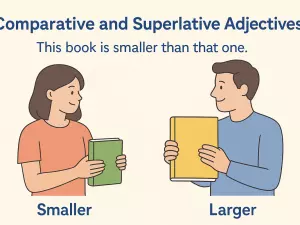
Questions with Comparatives and Superlatives: Who, Which

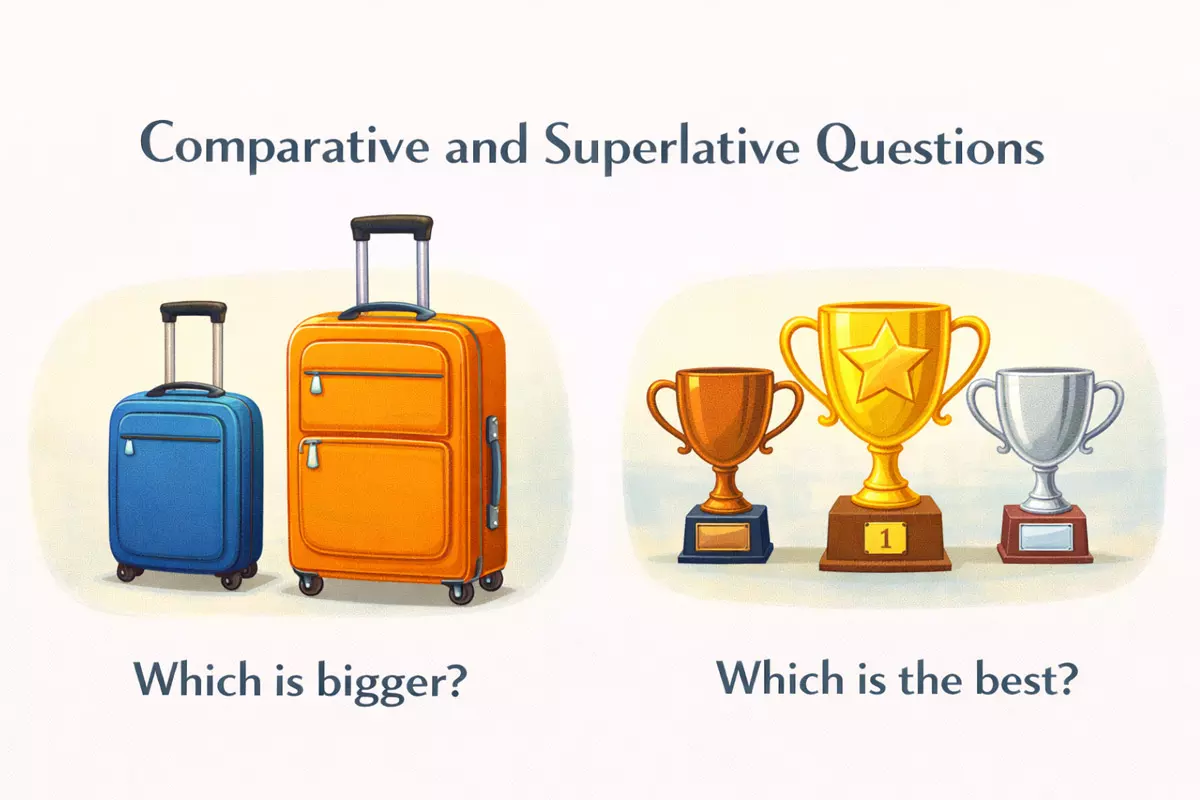 Here we how to form comparative and superlative questions, use than and of in questions, and handle irregular forms. It also highlights common mistakes, provides natural usage examples, and offers practice exercises with self-check.
If you want to ask about differences or extremes between people, places, or things, it's helpful to use comparative and superlative forms in your questions. For example, you might ask, Which city is bigger, London or Paris? to compare two places, or Who is the tallest in your class? to find out about the extreme. Using these structures not only makes your questions clearer but also helps you get more specific information, making your conversations both engaging and precise.
Comparatives and Superlatives Overview
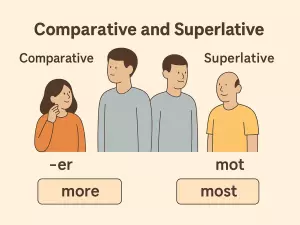
Understanding how to compare people, places, and things is essential in English. These forms help us express differences and extremes, whether we’re describing two items or ranking one as the “most” or “least” in a group. Typically, comparative adjectives and adverbs show how two things differ, while superlative forms identify something as the highest or lowest in quality among three or more.
Forming Comparatives and Superlatives
Forming these structures depends on the length and spelling of the word:
- For most one-syllable adjectives, add -er for the comparative and -est for the superlative (e.g., small, smaller, smallest).
- Adjectives ending in -y change the y to i before adding -er or -est (e.g., happy, happier, happiest).
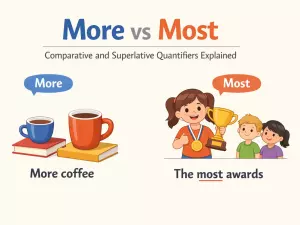
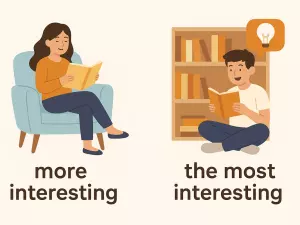
- Words with two or more syllables usually take more or most (e.g., more interesting, most interesting).
- Some adjectives and adverbs are irregular and change form completely (e.g., good, better, best).
Common Patterns and Examples
Comparisons are not limited to adjectives. Adverbs also have comparative and superlative forms. Here are some typical patterns you’ll encounter:
| Base Form | Comparative | Superlative |
|---|---|---|
| fast | faster | fastest |
| early | earlier | earliest |
| beautiful | more beautiful | most beautiful |
| good | better | best |
| bad | worse | worst |
| far | farther/further | farthest/furthest |
| much/many | more | most |
| little | less | least |
| carefully | more carefully | most carefully |
| late | later | latest |
Usage in Questions
When asking questions, these structures help you compare or rank items:
- Which city is bigger, Paris or Rome?
- Who runs faster in your class?
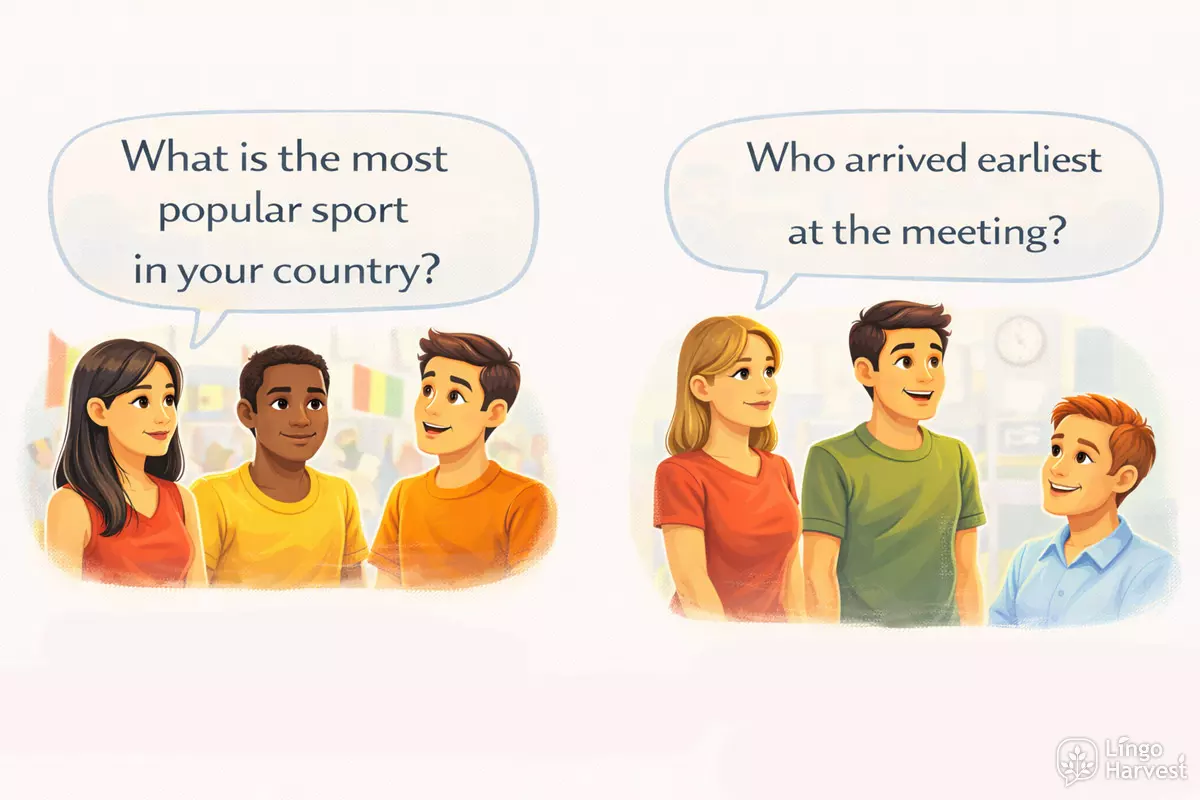
- What is the most popular sport in your country?
- Who arrived earliest at the meeting?
The choice of form depends on the word, the number of items compared, and whether you’re asking about two or more.
Forming Comparative Questions
When you want to compare two people, places, or things using English questions, you’ll need to use comparatives. This usually involves adjectives in their comparative form (like "bigger" or "more interesting") and a structure that helps you ask about differences or preferences. Mastering these types of questions not only improves your grammar, but also makes conversations more natural and engaging.
Key Patterns for Comparative Questions
The most common way to ask a question using a comparative is with the pattern: Which/Who/What + verb + comparative adjective + ...? This pattern helps you compare two or more options directly. Sometimes, you’ll see questions introduced with "Is" or "Are" for yes/no comparisons.
- Which city is larger, Paris or Rome? → Paris is larger than Rome.
- Who is taller, Sarah or Mike? → Mike is taller than Sarah.
- Is this test harder than the last one? → Yes, this test is harder than the last one.
- Are cats more independent than dogs? → Yes, cats are generally more independent than dogs.
- Which is more expensive, gold or silver? → Gold is more expensive than silver.
- Is your new job better than your old job? → Yes, my new job is better.
- Does this phone work faster than that one? → Yes, this phone works faster.
- Who drives more carefully, you or your brother? → My brother drives more carefully.
- Is English easier to learn than Chinese? → For many learners, English is easier than Chinese.
- Which subject do you find more interesting, history or science? → I find science more interesting.
- Are buses less crowded than trains at this hour? → Yes, buses are usually less crowded right now.
- Is winter colder than autumn here? → Yes, winter is colder than autumn here.
- Who arrived earlier, Tom or Anna? → Anna arrived earlier.
- Is this movie funnier than the previous one? → Yes, this movie is funnier.
Comparative Question Structures
Comparative questions can use either "-er" adjectives (short adjectives) or "more/less" with longer adjectives. The choice depends on the word being used. Here’s a quick overview:
| Adjective Type | Comparative Question Example |
|---|---|
| Short adjectives (-er) | Is your house bigger than mine? |
| Long adjectives (more/less) | Is this book more interesting than the other one? |
| Irregular comparatives | Is his cooking better than hers? |
| Negative comparisons | Is this job less stressful than your last one? |
Tips for Natural Comparative Questions
- Use "than" to show what you are comparing: "Is tea healthier than coffee?"
- With "Which," list the options: "Which is easier, skiing or snowboarding?"
- For people, "Who" is common: "Who is older, your dad or your mom?"
- Don’t forget irregular forms: "better," "worse," "farther," "less," etc.
- In informal speech, sometimes "or" is dropped if the options are clear: "Which tastes better?"
Asking questions with comparatives helps you gather opinions, make choices, and understand differences. By practicing these structures, your English will sound more fluent and precise in everyday situations.
Forming Superlative Questions
When you want to ask about the “most” or “least” of something within a group, you use the superlative form. These questions help you find out which person, place, or thing stands out above all others in a particular way. The structure often includes the definite article “the” along with the superlative adjective or adverb.
Common Patterns for Superlative Questions
Superlative questions usually start with question words like “Who,” “What,” “Which,” “Where,” or “When,” followed by “is/are,” and then the superlative. Sometimes, you might find “in” or “of” to specify the group being compared. Here are some basic patterns:
- Who is the tallest player on the team? → Alex is the tallest player on the team.
- What is the most popular movie this year? → The most popular movie this year is a superhero film.
- Which is the oldest building in the city? → The old cathedral is the oldest building in the city.
- Where is the coldest place on Earth? → Antarctica is the coldest place on Earth.
- When is the busiest time of day? → The busiest time is usually in the morning.
- Who has the least experience in the group? → Emma has the least experience.
- What is the least expensive option? → The basic plan is the least expensive option.
- Which is the biggest challenge you’ve faced? → Managing time effectively has been the biggest challenge.
- Who is the most talented musician here? → Daniel is the most talented musician here.
- What’s the hardest subject for you? → Math is the hardest subject for me.
- Which is the fastest route to the airport? → The highway is the fastest route.
- Who is the youngest person in your family? → My cousin is the youngest.
- What is the longest river in the world? → The Nile is the longest river in the world.
- Where is the most expensive restaurant in town? → It’s in the city center.
- Who is the least talkative student in class? → Mark is the least talkative student.
- Which is the hottest month of the year? → July is the hottest month of the year.
- What is the most difficult part of your job? → Meeting tight deadlines is the most difficult part.
Superlative Question Structure
The following table shows how to build these questions using different question words and superlative forms:
| Question Word | Example Question |
|---|---|
| Who | Who is the oldest in the group? |
| What | What is the most visited museum? |
| Which | Which is the biggest city in your country? |
| Where | Where is the least crowded beach nearby? |
| When | When is the earliest flight tomorrow? |
Tips for Asking the Best Superlative Questions
- Always use “the” before the superlative (the tallest, the most interesting).
- Use “most” or “least” for adjectives with three or more syllables (the most comfortable, the least dangerous).
- Be clear about the group or category you are asking about (“in the class,” “of all time,” “in your family”).
- For irregular superlatives, remember forms like “best,” “worst,” “least,” and “most.”
- Superlative questions often invite opinions or facts, so context is important.
By following these patterns and tips, you can ask about extremes—whether you’re curious about the best, the worst, the biggest, or the least in any situation.
Using Than and Of in Questions
When forming questions with comparatives and superlatives, English speakers often need to choose between "than" and "of" to compare people, things, or groups. Both words have specific roles, and knowing which to use can make your questions much clearer.
When to Use "Than" in Questions
"Than" is used for direct comparisons between two things or people. In questions, it helps ask about differences or preferences between options. Here are some common patterns:
- Is this car faster than that one? → Yes, this car is faster than that one.
- Are oranges more expensive than apples? → Yes, oranges are more expensive than apples.
- Is your brother taller than you? → Yes, my brother is taller than me.
- Was the movie better than the book? → No, the book was better than the movie.
- Are trains usually more crowded than buses? → Yes, trains are usually more crowded.
- Is it colder today than yesterday? → Yes, it’s colder today.
- Do you find math harder than science? → Yes, I find math harder than science.
- Is English spoken more than French in Canada? → Yes, English is spoken more than French in Canada.
- Are online classes easier than traditional ones? → It depends, but many people find online classes easier.
- Is this route shorter than the other? → Yes, this route is shorter.
Questions with "than" generally expect a comparison between two items, people, or groups.
When to Use "Of" in Questions
"Of" is commonly used with superlatives to identify one item as the most or least within a group. In question form, it helps ask about the best, worst, or another superlative quality among several choices.
- Who is the tallest of the three brothers? → The oldest brother is the tallest.
- Which of these books is the most interesting? → This one is the most interesting.
- What is the fastest of all the animals here? → The cheetah is the fastest.
- Which of your friends is the funniest? → Jake is the funniest.
- Who is the oldest of your classmates? → Maria is the oldest.
- Which of the answers is the least likely? → The last answer is the least likely.
- What is the most expensive of the options? → The premium option is the most expensive.
- Which of these cities is the coldest in winter? → This city is the coldest in winter.
- Who is the youngest of your cousins? → My youngest cousin is the youngest.
- Which of the solutions is the easiest? → The first solution is the easiest.
These patterns are especially useful when you want to highlight one thing out of a group, not just make a two-way comparison.
Comparing "Than" and "Of" in Questions
To see the difference more clearly, consider the following examples:
| Comparative with "Than" | Superlative with "Of" |
|---|---|
| Is Sarah taller than Emily? | Who is the tallest of the three girls? |
| Is this exam harder than the last one? | Which of the exams was the hardest? |
| Are cats more independent than dogs? | Which of these pets is the most independent? |
| Is Canada colder than Russia? | Which of these countries is the coldest? |
Tips for Choosing the Right Word
- Use "than" when comparing two specific items or people.
- Use "of" when asking about one item out of a group (usually with superlatives).
- Remember: "Than" never goes with superlatives in questions, and "of" is not used with comparatives.
- If you're unsure, check if your question is about two things (comparative) or the most/least among several (superlative).
Mastering this distinction will make your comparative and superlative questions sound natural and clear.
Irregular Forms in Questions
When forming questions with comparatives and superlatives, some adjectives and adverbs do not follow the usual "-er/-est" or "more/most" patterns. Instead, they have unique forms that must be memorized. Using the correct irregular form is important for clarity and accuracy in both written and spoken English.
Common Irregular Comparatives and Superlatives
A few adjectives and adverbs change completely in their comparative and superlative forms. Here are some of the most frequently used ones:
| Base Form | Comparative | Superlative | Sample Question |
|---|---|---|---|
| good | better | best | Who is better at math, you or your brother? |
| bad | worse | worst | Which team performed the worst this season? |
| far | farther/further | farthest/furthest | Is your house farther from school than mine? |
| little | less | least | Who has the least experience in this group? |
| many/much | more | most | Which city has more parks? |
Typical Question Patterns
When asking questions with these irregular forms, the structure is similar to regular comparatives and superlatives, but the unique word forms are used. Common patterns include:
- Who is better at playing chess?
- Which is the worst
- Is this route farther than the other one?
- Who drinks more coffee, you or your boss?
- Which student has the least
Tips for Remembering Irregular Forms
- Memorize the most common irregular forms—they appear frequently in everyday questions.
- Practice forming questions using these adjectives and adverbs in different contexts.
- Listen for these patterns in conversations and media to reinforce correct usage.
Using the right irregular comparative or superlative in a question not only makes your English sound more natural, but also helps avoid confusion. With regular practice, these special forms will become second nature.
Common Learner Mistakes
When forming questions with comparatives and superlatives, learners often run into several predictable issues. These errors can lead to confusion or unnatural sentences. Understanding where things go wrong can help you develop more accurate and fluent questions.
Mixing Up Comparative and Superlative Forms
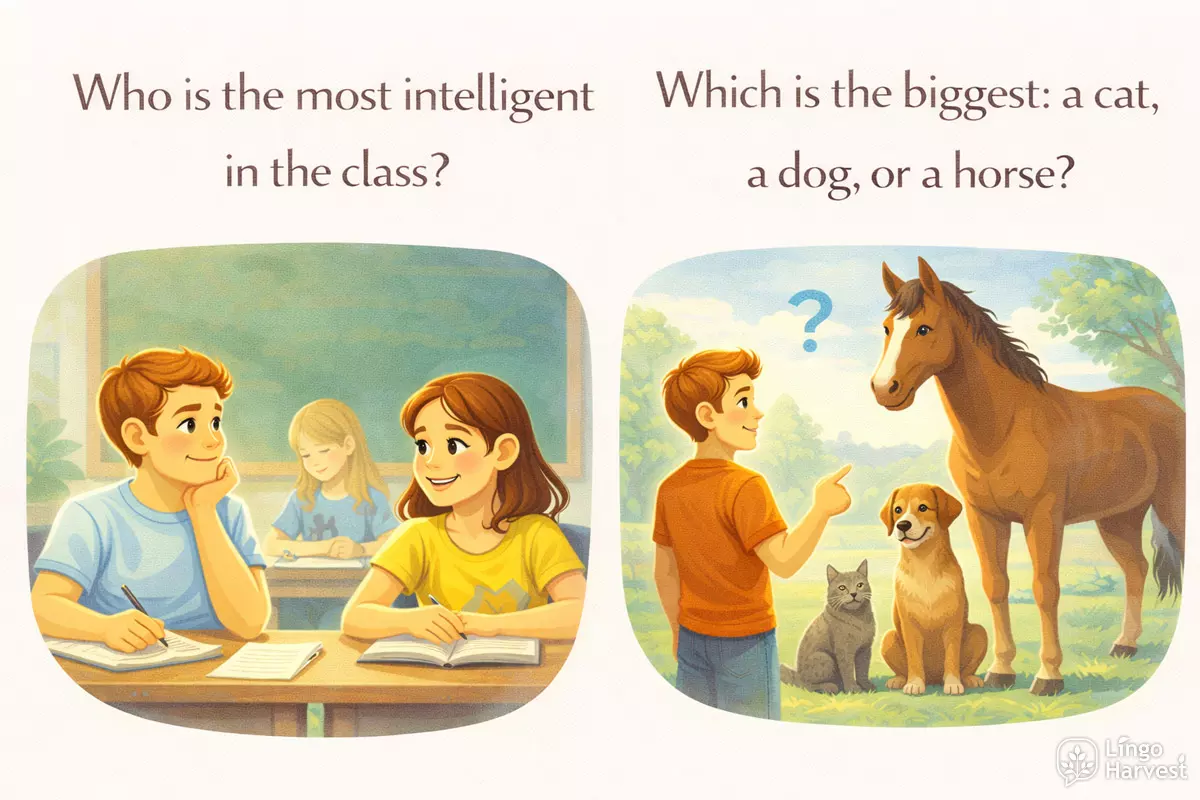
One frequent problem is confusing when to use the comparative or the superlative. Comparatives are used to compare two things, while superlatives are for comparing three or more. Using the wrong form can change the meaning or make the question unclear.
- Incorrect: Who is the more intelligent in the class?
- Correct: Who is the most intelligent in the class?
- Incorrect: Which is bigger, a cat or a dog or a horse?
- Correct: Which is the biggest: a cat, a dog, or a horse?
Forgetting Auxiliary Verbs in Questions
Another common difficulty is omitting necessary auxiliary verbs (like do, does, or is) when framing questions with comparative adjectives.
- Incorrect: Who smarter, John or Mike?
- Correct: Who is smarter, John or Mike?
- Incorrect: Which city colder in winter?
- Correct: Which city is colder in winter?
Misplacing the Question Word
Learners sometimes put the question word (who, which, what, etc.) in the wrong part of the sentence, making the question sound awkward or incorrect.
- Incorrect: Is who the best player?
- Correct: Who is the best player?
- Incorrect: Is which car faster?
- Correct: Which car is faster?
Incorrect Use of "Than" and "Of"
Comparative sentences often require "than," while superlatives may use "of" or "in" to specify the group. Mixing these up is a regular error.
- Incorrect: Who is more talented of the two?
- Correct: Who is more talented than the other?
- Incorrect: Who is the tallest than the group?
- Correct: Who is the tallest in the group?
Irregular Forms and Spelling Mistakes
Irregular adjectives like "good," "bad," and "far" are a stumbling block. Spelling errors or using regular forms for irregular words are also common.
| Adjective | Comparative / Superlative |
|---|---|
| good | better / best |
| bad | worse / worst |
| far | farther/further / farthest/furthest |
| little | less / least |
| many/much | more / most |
Overusing "More" and "Most"
Some adjectives only need "-er" or "-est" endings, but learners often add "more" or "most" unnecessarily, resulting in double comparatives or superlatives.
- Incorrect: Who is more taller?
- Correct: Who is taller?
- Incorrect: Who is the most fastest?
- Correct: Who is the fastest?
Summary of Frequent Issues
- Using the wrong comparative or superlative form
- Omitting auxiliary verbs
- Placing question words incorrectly
- Confusing "than" and "of" or "in"
- Misspelling irregular forms
- Adding unnecessary "more" or "most"
By paying attention to these patterns, you can avoid the most frequent pitfalls and ask clear, accurate questions with comparative and superlative adjectives.
Natural Usage Examples
When asking questions that use comparatives or superlatives, native speakers often rely on familiar patterns that fit everyday conversations. These question forms are especially useful for expressing preferences, making comparisons, or seeking opinions.
Common Patterns in Everyday Questions
- Which is faster, the train or the bus?
- Who is taller, Mike or John?
- Is this exam harder than the last one?
- What's the most popular dish here?
- Who is the youngest in your family?
- Do you think summer is better than winter?
- Which city is more expensive to live in?
- What’s the best way to get there?
- Is this hotel cheaper than the other one?
- Who is the oldest student in the class?
- Which subject do you find more interesting?
- What’s the biggest challenge you’ve faced?
- Is English easier to learn than French?
- Who was the most helpful during the project?
- Which is less crowded, the park or the mall?
- What’s the most exciting thing you’ve done?
- Is this the quietest place you know?
- Who runs faster, you or your brother?
- Which is more important to you, time or money?
- Are dogs friendlier than cats?
Comparative and Superlative Questions Side by Side
Below is a table showing how similar ideas can be asked with either a comparative or a superlative form:
| Comparative Question | Superlative Question |
|---|---|
| Is pizza healthier than burgers? | What’s the healthiest food you know? |
| Who is more creative in your team? | Who is the most creative person you’ve met? |
| Is this mountain higher than that one? | What’s the highest mountain in the region? |
| Are trains less convenient than buses? | What’s the least convenient way to travel? |
These examples reflect how questions with comparative and superlative forms appear naturally in conversation, whether comparing two items or asking about extremes. This approach helps learners sound more fluent and understand real-life usage.
Practice Exercises and Self-Check
Ready to test your understanding of how to form and use comparative and superlative questions? These activities will help you apply what you’ve learned and spot common patterns. Practice forming questions, choosing the correct structure, and identifying errors with the exercises below.
1. Complete the Questions
Rewrite each statement as a question using a comparative or superlative form. Pay attention to word order and the correct adjective form.
- John is taller than Mike.
- This book is more interesting than that one.
- Sarah is the youngest student in the class.
- Winter is colder than autumn.
- Mount Everest is the highest mountain in the world.
- This route is shorter than the alternative.
- English is easier to learn than German for many people.
- This phone is the most expensive model in the store.
- Anna arrived earlier than everyone else.
- This is the least comfortable chair in the room.
Show answers
- Who is taller, John or Mike?
- Which book is more interesting, this one or that one?
- Who is the youngest student in the class?
- Is winter colder than autumn?
- What is the highest mountain in the world?
- Which route is shorter, this one or the alternative?
- Is English easier to learn than German?
- Which model is the most expensive in the store?
- Who arrived earlier than everyone else?
- Which chair is the least comfortable in the room?
2. Identify the Error
For each question, decide if it is correct or incorrect. If incorrect, rewrite it.
- Who is more smarter, Tom or Alex?
- Is the elephant the biggest animal on land?
- Which city is the most oldest in the country?
- Is a dolphin faster than a shark?
- Who is the most tallest player on the team?
- Is this exercise more easier than the last one?
- Which of these movies is the most funniest?
- Is summer hotter than winter?
- Who is the least experienced member of the group?
- Which planet is the more distant from the Sun?
Show answers
- Incorrect. It should be: Who is smarter, Tom or Alex?
- Correct.
- Incorrect. It should be: Which city is the oldest in the country?
- Correct.
- Incorrect. It should be: Who is the tallest player on the team?
- Incorrect. It should be: Is this exercise easier than the last one?
- Incorrect. It should be: Which of these movies is the funniest?
- Correct.
- Correct.
- Incorrect. It should be: Which planet is the most distant from the Sun?
3. Comparative and Superlative Patterns
Review how regular and irregular adjectives form their comparatives and superlatives in the table below. These forms are key when constructing questions.
| Adjective | Comparative | Superlative |
|---|---|---|
| fast | faster | fastest |
| happy | happier | happiest |
| good | better | best |
| bad | worse | worst |
| interesting | more interesting | most interesting |
| little | less | least |
| far | farther/further | farthest/furthest |
| old | older/elder | oldest/eldest |
4. Make Your Own Questions
Think of two or more people, places, or things you know. Write three questions using comparative forms and two using superlative forms. Try to use a mix of adjectives and patterns from the table above.
Show answers
- Examples:
- Who is faster, you or your friend?
- Is Tokyo bigger than Paris?
- Which is more interesting, history or science?
- What is the best movie you have seen?
- Who is the oldest person in your family?
After completing these tasks, review your answers to check for accuracy and consistency. Focus on correct word order and the distinctions between comparative and superlative forms when forming questions. This practice will help you gain confidence with these structures in everyday conversation and writing.