Synonym Choice for Tone: say vs state vs claim vs argue

 This article explains why choosing the right reporting verb matters, highlights subtle tone differences, and shows how to use say, state, claim, and argue accurately. It covers examples, avoiding bias, and includes practice picking the best synonym.
Selecting the appropriate word to describe how someone communicates information can significantly alter the tone of your writing. Words like mention, assert, or debate each bring their own nuances, subtly shaping the reader's perception of both the message and your intentions. Thoughtful word choice not only clarifies meaning but also guides the audience's emotional response, demonstrating the importance of precision in language when conveying ideas or arguments.
Why Synonym Tone Matters
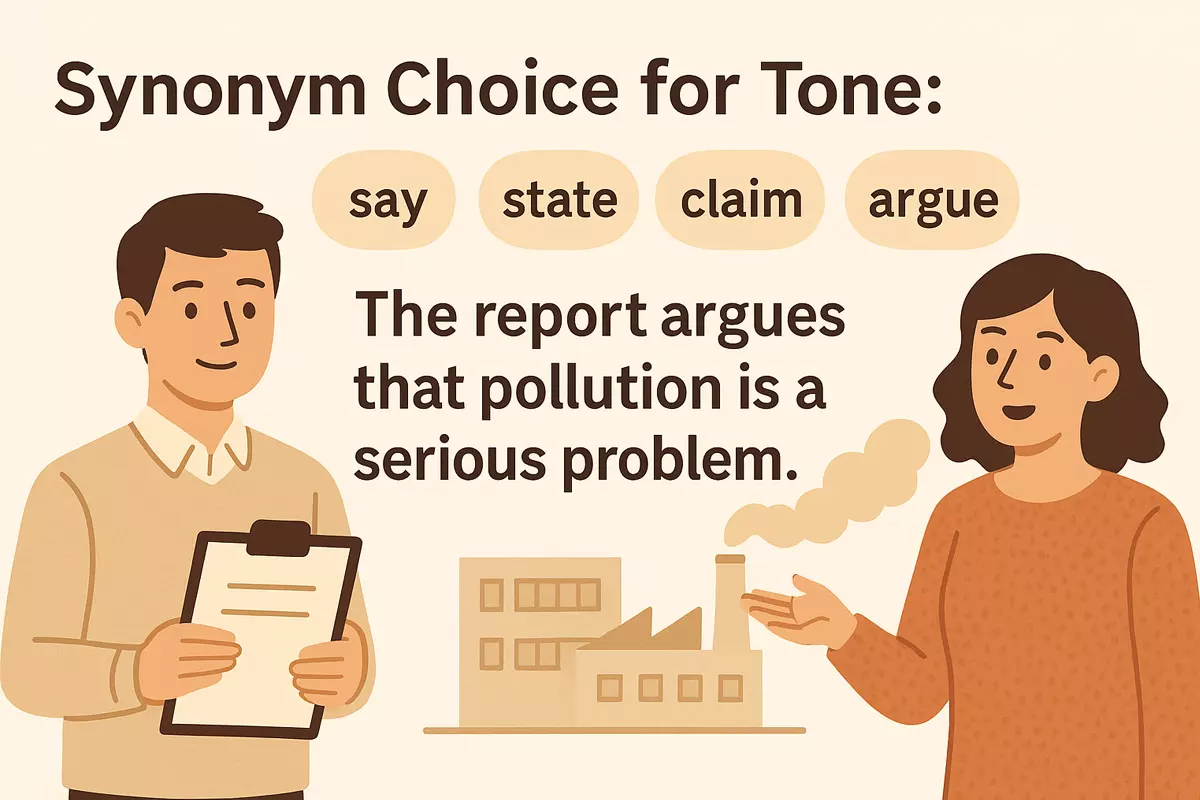
Choosing between words like “say,” “state,” “claim,” and “argue” isn’t just about vocabulary—it’s about shaping how your message lands. Each verb carries its own nuance, subtly influencing the reader’s perception of both the information and the speaker’s attitude. For example, “say” often feels neutral and conversational, while “argue” can suggest formality, confrontation, or a structured defense. These distinctions are important whether you’re writing an academic essay, reporting news, or crafting business correspondence.
How Word Choice Affects Perception
Readers pick up on these subtle differences, sometimes unconsciously. The verb you select can imply doubt, certainty, neutrality, or even bias. For instance, reporting that someone “claims” something may cast doubt on their statement, while “states” or “says” generally appear more neutral. Misjudging this effect might unintentionally undermine your credibility or misrepresent someone else’s intent.
Common Tone Implications of Reporting Verbs
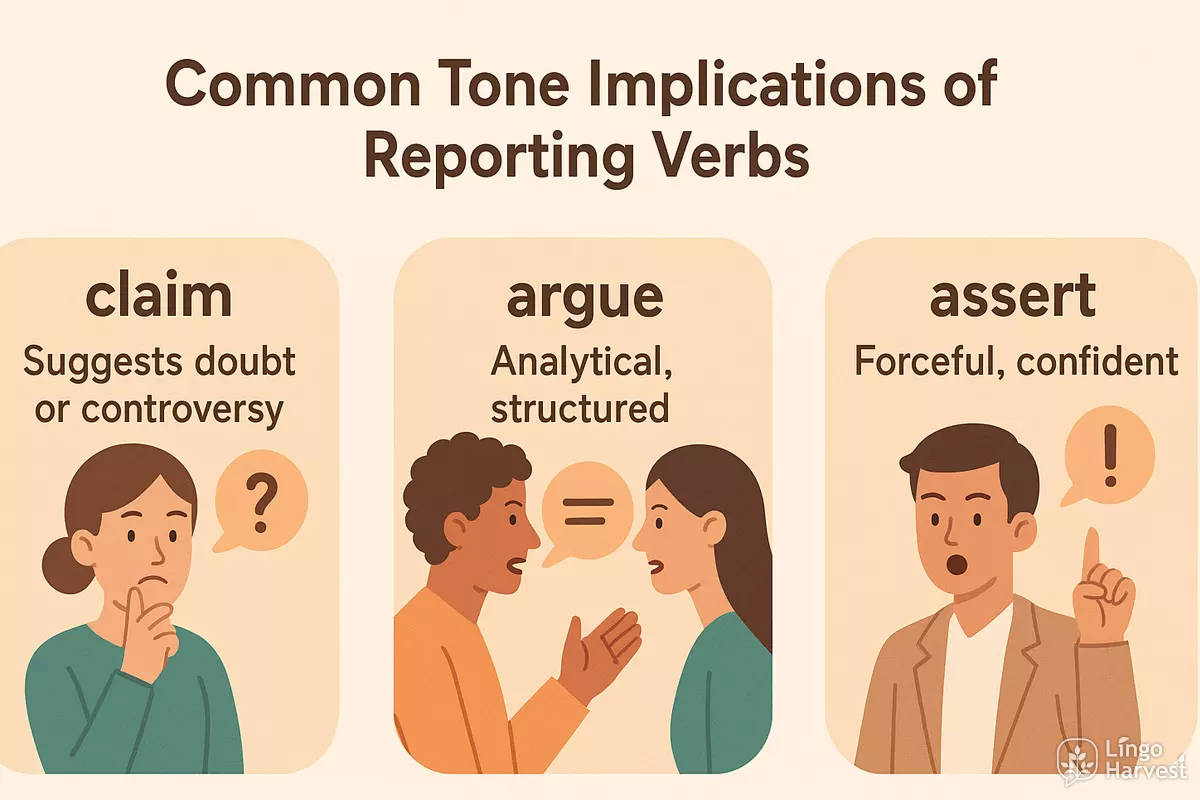
- say → Neutral, informal, direct
- state → Formal, factual, authoritative
- claim → Suggests doubt or controversy
- argue → Analytical, structured, potentially adversarial
- assert → Forceful, confident
- suggest → Tentative, open to interpretation
- announce → Public, official, declarative
- insist → Persistent, possibly defensive
- admit → Reluctant, possibly self-incriminating
- report → Objective, journalistic
- complain → Negative, dissatisfied
- explain → Informative, clarifying
- maintain → Consistent, possibly defensive
- deny → Rebuttal, defensive
- concede → Yielding, accepting
- allege → Legal, unproven, formal
- declare → Firm, official, emphatic
- confirm → Verifying, authoritative
Comparing Subtle Differences
| Verb | Typical Tone & Usage |
|---|---|
| say | Neutral, everyday reporting; minimal bias or formality |
| state | Formal and precise; often used in official or academic contexts |
| claim | Implies skepticism or lack of proof; can introduce doubt |
| argue | Suggests reasoning or debate; analytical or adversarial tone |
In summary, understanding and intentionally selecting synonyms shapes not just what you communicate, but how it is received. Sensitivity to these distinctions is essential for effective, accurate, and respectful writing.
Subtle Differences in Reporting Verbs
Choosing between verbs like "say," "state," "claim," and "argue" can subtly shift the tone and implication of a sentence. Each reporting verb carries its own nuance, which can influence how readers perceive the speaker’s certainty, objectivity, or even credibility.
Nuances in Meaning and Tone
- Say is the most neutral; it simply relays information without judging its truth or importance.
- State suggests formality and precision, often used in official contexts or to emphasize clarity.
- Claim introduces a hint of skepticism or distance, implying that the information may be disputed or unverified.
- Argue signals reasoning or persuasion, suggesting that the speaker is presenting evidence or trying to convince others.
How Context Shapes Perception
Writers often pick these verbs based on the intended tone and purpose. For example, academic texts might favor "argue" to highlight analysis, while journalism may alternate between "say" and "claim" to indicate varying degrees of neutrality or doubt.
Comparing Common Reporting Verbs
| Verb | Typical Use | Tone/Implication | Example |
|---|---|---|---|
| Say | Everyday speech, news reporting | Neutral, direct | She says it will rain tomorrow. |
| State | Formal writing, official documents | Authoritative, clear | The company stated its new policy. |
| Claim | Contested facts, arguments | Doubtful, possibly disputed | He claims the product is effective. |
| Argue | Essays, academic debate | Analytical, persuasive | They argue that the law is outdated. |
Quick Reference: When to Use Each Verb
- Use say for neutral, straightforward reporting.
- Choose state to add formality or authority.
- Select claim to signal possible dispute or lack of evidence.
- Opt for argue when presenting reasoning or analysis.
Understanding these distinctions helps writers and speakers set the right tone and guide readers’ perceptions. Being mindful of each verb’s implications can make your communication clearer and more effective.
Neutral vs Strong vs Critical Tone
Word choice deeply influences how your message is received. Choosing between "say," "state," "claim," or "argue" can shift your sentence from impartial reporting to forceful assertion or even skepticism. The distinctions often come down to subtle cues in tone and intent, especially in academic, journalistic, or analytical writing.
Neutral Tone: Reporting Without Judgment
To remain objective, words like "say" and "state" are typically used. These verbs simply report information, without implying agreement, disagreement, or doubt. For example:
- She said the results were inconclusive.
- The report states the findings clearly.
- Experts say the impact is minimal.
This approach is useful when you want to present facts or quotations without injecting emotion or evaluation.
Strong Tone: Asserting with Confidence
A more assertive style often emerges with verbs like "argue" and, at times, "claim." These words suggest conviction, persuasion, or even confrontation. For example:
- The author argues that policy changes are needed.
- Researchers claim this method is more effective.
- She argues for stricter regulations.
Using these terms signals that the speaker is not just reporting a fact, but presenting a position—sometimes with the intent to persuade.
Critical Tone: Indicating Doubt or Opposition
When you want to subtly question the validity of a statement, "claim" often carries a skeptical edge. It can imply that the statement is unproven or disputed. Compare the following uses:
- The company claims its product is safe. (implies doubt)
- Critics argue that the evidence is lacking. (shows opposition)
- He claims to have solved the problem, but others disagree.
This tone is common in critical reviews, debates, or investigative reporting.
| Verb | Typical Tone & Nuance | Example Use |
|---|---|---|
| say | Neutral, direct reporting | They say the process is simple. |
| state | Formal, neutral, factual | The guidelines state that masks are required. |
| claim | Skeptical, critical, implies doubt | She claims the results are accurate. |
| argue | Strong, assertive, persuasive | The author argues for reform. |
Quick Reference: Effect of Each Synonym
- say: Simple reporting, little to no bias.
- state: More formal, still objective.
- claim: May question credibility or truth.
- argue: Shows reasoning, sometimes opposition.
Choosing the right verb can subtly color your message, so consider whether you wish to remain impartial, show conviction, or express skepticism. The distinction is especially important in academic writing, journalism, and critical analysis, where tone shapes both meaning and reader response.
Using Say, State, Claim, Argue Correctly
Understanding the distinctions among “say,” “state,” “claim,” and “argue” helps writers convey tone and intent with precision. Each verb signals not just what is being communicated, but also the speaker’s relationship to the information and the intended impact on the audience.
Context and Nuances
The verb “say” is casual and neutral, often used for quoting speech or reporting basic information. “State” is more formal, suggesting clarity and authority but not necessarily debate. “Claim” introduces a sense of doubt or subjectivity, implying that the information might be contested or unproven. “Argue,” on the other hand, involves reasoning or presenting evidence, and is typically reserved for opinions or contentious points.
Choosing the Right Verb
Selecting the most appropriate term depends on your purpose and the nature of the information. Consider these scenarios:
- Say: Used for direct quotes, everyday conversation, or reporting without judgment.
- State: Suits formal declarations, facts, or official positions.
- Claim: Indicates the speaker’s belief, often without proof, or when others might disagree.
- Argue: Best for presenting a case with logic or evidence, especially in essays or debates.
Common Usage Patterns
Writers often confuse these verbs in academic and journalistic contexts. To clarify, here are typical phrases and situations for each:
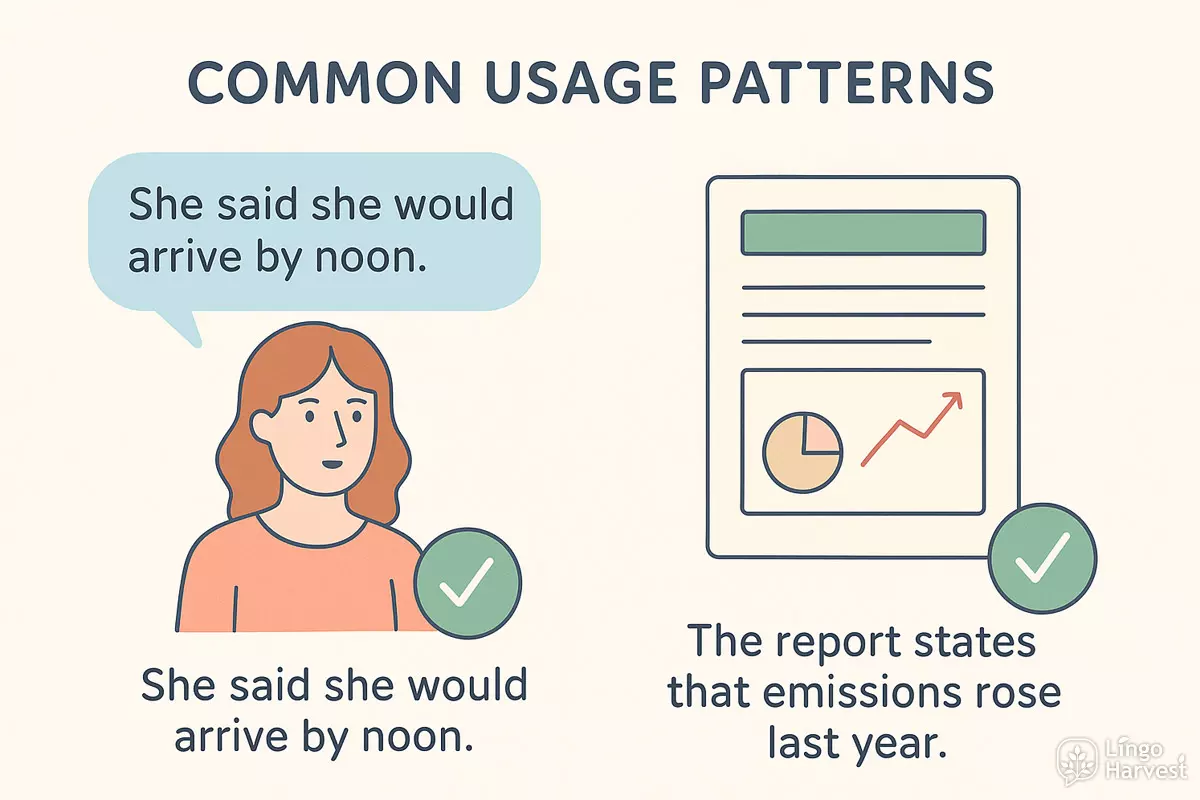
- She said she would arrive by noon. ✅ (neutral, reported speech)
- The report states that emissions rose last year. ✅ (formal, factual)
- The company claims its product is the fastest. ❌ (possibly disputed, subjective)
- The author argues that technology improves learning. ✅ (supports with reasons)
- “I’m innocent,” he said. ✅ (direct quotation)
- The government states its commitment to reform. ✅ (official position)
- Critics claim the policy will fail. ❌ (opinion, skepticism)
- The article argues for increased funding. ✅ (advocacy, rationale)
- He said the results were surprising. ✅ (neutral, indirect speech)
- Researchers state their findings in the journal. ✅ (formal, definitive)
- Some claim that climate change is exaggerated. ❌ (controversial, unproven)
- The essay argues against censorship. ✅ (position, supported by reasoning)
Comparative Overview
| Verb | Typical Use | Tone/Implication |
|---|---|---|
| Say | Reporting speech or information neutrally | Casual, objective, non-judgmental |
| State | Presenting facts or official statements | Formal, authoritative, clear |
| Claim | Expressing potentially disputed opinions | Subjective, possibly doubtful |
| Argue | Building a case with evidence or reasoning | Persuasive, logical, assertive |
Summary Tips
To ensure your writing reflects the intended tone:
- Use “say” for neutral reporting.
- Choose “state” for clarity and formality.
- Pick “claim” when the statement may be challenged.
- Opt for “argue” when presenting reasoning or analysis.
Careful synonym selection shapes how readers perceive both the message and the messenger.
Examples in Academic and Daily English
Choosing between words like "say," "state," "claim," and "argue" can affect how formal or persuasive your message sounds. In scholarly writing, precision matters, while in everyday interactions, tone influences clarity and politeness. Below, you’ll find sentences and contexts highlighting the differences in nuance and usage.
Common Contexts and Example Sentences
- Say: Used for reporting speech or opinions, usually neutral or informal.
She says she’ll be home by six. - State: More formal, often for official or clear declarations.
The rules state that all entries must be original. - Claim: Indicates an assertion, sometimes without evidence; can sound doubtful or neutral depending on context.
He claims he saw the accident happen. - Argue: Implies reasoned discussion or disagreement, often with evidence.
The author argues that technology improves learning outcomes.
Academic vs. Daily Use: Comparison Table
| Word | Academic Example | Everyday Example |
|---|---|---|
| Say | The researcher says the results are inconclusive. | My friend says it might rain later. |
| State | The policy states that attendance is mandatory. | He stated his name at the counter. |
| Claim | The article claims there is a link between diet and mood. | She claims she finished the project alone. |
| Argue | The paper argues that urbanization affects biodiversity. | He argued that he deserved a second chance. |
Quick Reference: When to Use Each Term
- Say: Reporting direct or indirect speech, informal recounting.
- State: Announcing facts, rules, or official information.
- Claim: Asserting something that may be disputed or unproven.
- Argue: Presenting reasons, evidence, or making a case for/against something.
Avoiding Overstatement or Bias
Choosing the right reporting verb—such as “say,” “state,” “claim,” or “argue”—can make a significant difference in how readers interpret a message. Each word carries its own nuance, and misusing them can unintentionally introduce exaggeration or partiality into your writing. To keep your tone neutral and fair, consider the implications of each synonym before selecting one.
Understanding the Subtle Differences
The verb you pick often signals your attitude toward the information presented. For instance, “say” is generally neutral, while “claim” may cast doubt, and “argue” implies a reasoned defense. If you’re summarizing another person’s point, using a loaded term can mislead your audience about the original intent or credibility of the source.
- Say: straightforward; does not suggest judgment or endorsement.
- State: formal; implies clarity but remains neutral.
- Claim: introduces skepticism; suggests the statement may be disputed.
- Argue: implies logic or persuasion; may indicate disagreement or debate.
Common Pitfalls to Avoid
Writers sometimes slip into overstatement or introduce bias simply by choosing the wrong verb. To minimize this risk:
- Check if your verb suggests doubt or certainty that isn’t warranted.
- Avoid verbs that editorialize unless you intend to signal skepticism or support.
- Be aware of context; for factual reporting, neutral verbs are usually best.
- When in doubt, ask: Does this verb subtly shift the reader’s perception of the source?
Examples of Tone Shift Through Verb Choice
It’s helpful to see how subtle word changes can affect tone and perceived objectivity. Consider these examples:
- “The spokesperson said the policy would be reviewed.” (neutral)
- “The spokesperson claimed the policy would be reviewed.” (doubt implied)
- “The spokesperson argued the policy would be reviewed.” (suggests debate or persuasion)
- “The spokesperson stated the policy would be reviewed.” (formal, clear)
Quick Reference: Selecting the Most Objective Reporting Verb
| Verb | Implication for Tone |
|---|---|
| Say | Neutral; simply conveys information without judgment. |
| State | Formal and clear; maintains objectivity but adds authority. |
| Claim | Implies doubt or potential dispute; may introduce skepticism. |
| Argue | Suggests a reasoned defense or debate; can signal disagreement or advocacy. |
Tips for Staying Neutral
- Use “say” or “state” for factual summaries.
- Reserve “claim” for unverified or contested information.
- Choose “argue” when describing logical reasoning or debate.
- Regularly review your verb choices for unintended connotations.
- When paraphrasing, ensure your verb reflects the source’s tone, not your personal stance.
Being mindful of these distinctions helps maintain credibility and ensures your writing is perceived as balanced rather than slanted or exaggerated.
Practice: Pick the Best Synonym for Context
Understanding which verb to use—such as "say," "state," "claim," or "argue"—depends on both the information being conveyed and the tone you wish to achieve. Let's explore how these choices affect meaning and tone, then try some practice exercises to sharpen your sense of nuance.
Common Contexts and Their Preferred Synonyms
Choosing the right synonym often hinges on context. For example, "say" is informal and neutral, "state" is formal and factual, "claim" can introduce doubt, and "argue" suggests reasoning or debate. Consider the following scenarios:
- Reporting neutral information: say
- Giving official or formal information: state
- Expressing a viewpoint that may be disputed: claim
- Presenting a reasoned position: argue
Quiz: Choose the Most Appropriate Verb
Read each sentence and decide which synonym fits best for tone and context.
- The scientist _______ that the new drug could have unforeseen side effects.
- The spokesperson _______ the official results of the election.
- "It's raining," she _______.
- The author _______ that technology has changed our daily lives for the better.
Show answers
- 1. claims
- 2. stated
- 3. said
- 4. argues
Quick Reference: Tone and Use
| Verb | Typical Use & Tone | Example |
|---|---|---|
| say | Neutral, informal, direct speech | She says she'll arrive at 7. |
| state | Formal, factual, official declarations | The report states that emissions dropped. |
| claim | Skeptical, possibly disputed, subjective | He claims he saw a UFO. |
| argue | Reasoned, persuasive, analytical | The lawyer argues that the evidence is insufficient. |
Practice Sentences: Fill in the Blanks
Select the most suitable verb for each sentence:
- The witness _______ that she saw the suspect at the scene.
- The company _______ in its press release that the product is safe.
- The critic _______ that the film lacks originality.
- "I love this song," he _______.
Show answers
- 1. claims
- 2. stated
- 3. argues
- 4. said
Try creating your own examples using each verb in different tones and contexts. This will help you internalize the subtle distinctions and improve your writing precision.