Adjectives for Food Texture and Flavor (Extended List)

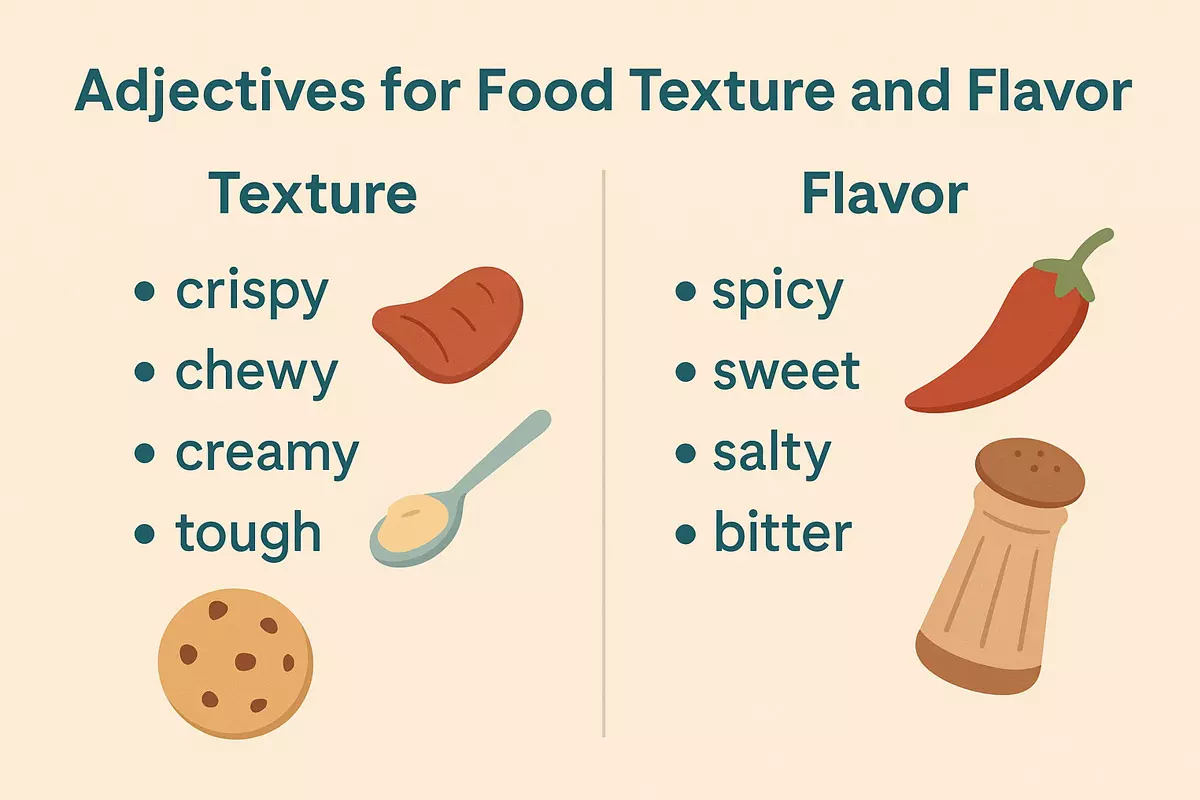 This article introduces basic taste and texture adjectives like sweet, salty, crunchy, and creamy, along with positive words such as delicious and fresh. It covers expressing food preferences and includes simple examples and practice exercises.
Describing how food feels and tastes can turn an ordinary meal into a vivid sensory experience, engaging the senses beyond just sight. By using a rich variety of words for texture and flavor, you can capture every subtlety, from the crisp snap of fresh vegetables to the creamy smoothness of a decadent dessert. This attention to detail helps dishes come alive in both writing and conversation, allowing others to imagine the meal as if they were tasting it themselves. Whether you are sharing a recipe, reviewing a restaurant, or simply talking about your favorite foods, choosing expressive language makes your descriptions more memorable and enjoyable.
Basic taste adjectives: sweet, salty, sour, bitter
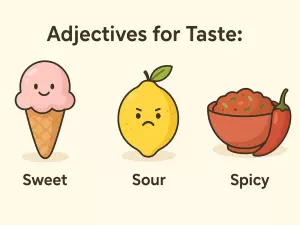
Understanding the primary flavors in food helps you describe dishes more vividly. English offers a rich set of words to express the major categories of taste: sugary, briny, tart, or sharp. Each of these fundamental flavors comes with its own set of adjectives, making it easier to pinpoint exactly how something tastes.
Sweet
Sweetness is often associated with desserts, fruits, and confections. Here are some common words to describe this flavor:
Sweet flavors are common in desserts, fruits, pastries, and confectionery. Here are refined and expanded adjectives:
- Honeyed → The tea tasted honeyed.
- Sugary → The cereal was too sugary.
- Saccharine → His smile felt saccharine.
- Syrupy → The pancakes were covered in syrupy sauce.
- Caramelized → The apples were caramelized perfectly.
- Fruity → The wine had a fruity aroma.
- Rich → The chocolate mousse was rich.
- Creamy → The dessert had a creamy sweetness.
- Buttery → The cookies were soft and buttery.
- Mellow → The sweetness was mellow and pleasant.
- Velvety → The frosting tasted velvety.
- Delicate → The cake had a delicate sweetness.
Salty
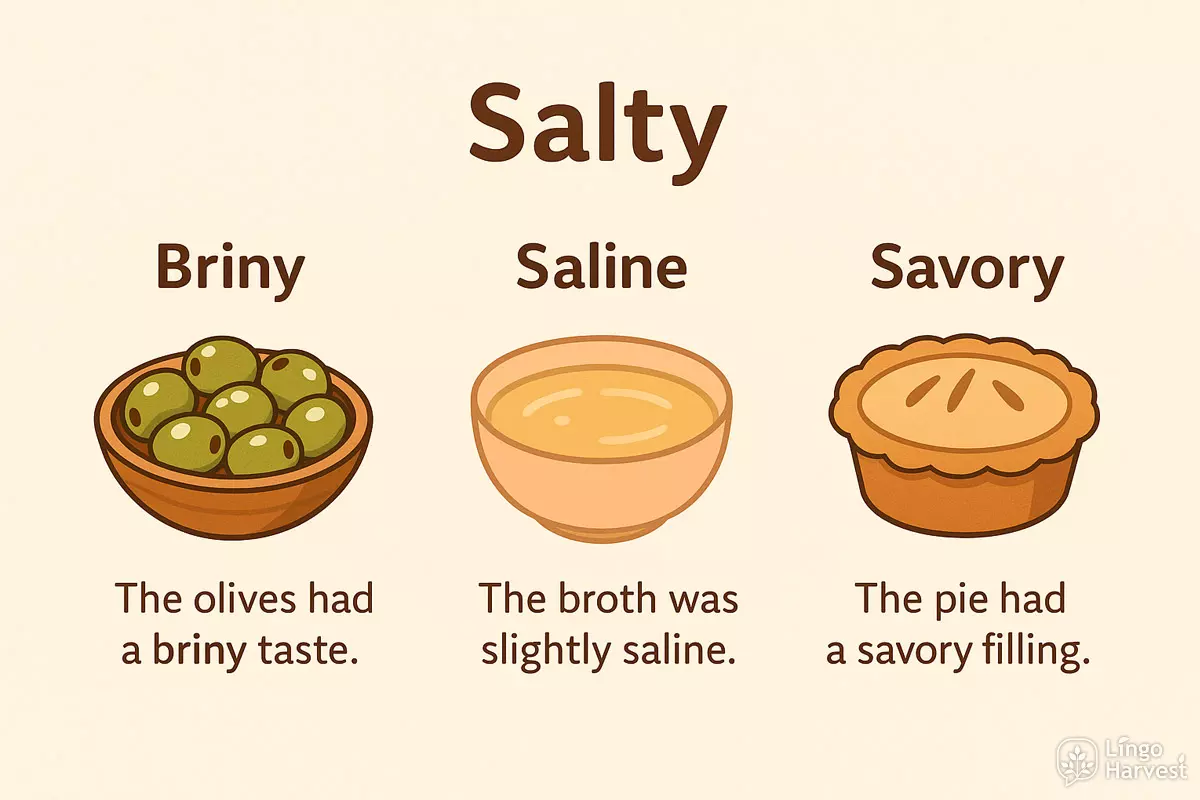
Foods with a pronounced saltiness usually include snacks, cured meats, and some cheeses. Adjectives for this taste include:
Salty foods include snacks, cured meats, cheeses, and savory dishes. Updated and non-repeating adjectives:
- Briny → The olives had a briny taste.
- Saline → The broth was slightly saline.
- Savory → The pie had a savory filling.
- Piquant → The dish was piquant and flavorful.
- Seasoned → The fries were well seasoned.
- Umami → The soup had deep umami notes.
- Zesty → The marinade tasted zesty.
- Sharp → The cheese had a sharp flavor.
- Bold → The seasoning was bold and strong.
- Earthy → The salted mushrooms tasted earthy.
- Robust → The flavors in the stew were robust.
- Brisk → The sauce had a brisk salty bite.
Sour
Sourness is found in citrus fruits, fermented foods, and some dairy products. To express this taste, try:
Sourness is found in citrus, fermented foods, and tangy dairy. I expanded the list with unique items:
- Tart → The lemonade was tart.
- Acidic → The sauce tasted too acidic.
- Zesty → The dressing had a zesty kick.
- Piquant → The pickles were piquant.
- Lemony → The cake had a lemony aftertaste.
- Vinegary → The salad smelled vinegary.
- Crisp → The apple had a crisp sourness.
- Sharp → The yogurt had a sharp tang.
- Refreshing → The sour drink was refreshing.
- Bright → The dish had bright citrus notes.
- Tangy → The sauce was tangy and lively.
- Fermented → The kimchi had a fermented sour taste.
Bitter
Bitterness can be subtle or strong, and is often present in dark chocolate, coffee, greens, and certain herbs. Useful adjectives include:
Bitter foods include greens, chocolate, herbs, and coffee. Updated list with additional unique descriptors:
- Herbal → The tea had a herbal bitterness.
- Astringent → The wine was astringent.
- Pungent → The greens tasted pungent.
- Earthy → The coffee beans had an earthy flavor.
- Robust → The espresso was robust.
- Intense → The bitterness was intense.
- Resinous → The beer had a resinous taste.
- Smoky → The chocolate had a smoky note.
- Sharp → The herbs left a sharp bitterness.
- Dry → The tonic water tasted dry.
- Toasted → The nuts had a toasted bitter edge.
- Dark → The chocolate had a dark bitter finish.
| Flavor | Example Adjectives | Typical Foods |
|---|---|---|
| Sweet | Honeyed, fruity, caramelized, mellow, velvety | Cakes, pastries, fruit desserts, custards |
| Salty | Briny, savory, umami, bold, seasoned | Cheese, pretzels, cured meats, salted nuts |
| Sour | Tart, zesty, acidic, tangy, lemony | Lemons, yogurt, pickles, fermented vegetables |
| Bitter | Astringent, earthy, pungent, smoky, robust | Coffee, dark chocolate, kale, herbal teas |
Choosing the right adjective can help you communicate the nuances of a dish or ingredient, whether you’re writing a review or describing a meal to a friend. These words form the foundation for more complex flavor descriptions and can be combined with texture terms for even richer detail.
Texture adjectives: crunchy, soft, creamy, chewy
Food descriptions often rely on texture as much as flavor, and words like crunchy, soft, creamy, and chewy help paint a vivid picture of the eating experience. Each term captures a different sensation, making it easier to communicate what to expect from a dish or ingredient.
Crunchy
Crunchiness is associated with foods that make a distinct sound when bitten, often indicating freshness or a particular cooking method. Common examples include:
- Potato chips → Potato chips are very crunchy.
- Raw carrots → Raw carrots stay crunchy and fresh.
- Toasted nuts → Toasted nuts taste rich and crunchy.
- Crusty bread → Crusty bread has a crunchy outer crust.
- Granola → Granola adds a crunchy topping to yogurt.
- Fried chicken → The fried chicken skin is deliciously crunchy.
- Tempura vegetables → Tempura vegetables are light and crunchy.
This quality is often prized in snacks and salads, offering contrast to softer components.
Soft
Soft foods are gentle to bite into, often comforting and easy to chew. They can be moist or dry, but always lack resistance. Examples include:
- Freshly baked cake → The freshly baked cake is soft and tender.
- Steamed dumplings → Steamed dumplings are soft and juicy.
- Ripe bananas → Ripe bananas are sweet and soft.
- Silken tofu → Silken tofu has a very soft texture.
- Mashed potatoes → Mashed potatoes are smooth and soft.
- Scrambled eggs → Scrambled eggs should be soft and fluffy.
- Soft cheese → This soft cheese spreads easily on bread.
Softness is often valued in desserts, breads, and many comfort foods.
Creamy
Creamy describes a smooth, rich consistency that spreads easily and often feels luxurious on the palate. Food with this texture includes:
- Yogurt → The yogurt is thick and creamy.
- Butter → The butter melts into a creamy spread.
- Custard → The custard has a silky, creamy texture.
- Avocado → Ripe avocado becomes creamy when mashed.
- Cheesecake filling → The cheesecake filling is rich and creamy.
- Ice cream → Good ice cream should taste smooth and creamy.
- Peanut butter → This peanut butter is very thick and creamy.
This texture is often linked with dairy products or foods that have been puréed.
Chewy
Chewy foods require more effort to break down, often providing satisfaction and a longer eating experience. This texture is common in:
- Bagels → Fresh bagels are pleasantly chewy.
- Nougat → The nougat is sweet and chewy.
- Jerky → Beef jerky is tough and chewy.
- Bubble gum → Bubble gum is made to be chewy.
- Squid (calamari) → Grilled calamari can be quite chewy.
- Dried fruit → Dried apricots have a chewy texture.
- Gummy candy → Gummy candies are soft and chewy.
Chewiness can be a positive or negative quality depending on the food and context.
Expanded Texture Vocabulary
To add nuance to your food descriptions, consider these additional adjectives related to mouthfeel:
- Flaky → The pastry is light and flaky.
- Gritty → The sauce tasted slightly gritty.
- Moist → The cake was moist inside.
- Sticky → The caramel is thick and sticky.
- Velvety → The soup has a velvety texture.
- Crumbly → The biscuit is dry and crumbly.
- Silky → The custard felt silky on the tongue.
- Rubbery → The overcooked squid turned rubbery.
- Gooey → The brownie center was warm and gooey.
- Fibrous → The meat was a bit fibrous.
- Dense → The bread is heavy and dense.
- Juicy → The steak was tender and juicy.
- Pasty → The sauce became thick and pasty.
- Airy → The mousse was very light and airy.
- Brittle → The brittle candy snapped easily.
- Watery → The soup tasted thin and watery.
- Gelatinous → The broth cooled into a gelatinous layer.
- Mealy → The apple had a mealy texture.
- Crispy → The skin of the chicken was crispy.
- Springy → The noodles had a firm, springy bite.
Comparing Texture Adjectives
| Adjective | Typical Foods |
|---|---|
| Crunchy | Celery, crackers, fried chicken skin, popcorn |
| Soft | Bread rolls, poached eggs, tofu, steamed sweet potatoes |
| Creamy | Ice cream, hummus, whipped cream, sauces |
| Chewy | Toffee, octopus, sourdough crust, gummy candies |
Choosing the right texture word can make a food description more precise and evocative. Whether you’re writing a recipe, a review, or simply sharing a meal, these adjectives help convey exactly what your senses experience.
Positive adjectives: delicious, tasty, fresh
Describing food in an appealing way often involves words that evoke a sense of enjoyment, quality, and appetizing flavor. Terms like "delicious," "tasty," and "fresh" help convey positive impressions, whether you're writing a review, describing a meal, or simply sharing your thoughts about a great dish. Each of these adjectives highlights a different aspect of the eating experience, from overall flavor to quality and appeal.
How These Adjectives Differ
- Delicious usually refers to food that is extremely pleasant to eat, suggesting an outstanding taste.
- Tasty emphasizes an enjoyable and appealing flavor, often in a more casual or everyday context.
- Fresh highlights the quality, indicating that ingredients or dishes are recently prepared and not stale, often associated with vibrant flavors and good texture.
Expanded List of Positive Food Adjectives
For a richer vocabulary, here are more adjectives you can use to describe food in a positive light:
- Savory → The soup was wonderfully savory.
- Juicy → The steak was incredibly juicy.
- Flavorful → This dish is rich and flavorful.
- Aromatic → The aromatic herbs filled the kitchen.
- Succulent → The chicken was tender and succulent.
- Delectable → We enjoyed a truly delectable dessert.
- Appetizing → The meal looked fresh and appetizing.
- Hearty → It was a warm, hearty stew.
- Zesty → The salsa had a bright, zesty taste.
- Rich → The chocolate sauce was thick and rich.
- Wholesome → This wholesome meal felt nourishing.
- Refreshing → The lemonade was cool and refreshing.
- Luscious → The berries were sweet and luscious.
- Golden-brown → The pastries baked to a perfect golden-brown.
- Creamy → The pasta had a smooth, creamy sauce.
- Mouthwatering → The aroma was absolutely mouthwatering.
- Fragrant → The fragrant spices lifted the entire dish.
- Spicy → The curry was bold and spicy.
- Light → The salad was light and crisp.
- Perfectly seasoned → The vegetables were perfectly seasoned.
- Delightful → The dessert was light and delightful.
- Velvety → The soup had a velvety finish.
Usage Examples in Sentences
- The soup was fresh and aromatic, with herbs picked from the garden that morning.
- Each bite of the pie was delicious, with a golden-brown crust and luscious fruit filling.
- The salad tasted wholesome and refreshing, ideal for a summer lunch.
Quick Comparison of Positive Food Adjectives
| Adjective | Highlights |
|---|---|
| Delicious | Overall outstanding taste; universally appealing |
| Tasty | Pleasant, enjoyable flavor; often informal |
| Fresh | Recently prepared or picked; vibrant and high-quality |
| Succulent | Juicy and tender, especially for meats or fruits |
| Appetizing | Visually or aromatically inviting; makes you want to eat |
| Delectable | Delightfully pleasing to the senses; gourmet |
| Flavorful | Rich in taste; full of flavor |
| Hearty | Filling, robust, and satisfying |
Using a variety of positive food adjectives can make your descriptions more vivid and precise, helping readers or listeners imagine the flavors, textures, and overall experience of a dish. This variety is especially useful in food writing, menus, and everyday conversation.
Describing food you like and dislike
Talking about your preferences with food often means using a range of adjectives to express both positive and negative impressions. Texture and flavor words help you explain exactly what you enjoy or avoid in a dish, making your opinions clearer to others.
How to express food preferences
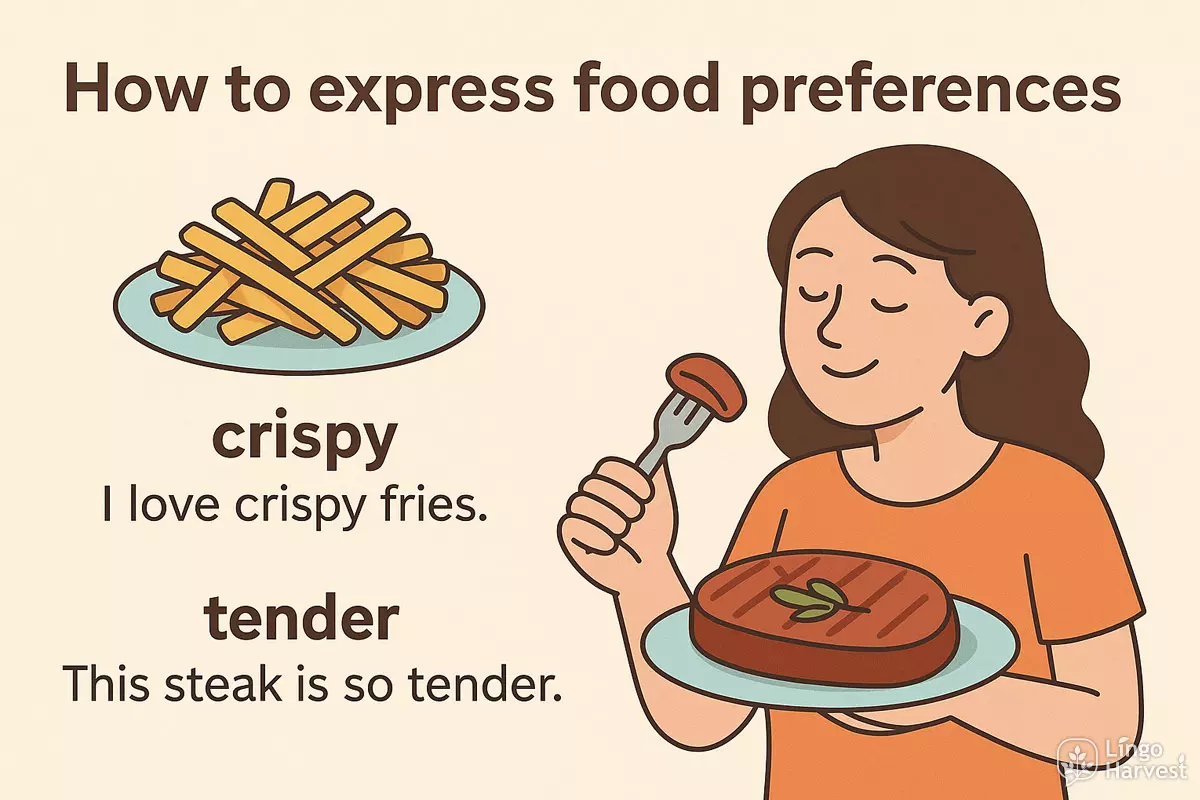
When you want to say you enjoy something, try using vivid adjectives:
- crispy – I love crispy fries.
- tender – This steak is so tender.
- juicy – The peaches are incredibly juicy.
- flaky – I prefer flaky pastry for my pies.
- rich – The chocolate cake is rich and satisfying.
- refreshing – Lemonade is so refreshing on a hot day.
- creamy – I enjoy creamy soups in winter.
- spicy – Spicy curries are my favorite.
- buttery – The croissant is perfectly buttery.
- savory – I like savory snacks more than sweet ones.
On the other hand, if something isn't to your taste, words with negative connotations help you explain why:
- bland – This soup tastes bland to me.
- greasy – The pizza is too greasy.
- rubbery – The calamari turned out rubbery.
- overcooked – The vegetables are overcooked and mushy.
- watery – The sauce is too watery.
- tough – The beef is tough and hard to chew.
- cloying – The dessert is too cloying for my liking.
- soggy – The bread is soggy.
- stale – These crackers are stale.
- burnt – It tastes burnt.
Sample sentences and patterns
To help you vary your descriptions, here are common ways to talk about your reactions to different foods:
- ✅ "I'm a big fan of ___ because it's so [adjective]."
- ❌ "I can't stand ___; it's too [adjective] for me."
- ✅ "[Food] is delicious—especially when it's [adjective]."
- ❌ "I avoid [food] because it's often [adjective]."
- ✅ "What I like most about this dish is the [adjective] texture."
- ❌ "The [adjective] flavor puts me off."
Comparing likes and dislikes
If you want to compare foods you enjoy with those you don't, try using a simple table:
| Food I Like | Food I Dislike | Adjectives Used |
|---|---|---|
| Fresh berries | Overripe bananas | juicy, sweet, refreshing vs. mushy, cloying |
| Grilled chicken | Fried chicken | tender, savory vs. greasy, heavy |
| French bread | White sandwich bread | crusty, chewy vs. bland, spongy |
| Vegetable stir-fry | Canned vegetables | crisp, vibrant vs. soggy, dull |
Building your vocabulary of texture and flavor adjectives makes it much easier to share your food experiences and understand those of others. Practice these words and patterns to communicate your tastes with more nuance and confidence.
Simple restaurant and cooking examples
Describing food in a restaurant or while cooking at home often involves more than just saying something tastes “good” or “bad.” Knowing how to talk about texture and flavor helps you express what you like, give feedback, or follow recipes more accurately. Here are some practical ways to use texture and flavor adjectives in real situations.
How servers and chefs use descriptive words
In eateries, staff often use specific terms when talking about dishes. This helps guests understand what to expect and makes the experience more enjoyable. For example:
- “The steak is tender and juicy.”
- “Our sourdough bread is crusty on the outside and airy inside.”
- “This curry is spicy and aromatic.”
- “The salad is crisp and refreshing.”
- “Try the cheesecake—it's creamy and rich.”
Common questions and answers with food adjectives
When ordering, diners often ask for more detail. Here are some typical exchanges:
- “Is the chicken dry or moist?”
- “Are the fries crispy or soggy?”
- “Is the soup salty or mild?”
- “Is the bread soft or stale?”
- “Is the steak tender or tough?”
- “Is the sauce spicy or bland?”
- “Is the dessert sweet or bitter?”
- “Is the coffee strong or weak?”
- “Is the pasta al dente or overcooked?”
- “Is the salad fresh or wilted?”
Describing food in recipes and at home
Writing or following a recipe also relies on precise food descriptions. Here are some ways these words show up:
- “Beat the eggs until fluffy.”
- “Simmer until the beans are tender.”
- “Sauté until the onions are golden and sweet.”
- “Bake until the crust is golden and crisp.”
- “Add lemon for a zesty flavor.”
Quick reference: Comparing texture and flavor words
Here’s a structured look at some common adjectives, showing how they might be paired or contrasted in different foods:
| Texture Adjective | Flavor Adjective |
|---|---|
| Crunchy (carrots, chips) | Sweet (fruit, desserts) |
| Creamy (yogurt, sauces) | Savory (soup, stew) |
| Chewy (bagels, steak) | Spicy (curry, salsa) |
| Flaky (pastry, fish) | Tangy (vinaigrette, yogurt) |
| Silky (pudding, tofu) | Bitter (coffee, dark chocolate) |
| Rubbery (overcooked squid) | Bland (plain rice, boiled potatoes) |
Expanded list of adjectives for food description
- Tender → The meat was tender and easy to cut.
- Crumbly → The shortbread was crumbly and buttery.
- Hearty → We enjoyed a hearty vegetable stew.
- Buttery → The croissants had a rich, buttery flavor.
- Earthy → The mushrooms added an earthy taste to the dish.
- Peppery → The salad had a sharp, peppery bite.
- Sticky → The sauce was sticky and sweet.
- Velvety → The soup was smooth and velvety.
- Fizzy → The drink was cold and fizzy.
- Gooey → The brownies were warm and gooey inside.
- Herbaceous → The dressing had a fresh, herbaceous aroma.
- Nutty → The cheese had a mild, nutty flavor.
- Piquant → The salsa was piquant with a hint of heat.
- Woody → The wine had a deep, woody finish.
- Juicy → The peaches were ripe and juicy.
- Rich → The chocolate cake was dense and rich.
- Gamey → The roasted lamb had a strong, gamey taste.
- Starchy → The potatoes were soft and slightly starchy.
Using these words can help you order exactly what you want, describe homemade dishes, or follow cooking instructions with more confidence. The more you practice, the easier it becomes to match the right word to each bite.
Practice: match adjectives to foods and dishes
Understanding how to pair texture and flavor adjectives with the right foods is essential for clear, vivid descriptions. Below, you’ll find a set of activities designed to strengthen your ability to link descriptive words with common dishes and ingredients. This will help you become more confident when talking or writing about food.
Task 1: Match the Adjective to the Food
Review the list of food texture and flavor adjectives below. Try to decide which food or dish each word best describes.
- Creamy –
- Crunchy –
- Spicy –
- Bitter –
- Chewy –
- Juicy –
- Flaky –
- Rich –
- Stale –
- Buttery –
- Umami –
- Gritty –
- Zesty –
- Velvety –
- Bland –
- Sticky –
- Gamey –
- Earthy –
- Hearty –
- Caramelized –
Show answers
- Creamy – Mashed potatoes, yogurt, custard
- Crunchy – Potato chips, fresh celery, toasted nuts
- Spicy – Curry, jalapeños, kimchi
- Bitter – Dark chocolate, black coffee, kale
- Chewy – Bagels, gummy candy, beef jerky
- Juicy – Watermelon, ripe peaches, steak
- Flaky – Croissant, pie crust, fish fillet
- Rich – Cheesecake, chocolate mousse, Alfredo sauce
- Stale – Old bread, crackers left open
- Buttery – Shortbread cookies, buttered corn
- Umami – Soy sauce, mushrooms, aged cheese
- Gritty – Pear skin, ground cornmeal, some chocolate
- Zesty – Lemon vinaigrette, salsa, citrus marinade
- Velvety – Chocolate ganache, cream soup
- Bland – Plain rice, boiled potatoes without seasoning
- Sticky – Rice cakes, honey, caramel
- Gamey – Lamb, venison, wild duck
- Earthy – Beets, mushrooms, lentils
- Hearty – Beef stew, chili, thick vegetable soup
- Caramelized – Crème brûlée topping, roasted onions
Task 2: Choose the Best Adjective
For each food or dish, select the most fitting adjective from the list: crispy, bland, tangy, oily, fluffy, smoky, sweet, sour, savory, rubbery.
- Freshly baked bread
- Lemon juice
- Fried bacon
- Egg whites (after whisking)
- Processed cheese slices
- Barbecue ribs
- Vegetable oil
- Steamed broccoli without seasoning
- Gummy candies
- Honey
Show answers
- Fluffy
- Sour
- Crispy
- Fluffy
- Rubbery
- Smoky
- Oily
- Bland
- Rubbery
- Sweet
Task 3: Comparing Texture and Flavor
Some adjectives are more suitable for texture, some for flavor, and some for both. Review the table and decide which category each adjective fits best.
| Adjective | Texture, Flavor, or Both? |
|---|---|
| Silky | Texture |
| Peppery | Flavor |
| Gooey | Texture |
| Dry | Both |
| Salty | Flavor |
| Sticky | Texture |
| Fresh | Both |
| Woody | Flavor |
| Light | Texture |
| Nutty | Flavor |
Show answers
- Silky – Texture
- Peppery – Flavor
- Gooey – Texture
- Dry – Both
- Salty – Flavor
- Sticky – Texture
- Fresh – Both
- Woody – Flavor
- Light – Texture
- Nutty – Flavor
Practicing how to associate descriptive words with specific foods will make your language more precise and help you communicate culinary experiences more effectively.