Adjectives for Taste: Sweet, Sour, and Spicy

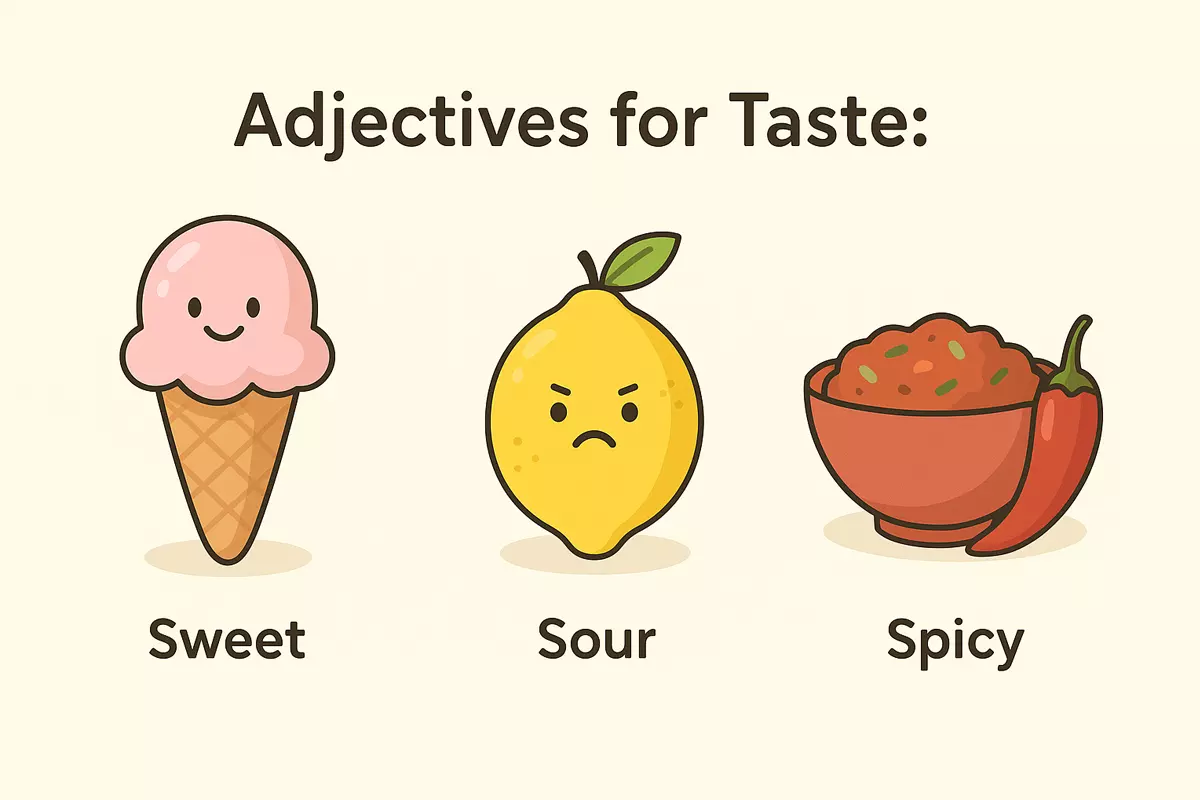 This article teaches you to describe flavors and textures with words like sweet, sour, spicy, crispy, and creamy. It covers positive and negative descriptions, using adjectives in sentences, and includes practice describing your favorite dish.
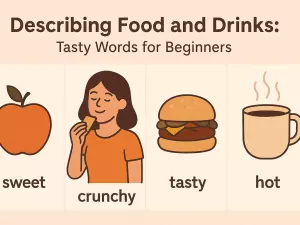
Describing flavors can be a delightful challenge, as each taste experience is unique and personal. From sweet and sugary treats to tangy or spicy dishes, the language we use helps convey the sensations we feel. Finding just the right words allows us to share the excitement of a new flavor or the comfort of a familiar one, making the act of eating even more enjoyable. Through vivid descriptions, we can invite others to join our culinary adventures and better appreciate the diversity of tastes available to us.
Describing Flavors
When talking about how food tastes, choosing the right descriptive words helps others understand exactly what you mean. Words like "sweet," "sour," and "spicy" are just a starting point. There are many more adjectives that can capture the subtle differences in what we eat and drink. By expanding your vocabulary, you can paint a clearer picture of a dish’s character, whether you’re reviewing a meal or simply sharing your experience with a friend.
Common Words for Sweetness, Sourness, and Spiciness
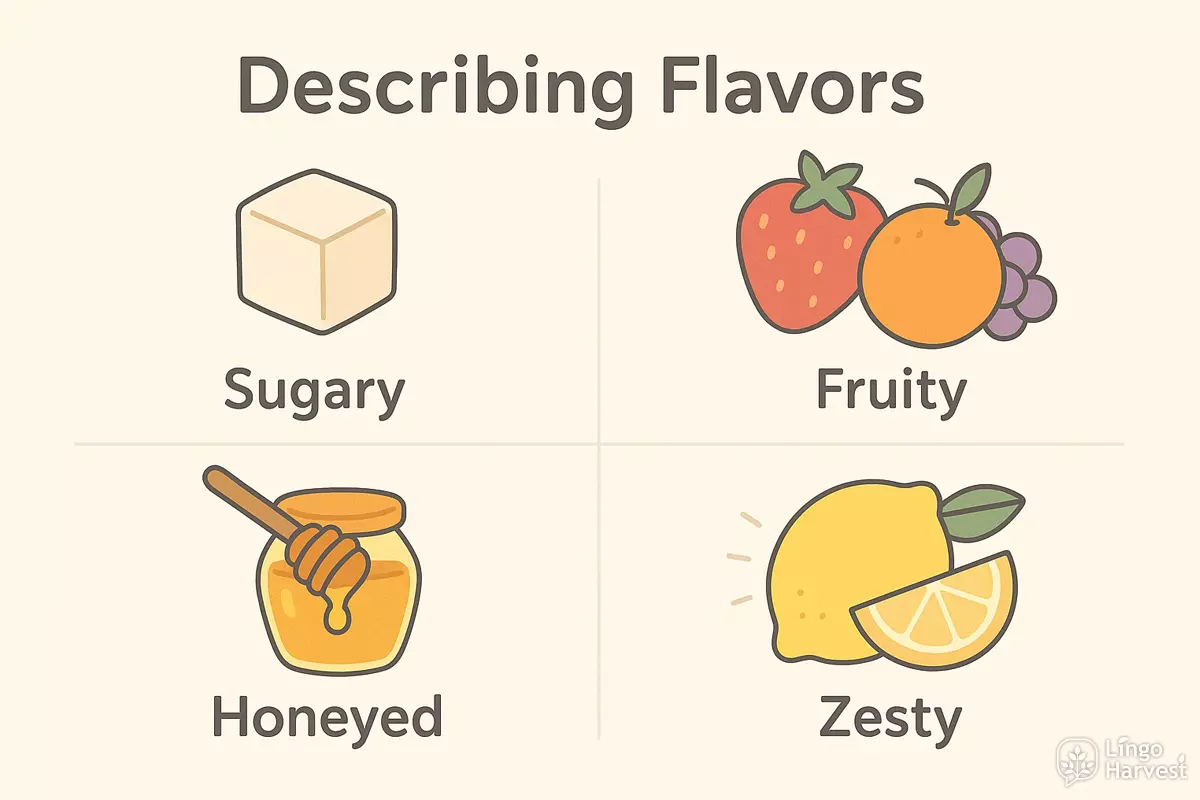
Sweetness can range from gentle to overpowering, just as sourness and heat can be mild or intense. Here are some useful adjectives to express these tastes in more detail:
- Sugary – intensely sweet, like candy
- Fruity – sweet with a hint of fruit flavor
- Honeyed – sweet in a smooth, mellow way
- Zesty – lively and slightly sour or tangy
- Tart – sharp, acidic, and slightly sour
- Piquant – pleasantly spicy or tangy
- Peppery – spicy in a black pepper kind of way
- Fiery – extremely hot and spicy
- Mild – gentle, not strong in any flavor
- Rich – full, deep, often sweet or spicy
- Sharp – strong and biting, usually sour or spicy
- Lemony – tangy, citrus-like sourness
- Burning – very spicy, causes a hot sensation
- Cloying – unpleasantly or sickeningly sweet
- Acidic – sour, with a noticeable acid edge
- Earthy – deep, sometimes sweet, sometimes spicy, like root vegetables
- Refreshing – light, crisp, often sweet or sour in a pleasant way
- Smoky – spicy with a hint of smoke flavor
- Vinegary – strong, sour, and acidic
- Bland – lacking strong flavor, neither sweet nor spicy
Comparing Taste Adjectives
Some adjectives are best used for certain foods or to describe specific levels of intensity. The table below groups words by flavor category and strength, helping you choose the most accurate term.
| Flavor Type | Descriptive Adjectives |
|---|---|
| Sweet | Sugary, honeyed, fruity, cloying, rich |
| Sour | Tart, zesty, lemony, acidic, vinegary |
| Spicy | Piquant, peppery, fiery, burning, smoky |
| Neutral/Mild | Mild, bland, refreshing, earthy |
Tips for Choosing the Right Word
Think about the food’s main taste, but also its aftertaste and how it feels on your tongue. For example, "zesty" often describes foods that are both sour and fresh, while "burning" is reserved for dishes that really bring the heat. Using a precise adjective makes your description more vivid and helps others imagine the flavor.
Sweet, Sour, Salty, Bitter, Spicy
When describing flavors in English, we often rely on a handful of core adjectives that instantly convey the essence of a dish or ingredient. Each taste word captures a distinct sensory experience, helping us talk about food in more precise and colorful ways.
Understanding the Main Taste Adjectives
Sweet is used for foods like honey, ripe fruit, or desserts. Sour often describes citrus fruits, vinegar, or yogurt. Salty applies to snacks such as pretzels or olives. Bitter is common for dark chocolate, coffee, or some leafy greens. Spicy relates to foods with chili peppers, black pepper, or hot sauces.
Expanded Vocabulary for Taste
Beyond the basics, English offers many adjectives to nuance each flavor. Here are some alternatives and related terms:
- Sweet: sugary, syrupy, honeyed, candied, saccharine
- Sour: tart, tangy, acidic, zesty, sharp
- Salty: briny, salted, savory, pickled, cured
- Bitter: astringent, acrid, pungent, sharp, harsh
- Spicy: hot, peppery, piquant, fiery, zesty
Comparing Taste Qualities
It's helpful to compare these tastes side by side, especially when describing complex dishes. Here is a table outlining typical associations and sample foods for each taste:
| Taste | Typical Foods | Related Adjectives |
|---|---|---|
| Sweet | Desserts, fruit, honey | sugary, syrupy, honeyed |
| Sour | Lemon, yogurt, vinegar | tart, tangy, zesty |
| Salty | Pretzels, cheese, olives | briny, savory, salted |
| Bitter | Coffee, dark chocolate, kale | astringent, pungent, sharp |
| Spicy | Chili, curry, salsa | hot, peppery, fiery |
Tips for Using Taste Adjectives
- Use more than one word to capture complex flavors (e.g., "sweet and tangy").
- Pairing descriptive adjectives with foods helps readers imagine the taste.
- Consider intensity: "mildly spicy" vs. "blazing hot".
- Combine with texture words for richer descriptions, such as "crispy, salty chips".
Describing flavors accurately can make your writing about food more vivid and relatable. The right adjective not only tells what something tastes like, but also creates a sensory connection for your audience.
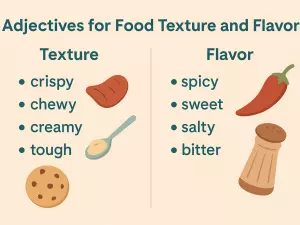
Texture Words (Crispy, Creamy)
When describing food, it’s not just about taste—texture plays a huge role in the eating experience. Words that capture how food feels in your mouth help make descriptions more vivid and precise. Think about the contrast between a crunchy cracker and a silky pudding; both are delicious, but they excite the senses in totally different ways.
Common Texture Adjectives
Here are some useful adjectives to describe how foods feel, beyond sweet or spicy flavors:
- Crispy: firm and makes a sharp sound when bitten (fried chicken, toast)
- Crunchy: hard enough to be chewed noisily (carrots, granola)
- Creamy: smooth and rich, often with dairy (ice cream, mashed potatoes)
- Silky: exceptionally smooth and soft (custard, mousse)
- Chewy: requires a lot of chewing (bagels, gummy candies)
- Flaky: breaks apart in thin layers (pastry, croissant)
- Gooey: sticky and soft, often melts in the mouth (brownies, melted cheese)
- Tender: easy to cut or bite (stewed meat, ripe fruit)
- Juicy: filled with liquid that bursts when bitten (peach, steak)
- Velvety: smooth, soft, and luxurious (hot chocolate, sauces)
- Grainy: contains small, hard particles (polenta, some chocolates)
- Rubbery: tough and elastic (overcooked squid, some candies)
- Powdery: dry and easily crumbles to dust (certain cookies, powdered sugar)
- Fibrous: stringy or full of fibers (celery, some meats)
- Sticky: adheres to teeth or fingers (taffy, honey)
- Moist: pleasantly wet or damp (cake, muffins)
- Dry: lacking moisture (crackers, stale bread)
- Spongy: soft and springy, like a sponge (angel food cake, tofu)
- Buttery: rich, smooth, and sometimes greasy (shortbread, croissants)
Comparing Popular Texture Descriptors
Some words may sound similar but describe different sensations. For example, “crispy” and “crunchy” are both positive for fried foods, but “crispy” is often lighter, while “crunchy” suggests a heartier bite. Similarly, “creamy” and “silky” both mean smooth, but “silky” is even more delicate.
| Adjective | Description & Example |
|---|---|
| Crispy | Firm and makes a crackling sound; e.g., potato chips, bacon |
| Creamy | Rich, smooth, and soft; e.g., yogurt, chocolate mousse |
| Crunchy | Hard, requires effort to chew; e.g., nuts, raw broccoli |
| Silky | Exceptionally smooth and delicate; e.g., panna cotta, custard |
| Chewy | Needs sustained chewing; e.g., bagels, caramel candies |
| Flaky | Breaks into thin layers or pieces; e.g., puff pastry, fish |
Why Texture Adjectives Matter
Describing texture helps set expectations and paints a more complete picture of a dish. Whether you’re writing a recipe, reviewing a meal, or just chatting about food, having a varied vocabulary for mouthfeel brings your descriptions to life. Try mixing a few of these terms next time you talk about your favorite snack or dessert.
Positive and Negative Descriptions
When talking about flavors such as sweet, sour, and spicy, the words we choose can highlight our enjoyment or displeasure. The way we describe taste helps others imagine what we’re experiencing—sometimes making a food sound inviting, other times warning about an unpleasant surprise. Adjectives play a big role in shaping these impressions.
Expressing Enjoyment or Dislike
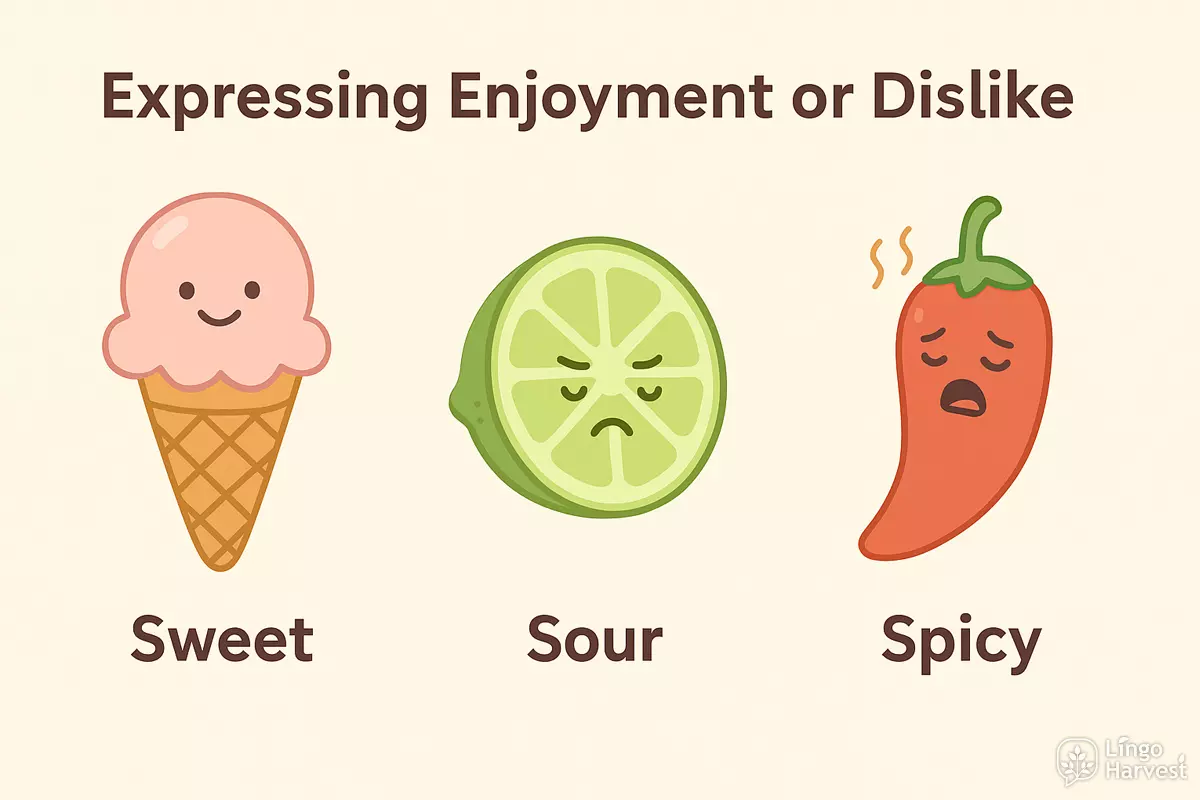
Enthusiastic reactions to food often use adjectives with positive connotations, while less pleasant experiences lead to negative descriptors. Here are some common ways to talk about sweet, sour, and spicy tastes:
- Sweet: delightful, luscious, sugary, cloying, sickly
- Sour: tangy, zesty, refreshing, sharp, acrid, vinegary
- Spicy: piquant, bold, fiery, overpowering, harsh, burning
People may describe a dessert as “delightfully sweet” if it’s enjoyable, but call it “sickly sweet” if it’s too much. Similarly, “refreshingly sour” lemonade is positive, while “acrid” or “overly sour” signals a negative reaction. For spicy foods, “bold” or “piquant” is often praise, while “overpowering” or “harsh” suggests a problem.
Comparing Positive and Negative Taste Adjectives
To make it easier to see the contrast, here is a comparison of typical words used for each flavor profile:
| Taste | Positive Words | Negative Words |
|---|---|---|
| Sweet | pleasant, mellow, rich, honeyed | cloying, sickly, bland, artificial |
| Sour | zesty, crisp, refreshing, lively | harsh, acrid, biting, vinegary |
| Spicy | aromatic, vibrant, warming, exciting | overpowering, burning, numbing, unpleasant |
Tips for Choosing Descriptive Words
When describing taste, think about intensity, aftertaste, and personal preference. A positive term for one person might be negative for another. For example, “fiery” can be enthusiastic praise for a chili lover, but “burning” might be a warning for someone sensitive to heat. Consider the context and your own reaction when picking adjectives for taste.
Using Adjectives in Sentences
Describing flavors in everyday conversation is easier when you know how to place adjectives like "sweet," "sour," and "spicy" in your sentences. These words help express impressions about food, drinks, or even experiences, making your speech more vivid and precise.
Typical Sentence Patterns
Adjectives for taste usually follow simple patterns in English. For example:
- It tastes + adjective: The soup tastes spicy.
- This/That is + adjective: This lemonade is sour.
- I find + noun + adjective: I find mangoes sweet.
- Adjective + noun: A sweet dessert
Expanded Example List
Here are various ways to use taste descriptors naturally in sentences:
- This curry is incredibly spicy.
- I love the sweet flavor of fresh strawberries.
- The sauce has a sour aftertaste.
- Chili peppers make the dish very hot.
- Her lemonade is too sour for my liking.
- Children often prefer sweet snacks.
- The salsa is both spicy and tangy.
- That candy is almost painfully sweet.
- I accidentally made the soup too salty instead of spicy.
- The pickles are sour but refreshing.
- This chocolate cake is perfectly sweet.
- He added extra chili to make it spicier.
- Some people enjoy sour candies more than sweet ones.
- The stew is not as spicy as I expected.
- They brought a sweet and spicy sauce for the wings.
- The lemonade is just the right balance of sweet and sour.
- Spicy foods are popular in many cultures.
- Too much sugar can make a drink overly sweet.
Comparing Taste Adjectives
Sometimes, it's useful to compare how these words are used in context. The table below shows sample sentences using "sweet," "sour," and "spicy" for easy reference.
| Adjective | Example Sentence |
|---|---|
| Sweet | The honey is sweet and delicious. |
| Sour | The grapefruit tastes very sour this season. |
| Spicy | I prefer my food less spicy than this. |
| Sweet & Spicy | This sauce is both sweet and spicy, which makes it unique. |
| Sour & Sweet | Their homemade candy is a delightful mix of sour and sweet. |
With these examples and patterns, you can confidently describe flavors and share your opinions about food in English. Remember, pairing these adjectives with specific foods or drinks helps your sentences sound more natural and engaging.
Practice: Describe Your Favorite Dish
Describing food with taste adjectives helps others imagine the flavors and sensations you enjoy. To get better at this, try talking about your favorite meal using a variety of taste words. Focus on specific qualities—sweetness, tanginess, or spiciness—so your description becomes vivid and precise.
Useful Taste Adjectives
- Sweet
- Sour
- Spicy
- Bitter
- Salty
- Umami
- Tangy
- Rich
- Mild
- Peppery
- Fruity
- Earthy
- Buttery
- Herbal
- Smoky
- Creamy
- Zesty
- Sharp
- Refreshing
- Delicate
How to Build a Description
Start by naming your favorite dish. Then, use at least three adjectives from the list to describe its flavor. Consider the overall taste, any dominant notes, and how the flavors combine.
- Name the dish.
- List its main ingredients.
- Describe the taste using adjectives.
- Mention how the flavors make you feel.
Sample Description
Example: "Pad Thai is my favorite dish. It combines rice noodles, shrimp, peanuts, and lime. The taste is sweet from the tamarind, a little sour from the lime, and mildly spicy thanks to the chili flakes. The mix of flavors is refreshing and makes each bite exciting."
Practice Task
Write a short paragraph describing a dish you love. Use at least three different adjectives for taste. Try to make your description clear and interesting for someone who has never tried it before.
Show answers
- Possible answer 1: "I really enjoy lemon tart. The crust is buttery, while the filling is both sweet and sharply sour. The zesty lemon flavor makes it refreshing and light."
- Possible answer 2: "My favorite meal is spicy lentil soup. It’s earthy and rich, with a peppery heat that warms you up. The herbs add a mild, fresh note."
- Possible answer 3: "I love chocolate mousse. It’s creamy, slightly bitter, and intensely sweet. The smooth texture and deep cocoa flavor are irresistible."