Positive vs Negative Connotation in Adjectives

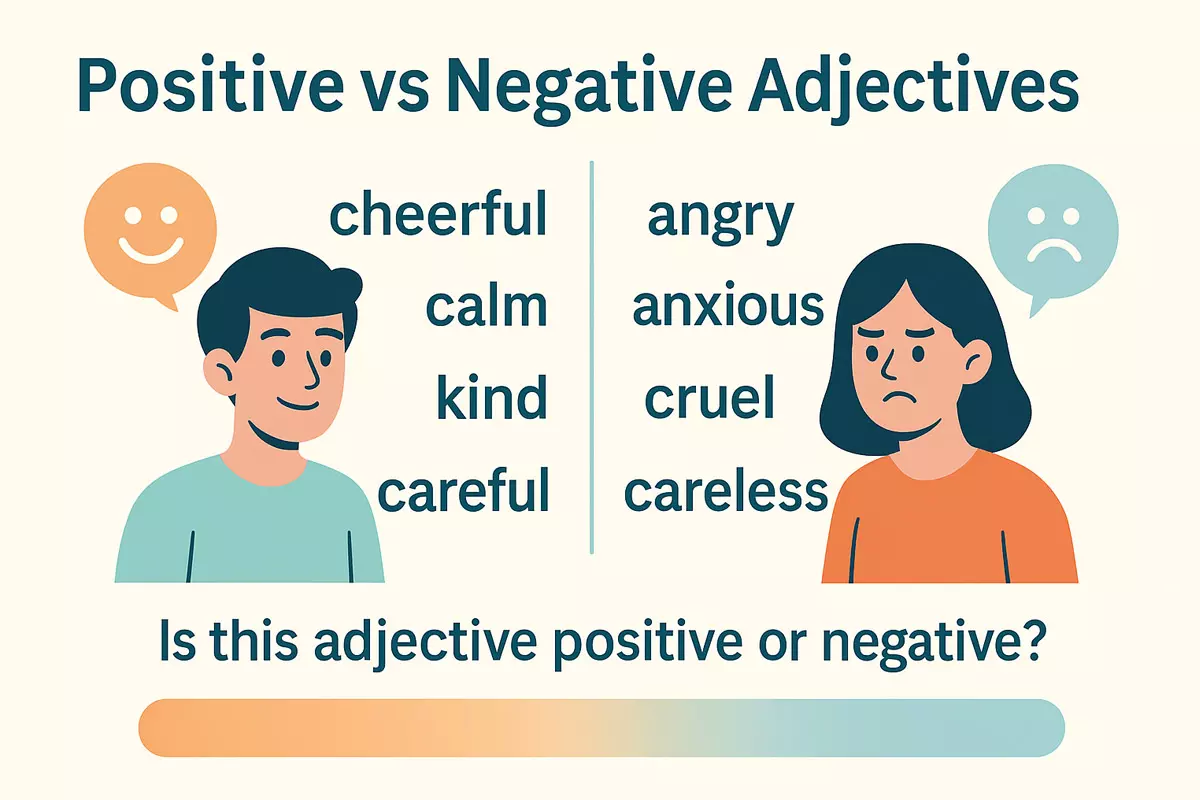 Here we what connotation means in adjectives, compares adjective pairs with similar meanings but different tones, explains polite versus rude word choices, and gives practical tips and exercises for using softer, more neutral adjectives in conversation.
The words we choose, especially when describing people or things, can significantly influence how others perceive them, often in subtle and unexpected ways. Certain descriptive terms may carry positive or negative connotations, even when their literal meanings are similar. This demonstrates how language shapes our impressions and highlights the importance of being mindful about the words we use. Recognizing the power of language allows us to communicate more thoughtfully and avoid unintentionally conveying bias or judgment.
What connotation means in adjectives
When we talk about adjectives, their meaning isn’t just about describing something literally. The emotional or cultural tone—the connotation—adds an extra layer. This is the subtle feeling or association that comes with a word, which can be positive, negative, or neutral. For example, calling someone "slender" versus "skinny" both refer to being thin, but the first is typically flattering, while the second can feel critical.
How connotation influences understanding
Adjectives can shape opinions, set a mood, or even cause misunderstandings. The same fact described with different words can create very different impressions. For instance, describing a meal as "cheap" versus "affordable" changes how readers perceive both the price and the quality. These nuances are especially important in writing, conversation, and media, where word choice can subtly influence attitudes.
Common patterns of connotation in adjectives
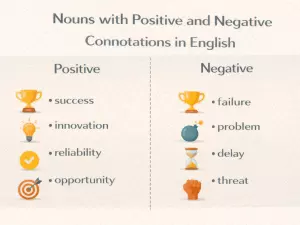
- Positive: friendly, energetic, youthful, passionate, unique
- Negative: aggressive, stubborn, nosy, childish, manipulative
- Neutral: tall, round, blue, metallic, weekly
Comparing adjective connotations
| Adjective (Positive) | Adjective (Negative) | Literal Meaning |
|---|---|---|
| confident | arrogant | Sure of oneself |
| thrifty | stingy | Careful with money |
| curious | nosy | Interested in others |
| determined | stubborn | Persistent |
| slender | skinny | Thin in body shape |
| unique | odd | Unusual |
| assertive | pushy | Forceful in stating views |
| youthful | childish | Like a young person |
| selective | picky | Careful in choosing |
| affordable | cheap | Low in price |
Understanding these shades of meaning helps you communicate more precisely and sensitively. Whether you’re describing people, products, or experiences, paying attention to connotation can make your language more effective and appropriate for the situation.
Pairs with similar meaning but different tone
Understanding how adjectives can convey a positive or negative slant—even when describing the same quality—helps you choose words that better fit your intention. Some words highlight virtues, while others hint at flaws, bias, or criticism, despite their similar definitions. Tone can subtly shift the impression you leave, so being aware of these differences is useful in both writing and conversation.
Examples of contrasting adjective pairs
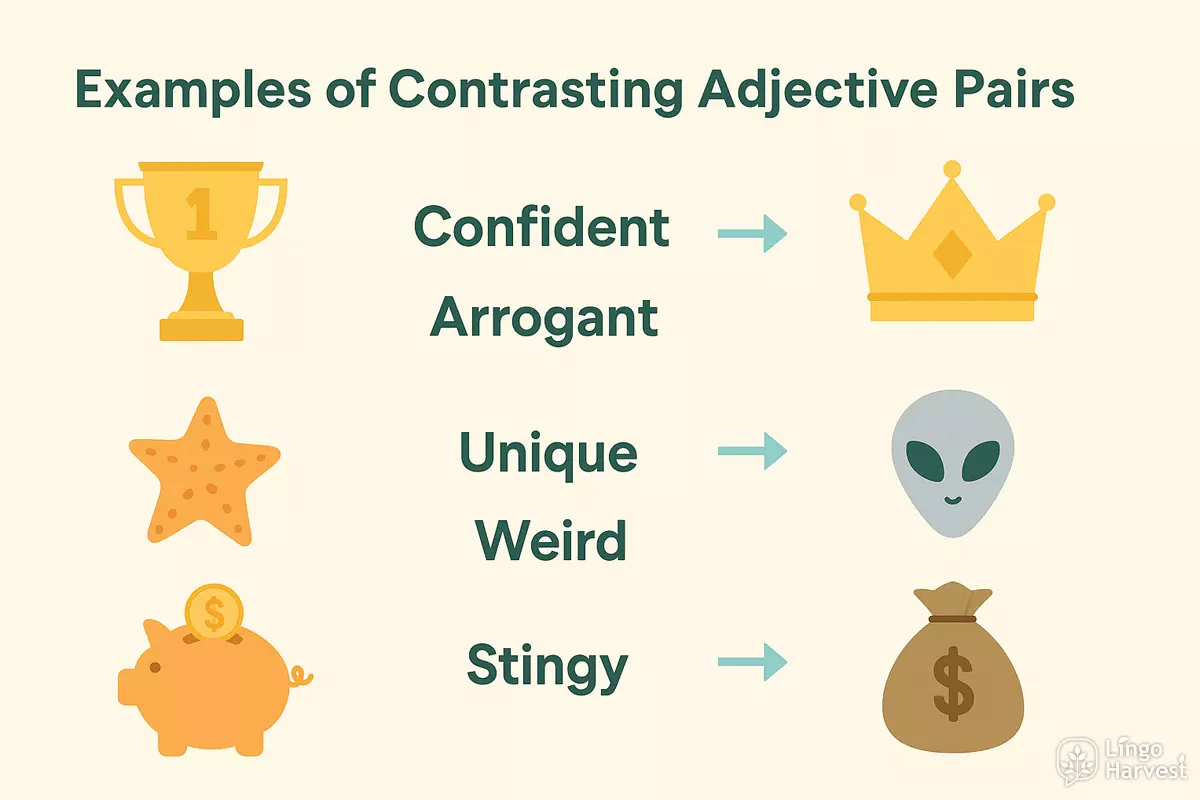
Many adjectives come in pairs where one is more complimentary or neutral, and the other implies disapproval or negativity. Here are several common examples:
- Confident → Arrogant
- Unique → Weird
- Thrifty → Stingy
- Curious → Nosey
- Assertive → Aggressive
- Meticulous → Picky
- Energetic → Hyperactive
- Persistent → Stubborn
- Carefree → Irresponsible
- Childlike → Childish
- Reserved → Withdrawn
- Flexible → Fickle
- Traditional → Old-fashioned
- Bold → Reckless
- Ambitious → Ruthless
- Passionate → Obsessive
- Self-assured → Conceited
- Frugal → Cheap
Comparison table: Positive vs Negative Connotation
| Positive/Neutral Adjective | Negative Adjective | Example Sentence |
|---|---|---|
| Confident | Arrogant | He sounds confident, not arrogant. |
| Curious | Nosey | She is curious about new things, but not nosey. |
| Thrifty | Stingy | He is thrifty with money, not stingy. |
| Ambitious | Ruthless | She is ambitious without being ruthless. |
| Unique | Weird | His style is unique, not weird. |
| Meticulous | Picky | He is meticulous in his work, never picky. |
| Bold | Reckless | Her choices are bold, not reckless. |
| Frugal | Cheap | They are frugal, but not cheap. |
| Childlike | Childish | His excitement is childlike, not childish. |
| Carefree | Irresponsible | She tries to be carefree, not irresponsible. |
Why does tone matter?
Choosing between these adjectives can shape your message and how others perceive it. For example, describing someone as “frugal” sounds practical and wise, while “cheap” suggests negativity. Similarly, “ambitious” can inspire, but “ruthless” implies a lack of ethics. Being mindful of these subtle differences improves both clarity and emotional impact in your communication.
Adjectives that sound polite vs rude
Choosing the right descriptive word can completely change the tone of what you say. Some modifiers come across as respectful or complimentary, while others may unintentionally offend. Often, the difference lies in subtle connotations rather than dictionary definitions. Understanding which words to pick helps you communicate more thoughtfully and avoid misunderstandings.
Polite-sounding vs blunt adjectives
Many adjectives have both a gentle and a more direct (sometimes harsh) alternative. For instance, describing someone as "slim" is generally more tactful than calling them "skinny." The context, relationship, and cultural background also play a role in how these words are received.
Polite-sounding vs Blunt Adjectives
| Polite / Neutral | Blunt / Negative | Example Sentence |
|---|---|---|
| Unique | Weird | His ideas are unique, not weird. |
| Energetic | Hyperactive | The child is energetic, not hyperactive. |
| Inexpensive | Cheap | The meal was inexpensive, not cheap. |
| Thrifty | Stingy | She is thrifty, not stingy. |
| Confident | Arrogant | He sounds confident, not arrogant. |
| Curious | Nosey | She's curious, but not nosey. |
| Talkative | Gossipy | She's talkative, but not gossipy. |
| Youthful | Immature | Her style looks youthful, not immature. |
| Traditional | Old-fashioned | The design is traditional, not old-fashioned. |
| Direct | Blunt | He is direct, not blunt. |
| Assertive | Pushy | She is assertive, not pushy. |
| Dedicated | Obsessed | He is dedicated to his work, not obsessed. |
| Selective | Picky | He is selective about food, not picky. |
| Easygoing | Lazy | He is easygoing, not lazy. |
| Meticulous | Fussy | She is meticulous, not fussy. |
| Passionate | Fanatical | They are passionate fans, not fanatical. |
| Senior | Old | He is a senior member, not just old. |
| Frugal | Miserly | They are frugal, not miserly. |
| Carefree | Irresponsible | She tries to be carefree, not irresponsible. |
| Creative | Unrealistic | His plans are creative, not unrealistic. |
Comparing positive and negative connotations
Sometimes, the difference between sounding courteous or abrasive is just a matter of word choice. Here’s a comparison of some commonly confused descriptive terms:
| Polite/Positive | Rude/Negative |
|---|---|
| Economical | Cheap |
| Curvy | Fat |
| Mature | Old |
| Reserved | Aloof |
| Enthusiastic | Overbearing |
| Diligent | Nitpicky |
| Unique | Odd |
| Ambitious | Ruthless |
| Sincere | Naive |
| Cautious | Paranoid |
Why word choice matters
Selecting adjectives thoughtfully helps maintain respect and clarity. Even well-intentioned remarks can be misinterpreted if the wrong term is used. Paying attention to nuance shows emotional intelligence and can strengthen relationships. If in doubt, opt for words with positive or neutral undertones, especially in sensitive situations.
Choosing softer adjectives in daily talk
Selecting gentler language can make conversations feel more respectful and less confrontational. Instead of using harsh or blunt descriptive words, opting for milder adjectives helps maintain positive interactions, especially in sensitive situations. This approach is particularly useful when giving feedback, discussing mistakes, or describing people’s actions and qualities.
Why word choice matters
Adjectives with strong negative connotations can unintentionally hurt feelings or cause defensiveness. Softer alternatives, on the other hand, let you communicate honestly without sounding overly critical. For example, saying someone is “unreliable” is direct but may feel harsh, while “inconsistent” softens the impact.
Common softer alternatives
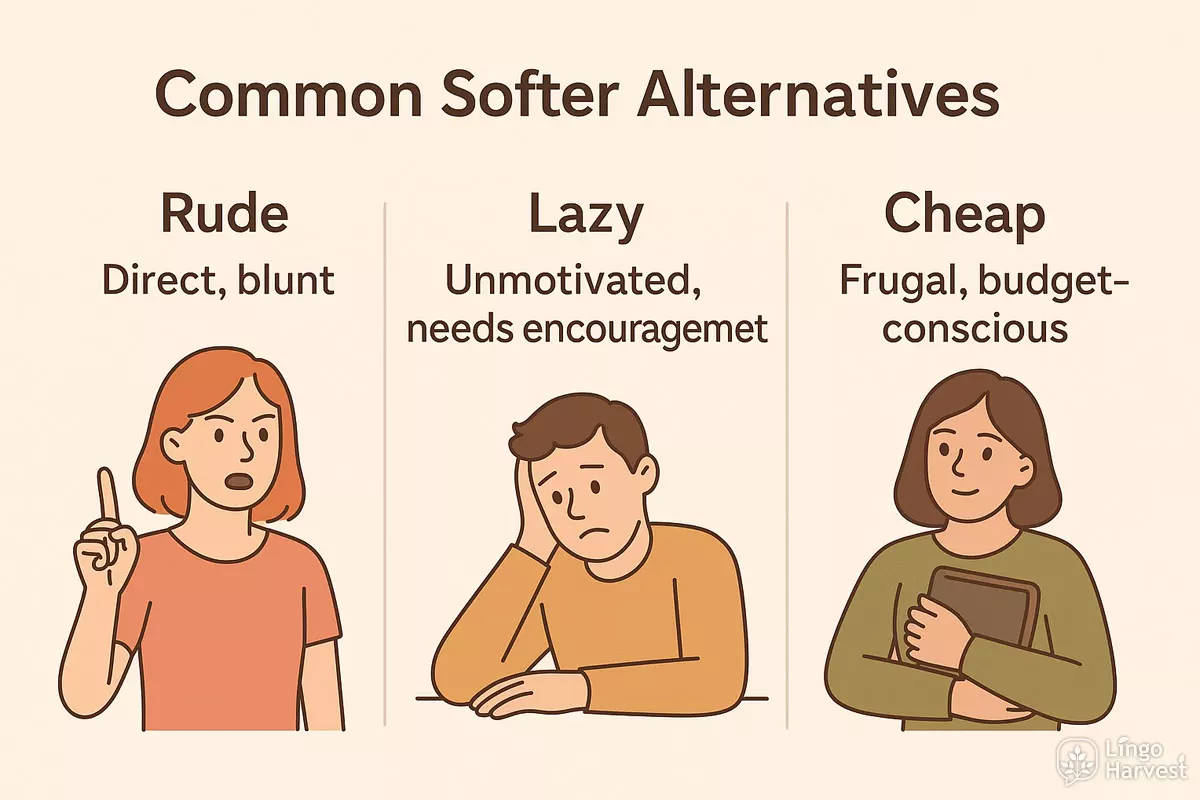
Below are examples of how to replace blunt adjectives with more tactful options:
| Negative / Harsh | Softer Alternative | Example Sentence |
|---|---|---|
| Rude | Direct, blunt | He isn’t rude — he’s just direct. |
| Lazy | Unmotivated, needs encouragement | She’s not lazy; she just needs encouragement. |
| Cheap | Frugal, budget-conscious | He isn’t cheap — he’s budget-conscious. |
| Bossy | Assertive, takes initiative | She’s not bossy; she’s assertive. |
| Stubborn | Persistent, determined | He’s persistent, not stubborn. |
| Noisy | Energetic, lively | The kids aren’t noisy — they’re lively. |
| Old | Senior, experienced | He’s a senior, experienced member of the team. |
| Weird | Unconventional, unique | Her style is unique, not weird. |
| Slow | Careful, thoughtful | He works carefully, not slowly. |
| Weak | Delicate, sensitive | The plant is delicate, not weak. |
| Fat | Full-figured, curvy | She prefers to be called curvy, not fat. |
| Skinny | Slim, lean | He is slim, not skinny. |
| Impulsive | Spontaneous | She’s spontaneous, not impulsive. |
| Clingy | Affectionate | He’s affectionate, not clingy. |
| Critical | Analytical | He is analytical rather than critical. |
| Forgetful | Absent-minded | She’s absent-minded sometimes, not forgetful. |
| Disorganized | Flexible | He’s flexible, not disorganized. |
| Talkative | Communicative | She’s communicative, not talkative. |
| Shy | Reserved | He’s reserved, not shy. |
| Messy | Casual | His style is casual, not messy. |
Tips for using milder adjectives
- Consider your relationship with the listener; adjust your words accordingly.
- Try to focus on behavior or outcomes, not personal traits, when possible.
- If in doubt, choose a word that highlights a positive aspect or neutral quality.
- Remember that tone and context also affect how your words are received.
Being mindful of adjective choice encourages understanding and reduces the risk of misunderstandings or hurt feelings. By practicing with these alternatives, you can make your everyday conversations more considerate and effective.
Avoiding common connotation mistakes
Many English adjectives carry subtle shades of meaning that can lead to misunderstandings if not used with care. Choosing a word with the wrong emotional nuance can unintentionally offend someone, or simply fail to express your intended message. Understanding the emotional coloring of words—how "slim" feels different from "skinny," for instance—helps you communicate more clearly and respectfully.
Common pitfalls when choosing adjectives
- Confusing neutrality with positivity (e.g., "plain" vs. "simple")
- Using words with unintended negative undertones ("cheap" instead of "affordable")
- Assuming synonyms are interchangeable without considering their emotional impact
- Overusing intensifiers that can make adjectives sound harsher or less genuine
- Applying culturally sensitive descriptors without understanding their connotations
Examples of adjectives with contrasting connotations
Here are some pairs where the difference in tone can change a sentence's meaning entirely:
- Confident ✅ / Arrogant ❌
- Unique ✅ / Weird ❌
- Thrifty ✅ / Stingy ❌
- Energetic ✅ / Hyperactive ❌
- Curious ✅ / Nosey ❌
- Bold ✅ / Reckless ❌
- Childlike ✅ / Childish ❌
- Economical ✅ / Cheap ❌
- Slender ✅ / Skinny ❌
- Determined ✅ / Stubborn ❌
- Assertive ✅ / Aggressive ❌
- Meticulous ✅ / Picky ❌
Tips for selecting the right adjective
- Consider the context and your relationship with the listener or reader.
- Think about the underlying emotion the word communicates.
- If unsure, look up example sentences or ask a native speaker for feedback.
- Be aware that some adjectives may have different connotations in various English-speaking cultures.
- When in doubt, opt for more neutral or positive alternatives.
By paying attention to the feelings that adjectives can evoke, you avoid common slips and express yourself with greater precision and sensitivity.
Practice: replace negative-sounding adjectives with neutral ones
Choosing adjectives with a neutral connotation can help you communicate more objectively and avoid unintended offense. Let’s explore how to swap out words that might sound harsh or judgmental for more balanced alternatives. This practice not only softens your tone but also makes your descriptions more precise and professional, especially in academic, business, or everyday settings.
Common Negative Adjectives and Their Neutral Alternatives
Below is a list of adjectives that often carry a negative slant, along with suggestions for neutral replacements. Consider how each neutral word changes the impression:
- Cheap → Inexpensive
- Old → Older / Elderly / Senior
- Lazy → Unmotivated / Unenthusiastic
- Stubborn → Persistent / Determined
- Loud → Vocal / Expressive
- Weird → Unusual / Unique
- Bossy → Directive / Assertive
- Clumsy → Uncoordinated / Awkward
- Skinny → Thin / Slim
- Shy → Reserved / Introverted
- Nosy → Inquisitive / Curious
- Pushy → Persistent / Proactive
- Selfish → Self-focused / Independent
- Messy → Unorganized / Disordered
- Slow → Deliberate / Unhurried
- Weak → Delicate / Vulnerable
- Greedy → Ambitious / Eager
- Critical → Analytical / Discerning
- Forgetful → Distracted / Preoccupied
- Unattractive → Plain / Unassuming
Quick Exercise: Identify and Revise
Try spotting the negative adjective in each sentence and suggest a neutral version. Rewrite the sentence using your chosen word.
- The bossy manager gave everyone orders.
- He is so lazy about his homework.
- The weird painting confused the visitors.
- She’s a nosy neighbor.
- He made a selfish decision.
- The messy desk made it hard to work.
- The stubborn student refused to change his idea.
- The clumsy waiter dropped the tray.
- The cheap jacket fell apart quickly.
- The shy boy avoided speaking in class.
Show answers
- The directive (or assertive) manager gave everyone orders.
- He is so unmotivated (or unenthusiastic) about his homework.
- The unusual (or unique) painting confused the visitors.
- She’s an inquisitive (or curious) neighbor.
- He made a self-focused (or independent) decision.
- The unorganized (or disordered) desk made it hard to work.
- The persistent (or determined) student refused to change his idea.
- The uncoordinated (or awkward) waiter dropped the tray.
- The inexpensive (or budget-friendly) jacket held up well.
- The reserved (or introverted) boy avoided speaking in class.
Why It Matters
Replacing negative-sounding descriptions with neutral ones encourages openness and avoids value judgments. This skill is especially helpful in feedback, reviews, or any situation where tone can influence relationships or outcomes.