Adjectives for Beginners: Describing People and Things

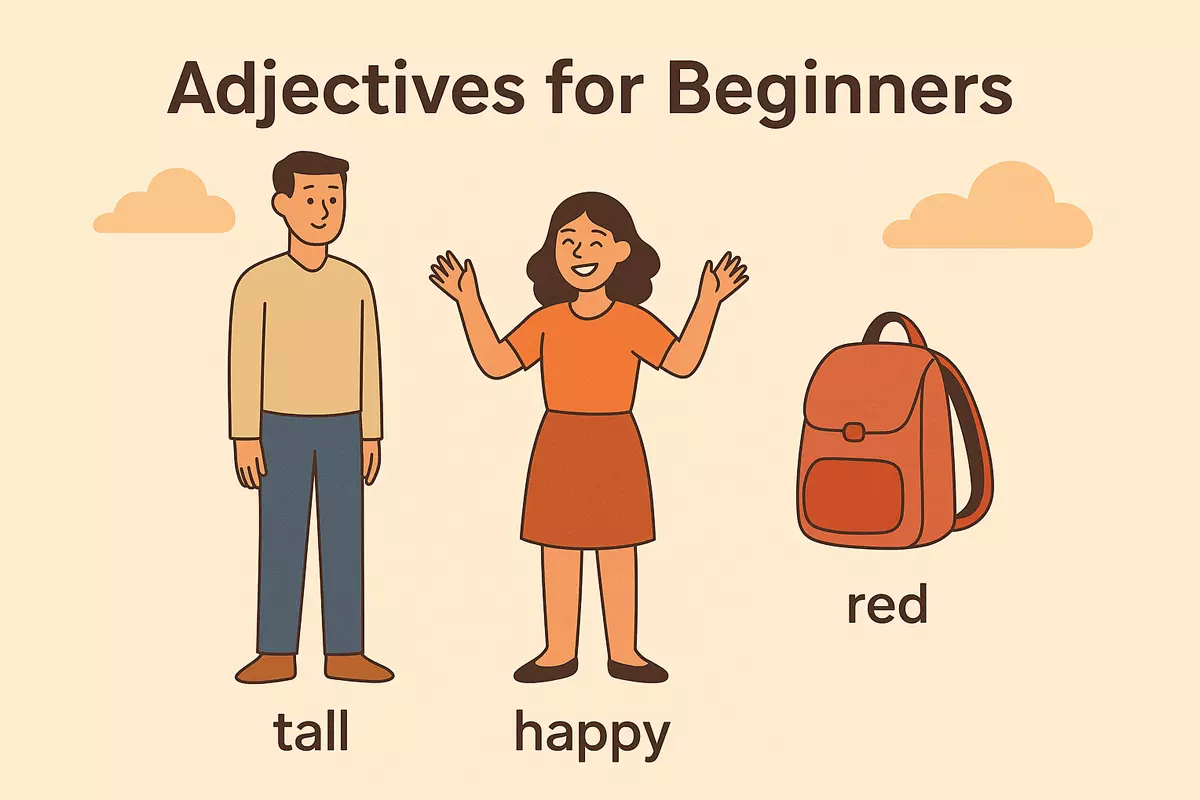 Here we how to use adjectives, including their position before nouns or after be, main types like size, color, and shape, describing people's looks and traits, using intensifiers such as very, and common errors to avoid. It also suggests practical exercises.
If you want to make your English more engaging and expressive, using basic describing words is a great place to start. Adjectives not only add detail but also help paint a clearer picture of people, objects, or situations in your conversations and writing. By choosing the right words, you can convey emotions, highlight important features, and make your communication more vivid and memorable. Expanding your vocabulary with common descriptive terms will improve your ability to express yourself and connect with others more effectively.
What Adjectives Do
Adjectives bring details and color to language. They help us explain what people and things are like by describing qualities, amounts, or states. Instead of just saying “a dog,” you might say “a small brown dog,” adding information that helps the listener or reader form a clearer picture. These descriptive words can talk about size, color, shape, feelings, origin, and more.
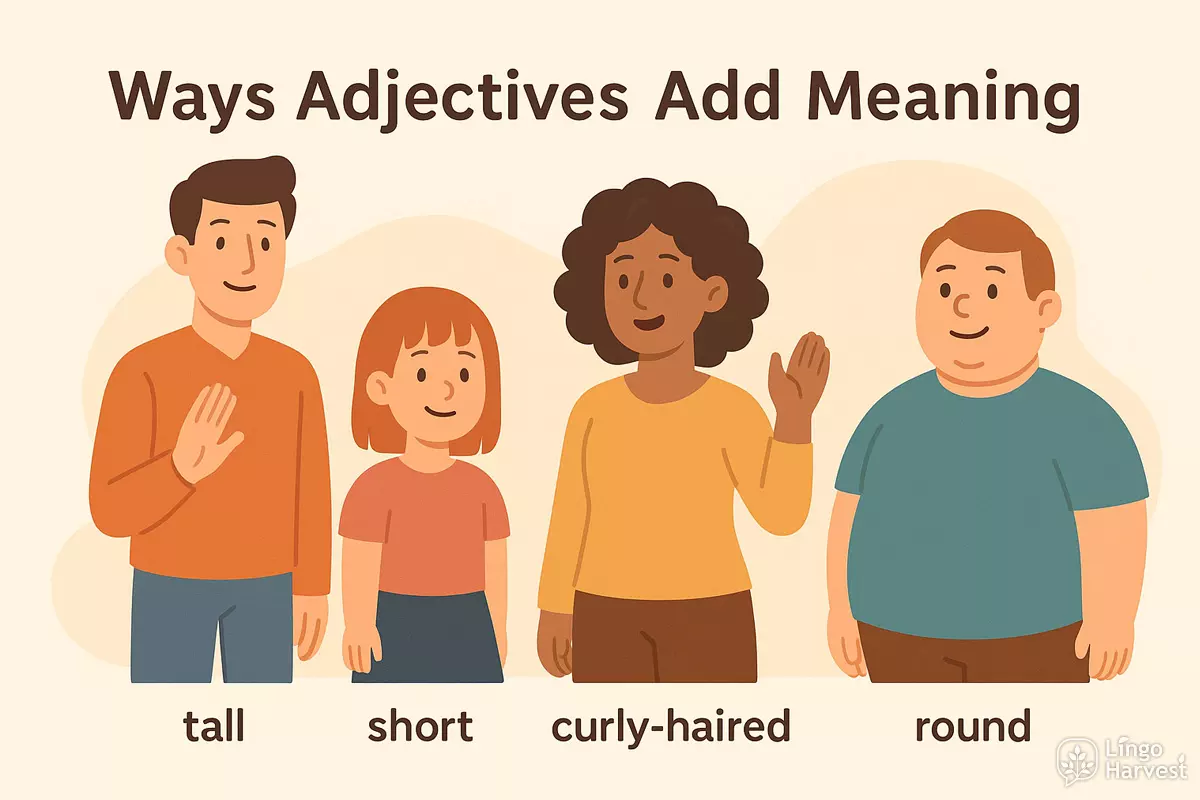
Ways Adjectives Add Meaning
- Describe appearance: tall, short, curly-haired, round
- Express feelings: happy, nervous, tired, excited
- Indicate size: tiny, huge, medium, gigantic
- Show color: red, blue, green, golden
- Suggest age: young, old, ancient, modern
- Identify material: wooden, plastic, metal, cotton
- Show origin: French, American, tropical, rural
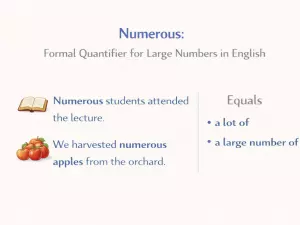
- State quantity: few, several, many, numerous
- Describe shape: square, round, flat, triangular
- Express opinion: beautiful, boring, interesting, terrible
Where Describing Words Appear in Sentences
Most commonly, adjectives come before the noun they describe (“a noisy street”) or after linking verbs (“The street is noisy”). This flexibility allows you to be precise or creative in your descriptions. Some describing words can’t be used before a noun, while others fit naturally in either position.
Comparing Qualities
Describing words are also used for making comparisons between people or things. Here are some typical forms:
| Type | Example |
|---|---|
| Basic | fast |
| Comparative | faster |
| Superlative | fastest |
| Irregular | good → better → best |
Summary
By using a variety of adjectives, your communication becomes richer and more precise. These words help listeners and readers imagine exactly what you mean, whether you’re describing people, places, objects, or ideas.
Position: Before Nouns and After Be
Adjectives in English usually appear right before the nouns they describe. This is the most common placement, and it helps listeners or readers quickly understand what kind of person or thing is being discussed. For example, in the phrase “a red apple,” the word “red” comes directly before the noun “apple” to show its color. Another typical position for adjectives is after the verb “be” (am, is, are, was, were). In this case, adjectives give more information about the subject. For instance, in “The apple is red,” the adjective “red” follows the verb “is” and describes the apple.
Adjectives Before Nouns
Placing adjectives in front of nouns helps specify or clarify which item you mean. Here are some common examples:
- a tall man
- an old book
- blue jeans
- delicious food
- a new car
- cold water
- happy children
- a fast train
- big ideas
- a quiet street
- small animals
- a friendly dog
Adjectives After "Be"
When using adjectives after forms of “be,” they describe the subject rather than directly modifying a noun:
- The man is tall.
- The book is old.
- These jeans are blue.
- The food is delicious.
- Her car is new.
- The water is cold.
- The children are happy.
- This train is fast.
- The idea is big.
- The street is quiet.
- The animals are small.
- The dog is friendly.
Comparison Table: Before Noun vs. After "Be"
| Adjective Before Noun | Adjective After "Be" |
|---|---|
| a smart student | The student is smart. |
| a noisy classroom | The classroom is noisy. |
| an expensive phone | The phone is expensive. |
| a clean room | The room is clean. |
| a strong coffee | The coffee is strong. |
| a difficult question | The question is difficult. |
Quick Tips
- Most adjectives go before the noun: a beautiful day.
- After “be,” adjectives describe the subject: The day is beautiful.
- Remember, some adjectives (like “afraid” or “asleep”) are almost always used after “be.”
- Do not add “-s” to adjectives, even with plural nouns: happy children (not “happys children”).
Learning where to place describing words will help your English sound natural and clear. Practice by making your own sentences using both patterns.
Useful Categories: Size, Color, Shape
When learning how to describe people or objects, it helps to start with clear, concrete qualities. Three especially common ways to talk about what something is like are by mentioning how big it is, what color it is, and what shape it has. These features are easy to observe and use, making them perfect for beginners who want to practice using descriptive words in English.
Describing Size
Talking about size means saying how large or small something is. This can refer to height, length, width, or overall scale. Here are some useful adjectives for size:
- big
- small
- tall
- short
- huge
- tiny
- long
- wide
- narrow
- thick
- thin
You might say, "The tall boy is playing," or "She has a tiny cat."
Talking About Color
Color words help identify and describe things quickly. They are simple, but very useful for everyday conversation. Here are some basic color adjectives:
- red
- blue
- green
- yellow
- black
- white
- brown
- orange
- pink
- gray
- purple
Example: "She is wearing a blue dress." or "The dog has black fur."
Describing Shape
Shape words tell us about the outline or form of someone or something. These adjectives make your descriptions more precise:
- round
- square
- rectangular
- triangular
- flat
- curved
- straight
- pointed
- oval
- circular
- thin
- thick
For instance, "The table is rectangular," or "He has a round face."
Combining Adjectives
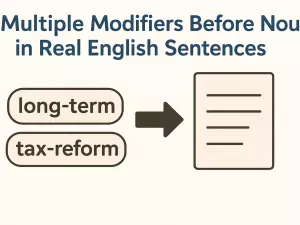
When you want to be more specific, you can use several adjectives together. The usual order is: size, then color, then shape, then the noun. For example: "a small green square box" or "a big blue round balloon."
| Adjective Type | Examples |
|---|---|
| Size | big, small, tall, tiny, large, short |
| Color | red, blue, green, yellow, black, white |
| Shape | round, square, oval, rectangular, flat, pointed |
Learning to use these categories makes your English more clear and descriptive. Try practicing by looking around and saying what you see, using different words for size, color, and shape.
Describing People: Looks and Traits
When talking about people, adjectives help us paint a clear picture by describing both physical appearance and personality. Using the right words makes your descriptions more interesting and precise.
Physical Appearance
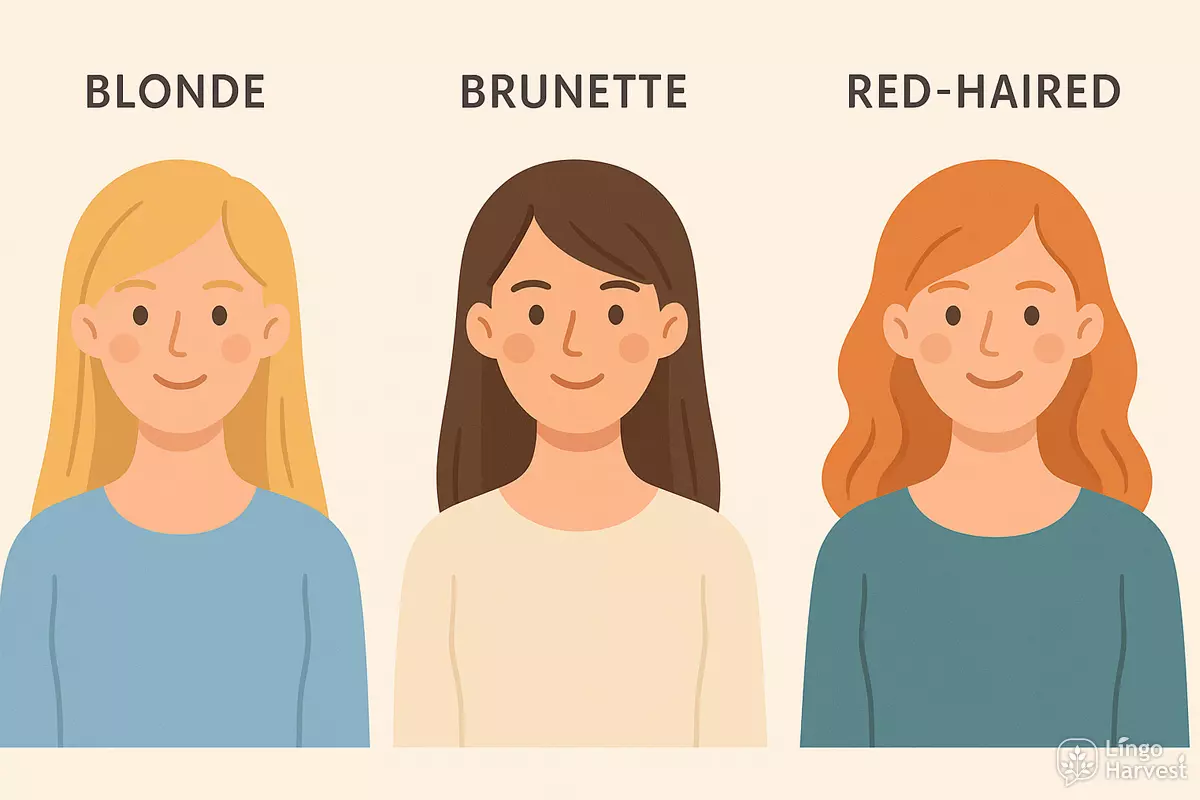
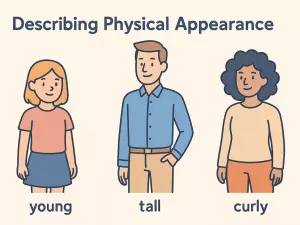
To talk about how someone looks, you can use adjectives for height, build, hair, eyes, and more. Here are some useful words:
- Tall / Short
- Thin / Chubby / Plump
- Young / Old
- Blonde / Brunette / Red-haired
- Curly-haired / Straight-haired
- Blue-eyed / Brown-eyed
- Handsome / Pretty / Attractive
- Bearded / Clean-shaven
- Freckled / Pale / Tanned
These words help you describe someone’s looks in detail. For example: “She is tall and slender with curly brown hair,” or “He has a short beard and blue eyes.”
Personality Traits
Adjectives for personality let you express what a person is like on the inside. Some common examples include:
- Friendly / Polite / Kind
- Funny / Serious
- Talkative / Quiet
- Hardworking / Lazy
- Generous / Selfish
- Brave / Shy
- Honest / Cheerful
- Calm / Moody
- Creative / Intelligent
These terms are useful for giving more information about a person’s character. For instance: “My teacher is very patient and creative,” or “He can be moody but is usually cheerful.”
Comparing Looks and Personality
Sometimes, you want to compare people using adjectives. Here is a helpful table showing basic comparative forms:
| Adjective | Comparative | Example |
|---|---|---|
| Tall | Taller | Lisa is taller than Anna. |
| Funny | Funnier | Ben is funnier than Max. |
| Kind | Kinder | Sara is kinder than Tom. |
| Intelligent | More intelligent | David is more intelligent than John. |
| Old | Older | My brother is older than me. |
Using adjectives for both looks and traits will help you describe people accurately and naturally. Try combining different words to give a fuller picture of someone in your conversations or writing.
Using Very, Really, Quite
When you want to make adjectives stronger or softer, words like "very," "really," and "quite" are helpful. These adverbs change the strength of a description, giving you more ways to express how you feel about people and things.
How Do These Words Change Meaning?
All three words add emphasis, but each one feels a bit different. "Very" makes adjectives stronger and more formal. "Really" is also strong, but it sounds a bit more casual and friendly. "Quite" can make an adjective a little stronger or, in some cases, a bit softer, depending on where you are (for example, in British or American English).
Common Patterns
You usually put these adverbs before adjectives:
- She is very smart.
- This book is really interesting.
- The movie was quite funny.
Examples of Use
Here are some example sentences to show the differences:
- very tall → He is very tall.
- really tired → They are really tired after work.
- quite easy → The test was quite easy.
- very old → This building is very old.
- really helpful → Your advice was really helpful.
- quite delicious → The soup was quite delicious.
- very expensive → That phone is very expensive.
- really friendly → The staff are really friendly.
- quite small → Their apartment is quite small.
- very cold → It’s very cold today.
- really easy → This exercise is really easy.
- quite busy → The restaurant is quite busy tonight.
Comparing Strength
| Adverb | Effect on the Adjective |
|---|---|
| Very | Makes the adjective much stronger (e.g., very interesting = much more interesting than just "interesting") |
| Really | Also makes the adjective stronger, but is a bit more informal and emotional than "very" |
| Quite | Can make the adjective a little stronger or sometimes softer, depending on context and region (e.g., "quite nice" can mean "pretty nice" or "very nice") |
Tips for Beginners
- Use "very" with almost any adjective.
- "Really" works with both positive and negative adjectives, and sounds friendly.
- "Quite" can be tricky: in American English, it often means "a little," but in British English, it can mean "very."
- Don’t use these words with extreme adjectives (for example, avoid "very excellent" or "really perfect").
Learning how to use these modifiers will help you express your thoughts more clearly and add variety to your descriptions. Practice with different adjectives to get comfortable with the shades of meaning they create.
Common Mistakes to Avoid
Learning how to describe people and things with the right words is easier when you know which pitfalls to watch for. Many beginners run into trouble with word order, confusing similar terms, or using the wrong form. Let’s break down some of the most frequent errors so you can steer clear of them in your own sentences.
Mixing Up Word Order
In English, adjectives usually come before the noun. For example, we say “a tall man” (not “a man tall”). This is different from some other languages, so it’s easy to get mixed up. Remember this basic structure to make your descriptions sound natural.
Using Too Many Adjectives Together
While it’s tempting to pile on lots of descriptive words, using too many can make your sentence confusing. Usually, one or two adjectives are enough. If you use several, there’s even a preferred order: opinion, size, age, shape, color, origin, material, purpose, then noun (e.g. “a beautiful small old round red Italian wooden coffee table”).
Confusing Similar Descriptive Words
Some words seem close in meaning but aren’t always interchangeable. Here’s a quick guide to avoid mixing them up:
| Incorrect Use | Correct Example & Explanation |
|---|---|
| He is interesting in music. | He is interested in music. “Interested” describes a person’s feelings; “interesting” describes something that makes people interested. |
| She is a funny girl (when you mean pleasant). | She is a fun girl. “Funny” means amusing or makes you laugh. “Fun” means enjoyable. |
| This is a big problem (when you mean important). | This is a serious problem. Use “big” for size, “serious” for importance. |
| It’s a hard rain (when you mean heavy). | It’s a heavy rain. “Heavy rain” is correct, not “hard rain”. |
Forgetting Comparative and Superlative Forms
When comparing people or objects, use the correct form: “-er” or “more” for comparisons, “-est” or “most” for the highest degree. For example:
- tall → taller → tallest
- beautiful → more beautiful → most beautiful
- good → better → best
Overusing “Very” or Other Intensifiers
Beginners often add “very” to every adjective, but English has richer ways to express intensity. Try “extremely,” “quite,” or “really,” or choose a more precise word (for example, “enormous” instead of “very big”).
Relying on Vague Words
Words like “nice,” “good,” or “bad” don’t give much detail. Whenever possible, use more specific adjectives: “friendly,” “delicious,” “difficult,” “expensive,” “comfortable,” etc.
Summary List: Mistakes to Watch For
- Putting adjectives after the noun (a house big ❌)
- Using “funny” instead of “fun”
- Mixing up “interested” and “interesting”
- Forgetting to change adjectives for comparisons
- Using “very” too often
- Choosing vague adjectives (“nice,” “good”) too much
- Using adjectives that don’t fit the noun (“a delicious car” ❌)
- Wrong order with multiple adjectives
- Not matching the adjective to the noun (singular/plural agreement isn’t needed in English, unlike some languages)
- Using adjectives where adverbs are needed (“He runs quick” ❌ should be “He runs quickly”)
Keep an eye out for these typical errors, and your descriptions will become much clearer and more natural.
Practice: Describe Photos or Class Items
Looking at images or objects in the classroom is a great way to build your vocabulary and confidence using adjectives. Start by choosing a photo, a book, a chair, or any visible item nearby. Focus on describing what you see by mentioning appearance, size, color, shape, and other qualities. This practical approach helps you use new words in real situations.
Useful Adjectives for Describing Objects
- big
- small
- long
- short
- round
- square
- old
- new
- clean
- dirty
- soft
- hard
- bright
- dark
- colorful
- plain
- heavy
- light
- smooth
- rough
Describing People in Photos
When looking at pictures of people, try to notice features such as hair color, age, clothing, and mood. Here are some sentence patterns you can use:
- The woman is wearing a red dress.
- He looks happy and friendly.
- The boy has short, dark hair.
- They are young and energetic.
- She is tall and slim.
Practice Task: Describe These Items
Choose three objects or people around you. Write one sentence for each, using at least two adjectives. For example:
- This is a big, green plant.
- The old, wooden chair looks comfortable.
- My friend has a happy, smiling face.
Comparing Items
Sometimes, you may want to compare two or more things. Here’s a structured way to practice using comparative adjectives:
| Item | Adjectives & Comparison |
|---|---|
| Book | thicker, heavier |
| Pencil | shorter, lighter |
| Bag | bigger, brighter |
| Ruler | longer, harder |
Try making sentences like: "The bag is bigger than the book," or "The ruler is longer than the pencil."
Mini Quiz: Adjective Practice
- Describe your favorite classroom object with two adjectives.
- Look at a photo of people. Write one sentence about their appearance.
- Choose two items and compare them using a comparative adjective.
Show answers
- Example: My notebook is blue and thin.
- Example: The girl has long, blonde hair.
- Example: The chair is smaller than the desk.