Mixed Adjective Practice: Spot the Error

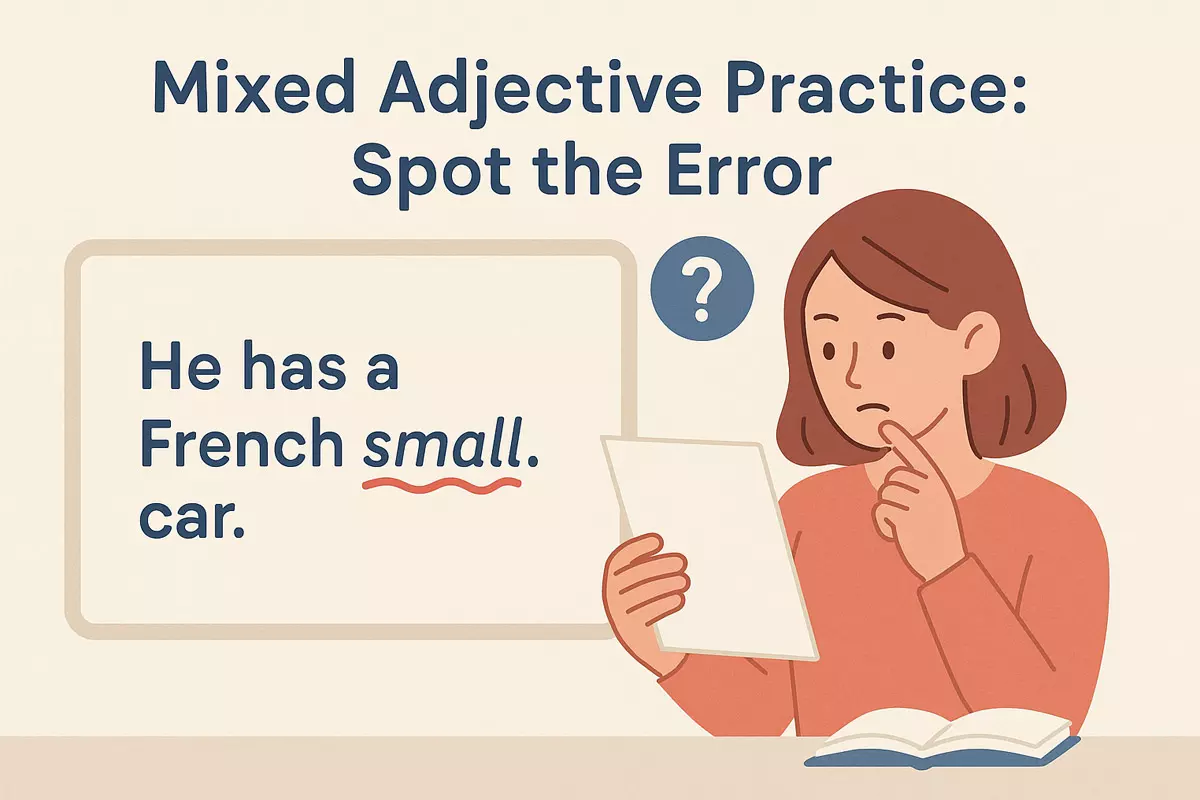 This article reviews essential adjective rules, highlights typical beginner mistakes, and provides error-spotting sentences. It includes an answer key with explanations, strategies for self-checking, and extra sentences for additional practice.
Are you able to spot mistakes when different types of descriptive words are used together in a sentence? Strengthening your grammar skills involves paying close attention to how various modifiers—such as adjectives and adverbs—interact within a sentence. Sometimes, using multiple modifiers can create confusion or lead to awkward phrasing. By practicing the identification of these errors, you can improve your ability to write clear and effective sentences. Challenge yourself to review sentences that use a mix of modifiers and see if you can find any slip-ups or inconsistencies.
Quick review of key adjective rules
Adjectives help us describe nouns by giving more information about their qualities, quantity, or state. To use them accurately, it’s important to understand their basic patterns, placement, and forms. Here, you’ll find a concise summary of the core principles that guide correct adjective usage in English.
Placement and Order
Adjectives usually come before the noun they describe (e.g., a red apple). When more than one appears together, there is a typical order:
- Quantity or number: two, many
- Opinion: beautiful, awful
- Size: small, giant
- Age: old, new
- Shape: round, flat
- Color: blue, dark
- Origin: French, ancient
- Material: wooden, plastic
- Purpose: sleeping (as in sleeping bag)
Example: three beautiful old Italian wooden chairs.
Comparative and Superlative Forms
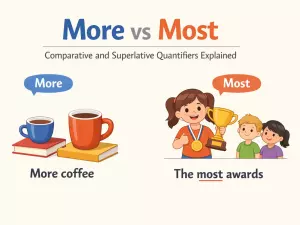
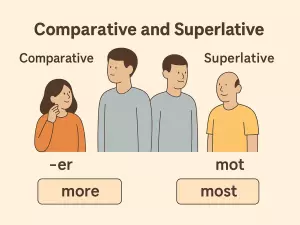
Adjectives change form to compare. Short adjectives typically add -er or -est; longer ones use more or most:
| Base Form | Comparative | Superlative |
|---|---|---|
| small | smaller | smallest |
| happy | happier | happiest |
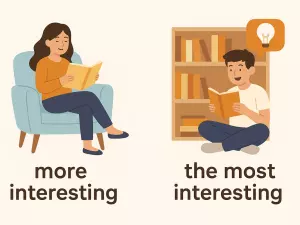
| interesting | more interesting | most interesting |
| good | better | best |
| bad | worse | worst |
| fast | faster | fastest |
| big | bigger | biggest |
| early | earlier | earliest |
| careful | more careful | most careful |
| exciting | more exciting | most exciting |
| young | younger | youngest |
| old | older | oldest |
| busy | busier | busiest |
| comfortable | more comfortable | most comfortable |
| simple | simpler | simplest |
Common Mistakes to Avoid
- Don’t use double comparatives or superlatives: write more beautiful (not more beautifuller).
- Be sure adjectives agree in form: an interesting idea, not a interest idea.
- Don’t use adjectives after linking verbs incorrectly: say The food tastes delicious, not The food tastes deliciously.
- Distinguish between adjectives and adverbs: She is quick (adjective), She runs quickly (adverb).
Practice: Spot the Error
Read each sentence and identify the adjective mistake.
- This is the most quickest route.
- He bought a leather black jacket.
- She is more happier now.
- The soup tastes wonderfully.
- It was an interested movie.
Show answers
- Incorrect double superlative: should be the quickest route or the most quick route (but "quickest" is preferred).
- Incorrect adjective order: should be a black leather jacket.
- Double comparative: should be happier now or more happy (but "happier" is preferred).
- Adjective/adverb confusion: should be tastes wonderful.
- Wrong adjective form: should be an interesting movie.
Mastering adjective patterns makes your writing and speech clearer and more precise. Keep these guidelines in mind to spot and fix common errors quickly.
Typical beginner errors with adjectives
New learners often stumble over describing nouns correctly in English. Many mistakes come from confusion over adjective order, incorrect forms, or using the wrong words altogether. Understanding where things go wrong can help you improve your accuracy and sound more natural when speaking or writing.
Common adjective mistakes
- Placing adjectives after the noun they describe (e.g. "a car red" instead of "a red car")
- Using comparative or superlative forms incorrectly (e.g. "more better" instead of "better")
- Mixing up adjectives and adverbs ("She runs quick" instead of "She runs quickly")
- Forgetting to use adjectives for quantity or opinion ("She has cat" instead of "She has a cute cat")
- Using double negatives with adjectives ("not unhappy" when "happy" is meant)
- Incorrect adjective order ("a leather brown big bag" instead of "a big brown leather bag")
- Confusing stative and dynamic adjectives ("He is boring" vs. "He is bored")
- Using ungradable adjectives with modifiers ("very unique" instead of just "unique")
- Adding -ed or -ing forms incorrectly ("interested book" instead of "interesting book")
- Not matching adjectives to the noun’s number ("an informations" instead of "some information")
- Direct translation from native language patterns ("the house white" instead of "the white house")
- Overusing adjectives, making sentences unnatural ("a beautiful nice amazing lovely dress")
- Confusing words that look similar but differ in meaning ("historic" vs. "historical")
Examples of confusing adjective pairs
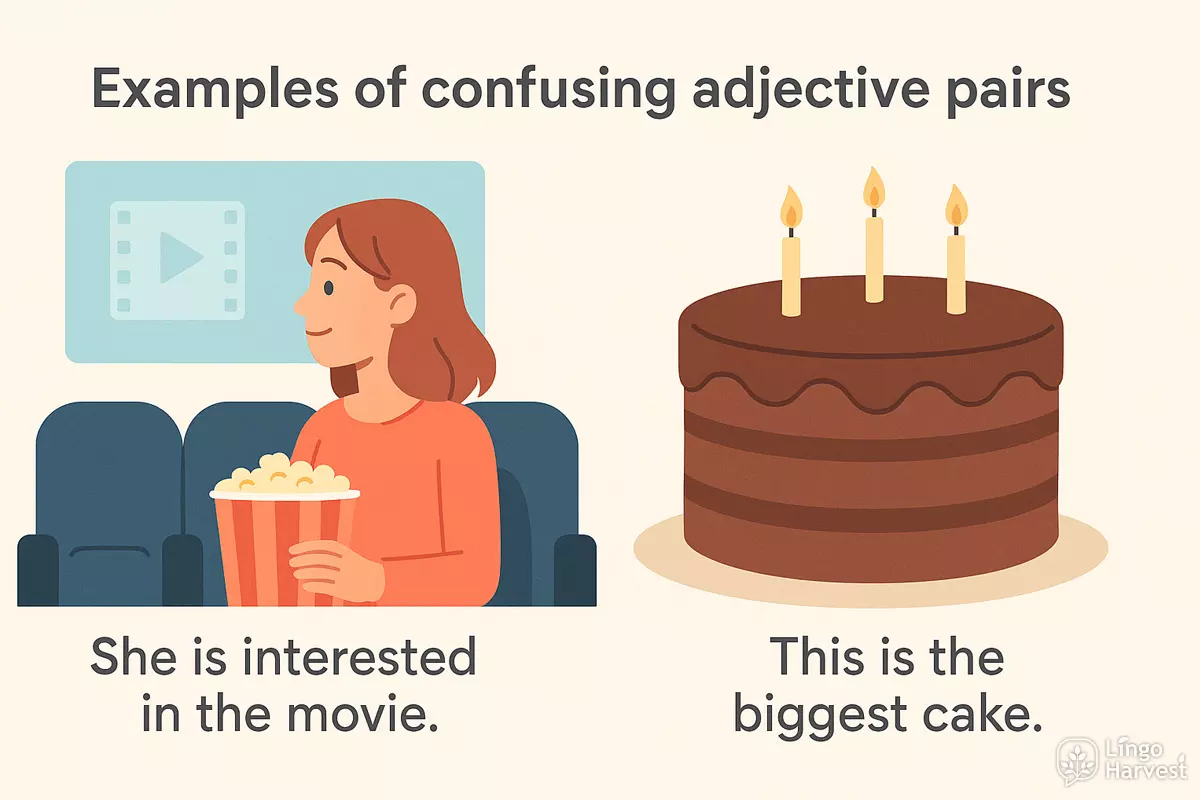
| Incorrect Usage | Correct Usage |
|---|---|
| She is interested movie. | She is interested in the movie. It is an interesting movie. |
| This is the most biggest cake. | This is the biggest cake. |
| He is more taller than me. | He is taller than me. |
| She wore a dress red. | She wore a red dress. |
| This is a very unique idea. | This is a unique idea. |
Tips to avoid mistakes
- Remember that adjectives almost always come before the noun in English.
- Practice the correct order: opinion, size, age, shape, color, origin, material, purpose.
- Use “-ed” adjectives for feelings, “-ing” adjectives for things that cause feelings.
- Don’t double up comparatives or superlatives.
- Be careful with words that don’t take “very” or “more” (e.g. "perfect," "unique").
By focusing on these typical missteps, you can steadily improve your use of adjectives and express yourself more clearly in English.
Error-spotting sentences with one mistake each
Practicing with sentences that each contain a single adjective-related error is a practical way to sharpen your grammar skills. The goal is to identify the mistake, correct it, and understand why the change is needed. This activity covers comparatives, superlatives, order of adjectives, and irregular forms. Read each example, spot the incorrect adjective usage, and try to rewrite the sentence correctly.
Find and Fix: Sentences with Adjective Errors
- She is the most smartest student in the class.
- This is a more better solution than yours.
- He wore a blue beautiful shirt to the party.
- My house is more bigger than yours.
- That was the baddest movie I've ever seen.
- We visited the most old museum in the city.
- Of the twins, Tom is elder than Jim.
- I have a red small car.
- She is more cleverer than her brother.
- This is the less interesting book on the shelf.
- It was the most funniest show last night.
- His explanation was much clear than mine.
- He’s the bestest player in the team.
- This exercise is the difficultest of all.
- She bought a woolen beautiful scarf.
- The weather today is more colder than yesterday.
- She is the most youngest in her group.
- That is the least cheapest restaurant nearby.
Quick Reference: Common Adjective Mistakes and Corrections
| Incorrect Sentence | Corrected Version |
|---|---|
| She is the most smartest student in the class. | She is the smartest student in the class. |
| My house is more bigger than yours. | My house is bigger than yours. |
| He wore a blue beautiful shirt to the party. | He wore a beautiful blue shirt to the party. |
| This is a more better solution than yours. | This is a better solution than yours. |
| That was the baddest movie I've ever seen. | That was the worst movie I've ever seen. |
| We visited the most old museum in the city. | We visited the oldest museum in the city. |
| Of the twins, Tom is elder than Jim. | Of the twins, Tom is older than Jim. |
| I have a red small car. | I have a small red car. |
Reviewing these examples can help solidify your understanding of how adjectives should be used and ordered in English. Focus on patterns, such as avoiding double comparatives, placing adjectives in the right sequence, and using irregular forms correctly. Regular practice with such error-spotting exercises will make your written and spoken English more natural and accurate.
Strategies for checking your own writing
Reviewing your own work for adjective errors requires a focused approach. Start by reading your sentences slowly, paying close attention to how descriptive words interact with the nouns they modify. Ask yourself if each adjective is necessary, if it fits the noun, and if its form is correct (e.g., comparative, superlative, order).
Step-by-step review process
- Read aloud: Hearing your sentences can help you spot awkward adjective placements or missing words.
- Underline adjectives: Physically marking adjectives lets you examine each one for accuracy and appropriateness.
- Check adjective order: English has a specific order for multiple adjectives (opinion, size, age, shape, color, origin, material, purpose). Rearranging them incorrectly can make sentences sound unnatural.
- Look for agreement: Make sure adjectives agree with the nouns they describe, especially in number and meaning.
- Compare with models: Refer to sample sentences or trusted grammar sources to verify unfamiliar adjective patterns.
Common adjective error types to watch for
- Using comparatives or superlatives incorrectly (e.g., more better instead of better)
- Misplacing adjectives in the sentence (e.g., a red beautiful car instead of a beautiful red car)
- Mixing up adjectives and adverbs (e.g., She sings beautiful instead of She sings beautifully)
- Using adjectives with uncountable nouns incorrectly (e.g., many information instead of much information)
- Forgetting to use "more" or "most" with longer adjectives (e.g., importanter instead of more important)
- Repeating similar adjectives unnecessarily (e.g., tiny small)
- Choosing the wrong adjective for the context (e.g., historic vs. historical)
- Using absolute adjectives in comparative forms (e.g., more perfect)
- Omitting linking verbs when needed (e.g., The cake delicious instead of The cake is delicious)
- Confusing adjectives with participles (e.g., interested vs. interesting)
Quick self-check: Adjective order
| Type | Example |
|---|---|
| Opinion | beautiful, ugly, lovely |
| Size | large, tiny, huge |
| Age | old, young, new |
| Shape | round, square, flat |
| Color | red, blue, green |
| Origin | French, American, Asian |
| Material | wooden, plastic, cotton |
| Purpose | sleeping (as in "sleeping bag"), running (as in "running shoes") |
Final tips
Take breaks before proofreading so you can see your writing with fresh eyes. Consider reading your work backwards, sentence by sentence, to focus on structure rather than meaning. If you’re unsure about an adjective, try replacing it or removing it to see if the sentence still works. Over time, these habits will make spotting and correcting adjective errors much easier.
Answer key with short explanations
Below you'll find guidance for each mixed adjective sentence, highlighting the error and providing a brief reason. This should help you better understand how adjectives function and how to avoid common mistakes in the future.
Common Adjective Errors and Corrections
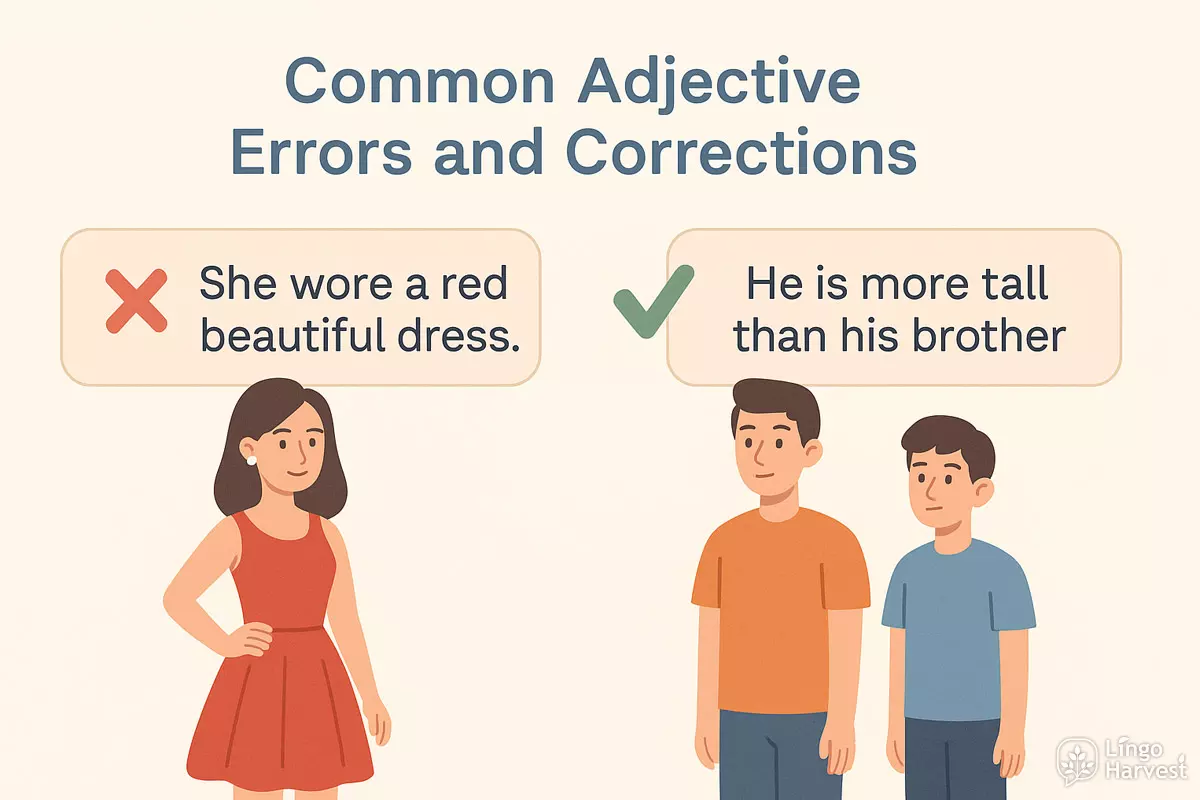
- Incorrect: She wore a red beautiful dress. ❌
Correct: She wore a beautiful red dress. ✅
Explanation: The correct adjective order in English is opinion before color ("beautiful" before "red"). - Incorrect: He is more tall than his brother. ❌
Correct: He is taller than his brother. ✅
Explanation: Use the comparative form "taller," not "more tall," for one-syllable adjectives. - Incorrect: This is the most quickest route. ❌
Correct: This is the quickest route. ✅
Explanation: Do not use both "most" and "-est"; only one is needed for the superlative. - Incorrect: She has a hair brown long. ❌
Correct: She has long brown hair. ✅
Explanation: Adjectives should follow the correct order: length before color. - Incorrect: It was an interested movie. ❌
Correct: It was an interesting movie. ✅
Explanation: Use "interesting" for things that cause interest, "interested" for people who feel interest. - Incorrect: My sister is elder than me. ❌
Correct: My sister is older than me. ✅
Explanation: Use "elder" only before nouns ("my elder sister"), not in comparisons; use "older" with "than." - Incorrect: That’s the more important point. ❌
Correct: That’s the most important point. ✅
Explanation: Use "most" for the superlative form, not "more." - Incorrect: She is a very much talented artist. ❌
Correct: She is a very talented artist. ✅
Explanation: "Very much" is not used before adjectives; use "very." - Incorrect: I have any good news. ❌
Correct: I have some good news. ✅
Explanation: "Any" is generally used in questions/negatives, not positive statements. - Incorrect: He is the bestest player on the team. ❌
Correct: He is the best player on the team. ✅
Explanation: "Bestest" is not a valid word; use "best" for the superlative.
Extra sentences for self-practice
To reinforce your understanding of how different adjectives function and where mistakes often occur, try working through the following sentences. These prompts include a mix of common errors with descriptive, limiting, and compound adjectives. Some sentences may have more than one issue; read carefully before deciding.
Identify and correct the adjective errors
- She wore a red beautiful dress to the party.
- This is the most unique painting in the gallery.
- We had a delicious French three-course meal last night.
- He bought a wooden old table for his kitchen.
- The weather was more colder yesterday than today.
- My friend has a hair long brown.
- It was a quite interesting movie, but a little slow.
- There are less cars on the road at night.
- She is the eldest of the two sisters.
- He gave me some advices on how to improve my writing.
- The soup tasted unusually salty.
- Did you see that huge, black, angry dog in the yard?
- She is more kinder than her brother.
- We visited an ancient beautiful city in Italy.
- I need a information about the ticket prices.
Show answers
- She wore a beautiful red dress to the party. (Order of adjectives: opinion before color)
- This is the most unusual painting in the gallery. (“Unique” is absolute; use “unusual” or “most unusual” instead)
- We had a three-course delicious French meal last night. (Order: number, opinion, origin, noun)
- He bought an old wooden table for his kitchen. (Order: age before material)
- The weather was colder yesterday than today. (“More colder” is incorrect; use “colder”)
- My friend has long brown hair. (Adjective order and noun placement)
- It was quite an interesting movie, but a little slow. (“Quite” modifies “an interesting movie”)
- There are fewer cars on the road at night. (“Fewer” for countable nouns)
- She is the older of the two sisters. (“Eldest” is for family with three or more people)
- He gave me some advice on how to improve my writing. (“Advice” is uncountable)
- The soup tasted unusually salty. (Correct as is; included as a control)
- Did you see that huge, angry, black dog in the yard? (Order: size, opinion, color, noun)
- She is kinder than her brother. (“More kinder” is incorrect)
- We visited a beautiful ancient city in Italy. (Order: opinion before age)
- I need information about the ticket prices. (“Information” is uncountable; remove “a”)
Adjective order and types: quick comparison
When using multiple adjectives, the order often follows a specific pattern: opinion, size, age, shape, color, origin, material, purpose, noun. Here are some examples for you to compare and analyze:
| Incorrect Version | Correct Version |
|---|---|
| a metal new small box | a small new metal box |
| an Italian delicious pizza | a delicious Italian pizza |
| a shoes red old pair | an old pair of red shoes |
| a wooden round table | a round wooden table |
| a brown big dog | a big brown dog |
Practice: Find the mistake
- He lives in a modern spacious apartment beautiful.
- The more fastest runner wins the race.
- Can you pass me a scissors?
- This is the most funniest joke I have ever heard.
Show answers
- He lives in a beautiful modern spacious apartment. (Order: opinion, age, size, noun)
- The fastest runner wins the race. (“More fastest” is incorrect)
- Can you pass me some scissors? (“Scissors” is plural)
- This is the funniest joke I have ever heard. (“Most funniest” is incorrect)
Practicing with real examples helps you develop a natural feel for adjective order, comparative forms, and countable versus uncountable usage. Review your answers and try creating original sentences using different adjective types.