Comparative Clause Linking: the more…, the more…

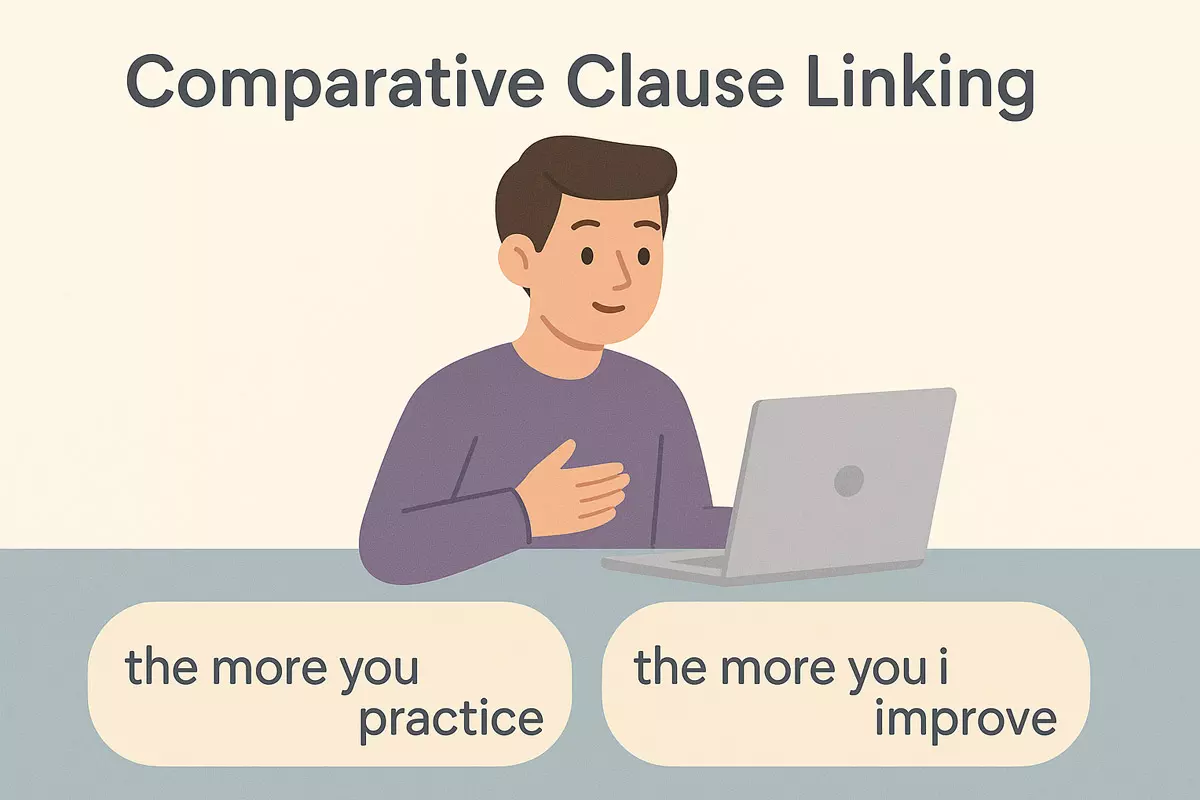 This article explains comparative clause linking, focusing on the structure and use of the more… the more… pattern. It covers meaning, common variations, usage in formal and spoken English, mistakes to avoid, and provides practice examples.
Have you ever noticed how certain English sentences show a growing cause-and-effect relationship, such as when working harder results in greater achievements? This article examines the use of paired comparative structures, like the more you practice, the better you become, and explains how understanding these patterns can make your communication clearer and more effective. By mastering these constructions, you can express complex ideas more precisely and add variety to your spoken and written English.
What Comparative Clause Linking Is
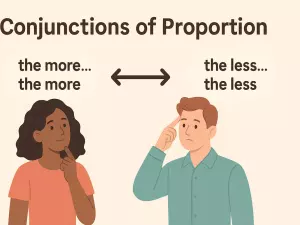
Comparative clause linking refers to a grammatical structure that connects two clauses using a pattern like the more..., the more.... This construction is used to show a proportional relationship between two actions, qualities, or states. Essentially, it expresses that as one thing changes, another thing changes in direct response.
How It Functions
This pattern is unique in that both clauses start with the followed by a comparative form (such as more, less, better, worse, sooner, later). The first clause sets up a condition or degree, and the second clause shows the outcome or corresponding change. These paired clauses often appear in statements about cause and effect, habits, or tendencies.
- The more you practice, the better you become.
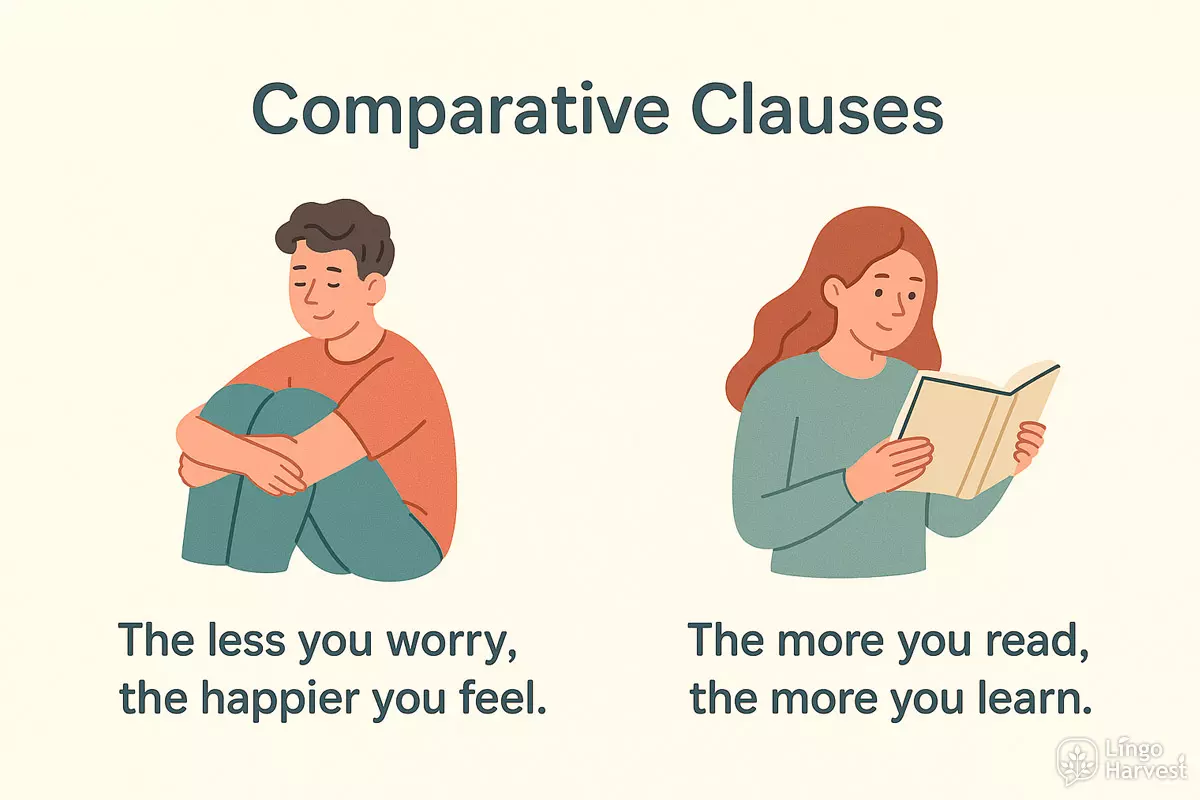
- The less you worry, the happier you feel.
- The earlier we leave, the sooner we’ll arrive.
- The harder it rains, the worse the traffic gets.
- The more you read, the more you learn.
- The longer you wait, the colder the food gets.
- The higher you climb, the colder it becomes.
- The more honest he is, the more people trust him.
- The faster you drive, the more dangerous it is.
- The less sleep you get, the more tired you feel.
- The more you spend, the less you save.
- The bigger the crowd, the louder the noise.
- The more options you have, the harder it is to choose.
- The less sugar you eat, the healthier you are.
- The stronger the wind, the harder the work.
- The longer the speech, the more bored the audience becomes.
Structure Overview
Both parts of this construction are parallel, making it easy to recognize. Notice how the comparative word immediately follows the in each clause. This parallelism helps to clearly show the relationship between the two linked ideas.
| First Clause | Second Clause |
|---|---|
| The more you study | the easier the test becomes |
| The less you move | the stiffer you feel |
| The earlier you start | the sooner you finish |
| The harder you try | the more you achieve |
| The better the instructions | the faster the assembly |
In summary, this type of clause linking is a concise way to express proportional changes or dependencies between two situations. It's common in both spoken and written English, making it a useful structure for clear and effective communication.
Structure of the More… The More… Pattern
Understanding how this comparative construction works is key for expressing proportional relationships in English. The pattern connects two clauses, each beginning with "the" plus a comparative adjective or adverb, to show that as one thing changes, another changes in response. This structure is especially common when describing cause and effect or parallel increases and decreases.
Basic Construction
The pattern uses two parallel clauses:
- The more (or the less) + subject + verb,
- the more (or the less) + subject + verb.
The order of clauses can be reversed, but both must begin with "the" followed by a comparative form.
Elements of the Pattern
Each clause consists of:
- "The" + comparative adjective/adverb (e.g., more, less, faster, earlier)
- Optional noun or pronoun subject
- Verb phrase
- Optional modifiers or objects
Common Variations
Writers can use different comparatives to fit their meaning. Here are some frequent forms:
- The more you practice, the better you become.
- The less you eat, the hungrier you get.
- The harder he works, the more he earns.
- The sooner we leave, the earlier we arrive.
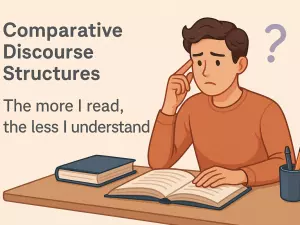
- The more I read, the more I learn.
- The less noise there is, the easier it is to concentrate.
- The longer you wait, the worse it gets.
- The colder it is, the more I want to stay inside.
- The faster you run, the sooner you finish.
- The more detailed the explanation, the clearer the result.
- The less sleep you get, the more tired you feel.
- The more expensive the item, the higher the quality (usually).
- The more people join, the more fun it becomes.
- The less you worry, the happier you'll be.
- The more carefully you drive, the safer you are.
- The older we get, the wiser we become.
- The more complex the task, the greater the challenge.
- The less sugar you use, the healthier your diet.
- The more feedback you receive, the better your work becomes.
- The less time you have, the more efficient you must be.
Typical Patterns in Context
This comparative structure is often used to highlight proportional relationships, such as:
- Increasing qualities: The more you try, the more you achieve.
- Decreasing qualities: The less you study, the less you understand.
- Contrasting changes: The faster you drive, the less time it takes.
Summary Table of Key Components
| Clause Position | Example Segment |
|---|---|
| First Clause | The more you read |
| Second Clause | the more you know |
| Alternate Comparative | The less you worry, the happier you feel |
| Comparative with Adverb | The sooner we start, the earlier we finish |
This pattern is flexible, allowing speakers and writers to express a wide range of proportional or causal relationships between two actions, qualities, or conditions.
Meaning and Emphasis in Comparison
Comparative clause structures like “the more…, the more…” allow speakers to express how two qualities or actions change in relation to each other. This pattern is especially useful for highlighting proportional relationships or showing how one thing influences another. Typically, the first clause sets up a condition or degree, and the second shows the direct result or effect, making the connection between the two ideas clear and emphatic.
How Emphasis Works in Comparative Clauses
Using this type of construction naturally draws attention to the relationship between the two elements. Speakers can choose to stress either the cause, the effect, or both, depending on what they want to highlight. Intonation in spoken English or word order in writing can further intensify or downplay the connection.
Common Patterns and Variations
There are several typical ways to form these comparative clauses. Here are some widely used examples:
- The more you practice, the better you become.
- The less you worry, the happier you feel.
- The sooner we start, the sooner we finish.
- The harder I work, the luckier I get.
- The bigger the challenge, the greater the reward.
- The longer you wait, the colder the coffee gets.
- The more it rains, the muddier the path becomes.
- The less you spend, the more you save.
- The darker it gets, the brighter the stars appear.
- The more you know, the more you realize you don’t know.
- The higher you climb, the colder it gets.
- The more you read, the better your vocabulary becomes.
- The later you stay up, the harder it is to wake up.
- The more people join, the livelier the party.
- The less sugar you eat, the healthier you feel.
Shifting Emphasis with Structure
Writers and speakers can adjust the focus by changing which element comes first or by adding adverbs for intensity. For example: “The much harder you try, the much more you achieve.” This intensifies both sides of the comparison.
Comparative Clause Paradigms
To see how these patterns function structurally, here’s a table of example pairings, showing how the changes in one element lead to changes in another:
| First Clause (Cause) | Second Clause (Effect) |
|---|---|
| The more you study | The higher your grades will be |
| The less you sleep | The more tired you feel |
| The faster you drive | The sooner you arrive |
| The more carefully you plan | The fewer mistakes you make |
| The longer the meeting lasts | The less attention people pay |
| The more you explain | The clearer it becomes |
Common Variations of the Construction
When using comparative clause linking such as "the more…, the more…", speakers often adapt the pattern to suit different contexts and levels of formality. These adaptations can involve changes in word order, omission of certain elements, or substitution with similar expressions. Understanding these differences helps in both comprehension and effective use.
Typical Patterns and Alternatives
The classic structure is "The + comparative adjective/adverb + subject + verb, the + comparative adjective/adverb + subject + verb." However, in everyday language, people frequently modify this form. Here are some notable alternatives:
- The sooner, the better.
- The more, the merrier.
- The less said, the better.
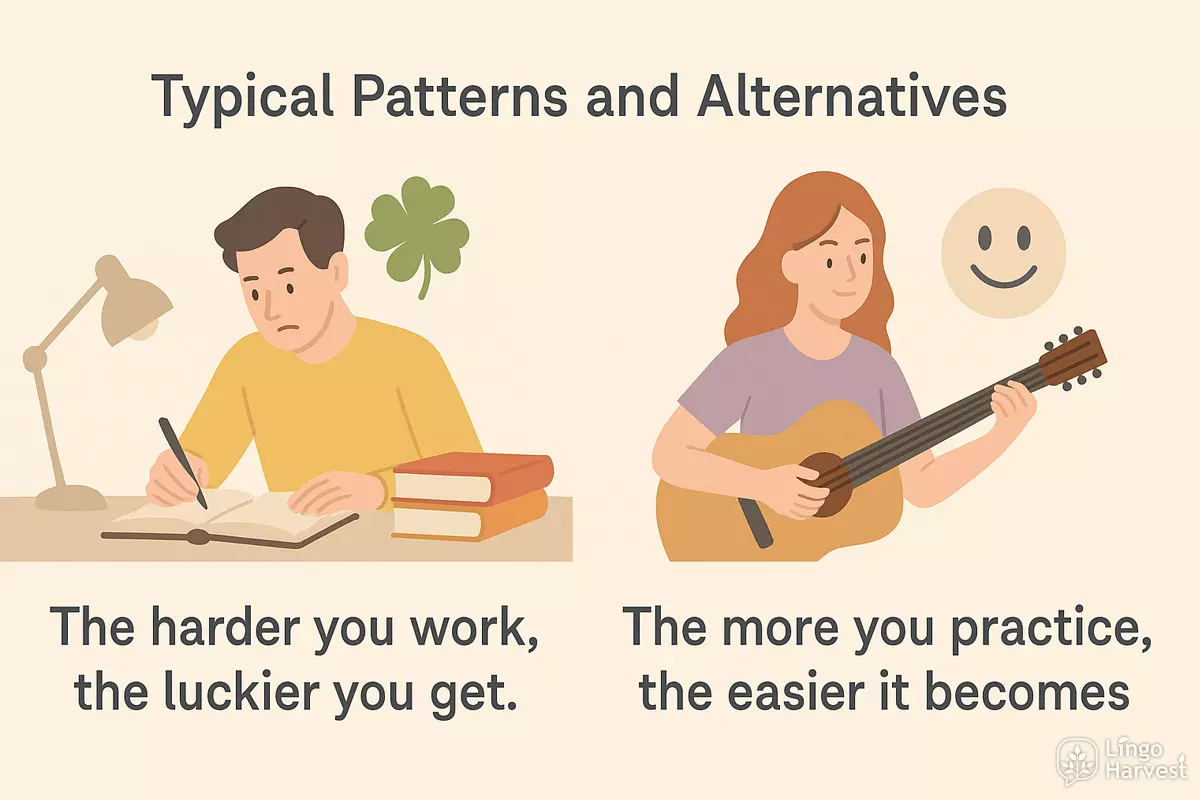
- The harder you work, the luckier you get.
- The more you practice, the easier it becomes.
- The older I get, the wiser I feel.
- The higher you climb, the colder it gets.
- The faster we finish, the sooner we can relax.
- The more you give, the more you receive.
- The clearer the instructions, the fewer mistakes occur.
- The longer you wait, the harder it gets.
- The more you know, the less you need.
- The less you worry, the happier you are.
- The bigger the challenge, the greater the reward.
- The more carefully you plan, the smoother things go.
- The later it gets, the more tired I become.
- The more options you have, the harder the choice.
- The less you spend, the more you save.
- The more risks you take, the more you learn.
Shortened and Elliptical Forms
Often, especially in spoken English, the structure is reduced for brevity. The subject and verb may be left out if context makes the meaning clear. For example:
- The bigger, the better.
- The sooner, the better.
- The less, the more.
These abbreviated forms are especially common with well-known expressions and proverbs.
Negative and Inverted Variants
It's also possible to invert or negate the pattern for emphasis or stylistic reasons:
- The less you study, the worse your results.
- The more you ignore it, the bigger the problem becomes.
- The less you care, the less it matters.
- The more you resist, the stronger it gets.
Comparative Clause Linking in Different Tenses
While most examples use the present simple, the construction can appear in other tenses to reflect different time frames:
- The more I thought about it, the clearer it became. (past)
- The sooner you will arrive, the better it will be. (future)
Summary of Variations
| Variation Type | Example |
|---|---|
| Standard Full Clause | The more you read, the more you understand. |
| Elliptical (Shortened) | The sooner, the better. |
| Negative/Inverted | The less you worry, the happier you are. |
| Different Tenses | The more I practiced, the easier it became. |
Exploring these diverse forms allows learners to express nuance and adapt their language to various situations, making communication more flexible and natural.
Examples in Formal and Spoken English
Understanding how "the more..., the more..." structures work in different contexts makes it easier to use them naturally. This construction appears frequently in both academic writing and everyday conversation, though the style and complexity may vary.
Formal Usage
In formal writing, such as academic essays or reports, these comparative clauses often convey cause-and-effect relationships, trends, or logical connections. Sentences are usually complete and precise, often using longer phrases or more abstract nouns.
- The more information you provide, the more accurate our analysis becomes.
- The more efficiently the system operates, the greater the cost savings.
- The more complex the problem, the more innovative the solution needs to be.
- The more resources are allocated, the higher the likelihood of success.
Spoken and Informal English
In conversation, the pattern is typically shorter and more direct. Speakers may drop words or use contractions, and the second half is often implied or left unfinished if the meaning is clear.
- The more you practice, the better you get.
- The more I think about it, the less I like the idea.
- The more you eat, the fuller you feel.
- The more he talks, the less I understand.
- The more it rains, the muddier the path gets.
- The more you wait, the harder it becomes.
- The more we tried, the less progress we made.
- The more they explained, the more confused I got.
- The more you save, the more you have for later.
- The more we hurry, the later we seem to be.
Comparing Formal and Spoken Examples
The distinction between written and spoken forms becomes clearer when similar ideas are expressed in both styles. Notice the differences in vocabulary and structure.
| Formal Expression | Spoken/Informal Equivalent |
|---|---|
| The more thoroughly the data is examined, the more reliable the results will be. | The more you check the data, the more you can trust the results. |
| The more rapidly the technology advances, the greater the impact on society. | The faster tech moves, the bigger the effect on people. |
| The more diligent the preparation, the higher the probability of a positive outcome. | The more you prepare, the better your chances. |
| The more restrictive the regulations, the less flexibility organizations possess. | The stricter the rules, the less freedom companies have. |
This side-by-side look highlights how the comparative clause linking pattern adapts to different registers, helping you choose the right tone for any situation.
Mistakes to Avoid with Double Comparatives
Understanding how to link comparative clauses with “the more…, the more…” is essential, but learners often fall into predictable traps. Common errors include incorrect word order, unnecessary repetition, and the use of incompatible adjectives or adverbs.
Common Pitfalls in Comparative Clause Linking
Incorrect structure or awkward phrasing can make your sentences confusing or even ungrammatical. Here are some frequent mistakes:
- Using “the” with a base adjective instead of the comparative form (e.g., the happy you are, the productive you are ❌).
- Repeating the subject unnecessarily in both clauses (e.g., The more you study, you will learn more ❌).
- Omitting “the” before the comparative (e.g., More you read, more you know ❌).
- Mixing adjectives and adverbs inconsistently (e.g., The faster you drive, the more dangerous it is ✅; The faster you drive, the dangerous it is ❌).
- Using double comparatives with non-comparative words (e.g., The more tall he grows, the more strong he becomes ❌—should be taller and stronger).
- Including auxiliary verbs incorrectly (e.g., The more will you practice, the better you get ❌).
- Placing commas incorrectly or omitting them when clarity is needed.
- Forgetting parallelism: both clauses should have a similar structure.
- Using “the more” with non-gradable adjectives (e.g., The more unique the item, the more valuable it is ❌—“unique” cannot logically be compared).
- Overcomplicating with unnecessary words or clauses.
Correct vs. Incorrect Forms
Notice how small changes can turn a sentence from correct to awkward or wrong. Compare these patterns:
| Incorrect Form | Correct Form |
|---|---|
| The more quickly you finish, you will have more free time. | The more quickly you finish, the more free time you will have. |
| More you work, more you earn. | The more you work, the more you earn. |
| The happier you are, the more do you smile. | The happier you are, the more you smile. |
| The more hot it gets, the more I sweat. | The hotter it gets, the more I sweat. |
| The more you practice, you get better. | The more you practice, the better you get. |
Tips to Avoid Errors
To master this comparative structure, keep these guidelines in mind:
- Always use “the” before each comparative phrase.
- Keep the structure parallel in both clauses.
- Do not add extra subjects or auxiliary verbs.
- Use only gradable adjectives or adverbs in the pattern.
- Check for clarity and logical progression between clauses.
Getting comfortable with these patterns will help you express cause and effect or proportional relationships more naturally, while avoiding common slip-ups.
Practice: Complete Sentences Using the Pattern
This section lets you actively use comparative clause structures with "the more..., the more..." to reinforce your understanding. Read each sentence starter and finish it logically, making sure both halves use a comparative form. Focus on natural connections between the two clauses.
Finish These Sentences
- The more you practice speaking English, ...
- The more sugar you add, ...
- The more time I spend outdoors, ...
- The more carefully you read the instructions, ...
- The more you worry about mistakes, ...
- The more I learn about history, ...
- The more tired I become, ...
- The more you help others, ...
- The more expensive the restaurant, ...
- The more you rush, ...
Show answers
- ...the more confident you will become.
- ...the sweeter the cake will taste.
- ...the happier I feel.
- ...the fewer mistakes you will make.
- ...the harder it is to relax.
- ...the more fascinating it seems.
- ...the less productive I am.
- ...the better you feel about yourself.
- ...the higher the bill.
- ...the more likely you are to forget something.
Identify and Complete the Pattern
Below are some mixed sentences. Some already use the structure, while others do not. Identify which sentences follow the comparative linking pattern and complete those that do not.
- The more you read, the more you know. ✅
- The more you exercise, ...
- The earlier you arrive, ...
- The less you sleep, the harder it is to concentrate. ✅
- The more you practice, ...
Show answers
- The more you exercise, the stronger you become.
- The earlier you arrive, the better your seat will be.
- The more you practice, the easier it gets.
Common Comparative Clause Pairings
To help you expand your vocabulary and flexibility with these constructions, here are some frequent pairings. Try creating your own sentences using these combinations.
- The more you listen / the more you understand
- The less you spend / the more you save
- The more you travel / the broader your perspective
- The more you eat / the fuller you feel
- The harder you work / the greater the reward
- The less you worry / the happier you are
- The more you repeat / the better you remember
- The longer you wait / the colder the food gets
- The more you smile / the friendlier you seem
- The more you try / the more you improve
- The less you complain / the more people like you
- The faster you run / the sooner you finish
- The more you invest / the higher the return
- The more you give / the more you receive
- The less you use your phone / the more productive you become
Practice forming your own sentences with these pairs, or swap in your own ideas to suit different contexts.