Opposite Adjectives: Big/Small, Hot/Cold, Fast/Slow

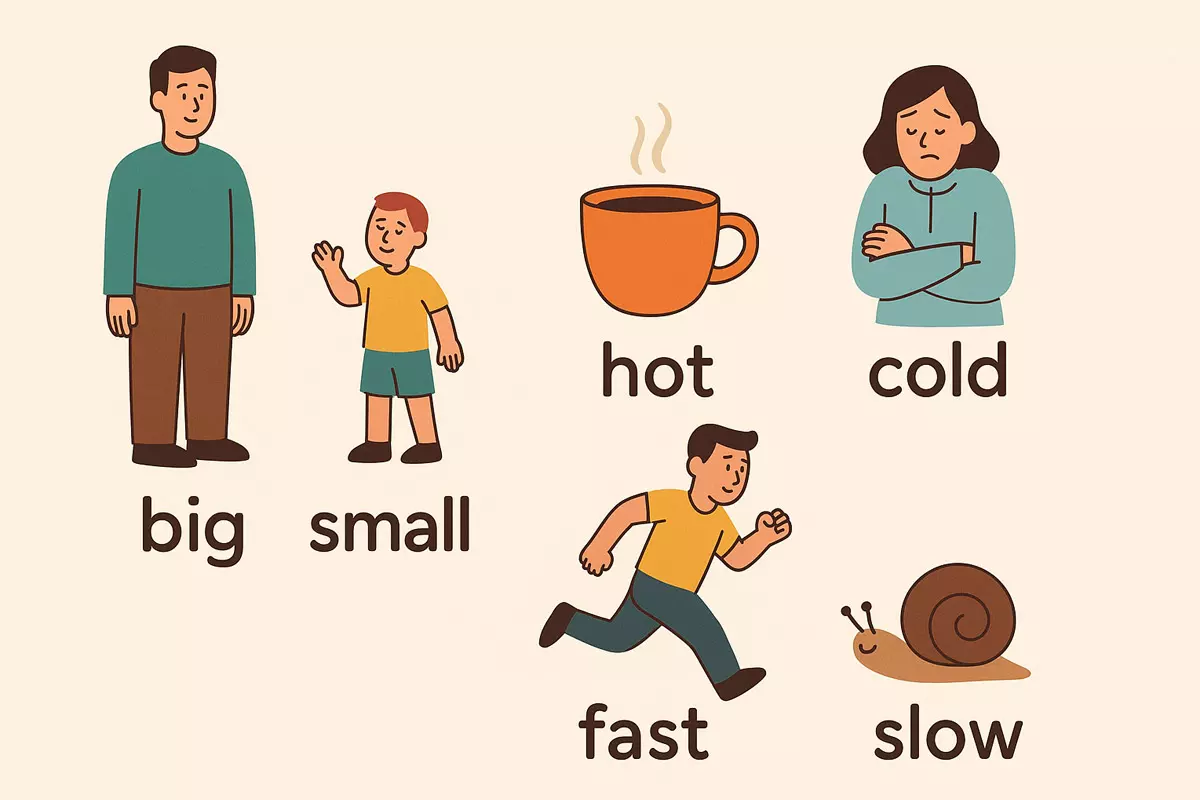 Here we what opposite adjectives express, lists useful pairs for daily use, explains differences in strength and tone, distinguishes not from true opposites, provides example sentences, highlights common confusions, and includes practice comparing and…
Exploring contrasting descriptive words such as large versus tiny, warm compared to chilly, and speedy against sluggish enhances our understanding of how language expresses the differences we observe in the world. Using these pairs not only clarifies communication but also adds vividness and depth to our conversations, making them more engaging and precise. By recognizing and applying these opposites, we become more effective in expressing ideas and emotions, allowing us to convey meaning with greater accuracy and creativity.
What Opposites Express
Opposite adjectives, like “big/small,” “hot/cold,” and “fast/slow,” help us describe differences, contrasts, and extremes in the world around us. They are essential for making comparisons, showing change, and expressing preferences. By pairing words with opposite meanings, we can communicate not just what something is, but also what it is not.
How Opposites Clarify Meaning
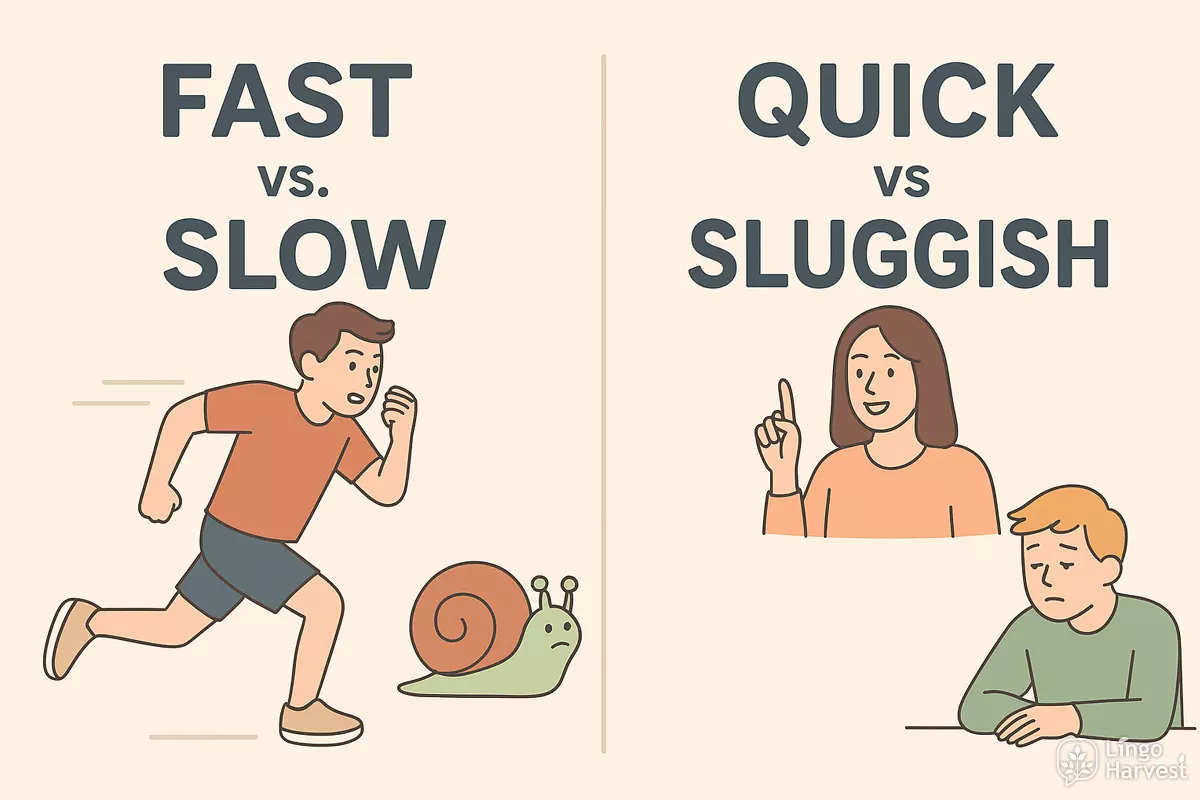
Using antonyms allows us to be more specific and vivid in our descriptions. For example, saying “The dog is big” becomes clearer when contrasted with “The cat is small.” This comparison gives the listener or reader a better sense of scale and context.
Common Uses for Opposing Descriptors
- Describing physical size or amount (e.g., big vs. small, tall vs. short)
- Talking about temperature (e.g., hot vs. cold, warm vs. cool)
- Expressing speed or pace (e.g., fast vs. slow, quick vs. sluggish)
- Comparing age or time (e.g., old vs. young, early vs. late)
- Discussing emotions or attitudes (e.g., happy vs. sad, brave vs. scared)
- Indicating position or direction (e.g., high vs. low, near vs. far)
- Judging quality or value (e.g., good vs. bad, expensive vs. cheap)
- Describing appearance (e.g., clean vs. dirty, light vs. dark)
- Contrasting sound or volume (e.g., loud vs. quiet, noisy vs. silent)
- Explaining state or condition (e.g., open vs. closed, full vs. empty)
Comparing Opposites in Context
Seeing antonyms side by side helps learners grasp their meanings and use them accurately. Here’s a practical comparison of some common pairs:
| Adjective | Opposite | Example Sentence |
|---|---|---|
| Big | Small | The elephant is big, but the mouse is small. |
| Hot | Cold | The soup is hot; the ice cream is cold. |
| Fast | Slow | The cheetah is fast, while the turtle is slow. |
| Tall | Short | The building is tall, but the fence is short. |
| Old | Young | My grandfather is old; my sister is young. |
| Clean | Dirty | His shirt is clean, but his shoes are dirty. |
| Open | Closed | The store is open in the morning and closed at night. |
| Hard | Soft | A rock is hard; a pillow is soft. |
| Full | Empty | The glass is full, but the bottle is empty. |
| Happy | Sad | She felt happy yesterday, but today she is sad. |
In daily communication, being able to use and recognize these pairs not only enriches your vocabulary but also makes your speech and writing clearer and more precise.
Useful Everyday Pairs
When describing the world around us, opposite adjectives like "big/small," "hot/cold," and "fast/slow" help us make clear comparisons. These word pairs are especially helpful in daily communication, whether talking about the weather, objects, or people. Understanding and using these contrasting terms makes conversations more precise and expressive.
Common Opposite Adjective Examples
Here are several pairs of adjectives that you’re likely to encounter in conversations, instructions, or descriptions. Each pair shows a simple way to express difference or contrast:
- Wide → Narrow
- Clean → Dirty
- Early → Late
- Light → Heavy
- Soft → Hard
- Strong → Weak
- Long → Short
- Old → Young
- Rich → Poor
- Easy → Difficult
- Full → Empty
- Thick → Thin
- Near → Far
- High → Low
- Quiet → Loud
- Deep → Shallow
- Open → Closed
- Safe → Dangerous
- Young → Old
- Cheap → Expensive
Comparing Opposites in Context
Sometimes, it helps to see how these adjectives work in sentences. Here are a few examples:
- The box is big, but the bag is small.
- This soup is hot; the salad is cold.
- Rabbits are fast, while turtles are slow.
Quick Reference: Key Opposites
| Adjective | Opposite |
|---|---|
| Big | Small |
| Hot | Cold |
| Fast | Slow |
| Easy | Difficult |
| Full | Empty |
| Clean | Dirty |
| High | Low |
| Near | Far |
Learning to recognize and use these contrasting pairs makes it easier to describe differences and give clear information in conversations. Try practicing with examples from your own daily routine to build confidence.
Strength and Tone Differences
When using pairs like big/small, hot/cold, and fast/slow, the intensity and nuance of each word can shift based on context. For example, "big" and "small" are not always exact opposites in every situation—sometimes alternatives like "huge" or "tiny" express stronger or softer degrees. The same applies to temperature adjectives and speed-related terms.
Graded Opposites and Modifiers
Many opposite adjectives have varying strengths. Words such as "enormous" or "minuscule" intensify the basic idea of "big" and "small." Similarly, "scorching" or "freezing" are much stronger than simply "hot" or "cold." Being aware of these gradations helps in choosing the right word for what you want to express.
- Huge vs. Tiny
- Massive vs. Petite
- Boiling vs. Chilly
- Scorching vs. Freezing
- Rapid vs. Sluggish
- Swift vs. Leisurely
- Immense vs. Minute
- Warm vs. Cool
- Quick vs. Slow
- Vast vs. Narrow
- Blazing vs. Arctic
- Speedy vs. Lagging
Choosing the Right Intensity
The tone of a sentence changes dramatically based on the adjective’s strength. Saying “It’s a bit cold” is gentler than “It’s freezing.” This choice can reflect politeness, urgency, or emotional coloring. In conversation, softer adjectives are often used to sound less dramatic or more neutral, while stronger terms are chosen for emphasis.
| Base Adjective | Stronger & Softer Forms |
|---|---|
| Big | Enormous, Huge, Massive → Large → Small, Petite, Tiny |
| Hot | Boiling, Scorching → Warm → Cool, Cold, Freezing |
| Fast | Rapid, Swift, Speedy → Quick → Slow, Sluggish, Leisurely |
Summary
Understanding these differences is key for clear and precise communication. Choosing between a mild or strong adjective affects not just meaning but also the emotional or practical impact of your statement. This awareness helps you adjust your message for the right audience and situation.
Using Not vs True Opposites
When describing qualities like size, temperature, or speed, English speakers can choose between directly stating the opposite adjective or using "not" plus the original word. The difference is subtle but important: "not big" doesn't always mean "small," and "not hot" isn't always the same as "cold." Often, "not X" suggests something in between or simply lacking the original quality, while the true antonym gives a clear, direct contrast.
Direct Opposites vs. Negation
Choosing between a direct antonym (like "fast/slow") and a negated form ("not fast") can change the nuance of your sentence. For example, calling a car "not fast" may imply it's average or just not quick, while "slow" clearly indicates it moves at a low speed.
- True Opposites: big/small, hot/cold, fast/slow
- Negated Forms: not big, not hot, not fast
Common Patterns and Their Meaning
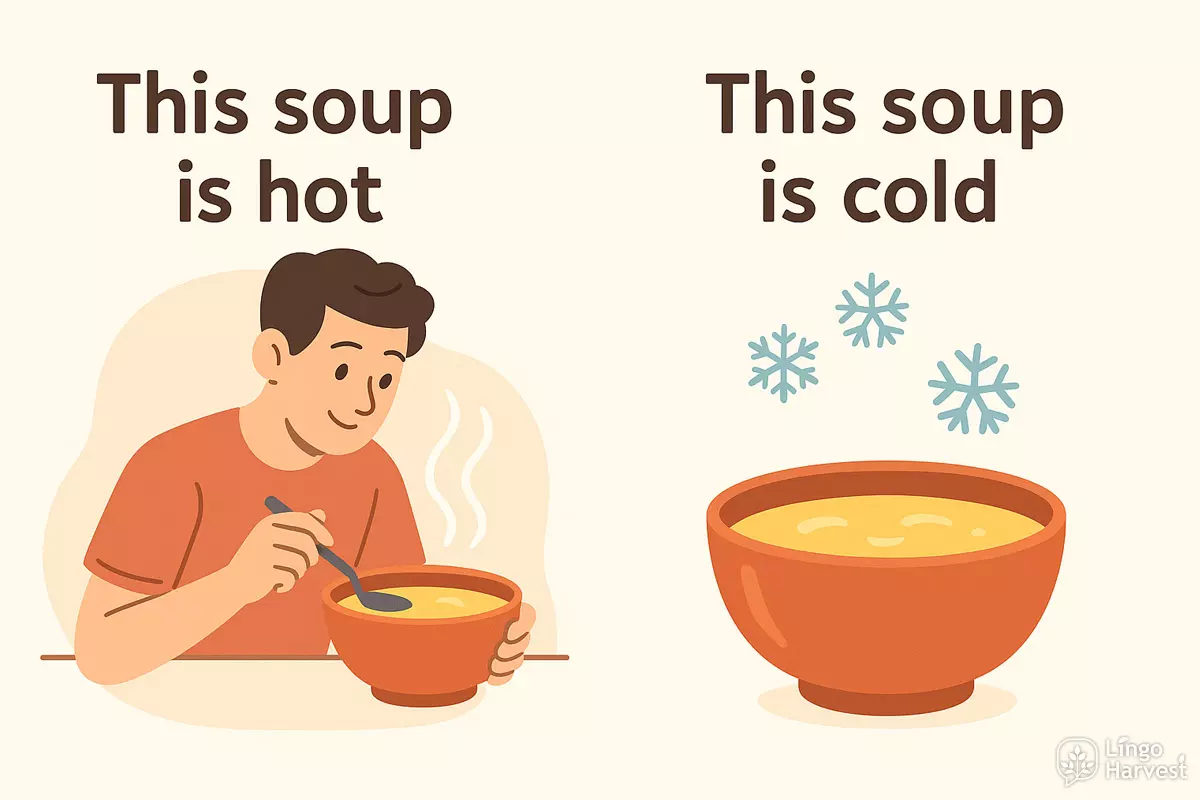
Here are some examples showing how the meaning shifts between using a direct opposite and a negated adjective:
- That house is big → That house is small (clear opposites)
- That house is not big → It might be medium-sized, or just not large
- This soup is hot → This soup is cold
- This soup is not hot → The soup could be warm, cool, or room temperature
- He is fast → He is slow
- He is not fast → He might be average or just not quick
Comparing Usage in Context
Sometimes, the best way to see the difference is through side-by-side comparison. Here are several pairs to illustrate:
| Direct Opposite | Negated Form |
|---|---|
| She is tall. | She is not tall. (She could be short or average height.) |
| The water is cold. | The water is not cold. (It may be warm, hot, or just not chilly.) |
| This test is easy. | This test is not easy. (It may be hard, or just not simple.) |
| The road is wide. | The road is not wide. (It could be narrow or just not broad.) |
| His answer was correct. | His answer was not correct. (It was incorrect or incomplete.) |
| The movie is long. | The movie is not long. (It could be short or just average length.) |
| This bag is heavy. | This bag is not heavy. (It might be light or just not very heavy.) |
Summary of Usage
Using a true antonym provides a clear, direct meaning. In contrast, using "not" plus an adjective often leaves room for interpretation. This subtlety allows speakers to be more precise or diplomatic, depending on the context. For learners, recognizing when to use a direct opposite and when to use a negated form can help make descriptions more accurate and natural.
Example Sentences in Daily Situations
When learning pairs like big/small, hot/cold, or fast/slow, it’s most useful to see how they fit into everyday conversations. These pairs help describe the world around us, compare things, and express preferences clearly.
Using Big/Small in Context
- The dog is big, but the cat is small.
- Our new apartment feels big compared to the old one.
- This shirt is too small for me.
- Can you give me a small piece of cake?
- He bought a big gift for his friend’s birthday.
Everyday Use: Hot/Cold
- My coffee is still hot.
- The soup got cold while I was on the phone.
- It’s hot outside, so wear light clothes.
- She likes her drinks cold, especially in summer.
- The bathwater is too hot for the baby.
Describing Speed: Fast/Slow
- The train is very fast today.
- My computer has become slow lately.
- She is a fast runner.
- Traffic is slow because of the rain.
- Please walk slowly—the floor is wet.
Quick Comparison Table
| Adjective Pair | Example in Conversation |
|---|---|
| Big / Small | This bag is big, but that one is small. |
| Hot / Cold | I prefer hot tea, not cold tea. |
| Fast / Slow | The rabbit is fast, the turtle is slow. |
| Big / Small | He has a small car, but his brother’s is big. |
Tips for Everyday Communication
Using these opposites helps you be more descriptive and precise. Try to notice how often these words appear in daily talk—at the café, shopping, or describing the weather. The more you practice, the more natural your descriptions will become.
Common Confusions
Many English learners mix up opposite adjectives, especially when context or nuance changes their usual meanings. Words like "big" and "small," "hot" and "cold," or "fast" and "slow" seem simple, but real-life situations can make their usage tricky.
Similar Adjectives vs. True Opposites
Some adjectives are not exact opposites, even if they seem related. For example, "tiny" is more extreme than "small," while "huge" is stronger than "big." Understanding these shades of meaning helps avoid awkward or unclear sentences.
- Big / Little (not always the same as Big / Small)
- Hot / Warm (not true opposites; "warm" is between "hot" and "cold")
- Fast / Quick (similar, but "quick" often refers to time, "fast" to speed)
- Slow / Sluggish (both mean not fast, but "sluggish" adds a sense of laziness)
Common Mistakes with Comparisons
Comparing things can lead to confusion, especially with irregular forms or when using "than." Some adjectives change their forms unexpectedly:
- Bigger, smaller (correct comparative forms)
- More hot ❌ (should be "hotter")
- More slow ❌ (should be "slower")
- Colder, faster (not "more cold," "more fast")
Contextual Pitfalls
Sometimes, what counts as "big" or "small," "hot" or "cold," depends on the context. For example, a "big" dog might be "small" compared to a horse. Similarly, "cold" weather in one country could be "warm" in another. Always consider what you’re comparing.
Frequently Confused Pairs
Here are some pairs and phrases that often cause trouble for learners:
| Adjective | Common Confusion |
|---|---|
| Big | Large, huge, tall |
| Small | Little, tiny, short |
| Hot | Warm, spicy, boiling |
| Cold | Cool, chilly, freezing |
| Fast | Quick, rapid, speedy |
| Slow | Sluggish, lazy, gradual |
Tips to Avoid Mixing Them Up
- Check the context: compare similar things.
- Memorize irregular comparative forms (e.g., "hotter," "colder").
- Listen for native usage in real conversations.
- Practice with sentences, not just single words.
Choosing the right adjective or its opposite often comes down to both meaning and situation. With careful attention and practice, these mistakes become easier to spot and fix.
Practice: Compare and Contrast
Understanding how to use opposite adjectives helps describe differences and similarities between objects, people, or situations. Let’s look at some ways to practice recognizing and using pairs like big/small, hot/cold, and fast/slow in context.
Identify the Opposites
Try matching each word to its opposite from the list below. This activity helps reinforce your ability to recognize antonyms.
- Big → __________
- Hot → __________
- Fast → __________
- Small → __________
- Cold → __________
- Slow → __________
Show answers
- Big → Small
- Hot → Cold
- Fast → Slow
- Small → Big
- Cold → Hot
- Slow → Fast
Use in Sentences
Complete each sentence by choosing the correct adjective from the pair in brackets.
- The elephant is _____ (big/small), but the mouse is _____ (big/small).
- In the summer, the weather is usually _____ (hot/cold).
- A cheetah runs very _____ (fast/slow).
- My coffee is too _____ (hot/cold) to drink.
- A snail moves very _____ (fast/slow).
Show answers
- big; small
- hot
- fast
- hot
- slow
Comparison Table
Below is a table showing how each adjective pair describes contrasting qualities. This helps visualize the differences clearly.
| Adjective | Opposite | Example (Positive) | Example (Opposite) |
|---|---|---|---|
| Big | Small | The whale is big. | The ant is small. |
| Hot | Cold | The soup is hot. | The ice cream is cold. |
| Fast | Slow | The train is fast. | The turtle is slow. |
Challenge: Describe and Compare
Think of two objects, people, or places you know. Write two sentences comparing them using the adjectives above. For example: “My backpack is big, but my lunchbox is small.” This exercise helps you practice making comparisons in real-life situations.
Show answers
Answers will vary. Example: “Winter is cold, but summer is hot.” / “My bike is fast, but my skateboard is slow.”