Feelings and Emotions: Useful Adjectives for Daily Talk

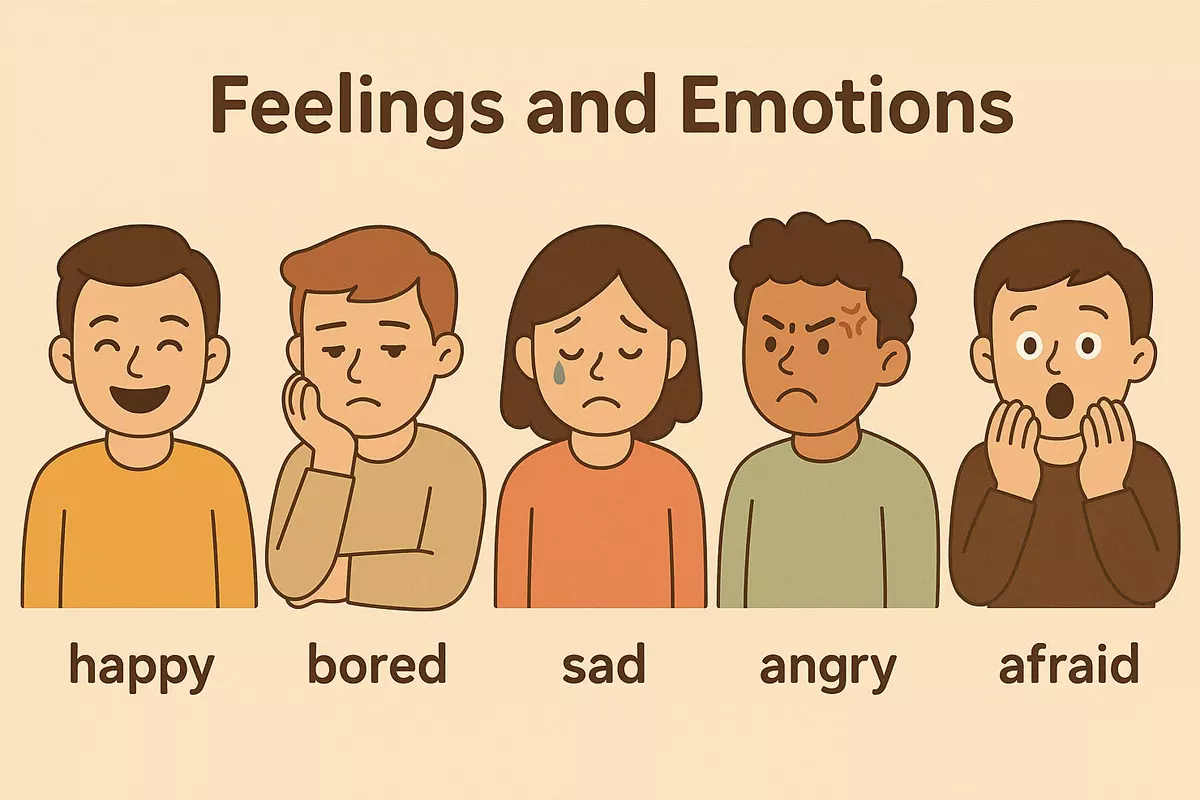 This article explains basic feeling words like happy and bored, the difference between ed and ing forms, and key patterns for describing feelings. It covers polite ways to talk about moods, common mistakes, and includes short role-play dialogues for practice.
Expressing our feelings can sometimes be challenging, especially when we struggle to find the precise words to convey what we mean. By expanding our vocabulary and learning a variety of descriptive terms for different moods and emotions, we can communicate more clearly and authentically in our daily interactions. This not only helps others understand us better but also allows us to connect more deeply and honestly, making conversations more meaningful and reducing the chances of misunderstandings.
Basic Feeling Words (happy, tired, bored)
Understanding simple adjectives for emotions helps you express your mood in daily conversations. Words like “happy,” “tired,” and “bored” are common, but there are many related terms that can make your speech more natural and specific.
Words Related to Feeling Good
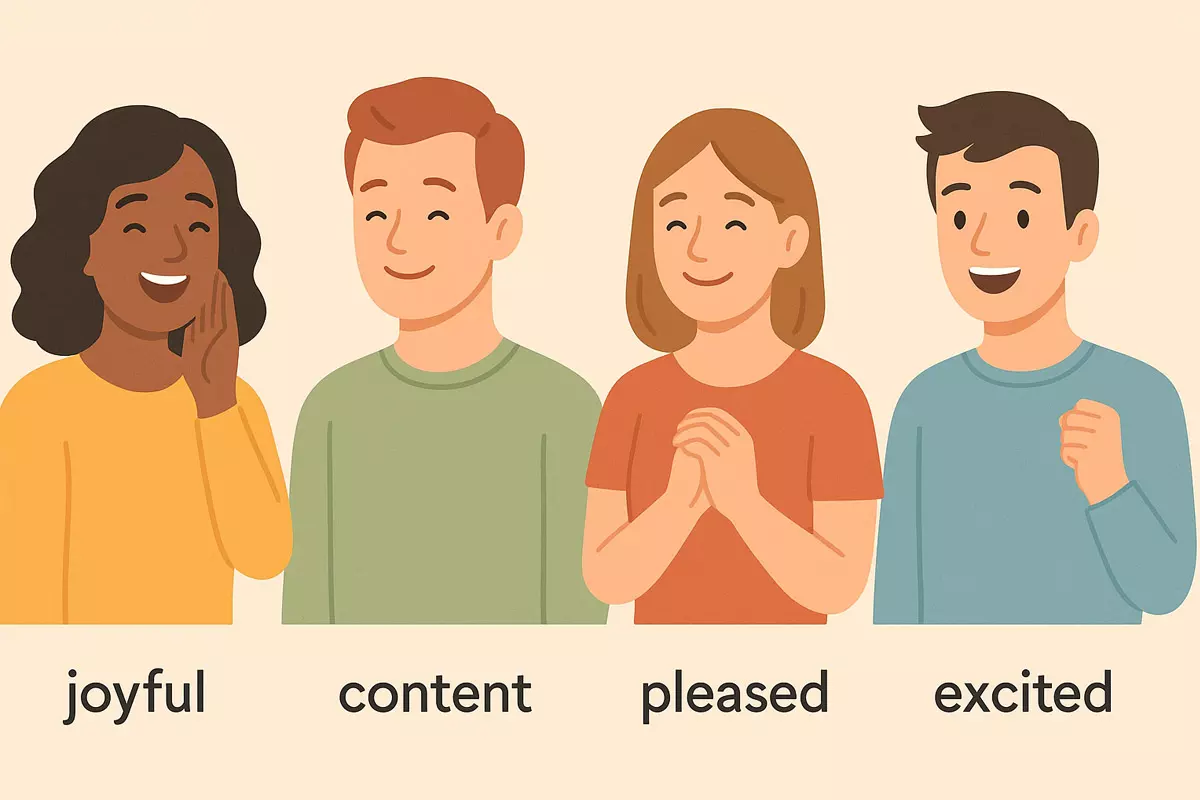
When you want to say you feel positive or cheerful, there are several adjectives to choose from:
- Joyful
- Content
- Pleased
- Excited
- Cheerful
- Delighted
- Glad
- Ecstatic
- Optimistic
- Grateful
Each word describes a slightly different shade of happiness. For example, “ecstatic” means extremely happy, while “content” is a calm, satisfied feeling.
Adjectives for Low Energy or Fatigue
Sometimes you need to talk about being out of energy or needing rest. Here are some useful words:
- Exhausted
- Sleepy
- Weary
- Drained
- Worn out
- Fatigued
- Drowsy
- Sluggish
- Burned out
- Spent
These words help you explain different levels and types of tiredness, from “sleepy” (ready for bed) to “burned out” (emotionally or physically overwhelmed).
Describing Lack of Interest or Motivation
If you want to say something isn’t interesting or you feel unmotivated, try these expressions:
- Uninterested
- Indifferent
- Restless
- Disengaged
- Apathetic
- Listless
- Unenthusiastic
- Fed up
- Jaded
- Detached
Choosing the right word helps you be specific. For example, “restless” suggests wanting to do something different, while “apathetic” means not caring at all.
Quick Comparison of Common Feeling Words
| Adjective | Meaning / Situation |
|---|---|
| Happy | General positive emotion; feeling good |
| Tired | Low energy, often after activity or lack of sleep |
| Bored | Lack of interest or stimulation; wanting something new |
| Excited | Strong, positive anticipation or enthusiasm |
| Exhausted | Extreme tiredness, both physical and mental |
| Restless | Unable to relax, wanting change or activity |
Using a variety of adjectives for emotions helps you communicate more clearly and understand others better. Whether you feel cheerful, sleepy, or uninterested, having the right word at hand makes daily conversation smoother.
-ed vs -ing Meaning Contrast
Understanding the difference between adjectives ending in -ed and those ending in -ing is essential for talking about feelings and emotions clearly. These adjective forms often confuse English learners, but there’s a simple logic behind them.
Adjectives ending in -ed usually describe how a person feels. They express the emotional state of someone who is affected by something. In contrast, adjectives ending in -ing describe the thing or situation that causes the feeling. This subtle difference can change the meaning of your sentence entirely.
How the Forms Work
- -ed adjectives: Used for people (or sometimes animals), showing their emotional reaction.
- -ing adjectives: Used for things, situations, or people that produce a feeling or reaction in others.
| Adjective Pair | Example Sentences |
|---|---|
| bored / boring | I feel bored during long meetings. This movie is boring. |
| excited / exciting | She is excited about her trip. The news was exciting. |
| tired / tiring | They looked tired after the hike. The job is tiring. |
| interested / interesting | We are interested in art. This book is interesting. |
| confused / confusing | He's confused by the instructions. The map is confusing. |
| amused / amusing | She was amused by the joke. His story was amusing. |
| frustrated / frustrating | I'm frustrated with the delays. The process is frustrating. |
| shocked / shocking | We were shocked by the news. The results are shocking. |
| worried / worrying | He felt worried about the exam. The situation is worrying. |
| annoyed / annoying | They're annoyed by the noise. The sound is annoying. |
Quick Tips
- If you talk about how someone feels, use the -ed form: "I am surprised."
- If you describe what causes the feeling, use the -ing form: "This result is surprising."
- It’s possible for a person to be interesting, but that means they cause interest in others, not that they feel interested.
Getting comfortable with these patterns helps you express your emotions and reactions more naturally in everyday English conversations. Remember, -ed is for the receiver of the feeling, and -ing is for the source.
Patterns: I feel / I am / It makes me
Recognizing how to express emotions clearly helps conversations feel natural and honest. English speakers commonly use phrases like “I feel,” “I am,” and “It makes me” to describe their mood or reactions. Choosing the right pattern depends on the adjective and the situation.
How These Patterns Work
“I feel” is used to talk about temporary emotions or sensations. “I am” works with adjectives to describe your state or personality, while “It makes me” explains what causes your feelings.
- I feel tired / excited / confused.
- I am happy / nervous / frustrated.
- It makes me angry / relaxed / anxious.
Common Adjectives for Each Pattern
Many adjectives fit naturally with all three structures, but some are more typical with one or two. Here are examples that work well with these expressions:
- happy
- sad
- angry
- hopeful
- proud
- worried
- scared
- relaxed
- disappointed
- grateful
- confused
- embarrassed
- excited
- lonely
- jealous
- surprised
- calm
- annoyed
- shy
- motivated
Choosing the Right Form
Selecting between “I feel” and “I am” can depend on whether the emotion is temporary or a more lasting state. For example, “I am happy” suggests a general mood, while “I feel happy” focuses on the moment. “It makes me” identifies the source of your emotion.
| Pattern | Example Sentences |
|---|---|
| I feel + adjective | I feel nervous before speaking in public. |
| I am + adjective | I am grateful for your help. |
| It makes me + adjective | This music makes me relaxed. |
| It makes me + verb | That joke makes me laugh. |
Tips for Everyday Conversation
When describing how you feel, try to be specific. Instead of just saying “good” or “bad,” choose adjectives that match your real emotion. This makes your English sound more natural and helps others understand you better. Experiment with mixing these patterns and adjectives to express your feelings accurately.
Talking About Mood Politely
Sharing how you feel in a considerate way can help conversations flow smoothly, especially in professional or casual settings where strong emotions might be too direct. Using gentle adjectives and softening expressions shows respect for others’ feelings and keeps interactions comfortable.
Polite Phrases for Expressing Emotions
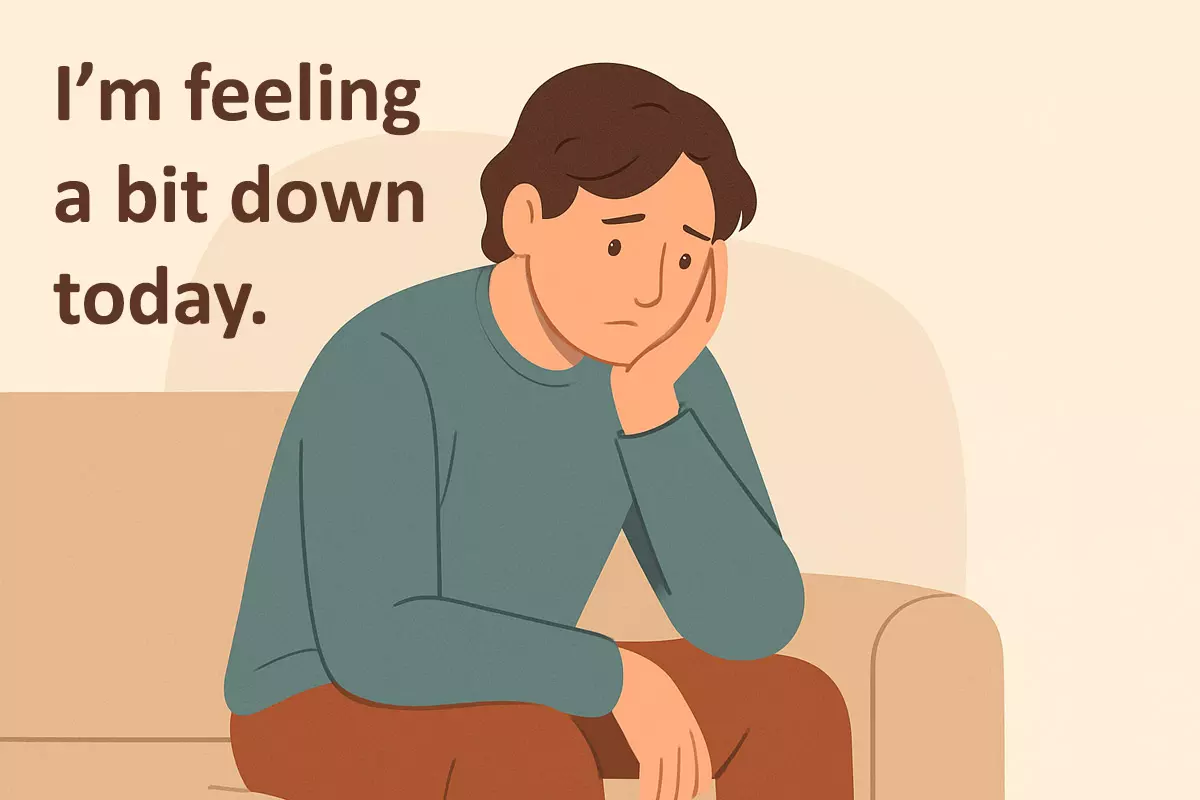
Instead of bluntly stating “I’m angry” or “I’m sad,” you can use more diplomatic language. Here are some common ways to describe your mood or ask about someone else’s emotional state with tact:
- “I’m feeling a bit down today.”
- “I’m not quite myself at the moment.”
- “It’s been a challenging day.”
- “I’m somewhat frustrated, but it’s manageable.”
- “I’m in good spirits, thank you.”
- “I’m a little overwhelmed right now.”
- “I’m feeling cheerful this morning.”
- “I’m a bit anxious about the meeting.”
- “I’m content with how things are going.”
- “I’m pleasantly surprised by the result.”
- “I’m slightly disappointed, but I’ll get over it.”
- “I appreciate your concern, I’m coping well.”
- “I’m excited for what’s ahead.”
- “I’m a little nervous, but optimistic.”
- “I’m grateful for your support.”
- “I’m feeling hopeful.”
- “I’m a bit under the weather.”
- “I’m just taking things one step at a time.”
Softening Your Words
Using modifiers like “a bit,” “slightly,” or “somewhat” makes your statements less forceful. This is especially useful when talking about negative or strong emotions, as it helps avoid sounding harsh or abrupt.
Comparing Direct and Polite Expressions
The way you phrase your feelings can change the tone of a conversation. Here’s a comparison of more direct versus softened options:
| Direct Expression | Polite Alternative |
|---|---|
| I’m angry. | I’m a bit upset. |
| I’m sad. | I’m feeling a little down. |
| I’m stressed. | I’m feeling a bit overwhelmed. |
| I’m happy. | I’m in good spirits. |
| I’m disappointed. | I’m slightly disappointed, but it’s okay. |
| I’m nervous. | I’m a little anxious. |
| I’m excited. | I’m looking forward to it. |
| I’m tired. | I’m a bit worn out. |
By choosing your words thoughtfully, you can express yourself honestly while maintaining a considerate and respectful tone. This approach is especially helpful in group settings, at work, or when you want to be mindful of how your emotions might affect others.
Examples from Everyday Situations
Describing our moods and reactions in daily life often relies on precise adjectives. Using the right word can help you share how you feel or understand someone else’s state of mind. Here are practical scenarios and expressions to illustrate how emotional adjectives enrich conversations.
Common Scenarios and Useful Vocabulary
- After receiving good news: excited, relieved, overjoyed
- Facing a tough deadline: stressed, overwhelmed, anxious
- Meeting a friend after a long time: delighted, thrilled, nostalgic
- Dealing with a misunderstanding: confused, frustrated, disappointed
- Solving a tricky problem: proud, satisfied, accomplished
- After a long, tiring day: exhausted, drained, restless
- Watching a sad movie: moved, touched, heartbroken
- When someone is rude: offended, annoyed, irritated
- Getting unexpected help: grateful, thankful, surprised
- Waiting for important results: nervous, restless, hopeful
- In a peaceful setting: calm, relaxed, serene
- Feeling left out: lonely, isolated, unappreciated
Comparing Emotional Responses
Sometimes, choosing between similar adjectives helps to fine-tune your meaning. For instance, feeling “annoyed” is less intense than being “furious.” The table below compares some common emotional adjectives, highlighting their use in context.
| Situation | Adjective & Example |
|---|---|
| Missed the bus | Annoyed – “I was annoyed when I missed my bus.” |
| Lost an important file | Frustrated – “She felt frustrated after losing her work.” |
| Received a compliment | Flattered – “He was flattered by the kind words.” |
| Got a surprise gift | Delighted – “They were delighted with the present.” |
| Argued with a friend | Upset – “I felt upset after our argument.” |
Tips for Expressing Emotions Clearly
- Match the intensity of the adjective to your actual feeling. For example, use angry for mild irritation and furious for stronger emotion.
- Combine adjectives for nuance: “I’m both nervous and excited about my new job.”
- Be specific—saying “disappointed” reveals more than just “bad.”
- Notice how others use emotional adjectives to improve your own vocabulary and understanding.
Being able to describe your mood or reactions with accuracy helps in both personal and professional interactions. With practice, these words become a natural part of your daily conversations.
Common Mistakes and Fixes
Describing how we feel can be tricky, especially when using adjectives to talk about emotions. Many learners mix up words with similar meanings or use them in the wrong context. Let’s look at frequent errors and how to improve your everyday conversations.
Confusing Similar Adjectives
Some words seem alike but have different nuances. For example, “nervous” and “anxious” both relate to worry, but “anxious” can be stronger or longer-lasting. Using the right word helps express your feelings clearly.
- Annoyed vs. angry: “Annoyed” is milder, while “angry” is stronger.
- Excited vs. nervous: Both can describe anticipation, but “nervous” adds unease.
- Disappointed vs. sad: “Disappointed” is about unmet expectations; “sad” is more general.
- Embarrassed vs. ashamed: “Embarrassed” is about social awkwardness; “ashamed” is deeper, involving guilt.
Incorrect Forms and Collocations
A common pitfall is using adjectives with the wrong prepositions or verb forms. For example, people often say “bored of” instead of the correct “bored with.”
| Incorrect Usage | Correct Form |
|---|---|
| I’m boring in class. | I’m bored in class. |
| She is exciting about the trip. | She is excited about the trip. |
| He feels depressing. | He feels depressed. |
| They are afraid from spiders. | They are afraid of spiders. |
Overusing Basic Words
Relying on a few simple terms like “happy” or “sad” can make speech sound repetitive. Try expanding your vocabulary with more precise adjectives:
- Ecstatic
- Content
- Frustrated
- Relieved
- Terrified
- Overwhelmed
- Grateful
- Hopeful
- Jealous
- Disgusted
- Amused
- Proud
- Confident
- Guilty
- Curious
Misplacing Adjectives in Sentences
Another issue is putting the adjective in the wrong part of the sentence or using it with the wrong verb. For example, “I feel happily” should be “I feel happy,” since “happy” is an adjective, not an adverb.
Quick Tips
- Check if your adjective describes a person or a situation (e.g., “bored” person, “boring” movie).
- Practice with real-life examples to build confidence.
- Notice which prepositions go with each emotion word.
With a little attention to these typical errors, your emotional vocabulary will sound more natural and precise in daily interactions.
Practice: Role-Play Short Dialogues
Role-playing is a great way to internalize vocabulary for describing how you feel. Practicing short exchanges helps you become comfortable with using adjectives to express emotions in daily life. Below are several sample dialogues and activity ideas that you can use alone or with a partner to boost your confidence and fluency.
Sample Dialogue Starters
- A: How are you feeling today?
B: I’m excited because I have a big presentation. - A: You seem a bit upset. What happened?
B: I’m frustrated with my homework. - A: Did you enjoy the movie?
B: Yes! I was amused by the jokes. - A: You look tired. Did you sleep well?
B: Not really, I felt anxious about the exam. - A: Are you okay?
B: I’m relieved that the test is over. - A: Why are you so cheerful today?
B: I got a message from an old friend! - A: I noticed you were quiet at lunch.
B: I was just feeling a bit thoughtful. - A: You look confused. Can I help?
B: Yes, I’m not sure how to solve this problem. - A: Did you hear the news?
B: Yes, I’m shocked by what happened! - A: You sound disappointed.
B: I didn’t get the result I wanted.
Useful Adjectives for Expressing Emotions
- excited
- nervous
- relaxed
- proud
- grateful
- curious
- jealous
- hopeful
- annoyed
- ashamed
- confident
- disappointed
- embarrassed
- frustrated
- lonely
- optimistic
- overwhelmed
- relieved
- scared
- surprised
Practice Activity: Match the Feeling
Read each situation and choose the best adjective to describe how the person feels:
- Anna just won a prize in a competition.
- Ben lost his keys and can’t get into his house.
- Clara is meeting her favorite author for the first time.
- David made a mistake in front of everyone.
Show answers
- 1. excited
- 2. frustrated
- 3. nervous
- 4. embarrassed
Role-Play Task Ideas
- Take turns asking and answering about your day using at least two emotion adjectives in each reply.
- Act out a situation where one person shares good news and the other responds appropriately.
- Practice comforting a friend by using supportive adjectives and phrases.
- Invent a scenario where you must express mixed feelings (e.g., nervous but hopeful).