Adjective or Adverb? Quick Tests for Beginners

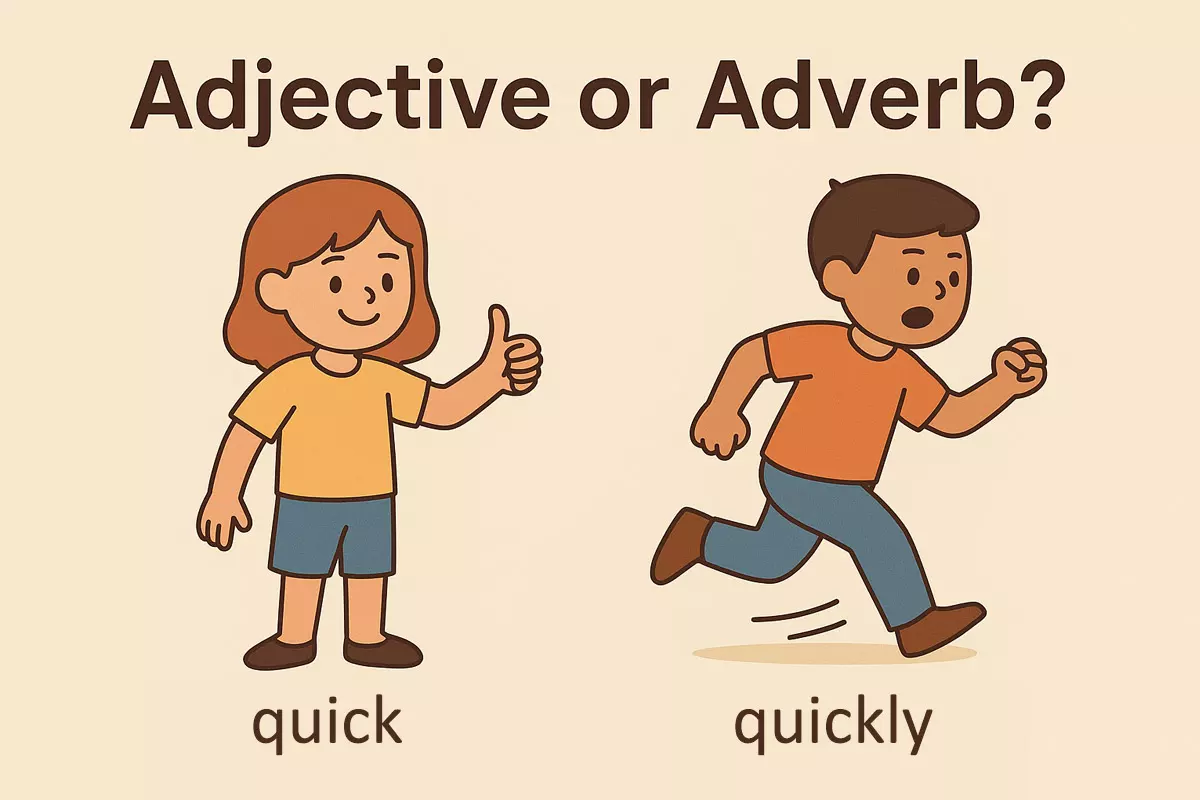 Here we the difference between what adjectives and adverbs describe, how to use them after be or action verbs, tricky words like hard vs hardly, choosing good or well, using adjectives with sense verbs, and correcting common mistakes with practice.
If you’re unsure whether to use a word to describe an action or a thing, understanding the difference between adjectives and adverbs can help. Adjectives typically describe nouns, giving more information about people, places, or objects, while adverbs modify verbs, explaining how an action is performed. To determine which form to use, check whether the word answers questions like “what kind?” for nouns or “how?” for verbs. With practice and attention to these clues, distinguishing between the two becomes much simpler.
What Adjectives Describe vs What Adverbs Describe
Understanding what each word type modifies is key to using adjectives and adverbs correctly. Adjectives and adverbs both add detail, but they focus on different targets in a sentence.
What Do Adjectives Modify?
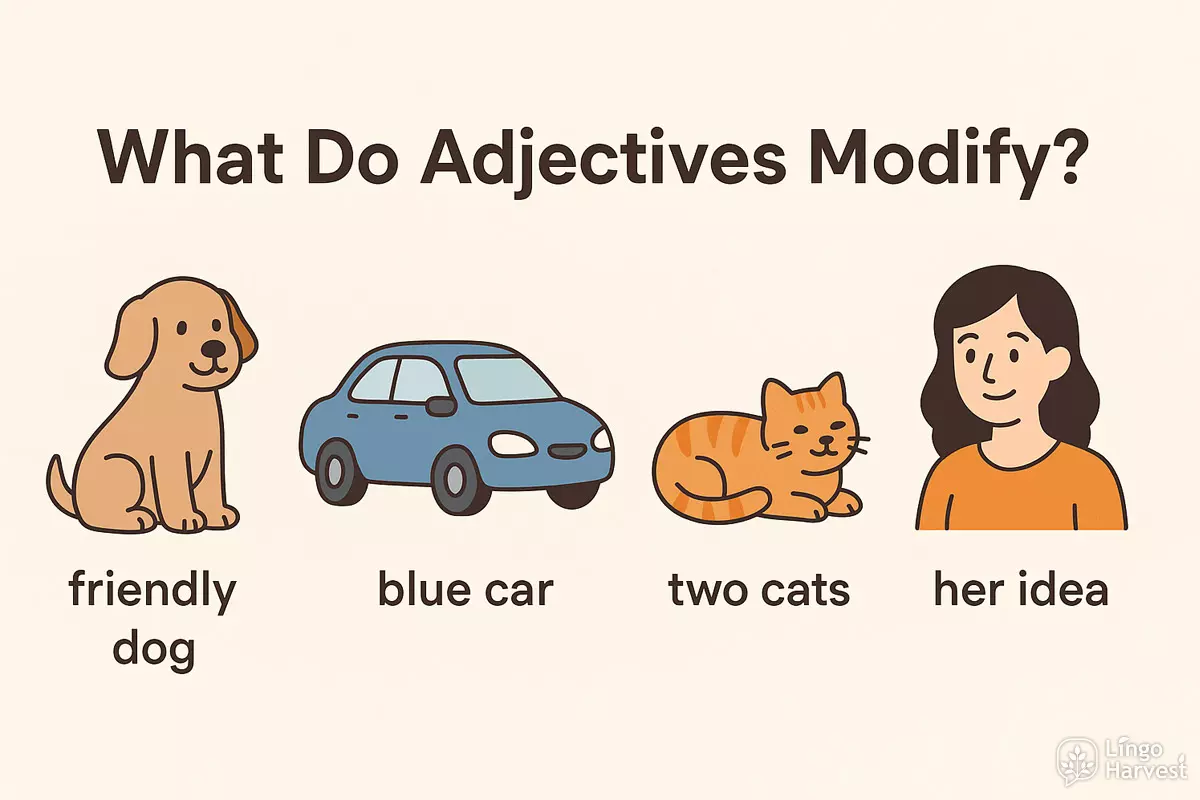
Adjectives provide more information about nouns or pronouns. They describe qualities, quantities, or states of people, places, animals, or things. For example, in “the blue car,” “blue” tells us something about the car (a noun). Some typical questions adjectives answer include: What kind? Which one? How many? Whose?
- big house
- three cats
- happy child
- wooden table
- old book
- red apple
- famous actor
- every student
- this problem
- her idea
What Do Adverbs Modify?
Adverbs give extra detail about verbs, adjectives, or other adverbs. They often explain how, when, where, or to what degree an action happens. In “She sings beautifully,” “beautifully” describes the verb “sings.” Adverbs can also modify adjectives (“very tall”) or other adverbs (“quite quickly”).
- He ran quickly.
- She arrived late.
- The test was extremely difficult.
- They spoke softly.
- He almost missed the bus.
- She is very happy.
- The answer is clearly correct.
- He eats too much.
- We’ll leave soon.
- They live nearby.
Side-by-Side Comparison
The following table summarizes the main differences in what adjectives and adverbs describe:
| Adjectives | Adverbs |
|---|---|
| Modify nouns or pronouns → the red ball → a tall woman |
Modify verbs, adjectives, or other adverbs → run quickly → very happy |
| Answer: What kind? Which one? How many? | Answer: How? When? Where? To what degree? |
| Usually placed before the noun | Often placed after the verb, or before adjectives/adverbs |
| Examples: green, several, noisy, her | Examples: quickly, almost, very, silently |
Knowing these roles helps you choose the right form when you want to add detail. Focus on what you are describing—the action or the “thing”—to decide if you need an adjective or an adverb.
Be + Adjective vs Verb + Adverb
Understanding when to use an adjective and when to use an adverb is a common challenge for English beginners. The verb "be" (am, is, are, was, were) is special: it links the subject to a description, so it’s followed by an adjective, not an adverb. In contrast, most other verbs describe actions and are modified by adverbs, which tell us how something happens.
How to Decide: Quick Test
If you want to describe a state or quality (what someone or something is like), use an adjective after "be". If you want to describe how an action happens, use an adverb after an action verb.
- He is happy. (Describes his state – adjective)
- She sings beautifully. (Describes how she sings – adverb)
- The soup smells delicious. (Linking verb, so adjective)
- They work hard. (Describes how they work – adverb)
- I feel tired. (State, so adjective)
- He speaks quickly. (How he speaks – adverb)
- The weather is cold. (State – adjective)
- She runs fast. (How she runs – adverb)
- You look great. (State or appearance – adjective)
- He drives carefully. (How he drives – adverb)
Common Mistakes and How to Avoid Them
It’s easy to mix these up, especially because some adverbs and adjectives look similar. For example, "good" is an adjective, but "well" is an adverb. Remember, after "be" and similar verbs like "seem", "look", "feel", "become", use adjectives.
| After "be" or linking verb | After action verb |
|---|---|
| I am happy. | I speak happily. |
| She is quiet. | She works quietly. |
| The cake smells good. | He cooks well. |
| They look tired. | They walk slowly. |
| We are late. | We arrived late. |
Summary
To sum up, use adjectives to describe what someone or something is (after "be" and linking verbs), and adverbs to describe how an action happens (after most other verbs). When in doubt, ask yourself: Am I describing a state or an action? This simple check can help you choose the right form every time.
Common Trap Words (hard/hardly, late/lately)
Some English words can easily confuse learners because their adjective and adverb forms look similar but mean very different things. Two classic examples are “hard” vs. “hardly” and “late” vs. “lately.” Recognizing the differences in meaning and usage will help you avoid common mistakes.
“Hard” and “Hardly”
“Hard” is both an adjective and an adverb, but “hardly” is only an adverb with a completely different meaning.
- Hard (adjective): The surface is hard. (not soft)
- Hard (adverb): She works hard. (puts in a lot of effort)
- Hardly (adverb): He hardly works. (almost not at all)
It’s easy to confuse “hard” and “hardly,” but remember: “hardly” means “barely” or “almost not.”
“Late” and “Lately”
“Late” can be an adjective or adverb meaning “not on time.” “Lately” is an adverb that refers to “recently.”
- Late (adjective): The train is late.
- Late (adverb): She arrived late.
- Lately (adverb): Have you seen her lately? (in the recent past)
Notice that “lately” never means “not on time”; it always refers to a recent period.
Quick Reference: Meanings and Usage
| Word | Part of Speech | Typical Meaning / Example |
|---|---|---|
| hard | adjective/adverb | Strong effort or not soft She studies hard. |
| hardly | adverb | Almost not I can hardly hear you. |
| late | adjective/adverb | Not on time He was late for class. |
| lately | adverb | Recently Have you traveled lately? |
Typical Beginner Mistakes ❌
- Using “hardly” to mean “with effort”: She works hardly → Incorrect
- Using “lately” to mean “not on time”: He arrived lately → Incorrect
- Switching “hard” and “hardly”: I can hard understand → Incorrect
- Confusing “late” and “lately” in time expressions
Paying close attention to these subtle differences will help you sound more natural and avoid misunderstandings. Always double-check the context when you use these pairs!
Good vs Well in Real Sentences
Choosing between “good” and “well” often confuses English learners, but clear examples make the difference easy to see. “Good” is usually an adjective, describing nouns (people, places, things), while “well” functions as an adverb, describing verbs (actions). If you want to say how someone does something, you’ll probably need “well.” If you want to describe someone or something, “good” is usually correct.
Quick Comparison in Context
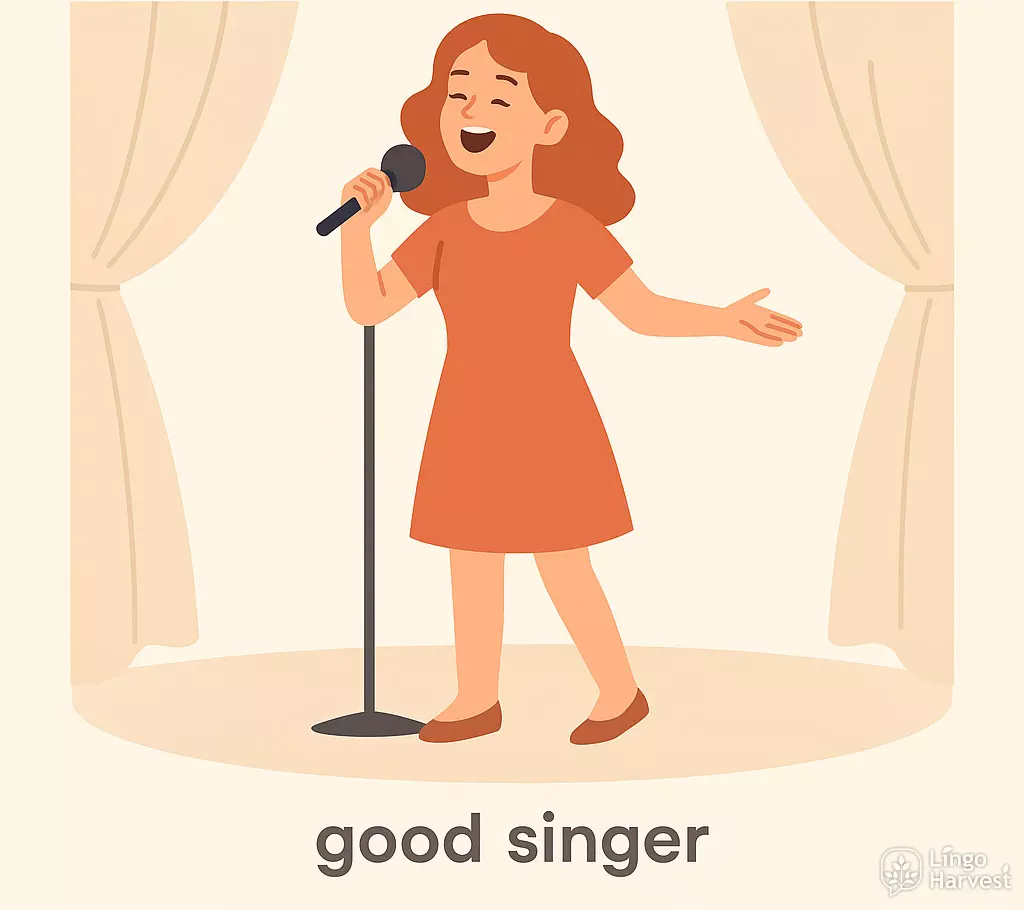
Let’s look at typical sentences you might hear or use. Notice how the word choice fits what’s being described:
- You did well on the test. ✅
- She is a good singer. ✅
- He plays the guitar well. ✅
- That was a good meal. ✅
- I don’t feel well today. ✅ (health, exception: here “well” is an adjective)
- He gave a good answer. ✅
- The team worked well together. ✅
- This is a good idea. ✅
- She speaks English well. ✅
- They are good friends. ✅
- He didn’t sleep well last night. ✅
- That’s not a good excuse. ✅
- The instructions are good. ✅
- He drives well, even in the rain. ✅
- She’s a good cook. ✅
- Did you sleep well? ✅
Common Mistakes and How to Fix Them
It’s easy to mix up these words. Here are some typical errors and the correct forms:
- ❌ He did good on the exam.
→ He did well on the exam. - ❌ She sings good.
→ She sings well. - ❌ I feel good (when you mean health).
→ I feel well.
Summary Table: When to Use Each Word
| Word | Typical Use | Example |
|---|---|---|
| Good | Adjective (describes nouns) | She is a good teacher. |
| Well | Adverb (describes verbs) | He writes well. |
| Well | Adjective (health only) | I don’t feel well. |
Understanding the difference between these two words will help you sound more natural in everyday English. When in doubt, check if you are describing an action (use “well”) or a thing/person (use “good”). With practice, choosing the right word becomes automatic.
Look/Feel/Smell/Taste + Adjective
When describing how something appears, feels, smells, or tastes, English typically uses an adjective, not an adverb. This pattern is a common trap for learners, but there’s a simple logic behind it: these verbs act as linking verbs, connecting the subject to a state or quality, rather than describing the action itself.
Quick Explanation
After verbs like "look," "feel," "smell," and "taste," we describe the state (how something is), not how the action is performed. For instance, "The soup smells delicious" means the quality of the soup, not the manner of smelling.
- The cake looks amazing.
- She feels tired.
- This flower smells wonderful.
- The lemonade tastes sour.
- Your idea sounds interesting.
- The fabric feels soft.
- His answer sounds strange.
- The air smells fresh.
- The bread tastes stale.
- The sky looks clear.
- My hands feel cold.
- The soup tastes bland.
- The flowers smell sweet.
- Her voice sounds cheerful.
- The pillow feels lumpy.
- This room looks messy.
Common Mistake: Adverb Instead of Adjective
It’s easy to accidentally use an adverb here, especially for beginners. For example, saying "The soup smells deliciously" is incorrect, unless you mean the soup is smelling something in a delicious manner (which is not the case).
| Correct | Incorrect |
|---|---|
| The cake looks amazing. | The cake looks amazingly. |
| The soup smells good. | The soup smells well. |
| This fabric feels soft. | This fabric feels softly. |
| The lemonade tastes sour. | The lemonade tastes sourly. |
Why Is It This Way?
These verbs don’t describe an action done by the subject; instead, they link the subject to a quality or condition. That’s why adjectives are the right choice. If you remember this, you’ll avoid one of the most common errors in beginner English writing and speaking. In summary, after verbs of senses and appearance, always use an adjective to describe the quality or state, not an adverb describing the action. This habit will make your English sound much more natural.
Common Mistakes and How to Fix Them
Many English learners confuse when to use words like "quick" versus "quickly," especially if their native language doesn’t distinguish between adjectives and adverbs in the same way. Below are some of the most frequent slip-ups, along with practical tips and corrections.
Mixing Up Adjectives and Adverbs
It's easy to select the wrong form, especially after verbs. For example, saying "She sings beautiful" instead of "She sings beautifully." Remember, adjectives describe nouns ("a beautiful song"), while adverbs modify verbs ("sings beautifully").
- He runs quick ❌ → He runs quickly ✅
- This is a real delicious cake ❌ → This is a really delicious cake ✅
- The dog barked loud ❌ → The dog barked loudly ✅
- She is a good singer ✅ (Correct: "good" describes "singer")
- She sings good ❌ → She sings well ✅
Irregular Forms and Exceptions
Some words don’t follow the usual "-ly" rule, which can trip up even attentive students. For example, "good" becomes "well," not "goodly." A few adverbs have the same form as their adjective, like "fast" and "hard."
| Adjective | Adverb |
|---|---|
| good | well |
| fast | fast |
| hard | hard |
| late | late |
| easy | easily |
| careful | carefully |
| early | early |
| high | highly |
Double Negatives and Redundant Forms
Avoid using both forms together, like "He ran very fastly" (should be "He ran very fast"). Double negatives like "not unquickly" can also cause confusion and are best avoided in beginner writing.
Quick Tips for Self-Checking
- If the word describes a noun, use an adjective ("a careful driver").
- If it describes a verb, use an adverb ("drives carefully").
- Check for irregular forms—don’t just add "-ly" automatically.
- After linking verbs (be, seem, look), use adjectives ("She looks happy").
- With action verbs, use adverbs ("She sings beautifully").
- If in doubt, try replacing your word with "slow/slowly" to test the sentence structure.
By practicing these distinctions and watching out for exceptions, you’ll avoid the most common adjective/adverb mix-ups. Consistent self-checking and exposure to native usage will strengthen your confidence.
Practice: Identify and Replace Forms
Understanding when to use an adjective or adverb can be challenging for beginners. Let’s work through some exercises to help you spot the difference and practice switching them in sentences. These activities focus on recognizing the correct word form and replacing mistakes with the right one.
Quick Check: Spot the Error
Read each sentence carefully. Decide if the underlined word is correct. If not, write the correct word form.
- The cat ran quick across the yard.
- She sings beautifully every morning.
- He is a careful driver.
- The child spoke soft to the puppy.
- They finished the test fast.
Show answers
- quick → quickly
- beautifully (correct)
- careful (correct)
- soft → softly
- fast (correct)
Adjective or Adverb? Choose the Right Form
For each sentence, choose the correct word from the pair in brackets.
- The soup tastes (good / well).
- He answered all the questions (correct / correctly).
- My brother runs very (fast / fastly).
- She is a (careful / carefully) planner.
- They worked (hard / hardly) to finish the project.
Show answers
- good
- correctly
- fast
- careful
- hard
Transform: Replace the Form
Rewrite each sentence, changing the adjective to an adverb (or vice versa) as needed:
- She is a quick runner. → She runs ______.
- The boy spoke loudly. → He has a ______ voice.
- Maria is a happy child. → She smiles ______.
- He drives dangerous. → He is a ______ driver.
Show answers
- quickly
- loud
- happily
- dangerous
Common Adjective and Adverb Forms
Here are some frequently confused pairs. Notice how the adverb form often ends with -ly:
- slow → slowly
- happy → happily
- careful → carefully
- easy → easily
- quiet → quietly
- bad → badly
- loud → loudly
- gentle → gently
- angry → angrily
- sad → sadly
- polite → politely
- quick → quickly
- simple → simply
- careless → carelessly
- serious → seriously
- brave → bravely
- beautiful → beautifully
- hard → hard (note: 'hardly' means 'almost not')
Comparison Table: Adjective vs. Adverb in Sentences
| Adjective Example | Adverb Example |
|---|---|
| He is a careful student. | He studies carefully for exams. |
| The flower is beautiful. | She sings beautifully. |
| This is a fast car. | The car moves fast on the road. |
| It was a hard task. | They worked hard all day. |
Remember, adjectives describe nouns, while adverbs usually describe verbs, adjectives, or other adverbs. Practicing these patterns will help you feel more confident in choosing the right form.