Question Words as Adverbs: When, Where, Why, How

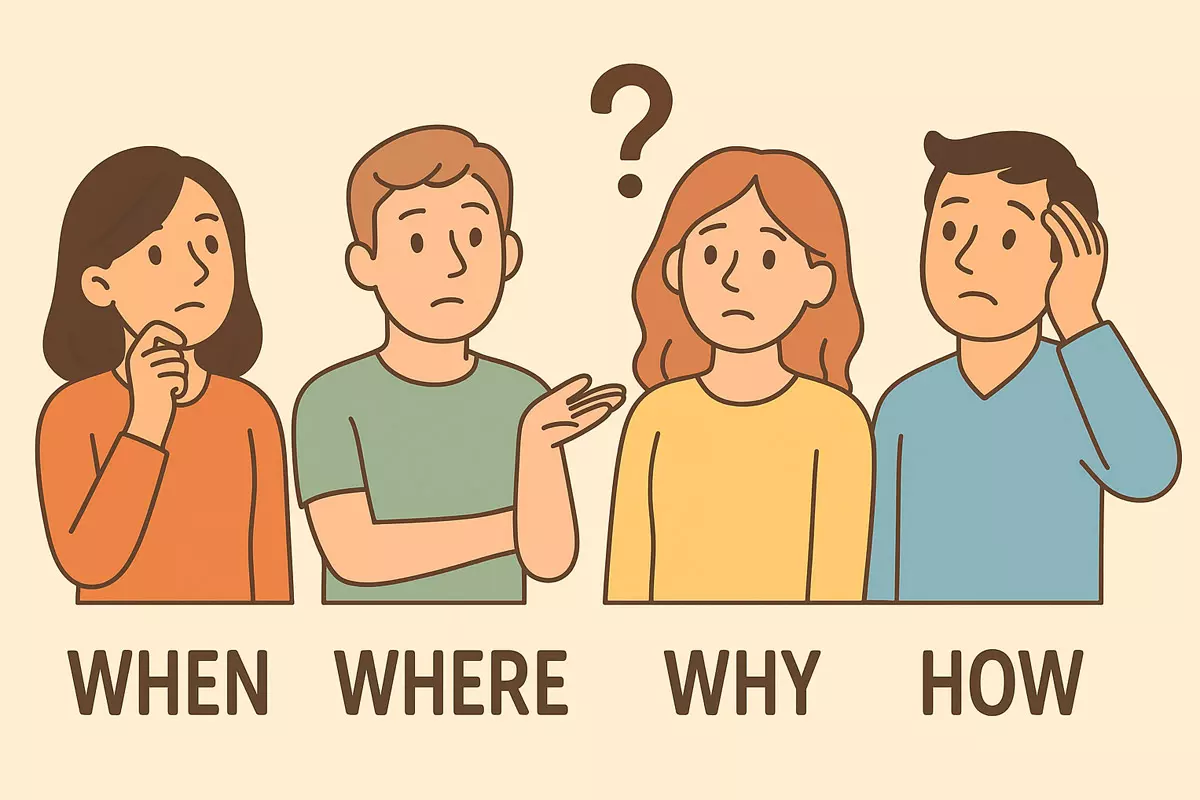 Here we how wh-words act as adverbs in questions, explains correct word order, short answers, and using how. It also addresses common classroom situations, typical errors, and includes practice to help learners build clear questions.
Interrogative terms such as when, where, why, and how play a crucial role in forming questions about time, place, reasons, and manner. By using these words effectively, you can gather specific information and ensure that your conversations are both clear and precise. Understanding their function as modifiers helps you ask more targeted questions, leading to better communication and reducing misunderstandings in both casual and formal settings.
Wh- Words as Adverbs, Not Pronouns
Many question words in English serve as adverbs, not as pronouns. This distinction matters because adverbs modify verbs, adjectives, or other adverbs, providing information about time, place, reason, or manner. In contrast, pronouns replace nouns. For example, “when,” “where,” “why,” and “how” often act as adverbs, not as replacements for nouns.
Recognizing Adverbial Question Words
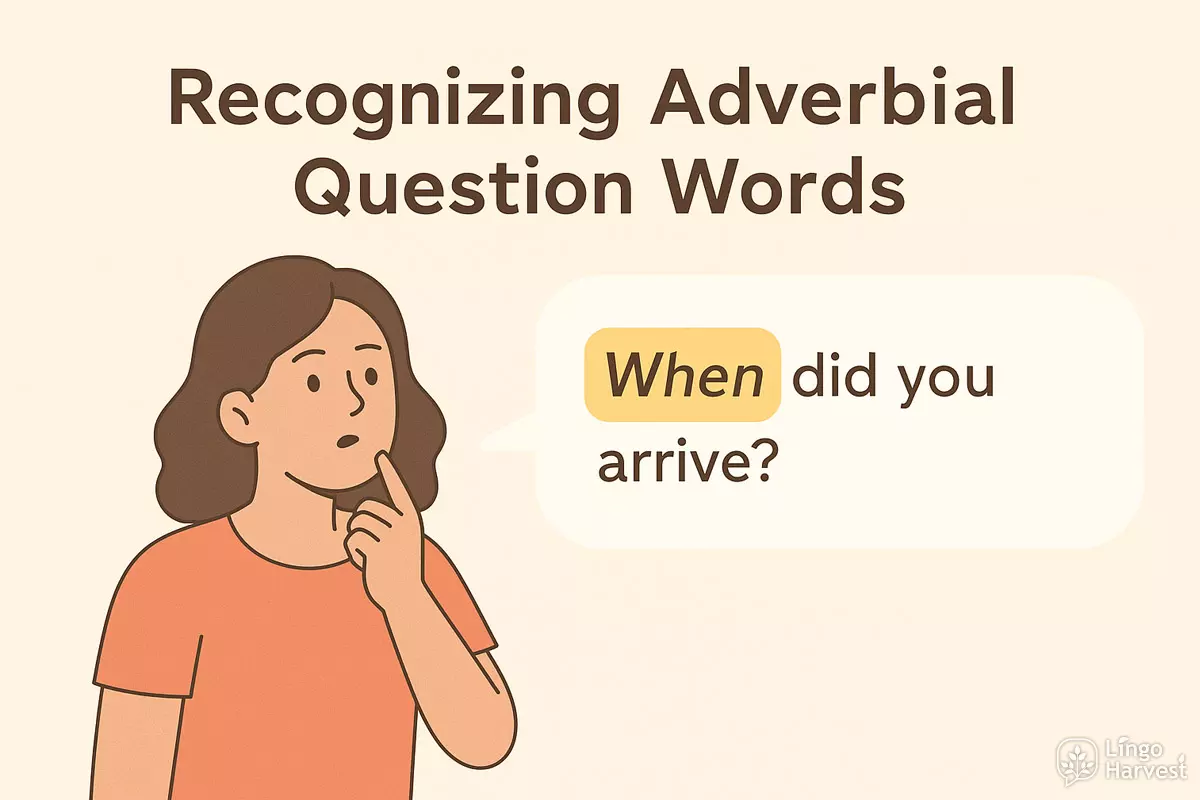
When these words introduce questions, they usually modify the verb and clarify circumstances. Consider these examples:
- When did you arrive? (modifies “arrive”—asks about time)
- Where is your bag? (modifies “is”—asks about place)
- Why are you late? (modifies “are”—asks about reason)
- How did you do that? (modifies “do”—asks about manner)
Notice that in each case, the question word is not standing in for a noun. Instead, it is providing additional information about the action or state described by the verb.
Comparison: Adverbs vs. Pronouns
It’s easy to confuse these adverbial question words with their pronominal counterparts such as “who,” “what,” or “which,” which refer directly to people or things. To clarify the difference, see the structured comparison below:
| Question Word | Function in the Sentence |
|---|---|
| When | Adverb: Modifies the verb by asking about time When did she call? |
| Where | Adverb: Modifies the verb by asking about place Where are they going? |
| Why | Adverb: Modifies the verb by asking about reason Why did he leave? |
| How | Adverb: Modifies the verb by asking about manner How do you know? |
| Who | Pronoun: Substitutes for a person Who called you? |
| What | Pronoun: Substitutes for a thing or idea What happened? |
| Which | Pronoun: Refers to a specific item or choice Which is yours? |
Common Patterns with Adverbial Question Words
In everyday English, these adverbs often appear at the start of direct and indirect questions. Here are some typical patterns:
- When will the meeting start?
- I don’t know when he’ll be back.
- Where did you put my keys?
- Can you tell me where the station is?
- Why are you upset?
- She wondered why they left early.
- How does this work?
- Let’s see how it’s done.
Understanding the role of these question words as adverbs helps you build clearer questions and recognize their function within sentences. This distinction is a key step toward mastering English sentence structure.
Correct Word Order in Questions
Understanding how to arrange words when forming questions with adverbial question words—like when, where, why, and how—is essential for clear communication. These words typically come at the very beginning of an interrogative sentence, followed by the auxiliary or modal verb, the subject, and the main verb. This structure helps listeners immediately recognize that a question is being asked, and it keeps the sentence easy to follow. When using these adverbs, it’s important to remember that English questions often invert the subject and auxiliary verb compared to statements. For example, "You are leaving" becomes "When are you leaving?" The question word signals the information being requested, while the rest of the sentence follows a predictable order.
Basic Structure for Question Formation
The usual pattern for questions with adverbial interrogatives is:
- Question word (When, Where, Why, How)
- Auxiliary or modal verb (is, are, do, does, can, will, etc.)
- Subject (he, you, they, the students, etc.)
- Main verb (go, arrive, study, work, etc.)
- Rest of the sentence (if needed)
Common Examples
- When does the train leave?
- Where are you going?
- Why did she call?
- How can I help?
- When will we start?
- Where do they live?
- Why are you upset?
- How did you do that?
- When is your birthday?
- Where should I park?
- Why haven’t you finished?
- How does it work?
- When can we meet?
- Where have you been?
- Why am I here?
- How long will it take?
Word Order Comparison Table
| Statement | Question Form |
|---|---|
| You are coming. | When are you coming? |
| She left the office. | Why did she leave the office? |
| They will arrive tomorrow. | How will they arrive? |
| We meet here. | Where do we meet? |
| He finished the report. | When did he finish the report? |
Tips and Common Mistakes
- ✅ Start with the question word, not the subject.
- ✅ Use the correct auxiliary verb for the tense.
- ❌ Don’t forget the subject-auxiliary inversion (e.g., "Why you are late?" → "Why are you late?").
- ✅ If there is no auxiliary in the statement, add do/does/did as needed.
Mastering this pattern will make your questions sound natural and clear, whether you’re asking for time, place, reason, or manner.
Short Answers and Clarifying Replies
Understanding how to respond concisely to questions formed with adverbial interrogatives like "when," "where," "why," and "how" is essential for natural communication. Native speakers often use brief, direct replies or clarifications that match the intent of the original query, rather than repeating the entire question.
Responding with Information, Not Full Sentences
Short answers typically focus on the specific detail asked for. For example, if someone asks "When is the meeting?" a natural reply is simply "At 3 PM," rather than "The meeting is at 3 PM." This approach saves time and sounds more conversational.
- When? – "Tomorrow morning."
- Where? – "In the conference room."
- Why? – "Because we need to finalize the project."
- How? – "By email."
Clarifying or Expanding on Short Replies
Sometimes, a brief response may lead to confusion or further questions. Clarifying replies help keep the conversation clear and ensure both sides understand.
- "At 3 PM." (Short answer)
- "At 3 PM, right after lunch." (Clarifying reply)
- "By train." (Short answer)
- "By train, unless there's a delay." (Extended clarification)
Common Patterns for Brief Replies
Here’s a list of typical short answers and clarifying phrases you might hear or use in everyday conversation:
- "Next week."
- "Downstairs."
- "Because it’s urgent."
- "With my team."
- "After dinner."
- "On the left."
- "To avoid confusion."
- "By calling him."
- "In two hours."
- "At the entrance."
- "For safety reasons."
- "With a password."
- "On Friday night."
- "In the main office."
- "Since it was raining."
- "Carefully."
- "Because she asked."
- "By following the instructions."
Comparing Short and Clarifying Replies
| Question Word | Example Short Reply | Clarifying or Extended Reply |
|---|---|---|
| When | At noon. | At noon, just after the break. |
| Where | Upstairs. | Upstairs, in the meeting area. |
| Why | Because it’s required. | Because it’s required for the report. |
| How | By bus. | By bus, since the train isn’t running. |
Using How for Manner and Degree
The word how acts as an adverb to ask about the way something happens or the extent of an action or state. In questions, it helps us discover both the method (manner) and the intensity or amount (degree) involved in an event. This flexibility makes how a useful tool for gathering detailed information.
How to Ask About Manner

When focusing on the method or process, how seeks an explanation of the approach or technique. For example, “How did you solve the problem?” expects a description of the steps or reasoning. Here are some common patterns:
- How did you make this?
- How does this work?
- How do they travel so quickly?
- How is the food prepared?
- How can I get there?
- How do you say this word?
- How do you know?
- How does she paint so well?
- How do you organize your schedule?
- How should I proceed?
How to Ask About Degree
How also measures the extent or amount of something, often followed by adjectives or adverbs. These questions seek information about size, number, frequency, or intensity. Some typical structures include:
- How old are you?
- How tall is the building?
- How much does this cost?
- How many people came?
- How far is the station?
- How often do you visit?
- How quickly can you finish?
- How long will it take?
- How well does he play guitar?
- How late does the store stay open?
Comparison of "How" in Different Contexts
| Function | Example Question |
|---|---|
| Method (Manner) | How did you fix the car? |
| Extent (Degree) | How cold is it outside? |
| Frequency | How often do you exercise? |
| Quantity | How many books do you have? |
| Duration | How long did it last? |
In summary, how is versatile, covering both the process and the degree of actions or qualities. Understanding these uses helps in forming precise questions for a variety of situations.
Common Classroom Situations
Learners often encounter adverbial question words like “when,” “where,” “why,” and “how” during class activities, especially while practicing speaking, listening, and writing. Teachers use these terms to check understanding, prompt discussion, or encourage detailed answers. Students benefit from seeing these adverbs in context, as they help frame questions about time, place, reason, and manner.
Typical Scenarios Involving Adverbial Question Words
- Prompting students to describe events: When did it happen?
- Asking about locations in stories or images: Where are the characters?
- Encouraging explanations for decisions or actions: Why did you choose that answer?
- Practicing instructions and processes: How do you solve this problem?
- Role-play interviews: students ask and answer with “when,” “where,” “why,” and “how.”
- Listening exercises focused on identifying details using these adverbs.
- Writing prompts that begin with question words to encourage full sentences.
- Class discussions about routines: When do you do your homework?
- Describing routes or directions: How do you get to school?
- Explaining feelings or opinions: Why is this your favorite?
Patterns and Sample Exchanges
Students often need to answer or form questions using these words. Here are some useful patterns:
- “When do you…?” → “I usually… at 7 o’clock.”
- “Where is the…?” → “It’s on the table.”
- “Why are you…?” → “Because I want to learn more.”
- “How did you…?” → “I followed the instructions.”
Comparison Table: Focus of Each Question Word
| Question Word | Typical Information Requested | Example Question | Sample Answer |
|---|---|---|---|
| When | Time, date, sequence | When is your birthday? | In July. |
| Where | Place, position, location | Where do you live? | Near the park. |
| Why | Reason, purpose, cause | Why are you late? | Because I missed the bus. |
| How | Manner, method, process | How do you cook rice? | With a rice cooker. |
Classroom Tips
Encouraging students to use a range of question words as adverbs helps them ask for specific details and develop richer conversations. Teachers often model these in context, correct misuse gently, and create activities where learners must choose the correct adverb to complete a question. This practice builds confidence and clarity in everyday communication.
Typical Errors and Fixes
Misusing question words like "when," "where," "why," and "how" as adverbs can lead to awkward or incorrect sentences. Learners often confuse their placement, punctuation, or function within questions and statements. Understanding their proper use helps avoid confusing or ambiguous communication.
Common Pitfalls with Question Adverbs
- Placing the adverb in the wrong part of the sentence (e.g., "You are going when?" instead of "When are you going?")
- Using question adverbs in indirect questions incorrectly (e.g., "I don't know when will he come" instead of "I don't know when he will come")
- Mixing up question words (e.g., using "where" for time, "when" for place)
- Forgetting to invert subject and verb in direct questions (e.g., "Why you did that?" instead of "Why did you do that?")
- Adding unnecessary auxiliary verbs (e.g., "How do you can do this?" instead of "How can you do this?")
- Omitting necessary prepositions (e.g., "Where are you going?" vs. "Where you going?")
- Using a statement word order in direct questions (e.g., "You are how?" instead of "How are you?")
- Misplacing question marks or using them in indirect questions (e.g., "He asked when did she arrive?" instead of "He asked when she arrived.")
- Confusing "how" phrases (e.g., "How much time it takes?" instead of "How much time does it take?")
- Doubling up on question words (e.g., "When where did you go?")
Structured Examples: Incorrect vs. Correct Usage
| Incorrect Example | Corrected Version |
|---|---|
| Where you are going? | Where are you going? |
| I don't know why did he leave. | I don't know why he left. |
| How you can solve this? | How can you solve this? |
| When do you will arrive? | When will you arrive? |
| I wonder where is she. | I wonder where she is. |
| He asked when did you call? | He asked when you called. |
| Why you are late? | Why are you late? |
| Where it is? | Where is it? |
| When you will finish? | When will you finish? |
| How much it cost? | How much does it cost? |
Quick Fixes
- Always invert the subject and auxiliary verb in direct questions.
- For indirect questions, use statement word order (no inversion).
- Choose the correct question adverb for time ("when"), place ("where"), reason ("why"), or manner ("how").
- Double-check for missing auxiliary verbs ("do," "does," "will," etc.).
- Remember: indirect questions do not take a question mark.
With careful attention to these patterns and corrections, you can confidently use question adverbs in both direct and indirect sentences.
Practice: Build Clear Questions
Understanding how to form questions with "when," "where," "why," and "how" helps you communicate clearly and get the information you need. Let's apply your knowledge by creating and analyzing questions using these adverbial question words.
Identify the Question Word
Choose the correct word to complete each question:
- ______ did you go to the library?
- ______ is your favorite restaurant located?
- ______ are you late today?
- ______ do you solve this problem?
Show answers
- When
- Where
- Why
- How
Expand the Question
Turn each statement into a clear information-seeking question. Use "when," "where," "why," or "how" as needed:
- I want to know the time of the meeting.
- I am curious about the location of the concert.
- I need to understand the reason for the delay.
- I would like to learn the method for making bread.
Show answers
- When is the meeting?
- Where is the concert?
- Why was there a delay?
- How do you make bread?
Common Patterns with Question Words
Below are useful structures for asking questions with adverbial question words. Notice the word order and auxiliary verbs:
- When + auxiliary + subject + verb? (e.g., When does the class start?)
- Where + auxiliary + subject + verb? (e.g., Where did you find this?)
- Why + auxiliary + subject + verb? (e.g., Why are you studying English?)
- How + auxiliary + subject + verb? (e.g., How can I improve my writing?)
- How + adjective/adverb + auxiliary + subject + verb? (e.g., How quickly can you finish?)
- How many/much + noun + auxiliary + subject + verb? (e.g., How many books do you have?)
- How long + auxiliary + subject + verb? (e.g., How long will it take?)
- How often + auxiliary + subject + verb? (e.g., How often do you travel?)
- How far + auxiliary + subject + verb? (e.g., How far is the station?)
- How old + auxiliary + subject + verb? (e.g., How old is your brother?)
Practice: Match the Answers
Match the questions to the most appropriate answers:
- 1. When are you leaving?
- 2. Where did you put my keys?
- 3. Why is the sky blue?
- 4. How do you get to the museum?
- A. Because of the way sunlight interacts with the atmosphere.
- B. Tomorrow morning.
- C. On the kitchen table.
- D. Take the number 5 bus from the main station.
Show answers
- 1-B
- 2-C
- 3-A
- 4-D
Quick Reference: Question Word Functions
| Question Word | Typical Use | Example |
|---|---|---|
| When | To ask about time or date | When did it start? |
| Where | To ask about place or location | Where are my shoes? |
| Why | To ask about reason or cause | Why are you upset? |
| How | To ask about manner, process, or condition | How does it work? |