Participial Clauses to Add Background Information

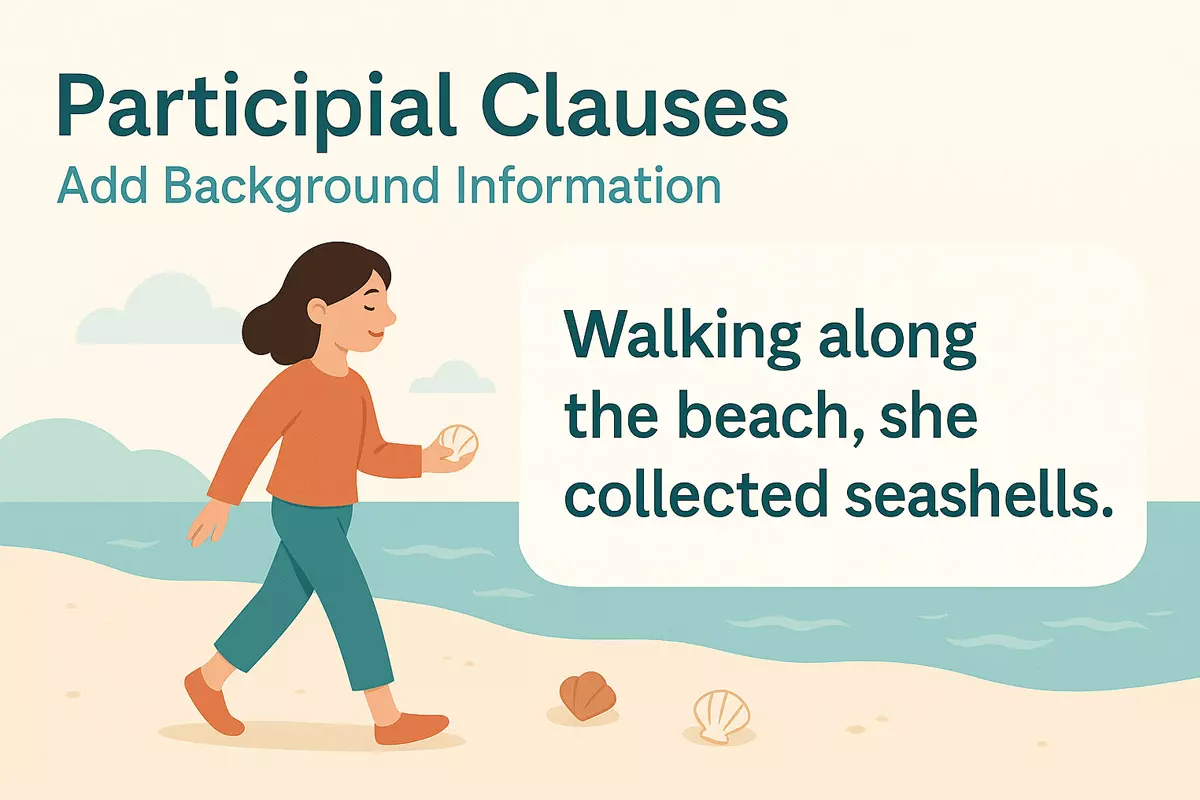 Here we the purpose of participial clauses, how to use present and past participles, ways to link actions, and strategies to avoid dangling participles. It also discusses formal uses, common mistakes, and provides practice exercises.
Have you ever wondered how skilled writers seamlessly add extra details to their sentences? By incorporating verb-based phrases, you can naturally enrich your writing with context and nuance, making it easier to share background information without disrupting the flow. This technique helps your readers stay interested and informed, as the additional details are woven into the narrative rather than presented abruptly, resulting in more engaging and sophisticated writing.
Purpose of Participial Clauses
Participial clauses are a practical way to add background or extra information to sentences without making them overly long or repetitive. By using these structures, writers and speakers can clarify circumstances, reasons, results, or timing in a compact form. This approach helps keep communication efficient and engaging, especially when describing actions or providing context.
Why Use Participial Clauses?
Writers often use this grammatical form to:
- Combine two related ideas into a single sentence
- Avoid repetition of subjects or verbs
- Add detail about time, cause, condition, or manner
- Express background actions that support the main idea
- Make writing more concise and varied
Common Functions
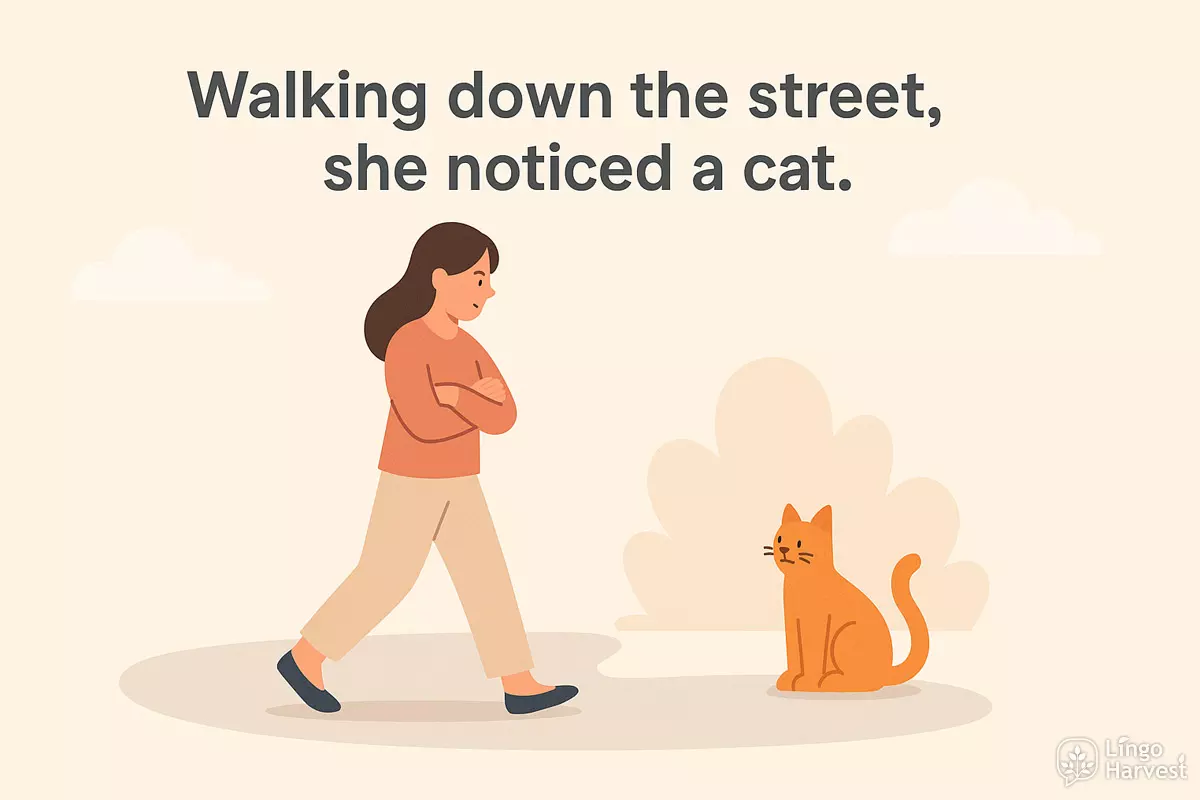
Participial constructions frequently serve one of the following roles in a sentence:
- Indicating simultaneous actions (e.g., "Walking down the street, she noticed a cat.")
- Showing cause or reason ("Feeling tired, he went to bed early.")
- Expressing conditions ("Given enough time, we can finish.")
- Adding descriptive information ("Built in 1920, the house is still sturdy.")
- Clarifying sequence ("Having finished his work, he left the office.")
- Introducing background details ("Known for her kindness, Maria is popular.")
- Providing contrast ("Worried about the test, he still tried to relax.")
- Summarizing results ("Exhausted by the journey, they fell asleep instantly.")
- Referencing previous actions ("Having studied abroad, she speaks fluent French.")
- Highlighting exceptions or conditions ("Assuming good weather, the event will proceed.")
Benefits in Communication
Using participial phrases can make language sound more natural and sophisticated. They allow for smoother transitions between ideas and help avoid choppy or repetitive sentence structures. By condensing background or additional information, these clauses help maintain flow and keep the focus on the main message.
Comparison: Full Clauses vs. Participial Clauses
| Full Clause | Participial Clause |
|---|---|
| Because she was tired, she went home. | Tired, she went home. |
| While he was reading, he fell asleep. | Reading, he fell asleep. |
| After he had finished dinner, he watched TV. | Having finished dinner, he watched TV. |
| Since it was built in 1920, the house is old. | Built in 1920, the house is old. |
In summary, participial clauses offer a flexible and efficient way to enrich sentences with background, context, or extra detail without overwhelming the reader or listener.
Present vs Past Participle Uses
Understanding the contrast between present and past participles is key for forming participial clauses that add background information in English sentences. Both forms let you combine ideas concisely, but they differ in meaning and function.
Present Participles: Ongoing Actions or States
Present participles (ending in -ing) generally indicate that the noun is performing an action or that something is happening at the same time as the main verb. These forms are especially useful for showing cause, reason, or simultaneous actions.
- Walking down the street, she saw her friend.
- Knowing the answer, he raised his hand.
- Feeling tired, I went to bed early.
- Looking out the window, he noticed the rain.
- Carrying a heavy bag, she entered the building.
Past Participles: Completed Actions or Passive Meaning
Past participles (usually ending in -ed, but with irregular forms) often describe a state that results from a completed action or something done to the subject. They are commonly used to add background details, often with a passive sense.
- Shocked by the news, he dropped his phone.
- Built in 1920, the house is still sturdy.
- Confused by the instructions, she asked for help.
- Surprised by the results, the team celebrated.
- Left alone, the child began to cry.
Direct Comparison
To clarify how these forms work, here’s a side-by-side look at their main uses and meanings:
| Present Participle (-ing form) |
Past Participle (-ed/irregular form) |
|---|---|
| Active meaning (the noun does the action) e.g. Running late, she hurried to work. |
Passive or completed meaning (the noun receives the action) e.g. Tired by the journey, he fell asleep. |
| Often shows simultaneous or ongoing action e.g. Smiling, he greeted everyone. |
Often shows a background state or result e.g. Broken by the storm, the fence fell. |
| Can express cause or reason e.g. Knowing the risks, she proceeded carefully. |
Can express condition or reason e.g. Worried about the test, he studied all night. |
| Form: verb + ing | Form: verb + ed (regular) or irregular form |
Choosing the Right Form
Selecting between present and past participle forms depends on whether you want to highlight an active, ongoing situation or a passive, completed one. Practice with various examples helps you develop an intuition for which form best fits the background information you wish to convey.
Linking Actions with Participles
To show how two actions are connected, participial clauses often come in handy. They let you combine related activities or background details into a single, more fluid sentence. This keeps writing concise and avoids repetition, while also clarifying the relationship between events.
How Participial Clauses Connect Actions
When you use a participle phrase, you can indicate that two actions occur at the same time, one after the other, or even as a result of each other. The participle (present or past) links the background action to the main verb in the sentence, creating a smoother narrative flow.
- Present participle (-ing): shows simultaneous or closely related actions.
Walking down the street, she noticed a lost dog. - Past participle (usually -ed or irregular form): often describes a completed action or state.
Surprised by the news, he dropped his coffee. - Perfect participle (having + past participle): indicates one action finished before the other began.
Having finished his homework, Tom went out to play.
Common Patterns for Combining Actions
Writers use participial clauses to avoid repeating the subject or to express cause, time, or manner. Here are several patterns and examples:
- Opening the window, she let in some fresh air. → (The two actions happen together.)
- Finished with his meal, he left the table. → (The first action is completed before the second.)
- Shouting loudly, the fans cheered for their team.
- Stuck in traffic, we missed the movie’s start.
- Turning the corner, he bumped into an old friend.
- Having lost her keys, Maria couldn't enter the house.
- Confused by the instructions, the students asked for help.
- Carrying a heavy bag, she struggled up the stairs.
- Not knowing anyone at the party, he felt awkward.
- Annoyed by the noise, the neighbors complained.
- Seeing the rain, we decided to stay inside.
- Given extra time, the students finished the test.
- Having read the book, he watched the film adaptation.
- Excited about the trip, the children woke up early.
Clarifying Subject Reference
The subject of the participle phrase should be the same as the subject of the main clause. Otherwise, the sentence may become confusing or ungrammatical. For example:
- Correct: Running quickly, John caught the bus. (John is running and catching the bus.)
- Incorrect: Running quickly, the bus was caught by John. (Here, it sounds like the bus is running.)
Overview: Types of Participial Clauses and Their Uses
| Type | Form | Typical Use & Example |
|---|---|---|
| Present participle | Verb + -ing | Shows actions happening at the same time Laughing, she told her story. |
| Past participle | Verb (past participle form) | Describes a state or result Exhausted, he went to bed early. |
| Perfect participle | Having + past participle | One action completed before another Having eaten, they left the restaurant. |
| Negative participle | Not + participle | Shows the action did not happen Not knowing the answer, she guessed. |
Avoiding Dangling Participles
When writing sentences with participial clauses, it’s essential to make sure the participle clearly refers to the correct noun in the main clause. If the participle is left “dangling,” your reader may be confused about who or what is performing the action. This kind of mistake can lead to sentences that are unclear or unintentionally humorous.
What Is a Dangling Participle?
A dangling participle occurs when the noun being described is missing or incorrectly placed in the sentence. As a result, the participle seems to modify the wrong word, often leading to awkward or illogical meanings.
- Incorrect: Walking down the street, the flowers were blooming beautifully. ❌
- Correct: Walking down the street, I saw the flowers blooming beautifully. ✅
Tips to Prevent This Error
Keep these strategies in mind to ensure clarity:
- Make sure the subject of the main clause is the one performing the action in the participial phrase.
- Rewrite the sentence if the participle could refer to more than one noun.
- Read your sentence aloud to check for ambiguity or unintended meanings.
- If necessary, use a full clause instead of a participial phrase for clarity.
Common Patterns and How to Fix Them
Below is a comparison of sentences with misplaced participles and their improved versions. Notice how adjusting the subject or rephrasing the sentence makes the meaning clear.

| Problematic Sentence | Clear Version |
|---|---|
| After reading the book, the movie was disappointing. | After reading the book, I found the movie disappointing. |
| Running to catch the bus, the rain started pouring. | Running to catch the bus, she got soaked when the rain started pouring. |
| While driving to work, the accident was seen on Main Street. | While driving to work, I saw the accident on Main Street. |
| Looking out the window, the mountains appeared hazy. | Looking out the window, we noticed the mountains appeared hazy. |
Quick Checklist for Clear Participial Clauses
- Does the participial phrase directly describe the subject of the main clause?
- Is there any possible confusion about who is doing the action?
- Would a reader misinterpret the sentence if they didn’t know the context?
- Does reading the sentence aloud highlight any awkwardness?
By carefully checking your participial constructions, you can ensure your writing remains both precise and engaging.
Formal and Academic Uses
Participial clauses play an important role in academic and formal writing, allowing writers to present background information in a concise, sophisticated manner. By embedding context or secondary details within a sentence, participial constructions help to keep the main clause focused and avoid wordiness. This technique is especially useful in essays, reports, and scholarly articles, where clarity and brevity are valued.
Common Contexts for Participial Clauses
Writers often use participial phrases to:
- Summarize previous research or events (Having reviewed the literature, the author proceeded with the experiment.)
- Provide causes or reasons (Concerned about accuracy, the team double-checked the data.)
- Describe simultaneous actions (Walking into the lecture hall, she noticed the students were already seated.)
- Clarify conditions (Given adequate funding, the project will continue.)
- Indicate time relationships (Completed in 2010, the study remains relevant today.)
- Express contrasts or exceptions (Although working remotely, the staff remained productive.)
- Show results (Exposed to high temperatures, the material degraded rapidly.)
- Attribute findings or quotes (According to Smith, writing in 2018, the trend is reversible.)
- Refer to general background (Originating in the 19th century, this theory has evolved significantly.)
- Frame data or evidence (Based on recent surveys, public opinion has shifted.)
Effectiveness in Academic Writing
Using participial clauses for additional details helps produce more varied sentence structures, which can make writing smoother and less repetitive. This approach also allows for the inclusion of relevant background without interrupting the flow of the main argument.
Typical Patterns
Writers in academic settings often rely on certain patterns for participial clauses:
- Present participle: Noting the discrepancy, the researchers revised their approach.
- Past participle: Influenced by earlier studies, the authors adopted a new methodology.
- Perfect participle: Having completed the trial, the team published their results.
- Negative participle: Not included in the sample, these cases were excluded from analysis.
- Introductory participial phrase: Encouraged by the findings, she continued her research.
Comparing Participial Clauses and Full Clauses
| Participial Clause | Equivalent Full Clause |
|---|---|
| Completed in 2005, the project set new standards. | After it was completed in 2005, the project set new standards. |
| Having reviewed all the evidence, the committee reached a decision. | After they had reviewed all the evidence, the committee reached a decision. |
| Concerned about ethics, the researchers sought approval. | Because they were concerned about ethics, the researchers sought approval. |
| Originating in Asia, the species spread rapidly. | Since it originated in Asia, the species spread rapidly. |
Participial clauses are valued in scholarly contexts for their ability to condense information, signal relationships between ideas, and maintain academic tone. Mastering these structures can significantly elevate the clarity and professionalism of formal texts.
Common Mistakes to Avoid
When using participial clauses to enrich your writing, it’s easy to slip into a few typical errors. Being aware of these pitfalls will help your sentences stay clear, accurate, and natural.
Misplacing the Modifier
A frequent error is putting the participial phrase too far from the noun it modifies. This can confuse the reader or even change the meaning. For example:
- Incorrect: Walking down the street, the flowers were beautiful. (It sounds like the flowers are walking!)
- Correct: Walking down the street, I saw beautiful flowers.
Tense and Subject Agreement
It’s important that participial clauses match the tense and subject of the main clause. Mixing these up can create awkward or illogical sentences.
- Using a present participle for an action that happened earlier than the main verb.
- Letting the participial clause refer to the wrong subject.
Overusing Participial Clauses
While these structures add variety, using too many in one paragraph can make your writing dense and hard to follow. Aim for balance, mixing different sentence types.
Confusing Active and Passive Forms
Learners sometimes use the wrong participle. Remember, the present participle (-ing) is for active meaning, while the past participle (-ed or irregular) is for passive or completed actions.
| Intended Meaning | Example |
|---|---|
| Active (doing something) | Barking loudly, the dog chased the cat. (The dog is barking.) |
| Passive (having something done to it) | Shocked by the news, she dropped her phone. (She was shocked.) |
| Completed action before main verb | Having finished his homework, Tom went outside. |
| Simultaneous action | Listening to music, she cooked dinner. |
Avoiding Ambiguity
Ambiguous participial clauses can lead to misunderstanding. Make sure it’s always clear which noun the clause describes. If in doubt, rewrite the sentence for clarity.
Checklist: Frequent Issues
- Dangling participles (modifier not clearly linked to a noun)
- Unclear time relationships between actions
- Using participial phrases unnecessarily where a simple clause is clearer
- Forgetting commas to separate the clause from the main sentence
- Starting too many sentences in a row with participial phrases
- Using participial clauses with stative verbs (which usually do not take -ing)
- Making the participial clause too long or complex
- Using the wrong participle (e.g., “being broken” vs. “broken”)
Careful attention to these points will help you use participial constructions naturally and effectively, adding background detail without confusion.
Practice: Add Participial Clauses
Participial clauses are a concise way to add background or additional details to sentences. In this section, you’ll work with example sentences and learn to incorporate participial phrases to enrich the information provided. This hands-on practice will help you recognize and use these structures more naturally in your writing.
Task 1: Expand the Sentences
Rewrite each sentence by adding a participial clause that gives extra background. You can use present or past participles as appropriate.
- The students left the classroom. (They were chatting happily.)
- The dog barked loudly. (It was startled by a noise.)
- Maria finished her report. (She was feeling exhausted.)
- He stood at the window. (He was watching the rain.)
- The painting was discovered in the attic. (It had been forgotten for years.)
Show answers
- The students left the classroom, chatting happily.
- The dog barked loudly, startled by a noise.
- Maria finished her report, feeling exhausted.
- He stood at the window, watching the rain.
- The painting was discovered in the attic, forgotten for years.
Common Participial Clause Patterns
Participial clauses can express time, reason, condition, or additional description. Here are some patterns to observe and try using:
- Feeling tired, she went to bed early.
- Given enough time, you can finish the project.
- Not knowing the answer, he stayed silent.
- Built in 1890, the house needs repairs.
- Having finished his work, he left the office.
- Surprised by the results, they checked the data again.
- Walking along the river, we saw many birds.
- Confused by the instructions, she asked for help.
- Opened recently, the café is already popular.
- Knowing the risks, he proceeded carefully.
- Not recognized by anyone, the artist left quietly.
- Burned by the sun, the grass turned yellow.
Task 2: Identify the Function
For each participial clause below, decide if it shows time, reason, condition, or description in the sentence.
Task 2: Identify the Function
For each participial clause below, decide if it shows time, reason, condition, or description in the sentence.
- Finished with his meal, he left the restaurant.
- Not wanting to be late, she hurried.
- Given the weather, we stayed inside.
- Walking home, I met an old friend.
- Damaged in the storm, the roof needs repair.
- Feeling exhausted, they stopped for a break.
- Confused by the instructions, he asked for help.
- If handled carefully, the device will last longer.
- Having waited for an hour, they finally boarded.
- Surprised by the news, she didn’t know what to say.
Show answers
- Time
- Reason
- Condition
- Time
- Description
- Description
- Reason
- Condition
- Time
- Description
Quick Reference: Types of Participial Clauses
| Type | Example |
|---|---|
| Time | Leaving the house early, he avoided traffic. |
| Reason | Feeling ill, she stayed home. |
| Condition | Given more practice, you’ll improve. |
| Description | The book, written in 1920, is still popular. |
Practicing with participial clauses helps you write more naturally and add context without long relative clauses. Try creating your own examples to describe actions, reasons, and conditions in a compact way.