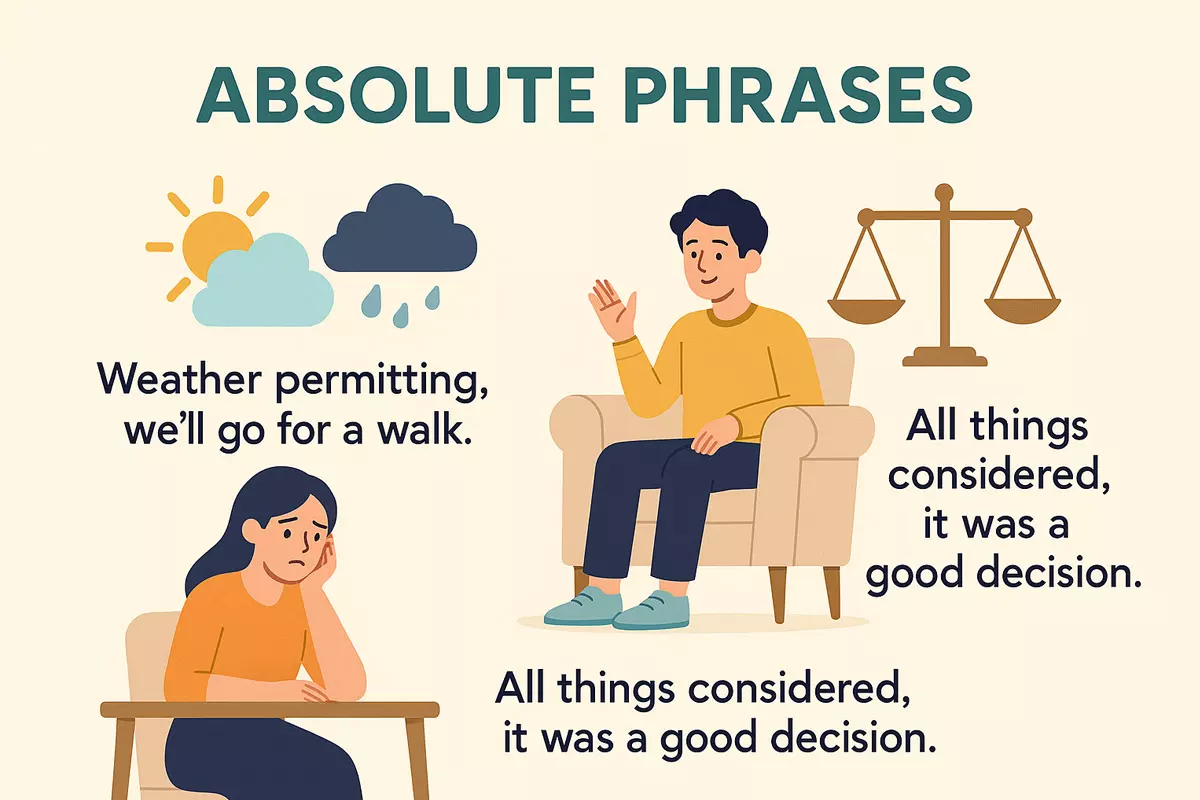
Absolute Phrases: Weather permitting, All things considered

 This article explains absolute phrases, their noun plus participle structure, and common real-world examples. It covers when they enhance style, rules for punctuation and placement, typical pitfalls, and offers practice in creating absolute phrases.
Exploring how different sentence structures enhance your writing can reveal the subtle ways language shapes meaning and adds nuance. Phrases that set the scene or express conditions, such as weather expressions or summary statements, do more than just convey information—they provide context and atmosphere, guiding the reader’s understanding and engagement. By experimenting with these varied structures, writers can make their prose more dynamic and effective, ensuring that both the content and the tone resonate with their audience.
What Absolute Phrases Are
Absolute phrases are groups of words that modify an entire sentence, rather than a single word. These constructions usually consist of a noun or pronoun followed by a participle and any accompanying modifiers or objects.
They provide additional context—often about time, condition, or cause—without using a conjunction. For example, in “Weather permitting, we’ll go for a walk,” the phrase “Weather permitting” sets the condition for the action in the main clause.
Absolute constructions are not tightly linked to any one element in the sentence. Instead, they stand somewhat apart, offering background information or circumstances. They’re especially common in formal writing, narratives, and descriptive passages, where they add detail or nuance without making the sentence overly complex.
Key Features of Absolute Constructions
- Usually begin with a noun or pronoun
- Followed by a participle (present or past), adjective, or another modifier
- Can appear at the beginning, middle, or end of a sentence
- Not connected to the rest of the sentence by a conjunction
- Set off by commas
- Often answer questions like “under what conditions?” or “in what state?”
Common Patterns and Examples
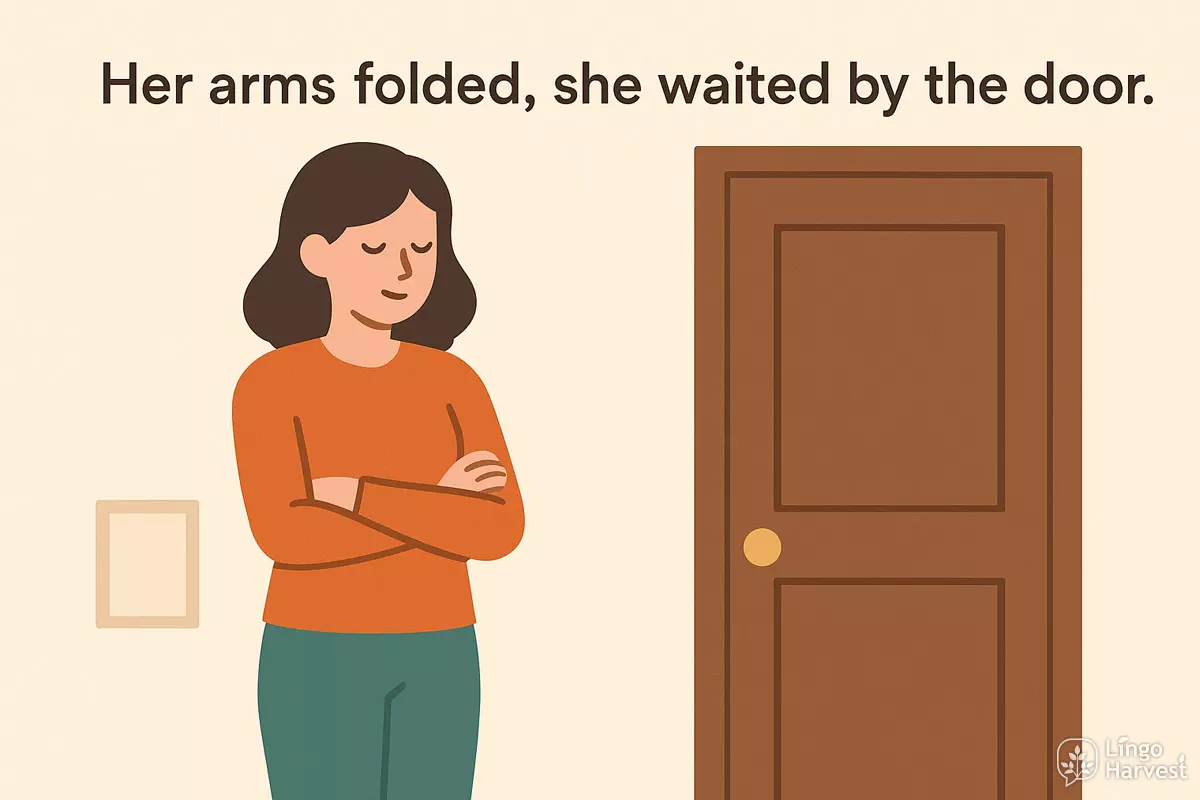
Writers use these phrases in a variety of ways. Here are some typical forms:
- Noun + present participle: Her arms folded, she waited by the door.
- Noun + past participle: The task completed, they relaxed.
- Noun + adjective: His face pale, he entered the room.
- Noun + prepositional phrase: The sun high in the sky, we continued hiking.
- Pronoun + participle: His voice trembling, he spoke.
Expanded List of Examples
- All things considered, the trip was a success.
- The weather being cold, we stayed inside.
- Her homework finished, she watched TV.
- His mind racing, Tom couldn’t sleep.
- Time permitting, I’ll join you for lunch.
- The guests having left, the house was quiet.
- With the sun setting, the sky turned orange.
- His eyes closed, he meditated.
- The car engine running, they waited in the driveway.
- The children asleep, the parents relaxed.
- Her voice soft, she told the story.
- The meeting over, everyone returned to work.
- Weather permitting, we’ll start at dawn.
- His head held high, he entered the room.
- The food ready, they sat down to eat.
- Her heart pounding, she opened the letter.
- With everyone watching, he performed flawlessly.
- His job done, he left the office early.
- The sun shining, we had a picnic.
- Her patience exhausted, she spoke up.
How Absolute Phrases Differ from Other Constructions
Absolute constructions are sometimes confused with participial phrases or subordinate clauses, but they function differently. Rather than modifying a specific noun or verb, they comment on the whole situation described in the main clause. Unlike subordinate clauses, they do not contain a subject-verb relationship tied directly to the main clause.
Common Functions
- Setting the scene or background
- Explaining conditions or reasons
- Adding descriptive detail
- Summing up circumstances
By using absolute phrases, writers can add information efficiently, keeping sentences clear and fluid while conveying additional meaning.
Noun + Participle Structure
Absolute phrases often rely on a pattern where a noun is paired with a participle, forming a concise unit that adds extra information to a sentence. Instead of acting as a main clause, this construction provides background or context, as in “Weather permitting, we’ll go hiking.” Here, “weather” is the noun and “permitting” the present participle, together creating a phrase that modifies the whole sentence.
How This Construction Works
This structure involves a noun (or pronoun) followed immediately by a participle (present or past), sometimes with additional modifiers or objects. The participle describes an action or state related to the noun, and the whole phrase is set off by commas. Importantly, these phrases do not contain a finite verb, so they can’t stand alone as sentences.
- Time permitting, we’ll finish the project today.
- All things considered, the solution seems fair.
- His homework completed, Max went to play outside.
- The sun having set, the park became quiet.
- Her voice trembling, she gave her speech.
- Everyone gone, the building was locked.
- Weather permitting, we’ll have a picnic.
- Her arms folded, she waited patiently.
- The meeting finished, people left the room.
- The job done, he took a break.
- The children playing, the adults relaxed nearby.
- His mind racing, he tried to focus.
- Hands shaking, he signed the document.
- Eyes closed, she listened to the music.
- Her task forgotten, she enjoyed the party.
Present vs Past Participle in Absolute Phrases
Present participles (-ing forms) often show an ongoing or simultaneous action, while past participles usually indicate a completed state or result. Both forms add nuance and allow for more compact, elegant sentences.
| Present Participle Example | Past Participle Example |
|---|---|
| Weather permitting, we’ll travel tomorrow. | The homework finished, she went outside. |
| Her hands shaking, she answered the phone. | His work completed, he relaxed. |
| All things considered, it was a good choice. | The sun gone, the night grew cold. |
| The children playing, the parents chatted. | Eyes closed, he meditated quietly. |
Usage Notes
Writers use these concise phrases to add information without creating a new sentence or clause. They are especially common in formal, literary, or descriptive writing. Remember, the noun in the phrase must logically relate to the main clause, ensuring clarity for the reader. When you see phrases like “All things considered” or “Weather permitting,” you’re encountering this structure in action—providing elegant, context-rich details in just a few words.
Common Real-World Examples
Absolute phrases often appear in both spoken and written English, providing extra information or context without forming a complete clause. They are especially useful for setting the scene or adding details about timing, conditions, or background actions. Here are some ways these constructions naturally occur in everyday communication.
Typical Patterns in Daily Language
- Weather permitting, we’ll have the picnic outside.
- All things considered, it was a successful event.
- His homework finished, Jake went out to play.
- Time running out, the team hurried to score.
- Her voice trembling, she gave the speech.
- With everyone watching, he took a deep breath.
- The sun having set, the park became quiet.
- Hands shaking, she opened the letter.
- Her mind racing, she tried to focus on the test.
- The guests gone, we started cleaning up.
- His car keys missing, he was late for work.
- With dinner ready, the family gathered at the table.
- The baby asleep, the parents relaxed on the couch.
- All options exhausted, they called a professional.
- His confidence growing, he volunteered to lead.
- Eyes closed, he listened to the music.
- With her job finished, she left the office early.
- Her patience tested, she finally spoke up.
- Time permitting, we’ll stop for coffee.
- With the meeting adjourned, everyone left the room.
Comparing Absolute Phrases with Complete Clauses
| Absolute Phrase Example | Equivalent Full Clause |
|---|---|
| Weather permitting, we’ll go hiking. | If the weather permits, we’ll go hiking. |
| Her eyes closed, she drifted off to sleep. | She closed her eyes and drifted off to sleep. |
| The work done, they relaxed. | After the work was done, they relaxed. |
| All things considered, it wasn’t a bad result. | When all things are considered, it wasn’t a bad result. |
| The sun rising, the birds began to sing. | As the sun rose, the birds began to sing. |
When Absolute Phrases Improve Style
Absolute phrases can elevate writing by providing additional context, streamlining sentences, and creating smoother transitions. Rather than overloading a sentence with clauses, these constructions let writers add detail in a concise, elegant way. For example, instead of saying “Because the weather was good, we went hiking,” you might say, “Weather permitting, we went hiking.” The result is more vivid and efficient prose.
Enhancing Clarity and Flow
Writers often rely on absolute phrases to clarify circumstances or set a scene without lengthy explanations. These structures help break up monotonous sentence patterns and prevent repetitive use of subordinating conjunctions like “because,” “when,” or “if.” By embedding background information or conditions, the prose becomes more readable and engaging.
Variety and Emphasis Through Absolutes
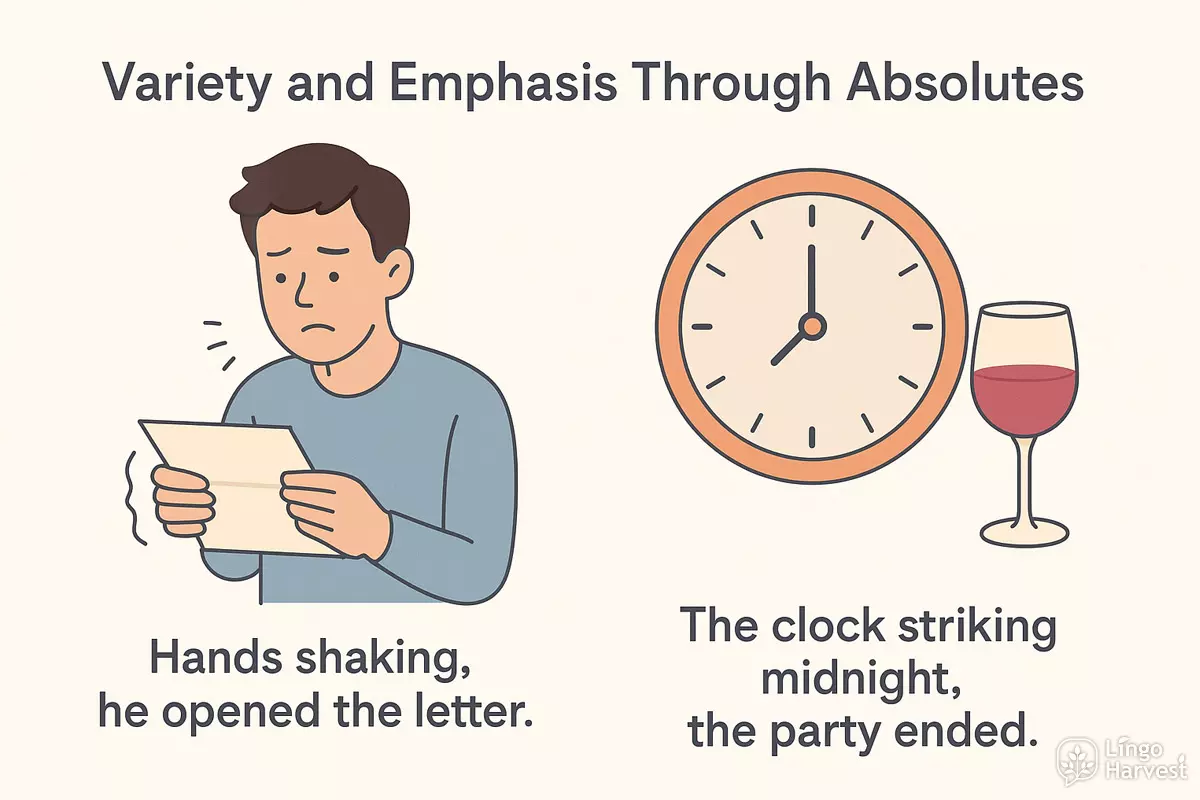
Using absolute phrases offers stylistic flexibility. They can appear at the beginning, middle, or end of a sentence, allowing writers to shift emphasis where it’s most effective. This versatility is particularly valuable in narrative and descriptive writing.
- All things considered, the event was a success.
- Her voice trembling, she delivered the news.
- The sun setting behind the hills, we packed up our picnic.
- His homework finished, Mark went outside to play.
- Weather permitting, the parade will proceed as scheduled.
- The cake baked to perfection, everyone applauded the chef.
- With the clock ticking, they finished the project just in time.
- Her arms folded, she waited for an answer.
- The meeting adjourned, the team headed to lunch.
- Teeth chattering, the hikers pressed on through the cold.
- His mind racing, he couldn’t fall asleep.
- With no one watching, the cat crept onto the table.
- Eyes wide, the children listened to the story.
- The rain pouring, the streets emptied quickly.
- Her confidence restored, she spoke up in class.
- With a sigh of relief, the exam was over.
- Hands shaking, he opened the letter.
- The clock striking midnight, the party ended.
Comparing Sentence Styles
To illustrate the stylistic impact, compare sentences that use absolute phrases with those that use full clauses. Notice the difference in rhythm and conciseness:
| Without Absolute Phrase | With Absolute Phrase |
|---|---|
| Because the rain was pouring, the streets emptied quickly. | The rain pouring, the streets emptied quickly. |
| When his homework was finished, Mark went outside to play. | His homework finished, Mark went outside to play. |
| Because her arms were folded, she waited for an answer. | Her arms folded, she waited for an answer. |
| As the sun was setting behind the hills, we packed up our picnic. | The sun setting behind the hills, we packed up our picnic. |
In summary, absolute phrases help writers achieve greater style, efficiency, and rhythm, especially when used thoughtfully to introduce background, conditions, or atmosphere. They’re a versatile tool for anyone aiming to craft more dynamic and polished sentences.
Punctuation and Placement Rules
Absolute phrases, like “Weather permitting” or “All things considered,” often appear at the start, middle, or end of sentences. Their placement can affect the rhythm and clarity of a sentence, but they remain grammatically independent from the main clause. Understanding how to punctuate and position these phrases ensures your writing stays clear and effective.
Comma Usage with Absolute Phrases
Absolute phrases are typically set off by commas. This punctuation separates them from the rest of the sentence, making their function as modifiers clear. Place a comma after the phrase if it opens the sentence, and use commas before and after if it appears mid-sentence.
- At the beginning: Weather permitting, we’ll go for a hike.
- In the middle: The team, all things considered, performed admirably.
- At the end: He finished the project, his deadline looming.
Common Placement Patterns
Writers can position these phrases flexibly, but certain placements are more common for clarity or emphasis. Here’s a comparison of typical patterns:
| Pattern | Example |
|---|---|
| Beginning of sentence | All things considered, the event was a success. |
| After the subject | The hikers, their spirits high, continued up the trail. |
| End of sentence | We’ll leave at dawn, weather permitting. |
| After an object or clause | She completed her speech, her voice unwavering. |
Quick Reference: Dos and Don’ts
- ✅ Use a comma to set off the absolute phrase.
- ✅ Place the phrase where it adds clarity or emphasis.
- ✅ Keep the phrase grammatically separate from the main clause.
- ❌ Don’t omit commas—this can confuse readers.
- ❌ Don’t let the phrase blend into the main clause’s subject or verb.
Varied Examples for Practice
- Time permitting, we’ll stop for lunch.
- The sun setting, the crowd began to disperse.
- Her voice trembling, she accepted the award.
- The weather being unpredictable, we packed extra gear.
- The cake baked, we decorated it together.
- His mind racing, he searched for answers.
- All things considered, the plan worked well.
- The meeting finished, everyone left quickly.
- His homework done, he played outside.
- The day ending, we watched the sunset.
Proper punctuation and thoughtful placement of absolute phrases allow your sentences to flow naturally while adding nuance and detail. Use these guidelines to enhance clarity and style in your writing.
Typical Pitfalls and Ambiguities
Using absolute phrases like "Weather permitting" or "All things considered" can cause confusion or errors if not handled carefully. These word groups often appear at the start or end of sentences, and their role is to modify the whole statement, not a particular word. This broad scope can make their meaning unclear, especially for learners or in complex writing.
Common Misunderstandings
Writers sometimes mistake absolute phrases for adverbs or subordinate clauses, leading to misplaced modifiers or even sentence fragments. If an absolute phrase is too far from the main clause, the connection may be lost, and readers will have trouble understanding what’s being modified.
- Placing the phrase too far from the main clause (separation weakens the link).
- Confusing absolutes with participial phrases (e.g., "Running late, the bus was missed" vs. "The bus missed, time running short").
- Using them as standalone sentences (which are usually fragments).
- Failing to use a comma, which can blur the meaning.
- Misreading the subject: the implied subject of the phrase should match the main clause context.
- Overusing such constructions, making text sound stilted or awkward.
- Assuming every introductory phrase is absolute (many are not).
- Forgetting that absolutes don't express cause directly; they give background or context.
- Using ambiguous pronouns in the phrase, making reference unclear.
- Neglecting tense agreement, especially in narratives.
Examples: Ambiguous vs. Clear Use
Clarity depends on proximity and logic. Consider these contrasting pairs:
- Ambiguous: "All things considered the plan was approved." (No comma; could mislead.)
- Clear: "All things considered, the plan was approved." (Comma signals modification of the whole sentence.)
- Ambiguous: "Weather permitting the picnic will go ahead." (Read as if 'permitting the picnic' is a phrase.)
- Clear: "Weather permitting, the picnic will go ahead." (Comma clarifies the phrase's scope.)
- Confusing subject: "The report finished, the meeting started." (Who finished the report?)
- Improved: "The report having been finished, the meeting started." (Makes the sequence clearer.)
Comparison Table: Absolute vs. Participial Phrases
| Absolute Phrase | Participial Phrase |
|---|---|
| His homework completed, Jake went out. | Completing his homework, Jake went out. |
| The sun having set, we returned home. | Having set, the sun disappeared below the horizon. |
| All things considered, it was a good day. | Considering all things, it was a good day. |
| Weather permitting, the event will occur outdoors. | Permitting good weather, the event will occur outdoors. |
Summary
Careful placement, punctuation, and awareness of the construction’s function are essential for clear and effective use. When in doubt, check that the phrase logically modifies the entire statement and isn’t mistaken for another grammatical structure.
Practice: Create Absolute Phrases
To build your confidence with absolute phrases, try constructing your own using the models and cues below. Absolute phrases often combine a noun or pronoun with a participle or modifier, creating detail or background for the main clause. Familiarity with this structure helps you add variety and depth to your writing.
Common Starters for Absolute Phrases
- Weather permitting, ...
- All things considered, ...
- Her voice trembling, ...
- His arms folded, ...
- Engine roaring, ...
- Eyes closed, ...
- Backpack slung over his shoulder, ...
- Sun setting, ...
- His homework finished, ...
- Her heart pounding, ...
- With the meeting adjourned, ...
- With everyone watching, ...
- The room silent, ...
- Time running out, ...
- Her mind racing, ...
- Windows open, ...
- With the rain pouring, ...
- With nothing left to say, ...
Exercise: Complete the Sentences
- Weather permitting, ________________________________.
- Eyes wide with surprise, _____________________________.
- His hands shaking, _________________________________.
- With her work done, ________________________________.
- The sun having set, ________________________________.
Show answers
- Weather permitting, we will go for a picnic in the park.
- Eyes wide with surprise, she accepted the unexpected gift.
- His hands shaking, he opened the letter.
- With her work done, she relaxed on the sofa.
- The sun having set, the garden was cloaked in darkness.
Challenge: Create Your Own
Try to write three original absolute phrases using the patterns above. You can use weather, emotions, time, or physical actions as your starting point. For example:
- Backpack slung over her shoulder, she hurried out the door.
- With everyone silent, the announcement began.
- Rain falling steadily, the streets quickly emptied.
Show answers
- Answers will vary. Any phrase similar to the examples above is correct if it follows the absolute phrase pattern.
Notice how these constructions add context and vividness to your sentences. Regular practice with absolute phrases can help you write with more nuance and sophistication.