Advanced Whiz-Deletion Patterns: Reducing Relative Clauses Naturally

 The article explains whiz-deletion in grammar, covering patterns with -ing and -ed forms, its use after pronouns and nouns, register and style issues, common learner mistakes, and provides practice to improve sentence flow.
Mastering the art of trimming relative clauses helps your sentences flow more smoothly and sound less formal. By learning advanced techniques to omit unnecessary words, you make your writing concise and natural, creating English that feels effortless and easy to read. This skill is particularly useful in both spoken and written communication, as it allows you to express ideas clearly without extra complexity. Practicing these methods leads to more engaging and effective language, enhancing your overall communication abilities.
What whiz-deletion is in grammar
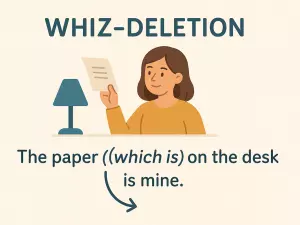
Whiz-deletion refers to a linguistic phenomenon where certain relative clauses in English are reduced, resulting in more concise sentences. Specifically, this process involves omitting the relative pronoun—usually “who,” “which,” or “that”—along with a form of the verb “to be” (is, are, was, were). This reduction is common in informal speech and writing, making sentences sound more natural and less repetitive.
How whiz-deletion works
When a relative clause contains a pronoun and the verb “to be,” these elements can often be dropped if the meaning remains clear. The name “whiz-deletion” comes from combining “wh-” (from the relative pronoun) and “is” (the form of “to be” most often deleted). This results in a streamlined clause, which can make descriptions flow better.
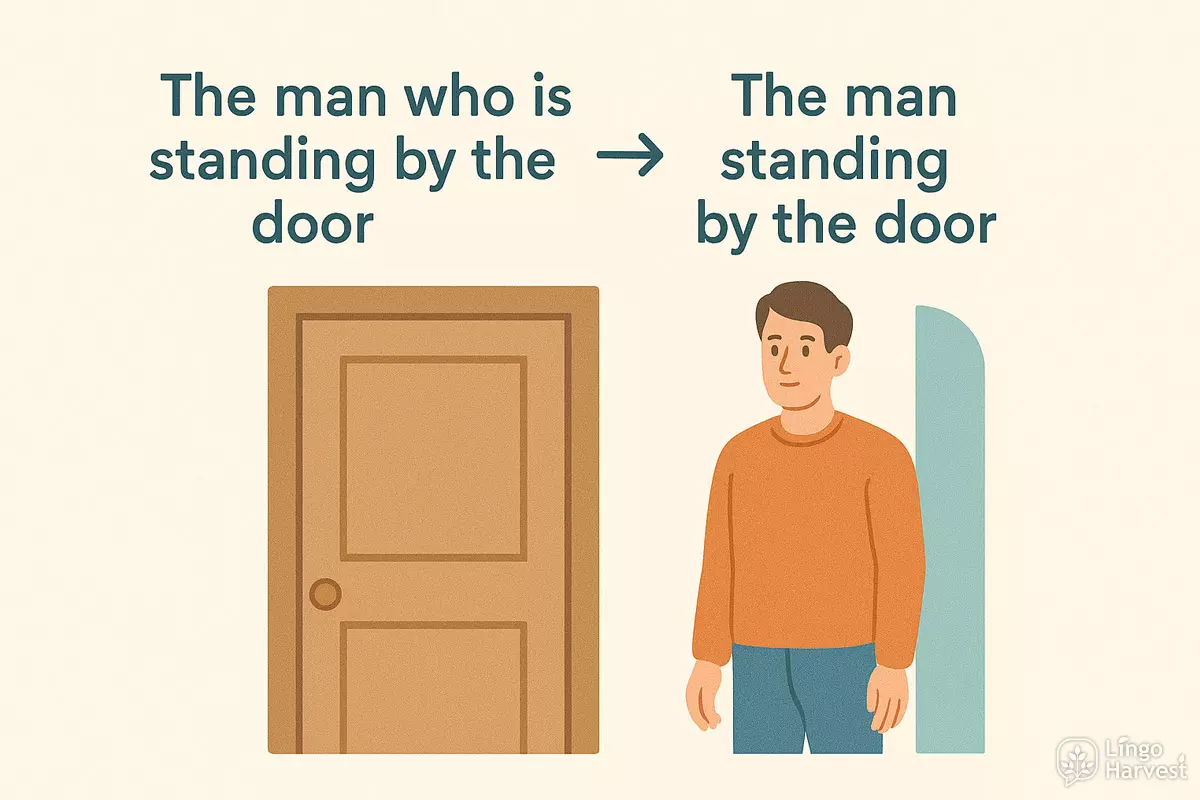
- The man who is standing by the door → The man standing by the door
- The book that is on the table → The book on the table
- The students who are waiting outside → The students waiting outside
- The cake which was made yesterday → The cake made yesterday
Typical contexts for whiz-deletion
This reduction is most common when the relative clause directly follows the noun it modifies and uses a form of “to be.” However, not all clauses qualify: if additional verbs or objects appear immediately after the pronoun, deletion may not be possible.
- Allowed: The girl who is singing → The girl singing
- Not allowed: The girl who sings (no “to be” to delete)
- Allowed: The house that was built last year → The house built last year
- Not allowed: The house that people built last year (no “to be” to delete)
Common patterns and examples
Reducing relative clauses through whiz-deletion is especially frequent in descriptive writing and headlines. Here are some patterns you might see:
- People who are interested in linguistics → People interested in linguistics
- Animals which are endangered → Animals endangered
- Students who are late → Students late
- Visitors who are expected today → Visitors expected today
- Articles that are published monthly → Articles published monthly
- Emails which have been sent → Emails sent
- Cars that were parked outside → Cars parked outside
- Reports which are missing → Reports missing
- Questions that are frequently asked → Questions frequently asked
- Topics which are discussed → Topics discussed
What whiz-deletion is not
It’s important to distinguish this reduction from other forms of clause simplification. Whiz-deletion specifically involves dropping the relative pronoun and a form of “to be.” It doesn’t apply to clauses where “to be” is absent, or where the clause is essential for the sentence’s meaning.
Summary of whiz-deletion features
- Removes unnecessary words in relative clauses
- Applies only when a relative pronoun and “to be” are present
- Helps make language more efficient and natural
- Frequent in both spoken and written English
- Not all relative clauses can be reduced this way
Common patterns with -ing and -ed forms
Understanding how to naturally reduce relative clauses often means recognizing when -ing and -ed participles can take the place of fuller structures. These participial forms let writers and speakers streamline sentences, making them less wordy while still clear. The -ing form (present participle) typically replaces relative clauses with active meaning, while the -ed form (past participle) is used when the clause has a passive sense.
Typical Usage Scenarios
The participle phrase often directly follows the noun it describes, giving extra information in a compact way. Here are some common transformations:
- People working late (who are working late)
- The car parked outside (that is parked outside)
- Books written by her (that were written by her)
- Students waiting for the bus (who are waiting for the bus)
- A language spoken worldwide (that is spoken worldwide)
- Emails sent yesterday (that were sent yesterday)
- Children playing in the yard (who are playing in the yard)
- Devices designed for safety (that are designed for safety)
- People invited to the party (who were invited to the party)
- Projects managed by experts (that are managed by experts)
- Machines operating quietly (that are operating quietly)
- Stories told by elders (that are told by elders)
- Students chosen for the award (who were chosen for the award)
- Rooms overlooking the park (that overlook the park)
- Items ordered online (that were ordered online)
- People living abroad (who live abroad)
- Reports published last week (that were published last week)
- Dogs trained for rescue (that are trained for rescue)
Comparison of -ing and -ed Reductions
When choosing between these two forms, consider the action’s direction: is the noun doing the action, or receiving it? The table below illustrates this difference with clear examples.
| Active Meaning (-ing form) |
Passive Meaning (-ed form) |
|---|---|
| The man speaking at the meeting (who is speaking) |
The man invited to the meeting (who was invited) |
| Children playing outside (who are playing) |
Children left behind (who were left) |
| Documents relating to the case (that relate) |
Documents found in the folder (that were found) |
| People waiting in line (who are waiting) |
People selected for the job (who were selected) |
Guidelines for Usage
- Use the -ing form when the noun performs the action.
- Use the -ed form when the noun receives the action.
- Keep the participle phrase close to the noun it modifies to avoid ambiguity.
- Reductions are most common in written and formal English, but they can appear in speech for conciseness.
Mastering these patterns makes your writing more natural and efficient, especially when streamlining relative clauses.
Whiz-deletion after pronouns and nouns
When relative clauses follow pronouns or clear noun referents, English often allows the omission of the relative pronoun and the auxiliary verb "be." This process, known as whiz-deletion, streamlines sentences and creates a more natural, conversational flow. Understanding how this works after pronouns (like "he," "she," "they") and noun phrases is key to mastering concise, advanced English structures.
How omission works with pronouns and nouns
In restrictive relative clauses, the pattern typically involves a relative pronoun ("who," "that," "which") immediately followed by a form of "be" and a present participle or adjective. When the context is clear, both the pronoun and "be" can often be dropped:
- The man who is standing over there → The man standing over there
- The students who are interested should apply → The students interested should apply
- Anyone who is caught cheating will be disqualified → Anyone caught cheating will be disqualified
- The car that was parked outside is gone → The car parked outside is gone
- People who are living in the city have many options → People living in the city have many options
- The book which is lying on the table belongs to Sam → The book lying on the table belongs to Sam
- Children who are hungry need food → Children hungry need food
- Someone who is willing to help → Someone willing to help
- The woman who was chosen for the role → The woman chosen for the role
- The players who are injured cannot participate → The players injured cannot participate
Recognizing patterns and exceptions
Not every clause allows this reduction. The omitted elements must be directly followed by a participle or adjective, and the meaning must remain clear. For example, whiz-deletion does not occur if the clause contains additional verbs or complex structures.
| Full Relative Clause | After Whiz-Deletion |
|---|---|
| The girl who is singing loudly | The girl singing loudly |
| People who are excited about the news | People excited about the news |
| The house that was built last year | The house built last year |
| Anyone who is waiting outside | Anyone waiting outside |
| The ideas which are presented here | The ideas presented here |
| The dogs that are barking loudly | The dogs barking loudly |
Common contexts and practical tips
In spoken and written English, this reduction is especially common after pronouns and definite nouns when describing people, things, or groups. It is less likely in formal legal or technical writing, or when the relative clause is non-restrictive (adds extra, non-essential information). To use these patterns effectively:
- Check if the relative pronoun is immediately followed by a form of "be" and a participle/adjective.
- Ensure the meaning stays clear after omission.
- Use the reduced form for concise, fluent expression, especially in descriptions.
Register and stylistic considerations
When applying advanced whiz-deletion patterns to reduce relative clauses, it’s essential to consider both the formality of the setting and the nuances of written versus spoken English. These reductions, while often natural in conversational contexts, may not always be suitable for formal documents or highly academic writing, where clarity and explicitness take priority.
Levels of formality and appropriateness
The choice to omit relative pronouns or auxiliary verbs depends on the register. In casual speech and informal writing, such as emails, blog posts, or storytelling, whiz-deletion can make sentences flow more smoothly and sound less stilted. However, in legal, technical, or scholarly texts, retaining full relative clauses may prevent ambiguity and misinterpretation.
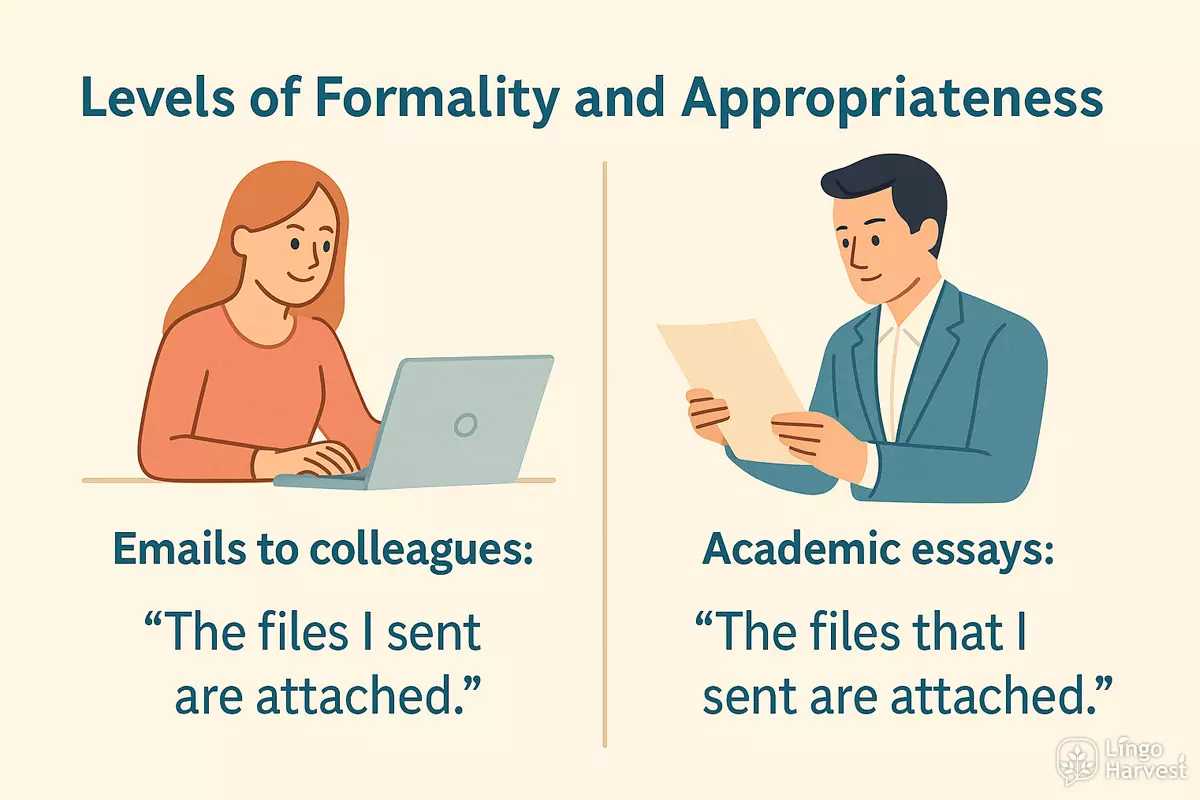
- Emails to colleagues: "The files I sent are attached."
- Academic essays: "The files that I sent are attached."
- News articles: "The committee members chosen will serve for two years."
- Instructional manuals: "The device that is supplied must be calibrated."
- Conversational speech: "The book I borrowed was excellent."
- Formal reports: "The book which I borrowed was excellent."
- Marketing copy: "Every solution offered is tailored."
- Official correspondence: "Every solution that is offered is tailored."
- Social media posts: "Any questions asked will be answered."
- Policy documents: "Any questions that are asked will be answered."
Stylistic effects and reader expectations
Reducing relative clauses can lend a more modern, concise, and sometimes more conversational tone. However, overuse or inappropriate application may lead to confusion, especially if the referent is unclear or if the clause contains essential information. Consider whether the omitted elements are recoverable from context and whether your audience expects a formal or informal style.
| Register | Preferred Relative Clause Style |
|---|---|
| Formal Academic | Full relative clause (e.g., "that is/which was") |
| Casual Conversation | Reduced clause (e.g., "I met the man you mentioned") |
| Technical Manuals | Explicit clause for clarity |
| Creative Writing | Flexible; depends on rhythm and tone |
| Journalistic Reporting | Mix of reduced and full clauses for readability |
Summary advice
When deciding whether to use whiz-deletion, weigh the balance between naturalness and precision. If your readers expect a direct, accessible style, reduced clauses often work well. If absolute clarity is required, or if the information is dense or technical, retain the full structure. Adjusting your approach to suit both your audience and your communicative goals is key to effective use of advanced clause reduction.
Typical learner errors with over-reduction
Many advanced English learners experiment with relative clause reduction to sound more natural or concise. However, overdoing it can result in sentences that are confusing, ungrammatical, or even misleading. Over-reduction often stems from misunderstanding which elements are optional and which are required for clarity or correctness.
Frequent mistakes when reducing relative clauses
- Removing the subject pronoun and auxiliary verb incorrectly (e.g. "The man standing there is my friend." is correct, but "The man is standing there my friend." is not).
- Dropping essential relative pronouns in restrictive clauses, making the sentence ambiguous.
- Reducing relative clauses with intransitive verbs, where reduction is not possible (e.g. "The boy laughed is my brother." ❌).
- Applying whiz-deletion to non-defining relative clauses, which must remain fully expressed for clarity.
- Using participle phrases when the tense or meaning does not allow (e.g. "The book written by Shakespeare is famous." ✅, but "The book wrote by Shakespeare is famous." ❌).
- Omitting necessary prepositions, especially after reduction (e.g. "The house I live." ❌ vs. "The house I live in." ✅).
- Forgetting to maintain subject-object clarity after reduction, leading to confusing sentences.
- Attempting to reduce clauses where the antecedent is not the subject of the relative clause (e.g. "The car that he bought was expensive." cannot be reduced to "The car bought was expensive.").
- Misapplying reduction in passive constructions, resulting in awkward or incorrect phrasing.
- Overusing reduction in formal writing, where full relative clauses may be preferred for clarity.
Comparison: Correct vs. Incorrect Reductions
| Original Clause | Reduction Attempt | Comment |
|---|---|---|
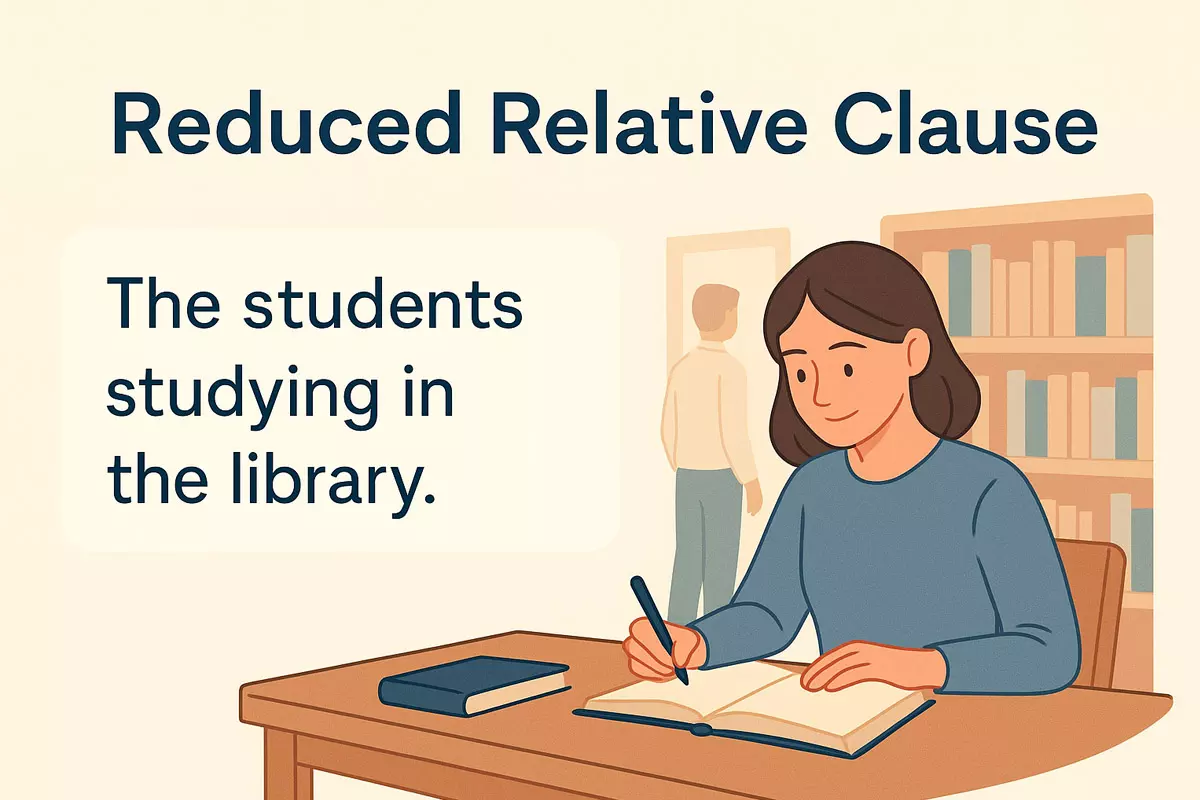
| The students who are studying in the library | The students studying in the library | ✅ Correct |
| The cake that was made by Anna | The cake made by Anna | ✅ Correct |
| The book which she read | The book read | ❌ Unclear: who read? |
| The man who I met yesterday | The man met yesterday | ❌ Wrong: subject mismatch |
| The girl who lives next door | The girl living next door | ✅ Correct |
| The rooms that are cleaned daily | The rooms cleaned daily | ✅ Correct (passive) |
| The dog which was barking loudly | The dog barking loudly | ✅ Correct |
| The city where I was born | The city born | ❌ Incorrect reduction |
Key points for avoiding excessive reduction
- Only reduce when the subject of the relative clause matches the noun it modifies.
- Keep the full clause if omitting words would cause confusion or ambiguity.
- Watch for passive vs. active meaning before reducing.
- Do not reduce non-defining (comma) relative clauses.
- Review verb types (transitive/intransitive) to judge if reduction is possible.
- Practice with real examples to develop a natural sense for when reduction works.
Mastering natural-sounding reduction of relative clauses is a valuable skill, but it requires careful attention to structure and meaning. Avoiding these common missteps will help your writing and speech remain both concise and clear.
Practice: apply whiz-deletion to improve flow
Mastering whiz-deletion can help you craft sentences that sound more natural and concise. In this section, you’ll find practical exercises and detailed examples to help you recognize and use this technique for eliminating unnecessary relative pronouns and forms of “be.” This will improve the clarity and rhythm of your writing.
Quick Review: What is whiz-deletion?
Whiz-deletion refers to the process of omitting a relative pronoun (who, which, that) and a form of the verb “be” (is, are, was, were) from a relative clause when it directly modifies a noun. The result is a smoother, more streamlined sentence.
Examples: Before and After
- The book that is on the table → The book on the table
- The students who are waiting outside → The students waiting outside
- The cake which was made by Anna → The cake made by Anna
- The man who is speaking → The man speaking
- The report that was submitted yesterday → The report submitted yesterday
- The car which is parked outside → The car parked outside
- The emails that are unread → The emails unread
- The film which is showing tonight → The film showing tonight
- The people who are chosen → The people chosen
- The document that is attached → The document attached
Try it yourself: Transform the sentences
- The house that is painted blue belongs to my aunt.
- The students who are taking the test look nervous.
- The notes which were written by the teacher are helpful.
- The dogs that are barking loudly are mine.
- The assignment which is due tomorrow is difficult.
- The man who is standing near the door is my uncle.
- The book that was published last year became a bestseller.
- The woman who is speaking now is the project manager.
- The car that is parked outside belongs to my neighbor.
- The emails which were sent yesterday need a response.
Show answers
- The house painted blue belongs to my aunt.
- The students taking the test look nervous.
- The notes written by the teacher are helpful.
- The dogs barking loudly are mine.
- The assignment due tomorrow is difficult.
- The man standing near the door is my uncle.
- The book published last year became a bestseller.
- The woman speaking now is the project manager.
- The car parked outside belongs to my neighbor.
- The emails sent yesterday need a response.
Common Patterns and Exceptions
While whiz-deletion is straightforward in many cases, it cannot always be applied. Pay attention to tense, voice, and the sentence’s clarity after deletion. Here’s a comparison to illustrate:
| Original Relative Clause | After Whiz-Deletion |
|---|---|
| The woman who is reading | The woman reading |
| The car that was stolen | The car stolen |
| The letters which are written in ink | The letters written in ink |
| The students who were chosen | The students chosen |
| The food that is served hot | The food served hot |
| The man who is known for honesty | The man known for honesty |
| The flowers which are blooming | The flowers blooming |
| The book that was recommended | The book recommended |
Practice: Identify where whiz-deletion works
Review the following sentences and decide whether whiz-deletion can be applied. If yes, rewrite the sentence; if not, explain why.
- The child who is sick stayed home.
- The coffee that smells good is fresh.
- The girl who he met yesterday is here.
- The project which is being discussed is confidential.
- The package that arrived today is for you.
- The students who are working in the lab need supervision.
- The article which was published last week is already popular.
- The man who she invited is at the door.
- The cake that is baking in the oven smells amazing.
- The results which were collected yesterday are incomplete.
Show answers
- The child sick stayed home. (❌ Unnatural → better keep original.)
- The coffee smelling good is fresh. (✅ Whiz-deletion works.)
- The girl who he met yesterday is here. (❌ Cannot delete “who” → not be-verb.)
- The project being discussed is confidential. (✅ Whiz-deletion works.)
- The package arrived today is for you. (❌ Incorrect → “arrived” not used as modifier.)
- The students working in the lab need supervision. (✅ Whiz-deletion works.)
- The article published last week is already popular. (✅ Whiz-deletion works.)
- The man who she invited is at the door. (❌ No whiz-deletion → not be-verb.)
- The cake baking in the oven smells amazing. (✅ Whiz-deletion works.)
- The results collected yesterday are incomplete. (✅ Whiz-deletion works.)
Experiment with sentences from your own writing. Look for relative clauses that can be trimmed using this method, but always check for clarity and grammatical correctness after making changes.