Non-finite Clauses for Academic Compression: To-, -ing, and -ed Forms

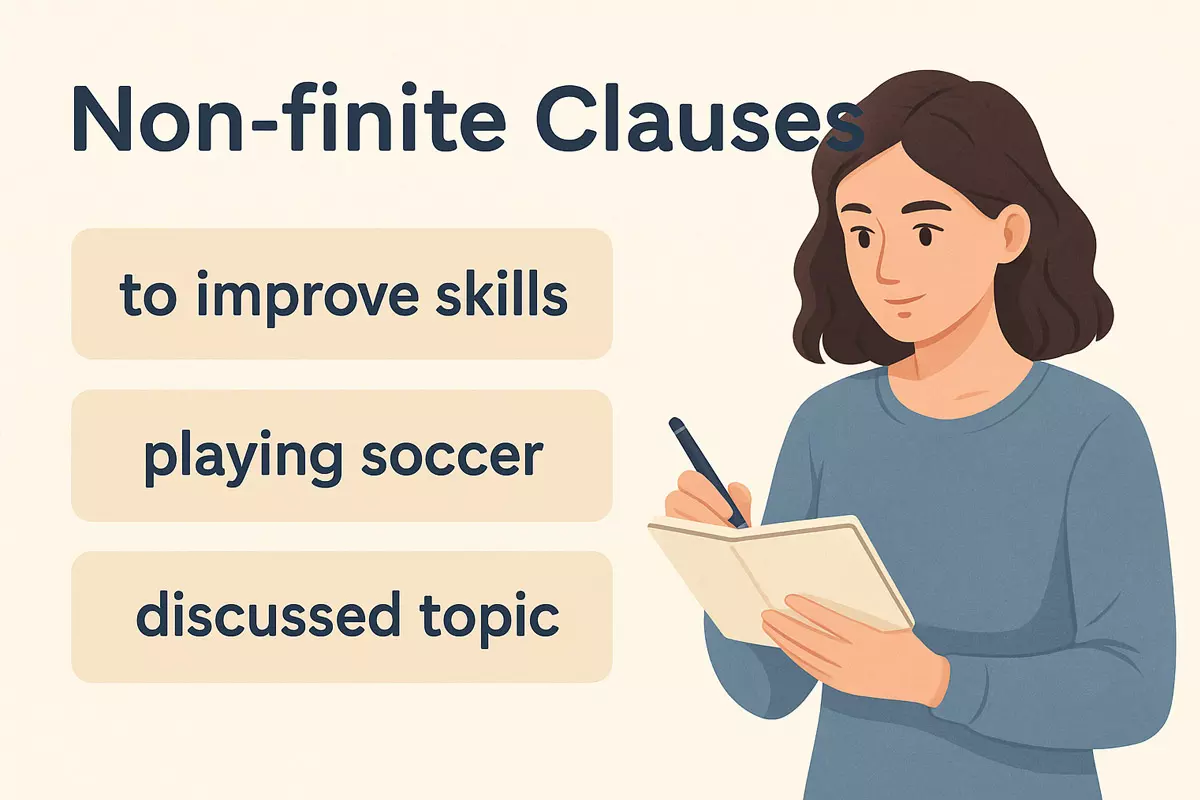 Here we types of non-finite clauses in English, their roles expressing reason, time, result, and condition, and how to use to-infinitives, -ing, and -ed forms. It also addresses avoiding ambiguity and using non-finite clauses in academic writing.
Academic writing requires clear and concise communication, and using structures such as to-infinitives, participles, and gerunds is an effective way to achieve this goal. By incorporating these non-finite verb forms, writers can present complex ideas more succinctly, avoid repetition, and maintain a smooth flow in their arguments. Mastery of these grammatical tools not only streamlines sentences but also contributes to the overall coherence and sophistication of academic texts, making them more engaging and easier for readers to comprehend.
Types of non-finite clauses in English
Non-finite clauses allow writers to compress academic information by reducing full clauses into more compact structures. These constructions lack tense and a clear grammatical subject, functioning as modifiers or complements within sentences. The three primary forms—infinitive, -ing participle (present participle/gerund), and -ed participle (past participle)—each have distinctive uses and patterns.
Infinitive Clauses (To-clauses)
Infinitive clauses typically begin with "to" followed by the base form of a verb. They often express purpose, intention, or result, and can act as subjects, objects, or modifiers.
- To understand the process, read the instructions carefully.
- She asked to leave early.
- The materials to be used are listed below.
-ing Clauses (Present Participle and Gerund Forms)
The -ing form can function as a gerund (noun-like) or present participle (adjectival/adverbial modifier). These clauses describe simultaneous actions, reasons, results, or background information.
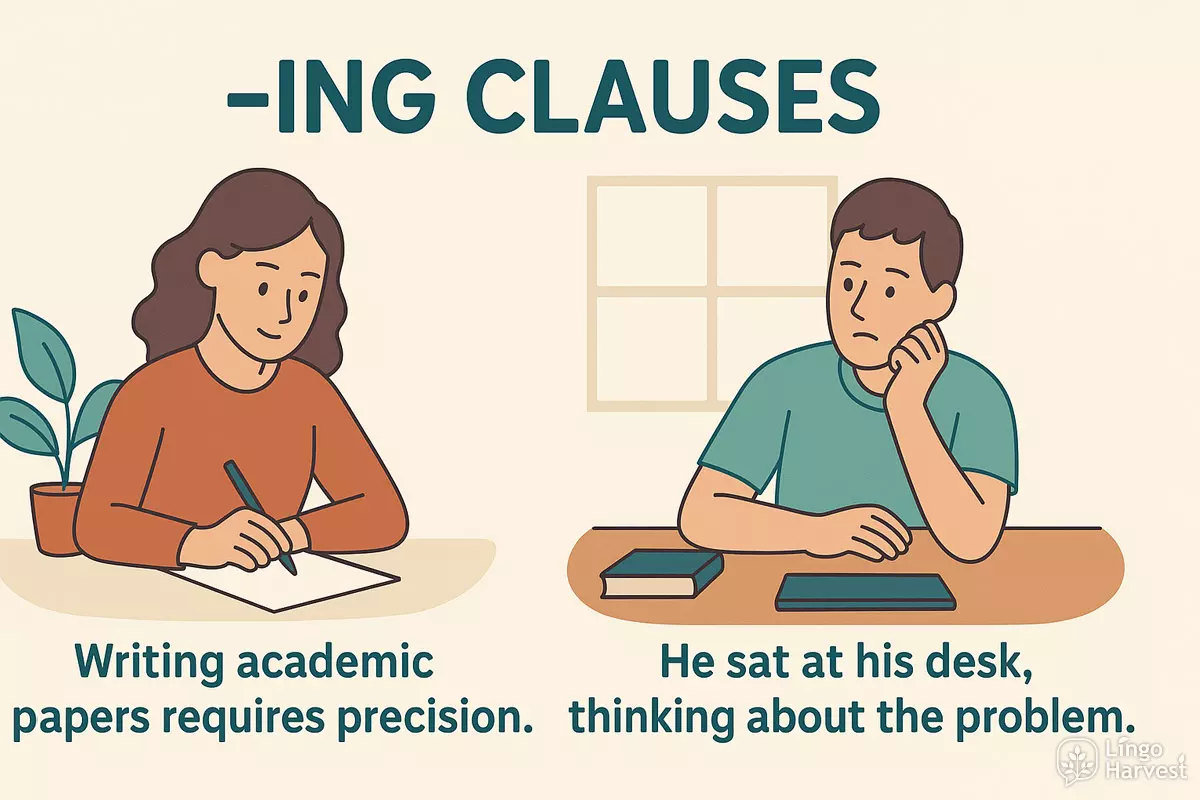
- Writing academic papers requires precision.
- He sat at his desk, thinking about the problem.
- By combining data sets, we improved accuracy.
- Having completed the experiment, the team analyzed the results.
-ed Clauses (Past Participle Forms)
Past participle clauses are used primarily in passive constructions or to show a completed action. They often provide background or additional information.
- Published in 2020, the study gained wide recognition.
- Given the complexity, extra time was allocated.
- The samples collected were analyzed immediately.
- Built on solid evidence, the argument was persuasive.
Comparison of Non-finite Clause Forms
The main non-finite clause types differ in structure, typical function, and example usage. The table below outlines these distinctions:
| Form | Typical Usage | Example |
|---|---|---|
| To-infinitive | Purpose, intention, result | To improve clarity, revise your draft. |
| -ing participle/gerund | Simultaneous action, reason, background | Reviewing the data, she noticed errors. |
| -ed participle | Passive, prior action, condition | Completed ahead of schedule, the project was a success. |
Expanded Example Patterns
Non-finite clauses can appear in a range of academic contexts. Here are some additional patterns:
- To achieve greater accuracy, the method was refined.
- Reading the article, I found new perspectives.
- Motivated by curiosity, she explored further.
- Having been notified, the participants responded quickly.
- Surprised by the outcome, the researchers double-checked their data.
- To summarize, the findings support the hypothesis.
- By applying these rules, clarity increases.
- Selected for their expertise, the authors contributed valuable insights.
- Having established the framework, they proceeded to test the model.
- Encouraged by initial results, the team expanded the study.
Mastering these non-finite clause forms helps academic writers compress information, clarify relationships between ideas, and vary sentence structure for greater impact.
Functional roles: reason, time, result, condition
Non-finite clauses using to-, -ing, and -ed forms are essential tools in academic writing for expressing relationships such as motivation, chronology, outcome, and hypothetical situations. By compressing information into these concise structures, writers can eliminate redundancy and clarify connections between ideas without overusing full clauses.
Expressing Purpose and Reason
Infinitive clauses (to + verb) often indicate intention or motivation. For example, "To understand the phenomenon, researchers conducted several experiments" shows why the action was taken. -ing clauses can also show reason, as in "Being unfamiliar with the topic, she sought additional resources." -ed forms, though less common for reason, can still be used: "Exhausted by the workload, he postponed the project."
- To reduce costs, the team adopted a new strategy.
- Hoping to improve results, they modified the method.
- Motivated by recent findings, the authors revised their hypothesis.
Showing Time Relationships
Non-finite clauses are frequently used to convey when something happens in relation to another event. -ing forms usually indicate simultaneous or preceding actions: "Entering the laboratory, she switched on the lights." -ed forms show actions completed before another: "Completed ahead of schedule, the report was submitted early."
- After finishing the analysis, the team published their results.
- Having collected the data, they proceeded to interpret it.
- Given the circumstances, alternative methods were considered.
Result and Consequence
Writers use non-finite structures to present outcomes or effects succinctly. Infinitives can express intended results ("The experiment was designed to test the hypothesis"), while -ing and -ed forms can highlight consequences: "Failing to comply with guidelines, the proposal was rejected."
- The new model was introduced to enhance efficiency.
- Lacking sufficient evidence, the claim was dismissed.
- Increased funding allowed the project to expand.
Condition and Hypothetical Situations
Conditional meanings often appear with -ing and -ed clauses, replacing full conditional sentences. For instance, "Given sufficient time, the results would improve" or "Assuming consistent variables, the outcomes are predictable." These forms are especially useful for academic brevity.
| Form | Functional Example (Academic Context) |
|---|---|
| To- (Infinitive) | To identify key trends, the data were analyzed repeatedly. (purpose/reason) |
| -ing (Present Participle/Gerund) | Considering the variables, the results are consistent. (condition/time) |
| -ed (Past Participle) | Influenced by previous studies, the authors changed their approach. (reason/result) |
| -ing/-ed (Conditional) | Assuming no errors, the model is reliable. Given more data, conclusions would be stronger. (condition) |
Using non-finite clauses for these various logical functions allows academic writers to present complex relationships in a streamlined, readable format. Mastery of these forms contributes to clear, concise, and effective scholarly communication.
Using to-infinitives, -ing, and -ed clauses
Academic writing often relies on non-finite clauses to compress information, clarify meaning, and connect ideas efficiently. By incorporating to-infinitive, -ing, and -ed forms, writers can produce concise sentences without sacrificing detail. Each of these structures serves specific grammatical and stylistic purposes in scholarly contexts.
To-Infinitive Clauses
To-infinitive structures (to + base verb) frequently express purpose, result, or intention. In academic texts, they help to present goals or summarize research aims. For example:
- To investigate the effects of climate change, the researchers collected data over ten years.
- The study was designed to evaluate student engagement.
- Participants were asked to complete a survey.
- To understand the mechanism, further experiments were conducted.
-ing Clauses (Present Participles and Gerunds)
The -ing form can function as a noun (gerund) or as a modifier (present participle). In compressed academic sentences, -ing clauses often describe simultaneous actions, causes, or methods:
- Analyzing the results, the authors identified key trends.
- Collecting samples from multiple sites, the team ensured representative data.
- Improving efficiency was a central objective.
- Understanding these variables is crucial for accurate interpretation.
- By applying this method, researchers minimized errors.
-ed Clauses (Past Participles)
-ed forms, usually past participles, are employed to introduce passive meaning or provide background information. They are especially useful for condensing relative clauses:
- Data collected from various regions revealed new patterns.
- The approach adopted by the authors proved effective.
- Results obtained using this technique were consistent.
- Published in 2020, the report influenced subsequent studies.
- Materials tested in the laboratory met all criteria.
Comparing Non-finite Clause Types
Below is a structured comparison showing typical academic uses, forms, and example sentences for each non-finite clause type.
| Form | Common Function | Academic Example |
|---|---|---|
| To-infinitive | Expressing purpose, intent, or result | The study aims to identify key factors influencing growth. |
| -ing clause | Describing method, cause, or simultaneous action | Examining the data, researchers found discrepancies. |
| -ed clause | Condensing passive or background information | Developed in recent years, this approach is widely used. |
Tips for Effective Use
Writers should select non-finite clauses that match the intended function and maintain clarity. Avoid overusing these structures in a single sentence, as this can lead to ambiguity or complexity. Prioritize balance and variety in academic prose for optimal readability.
Avoiding dangling or unclear non-finite clauses
Non-finite clauses, such as those using to-infinitive, -ing, and -ed forms, can make academic writing concise, but they can also cause ambiguity if not anchored clearly to the sentence’s subject. When the implied subject of a non-finite clause is unclear or does not match the main clause, confusion or unintended meanings often result.
What causes ambiguity with non-finite clauses?
Problems often arise when the non-finite clause (like a participial or infinitive phrase) is positioned in a way that its logical subject is missing or mismatched. This is called a "dangling" modifier. Readers may misinterpret which noun the clause describes, especially in dense academic prose.
- Dangling participial phrase: "Walking down the hall, the seminar was beginning." (Who is walking?)
- Clear version: "Walking down the hall, I noticed the seminar was beginning."
- Ambiguous infinitive: "To improve results, the experiment was repeated." (Who wanted to improve results?)
- Clear version: "To improve results, the researchers repeated the experiment."
Tips for clarity
To keep your writing precise and reader-friendly, follow these strategies:
- Ensure the non-finite clause’s logical subject matches the main clause’s subject.
- Place introductory non-finite clauses next to the noun they modify.
- Revise sentences where the implied actor is not explicit.
- Use active voice when possible to clarify agency.
- Read the sentence aloud to check if the connection is clear.
Common patterns and how to fix them
Here is a quick guide to identifying unclear constructions and their improved versions:
| Problematic Construction ❌ | Improved Version ✅ |
|---|---|
| After finishing the analysis, the results were published. | After finishing the analysis, the team published the results. |
| To complete the survey, consent was obtained. | To complete the survey, the researchers obtained consent. |
| Using this method, significant errors were avoided. | Using this method, the researchers avoided significant errors. |
| Designed to save time, participants preferred the new protocol. | Designed to save time, the new protocol was preferred by participants. |
| Having been completed, the supervisor reviewed the report. | Having completed the report, the supervisor reviewed it. |
Checklist for revision
Before finalizing your academic text, ask yourself:
- Is it clear who is performing the action in the non-finite clause?
- Does the noun directly following the clause match the intended subject?
- Could a reader misinterpret the agent or meaning?
- Have you avoided crowded sentences that obscure relationships?
By making sure non-finite clauses are clearly linked to their subjects, your academic writing remains both concise and precise.
Non-finite clauses in academic abstracts
Non-finite structures—such as to-infinitives, -ing forms (present participles/gerunds), and -ed forms (past participles)—are essential tools for condensing information in research summaries. By eliminating explicit subjects and auxiliary verbs, these clauses help authors pack more content into fewer words, making abstracts concise yet information-rich.
Common uses for non-finite clauses in research summaries
Writers rely on these constructions to express aims, methods, results, and implications efficiently. For example, instead of “This study aims to investigate…”, one might write “Aiming to investigate…”. Such phrasing saves space and keeps the focus on the main findings or contributions.
- To-infinitive clauses: Express purposes or intentions (e.g., “To examine the impact of…”)
- -ing clauses: Indicate simultaneous actions, background, or methods (e.g., “Using a mixed-methods approach…”)
- -ed clauses: Often used for passive meaning or results (e.g., “Data collected from 300 participants…”)
Patterns and examples
Academic writers frequently employ the following non-finite clause patterns to achieve brevity and clarity:
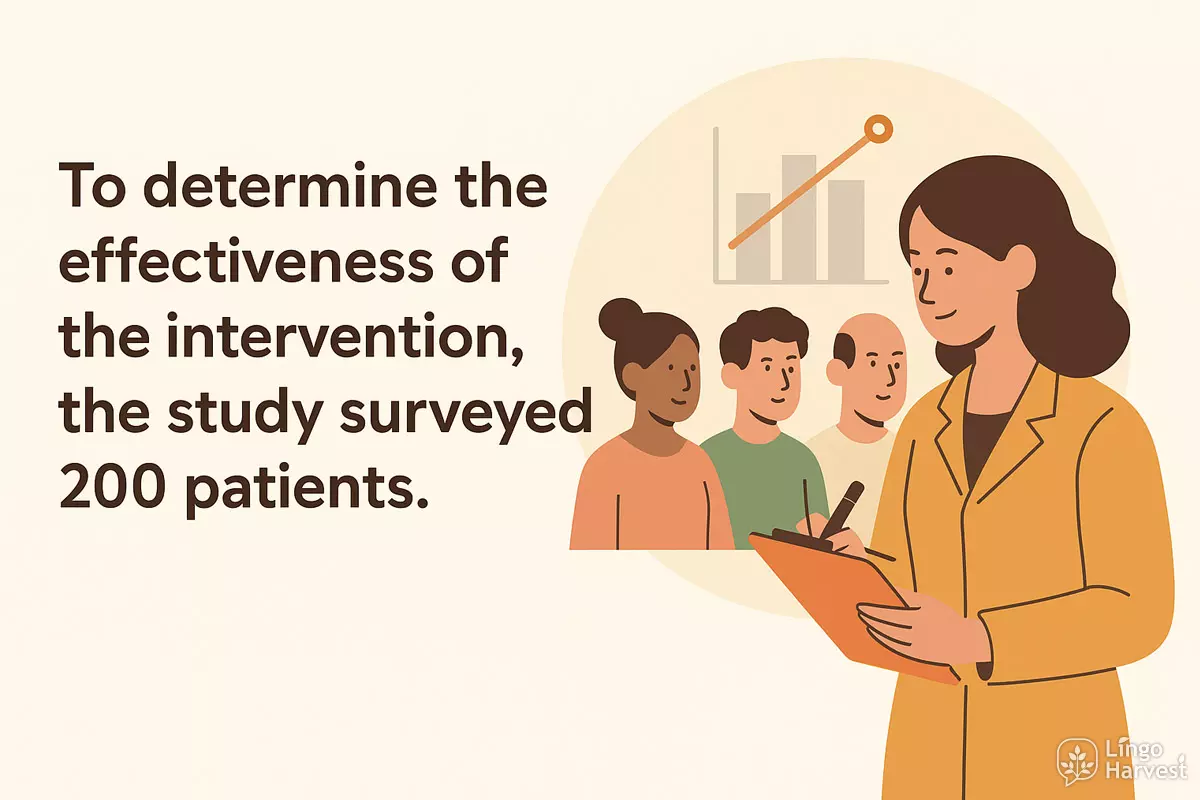
- To determine the effectiveness of the intervention, the study surveyed 200 patients.
- Examining previous research, the authors identified several gaps.
- Collected over two years, the data reveal significant trends.
- Using statistical analysis, we tested the hypothesis.
- Designed as a longitudinal study, this research tracked changes over time.
- To explore alternative explanations, further experiments were conducted.
- Focusing on urban areas, the survey provides new insights.
- Supported by recent findings, our approach offers a novel perspective.
- Including both qualitative and quantitative data, the analysis is comprehensive.
- Addressed in the conclusion, future directions are outlined.
- Applying a new framework, the authors reinterpret existing data.
- Assessed using standardized tests, performance improved significantly.
- To clarify terminology, the authors provide operational definitions.
- Found in previous literature, similar results support our claims.
- Comparing two models, the study highlights key differences.
- Based on participant feedback, recommendations were developed.
- Evaluated over six months, outcomes suggest lasting effects.
- To minimize bias, random sampling was implemented.
Benefits and cautions
Non-finite constructions streamline academic writing, but overuse or unclear referents may reduce readability. It’s important to ensure that the subject of the non-finite clause is unambiguous. For instance, in “Using a survey, results were obtained,” it’s unclear who used the survey; a clearer version would be, “Using a survey, the researchers obtained results.”
Summary comparison of non-finite forms
| Form | Typical Function | Example |
|---|---|---|
| To-infinitive | Express purpose, intention, or aim | To assess the impact, data were collected. |
| -ing (present participle) | Show simultaneous action, method, or background | Analyzing responses, we identified patterns. |
| -ed (past participle) | Provide passive background or result | Collected in 2023, the samples were analyzed. |
Overall, mastering these non-finite forms allows academic writers to compose abstracts that are succinct, precise, and highly readable, even under strict word limits.
Practice: compress long clauses into non-finite forms
Transforming lengthy clauses into non-finite structures is an essential skill for concise academic writing. By replacing full clauses with to-infinitive, -ing, or -ed participle forms, sentences become more readable and direct. This section provides practical exercises and patterns to help you master this technique.
Recognizing Opportunities for Compression
Start by identifying clauses that include unnecessary repetition or explicit subjects. Look for phrases like "which," "that," or "who" followed by a verb, as these often signal a relative clause that can be shortened. Consider the following examples:
- The data that were collected by researchers → The data collected by researchers
- Students who want to improve their skills → Students wanting to improve their skills
- He made a decision that he would leave → He made a decision to leave
Common Patterns for Non-finite Clause Compression
- Relative clauses → -ing or -ed participles: "The book that was written by Smith" → "The book written by Smith"
- Purpose clauses → to-infinitive: "She went to the lab so that she could analyze the samples" → "She went to the lab to analyze the samples"
- Result clauses → to-infinitive: "He was surprised when he saw the results" → "He was surprised to see the results"
- Time clauses (after, before, when) → -ing form: "After he finished the experiment, he wrote the report" → "After finishing the experiment, he wrote the report"
- Causal clauses (because, since) → -ing form: "Because she lacked evidence, she could not proceed" → "Lacking evidence, she could not proceed"
- Condition clauses (if, unless) → -ing form: "If you use this method, you will save time" → "Using this method, you will save time"
- Passive clauses → -ed participle: "The samples that were stored at -20°C" → "The samples stored at -20°C"
- Reason clauses → -ing form: "Since he was unaware of the deadline, he submitted late" → "Unaware of the deadline, he submitted late"
- Purpose with in order to → to-infinitive: "In order to reduce costs, the team simplified the process" → "To reduce costs, the team simplified the process"
- Concessive clauses (although) → -ing form: "Although he lacked experience, he succeeded" → "Lacking experience, he succeeded"
Exercise: Rewrite Complex Sentences
Rewrite the following sentences by compressing the underlined clauses into non-finite forms:
- The participants who completed the survey received a reward.
- She submitted her application so that she could be considered for the program.
- Because he wanted to finish early, he worked through the weekend.
- The report that was published last year contains important data.
- After they conducted the analysis, the team discussed the results.
- The students who are studying abroad must register online.
- If you follow these steps, you will achieve better accuracy.
- Although she was warned, she repeated the mistake.
Show answers
- The participants completing the survey received a reward.
- She submitted her application to be considered for the program.
- Wanting to finish early, he worked through the weekend.
- The report published last year contains important data.
- After conducting the analysis, the team discussed the results.
- The students studying abroad must register online.
- Following these steps, you will achieve better accuracy.
- Although warned, she repeated the mistake.
Checklist: When to Use Non-finite Forms
- Is the clause adding information about time, reason, purpose, or condition?
- Does the clause use a relative pronoun (who, which, that) and can be reduced?
- Would the sentence remain clear and grammatical after compression?
- Does the main subject remain obvious after reduction?
Regular practice with clause reduction not only condenses your writing but also improves clarity and flow in academic contexts. Try applying these techniques to your own drafts to achieve more concise expression.