Fronted Adverbials for Tone and Structure in Academic Sentences

 The article defines fronted adverbials and details their types, including time, place, manner, viewpoint, and linking. It also discusses their effects on emphasis and rhythm, punctuation rules, combining them with complex clauses, and practical exercises.
The way sentences are introduced plays a significant role in shaping the tone and structure of academic writing. By intentionally placing adverbial phrases at the beginning of sentences, authors can better direct readers' attention, enhance the logical flow, and clarify intricate points. This approach not only helps to organize ideas more coherently but also makes the writing more engaging and accessible, ultimately improving the reader's understanding of complex arguments and contributing to more effective scholarly communication.
What fronted adverbials are
In academic writing, a fronted adverbial is a word or phrase placed at the beginning of a sentence to provide context about time, place, manner, or reason. This placement shifts the focus, influencing both the tone and structure of the sentence. By leading with such elements, writers can guide the reader’s attention, create cohesion, and introduce nuance. Unlike adverbials that appear at the end or middle of a sentence, those at the start serve as a signpost, setting expectations for what follows.
Core functions of fronted adverbials
- Establishing when something occurs (e.g., Before sunrise, the team assembled.)
- Indicating location or spatial context (e.g., Across the campus, students gathered.)
- Clarifying manner or how an action is performed (e.g., With great care, the experiment was conducted.)
- Highlighting reasons or conditions (e.g., Due to recent findings, the hypothesis was revised.)
- Emphasizing contrast or concession (e.g., Although initially skeptical, the committee approved the proposal.)
Common types and introductory words
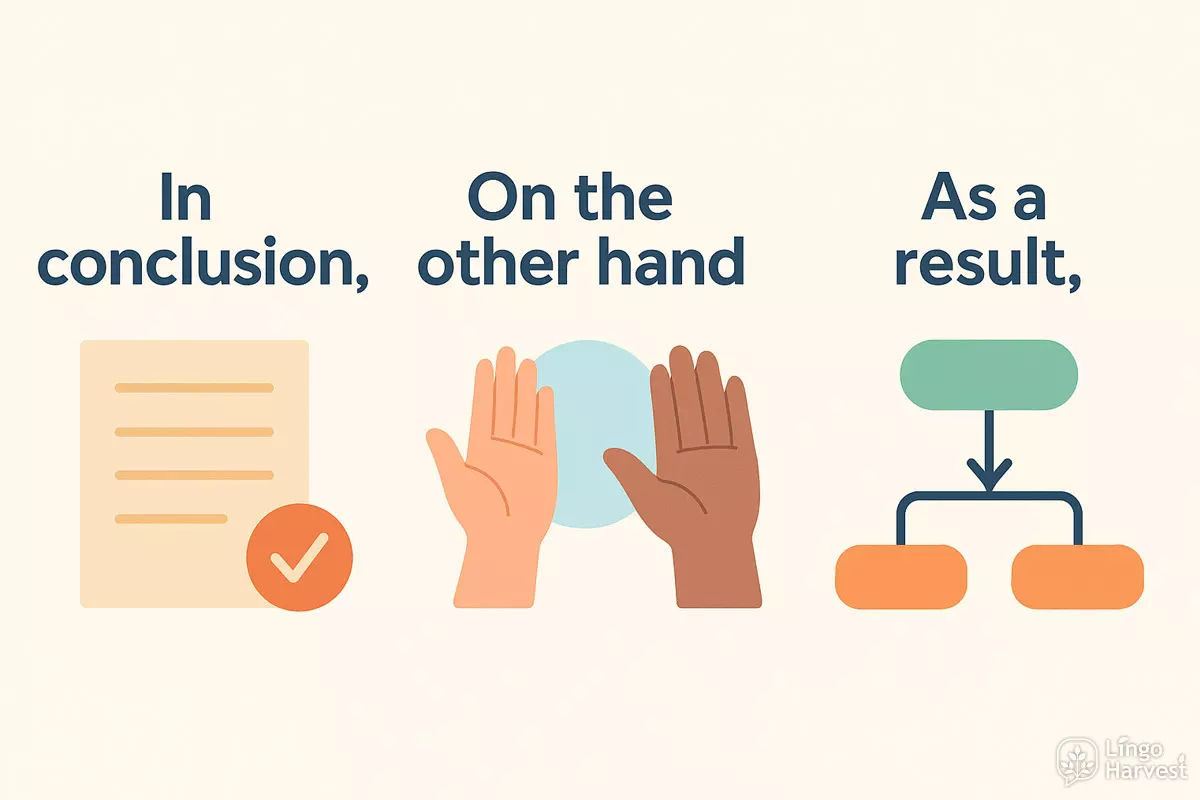
Writers often use a variety of phrases to open sentences and achieve different effects. Here are some frequently used openers:
- In conclusion,
- On the other hand,
- As a result,
- For example,
- During the experiment,
- By contrast,
- Under these circumstances,
- Without hesitation,
- In recent years,
- Surprisingly,
- With this in mind,
- Despite the challenges,
- Given the evidence,
- In summary,
- After thorough analysis,
- Initially,
- Consequently,
- In many cases,
How fronted adverbials affect sentence structure
Placing an adverbial at the start of a sentence typically requires a comma to separate it from the main clause. This not only adds clarity but also allows for subtle shifts in emphasis. The effect is especially noticeable in formal or academic texts, where such structures contribute to logical flow and reader guidance.
| Fronted Adverbial | Sentence Example |
|---|---|
| In recent studies, | In recent studies, researchers observed a significant correlation. |
| With careful analysis, | With careful analysis, the data revealed unexpected patterns. |
| Despite initial setbacks, | Despite initial setbacks, the project achieved its objectives. |
| By comparison, | By comparison, the control group showed minimal change. |
| After several attempts, | After several attempts, a solution was finally discovered. |
Using introductory adverbials in this way can make academic sentences more dynamic and reader-friendly. They allow for smoother transitions between ideas, reinforce logical connections, and fine-tune the overall tone of the writing.
Types: time, place, manner, viewpoint, linking
Understanding the variety of fronted adverbials helps writers shape academic sentences with precision and subtlety. Each category brings a distinct function, allowing authors to clarify when, where, how, or from what perspective an action is considered. Additionally, some adverbials serve to connect ideas, ensuring logical flow and coherence.
Time
Fronted adverbials of time establish when something occurs, setting a chronological context for the statement. This is especially useful in academic writing to sequence arguments or evidence.
- In recent years,
- During the experiment,
- At the beginning of the semester,
- Before the intervention,
- Subsequently,
Place
Adverbials indicating place help specify the location or spatial context related to the action. This aids clarity, especially in descriptions of studies or processes.
- In the laboratory,
- On the other hand,
- Within the community,
- Among the participants,
- Across Europe,
Manner
These adverbials describe how an action is performed. They add nuance, showing method or approach, which is valuable for describing procedures or analyses.
- With great precision,
- In contrast,
- Systematically,
- Unexpectedly,
- By comparison,
Viewpoint
Viewpoint adverbials introduce the perspective from which a statement is made, signaling subjectivity or a particular interpretive frame.
- From a theoretical perspective,
- In my opinion,
- According to Smith (2020),
- From an ethical standpoint,
- To some extent,
Linking
Linking adverbials connect sentences or clauses, guiding readers through complex arguments or shifting between related points.
- Consequently,
- Nevertheless,
- Furthermore,
- In addition,
- However,
- As a result,
- On the contrary,
- Therefore,
Comparing Functions and Examples
To clarify the distinctions among these types, here’s a structured overview:
| Type | Sample Fronted Adverbials | Typical Academic Function |
|---|---|---|
| Time | Initially, During the study, Recently, Afterwards | Sequencing arguments, situating events |
| Place | In this context, At the university, Across disciplines | Providing spatial or situational context |
| Manner | Critically, With caution, In a similar way | Describing method or approach |
| Viewpoint | From a practical standpoint, According to research | Signaling perspective or interpretation |
| Linking | Moreover, Conversely, As a result | Connecting ideas, transitions |
Choosing the appropriate type of fronted adverbial not only clarifies the sentence’s structure but also shapes its tone and guides the reader’s understanding. In academic contexts, this strategic use enhances both readability and the logical progression of arguments.
Effects on emphasis and rhythm
Placing adverbials at the front of a sentence can subtly shift what the reader focuses on and alter the overall pacing. By foregrounding certain details or perspectives, writers guide the audience’s attention and set expectations for what follows. This technique is particularly useful in academic writing, where managing flow and clarity is crucial.
Highlighting Important Information
When an adverbial phrase appears at the beginning, it often signals significance or context for the main clause. For example, starting with “In contrast” or “Surprisingly” tells the reader how to interpret the upcoming statement. This approach can also build cohesion between sentences or paragraphs by linking ideas more explicitly.
- In recent years, research has shifted toward interdisciplinary methods.
- Without doubt, this approach offers unique insights.
- By comparison, earlier studies lacked such integration.
- Interestingly, results diverged from initial predictions.
- For example, the data revealed unexpected correlations.
- Under these conditions, the outcome was less predictable.
- As a result, further investigation became necessary.
- To a lesser extent, similar findings emerged elsewhere.
- During the experiment, participants reported increased focus.
- On the contrary, some variables remained unchanged.
Influence on Sentence Rhythm
Moving adverbials to the front can create a pause or shift in tempo. This pause allows readers to absorb context before encountering the main idea. In longer academic passages, this rhythmic variation prevents monotony and improves readability. Short fronted adverbials can make statements feel punchier, while longer ones may slow the pace for emphasis or reflection.
Comparison of Placement Patterns
The location of an adverbial affects both which part of the sentence is emphasized and how smoothly the information flows. Consider the following structured comparison:
| Fronted Adverbial | Effect on Emphasis & Rhythm |
|---|---|
| In conclusion, the findings suggest... | Draws attention to summary; signals closure early. |
| The findings suggest, in conclusion, ... | Emphasis remains on the main clause; rhythm less interrupted. |
| During the first phase, participants responded quickly. | Highlights timing/context; creates an initial pause. |
| Participants responded quickly during the first phase. | Emphasis on the action; maintains a more direct flow. |
Strategic Use for Academic Tone
Writers can use these structures intentionally to shape their academic voice. By varying sentence openings, they avoid repetitive patterns and maintain reader engagement. Thoughtfully placed adverbials also signal logical connections, guide interpretation, and clarify complex arguments.
Punctuation and comma use with fronting
Academic writing often employs fronted adverbials to shape tone and guide the reader’s attention. When these adverbials appear at the beginning of a sentence, their separation by a comma is typically required. This punctuation signals a shift or adds emphasis, clarifying the sentence structure for readers. Omitting the comma can sometimes lead to confusion or ambiguity, especially in complex sentences.
Guidelines for Comma Placement After Fronted Adverbials
The general rule is straightforward: insert a comma after an introductory adverbial phrase or clause. However, there are exceptions and nuances, particularly with shorter adverbials or in informal contexts. In academic prose, consistency and clarity are the priorities, so the comma is almost always recommended.
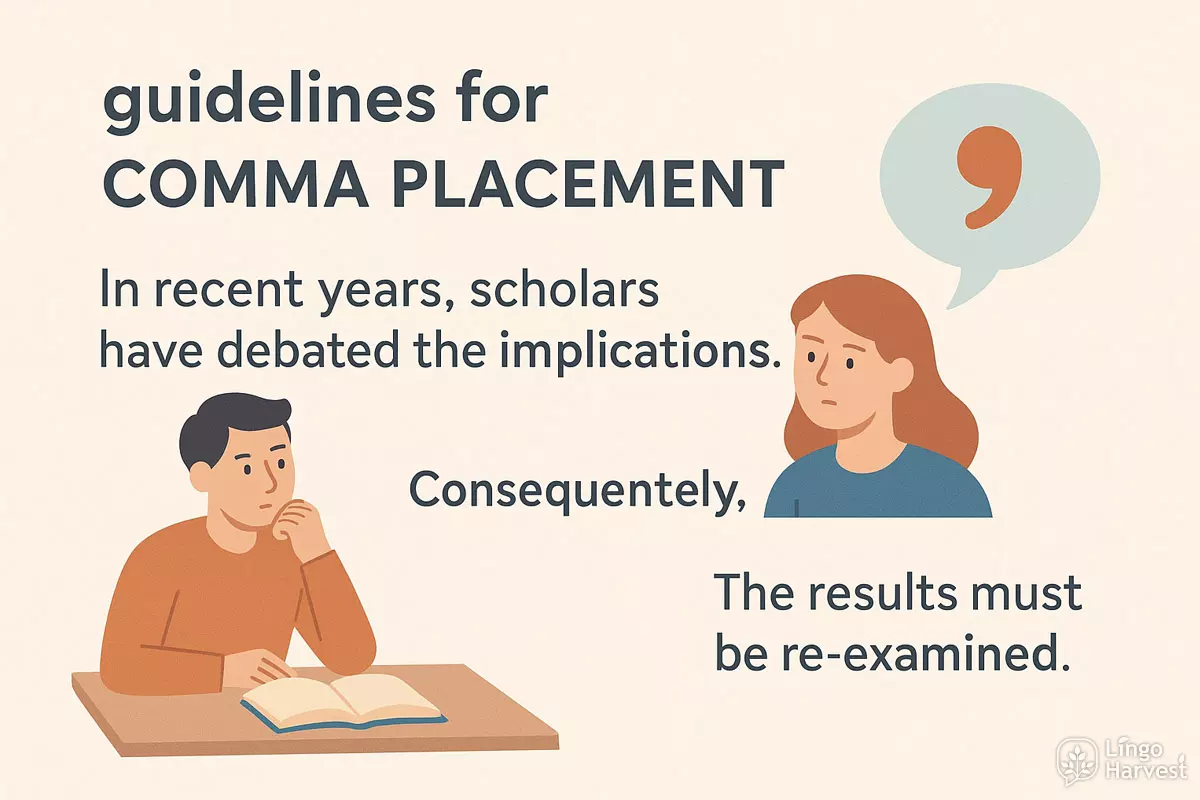
- After a long introductory phrase: “In recent years, scholars have debated the implications.”
- Following a single-word adverbial: “Consequently, the results must be re-examined.”
- With prepositional phrases: “During the experiment, observations were meticulously recorded.”
- For adverbial clauses: “Although the data were inconclusive, the hypothesis remains plausible.”
- With time expressions: “Yesterday, the committee reached a consensus.”
- For contrast or emphasis: “On the other hand, alternative methods exist.”
- When fronting conditional clauses: “If the sample size increases, the results may differ.”
- To show cause or reason: “Because of these findings, further research is warranted.”
- With concessive adverbials: “Despite the limitations, the study offers new insights.”
- For connecting ideas: “Moreover, this approach aligns with previous theories.”
Common Pitfalls and Exceptions
Writers sometimes omit the comma after brief adverbials such as “Today” or “Finally,” especially in informal writing. In academic contexts, though, the comma is almost always preferred for clarity. Avoid placing a comma if the adverbial is not fronted (i.e., appears later in the sentence) or when the phrase is tightly integrated and does not cause confusion.
Examples: Correct vs. Incorrect Usage
| ✅ Correct | ❌ Incorrect |
|---|---|
| As a result, the hypothesis was confirmed. | As a result the hypothesis was confirmed. |
| In summary, the findings support the main argument. | In summary the findings support the main argument. |
| Without further evidence, conclusions remain tentative. | Without further evidence conclusions remain tentative. |
| After the survey, responses were analyzed statistically. | After the survey responses were analyzed statistically. |
Summary Tips
- Use a comma after most fronted adverbials in scholarly writing.
- The comma aids readability, especially in longer or more complex sentences.
- When in doubt, include the comma for clarity and convention.
Combining fronted adverbials with complex clauses
Academic writing often benefits from nuanced sentence structures that establish clear relationships between ideas. One effective approach involves placing an adverbial phrase at the beginning of a sentence, followed by a more elaborate clause. This technique not only signals the writer’s stance or the logical flow but also enhances cohesion and sophistication throughout the text.
How fronted adverbials interact with complex clauses
When an adverbial phrase precedes a multi-part statement, it can highlight contrast, cause, sequence, or specificity. For instance, starting with “Despite recent findings,” prepares the reader for a concession or exception, while “In light of these results,” frames the subsequent information as a logical consequence. Writers often choose this structure to:
- Emphasize time, place, or condition before introducing the main argument
- Clarify the relationship between evidence and interpretation
- Guide the reader’s expectations about the sentence’s purpose
- Add variety to sentence openings, avoiding monotony
Patterns for integrating fronted adverbials with complex sentences
Here are several patterns and examples that illustrate the effective use of introductory adverbials with sophisticated clauses:
- Despite extensive research, the underlying mechanisms remain poorly understood, suggesting a need for further investigation.
- In contrast to previous studies, the current experiment yielded unexpected outcomes, which challenge established theories.
- Under certain conditions, the model performs reliably, provided that all variables are controlled.
- Given the limitations of the dataset, any generalizations should be made cautiously, as bias is possible.
- Following the implementation of new protocols, staff compliance rates increased, indicating procedural effectiveness.
- Although initial results were promising, subsequent trials failed to replicate the effect, raising questions about reliability.
- With this evidence in mind, scholars have begun to reconsider long-held assumptions about the phenomenon.
- For example, when participants were given additional context, their responses shifted significantly, supporting the hypothesis.
- Accordingly, further research is warranted, particularly in diverse populations where outcomes may differ.
- Once the variables were isolated, the correlation became apparent, though causation remains unproven.
- By synthesizing the available data, the authors propose a novel framework that integrates prior findings.
- After the intervention, student performance improved, which the authors attribute to increased engagement.
- When considering alternative explanations, the results appear less conclusive, suggesting complexity in the underlying factors.
- Prior to data analysis, all responses were anonymized, ensuring participant confidentiality.
- While these observations are compelling, they do not constitute definitive proof of causality.
- As a result of policy changes, enrollment numbers have shifted, requiring updated projections.
- To illustrate this point, several case studies are examined, each revealing unique challenges.
- During the initial phase, unexpected obstacles emerged, necessitating adjustments to the methodology.
Balancing clarity and complexity
It’s important to ensure that the introductory adverbial and the main clause are logically connected. Overly long or convoluted openings can obscure the main message. Academic writers should use punctuation—usually a comma after the fronted adverbial—to maintain readability. These constructions are especially useful for highlighting transitions, setting context, or signaling a shift in argument. By thoughtfully combining introductory phrases with detailed clauses, writers can create sentences that are both informative and engaging, reflecting the complexity and nuance of academic arguments.
Practice: add and move adverbials to redesign sentences
Understanding how to shift adverbials in academic sentences can strengthen tone, clarify relationships, and create variety. In this section, you’ll work with sentence transformations by both inserting and relocating adverbial phrases. This hands-on approach will help you recognize the stylistic and structural effects of fronted, medial, and end-position adverbials.
Task 1: Insert and Relocate Adverbials
Below are sentences missing adverbials. Your challenge: add a suitable adverbial (time, manner, reason, or place), and experiment by placing it at the beginning, middle, or end. Try each option and observe how tone or emphasis changes.
- Students improved their writing skills.
- The experiment was repeated.
- Researchers debated the findings.
- The results contradicted earlier theories.
- The data were analyzed using new software.
- The committee approved the proposal.
- The participants completed the survey.
- The theory gained widespread attention.
- The team revised the manuscript.
- The professor explained the concept.
Show answers
- Early in the semester, students improved their writing skills. / Students, over several weeks, improved their writing skills. / Students improved their writing skills after attending workshops.
- To ensure accuracy, the experiment was repeated. / The experiment, under controlled conditions, was repeated. / The experiment was repeated in the laboratory.
- During the conference, researchers debated the findings. / Researchers, with considerable enthusiasm, debated the findings. / Researchers debated the findings for several hours.
- Unexpectedly, the results contradicted earlier theories. / The results, contrary to expectations, contradicted earlier theories. / The results contradicted earlier theories in several key aspects.
- Recently, the data were analyzed using new software. / The data, for the first time, were analyzed using new software. / The data were analyzed using new software to enhance reliability.
- After a lengthy review, the committee approved the proposal. / The committee, after careful discussion, approved the proposal. / The committee approved the proposal without modifications.
- At the end of the session, the participants completed the survey. / The participants, with minimal hesitation, completed the survey. / The participants completed the survey in under ten minutes.
- Over the past decade, the theory gained widespread attention. / The theory, in academic circles, gained widespread attention. / The theory gained widespread attention due to recent findings.
- Following the reviewer’s suggestions, the team revised the manuscript. / The team, with great attention to detail, revised the manuscript. / The team revised the manuscript before resubmission.
- In yesterday’s lecture, the professor explained the concept. / The professor, with remarkable clarity, explained the concept. / The professor explained the concept to the entire class.
Task 2: Identify Adverbial Placement
For each sentence, decide if the adverbial is fronted, medial, or in end position. Consider how the placement influences focus and tone.
- After much debate, the committee reached a decision.
The committee, after much debate, reached a decision.
The committee reached a decision after much debate. - In the early morning, researchers began the procedure.
Researchers, in the early morning, began the procedure.
Researchers began the procedure in the early morning. - To ensure accuracy, the team repeated the test.
The team, to ensure accuracy, repeated the test.
The team repeated the test to ensure accuracy. - Without any warning, the temperature dropped.
The temperature, without any warning, dropped.
The temperature dropped without any warning. - During the conference, experts reviewed the findings.
Experts, during the conference, reviewed the findings.
Experts reviewed the findings during the conference. - For ethical reasons, they postponed the experiment.
They, for ethical reasons, postponed the experiment.
They postponed the experiment for ethical reasons. - Surprisingly, the results contradicted the hypothesis.
The results, surprisingly, contradicted the hypothesis.
The results contradicted the hypothesis surprisingly. - At the last minute, the team changed the plan.
The team, at the last minute, changed the plan.
The team changed the plan at the last minute. - With careful attention, she analyzed the data.
She, with careful attention, analyzed the data.
She analyzed the data with careful attention. - By the end of the week, they submitted the report.
They, by the end of the week, submitted the report.
They submitted the report by the end of the week.
Show answers
- Fronted / Medial / End
- Fronted / Medial / End
- Fronted / Medial / End
- Fronted / Medial / End
- Fronted / Medial / End
- Fronted / Medial / End
- Fronted / Medial / End
- Fronted / Medial / End
- Fronted / Medial / End
- Fronted / Medial / End
Common Adverbials for Academic Writing
Here is a selection of adverbials frequently used to adjust emphasis, clarify sequence, or set context in scholarly sentences. Try using some of these in the previous exercises:
- In recent years
- For this reason
- Under certain conditions
- In contrast
- Consequently
- Surprisingly
- Furthermore
- On the other hand
- During the analysis
- As a result
- To a lesser extent
- Within this framework
- In summary
- Notably
- Prior to the experiment
- From a theoretical perspective
- At this stage
- Despite initial assumptions
- Historically
- Without exception
Mini-Quiz: Tone and Structure
Choose the best adverbial placement for a more formal, academic tone in the following sentence:
The hypothesis was confirmed (adverbial: after extensive testing).
- After extensive testing, the hypothesis was confirmed.
- The hypothesis, after extensive testing, was confirmed.
- The hypothesis was confirmed after extensive testing.
Show answers
All options are grammatically correct, but A (“After extensive testing, the hypothesis was confirmed.”) is often preferred for formal emphasis in academic writing.