Advanced Quantifier Structures: Much Less, Far Fewer, A Great Many

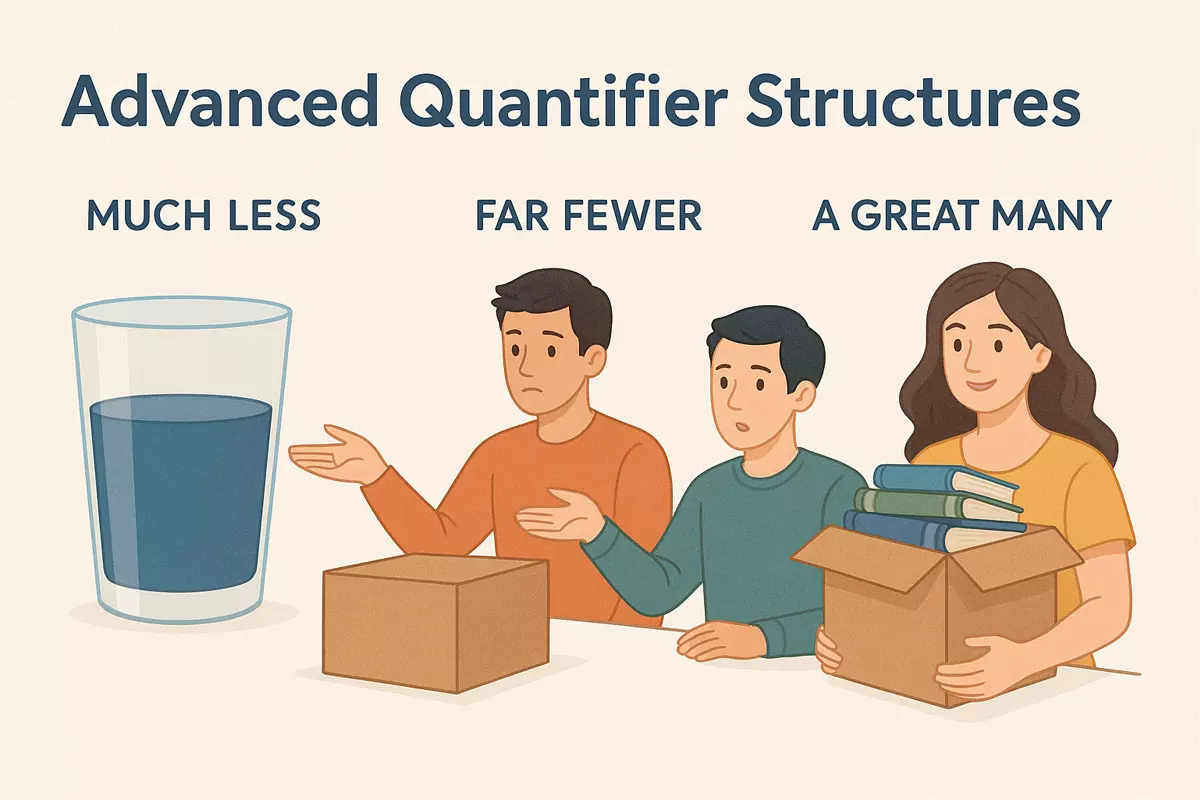 The article reviews basic quantifiers, covers intensified forms such as far fewer and much more, and explains complex of-phrase patterns. It also discusses using quantifiers for emphasis or contrast, common countable vs uncountable mistakes, and includes practice tasks.
Understanding the subtleties of English expressions related to quantity, such as distinguishing between terms like much less, far fewer, and a great many, can significantly enhance your communication skills. By mastering these nuanced phrases, you can express amounts with greater precision and clarity, ensuring that your language accurately reflects the situation you are describing. This attention to detail not only improves your ability to convey information but also adds sophistication and effectiveness to your overall communication style.
Review of basic quantifiers
Understanding how to express quantity is essential for clear and accurate communication in English. Quantifiers are words or phrases that indicate how much or how many of something there is. They are used before nouns and can refer to both countable and uncountable items. This section revisits the most common and useful quantifiers, laying the groundwork for exploring more advanced structures later.
Common Quantifiers and Their Usage
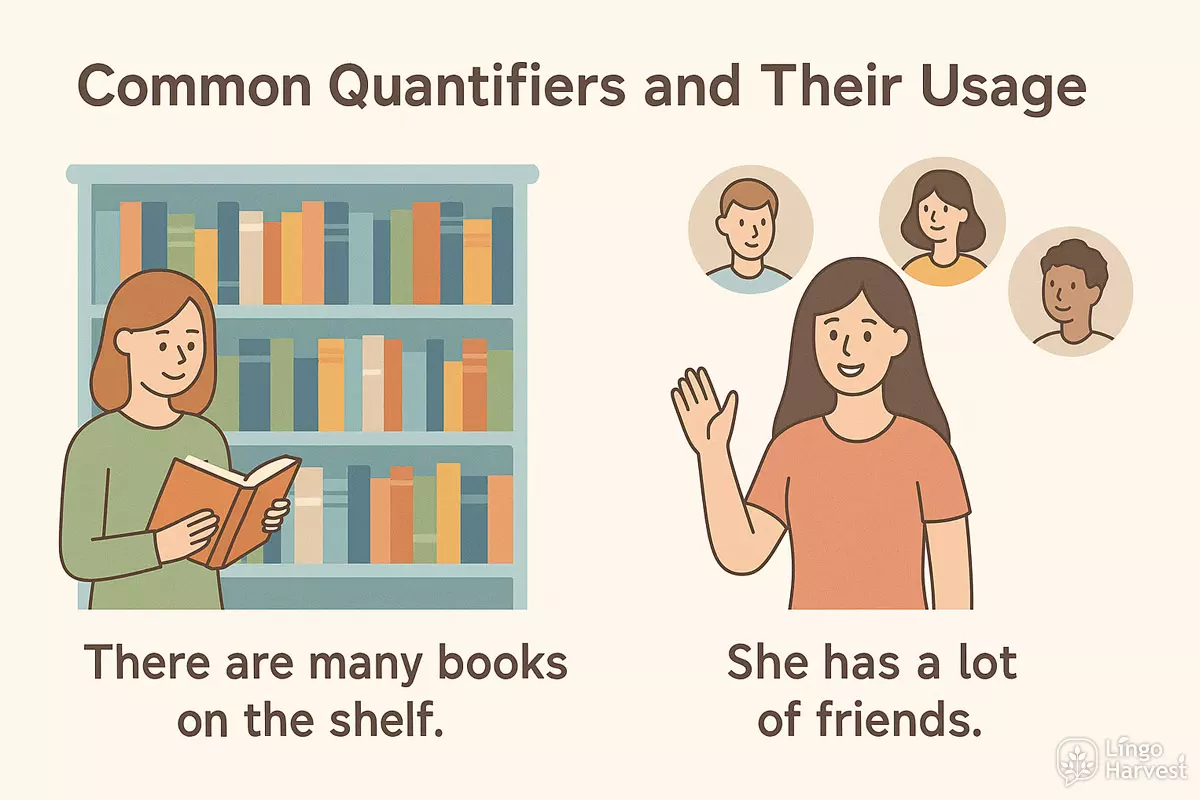
Basic quantifiers typically indicate a general amount or number. Some are used with countable nouns, others with uncountable nouns, and a few can be used with both. Here is an overview of frequently used quantifiers and their typical contexts:
| Quantifier | Used with | Example |
|---|---|---|
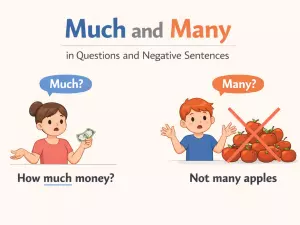
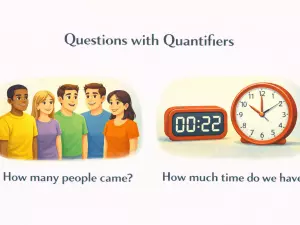
| much | Uncountable nouns | How much water is there? |
| many | Countable nouns | There are many books on the shelf. |
| a lot of / lots of | Both | She has a lot of friends. / We need lots of time. |
| some | Both | Can I have some sugar? / She bought some apples. |
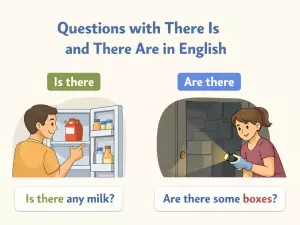
| any | Both (mainly in negatives and questions) | Are there any problems? / There isn’t any milk. |
| few / a few | Countable nouns | Few people know the answer. / I have a few ideas. |
| little / a little | Uncountable nouns | There is little hope. / I need a little help. |
| several | Countable nouns | We visited several countries. |
| plenty of | Both | There’s plenty of room. / She has plenty of ideas. |
| each / every | Singular countable nouns | Each student got a book. / Every child needs love. |
| no | Both | No time was wasted. / No students were late. |
Guidelines for Choosing Quantifiers
- Use much and little with uncountable nouns (e.g., “much information”, “little time”).
- Use many and few with countable nouns (e.g., “many cars”, “few people”).
- A lot of and plenty of are informal and work with both countable and uncountable nouns.
- Some is commonly used in positive statements and offers/requests.
- Any is preferred in negative statements and questions.
- The difference between few/a few and little/a little is important: “few” and “little” emphasize scarcity, while “a few” and “a little” suggest a small but sufficient amount.
Practice: Identify the Correct Quantifier
- There isn’t _____ milk left in the fridge.
- He made _____ mistakes on the test.
- We have _____ time before the meeting starts.
- _____ students attended the lecture.
- Did you buy _____ apples at the market?
- She has _____ friends in this city.
- There is still _____ water in the bottle.
- Only _____ people volunteered for the project.
- I don’t have _____ information about the event.
- They showed _____ interest in the proposal.
Show answers
- any
- few
- a little
- many
- any
- few
- a little
- few
- any
- little
Intensified quantifier structures: far fewer, much more
English often amplifies quantifiers using modifiers like far, much, a lot, or significantly. These intensified forms help speakers express not just quantity but also a sense of degree or contrast. For example, saying "far fewer people attended" suggests a dramatic drop compared to simply "fewer people attended." This extra layer of emphasis clarifies the speaker's attitude or highlights an important difference.
Common intensified quantifier patterns
Writers and speakers combine intensifiers with quantifiers to strengthen their statements. Here are some frequent patterns:
- far fewer (students, cars, options)
- much more (time, information, support)
- far more (choices, opportunities, evidence)
- much less (noise, effort, interest)
- a lot fewer (errors, complaints, cases)
- significantly more (details, funding, participants)
- substantially less (risk, confusion, waste)
- many more (reasons, questions, features)
- considerably fewer (interruptions, problems, delays)
- far less (stress, resistance, pollution)
- slightly more (flexibility, variety, space)
- noticeably fewer (errors, issues, objections)
- dramatically more (interest, engagement, sales)
- way less (traffic, hassle, confusion)
- vastly more (resources, knowledge, opportunities)
- markedly fewer (complaints, reports, symptoms)
- considerably more (freedom, options, data)
- far greater (impact, influence, relevance)
- much fewer (calls, incidents, delays)
- substantially more (choices, advantages, evidence)
Comparing intensifiers: usage and nuance
Some intensifiers carry a stronger emotional charge or suggest a larger difference. It's useful to compare which combinations work best for clarity or emphasis:
| Quantifier Structure | Typical Context or Nuance |
|---|---|
| Much more / much less | Neutral or factual increase/decrease (e.g., "much more water was needed") |
| Far fewer / far more | Highlights a strong or surprising contrast (e.g., "far fewer people applied this year") |
| Significantly more / less | Often used in academic or formal contexts to indicate measurable difference |
| A lot fewer / a lot more | Conversational, less formal, implies a noticeable but not always dramatic gap |
| Vastly more / vastly fewer | Emphasizes a very large gap, often for effect or exaggeration |
Practical tips for using intensified quantifiers
- Pair intensifiers only with comparative quantifiers (e.g., "fewer," "more," "less").
- Choose the intensifier that matches the degree you want to convey—far and vastly for very large differences; slightly or noticeably for smaller contrasts.
- Be mindful of register: academic writing prefers significantly or considerably; informal speech allows a lot or way.
- Stacking multiple intensifiers (e.g., "far, far fewer") is possible for dramatic effect but can sound exaggerated.
- Always check that the intensified quantifier fits grammatically with its noun (countable vs. uncountable).
Mastering these patterns allows for more precise and vivid communication, whether you are emphasizing a small improvement or a dramatic decline.
Complex patterns with of-phrases
Expressions like much less, far fewer, and a great many often combine with of-phrases to specify subsets within larger groups. These structures add nuance, highlighting contrasts or emphasizing the quantity in relation to a particular set. Understanding how to use these patterns is key to mastering advanced quantification in English.
Usage of quantifier structures with "of"
When quantifiers precede an of-phrase, they often refer to a portion of a defined group. For example: Far fewer of the candidates passed the test than expected. Here, the phrase points to a specific subset: those who took the test. These constructions are especially common in formal and academic contexts.
- Much less of the material was covered than planned.
- Far fewer of the respondents agreed with the proposal.
- A great many of the students participated in the survey.
- Very few of the options were feasible.
- A large number of the items need replacing.
- Most of the participants finished on time.
- Some of the evidence was inconclusive.
- None of the suggestions were implemented.
- All of the data has been verified.
- Several of the proposals were accepted.
- A small fraction of the budget was allocated to research.
- Too many of the rules are outdated.
- Much of the information is confidential.
- Only a handful of the cases were resolved.
- Hardly any of the predictions came true.
Comparing quantifier + of-phrase patterns
Different quantifiers pair with of-phrases in distinct ways, depending on countability and emphasis. The table below contrasts some common forms and their typical usage:
| Quantifier Expression | Example Usage |
|---|---|
| Much less of | Much less of the work remains to be done. |
| Far fewer of | Far fewer of the applicants were selected. |
| A great many of | A great many of the books were donated. |
| Very little of | Very little of the information was useful. |
| Several of | Several of the options are available. |
| Most of | Most of the staff agreed with the changes. |
| All of | All of the evidence supports the claim. |
| Few of | Few of the recommendations were adopted. |
Points to remember
- Use of-phrases after quantifiers to refer to a specific subset within a larger set.
- Match the quantifier to the noun type (countable vs. uncountable): far fewer of the people (countable), much less of the information (uncountable).
- Avoid redundancy: do not add of after quantifiers when not referencing a specific group (e.g., say many students, not many of students).
- These patterns are especially helpful for precise, nuanced statements.
Using quantifiers for emphasis and contrast
When you want to make your statements more forceful or highlight differences, advanced quantifier structures become essential. Phrases like much less, far fewer, and a great many help you express both the degree and the direction of the comparison. These structures add clarity and nuance, especially when comparing quantities or stressing significant contrasts.
Highlighting extremes in quantity
Writers and speakers often use quantifiers to underline just how much or how little of something exists. For example, saying "far fewer people attended the meeting this year" draws attention to a notable decrease, while "a great many students passed the exam" emphasizes a large success.
- Much less: emphasizes a significant decrease or smaller amount.
- Far fewer: stresses a sharp reduction in countable items.
- A great many: underlines a very large number, often with a positive nuance.
- Much more: highlights a significant increase or larger amount (uncountable).
- Far more: emphasizes a strong rise in countable elements.
- Many more: points to a considerable additional quantity (countable).
- Far less: accentuates a dramatic drop (uncountable).
- A good deal less: signals a substantial reduction (uncountable).
- A great deal more: marks a large increase (uncountable).
- Significantly fewer: used for marked decreases (countable).
- Substantially more: expresses a large gain (countable or uncountable).
- Considerably less: indicates a noticeable decrease (uncountable).
Contrastive quantifiers in context
To make differences between groups or situations clear, contrastive phrases are useful. These can be especially effective in academic or analytical writing, where precision matters.
| Emphatic Structure | Example in Context |
|---|---|
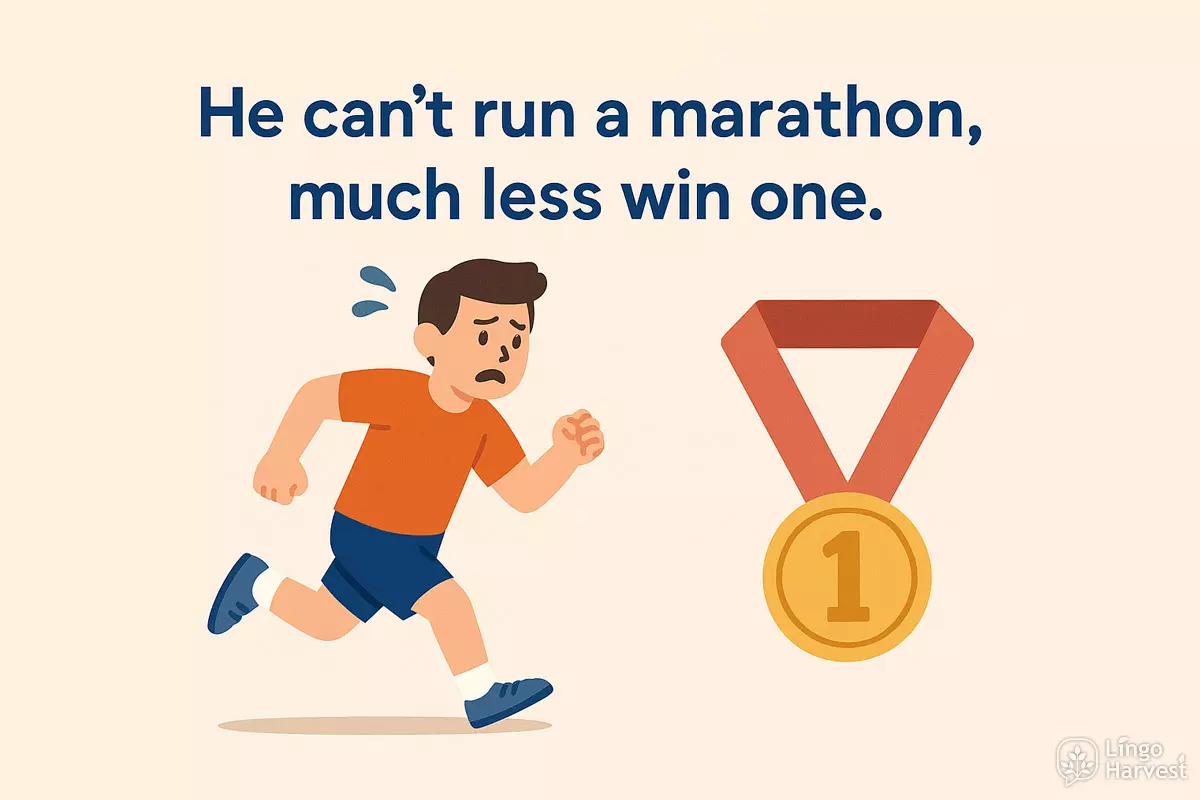
| Much less | He can't run a marathon, much less win one. |
| Far fewer | There are far fewer errors in this report than in the last one. |
| A great many | A great many people volunteered for the event. |
| Far more | There were far more applicants than available positions. |
| Considerably less | This solution uses considerably less energy than alternatives. |
| Many more | Many more students participated this year. |
| A great deal more | We need a great deal more time to complete the project. |
| Significantly fewer | Significantly fewer cases were reported in May. |
Tips for effective use
To use these advanced expressions naturally:
- Match the quantifier to the noun type (countable vs. uncountable).
- Use contrastive quantifiers to make differences stand out.
- Reserve strong quantifiers for genuinely notable contrasts or amounts.
- Balance emphasis—overusing strong quantifiers can weaken their impact.
Strategic use of these structures sharpens your communication, making your points clearer and more persuasive.
Common mistakes with countable vs uncountable nouns
Understanding the distinction between countable and uncountable nouns is essential when using advanced quantifiers like “much less,” “far fewer,” and “a great many.” Learners often confuse which quantifiers pair with which noun types, leading to ungrammatical or awkward sentences.
Mixing Up Quantifiers and Noun Types
A frequent error is pairing quantifiers designed for countable nouns with uncountable nouns, or vice versa. For instance, using “many” with “information” (an uncountable noun) or “much” with “books” (a countable noun) is incorrect. This confusion is especially common when the noun’s status isn’t obvious, or when translating directly from another language.
- ❌ Much books are on the shelf. → Many books are on the shelf.
- ❌ A great many advice was given. → A great deal of advice was given.
- ❌ There isn’t far fewer sugar in my tea. → There is far less sugar in my tea.
- ❌ Much less cars were sold this year. → Far fewer cars were sold this year.
Commonly Confused Nouns
Some nouns can be particularly tricky because their countability may differ from learners’ expectations. Here are several examples that often cause trouble:
- Advice (uncountable; much advice, not many advices)
- Furniture (uncountable; less furniture, not fewer furnitures)
- Equipment (uncountable; a lot of equipment, not many equipments)
- News (uncountable; some news, not many news)
- Homework (uncountable; much homework, not many homeworks)
- Information (uncountable; less information, not fewer informations)
- People (countable; many people, not much people)
- Children (countable; fewer children, not less children)
- Data (traditionally uncountable, but often treated as countable in modern English)
- Experience (uncountable for general knowledge, countable for individual events)
Quick Reference: Quantifiers and Noun Types
| Quantifier | For Countable Nouns | For Uncountable Nouns |
|---|---|---|
| Many / A great many | ✅ (e.g., many books) | ❌ (incorrect) |
| Much | ❌ (incorrect) | ✅ (e.g., much sugar) |
| Far fewer / Fewer | ✅ (e.g., fewer cars) | ❌ (incorrect) |
| Far less / Less | ❌ (incorrect) | ✅ (e.g., less water) |
| A lot of | ✅ (e.g., a lot of apples) | ✅ (e.g., a lot of time) |
Tips for Avoiding Mistakes
To minimize confusion, always check whether a noun is countable or uncountable before selecting a quantifier. If in doubt, consult a reliable dictionary or grammar resource. Practicing with common noun-quantifier pairs can also help solidify correct usage over time.
Practice: choose and adjust quantifiers in sample sentences
Understanding nuanced quantifiers like "much less," "far fewer," and "a great many" is essential for expressing precise meaning in English. Below you'll find exercises and examples to help you identify, select, and modify advanced quantifier structures. This will help you sound more natural and accurate in both spoken and written contexts.
Choose the Best Quantifier
Read the following sentences and select the most appropriate quantifier to complete each one. Think about whether the noun is countable or uncountable, and consider the intensity or emphasis expressed.
- There were __________ people at the conference this year compared to last year. (Options: a great many, far fewer, much less)
- We have __________ time to finish the project than we expected. (Options: much less, a great many, far fewer)
- __________ students participated in the survey, which surprised the organizers. (Options: much less, far fewer, a great many)
- This year, we received __________ complaints about the new policy. (Options: much less, far fewer, a great many)
- The company hired __________ interns this summer than last summer. (Options: much less, far fewer, a great many)
- There are __________ opportunities for promotion in the new department. (Options: a great many, far fewer, much less)
- We lost __________ data during the transfer than we feared. (Options: much less, a great many, far fewer)
- __________ visitors came to the exhibition than the organizers expected. (Options: a great many, far fewer, much less)
- We now face __________ problems than we did last year. (Options: far fewer, a great many, much less)
- There is __________ interest in this topic than the media suggests. (Options: much less, far fewer, a great many)
Show answers
- far fewer
- much less
- a great many
- far fewer
- far fewer
- a great many
- much less
- far fewer
- far fewer
- much less
Adjust the Quantifier
Rewrite each sentence, replacing the underlined quantifier with a stronger or weaker alternative from the article’s main structures. Pay attention to the meaning and formality.
- We have many reasons to believe the plan will succeed.
- There are fewer tickets available this year.
- She has less interest in the topic than before.
- The city has many visitors during the festival.
- He made few errors on the test.
- They had less time to prepare than expected.
- The report contains many useful suggestions.
- The school has fewer students enrolled this year.
- The experiment produced few measurable results.
- We noticed less noise after the renovation.
Show answers
- a great many
- far fewer
- much less
- a great many
- far fewer
- much less
- a great many
- far fewer
- far fewer
- much less
Comparing Quantifiers: Usage Patterns
Different quantifiers fit different contexts, especially when comparing countable and uncountable nouns. The table below summarizes their typical uses and structures:
| Quantifier | Example Sentence | Notes |
|---|---|---|
| a great many | A great many books were donated to the library. | Used with countable nouns for emphasis. |
| far fewer | Far fewer people attended the seminar this year. | Comparative, countable nouns. |
| much less | There is much less water in the reservoir now. | Comparative, uncountable nouns. |
| much less (negation) | I can't afford a car, much less a house. | Emphasizes impossibility; "let alone". |
Expand Your Range: More Sample Sentences
- Far fewer students registered for the advanced course this semester.
- Much less information was available about the incident.
- A great many challenges remain unresolved.
- He has far fewer responsibilities than his predecessor.
- This year, there was much less snow than usual.
- A great many opportunities await those who are prepared.
- The team made far fewer mistakes in the second half.
- Much less effort is required with the new process.
- A great many people contributed to the campaign.
- The new policy resulted in far fewer complaints.
Practicing with these structures will help you select the most natural and precise quantifier for each situation, making your English more expressive and accurate.