Conjunction Stacking in Advanced Writing: When Two Isn’t Too Many

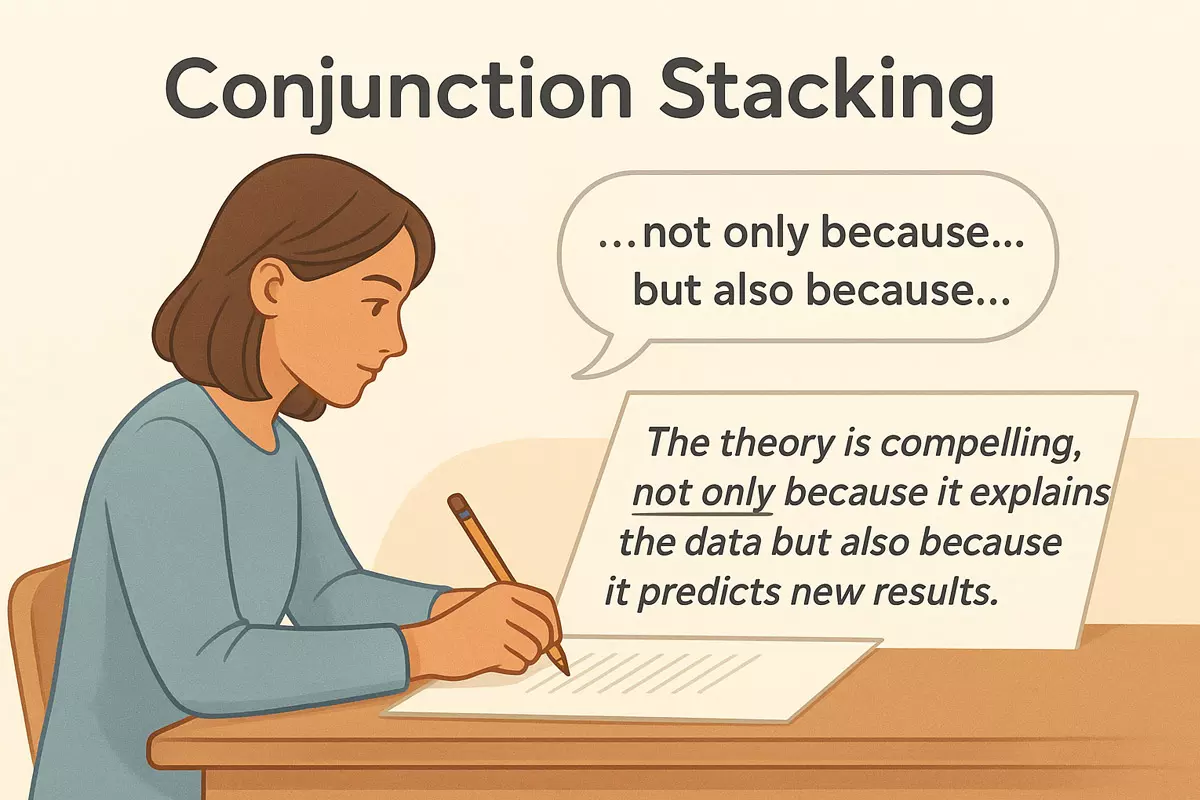 Here we what conjunction stacking is, gives examples of double and triple linkers, explains when stacking is helpful or redundant, outlines punctuation and parallelism rules, warns about conflicts, and includes practice editing such sentences.
Writers seeking to enhance their prose often combine multiple linking words within a single sentence, a stylistic choice that, when used thoughtfully, can introduce rhythm, nuance, and sophistication to their writing. However, while this approach can elevate the flow and depth of a passage, it also carries risks, such as creating overly complex or cumbersome sentences that may confuse readers. Understanding how to balance these elements is essential for writers who wish to harness the full potential of advanced sentence construction.
What conjunction stacking means
In advanced writing, it’s not unusual to see sentences where more than one coordinating conjunction appears in close succession. This practice—sometimes called “conjunction stacking”—involves linking multiple clauses, ideas, or phrases using two or more conjunctions (such as and, but, or, nor, yet, so) within a single sentence or even within a single clause. Rather than strictly adhering to the one-conjunction-per-connection rule, skilled writers sometimes stack conjunctions to create nuanced meaning, rhythm, or emphasis.
How stacking works in sentences
Stacking typically appears when a sentence presents a series of related but distinct ideas, or when the writer wants to reflect the complexity of real thought. For example:
- She wanted to stay, but she was tired, and the meeting was running late, so she excused herself.
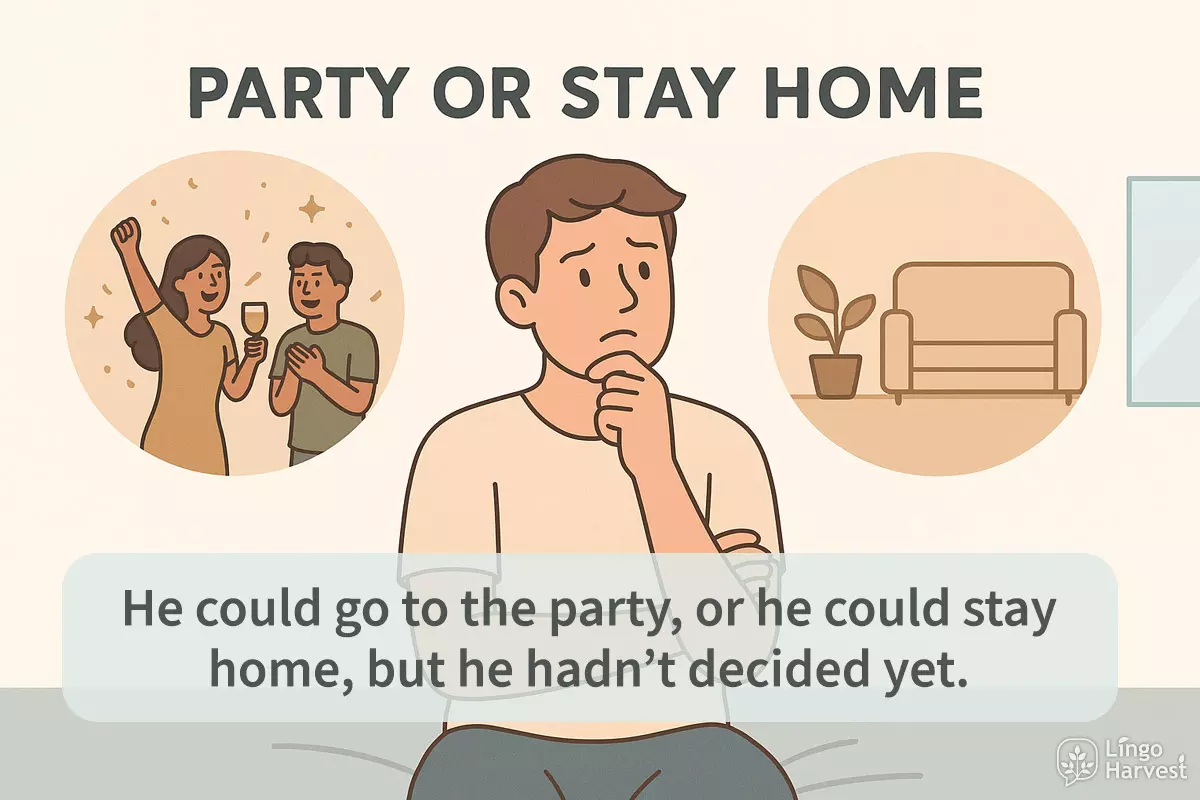
- He could go to the party, or he could stay home, but he hadn’t decided yet.
Notice how each conjunction adds a layer of logic, contrast, or consequence, guiding the reader through the sentence’s structure.
Common patterns and effects
Writers stack conjunctions for several reasons:
- To show complex relationships between ideas
- To maintain the natural flow of speech in dialogue or narrative
- To add emphasis or rhythm
- To avoid monotony in sentence structure
- To clarify the logical sequence of actions or options
Examples of multiple conjunctions
- We could leave now, or we could wait, but we might miss our chance.
- She tried to call, and she sent a message, but there was no reply.
- It was raining, so we stayed inside, and we played games.
- You can have tea, or coffee, or juice.
- I wanted to help, but I was busy, and I didn’t know how.
- The movie was long, and the plot was confusing, but the visuals were stunning.
- We planned to travel, yet the weather was bad, so we stayed home.
- He didn’t study, nor did he attend class, yet he passed the test.
- You can come early, or you can come late, but please let me know.
- She was nervous, and she was excited, so she couldn’t sleep.
Comparing single vs. stacked conjunctions
| Single Conjunction | Stacked Conjunctions |
|---|---|
| She wanted to stay, but she was tired. | She wanted to stay, but she was tired, and the meeting was running late, so she excused herself. |
| He could go to the party, or he could stay home. | He could go to the party, or he could stay home, but he hadn’t decided yet. |
| It was raining, so we stayed inside. | It was raining, so we stayed inside, and we played games. |
| I wanted to help, but I was busy. | I wanted to help, but I was busy, and I didn’t know how. |
When to use this technique
Conjunction stacking is most effective in literary works, creative nonfiction, or informal contexts where voice and flow matter. Overuse can cause confusion, but when used thoughtfully, it can mirror authentic thinking and produce engaging, dynamic prose.
Examples of double and triple linkers
Writers sometimes combine two or more conjunctions or linking expressions within a single sentence to clarify relationships or add nuance. Stacking linkers can help express complex ideas, show contrasts and conditions simultaneously, or emphasize subtle shifts in meaning. Below are common patterns and real-world examples that illustrate how multiple connectors work together in advanced writing.
Double Linkers in Context
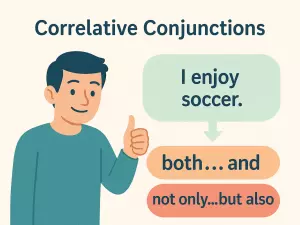
- Not only... but also:
She not only completed the project ahead of schedule, but also delivered exceptional quality. - Both... and:
Both the manager and the team were responsible for the decision. - Either... or:
You can either submit the report today or bring it to tomorrow’s meeting. - Neither... nor:
He is neither interested in sports nor in music. - As well as:
The proposal addresses budget concerns as well as resource allocation. - So... that:
The issue was so complex that even the experts struggled to explain it. - Both... as well as:
Both the introduction and the conclusion, as well as the main body, require revision. - Not only... but... as well:
Not only did she organize the event, but she managed the publicity as well. - If... then:
If the weather improves, then we will hold the meeting outdoors. - Although... nevertheless:
Although the evidence was circumstantial, nevertheless the jury was convinced.
Triple Linkers and More Complex Stacking
Occasionally, writers use three or more linkers for added precision or to show a chain of reasoning. These structures are less common but can be effective in formal or academic writing.
- Not only... but also... and:
The team not only met the deadline, but also exceeded expectations and set a new standard. - Either... or... or:
You can either call, email, or message your supervisor about the changes. - Both... and... as well as:
Both the methodology and the results, as well as the discussion, should be reviewed. - Whether... or... or:
Whether you agree, disagree, or remain neutral, your feedback is valuable. - Not only... but also... but:
Not only did the company improve its services, but it also expanded its operations, but the costs increased significantly. - Both... and... and:
Both the introduction and the literature review and the appendix require revision. - Either... or... and:
You can either update the document or submit a new version and notify the team. - Neither... nor... nor:
She was neither satisfied with the results nor confident in the method nor willing to repeat the test. - Whether... or... and:
Whether you choose to attend the workshop or watch the recording and complete the tasks later, participation is required.
Comparing Double and Triple Linker Usage
| Structure | Example Sentence |
|---|---|
| Double: Not only... but also | Not only was the presentation informative, but also engaging. |
| Double: Either... or | Either you can revise the introduction, or you can rewrite the conclusion. |
| Triple: Not only... but also... and | Not only did she analyze the data, but she also interpreted the results and published the findings. |
| Triple: Both... and... as well as | Both the experimental design and the data collection, as well as the analysis, were exemplary. |
| Triple: Either... or... or | You can either submit the form online, or mail it, or deliver it in person. |
Mastering these combinations helps writers create more nuanced, precise, and varied sentences, especially in academic, technical, or persuasive contexts.
When stacking adds clarity vs redundancy
Choosing whether to stack conjunctions—such as "and," "but," or "so"—often depends on the intended clarity and flow of a sentence. Sometimes, pairing conjunctions can guide the reader smoothly through complex thoughts. In other cases, it may muddy the message or make writing feel unnecessarily heavy.
When does stacking improve clarity?
Stacked conjunctions can help distinguish subtle relationships in advanced writing. For example, using "but also" after "not only" clarifies that two contrasting elements are both significant. Similarly, "and yet" signals an unexpected twist, guiding readers' expectations. Here are several cases where combining conjunctions works to your advantage:
- To emphasize a shift: She tried, and yet she failed.
- To show escalation: He was tired, but still determined.
- To clarify exceptions: Not only did she win, but she also set a record.
- To highlight consequences: He overslept, so he missed the meeting.
- To build rhythm in lists: We need food, water, and shelter.
- To combine conditions: If you study and if you practice, you will improve.
- To soften contradictions: I agree with you, but at the same time, I have concerns.
- To maintain parallel structure: She is not only talented but also diligent.
- To resolve ambiguity: He accepted the offer, and yet, he seemed hesitant.
- To signal cause and effect: She was late, so we started without her.
When does stacking create redundancy?
Overusing conjunctions or pairing them without purpose can make sentences convoluted or repetitive. Writers sometimes stack out of habit, leading to redundancy or awkwardness. Watch for these signs that stacking is unnecessary:
- Repeating the same logical connection: But yet or so therefore
- Adding conjunctions where a single one suffices: He left, and then he went home (vs. He left and went home)
- Forcing parallelism where it isn’t needed: Both and as well as
- Using stacked conjunctions in short, simple sentences
- Doubling up due to literal translation from other languages
| ✅ Clarity-Enhancing Stacking | ❌ Redundant or Awkward Stacking |
|---|---|
| Not only did he finish, but he also excelled. | But yet he was still late. |
| She tried, and yet she didn’t succeed. | So therefore we left. |
| If you read and if you take notes, you’ll remember more. | He both sings and as well as dances. |
| He was tired, but still managed to win. | And also she was happy. |
Tips for Judging Your Own Conjunction Stacking
- Read sentences aloud; if they sound cumbersome, consider trimming.
- Ask yourself if the extra conjunction changes or clarifies the meaning.
- Look for patterns—do you overuse certain stacks?
- Use stacking to highlight contrast, causation, or emphasis, not just to lengthen prose.
- Edit ruthlessly: if the sentence stands without both conjunctions, keep it simple.
Punctuation and parallelism requirements
When combining multiple conjunctions in a single sentence, writers need to be attentive to how punctuation is used and how grammatical structures align. Balancing clarity and rhythm is key, especially in advanced writing where two or more conjunctions appear together. The way you punctuate, and the way you maintain parallelism, can make the difference between a sentence that’s smooth and one that’s confusing.
Comma usage with stacked conjunctions
Proper comma placement helps readers follow complex ideas. Here are some guidelines:
- Use a comma before the second conjunction if what follows is an independent clause.
- If both conjunctions are coordinating (like "and" and "but"), a comma may be needed for clarity, especially in longer sentences.
- No comma is necessary if the second conjunction is joining two elements in a simple list.
- For correlative conjunctions (such as "not only... but also"), avoid separating the two parts with a comma unless the sentence is unusually long.
Ensuring parallel structure
Parallelism is essential when stacking conjunctions. Each phrase or clause linked by conjunctions should match in grammatical form. This keeps sentences readable and stylistically consistent. Here are common patterns:
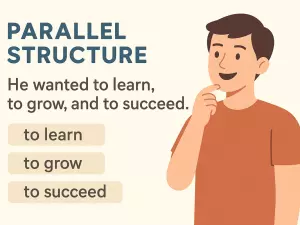
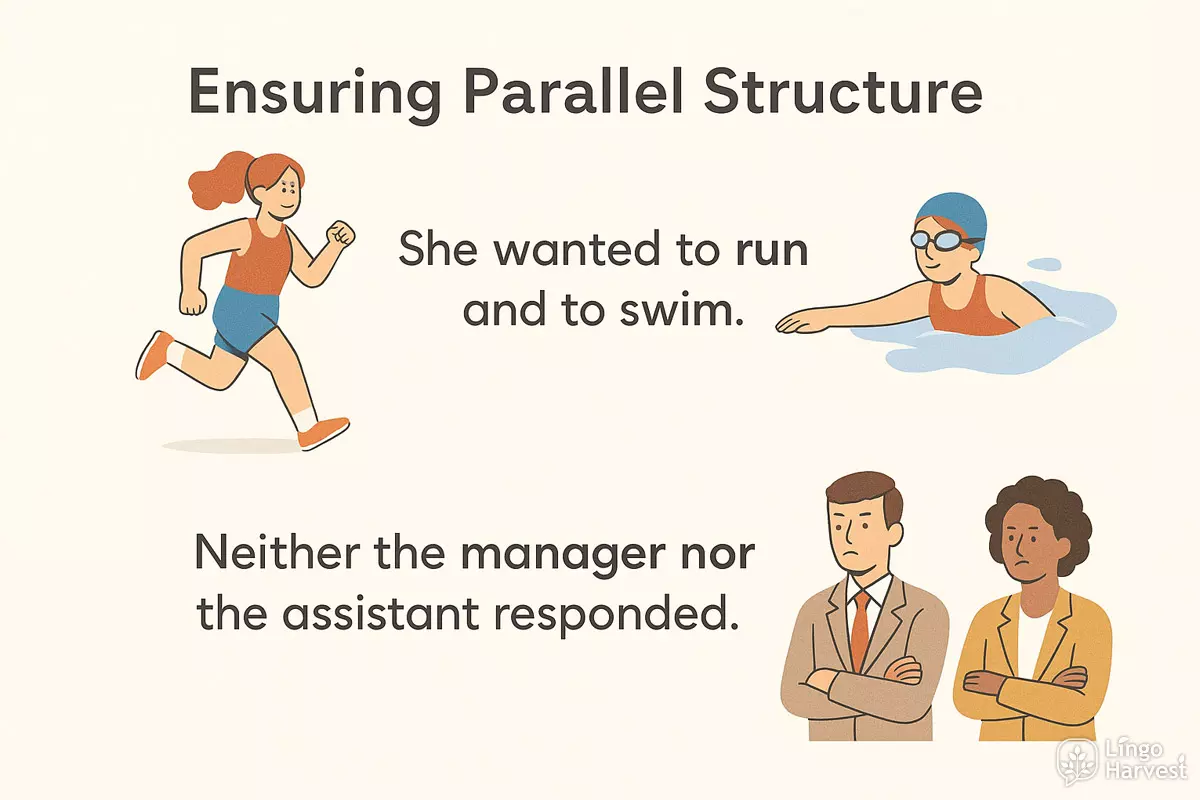
- Matching verb forms: "She wanted to run and to swim."
- Consistent noun phrases: "Neither the manager nor the assistant responded."
- Balanced clauses: "He said that he would call, and that he would email."
Common pitfalls and how to avoid them
Writers often stumble when mixing conjunction types or forgetting to align sentence elements. Here’s how to sidestep typical issues:
- Don’t mix forms: Avoid "either running or to walk."
- Don’t overload: Stacking more than two conjunctions can confuse readers.
- Check for subject-verb agreement in all clauses connected by conjunctions.
- Read sentences aloud to catch awkward or ambiguous phrasing.
Examples of correct and incorrect usage
| ✅ Correct | ❌ Incorrect |
|---|---|
| She wants to study, and she wants to travel. | She wants to study and she wants to travel. |
| Not only did he arrive early, but he also brought coffee. | Not only did he arrive early, but also brought coffee. |
| Either the manager or the assistant will attend. | Either the manager or assistant will attends. |
| She will come if you call and if you wait. | She will come if you call, and if you wait. |
Checklist for advanced conjunction stacking
Before finalizing your sentence, consider these points:
- Are all elements joined by conjunctions grammatically parallel?
- Is punctuation helping rather than hindering clarity?
- Have you avoided overcomplicating with too many conjunctions?
- Does the sentence flow naturally when read aloud?
- Is meaning absolutely clear at first glance?
Mastering these techniques ensures that your writing remains sophisticated, precise, and reader-friendly—even when your sentences get structurally ambitious.
Avoiding conflicts between stacked conjunctions
Writers often run into awkwardness or ambiguity when using more than one conjunction in close proximity. This usually happens when trying to connect complex ideas or clauses. The key is to ensure clarity and smooth flow, so the reader isn’t left untangling which part of the sentence each conjunction relates to.
Common pitfalls with multiple conjunctions
The most frequent issues stem from stacking coordinating conjunctions (like “and,” “but,” or “so”) with subordinating ones (“because,” “although,” “while,” etc.). This can create confusion about which ideas are being joined or subordinated. For example, “She wanted to go, but because it was late, she stayed home” is both correct and clear, but “She wanted to go and although it was late, she stayed home” is harder to process.
- Misplaced modifiers or unclear references
- Overly long sentences without clear breaks
- Ambiguous relationships between clauses
- Improper parallelism
- Redundant or conflicting conjunctions
Strategies for smooth conjunction stacking
To maintain readability and precision, try these techniques:
- Prioritize clarity: Choose conjunctions that make relationships explicit.
- Use punctuation strategically: Commas, semicolons, and dashes can separate ideas and guide the reader.
- Break up long sentences: When in doubt, split stacked clauses into separate sentences.
- Avoid needless repetition: Don’t pair similar conjunctions unless the distinction is necessary.
- Read aloud: Hearing the sentence can reveal confusion or awkwardness.
Examples: Effective vs. problematic stacking
Below is a comparison of commonly stacked conjunctions, showing which combinations typically work ✅ and which to avoid ❌.
| Stacked Conjunctions | Effectiveness |
|---|---|
| …but because… | ✅ Clear: “He stayed, but because it was raining, he left soon after.” |
| …and although… | ❌ Awkward: “She called and although he answered, he was distracted.” |
| …so that… | ✅ Acceptable: “He whispered so that no one would hear.” |
| …or if… | ❌ Confusing: “Decide now or if you wait, risk missing out.” |
| …yet when… | ✅ Works: “He was tired, yet when the call came, he responded.” |
| …but while… | ❌ Risky: “He agreed but while he listened, he doubted.” |
| …for if… | ✅ Effective: “Bring a coat, for if it rains, you’ll need it.” |
| …and because… | ❌ Often unclear: “She smiled and because he noticed, he smiled too.” |
| …nor unless… | ❌ Rarely works: “You can’t win nor unless you try, succeed.” |
| …or when… | ✅ Acceptable: “Call me or when you get home, text me.” |
Checklist for resolving stacked conjunction issues
Before finalizing a sentence with multiple conjunctions:
- Check for ambiguity: Does each conjunction have a clear role?
- Test alternatives: Could reordering or rephrasing improve clarity?
- Review for redundancy: Are both conjunctions necessary?
- Consider reader effort: Will the sentence slow down comprehension?
Thoughtful attention to how you layer conjunctions will help your writing remain both sophisticated and accessible.
Practice: analyze and edit sentences with multiple linkers
Understanding how to use several conjunctions or linking words in a sentence is crucial for advanced writing. Below, you'll find exercises to help you identify, analyze, and revise sentences that contain multiple linkers—sometimes called “conjunction stacking.” These activities focus on clarity, logic, and flow.
Spot the Stacked Linkers
Read each sentence and identify all the linking words. Consider whether they enhance or obscure the meaning.
- Although she was tired, yet she finished the project because she had a deadline.
- He not only missed the meeting but also forgot to send the report, so the team was delayed.
- Since the weather was bad and because the roads were icy, they postponed the event.
- While I agree with your point, nevertheless, I think we should gather more data before deciding.
- She wanted to attend the seminar, but since she was ill, she stayed home.
- Even though he practiced a lot, yet he still felt nervous when the exam began.
- They were excited about the trip, but because the flights were canceled, they stayed home.
- Not only did she prepare the slides, but she also wrote the report and therefore impressed the committee.
- Although the instructions were clear, still many participants made mistakes because they rushed.
- He tried to fix the issue, but since the system was down, he had to wait.
Show answers
- Although, yet, because
- Not only, but also, so
- Since, and, because
- While, nevertheless, before
- But, since
- Even though, yet
- But, because
- Not only, but also, therefore
- Although, still, because
- But, since
Editing for Clarity
Revise these sentences to improve clarity. You may remove redundant linkers or rephrase for smoother flow.
- Even though it was raining, but we went hiking because we had planned it for weeks.
- He studied hard, so therefore he passed the exam and as a result, he won a scholarship.
- Since you are here and because you are experienced, you can lead the team.
- Although I was prepared, yet I felt nervous during the interview.
Show answers
- Even though it was raining, we went hiking because we had planned it for weeks.
- He studied hard, so he passed the exam and won a scholarship.
- Since you are here and experienced, you can lead the team.
- Although I was prepared, I felt nervous during the interview.
Common Patterns: Multiple Linkers in Action
Writers sometimes combine conjunctions for emphasis or nuance. Here are common patterns, with comments on their effectiveness:
- Although… yet… → Although it was late, yet he continued working.
- Not only… but also… → Not only did she solve the problem, but also explained it clearly.
- Because… so… → Because it rained, so the match was canceled.
- Since… and… because… → Since the roads were icy, and traffic was heavy because of the storm, we stayed home.
- Even though… but… → Even though he was sick, but he still joined the meeting.
- While… nevertheless… → While the task was difficult, nevertheless they completed it.
- Either… or… → You can either call me or send an email.
- If… then… → If you need help, then just ask.
- As… so… → As demand increases, so do the prices.
- So that… can… → She lowered her voice so that everyone can hear clearly.
- Both… and… → Both the teacher and the students enjoyed the lesson.
- Neither… nor… → He is neither tired nor bored.
- Whether… or… → Whether you agree or disagree, your opinion matters.
- After… then… → After we finish the report, then we will send it.
- When… yet… → When the alarm rang, yet nobody moved.
- In order that… may… → She saved money in order that she may travel abroad.
- Even if… still… → Even if it rains, we will still go.
- Because… therefore… → Because the data was incomplete, therefore the study was delayed.
Note: Not all combinations are correct in formal writing. For example, “Although… yet…” is redundant; choose one.
Compare and Revise: Multi-Linker Sentences
Below is a table comparing original sentences with stacked conjunctions and their improved versions. Notice how editing for clarity often means reducing or rearranging linkers.
| Original Sentence | Improved Version |
|---|---|
| Because he was late, so he missed the introduction. | Because he was late, he missed the introduction. |
| Although she apologized, yet he remained upset. | Although she apologized, he remained upset. |
| Even though I studied hard but I didn’t pass. | Even though I studied hard, I didn’t pass. |
| Since it was raining and because the field was muddy, the game was canceled. | Since it was raining and the field was muddy, the game was canceled. |
| He not only speaks French but also he writes it fluently, so he got the job. | He not only speaks French but also writes it fluently, so he got the job. |
Practice: Combine Linkers Effectively
Try rewriting these sentences to use multiple linking words naturally and correctly. Aim for logical connections and smooth flow.
- He wanted to buy the ticket. He didn’t have enough money. He borrowed from a friend.
- She is talented. She works hard. She succeeds in most projects.
- The instructions were clear. Some people made mistakes. They did not read carefully.
Show answers
- Because he didn’t have enough money, he borrowed from a friend so that he could buy the ticket.
- Not only is she talented, but she also works hard, so she succeeds in most projects.
- Although the instructions were clear, some people made mistakes because they did not read carefully.
Mastering the art of combining linkers can elevate your writing, but always check for redundancy and clarity. Edit ruthlessly—your readers will thank you for it.