Comparative Discourse Structures: The More…, The Less… Patterns

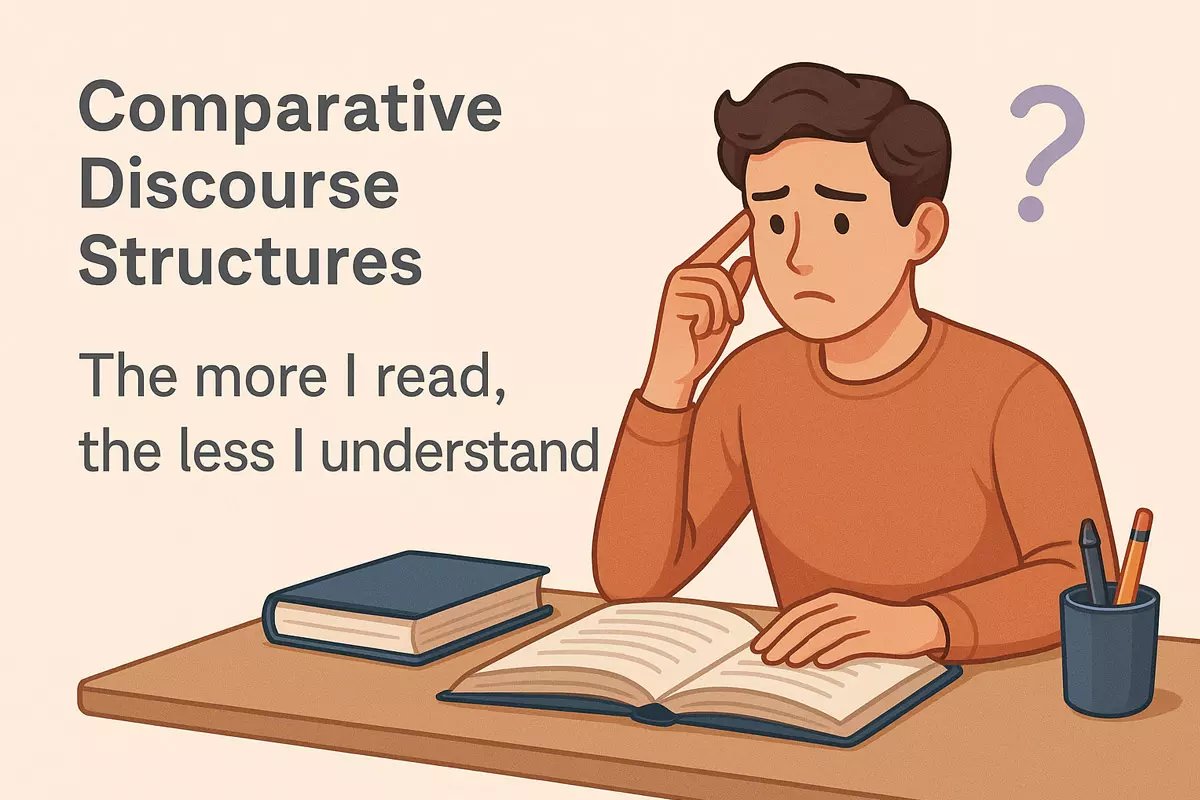 This article explains the form and meaning of the more…, the less… patterns, how they express proportional relationships, their stylistic effects in argument and narrative, common tense and parallelism errors, and variations with longer clauses.
Language often reveals complex relationships between ideas, especially through paired comparative expressions that show how an increase in one aspect can result in a decrease in another. These structures, such as the more you practice, the less nervous you feel, help us express subtle contrasts and dependencies in everyday conversations. By understanding and using these forms, we can communicate more precisely and highlight the balancing acts that shape our experiences and choices.
Form and meaning of the… the… patterns
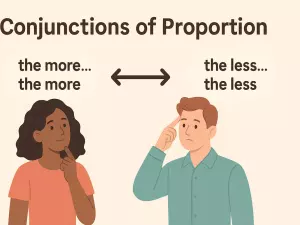
The structure known as "the more…, the less…" or "the… the…" pattern is used in English to show a direct relationship between two variables. This comparative construction highlights how a change in one quality or situation affects another, often in either a proportional or inversely proportional way. The first clause introduces one variable, and the second presents the result or corresponding change.
Basic Form
The typical structure is as follows:
- The + comparative adjective/adverb + subject + verb, the + comparative adjective/adverb + subject + verb.
For example: The more you practice, the better you get.
Meaning and Usage
This pattern is primarily used to express cause and effect or correlation between two factors. It can convey positive, negative, or inverse relationships depending on the comparatives chosen. The construction is flexible, allowing for a variety of comparative adjectives, adverbs, and even noun phrases.
Common Variations and Examples
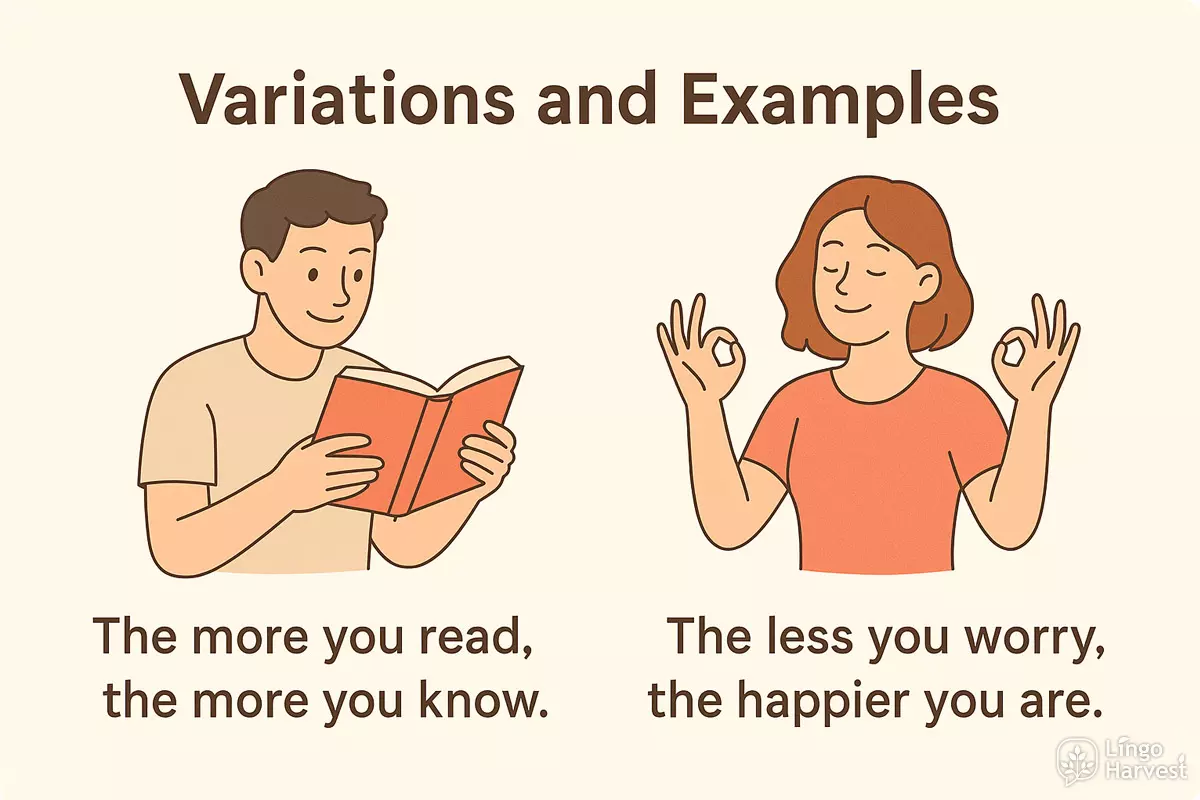
Here are some frequent ways this comparative structure appears in English:
- The more you read, the more you know.
- The less you worry, the happier you are.
- The harder you work, the more you achieve.
- The later you leave, the worse the traffic gets.
- The sooner you start, the sooner you finish.
- The higher you climb, the colder it gets.
- The longer we wait, the less time we have.
- The more he eats, the fatter he becomes.
- The faster you drive, the less time you have to react.
- The more expensive the car, the better the features.
- The more you give, the more you receive.
- The less you sleep, the more tired you feel.
- The more I study, the less confused I am.
- The louder you shout, the less people listen.
- The more detailed the instructions, the easier the task.
- The darker the night, the brighter the stars.
- The older we get, the wiser we become.
- The less sugar you use, the healthier the dessert.
- The more you travel, the broader your perspective.
- The longer the speech, the more bored the audience becomes.
Comparative Relationships
To help clarify, here is a table contrasting proportional and inverse patterns using this structure:
| Pattern Type | Example |
|---|---|
| Direct/Proportional | The more you practice, the better you become. |
| Inverse/Negative | The more you ignore the problem, the worse it gets. |
| Positive with "less" | The less you complain, the easier life feels. |
| Inverse with "less" | The less you study, the poorer your results. |
Key Points to Remember
- This construction always starts each clause with "the" + comparative.
- Clauses can be long or short, and the subject can be omitted if it is clear.
- The order of the clauses can be switched for emphasis, but the meaning remains the same.
- It is commonly used in both spoken and written English to draw attention to relationships and consequences.
Understanding this comparative discourse device allows for more nuanced and expressive statements about cause and effect, trends, and general truths in English.
Expressing proportional relationships
Understanding how to convey gradation and correlation between two variables is a key part of discussing comparative discourse structures. The "the more…, the less…" pattern is a classic way to show that as one factor increases, another decreases, or vice versa. These constructions allow speakers and writers to illustrate cause-and-effect dynamics, preferences, or consequences with clarity.
Core Features of "The More…, The Less…" Patterns
This comparative structure typically consists of two clauses, each introduced by "the" followed by a comparative adjective or adverb. The first clause sets up a variable that changes, while the second clause presents the corresponding result or trend. The relationship between the clauses highlights proportionality—one element rises or falls as the other does the opposite.
Common Patterns and Variations
Writers and speakers use several variations to suit different contexts. For example:
- The more you practice, the less nervous you feel.
- The less sugar you eat, the healthier you become.
- The more time you spend outdoors, the less stressed you tend to be.
- The less sleep you get, the harder it is to concentrate.
- The more information you have, the better your decisions.
- The less clutter in your workspace, the more productive you are.
- The more you explain, the less confusion there will be.
- The less you worry, the more you enjoy the moment.
- The more energy you use, the higher your bill.
- The less experience someone has, the slower the progress.
- The more you invest, the greater the potential return.
- The less you rush, the fewer mistakes you make.
- The more options available, the harder the choice becomes.
- The less pollution we produce, the cleaner the air.
- The more you listen, the better you understand others.
- The less support offered, the more challenging the task.
- The more frequently you review, the easier it is to remember.
- The less you interrupt, the smoother the conversation.
Comparing Proportional Patterns
While "the more…, the less…" is highly versatile, other proportional comparisons exist. Some express direct proportionality (both elements increase or decrease together), while others indicate inverse relationships. The table below outlines a few key forms for clarity.
| Pattern Type | Example | Relationship |
|---|---|---|
| The more…, the more… | The more you read, the more you learn. | Direct (both increase) |
| The less…, the less… | The less you sleep, the less energy you have. | Direct (both decrease) |
| The more…, the less… | The more you worry, the less you enjoy life. | Inverse (one increases, the other decreases) |
| The less…, the more… | The less you rush, the more accurate you are. | Inverse (one decreases, other increases) |
Usage Tips
When creating these structures, keep both clauses parallel and clear. The comparatives should match in form, and the relationship between variables must be logical. These patterns are especially useful for making arguments, giving advice, or explaining scientific and social phenomena.
Stylistic effects in argument and narrative
Comparative discourse structures such as "The more…, the less…" play a distinctive role in shaping both argumentative and narrative texts. These patterns allow writers to express proportional relationships, contrast, and causality with clarity and succinctness. By establishing a direct link between two variables, this construction can lend persuasive force or narrative tension, depending on the context.
Argumentative Functions
In argumentative writing, this comparative model is often used to reinforce a point or to highlight a logical consequence. It can emphasize escalation, diminish opposing views, or frame cause-and-effect reasoning. For example, stating "The more evidence we gather, the less doubt remains" succinctly expresses a logical progression that supports the writer's thesis.
- Clarifies cause and effect relationships
- Condenses complex reasoning into memorable phrases
- Strengthens persuasive appeals by highlighting contrasts
- Facilitates the presentation of escalating stakes or diminishing returns
- Enhances rhetorical rhythm and flow
Narrative Implications
Within stories, these comparative patterns can be used to chart character development, build suspense, or underline irony. They offer a way to mirror emotional or situational shifts, such as "The more she searched, the less she understood." This construction can create a sense of inevitability or deepen thematic resonance.
- Illustrates character dilemmas or transformations
- Signals rising action or intensifying conflict
- Highlights irony or paradox in plot developments
- Reinforces motif or theme through parallel structure
- Adds a cyclical or cumulative effect to narrative pacing
Common Patterns and Variations
Writers often adapt the "The more…, the less…" structure for stylistic variety or to suit specific discourse goals. Here are some frequently encountered forms and their effects:
| Pattern | Effect/Usage |
|---|---|
| The more you know, the less you fear. | Emphasizes knowledge dispelling anxiety; used to persuade or reassure. |
| The more he tried, the less he succeeded. | Highlights futility or irony; common in narrative setbacks. |
| The more they waited, the less hopeful they became. | Conveys declining emotion; builds suspense or pathos. |
| The more we invest, the less we seem to gain. | Signals diminishing returns; often used in critical or evaluative arguments. |
| The more she explained, the less they understood. | Suggests communication breakdown; can be humorous or tragic. |
| The more freedom, the less discipline. | Frames a value conflict; useful in philosophical or policy debates. |
| The more complex the plan, the less likely its success. | Warns against overcomplication; persuasive in strategic discussions. |
| The more he remembered, the less he wanted to. | Explores internal conflict or emotional struggle in narrative. |
| The more we talk, the less we listen. | Critiques communication habits; applicable in both essay and story. |
| The more you give, the less you have. | Expresses sacrifice or loss; can be literal or metaphorical. |
Stylistic Considerations
Writers select these comparative forms for their succinctness, parallelism, and potential for emphasis. The repeated structure draws attention to the relationship between two elements, making the statement more memorable and impactful. In both argument and narrative, judicious use of such patterns can enhance clarity, rhythm, and expressive power, while overuse may risk monotony. Ultimately, the "The more…, the less…" construction is a versatile tool for shaping discourse and guiding reader interpretation.
Common errors with tense and parallelism
Writers often run into trouble with tense consistency and parallel structure when building sentences using "The more..., the less..." patterns. These comparative constructions require careful alignment of verb forms and grammatical elements to ensure clarity and correctness. Slipping into mismatched tenses or irregular sentence balance can make your meaning unclear or even change the intended logic of the sentence.
Tense mismatches in comparative sentences
A frequent problem is shifting verb tenses between the two clauses. The comparative structure works best when both sides use the same tense and aspect. Inconsistent tense usage can confuse the reader about whether the actions happen simultaneously or at different times.
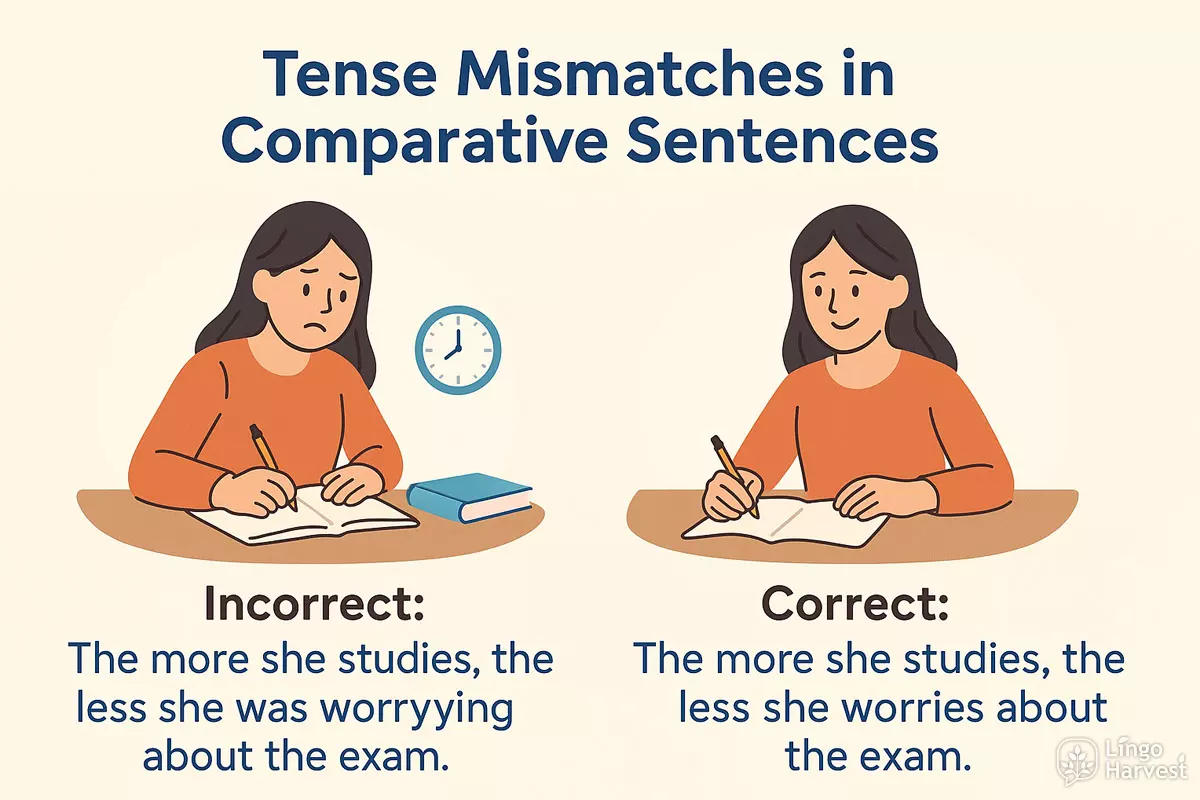
- Incorrect: The more she studies, the less she was worrying about the exam.
- Correct: The more she studies, the less she worries about the exam.
- Incorrect: The more you will practice, the less you make mistakes.
- Correct: The more you practice, the less you make mistakes.
Parallelism errors in structure
Parallelism means that the grammatical forms on both sides of the comparison are structured the same way. Breaking this symmetry can make the sentence awkward or obscure the relationship between the two ideas. The key is to match verb forms, noun phrases, or clauses as closely as possible.
- Incorrect: The more you read, the less watching TV.
- Correct: The more you read, the less you watch TV.
- Incorrect: The more he works, the less tiredness he feels.
- Correct: The more he works, the less tired he feels.
Common pitfalls and improved versions
Below is a comparison of typical mistakes and their improved forms. Paying attention to these patterns can help you avoid common issues.
| Problematic Example | Better Version |
|---|---|
| The more he is reading, the less he remembers. | The more he reads, the less he remembers. |
| The more they will try, the less success they got. | The more they try, the less success they get. |
| The more you practice, the less mistakes are made. | The more you practice, the fewer mistakes you make. |
| The more he works, the less he feeling tired. | The more he works, the less tired he feels. |
| The more we plan, the less unexpected things happened. | The more we plan, the fewer unexpected things happen. |
Quick checklist for accuracy
- Use the same verb tense in both clauses.
- Keep grammatical forms parallel (match verbs with verbs, nouns with nouns).
- Align singular/plural forms as needed.
- Avoid mixing active and passive voices in the same sentence.
- Check for logical connections between the compared elements.
Staying attentive to tense and structural balance will make your comparative sentences more natural and effective. With practice, these patterns become second nature and help express nuanced comparisons with precision.
Variations with longer comparative clauses
Expanding the structure of comparative discourse, English allows for much longer and more nuanced clauses on both sides of the "the more…, the less…" pattern. Instead of limiting each half to a single adjective or adverb, speakers often use full clauses or phrases, adding detail and subtlety to their comparisons. These extended forms enable richer descriptions and make logical relationships between actions or states much clearer.
Common patterns with extended clauses
Writers and speakers frequently attach full dependent clauses to either side of the comparative construction. This is particularly useful in academic, literary, or persuasive contexts where clarity and detail are essential. Here are some ways the structure is broadened:
- The more you explain your reasoning in detail, the less your audience will be confused.
- The more people rely on public transport for daily commutes, the less traffic congestion occurs in city centers.
- The more students engage in group discussions, the less they struggle with complex concepts.
- The more we understand about a problem, the less likely we are to make mistakes.
- The more time you spend practicing pronunciation, the less difficulty you'll have being understood.
- The more one invests in preventative healthcare, the less one spends on treatments later.
- The more you focus on the process rather than the outcome, the less pressure you feel.
- The more the company innovates, the less it risks falling behind competitors.
- The more they communicate openly, the less misunderstandings arise.
- The more he procrastinates on assignments, the less time he has for revisions.
- The more we observe animal behavior in natural settings, the less bias we introduce into our findings.
- The more parents encourage curiosity, the less children fear making mistakes.
Comparing simple and complex clause forms
To illustrate the difference between basic and extended comparative constructions, consider the following examples:
| Simple Pattern | Longer Clause Variation |
|---|---|
| The more you read, the less you forget. | The more you read material actively and take notes, the less likely you are to forget important details over time. |
| The more you eat, the less you move. | The more one consumes high-calorie foods without exercising, the less energy they have for physical activity later in the day. |
| The more you wait, the less you get. | The more you delay making a decision about the offer, the less chance you have of securing the best terms. |
| The more you give, the less you have. | The more resources you allocate to one project without planning, the less support remains for other initiatives. |
Tips for using extended comparative structures
- Ensure parallel structure in both clauses for clarity and rhythm.
- Use longer clauses to provide context, specify conditions, or clarify consequences.
- Keep the overall sentence balanced; overly complex clauses can reduce readability.
- Favor precise verbs and details to strengthen the logical link between the two halves.
By employing extended clauses in comparative patterns, writers and speakers can convey more precise relationships and craft arguments with greater nuance.
Practice: create sentences using the more… the more/less patterns
Mastering comparative discourse patterns requires both recognition and usage. To help you internalize these structures, try forming sentences that express proportional relationships or contrasts. Below you'll find a variety of examples and exercises to guide your understanding of how these patterns function in everyday English.
Examples of "the more..., the more/less..." Patterns
- The more you practice, the better you become.
- The more I read, the less I understand.
- The less you worry, the happier you’ll feel.
- The more we talk, the clearer things get.
- The less sugar you eat, the healthier you are.
- The more it rains, the muddier the roads become.
- The more questions you ask, the more you learn.
- The less sleep I get, the harder it is to concentrate.
- The more friends you have, the less lonely you feel.
- The more expensive the restaurant, the smaller the portions.
- The less preparation you do, the more nervous you’ll be.
- The more you give, the more you receive.
- The less you move, the stiffer your body gets.
- The more I think about it, the less it bothers me.
- The more sunlight the plant gets, the faster it grows.
- The less time we have, the faster we must work.
- The more you travel, the broader your perspective becomes.
- The more complicated the task, the more rewarding the result.
Exercise: Complete the Sentences
- The more you study, ______ you will score on the test.
- The less junk food you eat, ______ you will feel.
- The more people join the project, ______ efficient it becomes.
- The less you interrupt, ______ you will understand.
- The more sleep you get, ______ your concentration becomes.
- The more carefully you plan, ______ mistakes you make.
- The less noise there is, ______ you can focus.
- The more practice you have, ______ confident you become.
- The more we invest in research, ______ progress we achieve.
- The less stress you experience, ______ your overall health becomes.
- The more quickly you respond, ______ likely you are to solve the problem.
- The more you read academic texts, ______ your vocabulary grows.
Show answers
- the higher
- the better
- the more
- the more
- the better
- the fewer
- the better
- the more
- the more
- the better
- the more
- the more
Pattern Comparison Table
| Pattern | Example Sentence |
|---|---|
| The more... the more... | The more you practice, the more confident you become. |
| The more... the less... | The more you wait, the less time you have left. |
| The less... the more... | The less you spend, the more you save. |
| The less... the less... | The less you try, the less progress you make. |
Writing Task
Think of situations from your daily life or studies where one thing changes as another increases or decreases. Write three original sentences using the structure. Focus on clarity and natural context.
Show answers
Example ideas:
1. The more I exercise, the less stressed I feel.
2. The less noise there is, the better I sleep.
3. The more feedback I get, the faster I improve.