When We Use No Article: Basic Zero Article Rules

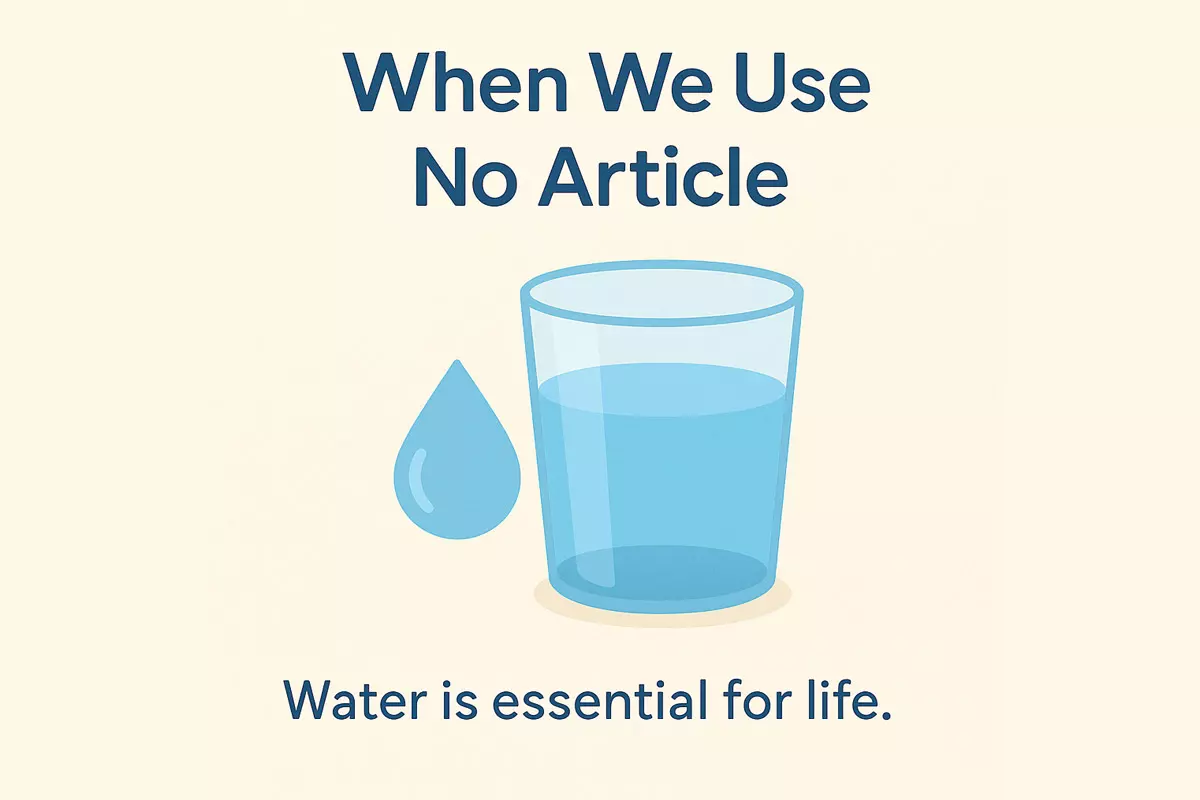 This article explains the zero article in English, showing when to omit articles with nouns, especially for places, meals, languages, and uncountable nouns. It also highlights common errors and provides beginner practice tasks.
Navigating English grammar can be tricky, especially when deciding whether to use articles like “a,” “an,” or “the.” While these small words are essential in many cases, there are specific situations where omitting them makes your sentences sound more natural and fluent. For example, articles are often left out before uncountable nouns, plural nouns used in a general sense, and with certain proper nouns such as names of countries, languages, or meals. Understanding these basic guidelines can greatly improve your writing and speaking skills.
What zero article means
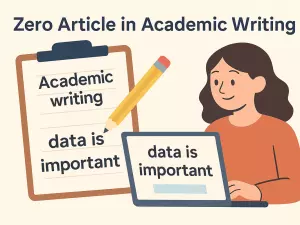
When we talk about the "zero article" in English, we're describing situations where no article (no "a," "an," or "the") is used before a noun. This isn't an accident or a mistake—it's a deliberate choice that follows specific grammar rules. Native speakers do this naturally, but for learners, recognizing when to use no article can be confusing.
Zero article: Definition and context
The zero article appears in certain contexts, especially with general ideas, abstract nouns, and some proper nouns. For example, we say "Life is beautiful," not "The life is beautiful." This use signals that we're speaking in general, not about a specific instance.
Common cases where no article is used
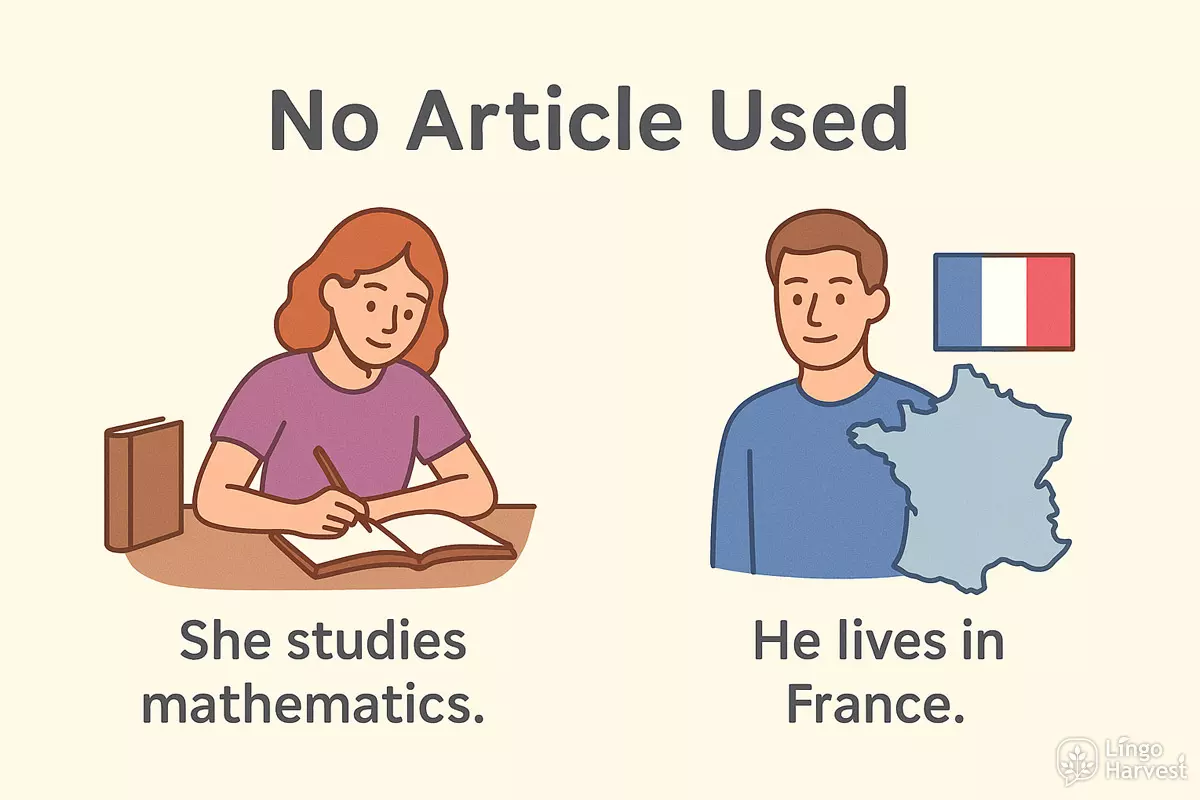
You’ll encounter the zero article in several familiar situations:
- With names of languages and subjects (e.g., "She studies mathematics.")
- Talking about meals (e.g., "We had breakfast at 8.")
- Before names of most countries, cities, and continents (e.g., "He lives in France.")
- With plural and uncountable nouns used in a general sense (e.g., "Books are expensive.")
- With most proper nouns (e.g., "John is here.")
- When referring to institutions (e.g., "She goes to school.")
- With transport in general terms (e.g., "Travel by train is relaxing.")
- Before certain places when the purpose is clear (e.g., "He's in prison." meaning as a prisoner)
- With days, months, and holidays (e.g., "Christmas is in December.")
- With some illnesses (e.g., "She has flu.")
Zero article vs. definite and indefinite articles
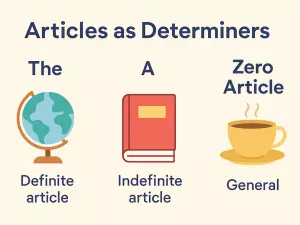
To understand when to use no article, it helps to compare how articles function in different contexts. Here’s a summary:
| Type | Example |
|---|---|
| Zero article | Water is essential for life. (general, uncountable) |
| Definite article ("the") | The water in this glass is cold. (specific water) |
| Indefinite article ("a/an") | I need a glass of water. (any one glass, not specific) |
Why does English use the zero article?
Omitting the article is a way to show that we’re speaking generally, not about something or someone specific. This pattern helps English speakers distinguish between broad statements ("Music brings people together.") and particular references ("The music you played yesterday was beautiful."). Understanding these patterns can make your English sound more natural and fluent. Whenever you see a noun without "a," "an," or "the," ask yourself if the context is general, abstract, or a proper name—chances are, the zero article is at work.
When we use no article with nouns
English often omits articles in specific situations, following what's known as the "zero article" rule. This usually happens with certain categories of nouns and set phrases. Recognizing these patterns helps you sound more natural and fluent.
General Rules for Zero Article Usage
- Plural and uncountable nouns in a general sense: We leave out articles when discussing things in general, not something specific. For example, "Books are expensive," or "Information is valuable."
- Names of languages and subjects: No article is needed: "She speaks Spanish," "He studies history."
- Meals, days, and months: Article omission is typical: "I had breakfast at eight," "We met on Monday," "July is hot."
- Names of most countries, cities, and continents: For example, "France," "Tokyo," and "Africa" are used without an article unless the name includes words like "kingdom," "states," or "republic."
- Sports and games: We say "play football," not "play the football."
- Abstract ideas: Words like "freedom," "love," and "honesty" do not take articles when used in a general sense.
- Transport and communication: Common phrases omit articles: "by bus," "by phone," "by email."
- Institutional nouns: When referring to the purpose of a place, drop the article: "go to school," "in prison," "at university."
- Most people's names and titles: "Dr. Smith," "Queen Elizabeth" (but "the Queen" when the title is used alone).
- Some set expressions: "Go home," "go to bed," "at work," "in hospital" (BrE).
Examples of Zero Article Use
- Children like chocolate.
- Water boils at 100°C.
- He plays tennis.
- We start work at nine.
- She is in class.
- Mount Everest is the highest mountain.
- I met professor Brown yesterday.
- They go to church on Sundays.
- Life is unpredictable.
- Music soothes the mind.
- He left home early.
- She goes to bed at ten.
- They travel by train.
- Breakfast is served at seven.
- We visited Europe last summer.
- Honesty is important.
- She teaches English.
- He is in prison (as a prisoner).
Set Phrases and Expressions Without Articles
Some combinations are always used without an article. These include directions, time expressions, and certain idiomatic phrases. Here are several common patterns:
- at night
- on foot
- by chance
- from beginning to end
- in detail
- in future (BrE)
- by mistake
- at sea
- on holiday
- in charge of
Places, meals, languages: zero article
When talking about general locations, daily meals, or languages, English usually leaves out the article completely. This means we say "go to school" or "learn French," not "go to the school" or "learn the French," unless we want to specify something unique or particular.
Common cases for zero article
- Public places used for their main purpose: We omit the article with places like school, university, prison, church, bed, and hospital when referring to their primary function. For example: "She is in hospital" (as a patient), but "She is at the hospital" (as a visitor or worker).
- Meals: No article is used for meals in a general sense: "We have breakfast at 8," "Lunch is ready," "What’s for dinner?" If you want to specify a special meal, you add an article or adjective: "The breakfast at this hotel is great," "We had a lovely dinner."
- Languages and subjects: When mentioning languages or academic subjects, skip the article: "He speaks Russian," "I study mathematics."
- Most forms of transport: We say "by car," "by bus," "by train," omitting "a" or "the."
Examples of zero article usage
- She goes to school every day.
- We eat lunch together.
- He speaks English fluently.
- They are in bed already.
- She’s at university in London.
- We travel by train.
- I love chocolate.
- We play football after school.
- He studies physics and chemistry.
- She’s in prison for theft.
- They go to church on Sundays.
- We have dinner at seven.
- He goes to bed early.
- She is learning Spanish.
- I take medicine after breakfast.
When an article is needed
Sometimes, we add "the" or "a" if we mean something specific, not the general concept:
- She went to the school to talk to the principal. (not as a student)
- The dinner we had last night was delicious. (a specific meal)
- The French spoken in Quebec is different. (a specific variety)
| With zero article | With article |
|---|---|
| She’s in hospital. | She’s at the hospital. |
| He goes to bed early. | He sat on the bed. |
| We have breakfast at 8. | The breakfast was delicious. |
| She studies French. | The French in this book is old-fashioned. |
Uncountable nouns and zero article
In English, many nouns refer to things we cannot count as individual items—substances, general concepts, or collective categories. These are called uncountable (or non-count) nouns. Typical examples include words like water, information, advice, and furniture. When using these words in a general sense, English speakers usually do not add the definite or indefinite article (the, a, or an).
When do we leave out the article?
The absence of an article before a non-count noun tells the listener or reader that we are talking about something in general, not a specific instance. For example: "Sugar is sweet." Here, sugar means all sugar, not a certain batch or type. Adding the or a would change the meaning or feel unnatural.
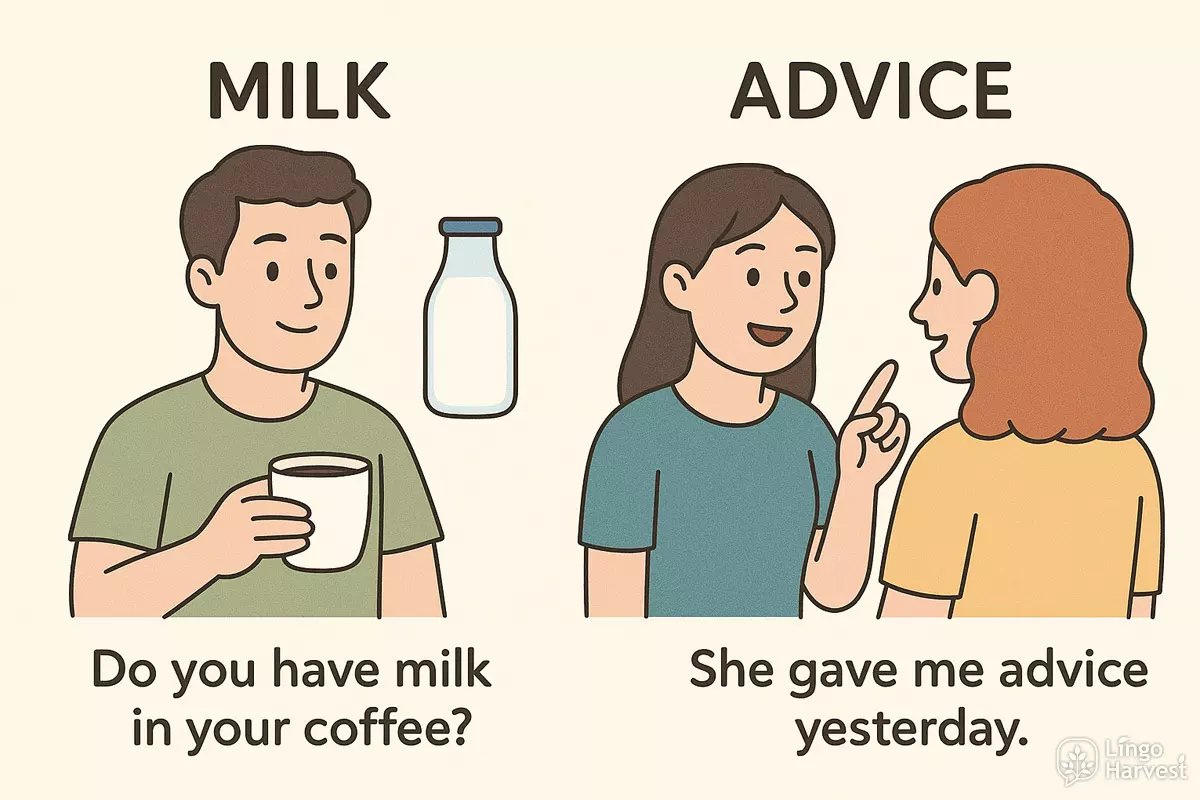
- Do you have milk in your coffee?
- She gave me advice yesterday.
- We need furniture for the new house.
- He has experience in management.
- Knowledge is power.
- There is sand on the floor.
- Can you give me information about the event?
- They bought equipment for the gym.
- She showed great patience.
- We need more time.
- He lost money in the stock market.
- Air is essential for life.
- She studies history at university.
- Is there enough space in the car?
- He found happiness in small things.
- They drank water after the run.
- She likes listening to music.
- We need to buy bread.
- There isn’t much traffic today.
- He has little patience for delays.
Zero article vs. when to use "the"
Sometimes, non-count nouns do take the, but only when we are talking about a specific or previously mentioned instance. Compare these examples:
| General (Zero Article) | Specific ("the") |
|---|---|
| Knowledge is valuable. | The knowledge you shared was helpful. |
| Water covers most of the earth. | The water in this glass is cold. |
| Music can change your mood. | The music at the party was loud. |
| She has experience in sales. | The experience we had in Paris was unforgettable. |
Common mistakes to avoid
- ❌ She gave me an advice. → She gave me advice.
- ❌ I need a furniture. → I need furniture.
- ❌ He has a good knowledge. → He has good knowledge.
Remember, omitting the article is standard with most non-count nouns unless you mean something specific. This rule helps your English sound more natural and fluent.
Typical mistakes
Choosing when to use no article in English can be surprisingly tricky, especially for learners whose native languages use articles differently—or not at all. Errors often happen because some phrases look like they need “a,” “an,” or “the,” but in fact, the correct structure is to omit the article entirely. Below, you’ll find an overview of the most frequent missteps, plus clear examples to help avoid these pitfalls.
Common areas of confusion
- Generalizations with plural and uncountable nouns: Adding an article before words like dogs or music when speaking generally (e.g., “The dogs are friendly” instead of the correct “Dogs are friendly”).
- Meals and times of day: Incorrectly inserting an article before words like breakfast, lunch, or night when used in set expressions (“I have the breakfast every morning” instead of “I have breakfast every morning”).
- Places used for their primary purpose: Misusing articles with locations such as school, hospital, or prison (“He’s in the hospital” when meaning he is there as a patient: “He’s in hospital”).
- Languages and subjects: Using “the” before languages or academic subjects (“She speaks the French” instead of “She speaks French”).
- Transport phrases: Adding an article in set phrases like “by bus,” “by car,” “by train,” (“I go by the train” instead of “I go by train”).
- Sports and games: Using articles with sports (“He plays the football” instead of “He plays football”).
- Abstract nouns: Inserting articles before abstract ideas like happiness, freedom, love (“The love is important” instead of “Love is important”).
- Names of countries and cities: Incorrectly putting “the” before most country and city names (“I live in the Canada” instead of “I live in Canada”), except for special cases like “the Netherlands.”
- Days, months, and holidays: Using an article with times like “Monday,” “Christmas,” or “June” (“I will come on the Monday” instead of “I will come on Monday”).
- Materials: Adding articles before materials such as gold, water, wood in a general sense (“The gold is expensive” instead of “Gold is expensive”).
At a glance: Correct and incorrect usage
| Incorrect (with article) ❌ | Correct (zero article) ✅ |
|---|---|
| I like the tea. | I like tea. |
| She goes to the school every day. | She goes to school every day. |
| We play the chess on weekends. | We play chess on weekends. |
| He is in the hospital (as a patient). | He is in hospital. |
| They travel by the car. | They travel by car. |
| Love is the important. | Love is important. |
| I live in the France. | I live in France. |
| She has the breakfast at 8. | She has breakfast at 8. |
| He studies the biology. | He studies biology. |
| Water is the essential for life. | Water is essential for life. |
Final thoughts
Most mistakes with zero article come from translating directly or overgeneralizing rules. Paying attention to set expressions, typical collocations, and the function of the noun in context will help you avoid these common errors. When in doubt, ask yourself: Am I speaking about something in general, or a specific instance? This simple check can prevent many article mistakes.
Beginner practice tasks
Understanding when to use no article in English can be tricky at first. The following exercises and examples will help you recognize zero article patterns and practice correct usage in everyday sentences.
Spot the zero article
Read these sentences and identify where no article is needed. Pay attention to general statements, meals, languages, and places.
- ___ Water is important for health.
- We have ___ dinner at six o’clock.
- ___ English is spoken in Canada.
- She goes to ___ school by bus.
- ___ Dogs are friendly animals.
- He plays ___ football every weekend.
- ___ Music relaxes me.
- We visited ___ Paris last year.
- ___ Rice is a common food in Asia.
- My mother is at ___ work.
Show answers
- No article ("Water is important for health.")
- No article ("We have dinner at six o’clock.")
- No article ("English is spoken in Canada.")
- No article ("She goes to school by bus.")
- No article ("Dogs are friendly animals.")
- No article ("He plays football every weekend.")
- No article ("Music relaxes me.")
- No article ("We visited Paris last year.")
- No article ("Rice is a common food in Asia.")
- No article ("My mother is at work.")
Common zero article patterns
Here are some typical situations where English uses no article. Review these to build your intuition:
- Names of languages (Spanish, Chinese)
- Meals (breakfast, lunch, dinner)
- Sports (tennis, basketball)
- Subjects (history, mathematics)
- Most countries and cities (Italy, London)
- Abstract nouns (happiness, freedom)
- Uncountable nouns in general (water, air, information)
- Places with a general purpose: at school, in prison, at work, in hospital
- Plural nouns when talking about things in general (cats are cute)
- Days and months (Monday, June)
- Names of people (Maria, Mr. Brown)
- Transport with by (by car, by train)
- Most streets and parks (Oxford Street, Central Park)
- Most mountains and lakes (Mount Everest, Lake Baikal)
- Zero article with "home", "bed", "church" when used for their primary purpose (go home, in bed, at church)
Zero article vs. definite/indefinite articles
Compare when to use no article, the, or a/an with common nouns. This table summarizes basic rules:
| No Article | A/An | The |
|---|---|---|
| She likes tea. | She wants a tea (one cup). | She didn’t like the tea (specific tea). |
| He goes to school. | He saw a school (any school). | He visited the school (a specific one). |
| Books are useful. | This is a book. | I lost the book you gave me. |
| We play football. | He bought a football (one ball). | He forgot the football at home. |
Practice: Choose the correct option
Select the best answer for each blank. Use (–) if no article is needed.
- We start ___ school at 8 a.m.
- ___ Sun rises in the east.
- She drinks ___ coffee every morning.
- He is ___ engineer.
- ___ Cats are independent animals.
- They visited ___ museum on Friday.
- Do you have ___ umbrella?
- She wants to be ___ artist.
- ___ water in this bottle is cold.
- He bought ___ new laptop yesterday.
Show answers
- — (We start school at 8 a.m.)
- The (The sun rises in the east.)
- — (She drinks coffee every morning.)
- An (He is an engineer.)
- — (Cats are independent animals.)
- The (They visited the museum on Friday.)
- An (Do you have an umbrella?)
- An (She wants to be an artist.)
- The (The water in this bottle is cold.)
- A (He bought a new laptop yesterday.)
Regular practice with these patterns will help you become more confident in recognizing when zero article is required in English usage.