Questions with Used to and Would in English

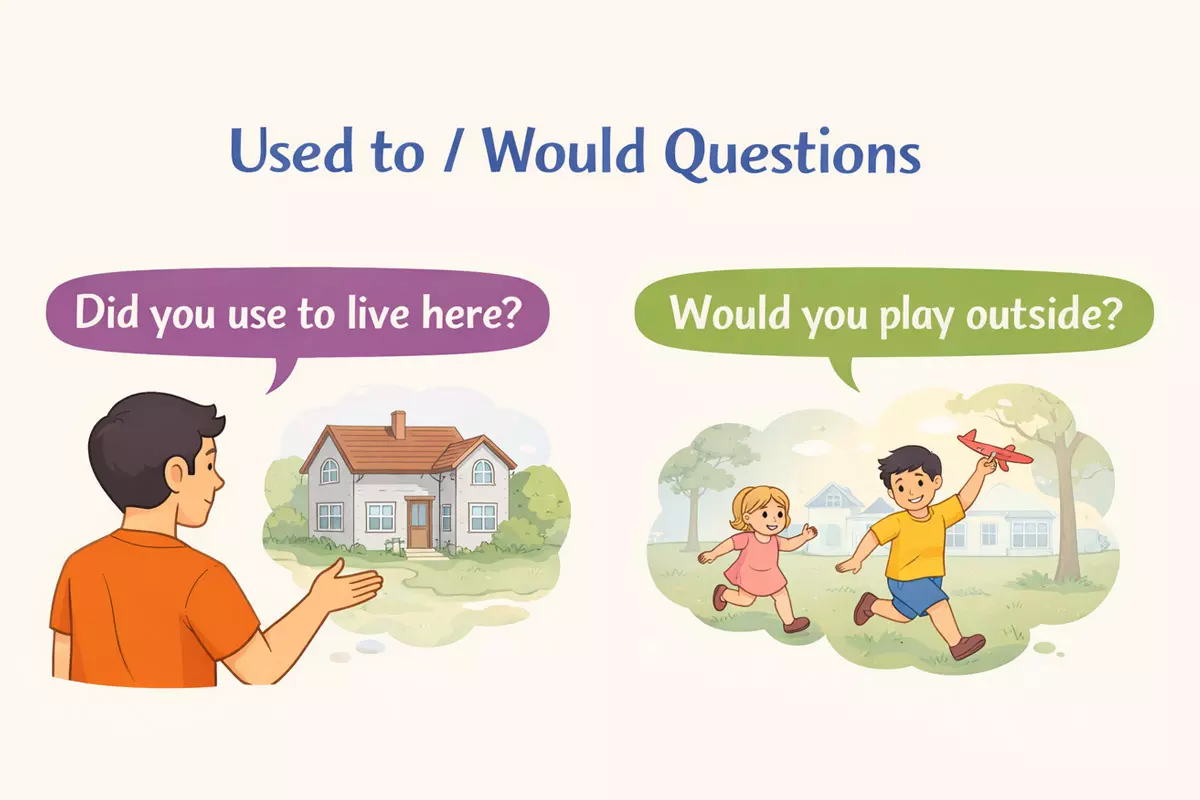 Here we the meanings of used to and would, how to form questions with both, and their differences in questions. It also discusses time references, common mistakes, spoken vs written usage, and provides practice exercises.
If you want to ask about past habits in English, it's helpful to use structures like "Did you use to..." or "Would you..." when talking about repeated actions or routines from earlier times. For example, you might ask, "Did you use to play soccer as a child?" or "Would you go fishing every summer?" These forms allow you to discuss memories and past routines naturally, making your conversations sound more fluent and engaging when talking about experiences from the past.
Meaning of Used to and Would
Both used to and would help us talk about habits or repeated actions in the past, but they are not always interchangeable. Understanding the difference can make your English sound more natural and precise. Generally, these expressions allow speakers to refer to something that was true or happened regularly before, but does not occur now.
Used to
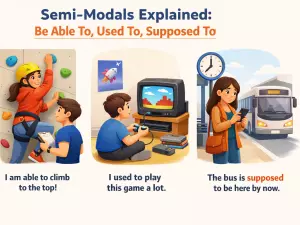
We use used to for actions, routines, and states that were true in the past but are not true anymore. This structure is especially common when you want to highlight a contrast between the past and the present. It works with both actions and situations:
- I used to play football every weekend.
- She used to live in Paris.
- We used to have a dog.
- He used to be very shy.
- There used to be a bakery here.
Would
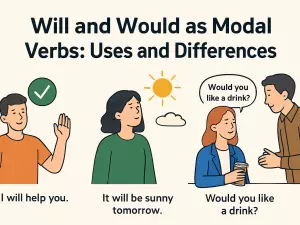
The word would can also describe repeated actions or habits in the past, but not states. It is more frequently used in storytelling or when recalling memories. Would emphasizes the repeated nature of the action, especially in narratives:
- On summer evenings, we would sit on the porch and talk for hours.
- When I was a child, my grandfather would tell me stories.
- They would always celebrate birthdays with a big cake.
- After school, I would ride my bike around the neighborhood.
Key Differences
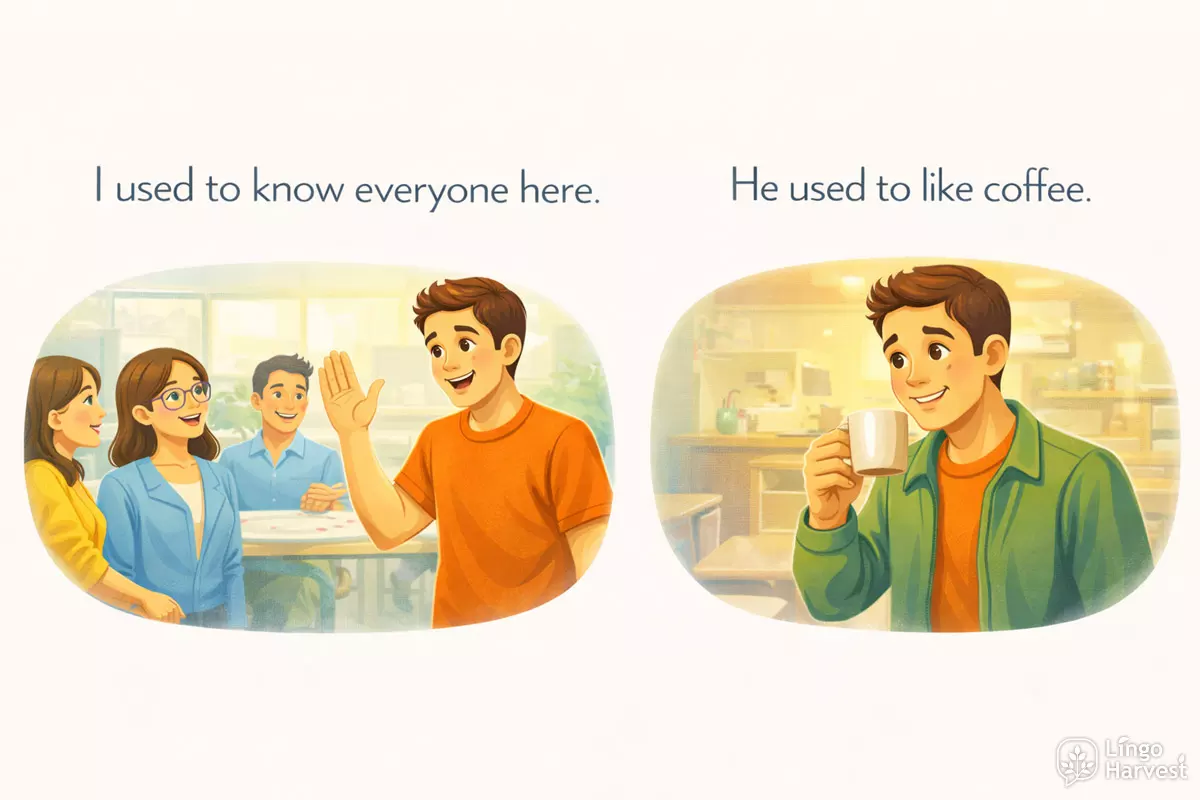
Choosing between used to and would depends on the type of past habit or situation you want to describe. Used to can refer to both actions and states, while would is only for repeated actions. Here’s a comparison to make this clearer:
| Expression | Usage | Example |
|---|---|---|
| Used to | Past habits and past states | She used to have long hair. |
| Would | Past repeated actions only | Every winter, we would go skiing. |
| Used to | Can be used with stative verbs | I used to know everyone here. |
| Would | Cannot be used with stative verbs | ❌ I would know everyone here. ✅ I used to know everyone here. |
| Used to | Permanent or long-term past situations | We used to live near the sea. |
| Would | Needs a clear time reference or context | ❌ I would visit my grandparents. ✅ When I was a child, I would visit my grandparents every Sunday. |
| Used to | Works without a specific time phrase | I used to hate coffee. |
| Would | Focuses on repeated actions, not states | ❌ He would like coffee. ✅ He used to like coffee. |
| Used to | Common with mental and emotional states | I used to believe in ghosts. |
| Would | Not used for past opinions or beliefs | ❌ I would believe in ghosts. ✅ I used to believe in ghosts. |
Summary List: When to Use Each Form
- Use used to for: past routines, repeated actions, and situations or states.
- Use would for: past repeated actions, especially in stories or descriptions.
- Do not use would for past states or feelings (like know, love, believe, have).
- Both forms show something happened regularly in the past but is no longer true.
Forming Questions with Used to
When talking about past habits or repeated actions that no longer happen, English speakers often use "used to." To ask about these past routines, the word order and auxiliary verbs are a bit different from regular questions in the present or past simple. The process involves using "did" as the auxiliary, placing the subject next, and then following with "use to" (without the 'd'). This structure helps clarify that you are asking about previous habits rather than current ones.
Basic Structure
The typical question pattern is:
- Did + subject + use to + base verb?
Notice that "use" (not "used") appears after "did" because the auxiliary already marks the past.
Common Examples
Here are some examples of how to create questions about past habits:
- Did you use to play the piano? → Yes, I did.
- Did she use to live in New York? → Yes, she did.
- Did they use to travel every summer? → Yes, they did.
- Did he use to work here? → No, he didn’t.
- Did your family use to have a pet? → Yes, we did.
- Did we use to go to that restaurant? → Yes, we did.
- Did it use to snow a lot here? → Yes, it did.
- Did your brother use to collect stamps? → No, he didn’t.
- Did people use to write letters more often? → Yes, they did.
- Did you use to watch cartoons on Saturdays? → Yes, I did.
Short Answers
Short responses to these questions use "Yes, I did" or "No, I didn’t," not "Yes, I used to." This keeps the answer concise and grammatically correct.
Comparison: Affirmative, Negative, and Question Forms
To clarify the differences in forming statements, negatives, and questions with "used to," see the table below:
| Form | Example |
|---|---|
| Affirmative | I used to walk to school. |
| Negative | I didn’t use to walk to school. |
| Question | Did you use to walk to school? |
Key Points to Remember
- Always use "did" for questions about past habits with "use to."
- Drop the "d" in "used" after "did" (write "use to," not "used to").
- Do not use "would" for general states or situations—reserve it for repeated actions only.
- Short answers use "did" or "didn’t," not "used to" or "use to."
By following these patterns, you can confidently ask about past routines and habits in English conversations.
Forming Questions with Would
When talking about repeated actions or habits in the past, "would" can be used in questions to ask about what someone regularly did. This usage is common when you are curious about routines, traditions, or things that happened many times in someone’s earlier life. The structure is straightforward: start with "Would," then add the subject, followed by the base form of the verb.
Basic Structure
- Would + subject + base verb + …?
- Example: Would you visit your grandparents every summer?
This pattern is similar to asking about past habits with "used to," but "would" is only used with action verbs, not with stative verbs (like "know," "like," or "believe"). Remember, "would" focuses on actions or routines, not states or feelings.
Common Examples
- Would your family go camping every year? → Yes, they would.
- Would he play chess with his grandfather on weekends? → Yes, he would.
- Would you walk to school as a child? → Yes, I would.
- Would your parents tell you stories before bed? → Yes, they would.
- Would they travel abroad during the holidays? → Yes, they would.
- Would your teacher give you extra homework? → Yes, they would.
- Would your friends meet at the park after school? → Yes, they would.
- Would you bake cookies with your siblings? → Yes, I would.
- Would your neighbors organize block parties? → Yes, they would.
- Would your dog wait for you at the door? → Yes, it would.
- Would you help your grandparents in the garden? → Yes, I would.
- Would your brother play tricks on you? → Yes, he would.
- Would your family eat dinner together every night? → Yes, they would.
- Would you watch cartoons on Saturday mornings? → Yes, I would.
- Would your parents drive you to soccer practice? → Yes, they would.
- Would you and your friends ride bikes around the neighborhood? → Yes, we would.
- Would your mother read to you before you fell asleep? → Yes, she would.
- Would your classmates exchange gifts at the end of the year? → Yes, they would.
Action vs. State: When to Use "Would" in Questions
It’s important to use "would" only with activities, not with verbs that describe feelings or situations. For those, "used to" is a better choice. For example, you can say, "Would you visit your cousins every summer?" but not "Would you know the answer back then?" Here’s a quick comparison:
| ✅ Correct Use | ❌ Incorrect Use |
|---|---|
| Would you play outside until dark? | Would you be tall as a child? |
| Would your father cook breakfast on Sundays? | Would you like ice cream as a kid? |
| Would your classmates sing songs at assemblies? | Would you know many people in your neighborhood? |
| Would your dog chase squirrels in the yard? | Would you believe in ghosts when you were young? |
Short Answers
When responding to these kinds of questions, short answers use "would" plus the subject, or "wouldn’t" for negative replies:
- Yes, I would.
- No, I wouldn’t.
- Yes, they would.
- No, we wouldn’t.
Using "would" in this way helps you sound more natural when discussing past routines in conversational English. It also shows a clear distinction between actions (where "would" fits) and states (where "used to" is required).
Used to vs Would in Questions
When asking about past habits or repeated actions, English speakers often choose between "used to" and "would." Each form has its own nuances, and knowing when to use them can make your questions sound more natural and precise.
Key Differences
"Used to" is common in both statements and questions about past states or repeated activities. "Would," on the other hand, is mainly used for past repeated actions—never for past states—and is less frequent in questions. For past habits, both can sometimes work, but there are restrictions in forming questions, especially with "would."
| Form | Usage in Questions | Example | Notes |
|---|---|---|---|
| "Used to" | ✔ Common and natural | Did you use to play chess? | Works for habits and states |
| "Would" | ❌ Rare, sometimes awkward | Would you play chess as a child? | Only for repeated actions, not states |
| "Used to" (state) | ✔ Acceptable | Did you use to live in London? | Cannot use "would" here |
| "Would" (state) | ❌ Not possible | Would you live in London? | Incorrect for states |
Question Patterns
- Did you use to + base form? (e.g., Did you use to ride your bike to school?)
- Would you + base form? (e.g., Would you visit your grandparents every summer?)
- For state verbs (be, have, live, know): use "used to" only, not "would."
- For action verbs (go, play, read): both forms may be possible, but "used to" is more natural in questions.
Examples of Acceptable and Unacceptable Questions
- Did you use to watch cartoons on Saturday mornings? ✅
- Would you watch cartoons on Saturday mornings? (less common, but possible) ✅
- Did you use to have a pet? ✅
- Would you have a pet? ❌ (incorrect for a past state)
- Did you use to walk to school? ✅
- Would you walk to school every day? (can work for repeated action) ✅
Summary of Usage Tips
- Use "used to" for both past habits and situations.
- Reserve "would" for repeated actions, and use it cautiously in questions—often with clarifying time expressions.
- Never use "would" for past states in questions.
- "Used to" questions are more frequent and sound more natural in everyday English.
Time References and Context
When asking about past habits in English, choosing between "used to" and "would" depends on both the time frame and the nature of the action. Both forms refer to repeated actions or situations in the past, but their use is shaped by specific time cues and the context of the sentence. Understanding these clues helps speakers and learners pick the most natural structure for their questions.
Recognizing Past Time Markers
Certain words and phrases signal that a question is about a previous period or a routine that no longer takes place. These time markers often appear alongside "used to" or "would" to clarify the intended meaning. Here are some common examples:
- when you were a child
- in your school days
- back then
- a few years ago
- in the past
- during your childhood
- when you lived in...
- before moving here
- in those days
- at that time
- long ago
- in your early twenties
- before you started working
Contextual Differences Between "Used to" and "Would"
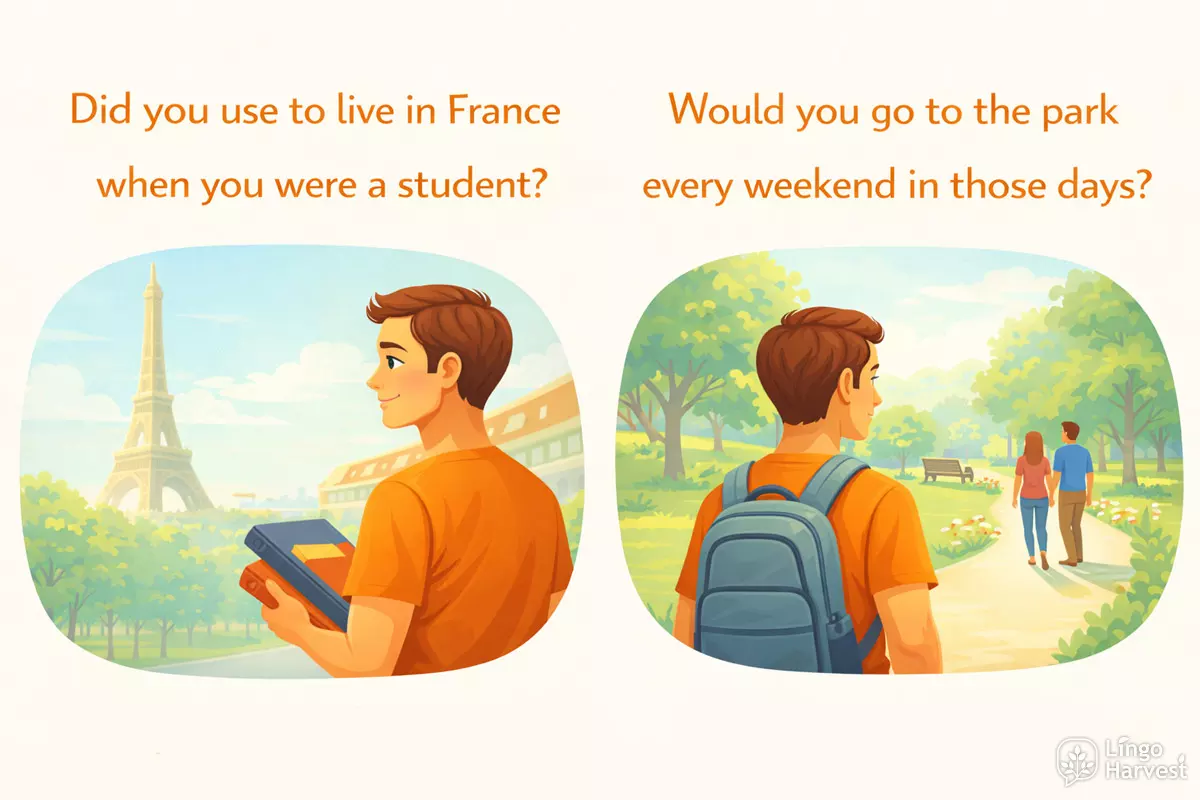
Although both forms can refer to past routines, their use in questions is shaped by what the speaker wants to know. "Used to" is more general, applying to both states and repeated actions, while "would" is limited to actions that were performed regularly. The surrounding context—such as whether a question is about a habit or a situation—determines which is appropriate.
| Form | Context Example | Time Reference Example |
|---|---|---|
| "Did you use to..." | Asking about a state or repeated action | Did you use to live in France when you were a student? |
| "Would you..." (for past) | Asking about repeated actions only | Would you go to the park every weekend in those days? |
| "Did you use to..." | General past habit or situation | Did you use to play piano in your childhood? |
| "Would you..." (for past) | Specific repeated behavior | Would you visit your grandparents every summer? |
Tips for Choosing the Right Form
- Use "used to" for both past situations and repeated actions.
- Use "would" only for actions, and only when the context makes the time frame clear.
- Always look for a time marker or contextual clue to avoid confusion.
- If asking about a state (e.g., "live," "be," "have"), stick with "used to." "Would" does not work for states.
- For clear communication, include a time reference when possible, especially in questions.
Common Learner Mistakes
Incorrect use of "used to" and "would" is a frequent source of confusion for English learners, especially when forming questions or discussing past habits. Understanding when and how to use these forms is crucial for clear communication about past routines, repeated actions, or states.
Mixing Up "Used to" and "Would"
Many students incorrectly use "would" for all types of past actions, not realizing that "would" is only suitable for repeated actions, not for past states or situations. For example, "I would have a car" (to mean "I had a car in the past") is incorrect. The correct form is "I used to have a car."
- Using "would" for states instead of repeated actions
- Forgetting that "used to" can describe both states and repeated actions
- Overusing "used to" in situations where the simple past is more natural
Forming Questions Incorrectly
Turning "used to" and "would" into questions often leads to errors in word order and auxiliary usage. Learners may forget to use "did" with "use to" in questions or place "would" incorrectly.
| Incorrect Form | Correct Form |
|---|---|
| Did you used to play tennis? | Did you use to play tennis? |
| Would you go to the beach when you were a child? | Did you use to go to the beach when you were a child? |
| Used you to live here? | Did you use to live here? |
| Did you would eat ice cream every summer? | Would you eat ice cream every summer? |
Pronunciation and Spelling Issues
Spoken and written mistakes are common, such as pronouncing the "d" in "used to" clearly, which is often dropped in natural speech. In writing, learners sometimes add an unnecessary "d" in questions ("Did you used to...?") or omit the "to" altogether.
- Writing "Did you used to..." instead of "Did you use to..."
- Leaving out "to" in "used to"
- Pronouncing "used to" as two separate words instead of blending ("useto")
Confusing Negative Forms
Negative forms also cause trouble. Learners might say "I didn't used to" instead of the correct "I didn't use to," or "I wouldn't used to," which is never correct.
- Incorrect: I didn't used to like coffee. ❌
- Correct: I didn't use to like coffee. ✅
- Incorrect: I wouldn't used to go there. ❌
- Correct: I wouldn't go there (if talking about repeated actions). ✅
Summary of Frequent Patterns
Some typical learner errors include:
- Using "would" for past states (e.g., "I would know him" instead of "I used to know him")
- Incorrect question formation ("Used you to...?" instead of "Did you use to...?")
- Adding "did" with "would" in questions ("Did you would...?")
- Misplacing or omitting "to" in "used to"
- Unnecessary "d" in "used" after "did"
- Confusing negative structures
- Overusing "used to" when simple past is enough ("I used to go yesterday" instead of "I went yesterday")
- Pronunciation errors, such as overemphasizing "used" in "used to"
By recognizing these pitfalls, learners can focus on practicing the correct forms and improve their confidence with questions using "used to" and "would."
Spoken vs Written Usage
When comparing how “used to” and “would” function in everyday conversation versus formal writing, several differences emerge. These expressions are both common for describing past habits, but their frequency, structure, and nuances can shift depending on whether we are speaking or writing.
Everyday Conversation
In speech, “used to” and “would” are often used interchangeably to talk about repeated actions or routines in the past. However, “used to” is more flexible—it can describe both actions and states, while “would” is limited to actions. Spoken English also tends to be less strict about grammar, so contractions and ellipsis frequently occur. For example, you might hear:
- “I used to go there every summer.”
- “We’d play outside until it got dark.”
- “Didn’t you use to live in London?”
- “He’d always bring his guitar.”
- “We used to be close.” (describing a state)
- “Would you go there often?”
- “She used to have long hair.”
- “We’d eat ice cream after school.”
- “Did you use to play football?”
- “I didn’t use to like coffee.”
Formal and Written English
Written forms, especially in academic or professional contexts, require more precision. “Used to” is favored for clarity, especially because “would” can be ambiguous—it might also refer to the future-in-the-past or willingness. Negative and interrogative forms with “used to” are more clearly marked in writing, for example, “Did you use to...?” rather than “Did you used to...?” (which is considered incorrect in standard grammar).
- “She used to work here before moving abroad.”
- “We did not use to consider that option.”
- “Would” is rarely used for states in writing: “She would be shy as a child” is less common than “She used to be shy.”
- “Would” often appears in narratives or historical texts: “Every evening, he would walk along the river.”
| Feature | Spoken English | Written English |
|---|---|---|
| Frequency of “would” for past habits | Very common, especially in stories | Used, but less than “used to” for clarity |
| Use for past states | “Used to” only; “would” rarely used | “Used to” preferred, “would” avoided |
| Negative/interrogative forms | Often contracted or informal (“Didn’t use to”) | More formal and precise (“Did you use to…?”) |
| Ambiguity | Listeners rely on context | Writers avoid ambiguity, choose “used to” |
Key Takeaways
- “Used to” is versatile for both actions and states; “would” focuses on repeated actions.
- Spoken language allows for more flexibility and informal forms.
- Written English prioritizes clarity and grammatical accuracy.
- Negative and question forms with “used to” can sound awkward when spoken quickly, but are clearer in writing.
Understanding how these patterns shift between conversation and text can help learners sound more natural and write more precisely.
Practice Exercises and Self-Check
Test your understanding of expressing past habits in English with a variety of short tasks. These activities focus on distinguishing between “used to” and “would,” and on forming correct sentences. Try each exercise before checking the solutions at the bottom of this section.
1. Complete the Sentences
Fill in each blank with either “used to” or “would” to accurately reflect a repeated action in the past. Some sentences may require both options; others may only allow one.
- When I was a child, I ________ visit my grandparents every summer.
- My father ________ play the guitar after dinner.
- We ________ have a big garden before we moved to the city.
- On Sundays, she ________ bake bread with her mother.
- They ________ believe in fairy tales when they were young.
- In high school, we ________ walk home together after class.
- Every winter, my family ________ go skiing in the mountains.
- I ________ love spicy food, but now I don’t.
- At bedtime, my parents ________ read me stories.
- He ________ know everyone in the neighborhood back then.
Show answers
- used to / would
- would / used to
- used to
- would / used to
- used to
- used to / would
- would / used to
- used to
- would / used to
- used to
2. Identify the Correct Usage
Decide if each sentence is correct or incorrect. If it’s incorrect, think about how to fix it.
- He would have a car when he was a teenager.
- We used to live near the beach.
- She would go swimming every morning in college.
- I used to be afraid of the dark.
- They would know the answer back then.
- When I was little, I would visit my aunt every weekend.
- She used to speak French fluently.
- Every summer, we used to go to the lake.
- He would like broccoli when he was a kid.
- My parents would take us to the zoo on Sundays.
Show answers
- Incorrect. (Correct: He used to have a car when he was a teenager.)
- Correct.
- Correct.
- Correct.
- Incorrect. (Correct: They used to know the answer back then.)
- Correct.
- Correct.
- Correct. (Used to is fine here.)
- Incorrect. (Correct: He used to like broccoli when he was a kid.)
- Correct.
3. Quick Reference Table: “Used to” vs. “Would”
This table summarizes the main differences between “used to” and “would” for habitual actions in the past:
| Used to | Would |
|---|---|
| Describes past states and repeated actions | Only describes repeated actions, not states |
| Can be used with both action and state verbs (e.g., live, like, have) |
Only used with action verbs (e.g., go, play, walk) |
| Example: I used to know all my neighbors. | Example: I would ride my bike after school. |
| Cannot be used for single events | Cannot be used for single events or states |
4. Make Your Own Sentences
Write three sentences about your own childhood or past experiences: one with “used to” for a state, one with “used to” for an action, and one with “would” for a repeated action.
Show answers
- Example (state): I used to have a pet rabbit.
- Example (action): I used to play soccer after school.
- Example (repeated action): My friends and I would meet in the park every Saturday.
Practice regularly and review your answers to build confidence in using “used to” and “would” for talking about past habits and routines in English. Notice how the context and verb type affect your choices.