Articles with Countable and Uncountable Nouns: Starter Rules

 Here we the rules for using a, an, and the with countable and uncountable nouns, explains when to use no article, points out frequent beginner mistakes, and provides practice sentences to reinforce understanding.
Mastering when to use “a,” “an,” or “the” with both countable and uncountable nouns can be challenging for English learners, but understanding a few key rules makes it much easier. Use “a” before words that begin with a consonant sound and “an” before words that begin with a vowel sound, both for singular countable nouns. “The” is used when referring to a specific noun, whether countable or uncountable, that is already known to the listener or has been previously mentioned.
Review of countable/uncountable nouns
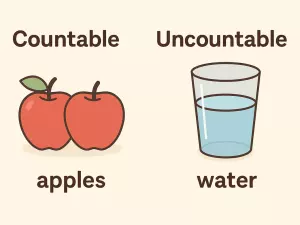
Understanding the difference between nouns that can be counted and those that cannot is essential for using English articles correctly. Countable nouns refer to items you can count individually, such as "apples" or "cars". Uncountable nouns, on the other hand, represent things you cannot separate into individual units, like "water" or "information".
Countable Nouns: Definition and Examples
These nouns have both singular and plural forms. You can use numbers directly before them and often use "a" or "an" with the singular.
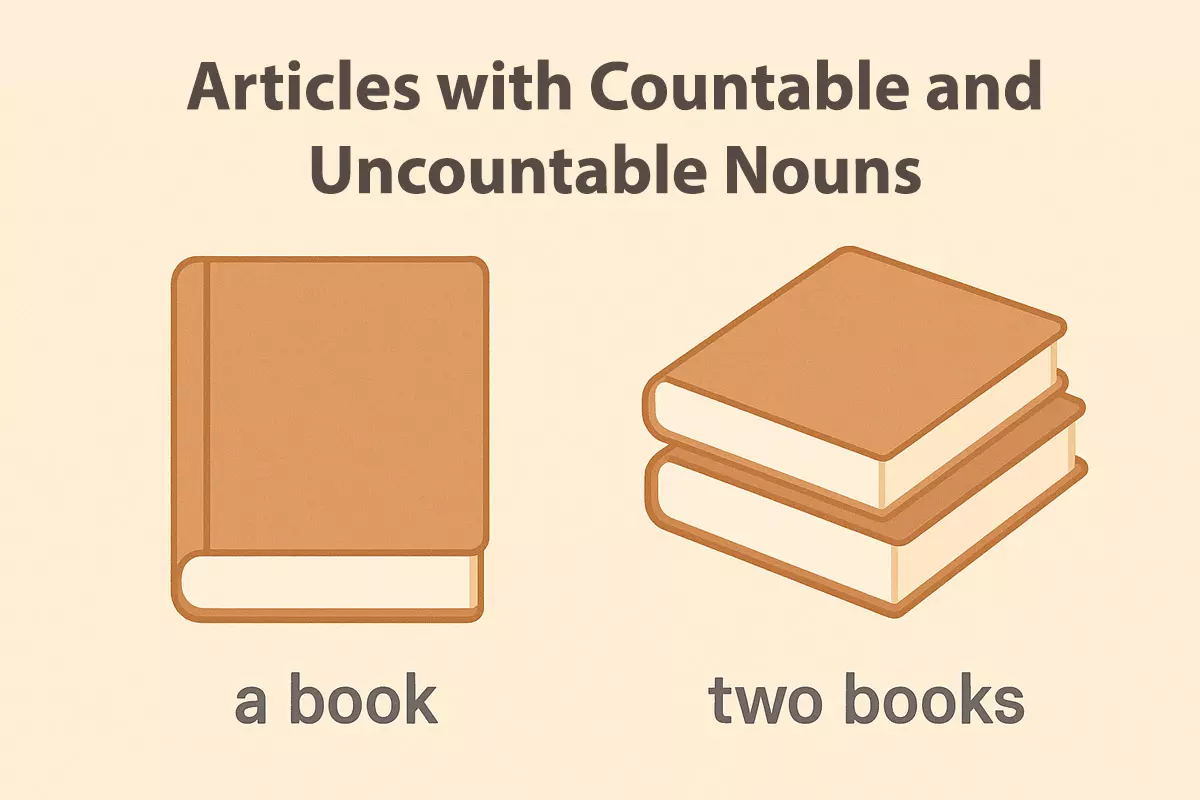
- a book, two books
- an apple, several apples
- a chair, many chairs
- a university, dozens of universities
- one idea, three ideas
- a cat, nine cats
- a question, some questions
- a bottle, six bottles
- a friend, two friends
- a country, many countries
Uncountable Nouns: Key Points and Sample List
Uncountable nouns typically have only one form and do not use "a" or "an". These words often refer to substances, concepts, or collective categories.
- water
- rice
- information
- advice
- music
- furniture
- bread
- money
- news
- luggage
- equipment
- traffic
- knowledge
- air
- milk
- time
- sand
- homework
Countable vs. Uncountable: Quick Reference Table
| Countable Nouns | Uncountable Nouns |
|---|---|
| apple / apples | water |
| car / cars | music |
| book / books | advice |
| dog / dogs | information |
| student / students | furniture |
| question / questions | news |
Common Mistakes to Avoid
- Don’t use "a" or "an" before uncountable nouns: ❌ a information ✅ information
- Don’t make uncountable nouns plural: ❌ advices ✅ advice
- Remember some nouns can be both, depending on meaning: "chicken" (meat, uncountable) vs. "a chicken" (animal, countable)
Practice: Identify Each Noun
Decide if each noun is countable (C) or uncountable (U):
- Milk
- Chair
- Advice
- Apple
- Homework
- Dog
- Sand
- Bottle
- Furniture
- Country
Show answers
- Milk – Uncountable
- Chair – Countable
- Advice – Uncountable
- Apple – Countable
- Homework – Uncountable
- Dog – Countable
- Sand – Uncountable
- Bottle – Countable
- Furniture – Uncountable
- Country – Countable
A/an with countable nouns
When talking about singular nouns that you can count—like dog, apple, or idea—use a or an before the noun if you mean one, but not any specific one. A is used before words starting with a consonant sound, while an comes before words starting with a vowel sound. These articles signal that you are mentioning a single, non-specific thing or person for the first time.
How to choose between "a" and "an"
- Use a before words like a book, a cat, a university (because "university" starts with a y sound).
- Use an before words like an apple, an hour (because "hour" starts with a silent h and a vowel sound).
Remember, the choice is about the sound at the beginning of the next word, not only the letter. For example, an honest person (silent h), but a house (h is pronounced).
Common situations for using a/an
- Introducing something for the first time: I saw a movie yesterday.
- Describing someone's job: She is an engineer.
- Talking about one of many: Can I have a pen?
- Expressing frequency: He goes to the gym twice a week.
- Giving prices or measurements: It costs a dollar., We need an inch more.
- Stating someone's nationality or religion: He is a Canadian.
- Talking about a type or example: A smartphone can be expensive.
Examples of countable nouns with a/an
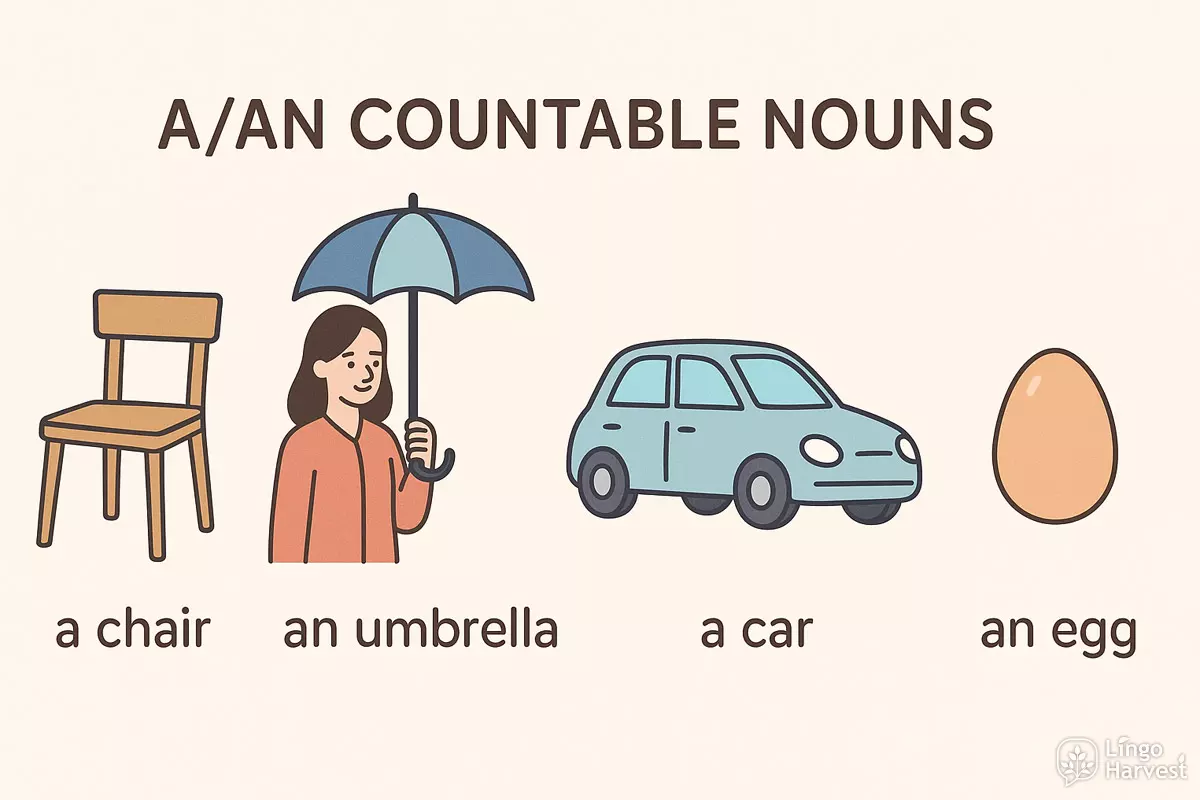
- a chair
- an umbrella
- a car
- an egg
- a teacher
- an elephant
- a ticket
- an idea
- a phone
- an uncle
- a question
- an orange
- a student
- an actor
- a friend
- an answer
Quick reference: when to use "a" vs. "an"
| Article | Example (with countable noun) | Reason |
|---|---|---|
| a | a dog, a book, a university | Before consonant sounds (including "y" in "university") |
| an | an apple, an hour, an honest person | Before vowel sounds (even if the first letter is not a vowel) |
| a | a house, a euro, a one-way street | When the word starts with a pronounced consonant sound |
| an | an egg, an umbrella, an MBA | When the first sound is a vowel (M in "MBA" sounds like "em") |
Using a or an with singular, countable nouns helps make your meaning clear. Pay attention to the sound that follows the article, and you'll avoid common mistakes.
Zero article with uncountable nouns
When we talk about things in a general sense and those things are not countable, English often skips any article before the noun. These words refer to substances, qualities, concepts, or categories that can’t be divided into single units easily. For instance, you might say “I love music” or “Water is essential,” not “a music” or “the water” (unless you mean specific music or water).
When do we leave out the article?
Uncountable nouns appear without an article when we are referring to them in a general way, not a specific example. This is common with materials, abstract ideas, and feelings. Here are some situations:
- Talking about things in general: “Sugar is sweet.”
- Discussing abstract concepts: “Happiness is important.”
- Referring to activities: “He enjoys swimming.”
- Describing academic subjects: “She studies mathematics.”
- Mentioning meals: “We had lunch at noon.”
- Talking about languages: “They speak French.”
- Referring to weather or natural phenomena: “Rain is expected.”
- Talking about materials: “Glass breaks easily.”
- Discussing emotions: “Love can be complicated.”
- General advice or information: “Information is useful.”
- Describing sports: “Football is popular here.”
- Talking about transportation: “Travel by train is comfortable.”
- Stating foods and drinks in general: “Coffee keeps me awake.”
- Talking about time: “Time flies.”
- Discussing money: “Money doesn’t buy happiness.”
Common uncountable nouns used without an article
Here are some typical examples that follow this rule. You’ll often hear them used without “a,” “an,” or “the” unless being specific:
- Advice
- Furniture
- Equipment
- News
- Progress
- Research
- Traffic
- Work
- Bread
- Cheese
- Music
- Knowledge
- Weather
- Patience
- Education
Comparison: General vs. Specific Reference
| General (no article) | Specific (with “the”) |
|---|---|
| Coffee is popular worldwide. | The coffee you made is delicious. |
| Experience comes with time. | The experience we had last year was unforgettable. |
| Water covers most of the Earth. | The water in this glass is cold. |
| Music helps people relax. | The music at the party was loud. |
| Information is power. | The information you gave me was useful. |
Remember, if you are talking about a specific item or instance, “the” may be needed, even with these nouns. But for general statements and ideas, no article is used. This pattern helps make English communication clear and natural.
The for both types
When it comes to definite articles, “the” is unique because it is used with both countable and uncountable nouns. This article signals that we are talking about something specific or already known to the listener or reader. The rules for using “the” are similar, but there are subtle differences depending on whether the noun is countable or uncountable.
How “the” works with countable nouns
With countable nouns, “the” is placed before singular or plural forms when referring to particular items that have already been mentioned or are understood from context. For example:
- The book on the table is mine. (a specific book)
- The apples in the basket are fresh. (specific apples)
- Can you pass me the pen? (a particular pen)
Using “the” with uncountable nouns
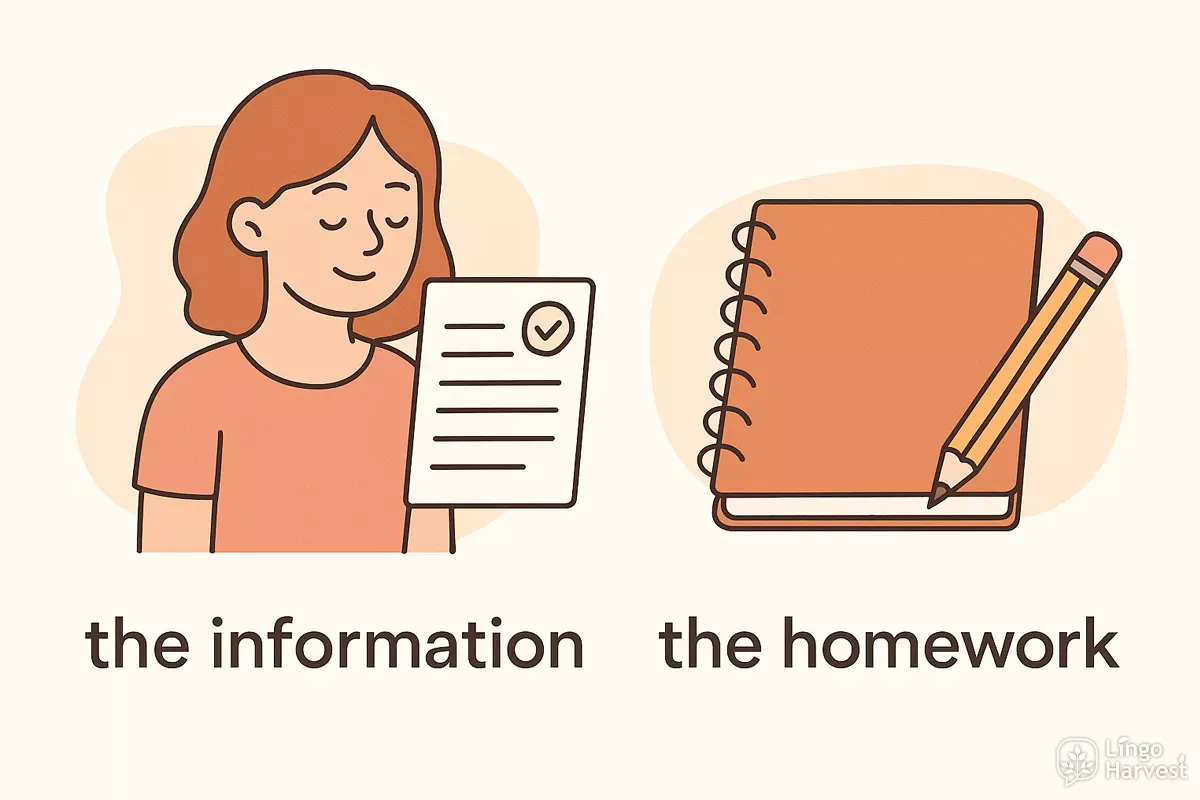
For uncountable nouns, “the” also signals specificity or shared knowledge. It is used when the speaker and listener both know exactly what is meant, or when the context limits the meaning:
- The information you gave was helpful. (specific information)
- I finished the homework. (the assigned homework)
- Could you close the water tap? (the specific tap in question)
Comparison: Countable vs. Uncountable with “the”
The following table highlights common scenarios where “the” is used, showing the difference between countable and uncountable nouns in context.
| Countable Noun Example | Uncountable Noun Example | Usage Note |
|---|---|---|
| The chairs are broken. | The furniture is broken. | Specific items or mass nouns in a known context. |
| The students passed the test. | The knowledge was impressive. | Referring to a particular group or amount. |
| The eggs in the fridge are old. | The milk in the fridge is sour. | Both specify known objects or substances. |
| The dogs barked all night. | The noise was loud. | “The” points to something specific in each case. |
Quick guide: when to use “the”
- When both speaker and listener know what is meant
- When something has already been mentioned
- When there is only one of something in the context (e.g., the sun, the president)
- When a phrase or clause specifies the noun (e.g., the cake you baked, the advice she gave)
In summary, “the” is versatile for both categories of nouns. What matters is whether the noun is definite in context, not whether it is countable or uncountable.
Frequent beginner mistakes
Many English learners find articles tricky, especially when countable and uncountable nouns are involved. Understanding when to use "a," "an," "the," or no article at all can be confusing at first. Below are some of the most common pitfalls that new students encounter when working with these types of nouns.
Mixing up articles with uncountable nouns
Learners often mistakenly use "a" or "an" with uncountable nouns. Words like "information," "advice," or "furniture" do not take "a" or "an" because they cannot be counted individually.
- ❌ a furniture
- ✅ furniture
- ❌ an advice
- ✅ some advice
Using "the" unnecessarily
Another error happens when "the" is added where it's not needed, especially with general statements about plural or uncountable nouns. For example:
- ❌ The water is important for life.
- ✅ Water is important for life.
- ❌ The apples are good for you. (when talking about apples in general)
- ✅ Apples are good for you.
Confusing countable and uncountable forms
Some nouns change meaning depending on whether they're countable or not. Beginners may use the wrong article or form:
- ❌ I have a work to do. (should be "some work")
- ✅ I have some work to do.
- ❌ She gave me an information.
- ✅ She gave me some information.
Common mistakes: quick reference
| Incorrect Usage | Correct Form |
|---|---|
| I need a bread. | I need some bread. |
| He has an equipment. | He has equipment. |
| Can I have the water? (in general) | Can I have some water? |
| She bought a milk. | She bought milk. |
| They gave me an advice. | They gave me some advice. |
| We need an information. | We need information. |
| I have a news. | I have some news. |
| Do you have a luggage? | Do you have any luggage? |
| There is an air in the room. | There is air in the room. |
| We bought a rice. | We bought rice. |
Other typical errors
Some additional slip-ups include:
- Forgetting "a" or "an" with singular countable nouns: "I have car" → "I have a car."
- Adding "s" to uncountable nouns: "informations," "furnitures," etc.
- Using "the" with general ideas: "The happiness is important" → "Happiness is important."
- Mixing "some" and "any" incorrectly, especially in questions or negatives.
Being aware of these patterns and practicing with real examples helps learners avoid common traps and develop more natural English.
Practice sentences
Exploring the use of articles with both countable and uncountable nouns is easier with guided examples. Below, you'll find exercises that highlight the most common patterns, followed by a short quiz to check your understanding.
Examples with Countable Nouns
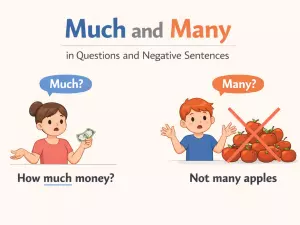
- I have a book in my bag.
- There are some apples on the table.
- She saw an elephant at the zoo.
- We need a chair for the guest.
- Can I have an orange?
- He bought a car last year.
- They found some coins on the street.
- Is there a message for me?
- We don't have any pencils left.
- She wants to buy a house.
Examples with Uncountable Nouns
- We need some water, please.
- There isn’t much information available.
- I bought some bread at the market.
- She doesn’t have any patience.
- Would you like some advice?
- There is no milk in the fridge.
- He gave me some money.
- Is there any news?
- I need a little help with this.
- They offered some assistance.
Comparing Countable and Uncountable Usage
| Countable Example | Uncountable Example |
|---|---|
| I ate an apple. | I drank some juice. |
| She bought a cake. | She bought some cake. |
| There is a chair in the room. | There is furniture in the room. |
| Do you have a question? | Do you have information? |
Mini Quiz: Choose the Correct Article
- Can I have ____ glass of water?
- There isn’t ____ sugar left.
- She wants to buy ____ umbrella.
- We don’t have ____ bread.
- Is there ____ apple in the bag?
Show answers
- a
- any
- an
- any
- an
For best results, read each example aloud and notice the article choice. This practice will help you build confidence when speaking or writing with both types of nouns.