Articles with Jobs and Professions

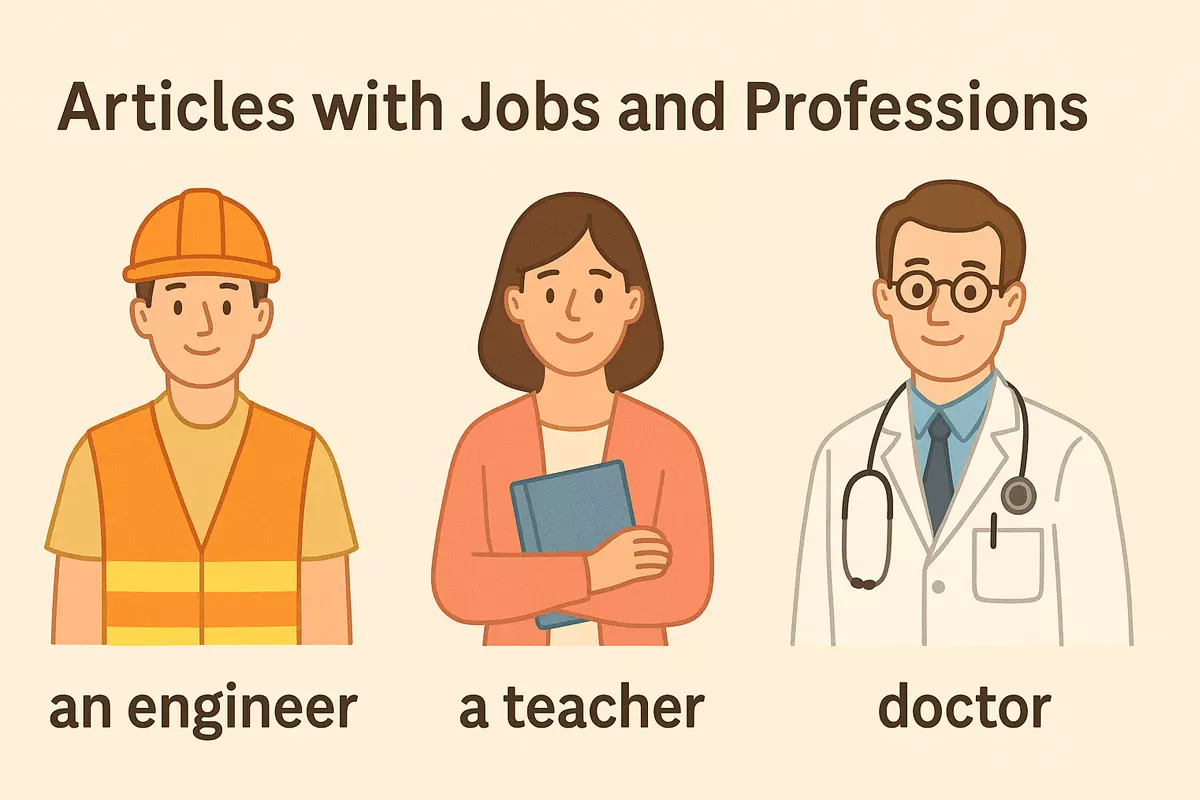 The article guides you on using a, an, or zero article with job titles, explains the difference between talking about roles and real jobs, covers modifiers, notes exceptions, points out common mistakes, and provides practice for describing people’s professions.
Selecting the appropriate article when discussing someone's occupation can be more challenging than it first appears. Words such as "a," "an," and "the" not only affect the grammatical correctness of a sentence but also influence its meaning and clarity. For instance, saying "She is a doctor" introduces her profession in general terms, while "She is the doctor" suggests she is the specific doctor relevant to the situation. Understanding how articles function in these contexts is essential for clear and effective communication.
a/an with Jobs (He is a teacher)
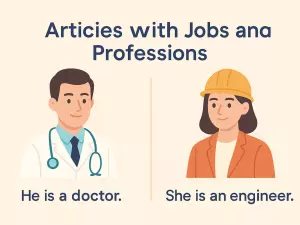
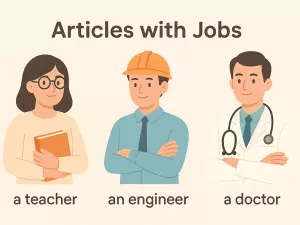
When talking about occupations in English, it’s standard to use the indefinite article “a” or “an” before the job title. This is true for both spoken and written English. For example, we say “She is a doctor” or “He is an engineer.” The article is needed because “teacher,” “doctor,” and similar words are countable, singular nouns. Without the article, the sentence would sound incomplete or incorrect to native speakers.
Basic Rules
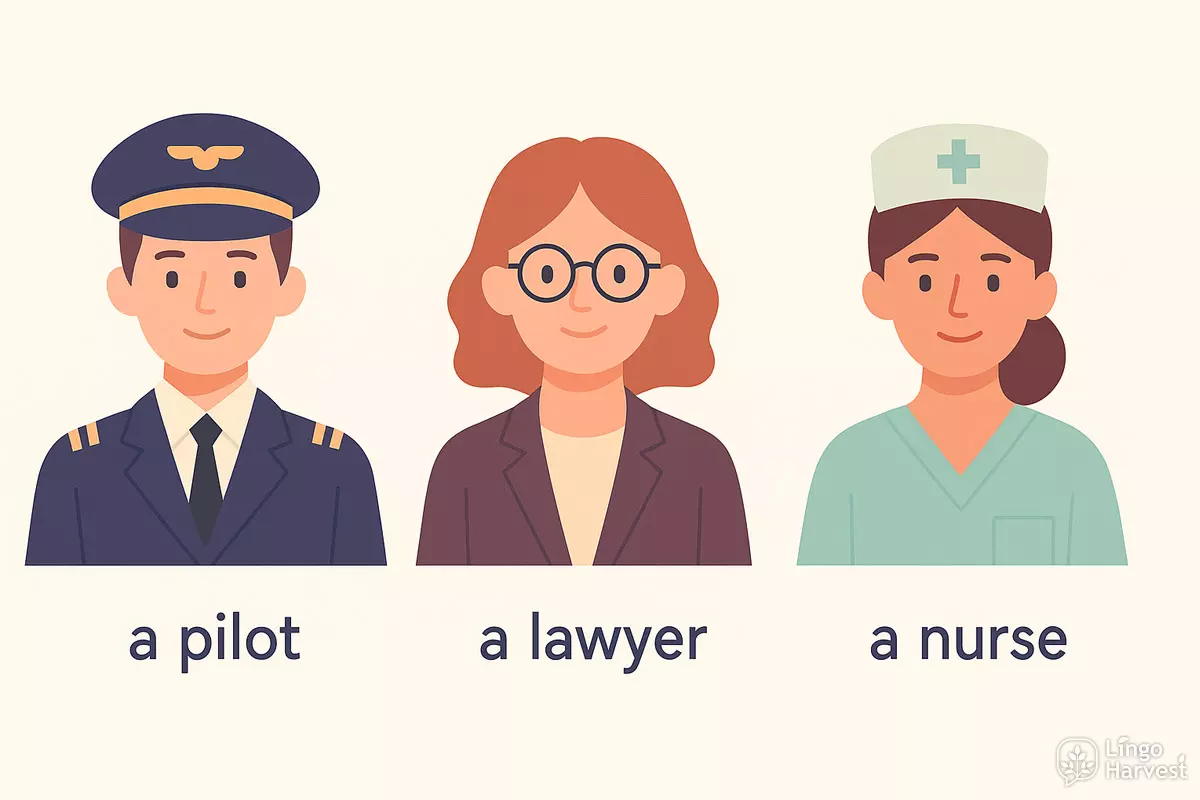
- Use “a” before job titles that begin with a consonant sound: a pilot, a lawyer, a nurse.
- Use “an” before job titles that begin with a vowel sound: an artist, an architect, an engineer.
- Do not use “the” or no article at all when stating a person’s profession in this structure.
Examples of Jobs with Articles
- He is a mechanic.
- She is an accountant.
- My father is a chef.
- Olga is an optician.
- They are a journalist and a photographer.
- I want to be an astronaut.
- Are you a designer?
- My sister is an actress.
- He was a soldier.
- Anna is an engineer.
- Is your uncle a dentist?
- She hopes to become an author.
- He works as a plumber.
- Lisa is a scientist.
- He dreams of being an inventor.
When Not to Use “a” or “an” with Professions
Usually, the article is omitted if the job title is used as an adjective or in certain expressions. Here are some cases:
- She became president in 2010. (titles/roles, not jobs in the regular sense)
- He was elected chairman.
- She was promoted to manager.
Common Mistakes
- ❌ He is teacher. → ✅ He is a teacher.
- ❌ She is engineer. → ✅ She is an engineer.
- ❌ My brother is the doctor. (unless you mean a specific doctor already known)
Quick Reference Table
| Correct Usage | Incorrect Usage |
|---|---|
| He is a pilot. | He is pilot. |
| She is an engineer. | She is engineer. |
| I am a student. | I am student. |
| My aunt is an artist. | My aunt is artist. |
| Are you a manager? | Are you manager? |
Remember, using “a” or “an” with profession names is a simple but important rule to make your English sound natural and accurate.
Zero Article After Be + Appointed/Named
When talking about someone receiving a job or position using verbs like appoint or name followed by be, there is no need to use an article before the title or profession. This pattern is especially common in formal or official contexts. The title or position acts as a role that a person is assigned to, rather than a countable noun referring to a specific job.
Usage Patterns
After passive forms like was appointed or was named, the title or profession stands without a or the. This is different from other sentences where you would use an article before jobs or roles.
- She was appointed manager of the sales department.
- He was named director last year.
- Julia was appointed ambassador to France.
- Mr. Lee was named chief executive officer.
- Maria was appointed head of marketing.
- He was named coach of the national team.
- Anna was appointed project leader for the new initiative.
- She was named president of the association.
- He was appointed editor of the magazine.
- Dr. Brown was named consultant for the hospital.
- Lisa was appointed treasurer of the club.
- He was named principal of the school.
- John was appointed team captain.
- They were named members of the committee.
- She was appointed spokesperson for the council.
- He was named supervisor of the new department.
- Mr. Smith was appointed secretary of the board.
Common Mistakes ❌
A frequent error is inserting a or the where it is not needed. Compare the correct usage with the incorrect forms:
| Incorrect | Correct |
|---|---|
| She was appointed a manager. | She was appointed manager. |
| He was named the director. | He was named director. |
| Julia was appointed an ambassador. | Julia was appointed ambassador. |
| Lisa was named the treasurer of the club. | Lisa was named treasurer of the club. |
Why No Article?
In these structures, the title or role is considered a status or function, not a specific position among many. The focus is on the assignment itself, not on identifying one example of a group. Using an article would either make the sentence sound unnatural or change its meaning.
Speaking About Roles vs Real Jobs
When talking about what people do, English often distinguishes between actual professions and temporary or functional positions. A “job” or “profession” typically refers to a person’s main occupation—what they officially do for a living, such as “teacher,” “engineer,” or “nurse.” In contrast, a “role” can mean a responsibility or a function someone takes on, regardless of whether it’s their main employment. For example, someone might have the job of “manager,” but take on the role of “team leader” for a particular project.
Common Ways to Describe Occupations and Roles
Here are some natural ways to talk about work and responsibilities in English. Notice the difference between describing a formal job and mentioning a temporary or informal role:
- He works as a chef. ✅ (Profession)
- She is in charge of the marketing team. (Role/Responsibility)
- I am an accountant. ✅ (Job title)
- They run the front desk. (Role)
- She’s the class representative this semester. (Temporary role)
- He’s employed as a mechanic. ✅ (Profession)
- He serves as our spokesperson. (Role)
- She acts as a mentor for new staff. (Role)
- He’s a freelance designer. ✅ (Job)
- She’s the project coordinator for this month. (Temporary position)
- I’m responsible for logistics. (Role/Task)
- He’s the owner of the company. (Permanent position)
- He works part-time as a barista. (Job type)
- She leads the sales team. (Role)
- He’s on duty tonight. (Role/shift)
- I’m an intern at the hospital. ✅ (Temporary job)
- She’s acting manager while the boss is away. (Temporary role)
- He’s self-employed as a consultant. (Job status)
- She’s volunteering as a guide. (Role, not paid employment)
- He’s on the advisory board. (Role/position)
Comparing Jobs and Roles: Key Differences
| Jobs/Professions | Roles/Responsibilities |
|---|---|
| Permanent or long-term positions (e.g., doctor, teacher) | Temporary or changing tasks (e.g., team leader, project manager) |
| Usually official titles and appear on contracts | Often informal and may not be part of the job title |
| Described with: “I am a/an…”, “I work as…” | Described with: “I’m responsible for…”, “I act as…” |
| May require qualifications or training | Can be assigned based on need or skills |
Understanding the distinction between what someone’s main occupation is and the tasks or functions they perform helps avoid confusion. It also allows for more accurate and natural communication, especially in professional or academic settings.
Jobs with Modifiers (a good doctor)
When describing professions in English, we often add adjectives or other modifiers before the job title. This changes the article usage. If you simply name a profession, like "He is a doctor," you usually don't use an adjective. But when you add a descriptive word—such as "good," "famous," or "experienced"—the structure requires the indefinite article "a" or "an." This is because the modifier makes the profession one of many possible types, not a unique identity.
Using Modifiers with Professions
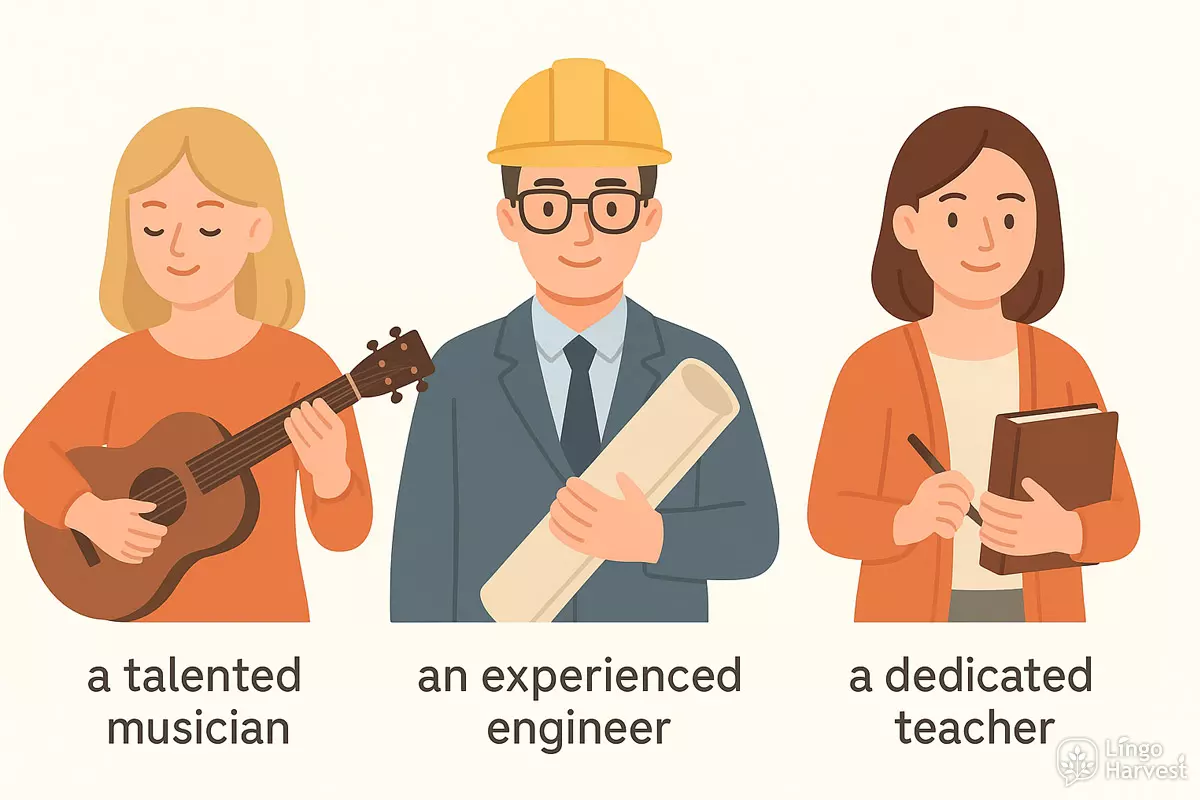
Here are some common patterns and examples of how modifiers work with job titles:
- a talented musician
- an experienced engineer
- a dedicated teacher
- a skilled carpenter
- a famous artist
- an ambitious lawyer
- a reliable nurse
- a creative designer
- a patient therapist
- a respected professor
- a friendly waiter
- a successful entrepreneur
- an innovative architect
- a supportive manager
- a passionate chef
- a hardworking farmer
- a trusted accountant
- a quick-thinking journalist
Why the Article Is Needed
Adding a modifier emphasizes one aspect of the person’s role, making it a specific example among many. For example, "She is a good doctor" means she is one of many doctors, but her quality is highlighted. Without the modifier, the article is often dropped: "She is a doctor."
Common Mistakes
- ❌ She is good doctor. (Wrong: missing "a")
- ✅ She is a good doctor. (Correct)
- ✅ He is an honest policeman. (Correct)
- ❌ He is honest policeman. (Wrong: missing "an")
Summary Table: Article Use with and without Modifiers
| Without Modifier | With Modifier |
|---|---|
| She is doctor. | She is a good doctor. |
| He is teacher. | He is an experienced teacher. |
| They are architects. | They are creative architects. |
| My sister is nurse. | My sister is a dedicated nurse. |
| He is engineer. | He is an innovative engineer. |
Whenever you describe someone's profession with an adjective or other modifier, remember to use the correct article before the job title. This is a key rule for clear and natural English.
When Not to Use an Article
In English, there are specific cases where no article is needed before job titles or professions. Understanding these exceptions helps your sentences sound natural and grammatically correct. Generally, articles are omitted when job names are used after certain verbs or in set expressions.
After the Verb "To Be"
When describing someone's occupation with the verb "to be," you usually do not add an article. This rule applies whether you are talking about yourself or someone else. For example:
- She is doctor.
- He became engineer after graduation.
- My father was teacher for 20 years.
However, in standard English, it is correct to say "She is a doctor." The omission of the article often appears in headlines, notes, or telegram-style writing, but is not standard in full sentences.
When Referring to Positions in General
No article is needed when speaking about professions in a general sense, especially in lists or when describing career fields broadly:
- Medicine, law, and teaching are respected professions.
- Jobs like nurse, firefighter, or pilot require special training.
- He studied to become architect or designer.
Set Phrases Without Articles
Some fixed expressions or idioms with professions do not use articles. These are often used in headlines, official documents, or concise notes:
- Appointed manager of the team
- Promoted to director last year
- Elected president of the club
- Named chairperson of the committee
- He works as consultant
- She trained as nurse
- Started work as intern
- Hired as supervisor
- Served as ambassador
- Resigned as treasurer
- Acted as interpreter
Summary Table: When to Omit the Article
| Context | Example (No Article) |
|---|---|
| After "to be" (headline style, not standard English) | She is doctor |
| Job titles in lists or general statements | Jobs like nurse, pilot, architect |
| Set phrases or headlines | Appointed manager, promoted to director |
| Official roles in formal documents | Named chairperson, elected president |
Common Mistakes and Natural Fixes
Choosing the right article before job titles or professions can be tricky for learners of English. Many common errors stem from confusion about whether a profession needs "a/an," "the," or no article at all. Below, you'll find typical pitfalls and practical ways to sound more natural.
Frequent Article Errors with Professions
- Omitting "a/an" before singular jobs: Saying "She is doctor" instead of "She is a doctor".
- Using "the" unnecessarily: Saying "He wants to be the engineer" when you mean any engineer, not a specific one.
- Adding articles with plural professions: Saying "They are the teachers" when you mean "They are teachers".
- Forgetting "an" before vowel sounds: "He is artist" instead of "He is an artist".
- Mixing up professions and positions: "She is a president" (when referring to a unique title, use "the President").
- Using articles with uncountable job nouns: "She does a research" instead of "She does research".
Natural Fixes for Article Usage
- Use "a/an" before singular professions: "a nurse," "an accountant".
- Leave out the article for plural or general statements: "They are engineers."
- Use "the" only for unique or specified roles: "the CEO," "the principal of our school".
- Remember pronunciation: "an actor" (because "actor" starts with a vowel sound).
- Don’t use articles before job titles in lists or after "as": "He works as manager" → "He works as a manager".
Quick Reference: Article Use with Jobs
| Incorrect Usage | Natural Fix |
|---|---|
| She is teacher. | She is a teacher. |
| He is engineer. | He is an engineer. |
| They are the doctors. | They are doctors. |
| He wants to be the lawyer. | He wants to be a lawyer. |
| She is a research. | She does research. |
| He works as teacher. | He works as a teacher. |
Tips for Sounding More Natural
- Think about whether you mean one of many (a/an), a unique role (the), or a general profession (no article).
- Practice with different professions: "She is a pilot," "They are designers," "He is the head chef."
- If unsure, check if the job is countable and singular—if so, "a/an" is usually needed.
Practice: Describe People Professionally
When talking about jobs and professions, it’s important to use clear and respectful language. This helps convey not just what someone does, but also their expertise and role in a professional setting. Below are practical ways to describe people’s occupations, along with useful vocabulary and phrases.
Useful Phrases to Describe Occupations
- She works as a software developer.
- He is employed as an accountant at a large firm.
- They hold the position of project manager.
- She is in charge of marketing for the company.
- He specializes in pediatric medicine.
- She leads a team of engineers.
- He is responsible for customer relations.
- They are experienced in logistics and supply chain management.
- She has a background in graphic design.
- He is the head of the legal department.
- She manages financial operations.
- He provides technical support.
- They serve as administrative assistants.
- She has expertise in human resources.
- He is a qualified electrician.
- She coordinates international sales.
- They work in research and development.
- He is a certified public accountant.
- She acts as a consultant for startups.
- He is a licensed real estate agent.
Practice Task: Match the Person to Their Profession
Read the short descriptions and match each to the correct profession from the list below:
- This person creates visual concepts and designs logos for companies.
- Responsible for diagnosing and treating illnesses in children.
- Leads a group of workers to complete construction projects safely and on time.
- Manages a company’s financial records and prepares tax documents.
- Advises businesses on how to improve their strategies and operations.
- A. Pediatrician
- B. Graphic Designer
- C. Accountant
- D. Construction Supervisor
- E. Consultant
Show answers
- B. Graphic Designer
- A. Pediatrician
- D. Construction Supervisor
- C. Accountant
- E. Consultant
Comparison: Formal vs. Informal Descriptions
| Informal Description | Professional (Formal) Description |
|---|---|
| He’s a tech guy. | He works as an IT specialist. |
| She’s a money person. | She is employed as a financial analyst. |
| They help people with legal stuff. | They serve as legal advisors. |
| She’s a teacher. | She holds the position of high school teacher. |
| He fixes cars. | He is a certified automotive mechanic. |
Task: Write Professional Descriptions
Rewrite the following informal sentences in a more formal and professional style:
- He’s a computer guy.
- She does numbers for the company.
- They build houses.
- She’s a people person at work.
Show answers
- He works as an IT specialist.
- She is responsible for financial analysis at the company.
- They are employed as construction workers.
- She manages client relations at work.
Using precise and appropriate language to describe professions not only shows respect but also improves clarity in communication. Try using these patterns and phrases in your own introductions or professional contexts.