Articles with Unique Objects: the sun, the moon, the sky

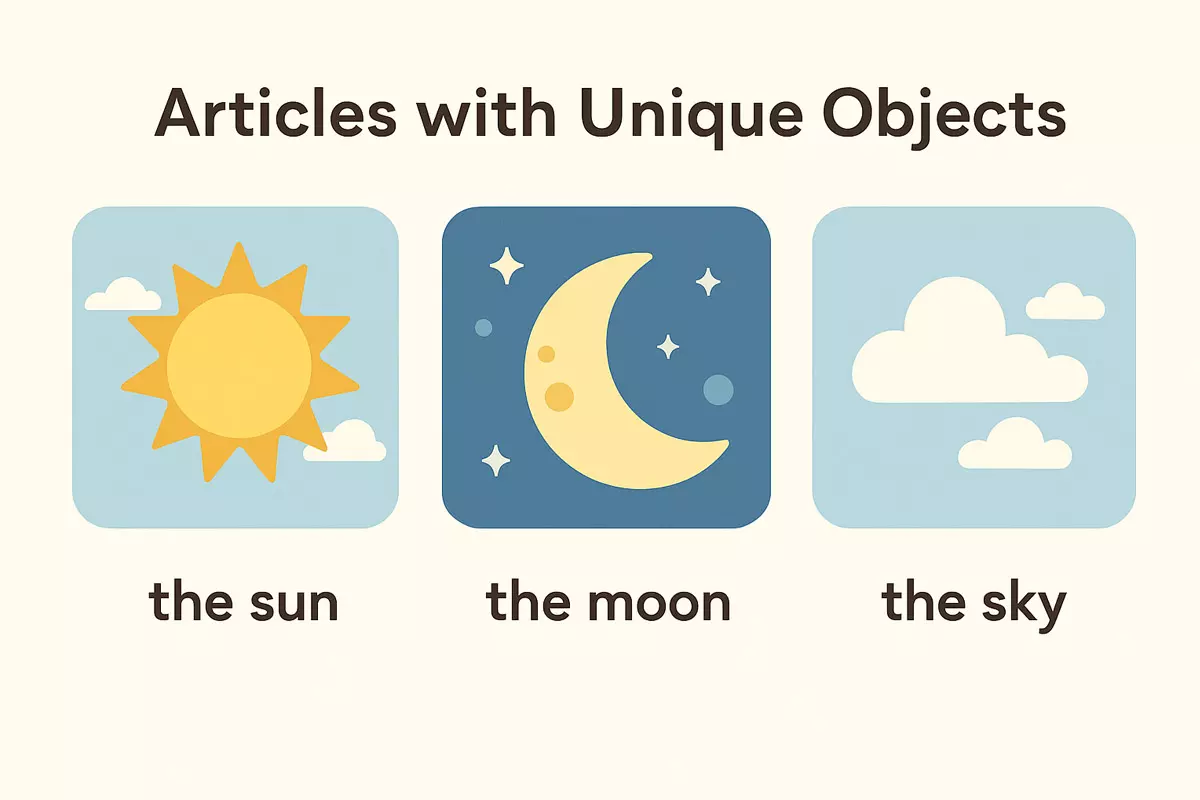 Here we what makes an object unique in English and why “the” is usually used with these nouns. It also discusses exceptions, modern shifts, metaphorical and idiomatic uses, and includes practice choosing the right article.
Have you ever wondered why we use a specific little word before mentioning the glowing orb in our daytime sky or the silvery sphere we see at night? In English, certain objects in our universe are so unique that they require a special way of being referenced. This is why we say the Sun and the Moon, using the definite article to highlight their singularity in our experience. These words help us distinguish these one-of-a-kind celestial bodies from countless other stars and moons that exist elsewhere in the cosmos.
What counts as a unique object in English
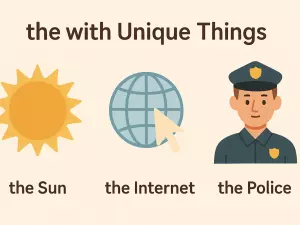
In English, certain objects are considered so singular in our world or experience that we always use the definite article “the” with them. This is because there is only one of these things in the context of our daily lives, the universe, or human perception. These unique entities do not need further description for identification—they are universally recognized. Understanding which things fall into this category helps learners use articles correctly and sound more natural.
Common examples of universally unique nouns
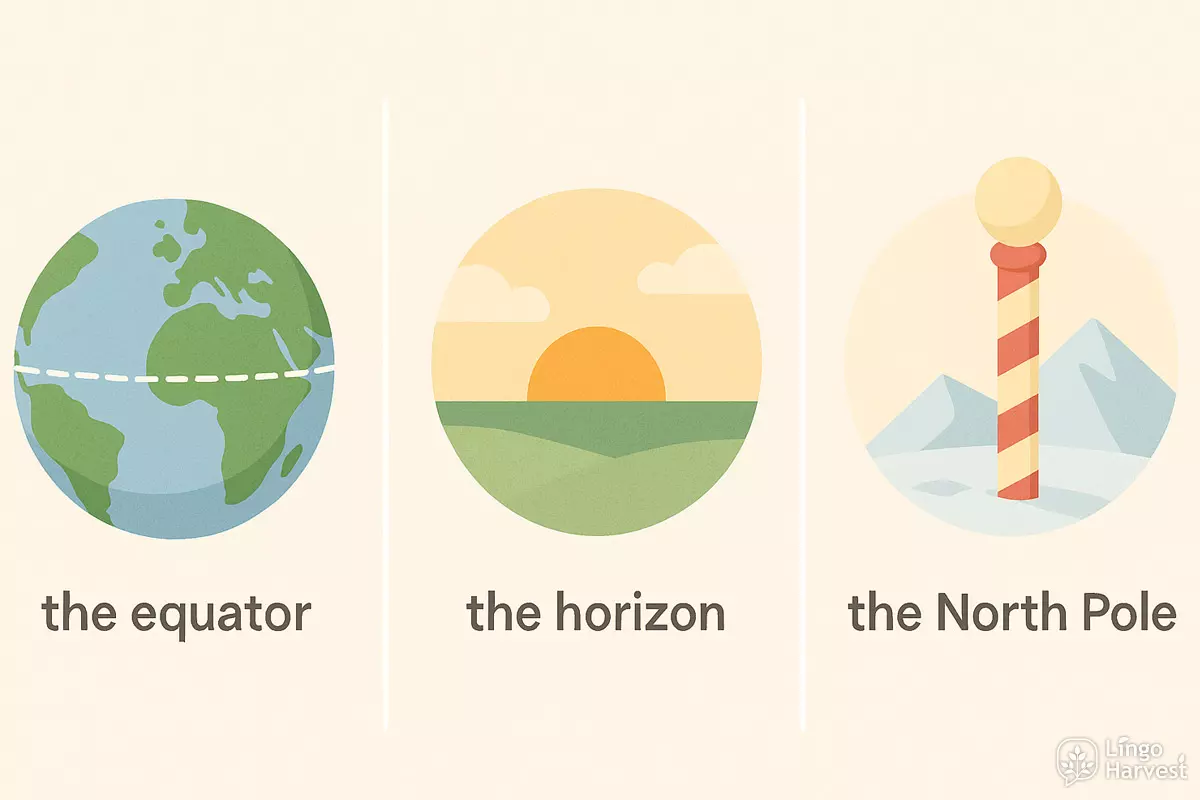
- the sun
- the moon
- the sky
- the Earth
- the universe
- the equator
- the internet
- the atmosphere
- the horizon
- the North Pole
- the South Pole
- the ozone layer
- the Milky Way
- the solar system
- the government (when referring to the current one)
- the past
- the future
- the present
Why are these objects treated as unique?
These nouns are viewed as one-of-a-kind from a human or planetary perspective. For example, while there may be many stars, when we say “the sun,” we mean the star at the center of our solar system. Similarly, “the moon” refers to Earth’s natural satellite, not just any moon. This sense of uniqueness can be based on physical reality (such as the equator) or a shared conceptual understanding (like the internet).
Exceptions and context matters
Not every noun that might seem unique is treated this way; context is crucial. For example, “a sky” could be used poetically or in science fiction, but in standard usage, “the sky” is correct because we all share the same one. Similarly, if discussing moons of other planets, “a moon” is possible, but “the moon” refers to Earth’s.
Comparison: Unique vs. Non-Unique Objects
| Unique Object (Always "the") | Non-Unique Object (Can use "a/an" or "the") |
|---|---|
| the sun | a star / the star you saw last night |
| the moon | a moon of Jupiter |
| the sky | a cloud / the cloud over the house |
| the internet | a website / the website you mentioned |
| the equator | a latitude line |
Recognizing these unique entities makes article use easier. When in doubt, ask yourself: is there only one of this thing in the context? If so, “the” is almost always the right choice.
Why we normally use “the” with unique nouns
We tend to add “the” before certain nouns because they refer to one specific thing in our world or universe. These are called unique nouns—words that naturally point to a single entity everyone recognizes, such as “sun,” “moon,” or “sky.” Using “the” signals that both the speaker and listener know which particular object is meant, since there’s only one of it in the context of our daily lives.
How “the” helps with clarity and specificity
Articles in English help us distinguish between general and specific references. When we use “the” with a unique noun, we don’t just mean any sun or moon, but the only one relevant to everyone. This removes ambiguity and makes it clear exactly what is being discussed.
Common unique nouns that always take “the”
- the sun
- the moon
- the sky
- the earth (when talking about the planet)
- the equator
- the North Pole
- the internet
- the atmosphere
- the universe
- the horizon
- the Milky Way
- the Pacific Ocean
- the government (of a specific country)
- the President (of a particular country)
- the past/future
- the human body
- the law (when referring to the legal system generally)
- the weather
Comparison: Unique vs. Non-Unique Nouns
| Unique Noun (with “the”) | Non-Unique Noun (with “a” or no article) |
|---|---|
| the sun | a star |
| the moon | a planet |
| the Pacific Ocean | an ocean |
| the internet | a website |
| the President | a president (of a company) |
| the sky | a cloud |
| the horizon | a mountain |
| the law | a law (specific regulation) |
When “the” is not used with unique nouns
There are rare exceptions, such as poetic or scientific contexts, where articles might be dropped (“Space is vast” instead of “The space is vast”). However, in ordinary conversation and writing, using “the” with unique objects is the norm.
In summary, “the” acts as a pointer to something singular and familiar to all. This is why we naturally use it with things like the sun, the moon, and the sky—because they are one-of-a-kind in our shared experience.
Exceptions and modern changes in usage
Although we traditionally use "the" with unique celestial objects like "the sun," "the moon," and "the sky," there are notable exceptions and evolving patterns, especially in scientific, poetic, and informal contexts. Modern English sometimes bends these rules, reflecting shifts in both grammar and meaning.
When "the" is omitted or replaced
- Scientific writing: Astronomers may omit "the" when referring to moons, suns, or skies of other planets, e.g., "Earth orbits sun-like stars," "a moon of Jupiter," or "under alien sky."
- Poetic or creative language: Writers may drop "the" for stylistic effect: "Beneath silver moon," "Chasing sun," "Open sky."
- Generalization: Without "the," these objects can refer to any instance, not the unique one we know: "A sun in another galaxy."
- Idioms and fixed phrases: Expressions like "from dawn to dusk," "under open sky," or "reach for the moon" may use or omit articles according to established usage.
Modern usage patterns
Language evolves, and so does the use of articles with cosmic nouns. In recent years, certain phrases have become common in both formal and informal registers. Compare the traditional and modern approaches in the table below:
| Traditional Form | Contemporary/Alternative Form |
|---|---|
| The sun is shining. | Sun shines bright. |
| We looked at the moon. | We gazed at moon. |
| The sky was clear. | Sky was clear. |
| Under the open sky. | Under open sky. |
| The stars filled the sky. | Stars filled sky. |
List of common phrases with and without "the"
- the sun / sun
- the moon / moon
- the sky / sky
- the heavens / heavens
- the horizon / horizon
- the stars / stars
- the universe / universe
- the cosmos / cosmos
- the daylight / daylight
- the night sky / night sky
- the blue sky / blue sky
- the morning sun / morning sun
- the evening sky / evening sky
- the rising moon / rising moon
- the open sky / open sky
Metaphorical uses: the mind, the heart, the future
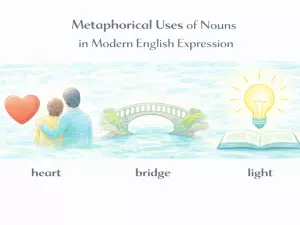
Expressions like "the sun," "the moon," and "the sky" often appear in metaphorical language beyond their literal meanings. These unique objects become powerful symbols for human experience, emotion, and imagination. For example, in poetry and everyday speech, people use them to represent aspects of the mind, the heart, or even the passage of time.
Symbolism and Emotional Associations
Writers and speakers frequently draw on images of the sky or celestial bodies to illustrate abstract ideas. The sun might stand for clarity or hope, while the moon can suggest mystery or changeability. The sky often evokes freedom, vastness, or limitless potential. These objects are used not just to describe, but to deepen the emotional resonance of a message.
- The sun: enlightenment, joy, renewal, positivity, awakening
- The moon: intuition, cycles, melancholy, romance, secrets
- The sky: openness, dreams, possibility, distance, tranquility
- The stars: aspiration, destiny, guidance, wishes, inspiration
- The dawn: new beginnings, hope, opportunity
- The dusk: endings, reflection, uncertainty
- The horizon: future, adventure, goals, the unknown
- The clouds: confusion, obstacles, moodiness, impermanence
- The storm: turmoil, conflict, transformation
- The eclipse: change, hidden truths, turning points
Common Metaphorical Expressions
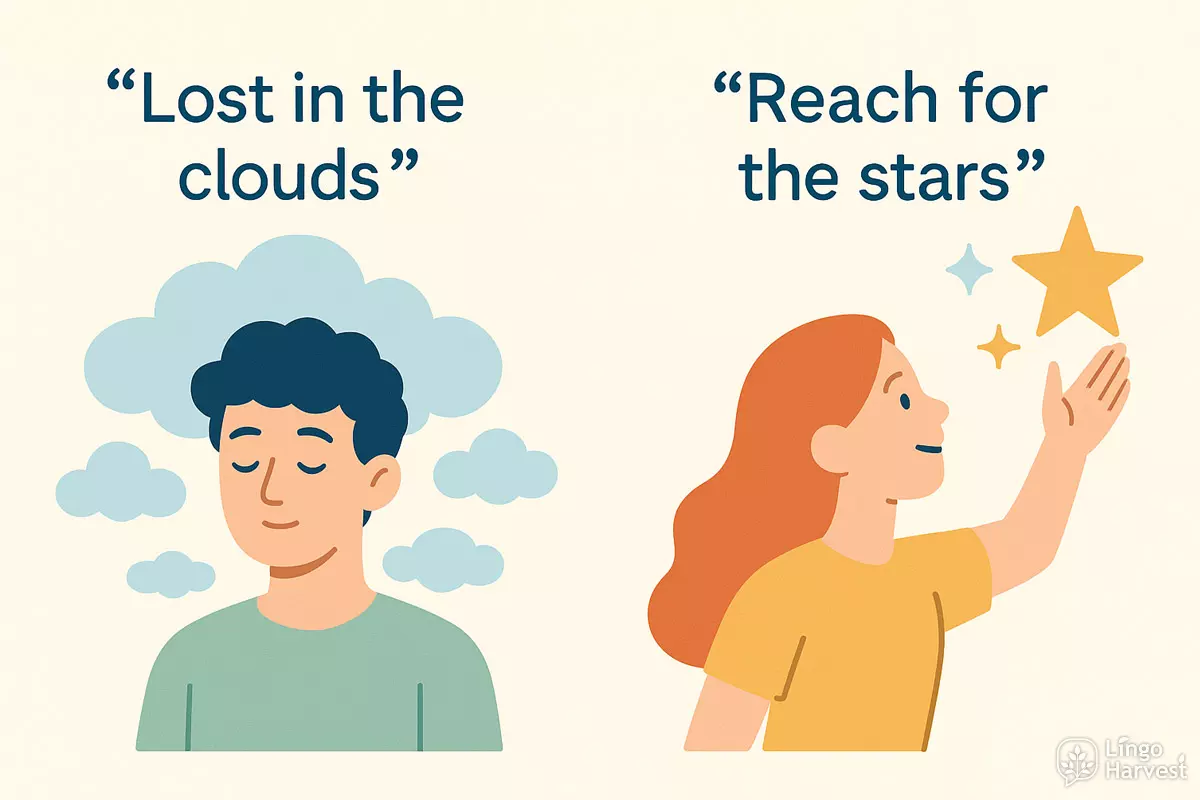
These objects serve as metaphors in a wide range of idioms and expressions. Here are some typical ways they appear in English:
- "Lost in the clouds" → distracted or daydreaming
- "Reach for the stars" → aim high or pursue big dreams
- "A heart as bright as the sun" → someone warm and generous
- "Under the same sky" → sharing a common bond despite distance
- "Dark side of the moon" → unknown or hidden aspects
- "A cloud on the horizon" → a sign of trouble ahead
- "Over the moon" → extremely happy
- "Chasing the sun" → pursuing happiness or freedom
- "Face like thunder" → visibly angry or upset
- "The calm before the storm" → a peaceful moment before chaos
Comparing Metaphorical Uses
| Celestial Image | Common Metaphorical Meaning |
|---|---|
| The sun | Joy, clarity, source of life, inspiration |
| The moon | Mystery, change, emotion, reflection |
| The sky | Limitlessness, freedom, imagination |
| The stars | Dreams, destiny, hope, guidance |
| The clouds | Obstacles, uncertainty, mood swings |
In literature and conversation, these metaphors enrich language and help express complex feelings about the mind, the heart, or the future. By drawing on the familiar yet awe-inspiring qualities of the sun, moon, and sky, speakers can communicate ideas that are both vivid and universally understood.
Using “the” vs zero in idiomatic phrases
When it comes to idiomatic expressions with unique objects like “sun,” “moon,” and “sky,” article usage can be tricky. Sometimes we include “the” to refer to a specific, universally recognized object, while in other idioms, we omit the article altogether. Understanding these patterns is key for natural-sounding English.
Common idiomatic expressions with “the”
In many set phrases, “the” is used because we are talking about a particular thing known to everyone:
- reach for the stars
- under the sun
- over the moon (meaning extremely happy)
- shoot for the moon
- wait for the sun to rise/set
- under the sky
- chase the sun
- blame it on the moon
- the sky’s the limit
- walk on the moon
Set phrases with zero article
In contrast, some idiomatic expressions use no article before these nouns. This often happens when speaking more generally, poetically, or in fixed expressions:
- by moonlight
- in daylight/sunlight
- from sunrise to sunset
- before sunrise
- after sunset
- at daybreak
- under open sky
- chase rainbows (no article with “rainbows,” not unique but related idiom)
- travel by night
- walk in moonlight
- soak up sunshine
- outdoors, under sky
Choosing between “the” and zero article
The choice depends on whether the phrase refers to a specific, unique thing (usually with “the”) or to a general idea or poetic image (usually zero article). For example, “under the sun” means “in the world,” and always takes “the,” while “by moonlight” is a general way to describe lighting conditions, so there’s no article. Here’s a quick comparison:
| With “the” | Zero Article |
|---|---|
| under the sun | in sunlight |
| over the moon | by moonlight |
| the sky’s the limit | under open sky |
| shoot for the moon | before sunrise |
Paying attention to these patterns will help you sound more fluent and natural when using idiomatic expressions with unique objects.
Practice: complete sentences with the correct article
Understanding when to use "the" for unique objects like celestial bodies is important for accurate English. Below, you'll find exercises to help you choose the right article when talking about things such as the sun, the moon, or the sky. These tasks will reinforce your ability to recognize when a noun refers to something unique and requires a definite article.
Fill in the blank
Complete each sentence with the or leave it blank if no article is needed.
- _____ sun rises in the east.
- Last night, we admired _____ moon from the balcony.
- Birds fly high in _____ sky during summer.
- _____ sky was full of stars.
- Without _____ sun, there would be no life on Earth.
- Have you ever seen _____ Northern Lights?
- Clouds covered _____ moon, making the night very dark.
- We watched _____ sunset together.
- _____ Earth orbits around _____ sun.
- She pointed at _____ brightest star in _____ sky.
Show answers
- The sun rises in the east.
- Last night, we admired the moon from the balcony.
- Birds fly high in the sky during summer.
- The sky was full of stars.
- Without the sun, there would be no life on Earth.
- Have you ever seen the Northern Lights?
- Clouds covered the moon, making the night very dark.
- We watched the sunset together.
- The Earth orbits around the sun.
- She pointed at the brightest star in the sky.
Common unique objects and their articles
Here is a list of unique objects. Decide which ones always take the before them in English:
- sun
- moon
- sky
- Earth
- Milky Way
- Mars
- Venus
- Great Wall of China
- Pacific Ocean
- Mount Everest
- Amazon River
- Big Dipper
- Statue of Liberty
Show answers
- the sun
- the moon
- the sky
- the Earth (when referring to the planet as a unique object; but "Earth" without "the" in some contexts)
- the Milky Way
- Mars (no article)
- Venus (no article)
- the Great Wall of China
- the Pacific Ocean
- Mount Everest (no article)
- the Amazon River
- the Big Dipper
- the Statue of Liberty
Quick check: article or no article?
For each phrase, decide if it should have "the" or not:
- _____ Mars is the fourth planet from _____ sun.
- We could see _____ Big Dipper in _____ night sky.
- Have you visited _____ Statue of Liberty?
- _____ Venus appears brightly at dawn.
- They observed _____ Milky Way during _____ trip to the mountains.
- _____ Earth orbits _____ sun once every year.
- We learned about _____ Great Barrier Reef in class.
- _____ Jupiter is known for its massive storm called _____ Great Red Spot.
- She dreams of climbing _____ Mount Kilimanjaro one day.
- Is _____ Pacific Ocean the largest ocean on Earth?
Show answers
- — Mars is the fourth planet from the sun.
- We could see the Big Dipper in the night sky.
- Have you visited the Statue of Liberty?
- — Venus appears brightly at dawn.
- They observed the Milky Way during the trip to the mountains.
- The Earth orbits the sun once every year.
- We learned about the Great Barrier Reef in class.
- — Jupiter is known for its massive storm called the Great Red Spot.
- She dreams of climbing Mount Kilimanjaro one day. (no “the” for most mountains)
- Is the Pacific Ocean the largest ocean on Earth?
Practicing with unique nouns helps you master definite article usage in English. Review your answers and notice the patterns: unique objects almost always require "the" to show there is only one of them.