These vs Those: How We Refer to Abstract Concepts in English

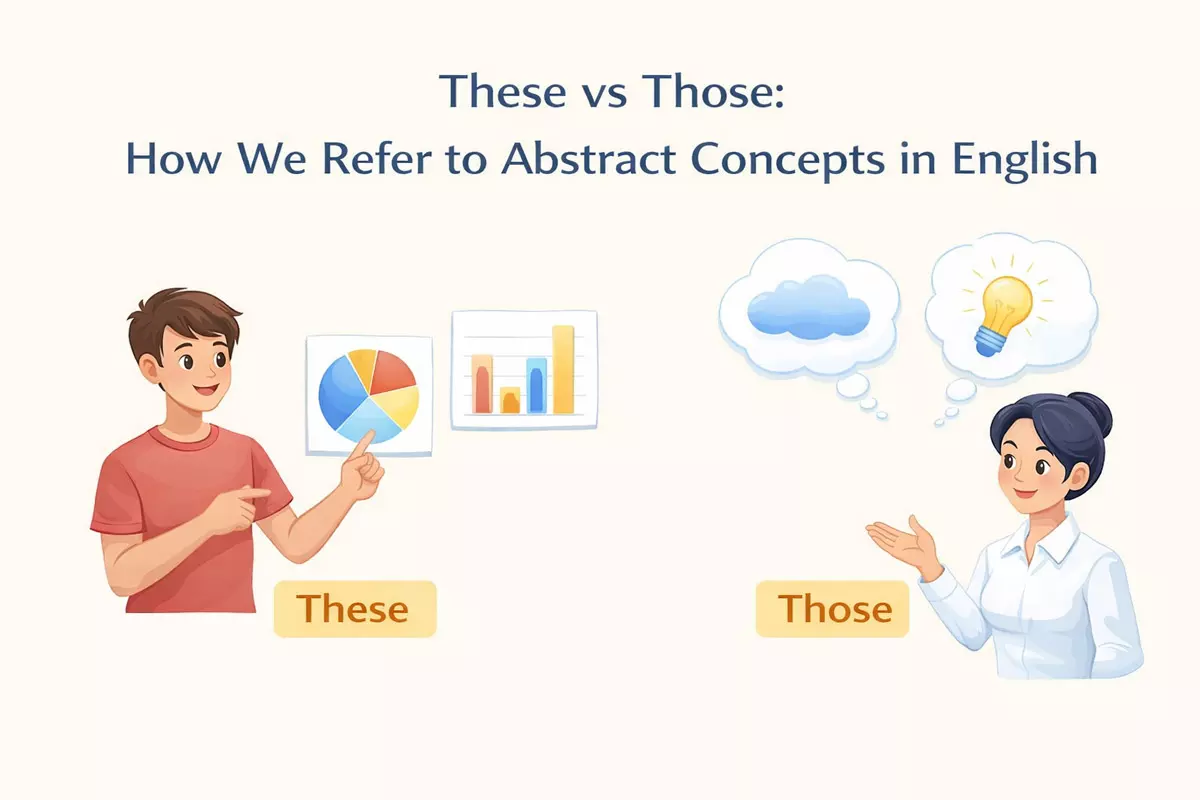 Here we the core plural meaning of these and those, their use for ideas, facts, and arguments, how to show near or distant reference in abstract contexts, common mistakes, patterns in speech and writing, and offers practice rewriting sentences.
- Core plural meaning of these and those
- Using demonstratives for ideas, facts, and arguments
- Near vs distant reference in abstract contexts
- These/those in academic and explanatory writing
- Common mistakes with unclear plural reference
- Spoken patterns vs written patterns
- Linking demonstratives to previous statements
- Practice: rewrite sentences using these or those
Selecting specific demonstrative words can significantly influence how we understand abstract concepts, affecting both the clarity and subtlety of our communication. The choice of language shapes the way ideas are conveyed, sometimes highlighting certain aspects while downplaying others. By examining these linguistic decisions, we can better appreciate the powerful role that word selection plays in framing our thoughts and interpretations, ultimately impacting how effectively we express complex or intangible notions.
Core plural meaning of these and those
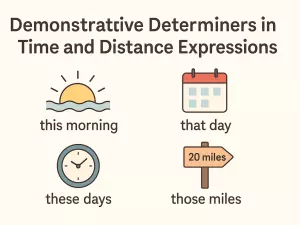
Understanding how "these" and "those" function as plural demonstratives helps clarify their use in both concrete and abstract contexts. Fundamentally, "these" refers to multiple items or concepts that are considered close to the speaker, while "those" points to multiple items or ideas that are more distant, either physically, temporally, or conceptually.
Plural reference and proximity
When using "these" and "those," the main distinction involves distance—literal or metaphorical—from the speaker. This applies not only to physical objects but also to abstract ideas, situations, or periods of time. The terms invite the listener to group items or concepts and to consider their relationship to the speaker’s focus or experience.
| Demonstrative | Plural Reference Example | Abstract Use Example |
|---|---|---|
| These | These books are new. | These challenges require creativity. |
| Those | Those cars are expensive. | Those beliefs are outdated. |
Common plural uses in abstract contexts
- Ideas: "These ideas are worth exploring."
- Problems: "Those problems seem familiar."
- Experiences: "These experiences shaped me."
- Opportunities: "Those opportunities have passed."
- Feelings: "These feelings are new."
- Assumptions: "Those assumptions can be harmful."
- Goals: "These goals motivate us."
- Trends: "Those trends are declining."
- Questions: "These questions need answers."
- Memories: "Those memories still linger."
- Values: "These values define our group."
- Habits: "Those habits should change."
Key takeaways
Plural demonstratives allow speakers to distinguish between groups of items or concepts based on their sense of nearness or relevance. "These" often highlights things that are present, current, or immediate in thought. "Those" typically points to things that are removed, whether by distance, time, or abstraction. Mastery of this distinction supports clearer communication, especially when discussing complex or intangible subjects.
Using demonstratives for ideas, facts, and arguments
When discussing abstract concepts like theories, evidence, or lines of reasoning, demonstratives such as these and those play a subtle but important role. While both words point to something, their meaning shifts depending on the writer or speaker’s distance—whether physical, temporal, or conceptual—from the ideas being referenced.
Choosing between “these” and “those” in abstract contexts
Writers often select these to refer to ideas, facts, or arguments that are close in the text or in the speaker’s mind. Those usually signals a step back, referencing earlier points or concepts that feel more distant. This distinction helps clarify relationships and keeps discussions organized, especially in essays, reports, or debates.
| Demonstrative | Usage Example (Abstract Meaning) |
|---|---|
| These | These findings suggest a new direction for research. |
| Those | Those arguments, presented earlier, no longer hold up under scrutiny. |
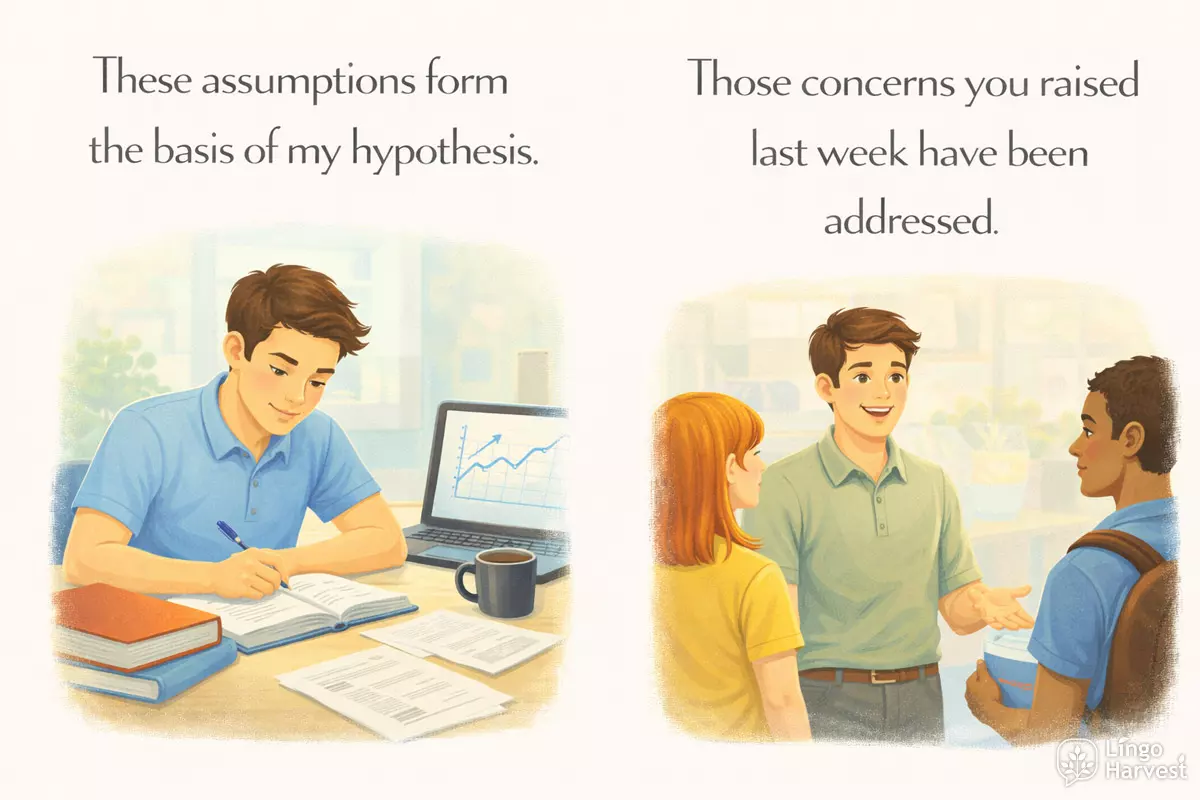
| These | These assumptions form the basis of my hypothesis. |
| Those | Those concerns you raised last week have been addressed. |
| These | These points illustrate the main differences between the two models. |
| Those | Those theories, though influential, are now outdated. |
Common patterns when referencing abstract content
- “These” for immediately preceding statements or fresh evidence
- “Those” for arguments made earlier in the conversation or text
- “These” to group several points just mentioned (“These factors explain the outcome.”)
- “Those” to distance oneself from a viewpoint or to critique (“Those claims lack supporting data.”)
- Switching from “these” to “those” as the discussion moves on
- “These” for supporting details; “those” for contrasting or opposing ideas
- “These” in summaries or conclusions about current topics
- “Those” when referring to past research, prior work, or established ideas
- “These” to invite agreement; “those” to introduce skepticism or challenge
- “These” in outlining next steps; “those” when recalling previous actions
Being mindful of which demonstrative you use can sharpen your arguments and help readers follow your reasoning. The choice between these and those is not just grammatical—it’s strategic, guiding your audience through the progression of ideas and the relationships between them.
Near vs distant reference in abstract contexts
When using "these" and "those" with abstract concepts, the distinction between proximity and distance is more than just physical space—it often reflects psychological or conceptual closeness. For example, in discussions about ideas, feelings, or arguments, "these" tends to signal a sense of immediacy or relevance to the current conversation, while "those" can indicate detachment, previous mention, or even disapproval.
Conceptual Proximity and Psychological Distance
Choosing between "these" and "those" in non-physical settings often reveals how speakers relate to the ideas in question. "These" can show alignment, endorsement, or a current focus, whereas "those" might suggest skepticism, distance, or reference to something already discussed.
- These plans suggest a way forward. (Plans currently under consideration, or favored by the speaker.)
- Those arguments were made last week. (Arguments from a prior discussion, possibly less relevant now.)
- These concerns are valid. (Concerns being actively discussed.)
- Those values seem outdated. (Values not shared by the speaker or group.)
- These emotions are overwhelming. (Emotions felt in the moment.)
- Those behaviors are unacceptable. (Behaviors possibly observed before or in others.)
- These results are impressive. (Results just obtained or presented.)
- Those beliefs can be problematic. (Beliefs not held by the speaker.)
- These assumptions underlie our decision. (Assumptions being used now.)
- Those traditions are no longer practiced. (Traditions from the past.)
Comparison of Abstract Usage
It's helpful to see how "these" and "those" function side by side in abstract reference. The table below contrasts several examples to highlight the nuances between immediate and distant conceptual reference.
| Using "these" | Using "those" |
|---|---|
| These questions are at the heart of the debate. | Those questions were settled years ago. |
| These principles guide our actions now. | Those principles belonged to another era. |
| These options seem promising. | Those options were already rejected. |
| These challenges require immediate attention. | Those challenges no longer concern us. |
| These theories are gaining popularity. | Those theories have been discredited. |
Key Considerations
- Context shapes meaning: The choice between "these" and "those" often depends on whether the speaker feels connected to or removed from the abstract topic.
- Temporal reference: "These" can refer to present or ongoing issues, while "those" may point to past or resolved matters.
- Attitudinal nuance: Speakers sometimes use "those" to distance themselves from ideas they disagree with, whereas "these" can express endorsement or involvement.
Understanding this subtle distinction can improve clarity and tone in both writing and conversation, especially when dealing with abstract or complex subjects.
These/those in academic and explanatory writing
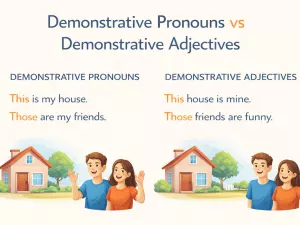
In academic and explanatory texts, writers often need to refer back to previously mentioned ideas, findings, or arguments. Choosing between "these" and "those" helps clarify which information is being discussed and creates cohesion within the text. Both terms function as demonstrative pronouns or adjectives, but their usage depends on context and the writer’s intended emphasis.
Clarifying Reference and Proximity
Writers use "these" to indicate elements that are conceptually close, recently mentioned, or directly relevant to the current point. "Those," on the other hand, typically signals a greater distance—either because the referenced items were mentioned further back, or to highlight contrast or separation from the immediate context.
- "These results suggest a new direction for research."
- "Those theories, developed decades ago, are now being re-examined."
- "These factors must be considered in the analysis."
- "Those concerns were already addressed in previous studies."
Patterns in Academic Writing
Writers frequently use "these" and "those" to summarize lists, refer to abstract concepts, or connect sections of their work. Recognizing these patterns can help readers follow complex arguments and help writers avoid ambiguity.
| Common Use | Example Sentence |
|---|---|
| Summarizing recent points | "These findings indicate a significant trend." |
| Referring to earlier, less immediate points | "Those assumptions were challenged by later research." |
| Distinguishing groups or ideas | "These variables differ from those considered in prior models." |
| Emphasizing contrast | "These advantages outweigh those previously discussed." |
Tips for Clear Usage
To keep writing precise, avoid vague references. Always make sure the relationship between "these" or "those" and their antecedents is unmistakable. Here are some practical guidelines:
- Use "these" for items just mentioned or closely related concepts.
- Choose "those" to refer to items mentioned earlier or to indicate conceptual distance.
- Pair with nouns ("these results," "those issues") for clarity, especially after longer sections.
- Avoid starting sentences with "these" or "those" when the reference could be unclear. Specify what you mean.
- Check that your demonstrative matches the intended proximity or contrast in your argument.
In summary, the thoughtful use of "these" and "those" enhances clarity and cohesion in academic and explanatory writing, guiding readers through complex discussions and reinforcing the logical flow of ideas.
Common mistakes with unclear plural reference
Many English learners and even native speakers run into trouble when using "these" and "those" for abstract or plural ideas. The main issue is that the plural demonstrative can accidentally point to the wrong concept, or leave readers unsure what’s being referenced. This happens often in academic writing, business communication, and everyday conversation—especially when multiple ideas, actions, or groups are discussed close together.
When reference is ambiguous
If you mention several abstract ideas and then use "these" or "those" without clarifying, your audience may not know which ideas you mean. For example, after listing several problems in a report, writing "these need to be addressed" could confuse readers about which problems are included.
Frequent unclear uses
Writers often fall into these traps:
- Using "these" or "those" after a long paragraph, expecting the reader to recall the intended reference
- Referring to multiple previous sentences or clauses without explicitly restating the subject
- Switching between concrete and abstract uses of "these" or "those" without warning
- Pairing "these" or "those" with a vague noun like "issues," "things," or "factors"
- Overusing plural demonstratives in technical writing, leading to confusion
- Assuming context is clear after a topic shift, when it might not be
- Using "those" for distant ideas, but the distance isn’t clear to the reader
- Listing examples, then following with "these" or "those" without specifying which examples are meant
- Jumping from "these" (immediate reference) to "those" (distant reference) without explanation
- Combining "these" or "those" with pronouns, creating double ambiguity (e.g., "these they discussed")
Consequences of unclear plural reference
Ambiguity can lead to misunderstandings, incorrect conclusions, or the need for clarification. In academic or formal writing, vague use of "these" or "those" can weaken arguments or obscure your main point.
Examples of unclear and improved references

Below is a table illustrating some typical unclear uses and clearer alternatives:
| Unclear Example | Clear Alternative |
|---|---|
| Several challenges exist. These must be solved soon. | Several challenges exist. These challenges must be solved soon. |
| The proposals were rejected. Those were not realistic. | The proposals were rejected. Those proposals were not realistic. |
| We discussed cost, time, and quality. These are important. | We discussed cost, time, and quality. These factors are important. |
| The symptoms include fever, cough, and fatigue. These can be treated easily. | The symptoms include fever, cough, and fatigue. These symptoms can be treated easily. |
| There are many opinions. Those might not be relevant. | There are many opinions. Those opinions might not be relevant. |
How to avoid confusion
To prevent your writing from becoming ambiguous, always make the reference clear. Add a descriptive noun after "these" or "those" (like "these issues" or "those results"), especially when discussing abstract ideas. If your list or explanation is long, briefly repeat the main subject to help readers follow your argument. Taking this extra step keeps your meaning precise and your communication effective.
Spoken patterns vs written patterns
When comparing how people use "these" and "those" in conversation versus writing, there are clear differences in flexibility and precision. Spoken language tends to be more spontaneous, with speakers often relying on context, gestures, and intonation to clarify which items or ideas they're referencing. In contrast, written communication usually demands more explicit cues, since the reader cannot see the speaker or their environment.
Patterns in conversation
In everyday speech, "these" and "those" are often accompanied by physical gestures, eye movement, or shared context. This allows speakers to be less specific, since everyone in the conversation can see or sense what is being referred to. Abstract uses, such as referencing ideas or feelings, are also common, but the meaning is typically clarified by tone or further explanation.
- "These are the kinds of problems we keep running into." (said with frustration, referencing recent issues)
- "Those just don't make sense to me." (possibly accompanied by a dismissive gesture)
- "These ideas excite me." (referring to concepts just discussed)
- "Those were the days." (talking about a nostalgic period)
- "These are what I meant." (pointing to notes or examples)
- "Those aren't important right now." (shifting focus away from some suggestions)
- "These feel different." (expressing a change in mood or atmosphere)
- "Those are the reasons why." (summarizing earlier points)
Patterns in writing
Writers need to be more explicit when using "these" and "those," especially in abstract contexts. The referent is usually introduced just before the demonstrative, or is made clear through careful wording. Clarity is essential, since the reader must infer meaning without nonverbal cues.
- "These factors contribute to the observed effect."
- "Those arguments have been refuted in previous studies."
- "These considerations are crucial for future research."
- "Those assumptions may not hold in all contexts."
- "These findings support the hypothesis."
- "Those limitations should be acknowledged."
- "These differences are significant."
- "Those perspectives are less common."
Abstract meaning: a structured comparison
In both modes, "these" generally signals closeness (in time, focus, or relevance), while "those" indicates distance. However, the boundaries can blur, especially with abstract nouns. Here's a comparison of typical uses:
| Context | Spoken Example | Written Example |
|---|---|---|
| Recent ideas (close) | "These sound promising." | "These theories have gained traction." |
| Earlier mentioned concepts (farther) | "Those were interesting." | "Those principles were established decades ago." |
| General feelings (abstract) | "These make me uneasy." | "These concerns remain unresolved." |
| Contrasting sets | "These are better than those." | "These approaches differ from those previously discussed." |
Ultimately, while the underlying logic of "these" (near) and "those" (far) remains, spoken language can rely on immediate context, whereas writing must construct that context for the reader. Abstract references especially demand careful wording so the intended meaning is unmistakable.
Linking demonstratives to previous statements
Demonstratives such as these and those serve as linguistic pointers, helping readers or listeners connect what is being discussed to earlier parts of a conversation or text. In abstract contexts, this linking function becomes especially important, as it guides the audience through complex arguments, theories, or sets of ideas that may not be physically present or easily visualized.
Writers and speakers often use these to refer to concepts or points that are close in the discourse, either just mentioned or about to be elaborated. On the other hand, those typically refers back to ideas that were discussed further back, or to contrast with new elements being introduced. This subtle distinction helps maintain clarity and cohesion, particularly in analytical or academic writing.
How demonstratives maintain coherence
By linking statements, these and those prevent repetition and provide cues about the relationship between different parts of a text. For example, after listing several reasons for a decision, an author might write, “These are the most compelling arguments.” This signals that the reader should connect the demonstrative to the immediately prior information.
- These typically refers to items or ideas just introduced: "I propose three solutions. These should address the problem."
- Those often points to earlier or contrasted information: "Some theories have been debunked. Those are no longer considered valid."
- Using demonstratives reduces redundancy and streamlines explanations.
- They help track multiple arguments or examples within a larger discussion.
- Shifts in demonstrative use can signal a change in focus or topic.
- Abstract usage relies on logical, not physical, proximity.
- Readers infer meaning from context—demonstratives act as cognitive bridges.
- In debates, those may highlight opposing viewpoints: "While those objections are valid, our data suggests otherwise."
- In summaries, these can collect several prior points: "To sum up, these findings..."
- Writers use demonstratives to avoid repeating complex phrases or technical terms.
- Clarity improves when demonstratives are paired with explicit references: "These hypotheses, outlined above, form our basis."
Contrast and emphasis using demonstratives
Strategically, these and those can also be used to emphasize differences between sets of ideas. For instance, “These results support our hypothesis, whereas those from previous studies do not.” This kind of contrast highlights relationships in the argument, guiding the reader’s interpretation.
| Demonstrative | Typical Reference in Discourse | Example Sentence |
|---|---|---|
| These | Recently mentioned ideas, close in the text | “Several factors influence the outcome. These include motivation and resources.” |
| Those | Earlier points, contrasted or more distant in the text | “Some proposals failed in the past. Those were not well received.” |
| These | Summarizing a list just presented | “The key findings are listed above. These demonstrate a trend.” |
| Those | Referring to opposing arguments or evidence | “While those concerns are understandable, our approach mitigates them.” |
Understanding the nuanced use of demonstratives in abstract meaning strengthens both writing and comprehension. Effective use of these and those ensures that connections between ideas remain clear, helping the audience follow the logical flow of any discussion or text.
Practice: rewrite sentences using these or those
Understanding how to choose between "these" and "those" in abstract contexts can be tricky. In this section, you'll work on transforming sentences to use the correct demonstrative pronoun, focusing on situations where distance is not physical but conceptual or emotional.
Exercise: Transforming Abstract Statements
Review the sentences below and rewrite each one by replacing any general nouns with "these" or "those" as appropriate. Consider whether the ideas are emotionally or conceptually close (these) or distant (those).
- The problems we are discussing now are very important.
- The memories from my childhood feel far away.
- The ideas you just mentioned are intriguing.
- The decisions made by the previous team no longer affect us.
- The questions on this exam are challenging.
- The opportunities available last year are gone now.
- The issues raised in the last meeting were already resolved.
- The emotions I feel right now are overwhelming.
- The suggestions from earlier don’t seem useful anymore.
- The trends in technology today are fascinating.
Show answers
- These are very important problems we are discussing now.
- Those memories from my childhood feel far away.
- These ideas you just mentioned are intriguing.
- Those decisions made by the previous team no longer affect us.
- These questions on this exam are challenging.
- Those opportunities available last year are gone now.
- Those issues raised in the last meeting were already resolved.
- These emotions I feel right now are overwhelming.
- Those suggestions from earlier don’t seem useful anymore.
- These trends in technology today are fascinating.
Quick Reference: Choosing Between "These" and "Those"
Below is a summary to help you determine which word to use when dealing with abstract concepts. Remember, the choice often depends on the speaker's sense of closeness to the ideas or events.
| Context | Use "these" or "those"? |
|---|---|
| Ideas or feelings you are experiencing or discussing now | These |
| Events or memories from the past, emotionally distant concepts | Those |
| Trends, questions, or issues currently relevant | These |
| Suggestions, opportunities, or problems no longer relevant | Those |
Reflect and Create
Try writing three of your own sentences using "these" and three using "those" for abstract ideas (like emotions, experiences, or opinions). This will help reinforce your understanding of how proximity and relevance affect your choice.
Show answers
- Examples with "these": These possibilities excite me. These fears keep me awake at night. These priorities matter most right now.
- Examples with "those": Those beliefs no longer guide me. Those arguments were settled long ago. Those worries seem insignificant now.