Articles in Academic Examples: a theory, the theory, or No Article Ø

 Here we how to use a, the, or no article in academic writing. It explains introducing concepts, general references, shifts from a to the, discipline-specific patterns, and provides examples plus editing practice.
Understanding when to use an indefinite article, a definite article, or no article at all with the word theory is often challenging for academic writers, yet mastering these distinctions is crucial for clear and precise scholarly communication. Using the definite article typically refers to a specific, previously mentioned theory, while the indefinite article introduces a theory that has not been specified before. In contrast, omitting the article altogether can signal a general reference to theory as a concept rather than a particular example.
How articles work in academic writing
Academic English relies on articles—a, the, and the “zero article” (Ø)—to communicate specificity, generality, and assumed knowledge. Choosing the right article can subtly shape meaning, especially when discussing theories, concepts, or research. This section explains the roles of these determiners and how they affect interpretation in scholarly writing.
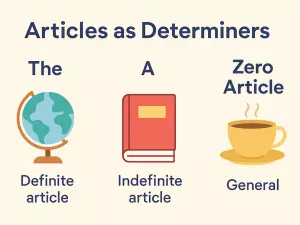
Definite, Indefinite, and Zero Articles: Their Functions
- The definite article (the) points to something specific or previously mentioned: the theory (a particular, known theory).
- The indefinite article (a/an) introduces something non-specific or new: a theory (any one among many theories).
- The zero article (Ø) is used with uncountable or plural nouns to make generalizations: Ø theory (the concept of theory in general).
Why Article Choice Matters in Research Writing
Using the correct article clarifies your stance. For example, “a theory” suggests one possible explanation, while “the theory” refers to a specific, perhaps widely accepted, explanation. Omitting the article (“Ø theory”) abstracts the concept further, making it universal or generic. This precision helps readers understand whether you’re discussing all theories, a particular one, or introducing a new idea.
Common Patterns and Examples
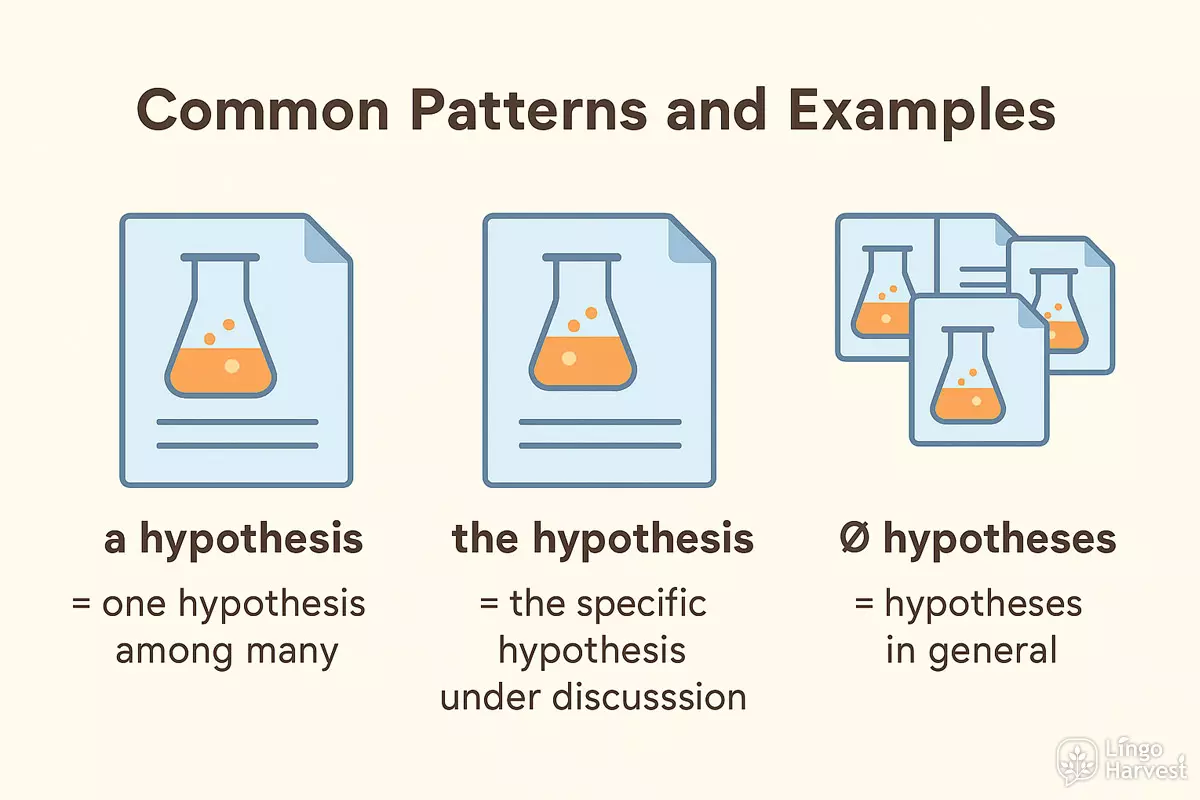
- a hypothesis = one hypothesis among many
- the hypothesis = the specific hypothesis under discussion
- Ø hypotheses = hypotheses in general
- a method = any method, not yet specified
- the method = the precise method used in the study
- Ø methods = methods as a general category
- a problem = an unspecified issue
- the problem = the main issue being addressed
- Ø problems = problems in general
- a result = one outcome among several
- the result = the main or previously mentioned outcome
- Ø results = results in a broad sense
- a researcher = any individual researcher
- the researcher = a particular, referenced researcher
- Ø researchers = researchers as a group
- a model = one possible model
- the model = the model in focus
- Ø models = models in general
Comparing Article Usage in Academic Contexts
| Form | Typical Meaning/Use | Example Phrase | Context |
|---|---|---|---|
| a/an | Non-specific, one of many | a theory | Introducing a new idea |
| the | Specific, previously mentioned or known | the theory | Referring to a particular theory |
| Ø (zero article) | General, all or any | Ø theory | Discussing the idea in general |
Key Takeaways
- Articles signal whether a term is specific, new, or general.
- Misusing articles can lead to ambiguity or misinterpretation.
- In academic writing, article choice is not just grammar—it's about clarity and precision.
Introducing concepts: a theory vs the theory
When discussing new ideas or frameworks in academic writing, the choice between "a theory" and "the theory" can subtly shift the meaning of your sentence. Writers often use these phrases to clarify whether they are referring to one possible explanation among many, or to a specific, established explanation that is widely recognized.
General vs. Specific Reference
"A theory" is typically used when introducing a new or non-specific explanation. This signals to the reader that the concept is one possibility, not necessarily the only or accepted one. In contrast, "the theory" points to a particular, commonly accepted framework or a previously mentioned concept.
- a theory = any one of several possible explanations or models
- the theory = a specific, identified explanation (often known to the reader)
Usage Patterns in Academic Writing
Writers often encounter situations where they must decide which article to use before "theory." Here are some typical examples and what they communicate:
- Researchers have proposed a theory to account for these results.
- According to the theory of relativity, time is relative.
- She developed a theory based on her fieldwork.
- Many scientists accept the theory that viruses can cause cancer.
- It is a theory that has not yet been tested.
- We will now examine the theory in detail.
- There is a theory which suggests a different mechanism.
- Critics have challenged the theory on several grounds.
- Formulating a theory is the first step in the scientific method.
- The theory was first introduced in the 19th century.
Comparing "a theory" and "the theory"
To clarify the distinction, here’s a side-by-side comparison of how each article shapes meaning:
| Form | Typical Use in Academic Contexts |
|---|---|
| a theory | Used to introduce a new, hypothetical, or unspecified explanation; does not assume prior knowledge by the reader. |
| the theory | Refers to a specific, previously mentioned, or widely recognized explanation; assumes the reader can identify it. |
Summary
Choosing between "a theory" and "the theory" helps guide your reader's understanding. Use the indefinite article for new or general ideas, and the definite article when referencing something specific or established. This distinction is subtle but important for clarity and precision in scholarly communication.
General reference with zero article: Ø theory
When discussing broad concepts or fields in academic writing, English often omits the article before singular, uncountable nouns. This is particularly common with terms like “theory” when referring to the discipline or concept in general, rather than a specific theory or a particular instance. Using no article (sometimes symbolized as “Ø”) signals that the noun is being used in a general or abstract sense.
When to use zero article with "theory"
Writers choose the zero article with “theory” in contexts where they mean the subject area or the idea as a whole, not a specific theory. This usage is standard in academic and scholarly texts, especially when discussing theory as a field or approach. For example, “Theory helps us understand complex phenomena” treats “theory” as a general concept.
- Theory is essential for scientific progress.
- In philosophy, theory can precede practice.
- Mathematics relies on theory as much as on computation.
- Students often struggle with theory before applying it.
- Research without theory may lack direction.
- Linguistics includes theory and description.
- Some argue theory should guide policy decisions.
- Critics sometimes claim theory is too detached from reality.
- Courses in theory are mandatory in many programs.
- Advances in theory often lead to technological innovation.
- Understanding theory improves critical thinking.
- Not all disciplines value theory equally.
- There is debate about the role of theory in education.
- Practical skills and theory are both important for professionals.
- New theory emerges from challenging existing beliefs.
Contrast with "a theory" and "the theory"
Using no article carries a different meaning from “a theory” (referring to one among many possible theories) or “the theory” (a specific, previously mentioned or well-known theory). The absence of an article shifts the focus from individual or identified theories to the entire conceptual domain.
| Form | Example | Meaning |
|---|---|---|
| Ø theory | Theory is foundational in science. | General concept or field |
| a theory | A theory explains this phenomenon. | One among several possible explanations |
| the theory | The theory was proved correct. | A specific, identified theory |
Summary
Choosing not to use an article before “theory” is a deliberate decision in academic English. It signals that the writer is making a broad, general statement about the concept, not referring to a particular instance. This pattern is a key feature of scholarly style and helps clarify the intended level of generality or specificity.
Shifts from a to the as ideas become known
Academic writing often introduces new concepts with the indefinite article a, and then later refers to them with the definite article the once they are established in the discussion. This process helps readers follow the development of ideas and signals which information is already familiar within the context. The transition from a theory to the theory is a common pattern, reflecting the movement from general or unknown to specific or previously mentioned.
How the progression works in academic texts
Writers typically present an unfamiliar concept using a to indicate it is one among many possible options, or new to the reader. As the text develops, the same concept is referenced with the to show that both writer and reader now share knowledge of it. This shift is not just a grammatical formality; it guides the reader’s understanding and maintains coherence.
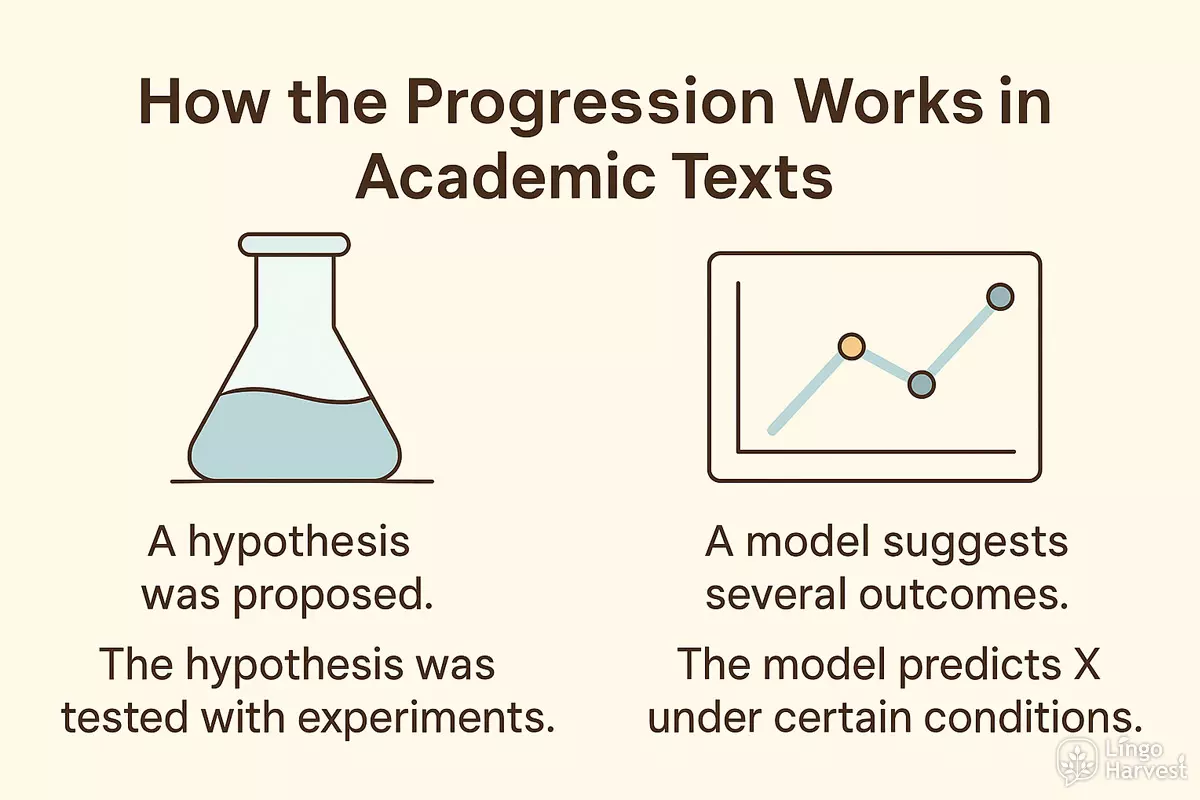
- A hypothesis was proposed. The hypothesis was tested with experiments.
- A model suggests several outcomes. The model predicts X under certain conditions.
- A framework for analysis is outlined. The framework includes three stages.
- A study was conducted. The study found significant results.
- A variable was controlled. The variable impacted the outcome.
- A problem arises in this context. The problem concerns data reliability.
- A solution is proposed. The solution addresses key limitations.
- A method was developed. The method improves accuracy.
- A principle underpins the approach. The principle is widely accepted.
- A distinction is made between X and Y. The distinction is important for clarity.
- A definition is introduced. The definition clarifies the term.
- A pattern emerges from the data. The pattern supports the hypothesis.
- A concept is central to this theory. The concept is elaborated below.
- A mechanism explains the effect. The mechanism involves several factors.
- A challenge remains. The challenge is addressed in future work.
Summary of article usage in academic progression
| Stage | Example |
|---|---|
| Introduction of concept | A theory is proposed to explain the data. |
| Further reference to the same concept | The theory predicts an increase in temperature. |
| Reference to a general class (no article) | Ø Theory is essential for scientific progress. |
This pattern is a subtle but essential feature of scholarly communication. Recognizing when to shift from indefinite to definite articles, or to omit the article altogether for general reference, helps writers clarify which ideas are being discussed and how familiar they are to the reader.
Discipline-specific patterns and examples
Usage of articles with the word "theory" varies greatly depending on academic field and context. While some disciplines rely on established conventions, others allow more flexibility or are guided by style manuals. Understanding these patterns helps writers choose between "a theory", "the theory", and zero article ("Ø theory") accurately.
Common trends across academic fields
Writers in different disciplines often follow distinct tendencies when referring to theories. Consider these typical approaches:
- Natural Sciences: Frequently specify with "the theory" when referencing a recognized framework (e.g., the theory of evolution), but use "a theory" for new or alternative models.
- Social Sciences: Use all forms—"a theory" to introduce an idea, "the theory" for an established concept, and Ø when speaking generally (e.g., Theory suggests that...).
- Humanities: Often omit the article when discussing theory as an abstract concept (e.g., Theory and practice), but specify when naming particular theories.
- Mathematics: Zero article is common with branch names (e.g., group theory), but use "the theory" for specific, well-defined sets of results.
- Linguistics: Switches between forms depending on whether referring to the discipline (Ø), a specific theoretical model ("the theory"), or a possible explanation ("a theory").
Typical examples by discipline
Writers often encounter the following real-life contexts:
- "A theory" is used for introducing a new idea or hypothesis: This is a theory about language acquisition.
- "The theory" refers to a widely accepted or previously mentioned framework: The theory of relativity changed physics.
- Ø article occurs with uncountable or branch names: Cognitive theory explores mental processes.
- Philosophy: According to theory, knowledge is justified belief.
- Biology: A theory was proposed to explain this mutation.
- Physics: The theory predicts observable phenomena.
- Literary studies: Critical theory informs this analysis.
- Computer Science: Complexity theory addresses computational limits.
- Economics: A theory of markets emerged in the 1970s.
- Sociology: The theory was challenged by new data.
- Mathematics: Number theory investigates integers.
- Psychology: A theory of emotion was tested.
Comparison of article usage in selected fields
| Discipline | Typical Article Usage |
|---|---|
| Physics | The theory for established models (the theory of relativity); a theory for hypotheses. |
| Literary Studies | Often uses Ø in branch names (literary theory); the theory for specific schools. |
| Mathematics | Prefers Ø in naming fields (number theory); the theory for known results. |
| Psychology | Mix of a theory (proposed explanations) and the theory (established concepts). |
In summary, article choices reflect both discipline-specific traditions and the communicative purpose. Recognizing these conventions supports clearer academic writing and helps avoid ambiguity.
Practice: edit short academic-style paragraphs
Editing academic paragraphs for correct article usage is a key skill for clear scholarly writing. In this section, you will review short texts and identify errors or possible improvements related to the use of "a theory," "the theory," and cases with zero article (Ø theory). Focus on how articles change the meaning and specificity of terms within academic contexts.
Task 1: Identify and Correct Article Usage
Read the following sentences. For each, decide if the article use is appropriate. If not, rewrite the sentence using the correct form ("a," "the," or no article at all).
- She developed a theory that explains the phenomenon in detail.
- The theory of relativity transformed physics in the twentieth century.
- Researchers often rely on theory to guide their experiments.
- He proposed the theory after years of observation.
- They introduced innovative approach to data analysis.
- Gravity is fundamental concept in physics.
- The experiment provided evidence supporting the new theory.
- We need a model that can predict future outcomes accurately.
- Climate change is challenge for modern science.
- The scientist suggested hypothesis based on early results.
- Students discussed the concept during the lecture.
- A researcher discovered an unexpected pattern in the data.
Show answers
- Correct — “a theory” for first mention.
- Correct — “the theory” because it’s specific.
- Correct — “theory” in general meaning (no article).
- Correct — specific theory already mentioned.
- Incorrect — should be “an innovative approach”.
- Incorrect — should be “a fundamental concept”.
- Correct — “the experiment” refers to a specific one.
- Correct — “a model” for introducing one option.
- Incorrect — should be “a challenge”.
- Incorrect — should be “a hypothesis”.
- Correct — “the concept” is specific in context.
- Correct — “a researcher” + “an unexpected pattern”.
Task 2: Choose the Best Article
Select the most appropriate article ("a," "the," or Ø) for the blank in each sentence:
- ___ theory suggests that language shapes thought.
- Einstein’s work led to ___ theory of special relativity.
- We need ___ comprehensive model to explain these results.
- ___ research indicates a connection between diet and memory.
- Scientists proposed ___ hypothesis to test the new data.
- He developed ___ method for analyzing large datasets.
- ___ data shows a significant improvement.
- The professor introduced ___ concept of cognitive load.
- They created ___ experiment to measure reaction time.
- ___ evidence suggests that sleep improves learning.
Show answers
- Ø — no article (“Theory suggests…” in a general sense)
- the — the specific theory of special relativity
- a — one possible model
- Ø / the — “research” is uncountable unless specified
- a — “a hypothesis” (one of many)
- a — “a method” (one method among others)
- the — referring to specific data already known
- the — a specific concept introduced in that context
- an — “an experiment” (first mention)
- The — referring to known evidence
Common Patterns: Article Use with "Theory"
- a theory = any single, unspecified theory
- the theory = a particular, known theory
- Ø theory = theory as a general concept
- theories = plural, no article for general reference
- a model = one example of a model
- the model = a specific, previously discussed model
- Ø research = research in general (uncountable noun)
- an experiment = one of many possible experiments
- the experiment = a particular experiment
- Ø evidence = evidence in general (uncountable)
- a hypothesis = one possible hypothesis
- the hypothesis = a specific hypothesis being discussed
Editing Exercise: Paragraph Revision
Review the following short academic paragraph. Edit the sentences for correct article use.
"Psychologist developed theory to explain memory formation. According to theory, information passes through several stages. However, some researchers argue that model does not account for all types of memory."
Show answers
"A psychologist developed a theory to explain memory formation. According to the theory, information passes through several stages. However, some researchers argue that the model does not account for all types of memory."