Articles with Food and Meals: Breakfast, Lunch, Dinner

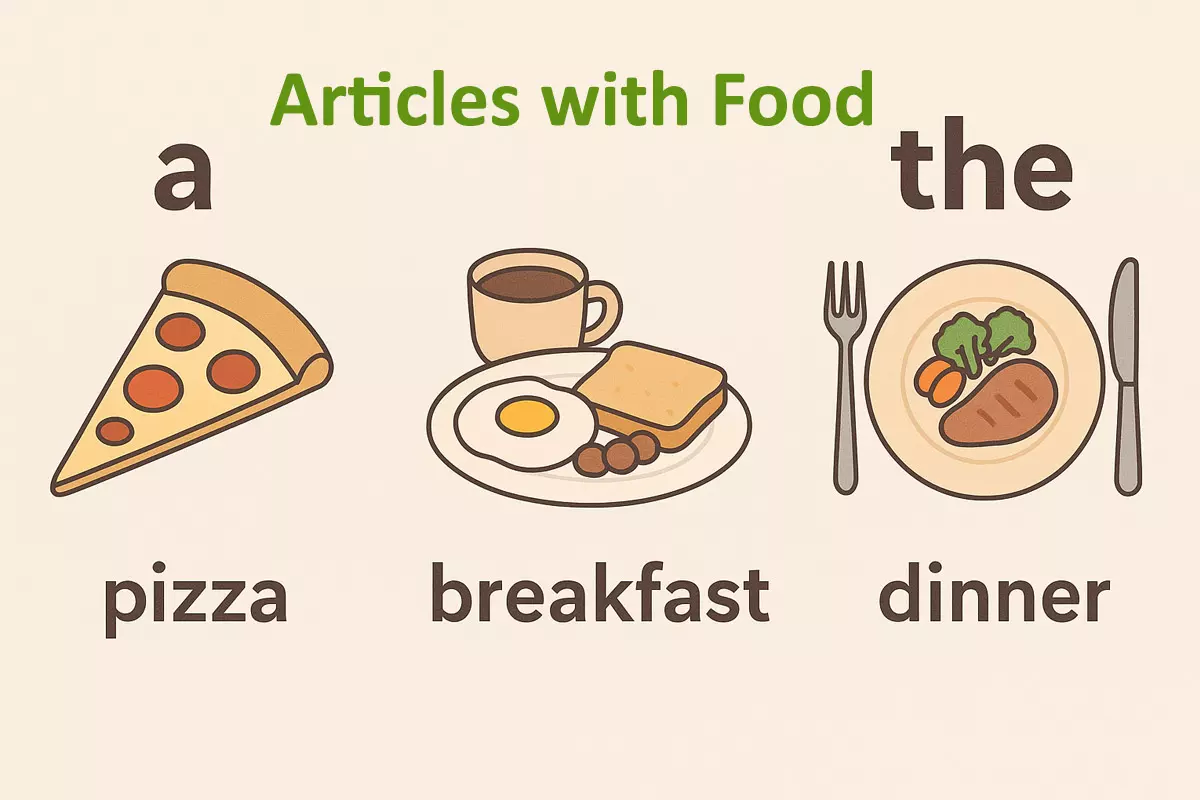 Here we rules for using or omitting articles with daily and special meals, explains countable and uncountable food types, discusses how to talk about dishes and portions, provides useful meal expressions, and highlights common mistakes.
Navigating the use of articles with common meals can be tricky, whether you are talking about having breakfast at home or meeting friends for dinner. Generally, meals like breakfast, lunch, and dinner do not require an article when you are speaking in a general sense, as in "I had breakfast." However, you should use "a," "an," or "the" when specifying a particular meal or referring to a special event, such as "a quick breakfast" or "the dinner we had last night." Mastering these details will help your English sound more natural and fluent.
Zero Article for Daily Meals
When talking about routine eating times—like breakfast, lunch, and dinner—English usually skips both a and the. This "zero article" usage treats these daily meals as general activities rather than specific events or items. For example, saying "I have breakfast at 8" sounds natural, while "I have a breakfast at 8" or "I have the breakfast at 8" is not typical in everyday conversation.
Typical Situations with No Article
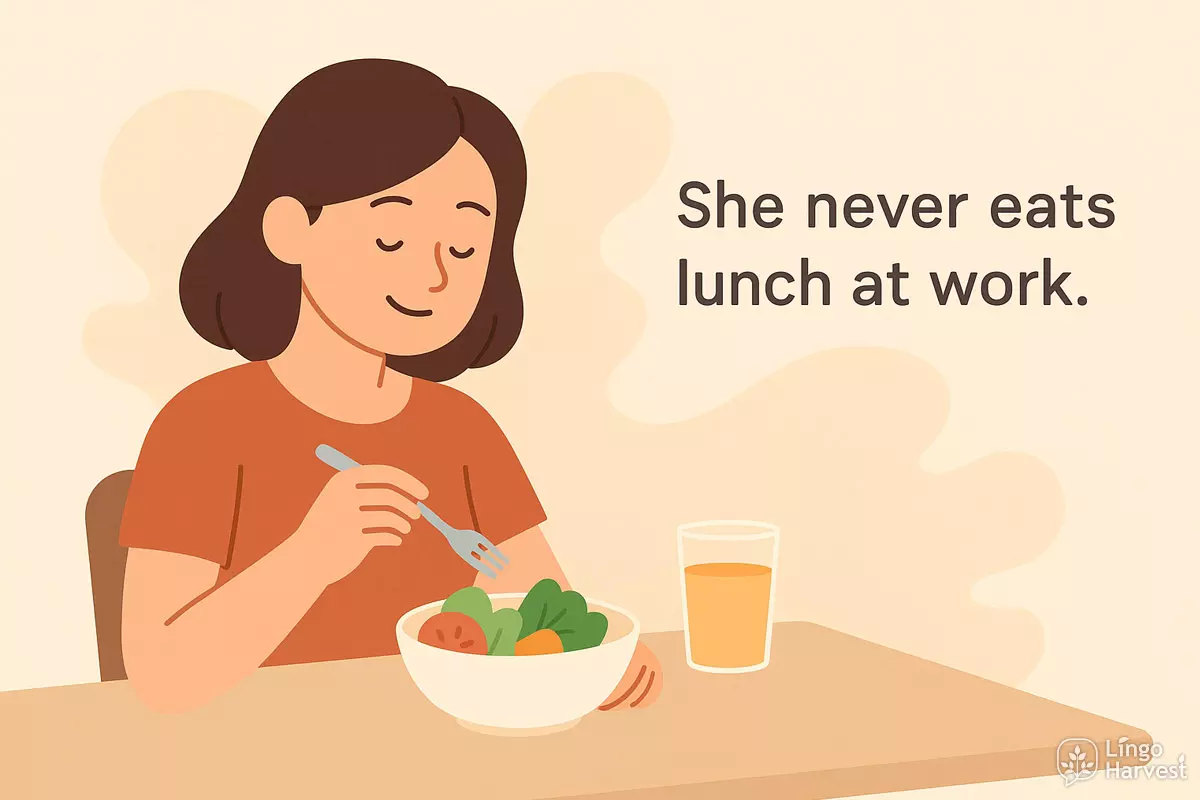
- Discussing daily routines: "She never eats lunch at work."
- Making general statements: "Dinner is usually at seven."
- Talking about meal times: "We met after breakfast."
- Describing meal customs: "People often skip breakfast."
Examples in Context
- He goes for a walk before breakfast.
- Lunch is served at noon.
- They invited us to dinner.
- I missed breakfast this morning.
- After lunch, we returned to work.
- We usually have dinner together.
- Breakfast is the most important meal of the day.
- She never skips lunch.
- They always talk business over dinner.
- He had tea instead of breakfast.
- Do you want breakfast?
- We ate lunch outside.
- She prepared dinner for everyone.
When Articles Are Used with Meals
Sometimes, though, an article appears if we refer to a particular instance of a meal, describe it, or talk about it as an event. Here are some quick contrasts:
| No Article ✅ | With Article ❌ |
|---|---|
| I had lunch at 1. | I had a big lunch today. |
| Breakfast is ready. | The breakfast we had was delicious. |
| They invited us to dinner. | We attended a formal dinner. |
| She always skips breakfast. | He prepared the breakfast for everyone. |
In summary, English omits articles for meals when speaking generally or about routines, but adds them when specifying or describing those meals. Remember this pattern to sound more natural and fluent in everyday conversations about eating.
Using the for Special or Specific Meals
When talking about meals in a general sense, articles are usually not used: we say "I had breakfast" or "We eat lunch at noon." However, when a meal is specific or special in some way, the definite article the is often required. This signals that the meal isn’t just any meal, but a particular one with some distinguishing feature, context, or purpose.
When to Use the Before Meals
The definite article is appropriate when the meal is:
- Linked to a special event (e.g., "the wedding breakfast")
- Already mentioned or known to the listener ("the dinner we had last night")
- Described by a limiting phrase ("the lunch you prepared")
- Part of an official or formal occasion ("the annual gala dinner")
- Contrasted with another meal ("the breakfast, not the lunch, was delicious")
Examples of the with Specific Meals
- Did you enjoy the breakfast at the hotel?
- The lunch with our clients is scheduled for Friday.
- They invited us to the Christmas dinner.
- I will never forget the dinner we had on our anniversary.
- Who cooked the breakfast this morning?
- We attended the farewell lunch for our colleague.
- Everyone was impressed by the brunch you organized.
- She missed the family breakfast because of work.
- We should thank them for the meal last night.
- Let’s talk about the dinner after the meeting.
- How did you like the buffet lunch at the conference?
- The special breakfast is only served on weekends.
- He prepared the picnic lunch for everyone.
- Was the dinner expensive?
- We skipped the lunch to finish our project.
- The team dinner is tonight at 7.
- They hosted the Thanksgiving meal this year.
- How was the breakfast after your hike?
Common Mistakes to Avoid
- ❌ I always have the breakfast at 8 AM. → Incorrect (unless referring to a specific breakfast)
- ✅ I always have breakfast at 8 AM. → Correct (general meal)
- ✅ The breakfast we had at the new café was delicious. → Correct (specific breakfast)
In summary, use the when referring to a particular meal that is unique, previously mentioned, or defined by context. For general eating habits or typical meals, leave the article out.
Food Types: Countable vs Uncountable
When talking about meals like breakfast, lunch, or dinner, it’s important to know whether foods are countable or uncountable in English. This affects which articles (a, an, the) or quantifiers (some, much, many) you can use. Some foods are seen as individual items, while others are treated as a general mass.
Countable Foods
Countable foods are things you can count one by one. You use numbers, "a" or "an," and the plural form with these. For example, at breakfast you might have an egg or two sandwiches. Here are common countable food examples:
- apple
- banana
- carrot
- biscuit
- sandwich
- egg
- cookie
- tomato
- sausage
- orange
- grape
Uncountable Foods
Uncountable foods are things we see as a whole or mass, not as separate units. You can’t say “two breads” or “a cheese.” Instead, use words like “some,” “a piece of,” or “a slice of.” These are typical uncountable foods:
- bread
- rice
- cheese
- milk
- coffee
- water
- butter
- tea
- jam
- meat
- honey
- soup
Comparing Usage
Let’s look at how articles and quantifiers change depending on whether a food is countable or uncountable:
| Countable Food | Uncountable Food |
|---|---|
| a biscuit, two biscuits | some bread, a slice of bread |
| an egg, three eggs | some cheese, a piece of cheese |
| a tomato, five tomatoes | some rice, a bowl of rice |
| a sandwich, many sandwiches | some milk, a glass of milk |
Tips for Learners
- For mass nouns, use “some” (some juice), or specify quantity (a cup of coffee).
- Remember that some foods can be both, depending on the context (e.g., “chicken” as uncountable for meat, but countable for animals or dishes: “three chickens”).
- Practice asking for food at meals: “Can I have an apple?” vs. “Can I have some rice?”
- When in doubt, check if you can add a number in front. If not, it’s probably uncountable.
Understanding these differences will help you use articles and quantities correctly when talking about what you eat at breakfast, lunch, or dinner.
Talking About Dishes and Portions
Understanding how to describe different meals, servings, and types of food is crucial when discussing breakfast, lunch, or dinner. English speakers often use specific words for individual dishes, as well as for the quantity or style in which food is served. This can help you order in a restaurant, follow a recipe, or simply talk about what you ate.
Common Words for Dishes and Servings
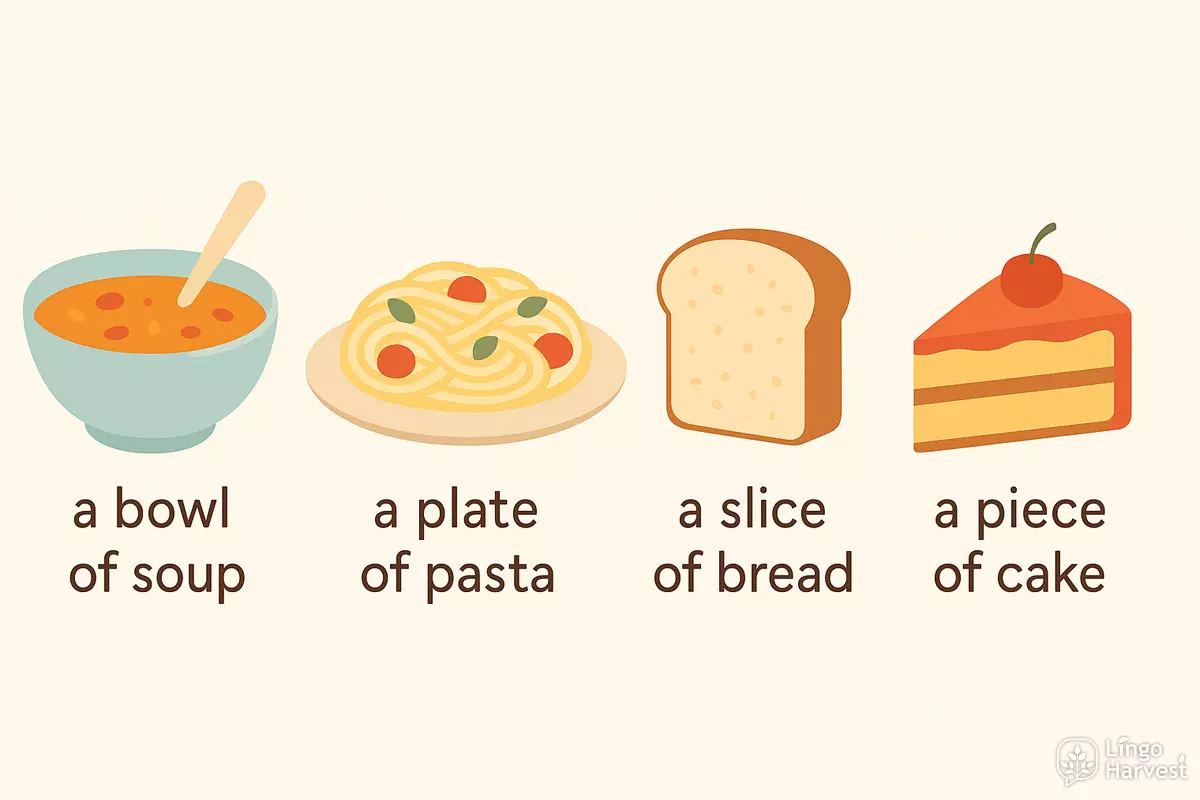
When referring to a specific item or amount of food, these terms come up frequently:
- a bowl of soup
- a plate of pasta
- a slice of bread
- a piece of cake
- a cup of tea/coffee
- a glass of juice
- a serving of salad
- a portion of fries
- a helping of rice
- a bottle of water
- a spoonful of sugar
- a jar of jam
- a can of soda
- a handful of nuts
- a stick of butter
- a loaf of bread
Using Articles with Food and Meals
Articles (“a,” “an,” and “the”) are used differently depending on whether you refer to food in general or to a specific dish or portion. For example, “I had a sandwich for lunch” (one specific sandwich), but “I like bread” (bread in general, no article).
| Countable Food (with Article) | Uncountable Food (no Article) |
|---|---|
| a banana, an apple, a cookie | rice, soup, cheese |
| a sandwich, an egg, a pancake | water, tea, honey |
| a muffin, a burger, a steak | bread, butter, jam |
| a glass of milk, a bowl of cereal | pasta, juice, coffee |
Tips for Describing Quantities
When you’re not sure whether to use an article, ask yourself if the food is countable or uncountable. Countable foods (like “apple” or “cookie”) usually take “a” or “an.” Uncountable foods (like “milk” or “cheese”) do not, unless you specify a portion (for example, “a glass of milk”). To sound more natural, try using specific portion words when serving or ordering food. This helps avoid confusion and makes your English more precise.
Useful Expressions in Cafes & Homes
When ordering food or sharing meals, having the right phrases ready makes interactions smoother and more enjoyable. Whether you’re at a café, visiting friends, or hosting guests, certain expressions come up again and again. These help you ask for what you want, show politeness, and navigate mealtime situations confidently.
Common Phrases for Ordering and Requesting
- Could I have the menu, please?
- What do you recommend for breakfast?
- I’d like a coffee with milk.
- May I have some more water?
- Is this dish vegetarian?
- Could I get the bill, please?
- Can I have this to go?
- Do you have any specials for lunch?
- I’m allergic to nuts—are there any in this?
- Could you make it without cheese?
- I’ll have the soup of the day, thank you.
- Can we get a table by the window?
- Could you pass the salt, please?
- Would you like some more tea?
- Help yourself to some bread.
- Is everyone ready for dessert?
- Let me clear the plates for you.
- Thanks for the delicious meal!
Polite Responses and Social Etiquette
- Thank you, that was wonderful.
- No, thank you, I’m full.
- Yes, please! I’d love some more.
- Just a little, please.
- Everything was perfect, thanks.
- Could I help with the dishes?
Comparing Questions for Meals
| Situation | Example Expression |
|---|---|
| At a breakfast café | Could I get eggs and toast? |
| Ordering lunch | What’s included with the lunch special? |
| Inviting for dinner at home | Would you like to join us for dinner? |
| Asking about ingredients | Does this contain gluten? |
| Offering food to guests | Can I get you anything else? |
Mastering these expressions can help you feel more comfortable and polite whether you’re enjoying a meal out or sharing food at home. They’re especially useful if you’re learning a new language or traveling abroad, as they cover the most common mealtime interactions.
Common Mistakes and How to Correct Them
Using articles with meal names like “breakfast,” “lunch,” and “dinner” can be confusing, especially for learners whose native languages work differently. Some errors are more frequent than others, but understanding why they happen helps you avoid them. Below, you’ll find practical explanations and examples to clarify these points.
Omitting or Adding “the” Incorrectly
In English, we usually do not use an article before “breakfast,” “lunch,” or “dinner” when talking about these meals in a general sense. However, when describing a specific meal or referring to it in a particular context, “the” is appropriate. The wrong choice can change the meaning.
- Incorrect: I had the breakfast at 7am. ❌
- Correct: I had breakfast at 7am. ✅
- Correct for a specific meal: The breakfast we had at the hotel was amazing. ✅
Using “a” or “an” with Meals
Articles “a” or “an” are rarely used with meal names unless you are describing a type of meal, not the meal itself.
- Incorrect: I had a dinner yesterday. ❌
- Correct: I had dinner yesterday. ✅
- Correct for type: We had a big dinner to celebrate. ✅
Confusing Set Phrases and Contexts
Some expressions always use an article, while others never do. It’s helpful to spot these by comparing them side by side.
| With No Article | With “the” or “a” |
|---|---|
| We have lunch at noon. | The lunch at work was delicious. |
| She never eats breakfast. | A breakfast of eggs and toast is my favorite. |
| Dinner is ready. | Did you enjoy the dinner last night? |
| They skipped dinner. | He prepared a dinner for his friends. |
Checklist: How to Use Articles with Meals Correctly
- Use no article for meals in a general, habitual sense.
- Use “the” for a specific meal or a meal that has been mentioned earlier.
- Use “a” or “an” only when describing the type or kind of meal (e.g., “a quick lunch”).
- Watch for set phrases that never use articles (“have breakfast”).
- When in doubt, check if you mean a particular meal or meals in general.
By practicing with real examples and paying attention to context, you’ll find it easier to use articles with food and meal terms accurately. Regular exposure to natural English will help these patterns become second nature.
Practice: Describe a Typical Day of Eating
To improve your food-related vocabulary and fluency, it's useful to practice writing or speaking about your daily meals. Think about what you typically eat for breakfast, lunch, and dinner. Try to make your descriptions specific—mentioning food items, beverages, times, and any routines you have. This will help you use new words and expressions in context.
Useful Phrases for Talking About Meals
- I usually have cereal and milk for breakfast.
- For lunch, I often eat a sandwich and some fruit.
- I drink coffee in the morning.
- We have dinner together as a family at 7 p.m.
- Sometimes I skip breakfast if I'm in a hurry.
- I like to eat salad with my lunch.
- My favorite dinner is grilled chicken with vegetables.
- I usually drink water or juice with my meals.
- On weekends, I make pancakes or eggs for breakfast.
- For dessert, I sometimes have yogurt or fruit.
- Lunch at work is usually quick and simple.
- In the evening, I prefer light meals like soup or salad.
- I try to eat healthy snacks between meals.
- Breakfast is my favorite meal of the day.
- We occasionally order pizza for dinner.
- I have tea instead of coffee in the afternoon.
- My typical day includes three main meals and a snack.
- I rarely eat fast food.
- I enjoy trying new recipes for dinner.
- On busy days, I grab a granola bar for breakfast.
Task: Write About Your Own Meals
Use the phrases above to describe what you eat during a normal day. Try to answer these questions in your own words:
- What do you usually eat for breakfast? At what time?
- Describe your typical lunch. Where do you eat it?
- What do you have for dinner? Who do you eat with?
- Are there any snacks or drinks you enjoy during the day?
Show answers
- Sample breakfast answer: I usually have oatmeal with fruit and a cup of tea at around 7:30 in the morning.
- Sample lunch answer: For lunch, I often eat rice with vegetables and chicken at the office cafeteria.
- Sample dinner answer: I have dinner at home with my family. We usually eat pasta with salad and drink water.
- Sample snacks/drinks answer: During the day, I like to snack on nuts and drink coffee in the afternoon.
Common Foods for Each Meal
- Breakfast: toast, eggs, yogurt, fruit, cereal, pancakes, porridge
- Lunch: sandwiches, salads, soup, rice dishes, pasta, grilled chicken, wraps
- Dinner: meat or fish with vegetables, stew, curry, pizza, stir-fry, roasted potatoes
- Snacks: fruit, nuts, crackers, yogurt, granola bars, cheese, biscuits
- Beverages: water, coffee, tea, juice, milk, soft drinks
Mini-Quiz: Choose the Correct Meal
- Which meal do people usually eat in the morning?
- What is a common drink with breakfast?
- Which food is typical for dinner?
- What do people often eat as a snack?
Show answers
- Breakfast
- Coffee, tea, or juice
- Meat or fish with vegetables, pasta, or stew
- Fruit, nuts, or yogurt