Modal Perfect Forms: Must Have, Could Have, Should Have

 This article explains how modal perfect forms like must have, could have, and should have express certainty, possibility, criticism, and regret. It covers their formation, meanings, common mistakes, use in speech, and practice activities.
- What modal perfect forms express
- Forming must have, could have, should have
- Degrees of certainty and possibility
- Using modal perfects for criticism and regret
- Comparing different modal perfect meanings
- Common mistakes by learners
- Modal perfects in spoken English
- Practice exercises on modal perfect forms
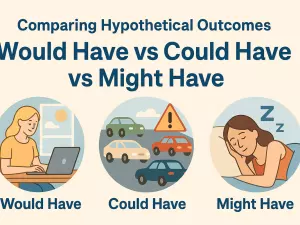
Have you ever thought about how to express past possibilities, obligations, or missed opportunities in English? Phrases such as must have, could have, and should have allow us to talk about what was necessary, possible, or advisable after something has already happened. For example, saying someone must have forgotten their keys suggests a logical conclusion about the past, while could have highlights something that was possible but did not occur, and should have expresses a sense of regret or advice about what would have been best. These expressions help us reflect on and discuss past actions and decisions.
What modal perfect forms express
Modal perfect forms, such as must have, could have, and should have, are used to talk about possibilities, obligations, or expectations in the past. These structures help speakers discuss events that did not happen, were expected to happen, or were possible but uncertain. By combining a modal verb with have and a past participle, English allows for nuanced expression about past situations.
Functions of modal perfect forms
- Speculating about past events: Suggesting what was likely or possible in a past situation.
- Expressing missed obligations or expectations: Indicating what someone was supposed to do, but didn’t.
- Describing unrealized possibilities: Talking about things that could have happened but didn’t.
- Drawing conclusions about the past: Making logical deductions based on evidence.
- Criticizing or regretting past actions: Pointing out mistakes or missed opportunities.
Common meanings by modal
| Modal Perfect Form | Typical Meaning |
|---|---|
| must have + past participle | Logical conclusion about the past (certainty) |
| could have + past participle | Unrealized possibility or past ability |
| should have + past participle | Obligation or expectation not fulfilled (criticism/regret) |
| might have + past participle | Uncertain possibility in the past |
| would have + past participle | Imagined result of an unreal condition |
Examples in context

- You must have left your keys at home. (A logical assumption about the past)
- She could have won the race if she had tried harder. (A possibility that did not happen)
- We should have called ahead. (A regret about not meeting an obligation)
- He might have missed the train. (Uncertain possibility)
- I would have helped if I’d known. (Imagined scenario)
- They ought to have apologized. (Expectation that was not met)
- You needn’t have worried. (Action was unnecessary)
- She may have forgotten the meeting. (Possible explanation)
- He can’t have seen us. (Strong negative deduction)
- We might not have realized the risks. (Uncertain negative possibility)
Overall, modal perfect forms allow speakers to express a wide range of attitudes toward past events, from certainty to doubt, from criticism to forgiveness. They are essential for conveying subtle meanings about what was possible, required, or simply imagined in previous situations.
Forming must have, could have, should have
Understanding how to build modal perfect forms—such as must have, could have, and should have—is key to expressing speculation, deduction, or criticism about the past. Each structure combines a modal verb with have and the past participle of a main verb. This pattern allows you to comment on past possibilities, obligations, or certainties.
Core Pattern
The basic formula for these constructions is:
- [Modal] + have + [past participle]
Here, the modal can be must, could, should, or others, depending on the meaning you want to convey. The verb have is always in its base form, and the main verb appears as a past participle (e.g., gone, seen, finished).
Examples of Use
- She must have forgotten the meeting. → (You are sure she forgot.)
- They could have arrived earlier. → (It was possible for them to arrive earlier.)
- You should have called me. → (It was the right thing to do, but you didn’t.)
- He might have missed the bus. → (It’s possible he missed it.)
- I would have helped if I’d known. → (In different circumstances, I would help.)
- We may have made a mistake. → (There’s a possibility of error.)
- She can't have seen us. → (You are sure she didn’t see you.)
- You ought to have told the truth. → (It was your duty.)
- They shouldn’t have gone alone. → (It was wrong to go alone.)
- He might not have understood the instructions. → (Maybe he didn’t understand.)
Comparison Table
| Modal Perfect | Typical Use | Example |
|---|---|---|
| must have + past participle | Strong deduction about the past | You must have seen the email. |
| should have + past participle | Advice or criticism regarding past actions | He should have apologized. |
| could have + past participle | Possibility or missed opportunity in the past | We could have stayed longer. |
| might have + past participle | Uncertainty about a past event | She might have called earlier. |
| can't have + past participle | Strong negative deduction about the past | They can't have finished already. |
Key Points to Remember
- Never use “has” or “had” after a modal; always use “have.”
- Always follow “have” with a past participle, not a base verb or -ing form.
- The meaning changes with the modal: must have implies certainty, should have suggests obligation, and could have expresses possibility or missed chance.
Using these patterns accurately helps you express nuanced ideas about events that did (or did not) happen in the past. Practice with different subjects and verbs to build fluency.
Degrees of certainty and possibility
Modal perfect forms like must have, could have, and should have allow us to express how sure (or unsure) we are about past events. These structures help speakers communicate their judgments, assumptions, or speculations about things that already happened. The choice of modal verb shows the speaker’s confidence, doubt, or obligation regarding the situation.
How modal perfects reflect our judgment
The core difference between forms such as must have, could have, and should have lies in the strength of the speaker’s belief. Some forms express near certainty, while others suggest possibility or missed obligation. Here’s how they compare:
| Modal Perfect | Degree Expressed |
|---|---|
| must have | Strong certainty or logical conclusion about the past |
| might have / may have | Possibility, but no certainty |
| could have | Possibility, or unrealized potential in the past |
| should have | Expectation or obligation that was not fulfilled |
| can't have / couldn't have | Strong certainty that something did not happen |
Examples of modal perfects for past situations
- must have: She must have left early. (I’m almost sure she did.)
- could have: They could have called you. (It was possible, but maybe they didn’t.)
- should have: You should have told me. (It was expected, but you didn’t.)
- might have: He might have forgotten. (It’s possible, but uncertain.)
- can't have: She can't have finished already. (I’m sure it’s not true.)
- couldn't have: They couldn't have known. (It was impossible for them to know.)
- may have: You may have missed the announcement. (It’s possible you did.)
- would have: I would have helped if I’d known. (Refers to a hypothetical past action.)
- ought to have: She ought to have apologized. (It was the right thing, but she didn’t.)
- must not have: He must not have understood. (Almost certain he didn’t understand.)
When to choose each form
Selecting the correct modal perfect depends on what you want to convey: a guess, a logical deduction, regret, or criticism. For instance, use must have when you are confident about your inference, and might have or could have when you are less sure. Should have and ought to have typically express expectations or advice about the past.
Understanding these distinctions lets you express your attitude toward past events with nuance and accuracy.
Using modal perfects for criticism and regret
Modal perfect forms like should have, could have, and must have often signal hindsight and judgment about past actions. These structures help speakers express disapproval, missed opportunities, or analyze what someone did (or failed to do). By combining a modal verb with have and the past participle, English lets us revisit past situations and comment on them from the present perspective.
Criticizing past actions
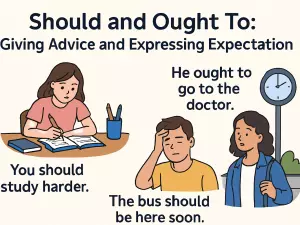
When we want to say that something was a mistake or not the best choice, we typically use should have or ought to have. These forms highlight actions that were expected or recommended but did not occur. For instance, "You should have called me" implies a mild reproach about not phoning earlier. Could have sometimes works in a softer way, pointing out possibilities rather than obligations.
- You should have apologized.
- They ought to have checked the weather.
- She could have studied harder.
- We shouldn't have left so late.
- You could have told me the truth.
Expressing regret
Regret is often shown through the same modal perfect forms, but the focus shifts to the speaker's own feelings or missed chances. Phrases like "I wish I had..." and "I shouldn't have..." are common for reflecting on personal decisions with remorse or disappointment.
- I shouldn't have eaten so much cake.
- We could have visited Paris last year.
- I should have listened to your advice.
- They shouldn't have ignored the warning.
- She could have been more careful.
Common modal perfects for feedback
To clarify how these forms compare in nuance, see the table below:
| Modal Perfect | Typical Use | Example Sentence |
|---|---|---|
| Should have | Criticism, advice about the past | You should have locked the door. |
| Could have | Missed opportunity, possibility | We could have won the game. |
| Must have | Deduction about the past | He must have forgotten the meeting. |
| Ought to have | Formal advice, criticism | She ought to have been more careful. |
Patterns and variations
Native speakers use a range of modal perfect forms for subtle shades of blame, disappointment, or reflection. Some patterns include:
- Shouldn't have + past participle (reproach/regret): You shouldn't have shouted.
- Could/should have + been + -ing (continuous): He could have been working instead of watching TV.
- Might have + past participle (possibility/regret): I might have left my phone at the café.
- Would have + past participle (hypothetical): I would have helped if I’d known.
In summary, modal perfects are essential tools for reflecting on past actions, expressing criticism, or showing regret in English. Understanding their nuances allows for more precise and empathetic communication.
Comparing different modal perfect meanings
Understanding how "must have," "could have," and "should have" function in modal perfect constructions can help clarify the nuances of certainty, possibility, and obligation about past events. Each form expresses a particular attitude toward what happened (or didn’t happen) in the past.
Key differences in meaning
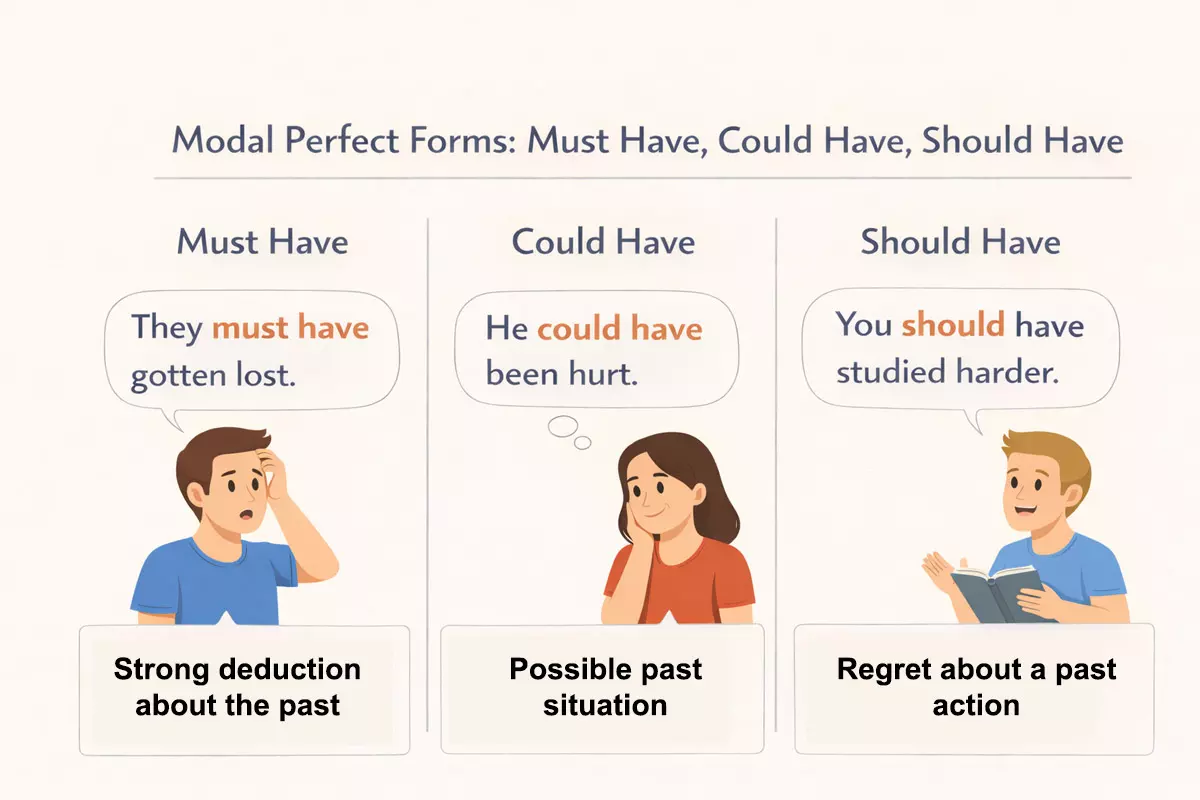
"Must have" typically suggests a strong logical conclusion about something that almost certainly happened. "Could have" points to a possible but not definite event, often focusing on missed opportunities or alternative outcomes. "Should have" is used to express criticism, regret, or a sense of lost obligation—something that was expected or recommended but did not occur.
| Modal Perfect Form | Typical Meaning | Example |
|---|---|---|
| Must have | Logical conclusion about the past | She must have left already. (I’m sure she left.) |
| Could have | Past possibility or missed opportunity | He could have won the race. (It was possible, but it didn’t happen.) |
| Should have | Past obligation, expectation, or regret | You should have called me. (You didn’t, and it was expected.) |
Usage patterns

The modal perfect forms are often used in real-life situations to analyze or comment on past actions. Here are common contexts and examples:
- Drawing conclusions: "The lights are off. They must have gone out."
- Expressing regret: "I should have studied more for the exam."
- Describing lost chances: "We could have taken the earlier train."
- Making assumptions: "He must have heard the news by now."
- Criticizing past actions: "You should have told me the truth."
- Speculating: "They could have been stuck in traffic."
- Suggesting what was advisable: "You should have brought an umbrella."
- Inferring based on evidence: "She must have forgotten our meeting."
- Considering alternatives: "I could have chosen a different route."
- Expressing disappointment: "We should have finished on time."
Summary of modal perfect nuances
While all three forms refer to the past, their meanings are not interchangeable. "Must have" is about near certainty, "could have" signals unrealized potential or options, and "should have" carries a sense of duty or criticism. Recognizing these distinctions helps avoid confusion and allows for more precise communication when reflecting on past events.
Common mistakes by learners
Understanding modal perfect forms like must have, could have, and should have can be tricky, especially when it comes to usage and meaning. Many English learners confuse these forms with simple past modals or misuse them when talking about past possibilities, obligations, or deductions. This often leads to unclear or incorrect sentences.
Mixing Up Modal Perfects with Simple Modals
One of the most frequent errors is using must, could, or should in the present or past without the auxiliary have when referring to past situations. This changes the intended meaning or makes the sentence grammatically incorrect.
- Saying "He must go home early yesterday" instead of "He must have gone home early yesterday."
- Using "She could win the game" for a past possibility, rather than "She could have won the game."
- Writing "You should tell me" when referring to advice not followed in the past, rather than "You should have told me."
Confusing Modal Meanings
Another common pitfall is misinterpreting the subtle differences in meaning between the modals. Learners often use must have when expressing regret, or should have when making deductions, which leads to misunderstandings.
- Using must have to express advice or expectation, e.g., "You must have called me" (when meaning "should have called").
- Replacing could have with should have when talking about missed opportunities.
- Confusing must have (strong deduction) with might have or could have (possibility).
Incorrect Verb Forms
Errors with verb forms following the modal are also frequent. The perfect modal structure always requires the past participle, but learners sometimes use the base or past tense forms instead.
- "He must have went home" ❌ instead of "He must have gone home" ✅.
- "She could have saw the movie" ❌ instead of "She could have seen the movie" ✅.
- "They should have took a taxi" ❌ instead of "They should have taken a taxi" ✅.
- "He might have ate already" ❌ instead of "He might have eaten already" ✅.
- "She would have wrote earlier" ❌ instead of "She would have written earlier" ✅.
- "We could have did better" ❌ instead of "We could have done better" ✅.
- "He must have gave you the keys" ❌ instead of "He must have given you the keys" ✅.
- "They might have forgot the meeting" ❌ instead of "They might have forgotten the meeting" ✅.
- "She should have spoke to him" ❌ instead of "She should have spoken to him" ✅.
- "I could have chose another option" ❌ instead of "I could have chosen another option" ✅.
Comparison of Correct vs. Incorrect Usage
| Incorrect Example | Correct Modal Perfect Form |
|---|---|
| You must call me yesterday. | You must have called me yesterday. |
| She should tell you about it last week. | She should have told you about it last week. |
| They could win if they tried harder. | They could have won if they had tried harder. |
| He must went home early. | He must have gone home early. |
Other Typical Errors
- Omitting have after the modal: "She should told me."
- Using the wrong modal for the context: "You must have studied more" (when expressing advice/regret, should use "should have").
- Applying modal perfects to present or future contexts: "I could have go tomorrow."
- Misplacing adverbs: "He must quickly have finished" instead of "He must have quickly finished."
- Overusing modal perfects when simple past is needed: "He could have came yesterday" (when simply "He came yesterday" is correct).
Careful attention to modal verb meanings, verb forms, and time references helps avoid these pitfalls. Practice and exposure to authentic examples are key to mastering these nuanced structures.
Modal perfects in spoken English
In everyday conversation, forms like "must have," "could have," and "should have" are common tools for expressing ideas about past possibilities, obligations, and missed opportunities. These combinations of modal verbs with the perfect aspect help speakers reflect on what was necessary, possible, or advisable after the fact. Their usage can be subtle, and the meaning often depends on context, tone, and stress.
Typical uses and meanings
- Must have: making logical conclusions about the past ("She must have left already.")
- Could have: indicating unrealized possibilities or abilities ("We could have gone to the party.")
- Should have: expressing regret or criticism about past actions ("You should have called me.")
- Might have: suggesting uncertainty or hypothetical alternatives ("He might have missed the train.")
- Would have: describing hypothetical results or intentions ("I would have helped if I’d known.")
- May have: showing uncertainty about the past ("They may have forgotten the meeting.")
- Ought to have: similar to "should have," often with a slightly stronger sense of duty ("She ought to have apologized.")
- Needn’t have: indicating an unnecessary past action ("You needn’t have brought your umbrella.")
- Can’t have: expressing disbelief about a past event ("He can’t have finished that quickly!")
- Wouldn’t have: stating refusal or unwillingness in a past context ("She wouldn’t have accepted the offer.")
Features of spoken usage
Speakers often contract these forms in conversation, such as "should've," "could've," and "must've." This makes them sound more natural and fluent. In fast speech, "have" may be reduced to /əv/ or even nearly disappear, especially after modal verbs.
Common pronunciation and contractions
- "Should have" → "should've" (/ˈʃʊdəv/)
- "Could have" → "could've" (/ˈkʊdəv/)
- "Might have" → "might've" (/ˈmaɪtəv/)
- "Would have" → "would've" (/ˈwʊdəv/)
- "Must have" → "must've" (/ˈmʌstəv/)
Comparing modal perfects: function and example
| Modal Perfect | Function | Example |
|---|---|---|
| Must have | Logical deduction about the past | He must have forgotten the time. |
| Should have | Expressing regret or criticism | You should have told me earlier. |
| Could have | Unrealized possibility or ability | We could have won the game. |
| Might have | Uncertainty or hypothetical situation | She might have taken a different bus. |
| Would have | Imagined outcome or intention | I would have helped, but I was busy. |
Points to remember
- Modal perfects are rarely stressed; the main verb carries the emphasis.
- Native speakers often drop or slur "have" in rapid speech.
- Context and intonation can change the nuance significantly.
- Some forms (like "ought to have") are less common in casual talk.
Understanding these patterns can make your spoken English sound more natural and help you interpret speakers’ intentions more accurately.
Practice exercises on modal perfect forms
Understanding how to use modal perfect forms like must have, could have, and should have is key for expressing speculation, criticism, or possibility about past events. The following activities are designed to help you practice recognizing and forming these structures in realistic contexts.
Identify the modal perfect forms
Read each sentence below and decide which modal perfect form (must have, could have, or should have) fits best. Focus on the meaning: is it about certainty, possibility, or advice/criticism in the past?
- She _______ finished the report by now; the deadline was this morning.
- You _______ told me you were going to be late. I was worried.
- They _______ taken the wrong train, but I’m not sure.
- He _______ forgotten his keys again. He always does that.
- I _______ studied harder for the exam. I didn’t do well.
- She _______ misunderstood the instructions; everything went wrong.
- They _______ arrived earlier, but the traffic was terrible.
- He _______ broken his phone; it suddenly stopped working.
- You _______ mentioned this problem before. We could have helped.
- I _______ made a mistake in the calculation.
Show answers
- must have
- should have
- could have
- must have
- should have
- must have
- could have
- must have
- should have
- must have
Complete the sentences
Fill in the blanks with the correct modal perfect form and the verb in brackets.
- He _______ (call) if he wanted to join us, but he didn’t.
- They _______ (see) the announcement; it was on the front page.
- You _______ (leave) your umbrella at the restaurant. It’s raining now.
- She _______ (win) the race, but she tripped at the end.
- I _______ (forget) my appointment; I just remembered it now.
- He _______ (tell) her the truth, but he stayed silent.
- They _______ (take) a taxi instead of walking so far.
- You _______ (check) the time before leaving.
- She _______ (notice) the warning sign, but she ignored it.
- I _______ (save) the file before closing the program.
Show answers
- could have called
- must have seen
- should have left
- could have won
- must have forgotten
- should have told
- could have taken
- should have checked
- must have noticed
- should have saved
Common uses of modal perfects: quick reference
Here is a summary table showing the main meanings and example uses for must have, could have, and should have in the past:
| Modal Perfect Form | Typical Meaning & Example |
|---|---|
| must have + past participle | Certainty about a past event She must have left early. |
| could have + past participle | Possibility in the past He could have missed the bus. |
| should have + past participle | Advice or criticism about the past You should have called me. |
Rewrite using modal perfects
Rewrite each sentence using the correct modal perfect form to express the intended meaning.
- It’s possible that Anna forgot her appointment.
- I’m sure they already left the office.
- It was wrong not to inform him about the meeting.
- Maybe Tom didn’t hear the phone ring.
- It’s possible that she misunderstood the instructions.
- I’m sure he lost his wallet.
- It was wrong not to reply to her email.
- Maybe they took the wrong exit.
- It’s possible that I made a mistake in the calculation.
- I’m sure she noticed the problem.
Show answers
- Anna could have forgotten her appointment.
- They must have left the office.
- You should have informed him about the meeting.
- Tom might not have heard the phone ring.
- She could have misunderstood the instructions.
- He must have lost his wallet.
- You should have replied to her email.
- They could have taken the wrong exit.
- I could have made a mistake in the calculation.
- She must have noticed the problem.