Common Article Errors and How to Avoid Them

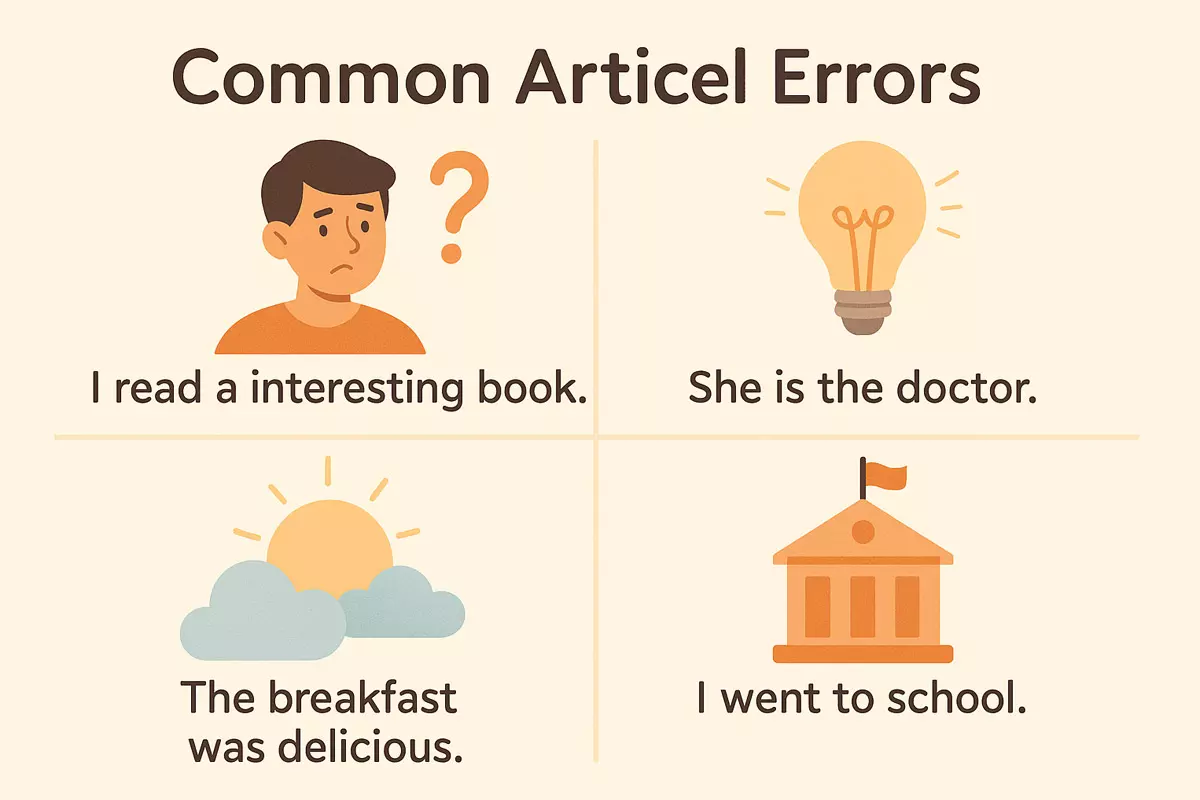 The article guides you on using a, an, and the, explains when to use articles for specific or general meanings, first or known mentions, unique or non-unique things, zero article cases, quick checking methods, and includes practice with sentence correction.
Mastering the use of a, an, and the can be surprisingly tricky, even for experienced writers. Simple slip-ups with these tiny words can muddle your message or distract your readers, but a few smart strategies will help you steer clear of these common pitfalls. One helpful approach is to remember that a and an are used for non-specific, singular nouns, with a before words beginning with consonant sounds and an before vowel sounds. The is used for specific or previously mentioned nouns. By practicing these guidelines and paying attention to the context, you can improve your writing and communicate your ideas more clearly.
a/an vs the
Choosing between indefinite and definite articles is a frequent stumbling block for English learners. Understanding when to use “a” or “an” versus “the” is essential for clear communication. The indefinite articles (“a” and “an”) introduce something non-specific, while “the” refers to something already known or previously mentioned.
When to Use “a” or “an”
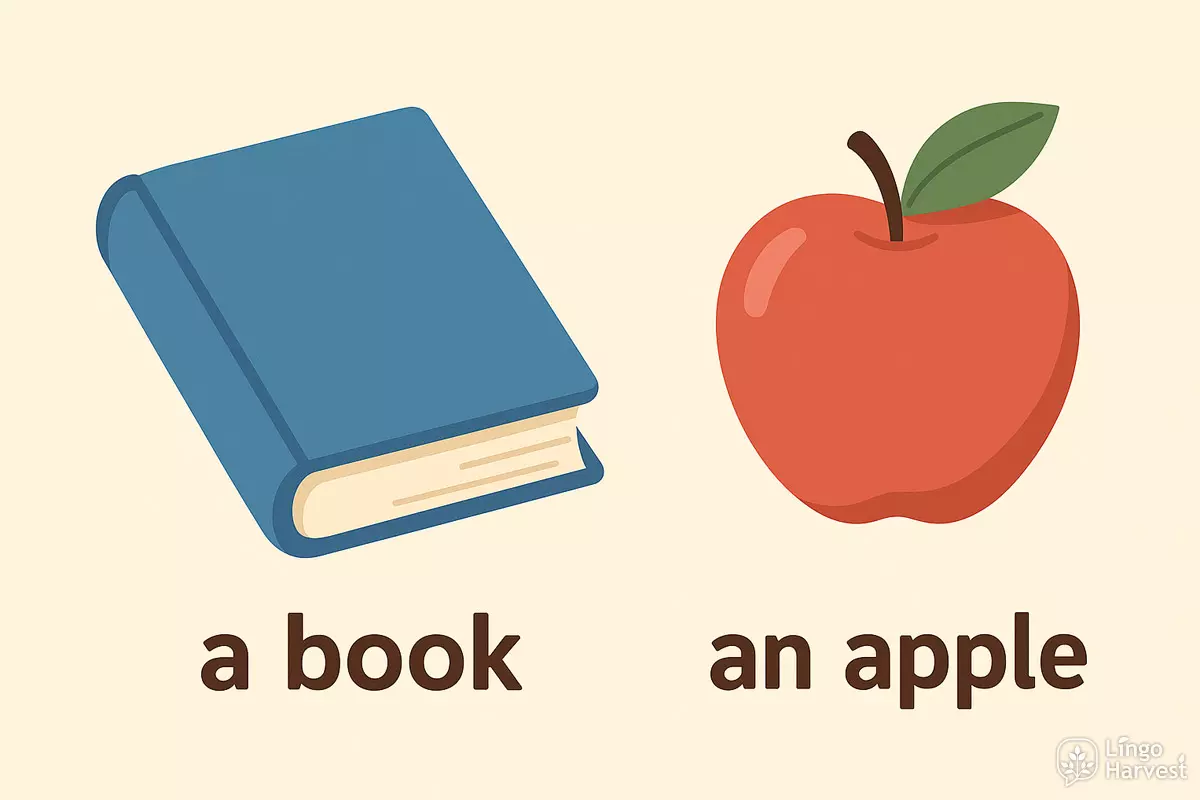
Use “a” before words that begin with a consonant sound, and “an” before words that begin with a vowel sound. These articles are used the first time you mention something or when it is not specific. For example:
- a book (any book, not a specific one)
- an apple (any apple, not a particular one)
- a university (the “yoo” sound is a consonant sound)
- an hour (the “h” is silent, so it starts with a vowel sound)
- a cat, an umbrella, a European country, an honest person
When to Use “the”
“The” is used when both the speaker and listener know which thing is meant, or when it is unique. It points to a particular item or group.
- the sun (there is only one)
- the book you lent me (a specific book, already mentioned)
- the children in the park (a known group)
- the first time, the best option, the answer
- the president, the Eiffel Tower, the water in this glass
Common Mistakes and How to Avoid Them
Mixing up these articles can make sentences confusing or unclear. Here are frequent errors:
- Using “the” with general, non-specific nouns: ❌ I like the dogs. → ✅ I like dogs.
- Leaving out “the” for known items: ❌ Please close window. → ✅ Please close the window.
- Choosing the wrong indefinite article: ❌ an university → ✅ a university
- Adding an article where none is needed: ❌ She goes to the school every day (meaning “school” in general) → ✅ She goes to school every day.
Summary Table: Indefinite vs Definite Articles
| Article | Main Usage | Example | Common Error |
|---|---|---|---|
| a / an | First mention, any one of many, not specific | a dog, an egg, a hotel | an university (should be “a university”) |
| the | Specific, unique, previously mentioned | the sun, the car we bought | the life is short (should be “life is short” for general statements) |
| (no article) | General ideas, plural or uncountable nouns | Books are expensive. Water is essential. | I like the music (should be “I like music” for general statements) |
| the | With superlatives and ordinals | the best, the first time | He is best player (should be “the best player”) |
Mastering these distinctions will help you sound more natural and avoid typical article mistakes in English writing and speech.
Specific vs General Meaning
Understanding when to use “a/an” versus “the” depends heavily on whether you’re talking about something particular or something more general. Articles help clarify if you mean a unique item or any item of that type. Using the wrong article can confuse readers about what you’re referring to, leading to misunderstandings.
When to Use “The”
“The” points to one specific thing that your listener or reader is expected to know. It’s used when both the speaker and the audience are clear about which item is being discussed. For example, “the car in the driveway” means a particular car that everyone knows about.
When to Use “A” or “An”
“A” or “an” introduce something for the first time or refer to any example of a category, not a unique one. For instance, “a car” could be any car, not one already identified. Using the wrong article here makes your meaning vague or misleading.
| General Reference | Specific Reference |
|---|---|
| I saw a bird in the garden. (any bird, not specified) |
I saw the bird you mentioned. (the particular bird discussed earlier) |
| Please hand me a pen. (any pen will do) |
Please hand me the pen on the table. (a particular pen) |
| She wants to buy a house. (any house) |
She wants to buy the house on Elm Street. (that specific house) |
| Can I have an apple? (any apple) |
Can I have the apple you were eating? (that specific apple) |
| He is reading a book. (any book) |
He is reading the book you gave him. (the particular book) |
Common Mistakes to Watch Out For
- Using “the” before a noun that hasn’t been identified yet (e.g., The teacher entered the room instead of A teacher entered the room if the teacher is new to the conversation).
- Leaving out “the” when referring to something unique or previously mentioned.
- Using “a” or “an” with things that are one-of-a-kind or universally known (e.g., a sun instead of the sun).
- Applying “the” to general ideas where no article is needed (e.g., The happiness is important instead of Happiness is important).
Tips for Choosing the Right Article
- If your listener knows exactly what you mean, use “the.”
- If you’re introducing something for the first time or it’s not specific, use “a” or “an.”
- For plural or uncountable nouns used in a general sense, no article is needed (e.g., Books are useful, Water is essential).
- Remember that context often determines whether something is specific or general—think about what your audience knows.
Getting comfortable with these distinctions will help you clearly express whether you’re talking about something unique or just any example in a group. Practice identifying whether your meaning is particular or general, and your article use will become much more accurate.
First Mention vs Known Mention
Understanding when to use "a/an" versus "the" is one of the most common article challenges in English. The general principle is simple: introduce something new with "a" or "an", but switch to "the" when talking about that same thing again or when it’s already clear which one you mean. When you bring up a noun for the first time, you usually use the indefinite article. This signals to the reader or listener that you’re talking about any example of that thing, not a specific one. Once it’s clear which object or idea you’re referring to, you move to the definite article to indicate it’s now familiar or unique in the context.
How to Decide Which Article to Use
- Use "a/an" for new, non-specific items or concepts.
- Use "the" for items already mentioned, or when it’s obvious which one is meant.
- No article is used for certain proper nouns, plural generalizations, or uncountable nouns (with exceptions).
Common Examples of Article Shifts
Below are typical patterns showing how articles change from the first mention to subsequent mentions or when the noun becomes familiar. Notice how the article signals the shift from new to known information.
| First Reference | Known Reference |
|---|---|
| A cat sat on the mat. | The cat looked sleepy. |
| I saw an old book on the shelf. | The book was covered in dust. |
| She bought a car yesterday. | The car is red. |
| There is a restaurant near my house. | The restaurant serves Italian food. |
| He found a key in the drawer. | The key opened the front door. |
| We adopted a puppy last week. | The puppy loves to play. |
| I need an umbrella. | The umbrella is in the hallway. |
| She met a doctor at the conference. | The doctor specializes in cardiology. |
| He picked an apple from the tree. | The apple was delicious. |
| They visited a museum in Paris. | The museum had ancient artifacts. |
Tips for Avoiding Mistakes
- Introduce new countable nouns with "a" or "an" unless the listener knows which one you mean.
- Switch to "the" after the first mention, or when context makes the noun unique or specific.
- Be cautious with uncountable and plural nouns—sometimes no article is needed.
- If both speaker and listener know what is meant (shared knowledge), use "the" even on first mention (e.g., "the sun").
- Practice by writing short stories or sentences that introduce and then refer back to objects.
By paying attention to whether your audience is already familiar with the noun you’re using, you can make your writing clearer and more accurate. This simple shift in article usage helps readers follow your ideas and prevents common errors.
Unique vs Non-Unique Things
Understanding whether a noun refers to something one-of-a-kind or something more general is crucial for correct article usage in English. The choice between “the,” “a,” or no article often depends on whether the object is singular and specific or part of a broader group. This distinction helps prevent common mistakes, especially for non-native speakers.
How Uniqueness Affects Article Choice
When a noun represents a single, clearly defined entity—like “the sun” or “the president of France”—the definite article “the” is required. In contrast, when the noun refers to any member of a category, such as “a teacher” or “an apple,” the indefinite article “a” or “an” is used. Plural and uncountable nouns without a specific reference often take no article at all, as in “people” or “water.”
Common Pitfalls and Examples
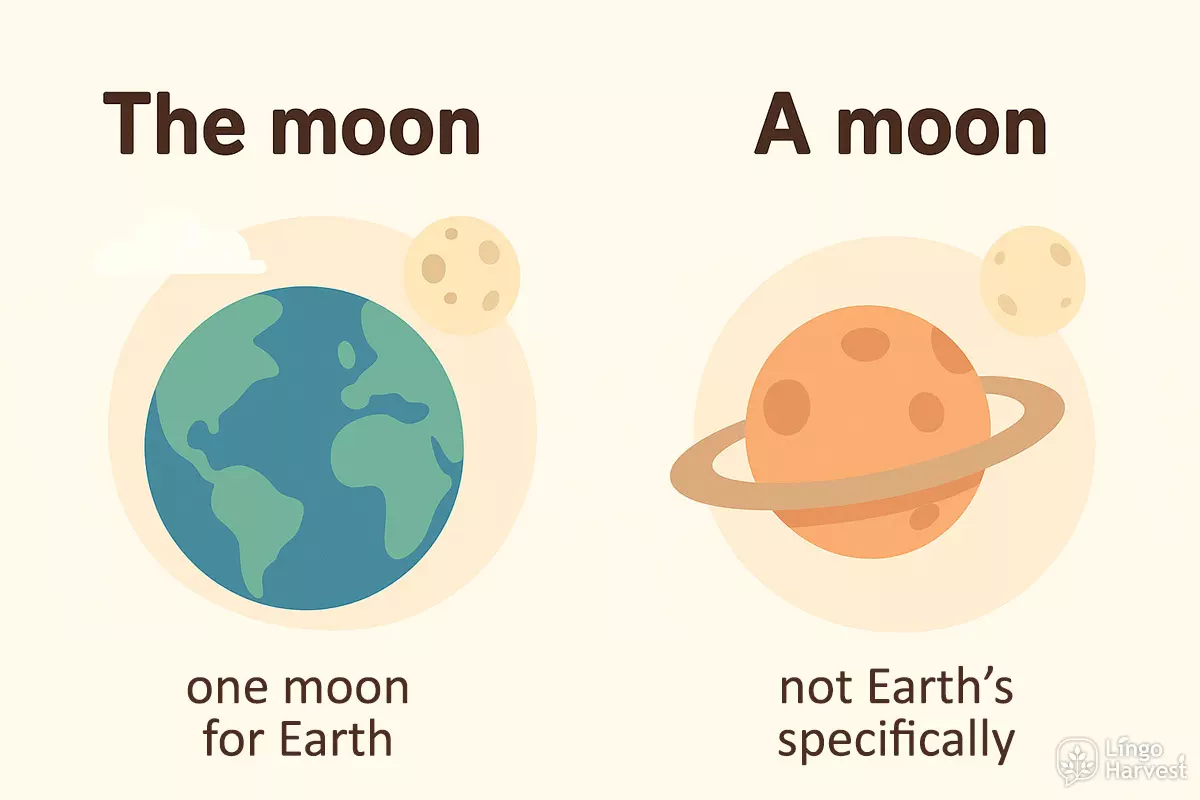
It’s easy to confuse which article to use, especially with places, titles, and objects that may seem unique in one context but not in another. Consider the following:
- The moon (there is only one moon for Earth)
- A moon (refers to any moon, not Earth’s specifically)
- The internet (refers to the global network)
- A website (any website, not a particular one)
- The president (when the country is understood from context)
- A president (any president, not a specific one)
- Mount Everest (no article, as with most mountains)
- The Amazon (for rivers: “the Amazon River”)
- History (no article for the subject in general)
- The history of England (specific history)
- Life (general, uncountable: “Life is unpredictable”)
- The life of a butterfly (specific)
- The United Nations (unique organization)
- A company (any company, not specified)
- The company (a company already mentioned or known)
- Music (general, uncountable: “Music relaxes me”)
- The music (specific: “The music at the party was loud”)
- An idea (one among many possible ideas)
- The idea (a specific idea being discussed)
Quick Reference: When to Use “The” or “A/An”
| Type of Noun | Typical Article Usage |
|---|---|
| Only one exists (e.g., the sun, the internet) | Use “the” |
| Any member of a group (e.g., a cat, an actor) | Use “a” or “an” |
| Unique entities by context (e.g., the director, the government) | Use “the” |
| Plural/general/uncountable nouns (e.g., dogs, water, science) | No article (unless specific: “the dogs in the yard”) |
Remember, context often determines whether something is treated as unique or not. If you’re unsure, ask yourself: “Is this the only one, or just one of many?” This simple check can help you avoid frequent mistakes with English articles.
Zero Article Confusion
Navigating when to leave out articles in English can be tricky, especially for learners whose native languages always require a definite or indefinite article. English, however, often omits articles in specific cases. Understanding these patterns helps avoid awkward or incorrect phrasing.
When No Article Is Needed
English drops articles in several common situations. Here are the most frequent categories:
- Languages and subjects: We study math, speak French, and enjoy history—no article needed.
- Meals: He eats breakfast at 8. She skipped dinner yesterday.
- Sports and games: They play tennis and chess.
- Abstract nouns: Love is important. Happiness matters.
- Most places (cities, countries, continents, parks, streets): She lives in Canada. They walked through Hyde Park.
- Transport (by + transport): He goes to work by bus or by train.
- Days, months, holidays: School starts Monday. My birthday is in July. See you at Christmas.
- Materials and substances: The table is made of wood. She drinks water.
- Most diseases and conditions: He has diabetes. She caught flu.
- Titles and positions (when used with a name): President Lincoln, Doctor Smith
Typical Mistakes with Omitted Articles
Learners often add unnecessary articles. Here are some classic errors and their corrections:
- ❌ She likes the music. → ✅ She likes music.
- ❌ I go to the school every Monday. → ✅ I go to school every Monday. (Unless you mean a specific building!)
- ❌ He speaks the Spanish. → ✅ He speaks Spanish.
- ❌ We play the football. → ✅ We play football.
Quick Reference: Where Articles Are Omitted
| Context | Example (No Article) |
|---|---|
| Academic subjects | She studies biology. |
| Meals | We had lunch together. |
| Sports | He plays basketball. |
| Languages | They speak German. |
| Transport (by + mode) | She travels by car. |
| Materials | The ring is made of gold. |
| Proper names (most countries, cities) | He lives in Rome. |
| Diseases (most) | She has asthma. |
Remember, some exceptions exist, like the Netherlands or the flu. When in doubt, check if the noun is a general concept or a unique, specific reference. Practice and attentive reading help reinforce these patterns, making article usage feel more natural over time.
Quick Checking Strategy
When reviewing a draft, a focused process can help catch mistakes that often slip through in articles. Rather than reading from start to finish, try scanning for common issues in a systematic way. This approach saves time and increases accuracy, especially when deadlines are tight.
Step-by-Step Review Process
- Read the title and headings: Make sure they accurately reflect the content and are free of typos.
- Check introductions and conclusions: Confirm these sections summarize the main point and are not repetitive.
- Skim for structure: Look for logical flow and paragraph breaks. Each section should lead naturally to the next.
- Spot-check sentences: Randomly select sentences throughout the article to check for grammar and clarity.
- Verify facts and figures: Ensure that all data is correct and properly cited if necessary.
- Watch for common word errors: Homophones, incorrect verb forms, and misplaced modifiers are frequent offenders.
- Review formatting: Confirm consistent use of lists, bold, italics, and headings.
- Scan for overused words: Vary vocabulary to keep the article engaging.
- Test readability: Read a random paragraph aloud to check for awkward phrasing or run-on sentences.
- Look for missing elements: Make sure all sections are included and nothing essential has been left out.
Common Mistakes and Quick Fixes
Many errors repeat themselves in articles. Here’s a quick-reference guide for identifying and correcting them:
- ❌ Subject-verb disagreement → ✅ Ensure subjects and verbs match in number.
- ❌ Confusing homophones (their/there/they’re) → ✅ Double-check usage in context.
- ❌ Run-on sentences → ✅ Break into shorter, clearer statements.
- ❌ Redundant phrases → ✅ Remove unnecessary repetition.
- ❌ Unclear pronoun references → ✅ Specify what each pronoun refers to.
- ❌ Improper article usage (a/an/the) → ✅ Check noun specificity and adjust articles.
- ❌ Inconsistent tense → ✅ Keep verb tense consistent throughout.
- ❌ Punctuation errors → ✅ Review commas, periods, and quotation marks.
- ❌ Spelling mistakes → ✅ Run a spell-check and look for typos missed by software.
- ❌ Inaccurate links or references → ✅ Test all internal references and citations.
- ❌ Awkward transitions → ✅ Add linking sentences or phrases where needed.
Checklist for Final Review
Before considering an article ready for publication, run through a mental or written checklist. This helps ensure all key areas are covered and minimizes lingering mistakes.
- Are all headings clear and relevant?
- Does each paragraph contribute to the main idea?
- Is the language concise and direct?
- Are there any off-topic tangents?
- Have all sources been verified?
- Is the tone appropriate for the audience?
- Are visuals, if present, correctly labeled and referenced?
- Has the article been proofread for grammar and style?
A systematic approach to reviewing articles not only catches errors but also improves overall quality and readability. By following these steps, writers and editors can efficiently polish their work and avoid common pitfalls.
Practice: Correct the Sentences
Applying article rules is easier with real examples. Below, you'll find sentences containing intentional mistakes related to definite, indefinite, and zero articles. Try to identify and correct the errors. This hands-on approach will help reinforce your understanding of typical pitfalls and how to avoid them.
Spot the Article Mistake
Read each sentence below. Decide where an article is missing, used incorrectly, or not needed at all. Rewrite the sentence with the correct article usage.
- I have cat and dog at home.
- Earth orbits around sun.
- She is best player in our team.
- He went to store to buy some milk.
- We ate delicious dinner yesterday.
- Mount Everest is highest mountain in the world.
- She wants to be engineer when she grows up.
- We visited France last summer.
- Books on the shelf belong to me.
- He is afraid of dark.
- I saw interesting movie last night.
- Water in this lake is clean.
- She is only child in her family.
- Let's go to cinema tonight.
- He works as teacher.
Show answers
- I have a cat and a dog at home.
- The Earth orbits around the sun.
- She is the best player in our team.
- He went to the store to buy some milk.
- We ate a delicious dinner yesterday.
- Mount Everest is the highest mountain in the world.
- She wants to be an engineer when she grows up.
- We visited France last summer. (No article needed)
- The books on the shelf belong to me.
- He is afraid of the dark.
- I saw an interesting movie last night.
- The water in this lake is clean.
- She is the only child in her family.
- Let's go to the cinema tonight.
- He works as a teacher.
Typical Article Error Patterns
- Omitting a/an before singular countable nouns: “She is teacher.” → “She is a teacher.”
- Using the with proper nouns unnecessarily: “The France is beautiful.” → “France is beautiful.”
- Forgetting the with superlatives: “He is tallest.” → “He is the tallest.”
- Dropping the before unique things: “Earth orbits sun.” → “The Earth orbits the sun.”
Reviewing these patterns and correcting mistakes in context will sharpen your sense for proper article usage. Regular practice with authentic examples is key to mastering these details.