First Conditional: Real Situations and Future Possibilities

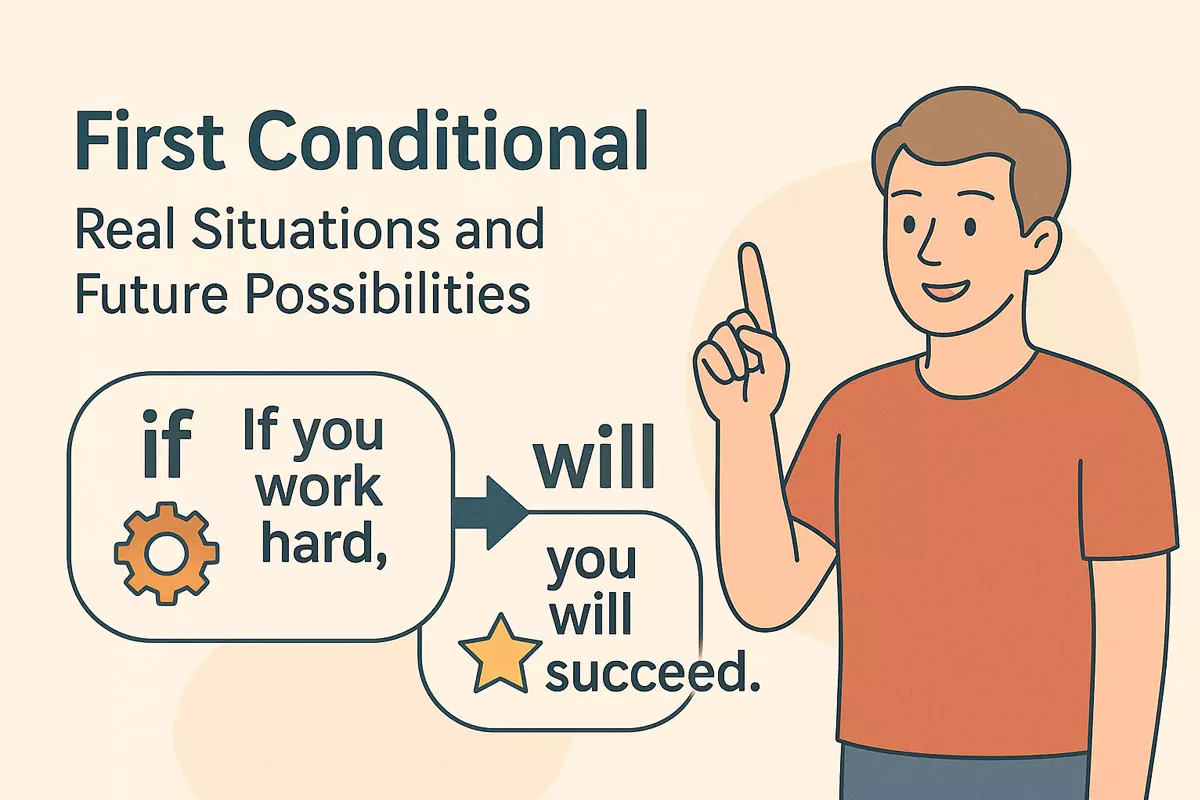 Here we the first conditional for real future situations, explaining its meaning, form, and use for plans, predictions, and warnings. It also discusses variations with will, won’t, may, might, can, word order, and includes practice exercises.
Being able to discuss possible outcomes and hypothetical situations is an important skill in English, as it allows us to express what might happen if certain events take place. By learning how to use conditional structures and phrases that indicate likelihood, we can clearly communicate our predictions, expectations, and plans for the future. This ability not only helps in everyday conversations but also in academic and professional settings where discussing potential scenarios is often necessary. Developing this skill makes our communication more precise and effective.
Meaning of real future conditions
When we talk about the first conditional in English, we refer to situations that are possible and likely to happen in the future, depending on a specific condition. This structure helps us discuss what might occur if a certain event or action happens. The “real” aspect comes from the fact that these scenarios are based on facts, realistic possibilities, or things that could actually take place, rather than imaginary or impossible situations.
How it works in English
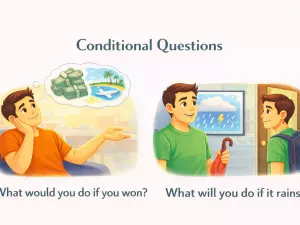
The first conditional typically uses the present simple tense after “if” to describe the condition, and “will” + base verb for the result. This pattern suggests a direct link between a possible future event and its consequence. For example, “If it rains, we will stay inside.” The rain is a real possibility, and the action of staying inside depends on that.
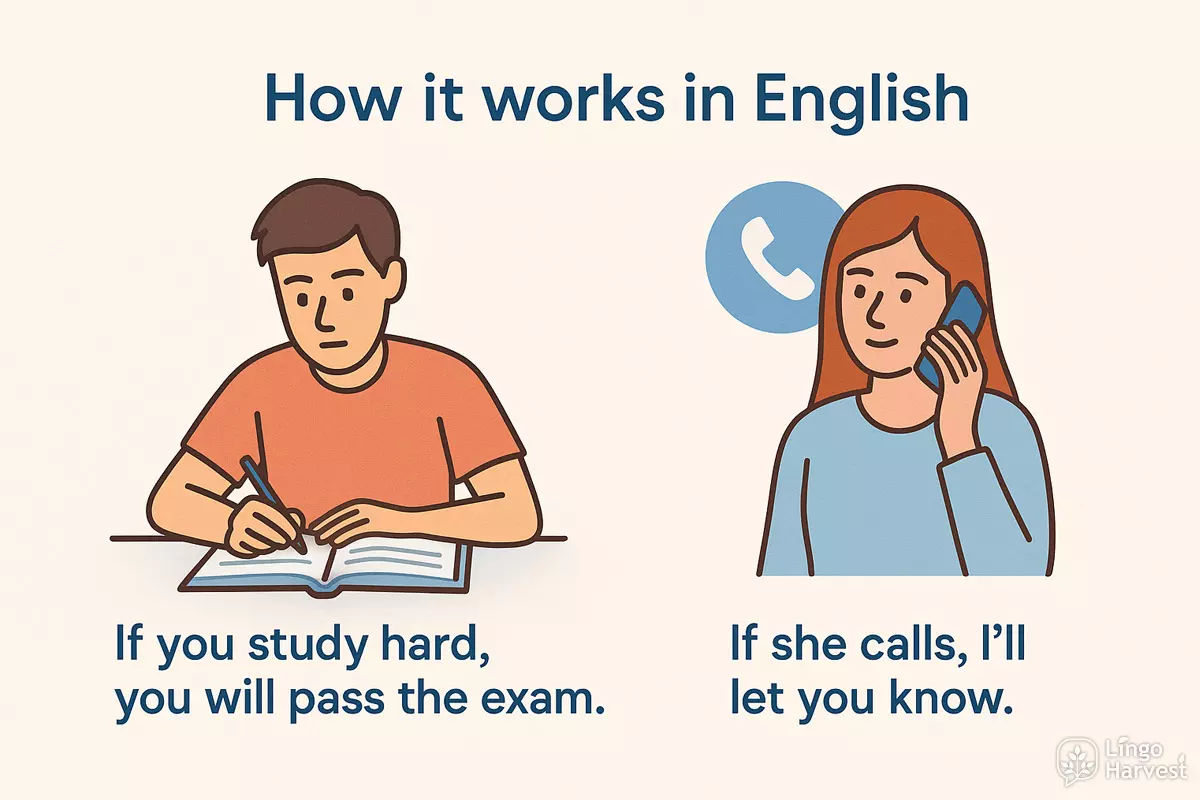
- If you study hard, you will pass the exam.
- If she calls, I’ll let you know.
- If they arrive early, we can start dinner sooner.
- If it gets cold, I’ll wear my jacket.
- If you don’t hurry, you will miss the bus.
- If we save money, we can go on vacation.
- If the shop is open, I’ll buy some bread.
- If he finishes work, he will join us.
- If you feel tired, take a break.
- If the weather improves, we’ll go outside.
Comparing Real and Unreal Conditions
It’s important to distinguish between real future conditions and unreal or hypothetical ones. Real conditions focus on outcomes that truly could happen, while unreal conditions (like the second conditional) are about imaginary or unlikely situations.
| If-Clause (Type 1: Real) | If-Clause (Type 2: Unreal) |
|---|---|
| If I see her, I will say hello. | If I saw her, I would say hello. |
| If it rains, we will cancel the picnic. | If it rained, we would cancel the picnic. |
| If you are hungry, I will make lunch. | If you were hungry, I would make lunch. |
| If they finish on time, we will celebrate. | If they finished on time, we would celebrate. |
In summary, first conditionals focus on realistic future outcomes that depend on a specific trigger. They help speakers express plans, warnings, offers, and advice about things that could genuinely happen.
Form: if + present simple, will + base verb
Understanding how to build first conditional sentences is key for talking about real possibilities in the future. This structure links a possible condition with a likely result, often used when discussing plans, warnings, or offers. The pattern starts with an if-clause that uses the present simple tense, followed by a main clause containing “will” plus the base form of a verb. The order of the clauses can be reversed; just remember to use a comma if the “if” part comes first.
Basic Pattern
- If + present simple, will + base verb
- Will + base verb if + present simple
Examples in Everyday English
- If it rains, we will stay inside.
- I will call you if I finish early.
- If you study hard, you will pass the test.
- We won’t go out if it gets too late.
- If she sees this, she will be surprised.
- If they invite us, we will come.
- Will you help me if I need it?
- If you don’t hurry, you will miss the bus.
- If I have time, I will join the meeting.
- If the shop is open, I will buy some bread.
- They won’t play if it rains.
- If you press this button, the machine will start.
Forming Negatives and Questions
The negative is formed by adding “not” to “will” (will not / won’t). For questions, move “will” before the subject.
- If you don’t call, I won’t know the answer. (negative)
- Will you come if it snows? (question)
Summary Table: Common Variations
| Clause Type | Example |
|---|---|
| Affirmative | If you leave now, you will catch the train. |
| Negative | If he doesn’t arrive soon, we will start without him. |
| Question | Will they agree if we explain? |
| Reversed Order | You will feel better if you rest. |
This structure allows you to talk about consequences and real possibilities in the near future, making your English more precise and practical.
How to talk about possible plans, predictions, and warnings
When we want to discuss what might happen in the future, the first conditional is a useful tool. This structure helps us express what could occur if a certain condition is met. It’s commonly used for suggesting plans, making predictions, or giving warnings about future situations that are likely or realistic.
Talking about possible plans
We often use the first conditional to talk about actions we might take, depending on another event. These sentences are practical for discussing arrangements, intentions, or choices that depend on something else. For example:
- If it rains tomorrow, I'll stay at home.
- If you finish your homework, we can watch a movie.
- If she calls, I'll let you know.
- If we have time, we’ll visit the museum.
- If the meeting ends early, I’ll join you for lunch.
Making predictions
The first conditional allows us to predict outcomes based on present or future conditions. These predictions are not guaranteed, but they are possible or even likely.
- If you study hard, you will pass the exam.
- If they leave now, they’ll catch the train.
- If it gets colder, the lake will freeze.
- If prices go up, people will buy less.
- If the team plays well, they might win the championship.
Giving warnings and advice
To warn someone or offer advice, the first conditional is especially effective. It highlights consequences that will happen if someone does or doesn’t do something.
- If you touch that wire, you’ll get an electric shock.
- If you don’t eat breakfast, you’ll feel tired later.
- If you don’t lock the door, someone might break in.
- If you speak too fast, people won’t understand you.
- If you don’t water the plants, they’ll die.
Common patterns and variations
The first conditional usually follows this form: If + present simple, will + base verb. However, there are some variations, especially when expressing possibility, permission, or advice. The table below shows different ways the first conditional is used, depending on intention:
| Function | Example Sentence |
|---|---|
| Plan/Intention | If I see John, I’ll invite him to dinner. |
| Prediction | If it snows tonight, the roads will be slippery. |
| Warning | If you don’t wear a helmet, you could get hurt. |
| Offer/Suggestion | If you need help, I can explain it to you. |
| Advice | If you feel sick, you should see a doctor. |
Using the first conditional in these ways helps you communicate uncertainty, possibility, or consequences clearly. Adjust the verbs (will, can, might, should, could) to match your intention—whether you’re planning, predicting, or warning about future events.
Variations with won’t, may, might, can
When using the first conditional, English speakers often adapt the structure to express different levels of certainty, possibility, or ability. Instead of always using “will” in the result clause, alternatives like “won’t,” “may,” “might,” and “can” help communicate more nuanced meanings about the future.
Using "won’t" for Negative Results
“Won’t” (will not) is the negative form of “will” and shows that something is not expected to happen if the condition is met. This adds a sense of prediction about a negative outcome.
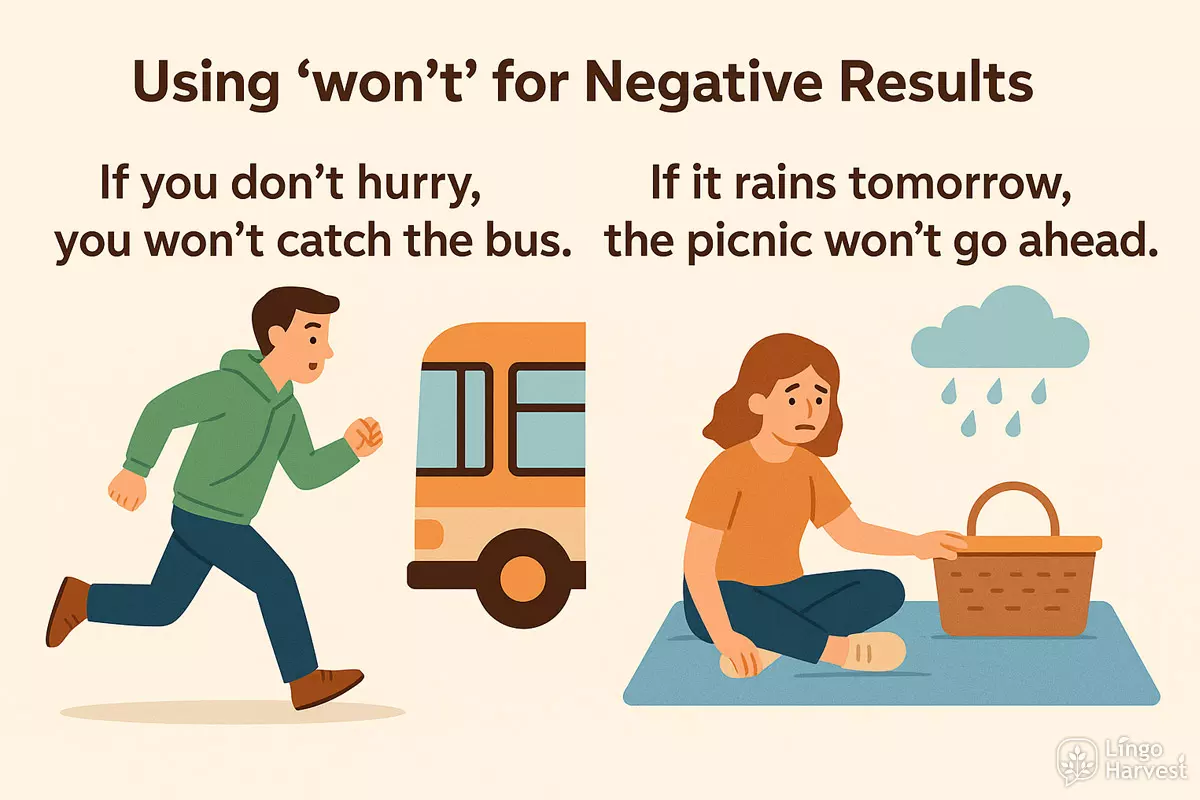
- If you don’t hurry, you won’t catch the bus.
- If it rains tomorrow, the picnic won’t go ahead.
- If she doesn’t study, she won’t pass the test.
Expressing Possibility with "may" and "might"
“May” and “might” both indicate that the result is possible but not certain. These modal verbs are useful for situations where there is a chance of something happening, but it is not guaranteed.
- If you call him now, he may answer.
- If they finish early, they might join us for dinner.
- If it gets colder, it may snow tonight.
- If you’re lucky, you might win a prize.
Showing Ability or Permission with "can"
“Can” is used to express ability or permission as a result of the condition being met. This is common when talking about what will be possible in the future.
- If you finish your homework, you can watch TV.
- If the store is open, we can buy some snacks.
- If you ask politely, they can help you.
- If you save enough money, you can travel abroad.
Comparing Result Clauses in the First Conditional
To make the differences clearer, here’s a comparison of how the result clause changes meaning with each modal verb:
| Condition | Result with Modal |
|---|---|
| If you study hard | you will pass the exam. (certain) |
| If you study hard | you won’t fail the exam. (certain negative) |
| If you study hard | you may get a high score. (possible) |
| If you study hard | you might win a scholarship. (possible, less sure) |
| If you study hard | you can apply for advanced courses. (ability/opportunity) |
Summary of Usage
Choosing between these modal verbs allows speakers to tailor their message based on how likely, possible, or permissible a result is. Here are additional examples to illustrate the range of possibilities:
- If you leave now, you might beat the traffic.
- If we don’t hurry, we won’t get good seats.
- If you’re free later, we can meet for coffee.
- If the weather is nice, we may go hiking.
- If you don’t water the plants, they won’t survive.
- If you ask, they might help you.
- If you finish early, you can leave.
- If the exam is hard, some students may struggle.
By adjusting the verb in the result clause, you convey not just what could happen, but how likely or possible that outcome is. This flexibility is one of the strengths of the first conditional in real English conversation.
Word order flexibility with if-clauses
In English, sentences with conditional "if" statements—especially first conditionals—allow for some flexibility in how you arrange the main and conditional parts. This means you can place the "if" clause at the beginning or the end of the sentence without changing the meaning. The choice of order often depends on emphasis, style, or flow in conversation and writing.
Two common orders for first conditional sentences
You can begin with the condition, or start with the result. Both structures are grammatically correct:
- If + condition, main result: If it rains, we will cancel the picnic.
- Main result + if + condition: We will cancel the picnic if it rains.
When the "if" part comes first, a comma is needed to separate the clauses. If the result comes first, no comma is used.
Examples of flexible sentence structures
Switching the position of the clauses can help with variety and clarity. Here are several first conditional examples, showing both possible orders:
- If you hurry, you'll catch the bus. → You'll catch the bus if you hurry.
- If I see Anna, I'll tell her. → I'll tell Anna if I see her.
- If the shop is open, we’ll buy some bread. → We’ll buy some bread if the shop is open.
- If it doesn’t snow, we’ll go hiking. → We’ll go hiking if it doesn’t snow.
- If you don’t understand, ask me. → Ask me if you don’t understand.
- If they arrive early, we’ll start dinner. → We’ll start dinner if they arrive early.
- If she calls, let me know. → Let me know if she calls.
- If you’re tired, take a break. → Take a break if you’re tired.
- If the weather is nice, we’ll eat outside. → We’ll eat outside if the weather is nice.
- If you study, you’ll pass the exam. → You’ll pass the exam if you study.
- If we finish early, we can watch a movie. → We can watch a movie if we finish early.
- If you need help, call me. → Call me if you need help.
When to use each order
Placing the "if" clause first is common in written English, especially when you want to highlight the condition. Starting with the result clause can sound more natural in speech or when the outcome is more important than the condition. Both styles are correct, so you can choose based on context and preference.
Quick comparison of punctuation rules
| Order | Comma Needed? |
|---|---|
| If-clause first: If you are late, we will start without you. | ✅ Yes, comma after the if-clause |
| Main clause first: We will start without you if you are late. | ❌ No comma needed |
Understanding how to rearrange these clauses helps you sound more natural and fluent, allowing you to choose the best structure for your message.
Practice: match conditions with correct future results
Understanding the first conditional helps you talk about real situations and likely outcomes. In this section, you'll practice pairing "if" clauses (conditions) with natural future results. This is a great way to reinforce how the first conditional expresses possibilities based on real actions or events.
Read each condition below and choose the most logical future result. This will help you recognize typical first conditional sentence structures and real-world uses.
Match the conditions with the correct results
- If it rains tomorrow,
- If you study hard,
- If they don't hurry,
- If we leave now,
- If she calls you,
- If I finish my work early,
- If you don’t bring an umbrella,
- If the store is open,
- If he feels better,
- If we don’t book the tickets soon,
Possible results:
- a) we will get wet
- b) you will pass the exam
- c) she will invite you to the party
- d) we will catch the bus
- e) we will buy some snacks
- f) he will come to school
- g) we will have to stay at home
- h) they will miss the train
- i) I will go to the gym
- j) there won’t be any seats left
Show answers
- g) we will have to stay at home
- b) you will pass the exam
- h) they will miss the train
- d) we will catch the bus
- c) she will invite you to the party
- i) I will go to the gym
- a) we will get wet
- e) we will buy some snacks
- f) he will come to school
- j) there won’t be any seats left
Extra practice: Complete the sentences
Fill in each blank with a logical result for the given condition. Use your own ideas, but keep the structure of the first conditional.
- If you don't sleep well tonight, _________
- If I see your notebook, _________
- If we don't leave soon, _________
- If the weather is nice this weekend, _________
- If you call your friend now, _________
- If they invite us to the party, _________
- If she studies hard, _________
- If the store is open, _________
- If you eat too much sugar, _________
- If the bus doesn't arrive on time, _________
Show answers
- You will feel tired tomorrow.
- I will give it back to you.
- We will be late.
- We will go for a picnic.
- He will answer your questions.
- We will go.
- She will pass the exam.
- We will buy what we need.
- You will feel sick.
- We will take a taxi.
Common first conditional patterns
Here are some typical sentence patterns you might come across:
- If you eat too much, you will feel sick.
- If it gets cold tonight, we will light the fireplace.
- If I don’t finish my homework, my teacher will be angry.
- If they win the match, they will celebrate.
- If the bus is late, I will walk to work.
- If you ask nicely, she will help you.
- If we save enough money, we will travel to Japan.
- If you don’t water the plant, it will die.
- If the meeting ends early, we will have lunch together.
- If you forget your keys, you will have to wait outside.
Focus on how these sentences use the present simple in the "if" clause and "will" plus the base verb in the result clause to talk about real possibilities in the future.