If-Clauses with Imperatives: Simple Instructions and Warnings

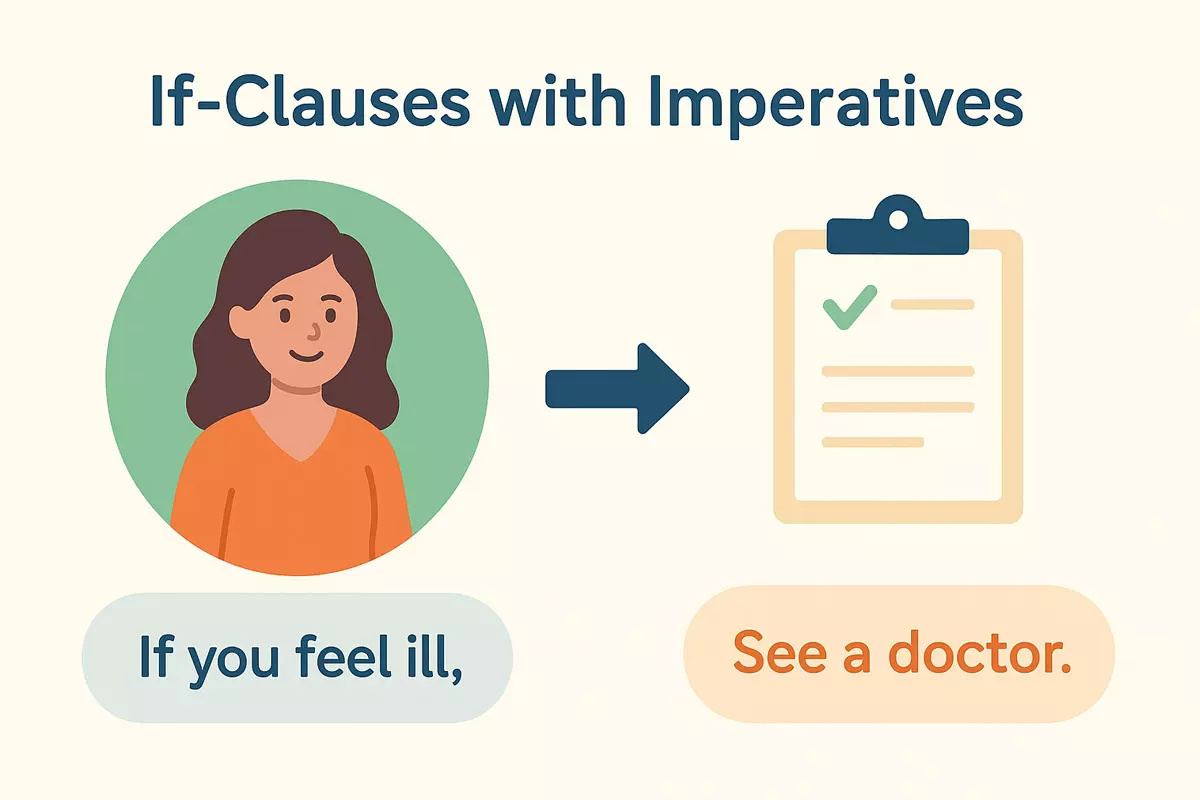 This article explains how to use if plus imperative structures to give advice, set safety rules, and provide directions. It covers patterns, differences from predictions, real-life examples, and offers practice creating these sentences.
- How if + imperative works in everyday English
- Using these sentences for advice, safety rules, or directions
- Patterns: if you…, do… / if you…, don’t…
- Difference between giving instructions and making predictions
- Examples from classroom, travel, and daily routines
- Practice: create instructions using if + imperative forms
Using conditional sentences with commands is a common and effective way to provide clear guidance or warnings in English. This approach helps ensure that instructions are straightforward and that the consequences of certain actions are easy to understand. By combining conditions with directives, speakers can communicate expectations and potential outcomes more directly, making it easier for listeners to follow advice or heed warnings. Understanding how these structures work can improve both written and spoken communication, especially in situations where clarity is essential.
How if + imperative works in everyday English
The structure "if" followed by an imperative is a common way to give instructions, warnings, or advice in a natural, direct manner. This construction is especially useful for telling someone what to do (or not do) depending on a specific situation. Rather than using complex sentences, speakers often choose this pattern for its clarity and simplicity in everyday interactions.
Typical Uses and Functions
You’ll hear these phrases everywhere—at home, at work, and in public spaces—because they quickly communicate what action to take if something happens. This form is often used for safety warnings, polite requests, or even everyday problem-solving. Instead of saying, "In case you see smoke, you should leave," people simply say, "If you see smoke, leave."
- If you’re tired, take a break.
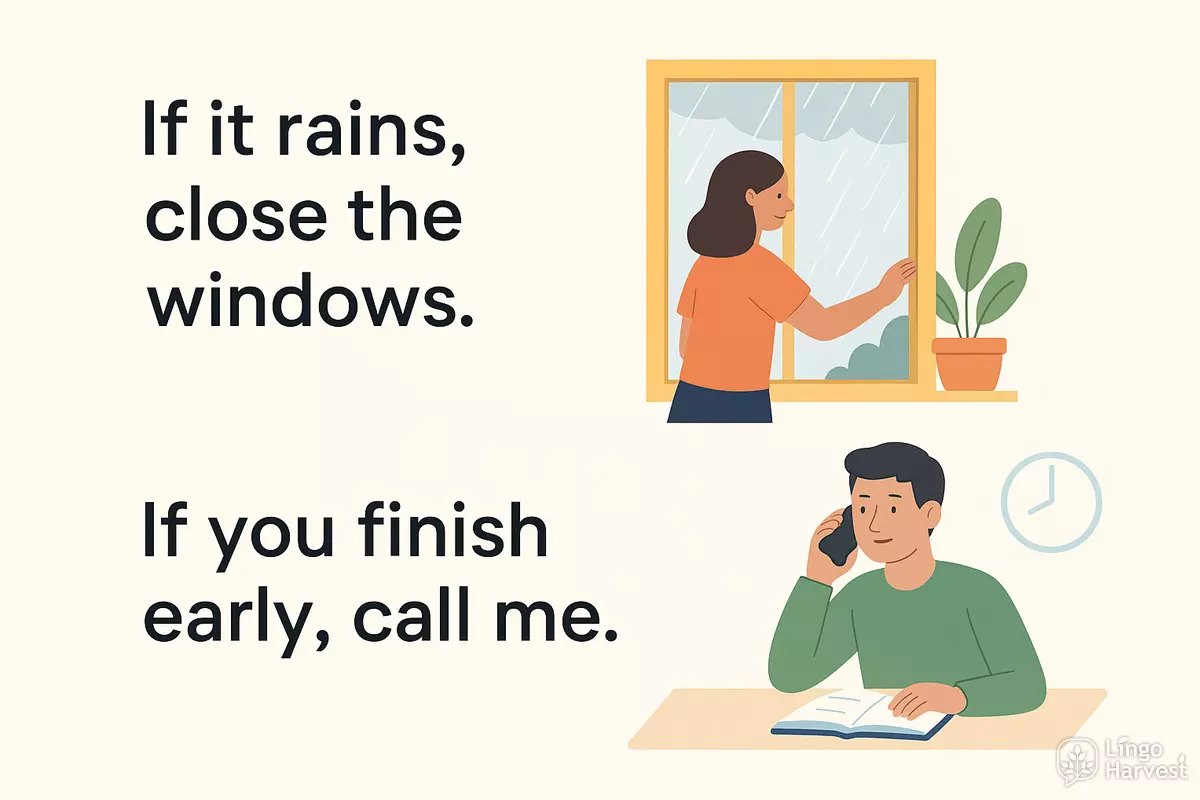
- If it rains, close the windows.
- If you finish early, call me.
- If you hear the alarm, exit the building.
- If you need help, ask.
- If you’re not sure, check with the manager.
- If it’s too loud, turn down the volume.
- If you spill something, clean it up.
- If you’re cold, put on a sweater.
- If the phone rings, answer it.
- If you see Anna, tell her I called.
- If you’re late, send a message.
- If the food is hot, let it cool.
- If you don’t understand, say so.
- If you’re leaving, lock the door.
- If you want more, help yourself.
- If you’re done, turn off the lights.
- If the dog barks, check outside.
- If it’s urgent, interrupt me.
- If you get lost, call this number.
How this pattern feels to native speakers
Using "if" plus an imperative sounds friendly, practical, and sometimes even caring. It avoids sounding bossy or too formal. For example, "If you’re hungry, grab a snack" feels more helpful than a strict command. This makes it ideal for both spoken and written English, from workplace notices to casual texts.
Comparing with other forms
This style is more direct than using modal verbs ("should," "must") and softer than giving an order without a condition. It’s especially useful when you want to give guidance without sounding demanding.
| Conditional Command | Direct Command | With Modal Verb |
|---|---|---|
| If you’re cold, close the window. | Close the window. | You should close the window if you’re cold. |
| If you finish, let me know. | Let me know. | You should let me know if you finish. |
| If you see an error, report it. | Report it. | You must report it if you see an error. |
| If you’re not sure, ask. | Ask. | You should ask if you’re not sure. |
This structure is a staple of everyday English, balancing clarity and politeness. It’s easy to understand and very effective for practical communication.
Using these sentences for advice, safety rules, or directions
When you want to give clear instructions, practical warnings, or helpful advice, if-clauses paired with imperatives are a natural fit. This structure helps people understand what to do (or not do) in specific situations. You’ll often see these in signs, manuals, and everyday conversations, especially where safety or step-by-step guidance is important.
How these structures work in real-life contexts
If-clauses with imperatives are common in English because they’re direct and easy to follow. The "if" part sets a condition, while the imperative tells someone exactly what action to take. This pattern is especially useful for giving directions, outlining safety procedures, or offering advice in a straightforward way.
- If you smell gas, leave the building immediately.
- If you feel unwell, tell your supervisor.
- If the light turns red, stop your car.
- If you hear the alarm, exit through the nearest door.
- If you’re not sure, ask for help.
- If you drop something heavy, bend your knees.
- If your clothes catch fire, stop, drop, and roll.
- If you finish early, check your work.
- If you make a mistake, correct it right away.
- If you see a spill, report it to staff.
- If your phone rings during the meeting, silence it.
- If you need more time, let me know.
- If you’re lost, call this number.
- If you need assistance, press the help button.
- If you’re late, inform your manager.
- If you forget your password, reset it online.
- If you want to join, sign up here.
- If you have allergies, notify the staff.
- If you’re not using the equipment, turn it off.
- If you’re finished, submit your form.
Why use this sentence pattern?
This kind of sentence is valued for its clarity. There’s no ambiguity—people know exactly what to do if a certain situation happens. It’s especially effective in rules for children, instructions for workers, or safety notices in public spaces.
Comparing advice, rules, and directions
The same structure can serve different purposes, depending on your intent. Here’s a look at how the pattern adapts:
| Function | Example | Context |
|---|---|---|
| Advice | If you need help, ask someone nearby. | Offering suggestions to make things easier or safer. |
| Safety rule | If the floor is wet, walk carefully. | Warning people about hazards and how to avoid them. |
| Direction | If you reach the intersection, turn left. | Giving step-by-step guidance for tasks or routes. |
| Instruction | If the printer is out of paper, refill the tray. | Explaining what to do when a problem occurs. |
By using if-clauses with imperatives, you make your instructions and rules easy to understand and more likely to be followed. This approach is especially helpful when safety, efficiency, or clarity is a priority.
Patterns: if you…, do… / if you…, don’t…
Understanding how to use conditional statements with imperatives is essential for giving instructions, advice, or warnings in English. These structures often begin with “if you” and are followed by an action or a result, creating a clear connection between a condition and what should (or shouldn’t) happen next. They are particularly common in spoken directions, safety notices, and everyday guidance.
Basic Forms and Usage
The most frequent patterns combine an “if-clause” (the condition) with an imperative in the main clause (the instruction). The main clause tells someone what action to take or avoid if the condition is true. This structure is direct and easy to understand, making it ideal for simple guidelines.
- If you feel tired, take a break.
- If you don’t understand, ask for help.
- If you see smoke, leave the building immediately.
- If you’re lost, call this number.
- If you make a mistake, correct it.
- If you spill something, clean it up.
- If you want more information, read the instructions.
- If you’re not sure, double-check your work.
- If you hear the alarm, exit the room calmly.
- If you’re finished, hand in your paper.
Negative Instructions and Warnings
When the main clause is negative, it gives a warning or tells someone what not to do if the condition is met. This is common in safety advice and rules.
- If you feel sick, don’t go to work.
- If you’re unsure, don’t guess.
- If you see a wet floor, don’t run.
- If you hear thunder, don’t use your phone outside.
- If you break something, don’t hide it.
- If you find lost property, don’t keep it.
- If you’re late, don’t rush.
- If you have allergies, don’t eat unknown foods.
- If you don’t know the answer, don’t panic.
- If you see fire, don’t use the elevator.
Comparing Affirmative and Negative Patterns
The following table presents a side-by-side look at how the same condition can lead to either a recommended action or a warning, depending on the main clause. This helps highlight the flexibility and clarity of these structures.
| Condition + Action | Condition + Warning |
|---|---|
| If you’re tired, take a rest. | If you’re tired, don’t drive. |
| If you finish early, check your answers. | If you finish early, don’t disturb others. |
| If you hear the bell, go outside. | If you hear the bell, don’t ignore it. |
| If you see danger, report it. | If you see danger, don’t approach it. |
| If you’re lost, ask for directions. | If you’re lost, don’t wander alone. |
These conditional-imperative patterns are practical and easy to use, making them a staple in instructions and safety communication. By mastering both the affirmative and negative forms, you can give clear, direct advice and warnings in many everyday situations.
Difference between giving instructions and making predictions
When you use if-clauses with imperatives, it's important to recognize whether you are telling someone what to do or describing what might happen. Instructions and predictions serve different purposes, even though both can use if-clauses in English.
Giving Instructions with If-Clauses
Instructions tell someone what action to take if a situation arises. The main clause uses the imperative (base verb), focusing on action:
- If you feel tired, take a break.
- If the alarm rings, leave the building immediately.
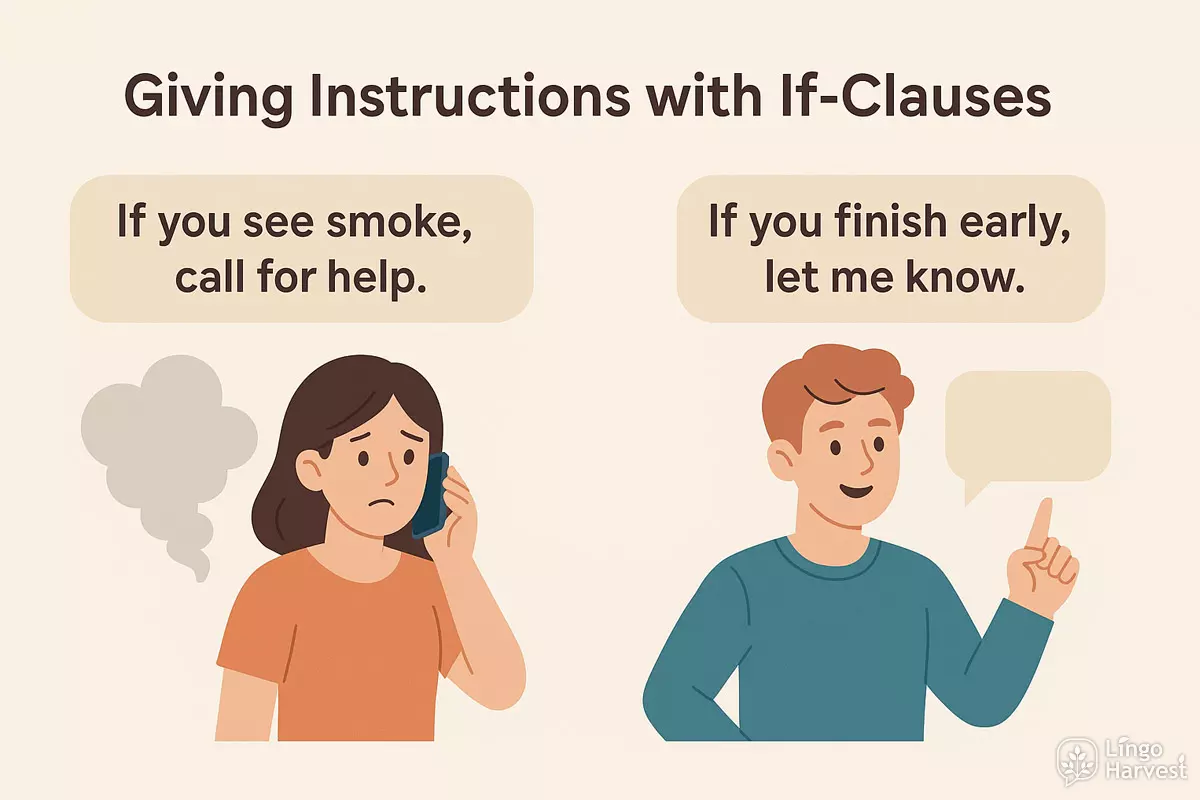
- If you see smoke, call for help.
- If you finish early, let me know.
- If it rains, bring an umbrella.
These sentences guide behavior in specific situations. The speaker expects the listener to follow the instruction if the condition is met.
Making Predictions with If-Clauses
Predictions describe what is likely or possible if a condition is true, rather than telling someone what to do. The main clause often uses will, can, may, or other modal verbs:
- If you don't water the plant, it will die.
- If you study hard, you will pass the exam.
- If it rains, the game may be canceled.
- If you touch that, you could get hurt.
- If you eat too much, you might feel sick.
Here, the speaker is not giving a command but stating a possible result.
Key Differences at a Glance
To clarify, here are the main contrasts:
| Instructions (Imperative) | Predictions (Modal/Will) |
|---|---|
| If you’re cold, put on a jacket. | If you’re cold, you will shiver. |
| If the phone rings, answer it. | If the phone rings, it might be important. |
| If you’re late, call me. | If you’re late, the meeting will start without you. |
| If you see a wet floor, walk carefully. | If you see a wet floor, you could slip. |
How to Tell Them Apart
- Imperatives use the base verb and directly address the listener.
- Predictions use modal verbs (will, might, can, could, may) to describe outcomes.
- Instructions focus on what should be done; predictions focus on what could happen.
- The tone of instructions is more direct; predictions sound more neutral or informative.
Understanding this distinction helps you use if-clauses more accurately, whether you are giving directions or describing potential results.
Examples from classroom, travel, and daily routines
Using if-clauses with imperatives is a practical way to give instructions and warnings in everyday contexts. These conditional sentences help clarify what action should be taken if a certain situation occurs. They are common in educational settings, while traveling, and during everyday activities.
Classroom Instructions
Teachers often use conditional imperatives to give students clear directions. Here are some examples:
- If you finish early, check your answers.
- If you need help, raise your hand.
- If you don’t understand, ask a question.
- If you forget your homework, tell me before class.
- If the bell rings, pack your things quietly.
Travel-Related Warnings and Advice
Travel situations can require quick decisions and safety reminders. Notice how these if-clauses guide behavior:
- If you lose your passport, contact the embassy immediately.
- If you miss your flight, speak to the airline staff at the counter.
- If you feel unwell, inform your tour guide.
- If your luggage is missing, report it at the lost and found.
- If you don’t know the way, ask for directions.
Daily Routine Examples
These conditional commands fit right into home life and daily habits:
- If you’re running late, send a message.
- If it starts to rain, close the windows.
- If you finish the milk, add it to the shopping list.
- If you spill something, clean it up right away.
- If you need to leave early, let someone know.
Comparing Positive and Negative Instructions
Sometimes these sentences tell us what not to do. Here’s a look at both types side by side:
| Instruction | Warning / Prohibition |
|---|---|
| If you’re hungry, have a snack. | If you’re not hungry, don’t eat just because others are. |
| If your phone rings, answer politely. | If you’re in a meeting, don’t answer your phone. |
| If you’re tired, take a break. | If you feel dizzy, don’t keep working. |
| If the doorbell rings, check who it is. | If you don’t recognize the person, don’t open the door. |
This variety of real-life examples shows how if-clauses with imperatives can be adapted to many situations, making instructions and cautions clear and actionable.
Practice: create instructions using if + imperative forms
Mastering "if" clauses with imperatives helps you give clear instructions and warnings in English. This structure is common in everyday guidance, safety notices, and recipes. Let's practice forming these sentences and understanding their use in different contexts.
Common Patterns: Using If + Imperative
- If you feel tired, take a short break.
- If the alarm rings, leave the building immediately.
- If you don’t understand, ask for help.
- If it rains, close the windows.
- If you see smoke, call the fire department.
- If you finish early, check your answers.
- If you’re lost, look for a map.
- If your phone battery is low, charge it.
- If the food is too hot, wait before eating.
- If you make a mistake, try again.
- If you hear thunder, stay indoors.
- If you are unsure, double-check the instructions.
- If you spill water, wipe it up.
- If your hands are dirty, wash them.
- If you’re late, call your teacher.
- If you need more time, let us know.
- If you see this sign, stop.
- If you want extra practice, complete the exercises.
Practice Tasks: Write Your Own Instructions
Try forming your own instructions using the pattern: if + present simple, imperative. Use the prompts below as a starting point.
- The door is locked (knock)
- You feel unwell (tell someone)
- Your computer freezes (restart it)
- The lights go out (find a flashlight)
- You need help (press the red button)
- Your phone battery is low (charge it)
- There is smoke in the kitchen (turn off the stove)
- You forget your password (reset it)
- Your clothes are wet (change them)
- You hear a strange noise at night (check carefully)
Show answers
- If the door is locked, knock.
- If you feel unwell, tell someone.
- If your computer freezes, restart it.
- If the lights go out, find a flashlight.
- If you need help, press the red button.
- If your phone battery is low, charge it.
- If there is smoke in the kitchen, turn off the stove.
- If you forget your password, reset it.
- If your clothes are wet, change them.
- If you hear a strange noise at night, check carefully.
Spot the Error: Which Instruction Is Incorrect?
Choose the sentence that is NOT a correct use of the "if + imperative" form.
- If you see a snake, stay calm.
- If it rains, take an umbrella.
- If you will arrive early, wait outside.
- If you hear the bell, go inside.
- If the phone rings, answer it.
- If you smell gas, open the window.
- If you will feel unwell, call the doctor.
- If there is a fire, leave the building.
- If you will be late, send a message.
- If the alarm goes off, follow the instructions.
Show answers
The 3rd, 7th, and 9th sentences are incorrect. Do not use "will" in the if-clause with imperatives.
- If you arrive early, wait outside.
- If you feel unwell, call the doctor.
- If you are late, send a message.
Transform Statements into Instructions
Rewrite these statements as instructions using the "if + imperative" structure.
- When the water boils, you should add the pasta.
- In case you see an emergency, you must call 911.
- After you finish your work, you can leave.
- When you arrive at the station, you should call me.
- Before you go to bed, you should turn off the lights.
- As soon as you hear the signal, you must start.
- While you drive, you should stay focused.
- When the movie ends, you can go home.
- Once you enter the building, you must show your ID.
- Before you start cooking, you should wash your hands.
Show answers
- If the water boils, add the pasta.
- If you see an emergency, call 911.
- If you finish your work, leave.
- If you arrive at the station, call me.
- If you go to bed, turn off the lights.
- If you hear the signal, start.
- If you drive, stay focused.
- If the movie ends, go home.
- If you enter the building, show your ID.
- If you start cooking, wash your hands.
Practicing these patterns helps you give clear instructions and warnings in English. Use them for safety, advice, and everyday situations.