Mini Test A1–A2: Choose the Correct Conditional Form

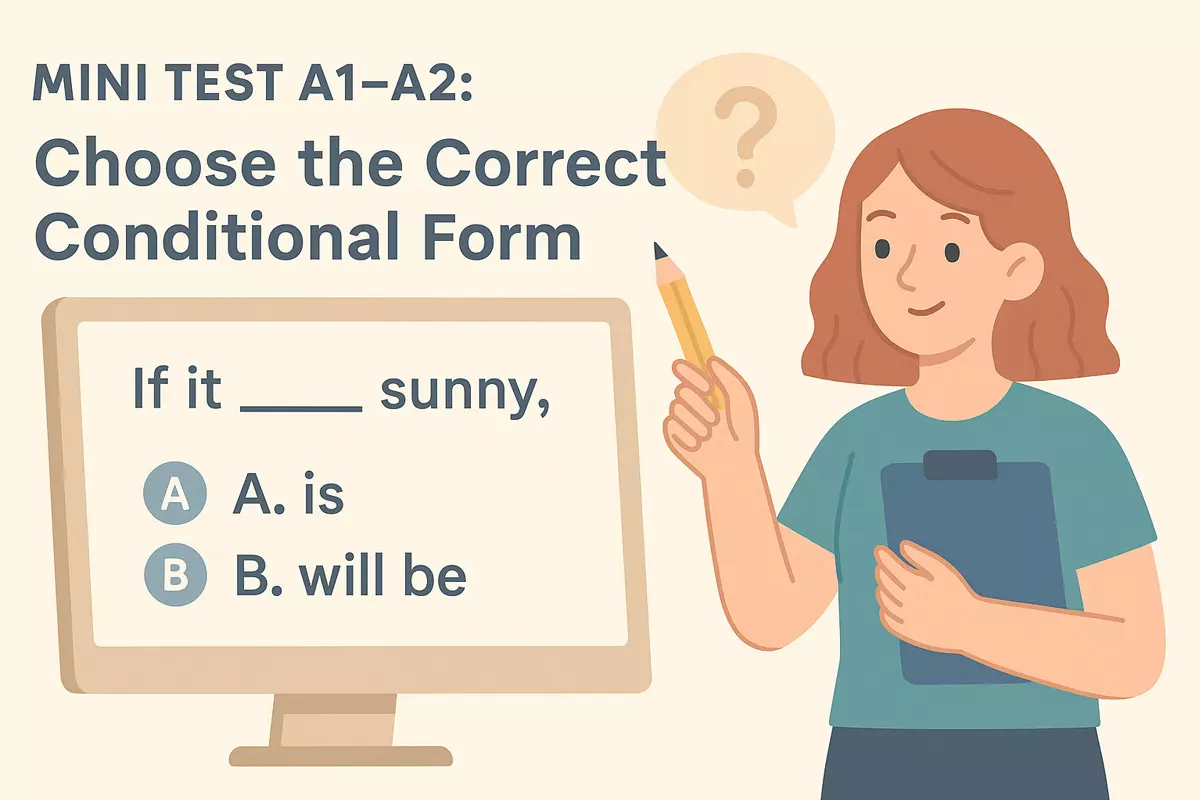 This article offers a quick test on zero and first conditionals. It features multiple-choice questions, tasks on if vs when and will vs won’t, error identification, a mini writing task, and an answer key for self-assessment.
Get ready to enhance your grammar skills with this beginner-level mini quiz focused on conditional sentences. Designed to challenge your understanding, the quiz will prompt you to choose the correct forms, helping you build a solid foundation for using English in daily situations. By practicing with these questions, you'll gain confidence in recognizing and applying conditionals, making your communication clearer and more accurate as you continue to learn and use English effectively.
Short instructions for the test
Before starting, make sure you understand the goal: you will select the correct conditional verb forms for each sentence. These tasks are designed for A1–A2 learners, so the focus is on basic structures like zero, first, and simple second conditionals. Read each sentence carefully and choose the most appropriate verb form from the options provided.
How to approach each question
- Read the entire sentence before looking at the options.
- Pay attention to the meaning: Is it a general fact, a real possibility, or an imaginary situation?
- Look for time markers (e.g., “if”, “when”, “unless”) to help decide the correct form.
- Remember that subject-verb agreement and correct tense are important.
Types of conditional forms you may encounter
- Zero Conditional: Used for general truths (If + present simple, present simple).
- First Conditional: Used for real future possibilities (If + present simple, will + base verb).
- Second Conditional: Used for unreal or hypothetical situations (If + past simple, would + base verb).
Common patterns and examples
| Type | Example Structure |
|---|---|
| Zero Conditional | If + present simple, present simple If it rains, the grass gets wet. |
| First Conditional | If + present simple, will + base verb If you study, you will pass. |
| Second Conditional | If + past simple, would + base verb If I had money, I would travel. |
Tips for success
- Don’t rush—double-check your answers before moving on.
- Think about the meaning of the sentence, not just the grammar.
- If you are unsure, eliminate options that are obviously incorrect.
- Review the examples above if you are not sure about the structure.
This test is multiple choice. After each question, select the answer that best completes the sentence. When you finish, you can check your results and review any mistakes to understand the correct usage.
Multiple-choice items with zero and first conditional
Understanding how to choose between the zero and first conditional is essential for expressing real situations and possible future outcomes in English. These forms often appear in grammar quizzes or classroom tests at the A1–A2 level, where you are asked to select the correct verb tense to complete a sentence. Practicing with multiple-choice questions helps learners recognize the difference between general truths and real possibilities.
Typical Patterns and Triggers
The zero conditional is used for facts and routines, while the first conditional describes possible events that may happen in the future if a condition is met. Here are some common structures and signal words to look for:
- If + present simple, present simple (for facts and routines)
- If + present simple, will + verb (for possible future results)
- Words like "whenever," "every time," and "when" often signal a zero conditional
- Look for "will" or "won’t" in the main clause for first conditional choices
Sample Multiple-Choice Items
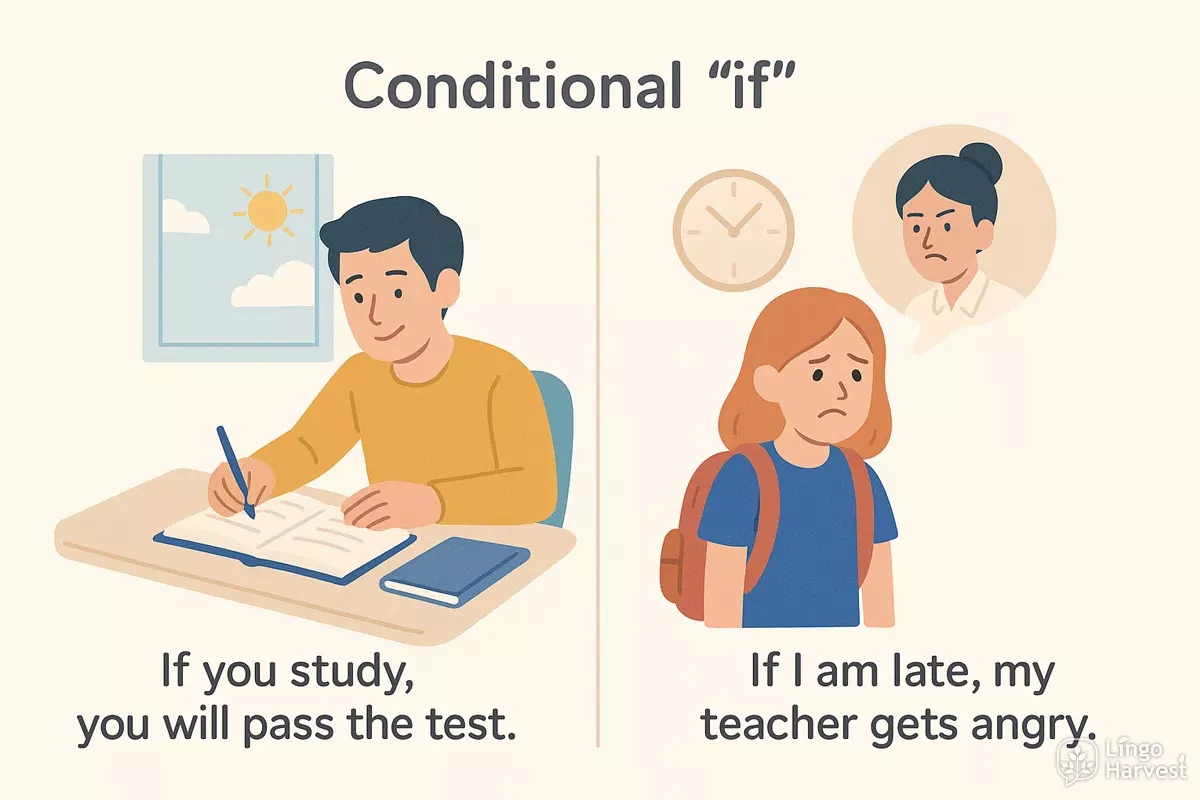
Below are example sentences you might encounter in a quiz. Try to identify which conditional form fits best:
- If it rains, the grass gets wet.
- If you study, you will pass the test.
- If I am late, my teacher gets angry.
- If you press this button, the machine starts.
- If she calls, I will answer the phone.
- If they don’t hurry, they will miss the bus.
- If water boils, it evaporates.
- If we finish early, we will go to the park.
- If you heat ice, it melts.
- If I find your keys, I will tell you.
- If the sun shines, the flowers open.
- If you don’t eat, you will be hungry.
- If she is tired, she goes to bed early.
- If it snows, we will make a snowman.
- If people don’t drink water, they die.
Comparing Zero and First Conditional Forms
To see the difference clearly, compare how the same sentence changes meaning with each structure:
| Zero Conditional | First Conditional |
|---|---|
| If you heat water, it boils. | If you heat water, it will boil. |
| If it rains, the grass gets wet. | If it rains, the grass will get wet. |
| If I am late, my boss gets angry. | If I am late, my boss will get angry. |
| If people eat too much, they get fat. | If people eat too much, they will get fat. |
These examples show that the zero conditional states what always happens, while the first conditional talks about what could happen in the future. Recognizing this difference will help you choose the correct answer in grammar tests.
Tasks focusing on if vs when and will vs won’t
Understanding the difference between if and when, as well as choosing between will and won’t, is essential for clear communication in English conditionals. This section explores how these words are used, how they change the meaning of sentences, and provides practical exercises to reinforce your skills.
How to Use "if" and "when"
If is used for situations that are possible but not certain. When is for events that you expect to happen. The choice between them can change the nuance of your sentence. Here are some examples:
- If it rains, we will stay inside. (It might rain.)
- When it rains, the streets get wet. (It always happens.)
- If I see Anna, I’ll tell her. (I might see her.)
- When I see Anna, I’ll tell her. (I will definitely see her.)
Choosing Between "will" and "won’t"
Will shows what someone intends or expects to do in the future. Won’t (will not) expresses a refusal or something that is not expected to happen. Pay attention to the context to select the correct form.
- If you study, you will pass the test. (A positive result is possible.)
- If you don’t study, you won’t pass the test. (A negative result is possible.)
- When she arrives, we will start dinner. (We expect it.)
- If it’s late, I won’t call you. (I will not do it.)
Practice: Complete the Sentences
- If it snows tomorrow, we _______ make a snowman.
- When my friend calls, I _______ answer quickly.
- If you don’t hurry, you _______ catch the bus.
- When the movie finishes, we _______ go home.
- If you eat too much, you _______ feel sick.
- When I get home, I _______ send you a message.
- If you ask politely, he _______ help you.
- When you finish your homework, you _______ watch TV.
Show answers
- will
- will
- won’t
- will
- will
- will
- will
- will
Quick Check: "if" or "when"?
Choose the correct word for each sentence:
- _______ I am tired, I go to bed early. (if/when)
- Call me _______ you arrive. (if/when)
- _______ it rains, we will cancel the picnic. (if/when)
- _______ you see Tom, tell him hello. (if/when)
- _______ I finish work, I usually go for a walk. (if/when)
- _______ you heat ice, it melts. (if/when)
- _______ you study hard, you will pass the test. (if/when)
- _______ the movie ends, let's go for coffee. (if/when)
- _______ you don’t hurry, we’ll be late. (if/when)
- _______ I visit London, I always go to the same café. (if/when)
Show answers
- When
- When
- If
- If
- When
- If
- If
- When
- If
- When
Summary Table: "if" vs "when" and "will" vs "won’t"
| Function | Example |
|---|---|
| If (possible, not certain) | If it rains, we will stay inside. |
| When (expected, certain) | When it rains, the streets get wet. |
| Will (future action/positive) | You will enjoy the party if you come. |
| Won’t (future negative/refusal) | If you don’t hurry, you won’t catch the train. |
Error-identification questions
When practicing conditional forms at the A1–A2 level, it’s common to encounter sentences where the structure isn’t quite right. Spotting these mistakes helps you understand English grammar more deeply and avoid similar errors in your own writing. In this section, you'll find guidance on how to recognize typical issues and correct them.
Common Mistakes in Conditional Sentences
Many learners mix up verb tenses or use the wrong modal verb in conditional sentences. For example, pairing "will" with "if" in the same clause is a frequent slip. Here are some patterns to watch out for:
- If + will: If you will come, I will be happy. ❌ (should be "If you come, I will be happy.")
- Past tense in zero conditional: If water boiled, it evaporates. ❌ (should be "If water boils, it evaporates.")
- Using "would" instead of "will" for first conditional: If it rains, I would stay home. ❌ (should be "If it rains, I will stay home.")
- Confusing "was" and "were" in second conditional: If I was you, I would try. ❌ (should be "If I were you, I would try.")
- Omitting "if": You come early, we can start. ❌ (should be "If you come early, we can start.")
- Wrong verb order: If will you help me, I can finish. ❌ (should be "If you help me, I can finish.")
- Incorrect use of "would" in the if-clause: If you would tell me, I would help. ❌ (should be "If you tell me, I will help.")
- Mixing conditional types: If I know the answer, I would tell you. ❌ (should be "If I knew the answer, I would tell you.")
- Double future: If it will snow, we will stay home. ❌ (should be "If it snows, we will stay home.")
- Forgetting subject-verb agreement: If he go, I come too. ❌ (should be "If he goes, I come too.")
How to Identify Wrong Forms
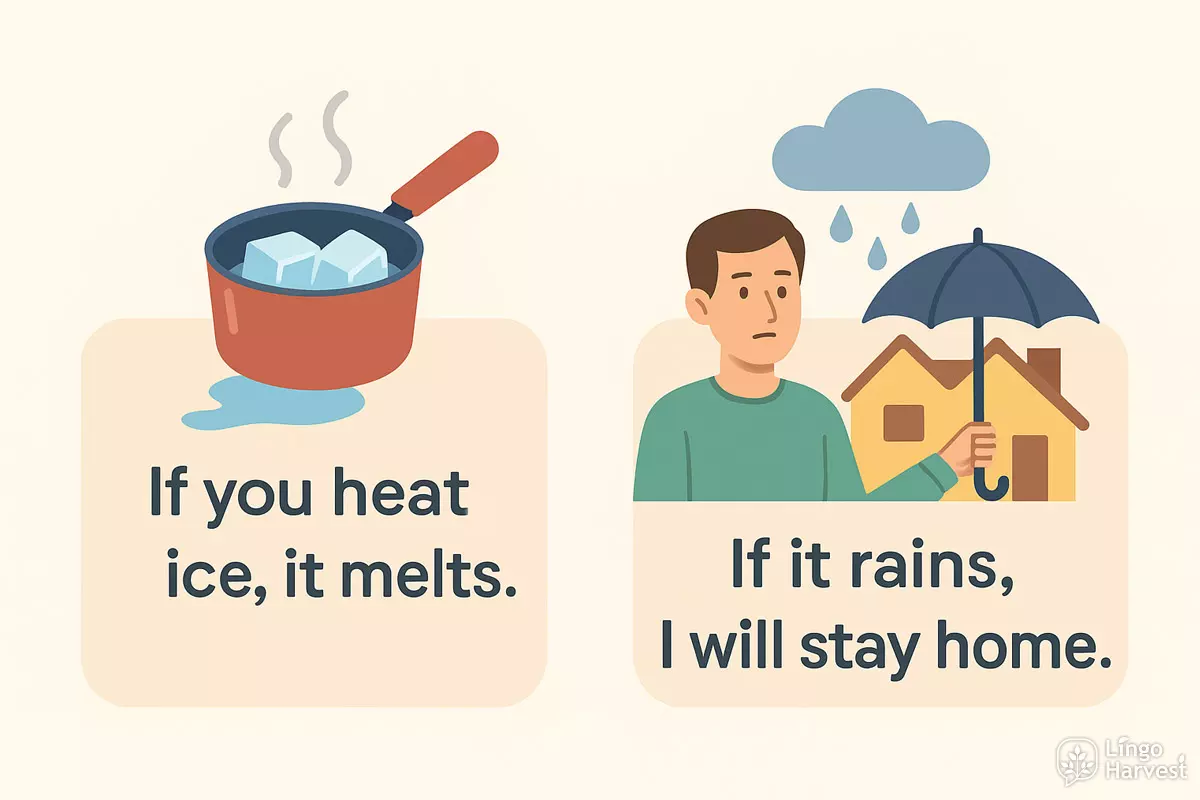
Pay attention to the tense and modal verbs in both parts of the sentence. The correct structure depends on the type of conditional being used. Reviewing a comparison of the main forms can help clarify what to look for:
| Type | Correct Structure | Example |
|---|---|---|
| Zero Conditional | If + present simple, present simple | If you heat ice, it melts. |
| First Conditional | If + present simple, will + base verb | If it rains, I will stay home. |
| Second Conditional | If + past simple, would + base verb | If I won the lottery, I would travel. |
| Third Conditional | If + past perfect, would have + past participle | If she had studied, she would have passed. |
By comparing your answers to these models, you can quickly spot and fix errors. Practicing with mini-tests and reviewing your mistakes will help you internalize the correct patterns for each conditional form.
Mini writing task: complete condition + result pairs
Practicing conditional sentences helps you understand how to connect situations and possible outcomes in English. In this exercise, you will see examples of condition-result pairs using the zero and first conditional forms. These structures are common at A1–A2 level and are useful for everyday situations.
How to build condition + result pairs
First, remember the basic structure:
- If + present simple, present simple (zero conditional): facts and routines.
- If + present simple, will + base verb (first conditional): real, possible future situations.
Here are some incomplete pairs for you to finish. Write a suitable condition or result to complete each sentence.
- If it rains, __________________________.
- __________________________, I will call you.
- If you study hard, __________________________.
- __________________________, she gets up early.
- If you don't understand, __________________________.
- __________________________, the water boils.
- If I am late, __________________________.
- __________________________, you feel tired.
- If we finish work early, __________________________.
- __________________________, the plants die.
Show answers
- If it rains, I will stay at home.
- If I have time, I will call you.
- If you study hard, you will pass the test.
- If it is Monday, she gets up early.
- If you don't understand, ask your teacher.
- If you heat water to 100°C, the water boils.
- If I am late, wait for me.
- If you don't sleep enough, you feel tired.
- If we finish work early, we will go to the park.
- If you don't water them, the plants die.
Useful phrases for conditional sentences
Here are some common beginnings and endings to help you create more condition-result pairs:
- If you are hungry, _____________
- _____________, I will help you.
- If he finishes his homework, _____________
- _____________, the lights go out.
- If you press this button, _____________
- _____________, you will be cold.
- If we hurry, _____________
- _____________, it melts.
- If she is busy, _____________
- _____________, you get a good seat.
Show answers
- If you are hungry, make a sandwich.
- If you need something, I will help you.
- If he finishes his homework, he can play outside.
- If there is a power cut, the lights go out.
- If you press this button, the machine stops.
- If you don't wear a jacket, you will be cold.
- If we hurry, we will catch the bus.
- If you leave ice in the sun, it melts.
- If she is busy, call later.
- If you arrive early, you get a good seat.
Try creating your own examples using these patterns to become more confident with conditionals. The more you practice, the easier it becomes to link situations and results naturally in English.
Answer key for self-checking
Here you’ll find the correct conditional forms for each question in the mini test. Use this information to check your responses, and review any mistakes to strengthen your understanding of conditional sentences at the A1–A2 level.
Typical Conditional Patterns at A1–A2
- If + present simple, will + base verb (first conditional)
- If + present simple, present simple (zero conditional)
- If + past simple, would + base verb (second conditional)
Correct Answers for the Mini Test
- If it rains, we will stay at home. ✅
- If you study hard, you will pass the exam. ✅
- If I have time, I will call you. ✅
- If they are late, we will start without them. ✅
- If water boils, it evaporates. ✅
- If she doesn't eat breakfast, she is hungry. ✅
- If I went to Paris, I would visit the Eiffel Tower. ✅
- If he were taller, he would play basketball. ✅
- If we finish early, we will go for a walk. ✅
- If you mix red and blue, you get purple. ✅
Common Mistakes to Watch For
- Mixing tenses: For first conditional, use present simple in the if-clause and “will” in the main clause.
- For zero conditional, both clauses use present simple.
- Second conditional uses past simple in the if-clause and “would” in the main clause.
Summary Table: Conditional Forms Overview
| Type | Structure | Example |
|---|---|---|
| Zero conditional | If + present simple, present simple | If you heat ice, it melts. |
| First conditional | If + present simple, will + base verb | If it rains, I will stay home. |
| Second conditional | If + past simple, would + base verb | If I had a car, I would travel more. |
Review your answers against the examples and explanations above. If you made any errors, revisit the rules and try rewriting the sentences for extra practice. Focusing on the structure of conditionals will help you use them more confidently in everyday English.