Third Conditional: Unreal Past and Imagined Results

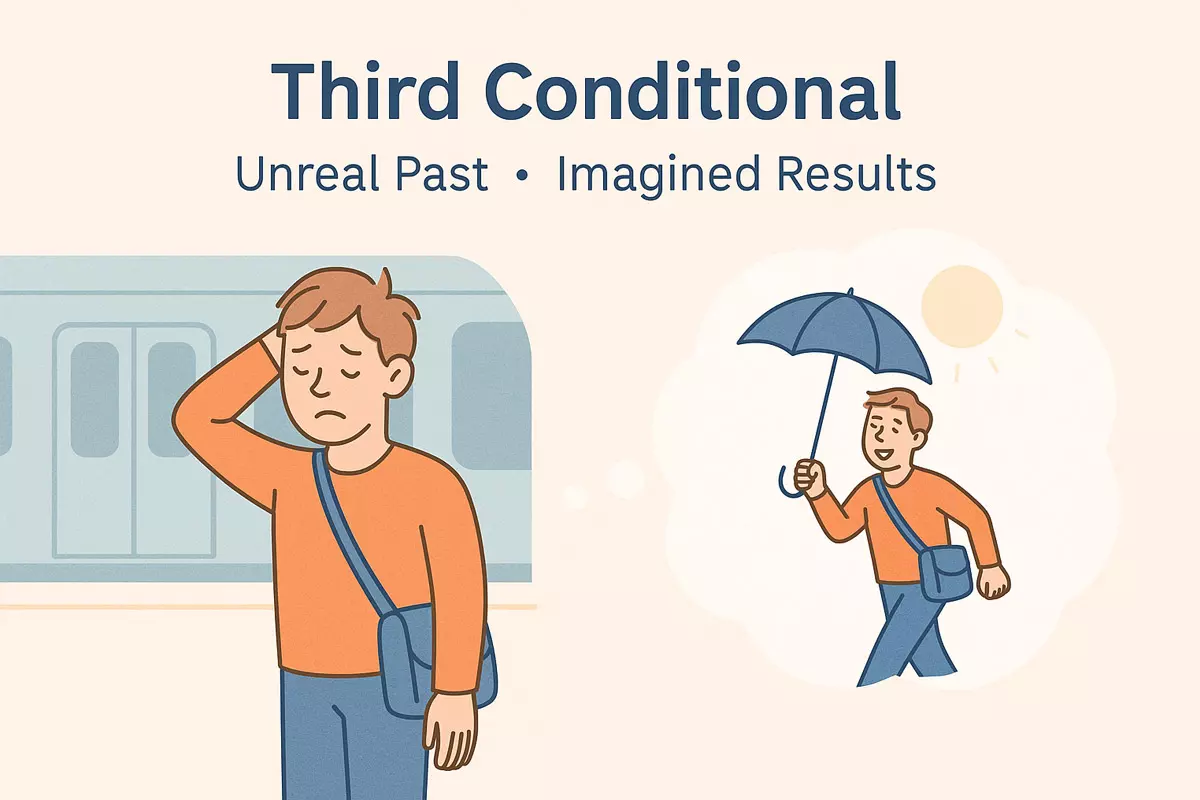 Here we unreal past conditions and regrets, how to form the third conditional with if plus past perfect and would have plus past participle, using could have and might have, expressing blame or missed chances, common mistakes, and practice exercises.
- Meaning of unreal past conditions and regrets
- Form: if + past perfect, would have + past participle
- Using could have and might have for different degrees of possibility
- How third conditional expresses blame, regret, or missed opportunities
- Differences between third conditional and narrative past
- Common tense mistakes and logical errors
- Practice: rewrite past events using third conditional forms
Have you ever wondered how life might have changed if events had played out differently? Here we the intriguing ways English allows us to discuss alternate outcomes and missed opportunities in the past. By examining the specific structures and phrases used to express imagined scenarios, we gain insight into how language helps us reflect on what could have been. Understanding these forms can enhance your ability to communicate complex ideas about regret, possibility, and hypothetical situations with greater clarity and nuance.
Meaning of unreal past conditions and regrets
The third conditional is used to talk about situations in the past that did not happen, and to imagine different outcomes if things had been different. This structure allows speakers to express hypothetical scenarios, missed opportunities, or reflect on past mistakes. Essentially, it’s a way to speculate about how the past could have gone differently, often with a sense of regret or relief.
How the third conditional expresses unreal past
When we use this conditional, we’re referring to events or actions that were impossible to change because they are already finished. The action in the “if” clause didn’t happen, and the result clause describes an imagined consequence. This is especially common when people look back and wonder, “What if...?”
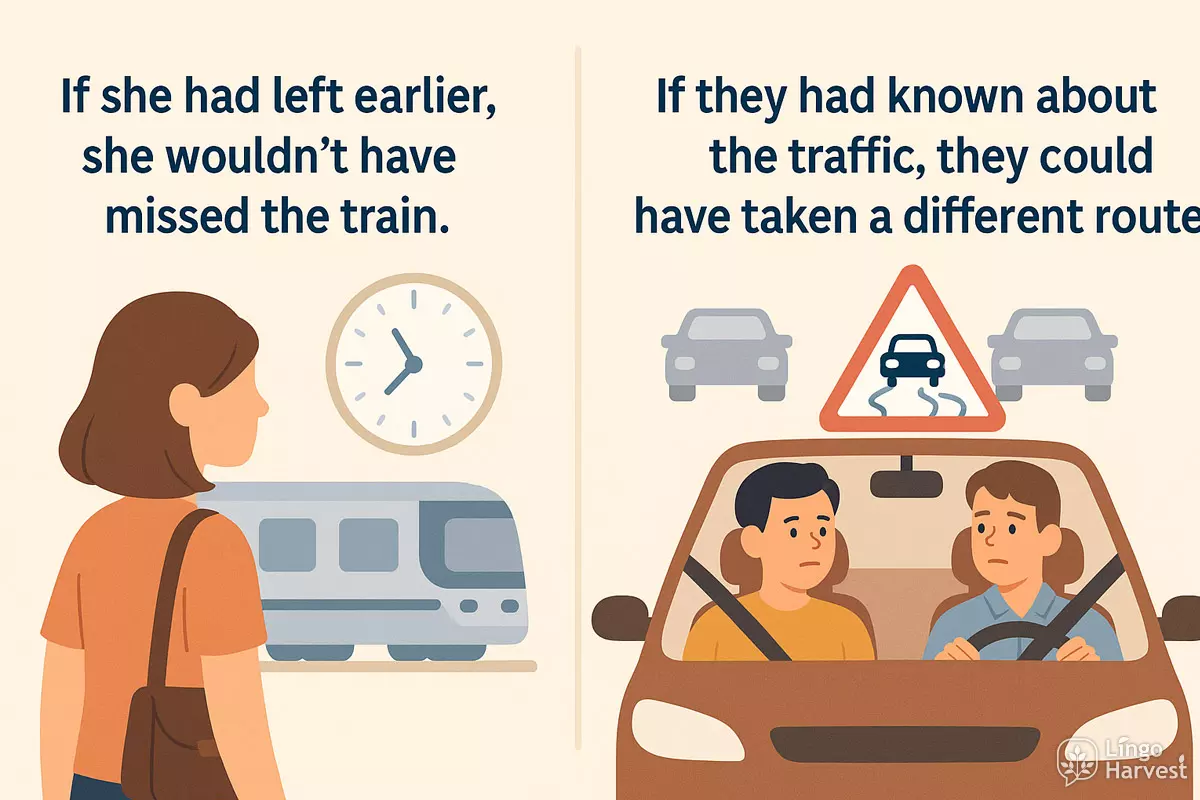
- If I had studied harder, I would have passed the exam. (But I didn’t study hard, so I failed.)
- If she had left earlier, she wouldn’t have missed the train.
- If they had known about the traffic, they could have taken a different route.
- If we had saved more money, we might have bought a bigger house.
- If he had listened to advice, he wouldn’t have made that mistake.
- If you had told me, I would have helped you.
- If it had rained, the picnic would have been cancelled.
- If I had seen the sign, I wouldn’t have parked there.
- If my phone hadn’t died, I could have called for help.
- If they had invited us, we would have come.
Talking about regrets and missed opportunities
People often use this conditional to express regret or wish things had happened differently. The focus is on actions or decisions that cannot be changed, which is why this form is so closely linked to feelings of disappointment or relief.
- Wishing you had acted differently: If only I had apologized sooner, we might still be friends.
- Expressing relief about something that didn’t happen: If I had gone to that party, I might have gotten sick.
- Recognizing a missed chance: If I had known about the job opening, I would have applied.
Summary of structure and meaning
The third conditional follows this pattern: If + past perfect, would/could/might have + past participle. Both the condition and the result are unreal—neither happened, but we imagine how things could have turned out differently.
| Unreal Past Condition | Imagined Result |
|---|---|
| If I had left home earlier | I would have caught the bus |
| If they had studied more | They might have passed the test |
| If she had brought an umbrella | She wouldn’t have gotten wet |
| If we had known about the sale | We could have bought it cheaper |
| If he had checked the weather | He would not have gone hiking |
Using the third conditional is a way to reflect on the past, showing how different actions might have changed the outcome. It’s a valuable tool for discussing hypothetical situations, expressing regret, or simply imagining alternative histories.
Form: if + past perfect, would have + past participle
Understanding the structure of third conditional sentences is key to expressing hypothetical situations about the past. This pattern allows us to talk about events that did not happen and imagine different results. The typical third conditional sentence is split into two main parts: a condition (the “if” clause) and a result clause. The “if” clause uses the past perfect tense to indicate an unreal or impossible past situation. The result clause features “would have” followed by a past participle, showing what might have happened if the condition had been met.
Basic Structure
- If + subject + had + past participle, subject + would have + past participle
- Conditional clause can come first or second, but a comma is needed if it comes at the beginning.
Examples in Context
- If she had studied harder, she would have passed the exam.
- If it had rained, the picnic would have been canceled.
- If they had left earlier, they would have caught the train.
- If I had known about the meeting, I would have attended.
- If you had told me, I would have helped you.
- If we had booked tickets, we would have gone to the concert.
- If he had seen the sign, he would have stopped.
- If the team had practiced more, they would have won.
- If she had remembered his birthday, she would have called him.
- If I had saved more money, I would have traveled abroad.
- If you had listened to advice, you would have avoided the mistake.
- If the weather had been better, we would have gone hiking.
- If they had invited us, we would have joined the party.
- If I had brought an umbrella, I would not have gotten wet.
- If the alarm had gone off, we would have woken up on time.
Word Order and Variations
You can switch the order of the clauses without changing the meaning. For example:
- You would have passed the exam if you had studied harder.
- The picnic would have been canceled if it had rained.
Notice that when the “if” clause comes second, a comma is not needed.
Summary Table: Third Conditional Structure
| Clause Type | Example |
|---|---|
| If-clause (Past Perfect) |
If she had called, |
| Main clause (Would Have + Past Participle) |
we would have answered. |
| Full sentence | If she had called, we would have answered. |
| Inverted order | We would have answered if she had called. |
Key Points to Remember
- This form only describes unreal or impossible events in the past.
- It is not used for future or present possibilities.
- “Would have” can sometimes be replaced with “could have” or “might have” to show ability or possibility.
Mastering this structure helps communicate regrets, missed opportunities, and alternate histories with clarity and precision.
Using could have and might have for different degrees of possibility
Understanding how to express varying levels of possibility in the third conditional helps make your English more precise and nuanced. Both "could have" and "might have" are common in these structures, but they suggest different shades of meaning about what was possible in the past but did not actually happen.
"Could have" often indicates ability or potential, implying that something was possible if circumstances had been different. It suggests that there was a real chance for the result to occur, though it did not happen. In contrast, "might have" is used for uncertain or less definite possibilities—it hints at a weaker or more speculative outcome. The difference can be subtle but important when discussing hypothetical past situations.
Examples of "could have" and "might have" in context
- If she had studied harder, she could have passed the exam. (She was capable of passing.)
- If they had left earlier, they could have caught the train. (It was possible for them to catch it.)
- If you had told me, I might have helped you. (It’s possible, but not certain, I would have helped.)
- If it had rained, the match might have been cancelled. (Cancellation was only a possibility.)
- If he had listened, he could have avoided the mistake. (He had the ability to avoid it.)
- If we had known about the sale, we might have bought more. (We possibly would have, but no guarantee.)
- If she had asked, I could have explained the problem. (I was able to explain.)
- If you had called, we might have met for coffee. (There was a chance, but not a certainty.)
- If they had planned better, they could have finished on time. (They were able to finish on time.)
- If he had seen the warning, he might have reacted differently. (He perhaps would have reacted.)
Comparing "could have" and "might have":
| Form | Typical Meaning | Example |
|---|---|---|
| could have + past participle | Indicates ability or possibility that was real, but not realized | If you had told me, I could have helped you. ✅ |
| might have + past participle | Suggests a less certain, more speculative possibility | If you had told me, I might have helped you. → |
When choosing between these forms, consider whether you want to express a clear potential (use "could have") or a more uncertain, hypothetical outcome (use "might have"). This distinction can help convey your meaning more accurately when discussing unreal past situations.
How third conditional expresses blame, regret, or missed opportunities
The third conditional is often used to talk about events that did not happen and their imagined consequences. This structure lets speakers reflect on past situations, showing feelings such as regret, missed chances, or even assigning responsibility for outcomes. By using "if + past perfect" together with "would have + past participle," people can discuss alternative realities and express how things could have turned out differently.
Expressing Regret and Missed Chances
People frequently use this form to talk about things they wish had happened, or to express disappointment about lost possibilities. For instance: "If I had studied harder, I would have passed the exam." This sentence shows regret and a sense of missed opportunity. The third conditional allows us to distance ourselves from reality, focusing on what might have been.
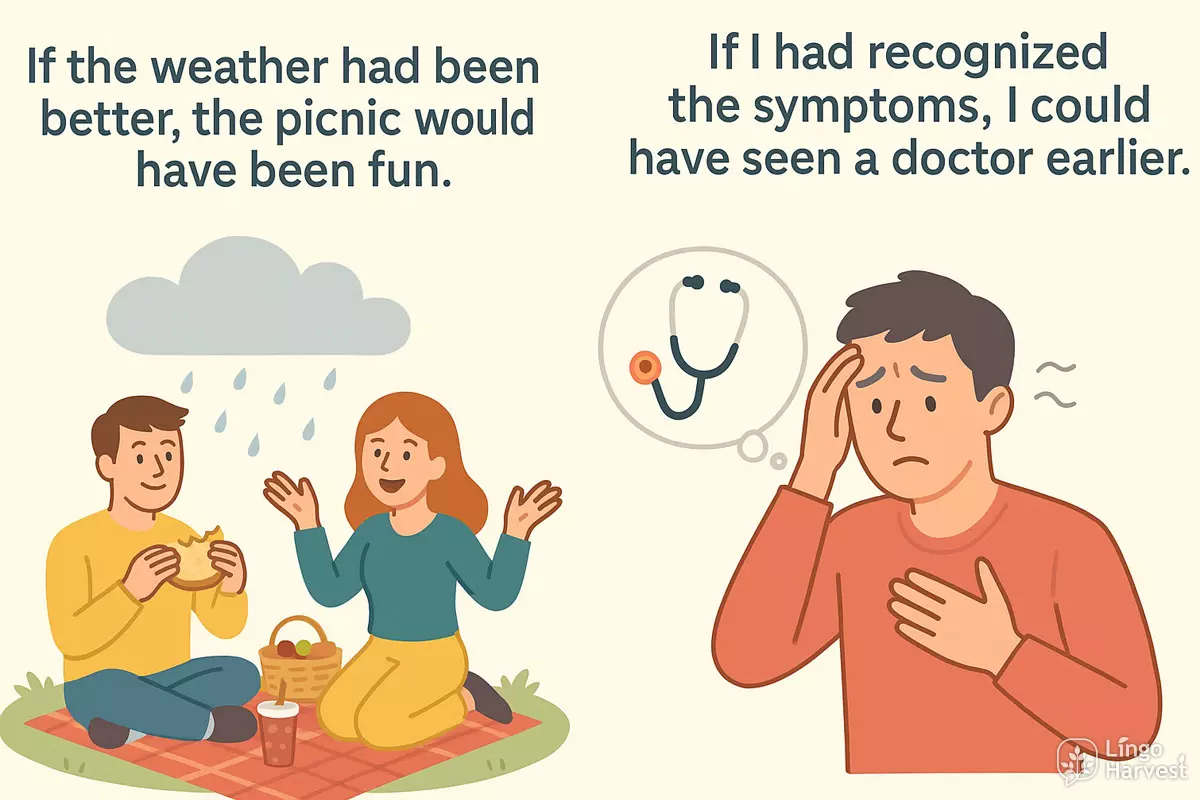
- If I had known about the meeting, I would have attended.
- If she had left earlier, she wouldn't have missed the train.
- If we had saved more money, we could have traveled abroad.
- If you had listened to my advice, things might have turned out better.
- If they had booked the tickets sooner, they would have gotten a discount.
- If I had remembered his birthday, he would not have been upset.
- If we had taken an umbrella, we wouldn't have gotten wet.
- If the weather had been better, the picnic would have been fun.
- If I had recognized the symptoms, I could have seen a doctor earlier.
- If she had apologized, the argument might have ended quickly.
- If you had tried harder, you might have succeeded.
- If I had checked the schedule, I wouldn't have missed the bus.
- If he had practiced more, he would have won the competition.
- If they had invited us, we would have come to the party.
Assigning Responsibility and Blame
The third conditional is also a tool for pointing out who or what caused a negative result. When someone wants to highlight that something could have been avoided, this structure makes it clear. For example: "If you had locked the door, the thief wouldn’t have gotten in." Here, the speaker is indirectly blaming the listener for the outcome. Below is a comparison table illustrating how the third conditional communicates different nuances:
| Situation | Third Conditional Example |
|---|---|
| Regret | If I had told her the truth, I wouldn’t have lost her trust. |
| Blame | If you had paid attention, this mistake would not have happened. |
| Missed Opportunity | If we had left earlier, we could have seen the sunrise. |
| Relief (avoided outcome) | If I hadn’t worn a helmet, I could have been seriously injured. |
Key Patterns and Emotional Impact
Using the third conditional adds emotional depth to statements about the past. It can show sorrow, frustration, or sometimes even relief about avoided disasters. The tone often depends on intonation and context, but the grammar itself signals that the speaker is considering a different version of past events—one that didn’t actually happen. In summary, this form helps English speakers communicate thoughts about alternate outcomes, express feelings about what might have been, and sometimes, gently (or not so gently) assign responsibility for past actions.
Differences between third conditional and narrative past
Understanding how the third conditional differs from narrative past can help learners express unreal situations and real events more accurately. While both use past tense forms, their purposes and implications contrast sharply.
Purpose and Use
The third conditional is used to talk about hypothetical situations in the past—things that did not happen—and their imagined results. In contrast, narrative past (simple past, past continuous, past perfect) is used for recounting actual events and actions that genuinely took place.
- Third conditional: Imagines a different outcome if the past had been different.
- Narrative past: Describes real past actions, sequences, or events.
Typical Structures
The third conditional follows a precise structure: If + past perfect, would have + past participle. Narrative past uses simple past, past continuous, or past perfect without the conditional framework.
| Aspect | Third Conditional | Narrative Past |
|---|---|---|
| Function | Describes unreal, hypothetical past situations and their imagined results | Describes real events or actions that happened in the past |
| Example | If she had studied, she would have passed the exam. | She studied hard and passed the exam. |
| Verb Form | if + past perfect, would have + past participle |
Simple past, past continuous, or past perfect |
| Reality | Contrary to fact; did not happen | Describes what actually happened |
Examples and Key Phrases
Here are some examples to clarify the distinction:
- If I had known about the meeting, I would have attended. (imagined past)
- I knew about the meeting and attended it. (real past)
- If they had left earlier, they would not have missed the train.
- They left early and caught the train.
- If we had saved more money, we could have traveled abroad.
- We saved money and traveled abroad.
- If you had called me, I would have helped you.
- You called me, and I helped you.
- If it had rained, the picnic would have been canceled.
- It rained, so the picnic was canceled.
Summary
In summary, third conditional sentences let us speculate about alternative pasts and their consequences, while narrative past is used to recount what genuinely happened. Recognizing these differences is crucial for expressing both real events and hypothetical scenarios in English.
Common tense mistakes and logical errors
Learners often struggle with the third conditional because it refers to unreal situations in the past and their hypothetical results. Misusing verb tenses or confusing third conditional with other conditional forms can make sentences unclear or illogical. It's important to recognize typical slip-ups to avoid miscommunication when discussing imaginary past scenarios.
Frequent Third Conditional Problems
- Using have instead of had in the if-clause:
❌ If he have studied, he would have passed. - Omitting have after would:
❌ She would passed the exam if she had tried. - Mixing second and third conditional forms:
❌ If I knew about the meeting, I would have come. - Using present or past simple instead of past perfect in the if-clause:
❌ If they go earlier, they would have caught the train. - Creating illogical time references (e.g., present result with a past condition):
❌ If you had called me, I am happy now. - Forgetting subject-verb agreement in the main clause.
- Placing would have in the if-clause:
❌ If she would have listened, this wouldn't happen. - Misusing modal verbs (should/could/might) without have:
❌ If you had left earlier, you could arrive on time. - Switching the order of clauses incorrectly, causing confusion.
- Using "was" instead of "had been" in the if-clause.
Comparing Correct and Incorrect Forms
| Incorrect Example | Correct Version |
|---|---|
| If you would have told me, I would have helped. | If you had told me, I would have helped. |
| If she studied harder, she would have passed. | If she had studied harder, she would have passed. |
| If we didn't miss the bus, we would have arrived on time. | If we hadn't missed the bus, we would have arrived on time. |
| If he had seen the sign, he stops. | If he had seen the sign, he would have stopped. |
| If I had known, I am not upset now. | If I had known, I would not have been upset. |
Logical Problems to Avoid
A common issue is combining a past unreal condition with a present or future result, which does not fit the third conditional framework. The third conditional is strictly for hypothetical past situations and their imagined past consequences. Another pitfall is mismatching verbs so the outcome doesn't logically follow from the condition. Double-check both parts of your sentence to ensure they refer to the same (unreal) moment in the past.
- Past condition + past result: If she had left earlier, she would have caught the bus. ✅
- Past condition + present result (incorrect): If she had left earlier, she catches the bus. ❌
- Past simple instead of past perfect (incorrect): If I knew, I would have helped. ❌
- Consistent verb forms make the meaning clear and logical.
Mastering third conditional sentences means paying close attention to verb forms and logical sequence. Regular practice and checking for tense consistency can help you avoid typical errors and communicate more precisely about unreal past events.
Practice: rewrite past events using third conditional forms
When expressing unreal situations in the past and imagining different outcomes, the third conditional is essential. This section offers practical exercises to help you transform real past events into hypothetical alternatives using the correct structure: if + past perfect, would have + past participle. Practicing these conversions will deepen your grasp of how to discuss regrets, missed opportunities, or alternative histories in English.
Convert these real past events into third conditional sentences
- Maria missed the train because she woke up late.
- We didn’t bring an umbrella, so we got wet.
- Tom forgot his wallet and couldn’t pay for lunch.
- The team lost the match because their best player was injured.
- I didn’t see the email, so I missed the meeting.
- They didn’t study for the exam, so they failed.
- She didn’t apply for the job, so she didn’t get it.
- He left his phone at home, so he couldn’t call you.
- The event was cancelled because it rained heavily.
- We took the wrong bus and arrived late.
- She got sick after eating spoiled food.
- I didn’t know about the party, so I didn’t come.
- He didn’t set an alarm and overslept.
- They forgot to lock the door, and their house was robbed.
- The presentation failed because the computer crashed.
- We didn’t book a table, so the restaurant was full.
- She didn’t listen to advice and made a mistake.
- He missed the flight because he left late.
- I lost my keys, so I couldn’t get inside.
- The children didn’t wear coats and caught a cold.
Hints for rewriting
To transform each sentence, identify the real cause and the result, then use the third conditional structure. For example, "Maria missed the train because she woke up late" becomes: "If Maria had woken up earlier, she wouldn’t have missed the train."
Third Conditional Transformation Table
| Original Event | Third Conditional Form |
|---|---|
| We didn’t bring an umbrella, so we got wet. | If we had brought an umbrella, we wouldn’t have got wet. |
| Tom forgot his wallet and couldn’t pay for lunch. | If Tom had remembered his wallet, he could have paid for lunch. |
| The team lost the match because their best player was injured. | If their best player hadn’t been injured, the team might have won the match. |
| I didn’t see the email, so I missed the meeting. | If I had seen the email, I wouldn’t have missed the meeting. |
Show answers
- If Maria had woken up earlier, she wouldn’t have missed the train.
- If we had brought an umbrella, we wouldn’t have got wet.
- If Tom had remembered his wallet, he could have paid for lunch.
- If their best player hadn’t been injured, the team might have won the match.
- If I had seen the email, I wouldn’t have missed the meeting.
- If they had studied for the exam, they wouldn’t have failed.
- If she had applied for the job, she might have got it.
- If he hadn’t left his phone at home, he could have called you.
- If it hadn’t rained heavily, the event wouldn’t have been cancelled.
- If we hadn’t taken the wrong bus, we wouldn’t have arrived late.
- If she hadn’t eaten spoiled food, she wouldn’t have got sick.
- If I had known about the party, I would have come.
- If he had set an alarm, he wouldn’t have overslept.
- If they had locked the door, their house wouldn’t have been robbed.
- If the computer hadn’t crashed, the presentation wouldn’t have failed.
- If we had booked a table, the restaurant wouldn’t have been full.
- If she had listened to advice, she wouldn’t have made a mistake.
- If he hadn’t left late, he wouldn’t have missed the flight.
- If I hadn’t lost my keys, I could have got inside.
- If the children had worn coats, they wouldn’t have caught a cold.
Practicing these transformations will help you fluently describe hypothetical outcomes from real past events. This is especially useful when discussing regrets, alternative actions, or lessons learned.