Comparing Hypothetical Outcomes: Would Have vs Could Have vs Might Have

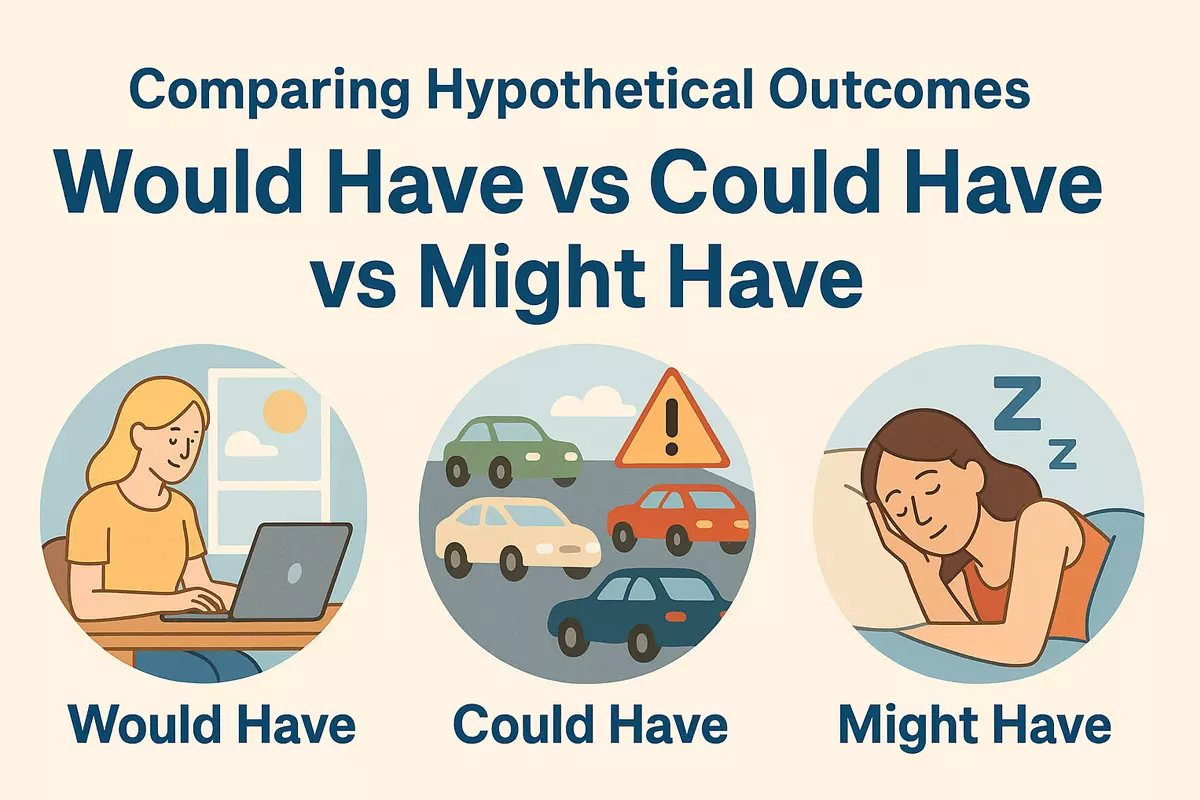 The article clarifies how would have, could have, and might have differ in meaning, certainty, and possibility when talking about past hypotheticals. It discusses how modal choice shapes interpretation, highlights common learner errors, and provides targeted practice.
- Meaning differences among would have, could have, might have
- Degrees of certainty, ability, and possibility
- How modal choice changes interpretation of past hypotheticals
- Common argument and narrative contexts
- Frequent learner errors with modal distinctions
- Practice: choose the correct modal for nuanced past outcomes
Have you ever considered how small changes in wording can significantly influence the way we discuss imagined past events? Examining the subtle distinctions among phrases like would have, could have, and might have shows how each one guides our understanding of what was possible, likely, or inevitable in hindsight. These expressions allow us to reflect on past situations with varying degrees of certainty or possibility, shaping our perception of alternative outcomes and the nature of our regrets or speculations.
Meaning differences among would have, could have, might have
Understanding how "would have," "could have," and "might have" function in sentences is crucial for expressing hypothetical scenarios in English. These phrases all relate to imagined situations in the past, but each carries a unique nuance about possibility, certainty, and intention.
Core distinctions
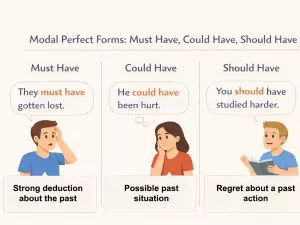
"Would have" is used to indicate a definite result or action that did not happen, typically due to a specific reason. "Could have" points to ability or possibility that was available but not realized. "Might have" suggests a weaker, more speculative possibility, often with less certainty than "could have."
| Form | Typical Meaning | Example Usage |
|---|---|---|
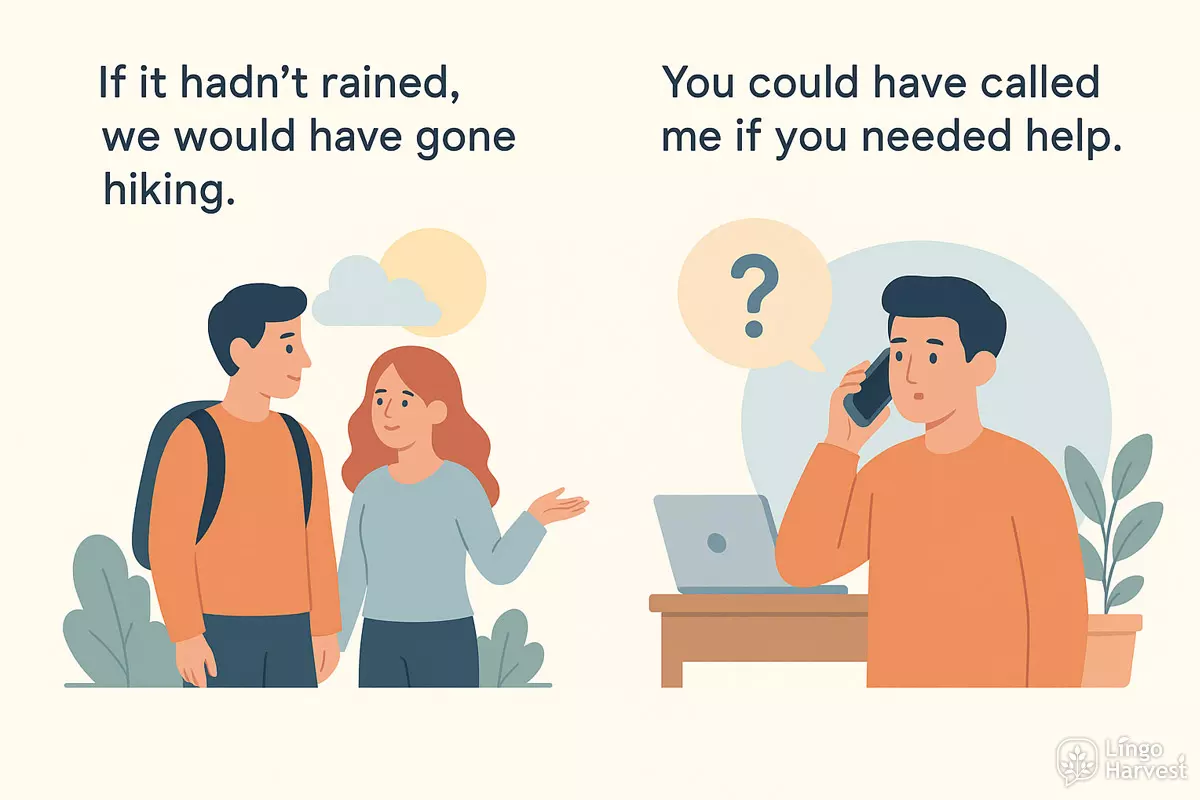
| Would have | Expected or intended result if conditions were met | If it hadn't rained, we would have gone hiking. |
| Could have | Potential ability or opportunity in the past | You could have called me if you needed help. |
| Might have | Possible but uncertain outcome | She might have missed the bus if she left later. |
Usage in context
- Would have often implies a condition was not met: "I would have finished earlier if I had started on time."
- Could have focuses on unrealized potential: "They could have won the game, but they made too many mistakes."
- Might have highlights uncertainty: "He might have forgotten the meeting."
Additional examples for clarity
- If you had told me, I would have helped you.
- She could have been a great artist.
- They might have seen us at the café.
- We would have visited Paris if we had more time.
- You could have tried harder on the test.
- He might have heard the news already.
- I would have answered if I’d known it was you.
- They could have joined the team last year.
- She might have misunderstood the instructions.
- We would have stayed longer, but it started to rain.
These subtle differences help convey intention, possibility, and speculation about past events. Choosing the right phrase ensures your meaning is clear, whether you’re discussing missed opportunities, alternate realities, or uncertain outcomes.
Degrees of certainty, ability, and possibility
Understanding the subtle differences between "would have," "could have," and "might have" helps clarify how English speakers express how sure they are about past events, what was possible, or what someone was capable of doing. Each phrase signals a distinct level of confidence, potential, or hypothetical scenario about the past.
Comparing certainty and possibility in hypothetical outcomes
"Would have" is typically used when talking about a definite outcome if the situation had been different. It implies a high degree of certainty. In contrast, "could have" expresses ability or potential—something was possible but not guaranteed. "Might have" conveys even less certainty, often used to suggest a mere possibility or a guess about the past.
Examples of usage
To see the differences in action, consider these examples:
- Would have: She would have finished the project if she hadn’t fallen ill. (She was certain to finish, but illness prevented it.)
- Could have: He could have become a professional athlete with more training. (He had the ability, but it didn’t happen.)
- Might have: They might have missed the train if they had left later. (It’s possible, but not certain.)
Quick reference: comparing "would have," "could have," and "might have"
| Form | Meaning | Level of Certainty | Example |
|---|---|---|---|
| Would have | Expected outcome if the past were different | High ✅ | I would have called you, but I lost my phone. |
| Could have | Ability or possibility in the past | Medium → | She could have won the race with more practice. |
| Might have | Uncertain possibility or speculation | Low ❌ | He might have forgotten the meeting. |
Summary of key distinctions
- Would have = strong expectation about what was likely to happen.
- Could have = focus on ability or opportunity that existed.
- Might have = highlights uncertainty or a remote possibility.
Learning to distinguish these forms will help you express shades of certainty, ability, and likelihood more naturally when discussing hypothetical situations in the past.
How modal choice changes interpretation of past hypotheticals
Choosing between "would have," "could have," and "might have" in counterfactual statements shapes the meaning in distinct ways. Each modal verb brings its own nuance, reflecting different attitudes toward possibility, certainty, and agency in past situations. Understanding these subtleties helps clarify what is being implied about unrealized outcomes.
Different Shades of Possibility and Certainty
- Would have signals a definite result, contingent on a specific condition ("If I had left earlier, I would have caught the train."). It's used for outcomes the speaker views as virtually certain if circumstances had been different.
- Could have suggests past ability or potential, not inevitability ("She could have won if she had tried harder."). It leaves room for possibility but does not guarantee the outcome.
- Might have expresses an uncertain or hypothetical possibility ("They might have enjoyed the party if they'd come."). The result is seen as plausible, but not assured or even likely.
Implications and Interpretive Differences
The modal chosen influences how responsibility, regret, or mere speculation are perceived. For example, "would have" often emphasizes missed opportunities or causes for regret, while "could have" points to untapped potential or capability. "Might have" keeps things more tentative, focusing on what was possible, not probable.
Comparing Modal Meanings in Context
| Modal Verb | Interpretation in Past Hypotheticals |
|---|---|
| Would have | Expresses a definite, expected result if a condition had been met. Implies high certainty and often regret or criticism. |
| Could have | Highlights ability or possibility, not certainty. Suggests something was possible but not guaranteed, often with a sense of missed potential. |
| Might have | Indicates a possible outcome, but with less certainty than "would have" or "could have." Used for tentative or speculative scenarios. |
Common Patterns and Examples
When comparing these forms, it's helpful to see them in action. Here are a variety of example sentences illustrating their different effects:
- If you had called, I would have answered.
- If it hadn't rained, we would have gone hiking.
- He could have been a great musician with more practice.
- They could have avoided the problem by planning ahead.
- She might have joined us if she’d known about the event.
- We might have finished earlier with more help.
- The car would have started if the battery wasn't dead.
- You could have told me sooner.
- He might have misunderstood the instructions.
- If I had known, I would have acted differently.
- We could have taken a taxi instead.
- They might have left already.
- She would have succeeded with more support.
- He could have passed the exam.
- It might have rained last night.
In summary, the choice among these modals adjusts the level of certainty, possibility, and emotional undertone when reflecting on past alternatives. Recognizing these differences is key for clear and nuanced communication about what did not, but potentially could have, happened.
Common argument and narrative contexts
When people discuss what might have happened, they often use "would have," "could have," and "might have" to express different shades of possibility or regret. These phrases appear frequently in debates, storytelling, and everyday conversations where outcomes are uncertain or imagined. Understanding how each functions helps clarify intention, blame, or speculation, especially when reflecting on past events.
Typical scenarios for hypothetical language
- Analyzing missed opportunities: "I would have called you if I'd known."
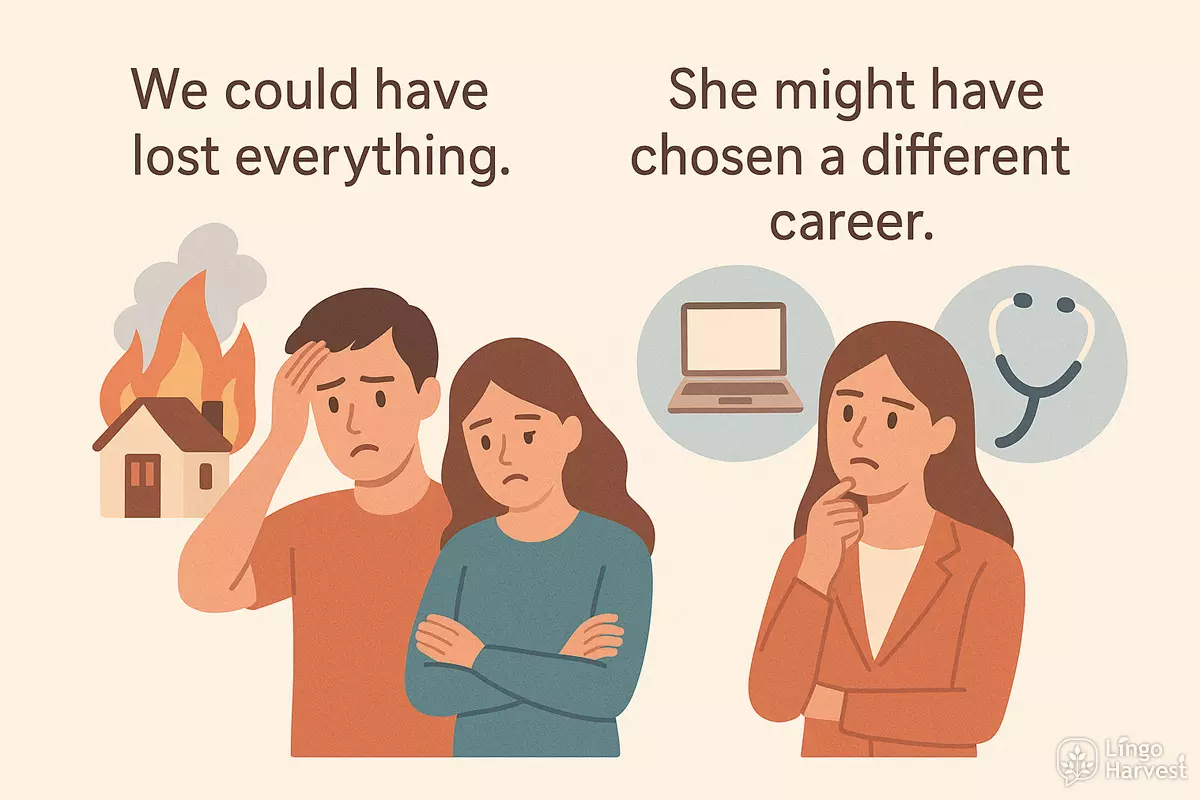
- Expressing regret or relief: "We could have lost everything."
- Speculating about alternatives: "She might have chosen a different career."
- Debating responsibility: "He would have finished the project if he’d started earlier."
- Imagining different pasts: "They could have won the game."
- Softening criticism: "You might have told me sooner."
- Justifying actions: "I would have helped, but I was out of town."
- Explaining results: "The plan could have worked with more time."
- Expressing uncertainty: "She might have misunderstood."
- Exploring consequences: "If it had rained, the event would have been canceled."
Comparing nuances in debate and narrative
The choice between these forms often signals the speaker’s attitude. For instance, "would have" usually expresses certainty about a hypothetical result, "could have" indicates possibility or ability, and "might have" highlights uncertainty or a faint chance. These distinctions matter in arguments, fiction, and reporting, as they can shift the focus from blame to possibility or from certainty to ambiguity.
| Phrase | Typical Use | Example in Context |
|---|---|---|
| Would have | Certainty about a different past | If you’d called, I would have answered. |
| Could have | Possibility or capability | We could have visited Paris last year. |
| Might have | Uncertainty or weak possibility | She might have forgotten the meeting. |
These structures let speakers navigate subtle differences in meaning, from implying obligation to expressing mere chance. Choosing the right one shapes how responsibility, regret, or possibility is communicated in both arguments and stories.
Frequent learner errors with modal distinctions
Learners often mix up modal verbs like “would have,” “could have,” and “might have” when talking about imagined or unreal situations in the past. These mix-ups can lead to confusion or unintended meanings. The subtle differences between possibility, ability, and hypothetical outcomes are not always clear, especially for those whose native languages use different structures.
Common confusion points
Many students use these modals interchangeably, not realizing each one expresses a slightly different nuance. For example, “would have” suggests a definite result if circumstances were different, while “could have” focuses on potential or ability, and “might have” indicates a possibility that didn’t happen but wasn’t certain.
Typical mistakes learners make
- Using “would have” instead of “could have” for past ability (e.g., “I would have finished” when they mean “I could have finished”)
- Confusing “might have” with “would have” in hypothetical regrets
- Mixing up the certainty levels implied by each modal
- Incorrect negative forms (e.g., “wouldn’t have can” instead of “couldn’t have”)
- Omitting “have” after the modal (e.g., “would finished” instead of “would have finished”)
- Using these modals in present tense contexts
- Translating directly from their native language, leading to unnatural or incorrect combinations
- Inserting unnecessary modals (e.g., “might could have”)
- Misplacing adverbs (e.g., “would have never finished” vs. “would never have finished”)
- Assuming “could have” always means permission rather than possibility or ability
- Forgetting subject-verb agreement after the modal construction
Modal distinctions at a glance
To help clarify, here’s a quick comparison of these common modals in hypothetical past contexts:
| Modal | Meaning | Example | Common Error |
|---|---|---|---|
| Would have | Definite result if conditions were different | I would have called you (but I didn’t have your number). | Used for possibility instead of certainty |
| Could have | Ability or possibility that did not happen | I could have won the race (if I had trained harder). | Used for definite outcome instead of potential |
| Might have | Uncertain possibility in the past | She might have seen you (but I’m not sure). | Used for strong certainty instead of doubt |
By keeping these distinctions in mind and practicing with clear examples, learners can avoid the most frequent pitfalls and communicate more precisely in English.
Practice: choose the correct modal for nuanced past outcomes
Understanding how to select between "would have," "could have," and "might have" allows for precise expression of past possibilities, abilities, and hypothetical results. The following exercises and explanations help you practice distinguishing these subtle differences in real-life scenarios.
Read each sentence and determine which modal best completes the idea. Consider whether the sentence refers to a certainty, a possibility, or an unrealized ability in the past.
Fill in the blanks
- If Sarah had seen the sign, she ________ (stop) before entering the restricted area.
- We ________ (finish) earlier if the traffic hadn't been so bad.
- They ________ (help) us, but they didn't know we needed assistance.
- He ________ (win) the match if he had practiced more.
- I ________ (call) you, but my phone battery was dead.
- With better weather, we ________ (go) hiking last weekend.
- If you had told me about the meeting, I ________ (attend).
- She ________ (pass) the exam if she had studied harder.
- They ________ (visit) us, but they were too busy.
- He ________ (be) at the party, but he was feeling ill.
Show answers
- would have stopped
- would have finished
- could have helped
- would have won
- would have called
- could have gone / might have gone
- would have attended
- would have passed
- might have visited / could have visited
- might have been
Choose the correct modal: Multiple choice
For each sentence, pick the best option to reflect the intended meaning.
- If I had known about the concert, I (would have / could have / might have) bought tickets.
- You (would have / could have / might have) avoided the mistake if you had double-checked your work.
- He (would have / could have / might have) been late, but he left early just in case.
- They (would have / could have / might have) joined us for dinner, but they had other plans.
- If she had seen the message earlier, she (would have / could have / might have) replied immediately.
- If the weather had been better, we (would have / could have / might have) gone hiking.
- You (would have / could have / might have) finished sooner if you hadn’t taken so many breaks.
- If he had trained more, he (would have / could have / might have) won the competition.
- If I hadn’t been busy, I (would have / could have / might have) helped you.
- If they had known the truth, they (would have / could have / might have) reacted differently.
Show answers
- would have
- could have
- might have
- might have / could have
- would have
- could have / might have
- could have
- would have / might have
- might have / could have
- might have
Common patterns and their meanings
- would have + past participle — a definite result if circumstances had been different.
- could have + past participle — an ability or possibility that existed, but didn't happen.
- might have + past participle — a possible outcome; less certain than "could have."
These exercises highlight the nuances between expressing certainty, possibility, and potential ability in past situations. Practicing with varied contexts will help reinforce accurate usage in your own speech and writing.