Wish + Past Perfect: Regrets About the Past

 Here we how wish plus past perfect is used for past regrets, contrasts wishes about the present and past, lists typical regret phrases, provides real and fictional examples, points out common errors, and includes practice rewriting regrets.
- How wish + past perfect expresses past regrets
- Difference between wish about the present vs past
- Typical phrases expressing disappointment or reflection
- Examples from storytelling and personal experiences
- Common mistakes with wish and should have structures
- Practice: rewrite past regrets using wish + past perfect
Reflecting on unchangeable past events often leads to feelings of longing or regret, and English offers specific ways to express such emotions, especially when wishing something in the past had turned out differently. By using certain verb forms, like the past perfect with phrases such as "I wish I had known" or "If only I had tried," speakers can clearly communicate their sense of missed opportunities or disappointment. This aspect of language allows people to share and understand each other's regrets in a meaningful way.
How wish + past perfect expresses past regrets
When we want to talk about things that happened in the past and express that we are unhappy about them, English speakers often use “wish” followed by the past perfect tense. This structure lets us communicate that we regret something we did or did not do, and that it’s too late to change the outcome. The focus is on imagining a different past—one where a particular action or event was different.
Forming sentences with “wish” and the past perfect
To build this type of sentence, use “wish” + subject + had (not) + past participle. Here are some typical examples:
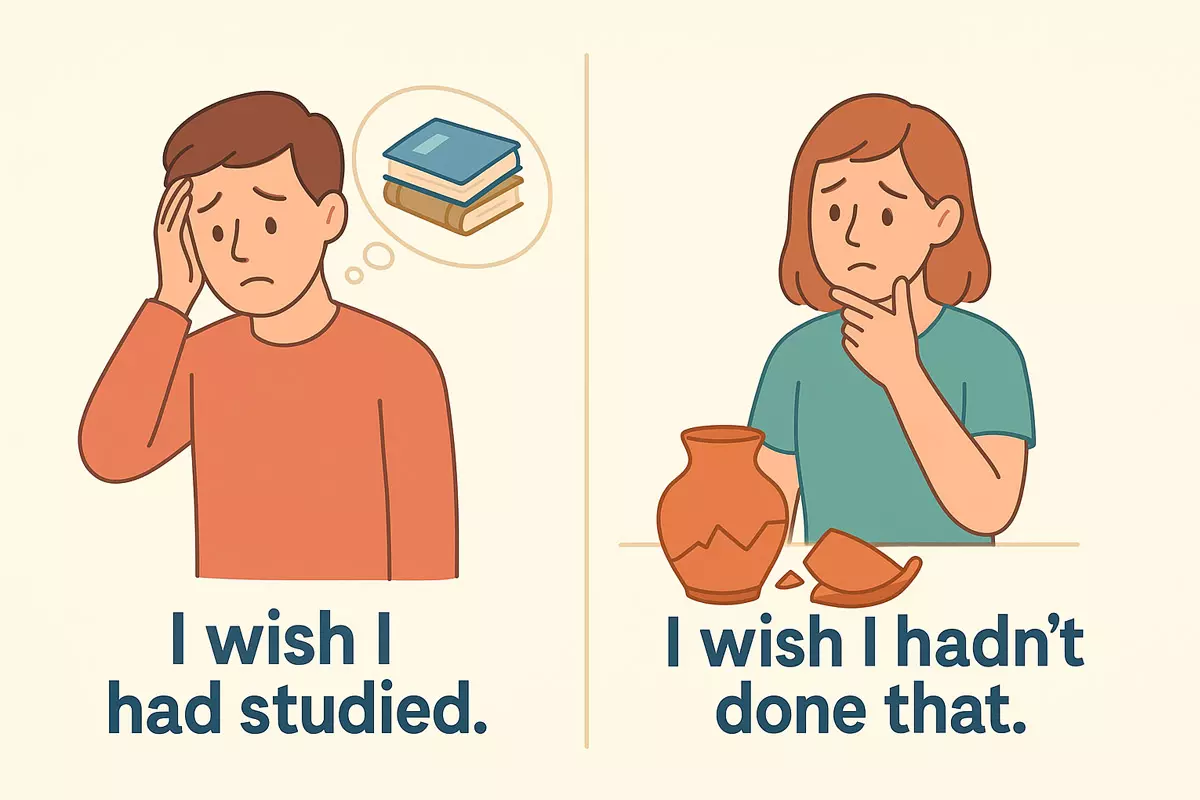
- I wish I had studied harder for the exam. (I didn’t study enough, and I regret it now.)
- She wishes she hadn’t said those things. (She said something and now feels sorry.)
- We wish we had left earlier. (We left late and regret it.)
- They wish they hadn’t missed the train. (They missed it and now feel regret.)
Common contexts for using this structure
People use “wish” with the past perfect in situations such as:
- Reflecting on mistakes or missed opportunities
- Expressing disappointment about choices
- Talking about things that can’t be changed
- Admitting feelings of responsibility or guilt for past actions
- Describing what could have made the past better
Typical sentence patterns and variations
This construction is flexible and can be used in many ways to talk about different regrets. Here are some common variations:
- I wish I had known about the meeting.
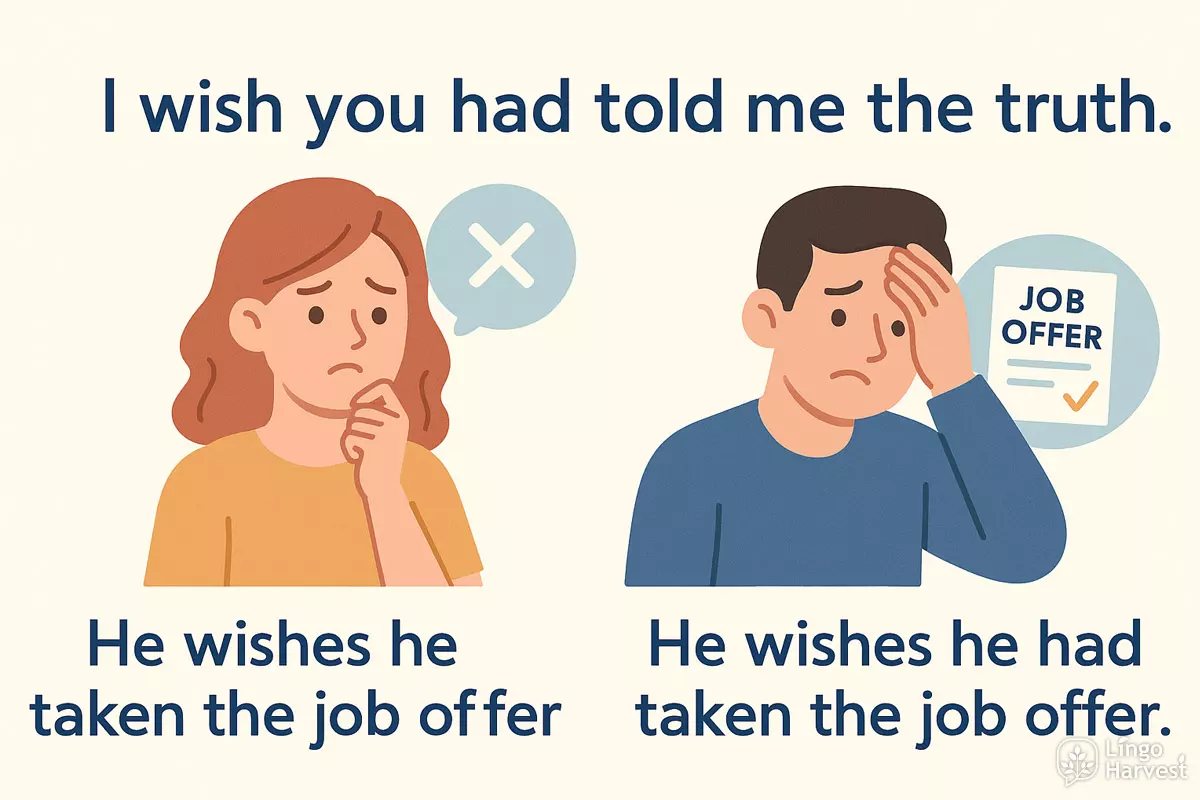
- I wish you had told me the truth.
- He wishes he had taken the job offer.
- We wish we hadn’t wasted so much time.
- They wish they had listened to advice.
- She wishes she had called her friend back.
- I wish I hadn’t eaten so much cake.
- He wishes he hadn’t forgotten her birthday.
- We wish we had prepared better for the trip.
- I wish I had brought an umbrella.
- They wish they hadn’t sold their house.
- She wishes she had asked for help sooner.
- I wish I had saved more money.
- He wishes he had apologized earlier.
- We wish we hadn’t ignored the warnings.
- I wish I had remembered your name.
Comparing regret structures
To help see the difference between expressing present regret and past regret, compare these patterns:
| Expression | Meaning |
|---|---|
| I wish I knew the answer. | Regretting a present situation (I don’t know the answer now). |
| I wish I had known the answer. | Regretting something in the past (I didn’t know the answer before, and now it’s too late). |
| She wishes she could help. | She can’t help now (present regret or inability). |
| She wishes she had helped. | She didn’t help in the past, and now regrets it. |
This pattern is especially useful for showing that a regret is about a finished event or situation rather than something that could still change. It’s a clear way to communicate remorse or disappointment over past actions.
Difference between wish about the present vs past
Understanding how we talk about unreal or regretted situations in English depends on whether we’re referring to the present or the past. The verb forms and meanings shift slightly between these two contexts, even though both use the verb “wish” to express desires or regrets.
Wishing about the Present
When we want to express that we would like something to be different right now, we use “wish” followed by a past simple verb. This construction refers to situations that are not true at the moment, but we would prefer them to be.
- I wish I knew the answer. (But I don’t know it now.)
- She wishes she had more free time. (She doesn’t have it currently.)
- They wish they lived closer to the city. (But they don’t.)
- He wishes he were taller. (But he isn’t.)
- I wish it wasn’t raining. (But it is raining now.)
Wishing about the Past
For regrets or unreal situations in the past, we use “wish” with the past perfect tense. This signals that something did not happen the way we wanted, and now it’s too late to change.
- I wish I had studied harder. (But I didn’t study enough.)
- She wishes she hadn’t missed the train. (But she did.)
- They wish they had gone to the party. (But they didn’t go.)
- He wishes he had told the truth. (But he didn’t.)
- I wish it hadn’t rained yesterday. (But it did rain.)
| Time Reference | Wish Construction | Example | Meaning |
|---|---|---|---|
| Present / Now | wish + past simple | I wish I knew Spanish. | I don’t know Spanish now, but I want to. |
| Past / Before now | wish + past perfect | I wish I had learned Spanish. | I didn’t learn Spanish before, and I regret it. |
Quick Reference: Key Differences
- For present unreal situations, use the past simple after “wish.”
- For past regrets, use the past perfect after “wish.”
- Both forms express things that are different from reality, but the time frame changes the verb tense and the meaning.
This distinction helps you talk clearly about your regrets or desires, whether they relate to now or to something that’s already happened.
Typical phrases expressing disappointment or reflection
When talking about regrets or thinking back on past decisions, English speakers often use certain phrases with "wish" plus the past perfect tense. These expressions help convey thoughts like "I regret that I didn't…" or "If only I had…". Such phrases are common in everyday conversation, especially when someone is reflecting on mistakes or missed opportunities.
Common expressions for past regrets
- I wish I had studied harder for the exam.
- She wishes she had told the truth.
- We wish we had left earlier.
- He wishes he hadn't spent so much money.
- I wish I had listened to your advice.
- They wish they had not missed the flight.
- I wish I had known about the meeting.
- He wishes he hadn’t quit his job.
- We wish we had remembered her birthday.
- I wish I had brought an umbrella.
- She wishes she had taken the opportunity.
- I wish I hadn’t said that.
- They wish they had checked the weather forecast.
- He wishes he had apologized sooner.
- I wish I had saved more money.
- We wish we had prepared better.
- She wishes she had chosen a different major.
- I wish I had met you earlier.
Other reflective phrases
Sometimes, people use alternatives to "wish" for expressing disappointment or reflecting on the past. These include:
- If only I had known…
- It would have been better if I had…
- Looking back, I should have…
- How I regret not having…
Patterns and sentence construction
To express these feelings, the structure is usually: wish + subject + had (not) + past participle. This pattern indicates that the action did not happen, and the speaker feels regret or disappointment.
Comparing positive and negative forms
| Positive Regret | Negative Regret |
|---|---|
| I wish I had taken that job. | I wish I hadn’t quit my old job. |
| She wishes she had learned Spanish. | She wishes she hadn’t missed the class. |
| We wish we had invited him. | We wish we hadn’t forgotten the tickets. |
| They wish they had saved more money. | They wish they hadn’t spent so much. |
These types of phrases make it clear that the speaker is reflecting on past events, often with a sense of disappointment or a desire to have acted differently. Using them helps communicate not just what happened, but also the emotional response to those events.
Examples from storytelling and personal experiences
Understanding how to express regrets about past actions is essential for nuanced storytelling and authentic communication. Using "wish + past perfect" helps to convey feelings of remorse or missed opportunities that can deeply affect characters or real individuals. Here are some scenarios and sample sentences that illustrate this structure in both fictional narratives and real-life anecdotes.
Classic storytelling situations
- After failing an important exam, a character might reflect: "I wish I had studied harder."
- In a romance novel, someone could say: "She wished she had told him how she felt before he moved away."
- After a missed flight, a traveler might admit: "We wish we had left home earlier."
- In a detective story, the investigator regrets: "I wish I had noticed the clue sooner."
- A parent reflecting on time with their child: "I wish I had spent more time with you when you were younger."
Personal reflections and real-life regrets
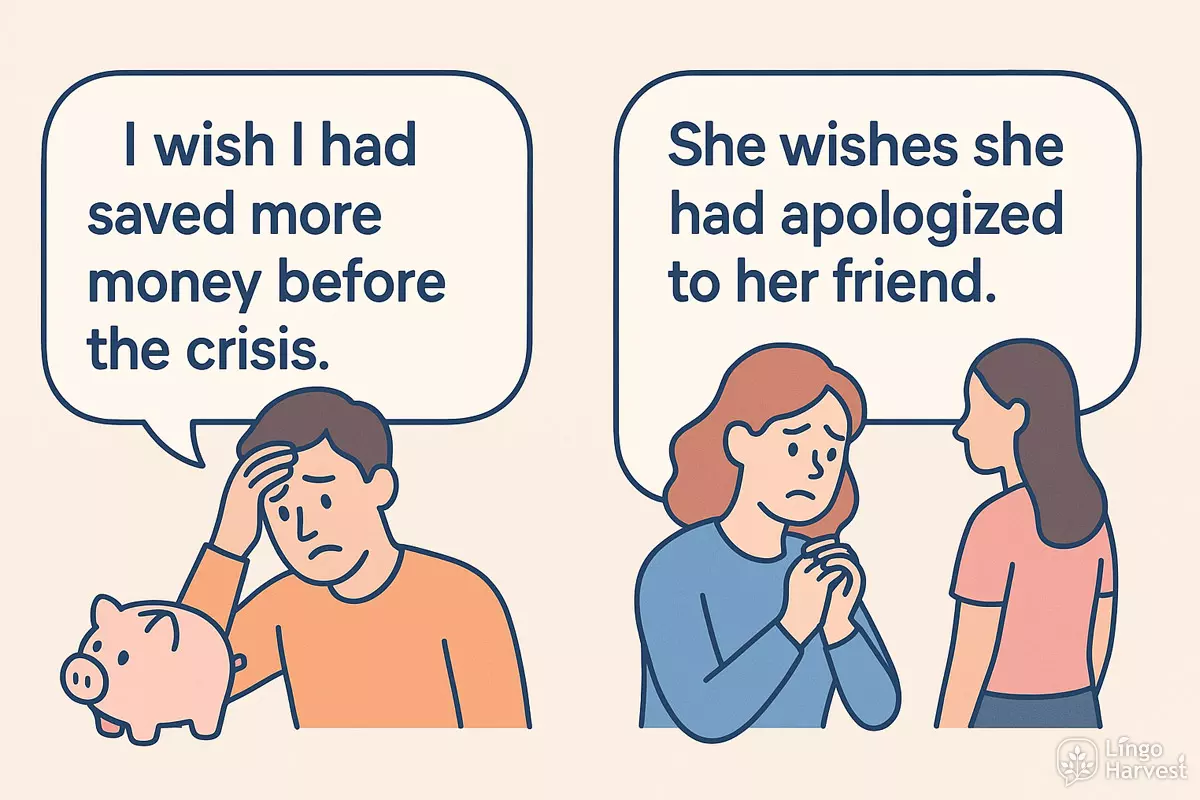
- "I wish I had saved more money before the crisis."
- "She wishes she had apologized to her friend."
- "They wish they had taken that job offer when it was available."
- "He wishes he had listened to his parents' advice."
- "We wish we had traveled more before starting a family."
- "I wish I had learned to play the piano as a child."
- "You wish you had kept in touch with old classmates."
- "She wishes she had attended the wedding."
- "He wishes he had backed up his files before the computer crashed."
- "They wish they had prepared better for the interview."
Comparing regret expressions in context
| Regret Statement | Implied Missed Action |
|---|---|
| I wish I had called my grandmother. | I didn't call her, and now I regret it. |
| She wishes she had taken the opportunity. | She didn't take it, and now feels sorry. |
| We wish we had checked the weather forecast. | We didn't, and our plans were ruined. |
| He wishes he had asked for help sooner. | He didn't ask, and it caused problems. |
| They wish they had left earlier. | They left late and missed the event. |
These examples show how "wish + past perfect" brings depth to stories and personal accounts, allowing speakers and writers to express feelings that arise from reflecting on the past. Whether in literature or daily conversation, this structure helps communicate the emotional weight of hindsight.
Common mistakes with wish and should have structures
Many learners confuse how to express regrets about the past using "wish" and "should have." These two structures are similar in meaning, but their forms and uses are different. Mixing them up can lead to awkward or incorrect sentences.
Mixing up verb forms
One of the most frequent errors is using the wrong verb tense after "wish." When expressing regret about something that did not happen in the past, the correct structure is "wish + past perfect." For example, "I wish I had studied harder." Learners sometimes mistakenly use the simple past ("I wish I studied harder") or present perfect ("I wish I have studied harder"), which sounds unnatural in English.
Confusing "wish" and "should have"
Another common issue is swapping "wish" and "should have" or using them together incorrectly. "Wish" is used to express regret or hypothetical situations, while "should have" indicates that something was a good idea in the past but didn’t happen. These structures are not interchangeable.
- Incorrect: I wish I should have called you.
- Correct: I wish I had called you. / I should have called you.
Omitting "had" in the past perfect
Learners sometimes forget to include "had" after "wish," creating errors like "I wish I went" instead of "I wish I had gone." This mistake can confuse listeners and weaken the intended meaning.
Using "should have" with the wrong subject or verb
"Should have" is followed by the past participle, but mistakes happen when students use the base form or simple past instead. For example, "You should have went" (❌) instead of "You should have gone" (✅).
Comparison of correct and incorrect forms
| Incorrect Example | Correct Version |
|---|---|
| I wish I studied harder. | I wish I had studied harder. |
| I wish I have gone. | I wish I had gone. |
| I should have went to the party. | I should have gone to the party. |
| I wish I should have listened. | I wish I had listened. / I should have listened. |
Summary: Frequent errors to watch for
- Using simple past or present perfect after "wish" for past regrets
- Combining "wish" and "should have" in one sentence
- Leaving out "had" in "wish + past perfect"
- Using the base form or simple past after "should have"
- Applying "wish" to situations where advice or criticism is intended ("should have" is better)
- Forgetting to use the past participle with "should have"
- Using "wish" for future or present wishes incorrectly (should use "wish + would" or "wish + simple past")
- Swapping the order of "should" and "have" ("should had" instead of "should have")
- Misplacing negatives: "shouldn't have" vs. "should have not"
- Directly translating from native language structures, leading to errors
Mastering the difference between "wish + past perfect" and "should have + past participle" helps you communicate past regrets clearly and naturally in English. Careful attention to verb forms and structure makes your sentences accurate and easy to understand.
Practice: rewrite past regrets using wish + past perfect
Understanding how to express regrets about past actions is a key part of mastering the use of "wish" with the past perfect tense. This structure helps us talk about things we would like to have been different in the past. Below, you will find exercises designed to help you transform sentences about past regrets into the correct form using "wish" and the past perfect.
Rewrite these regrets
Change each sentence so it uses "wish" + past perfect. This will help you practice expressing hypothetical feelings about things that cannot be changed.
- I didn’t study harder for the exam.
- She forgot her friend’s birthday.
- They didn’t leave the house earlier.
- We spent too much money last month.
- He didn’t tell the truth.
- I ate too much cake at the party.
- My parents didn’t take more photos when I was a child.
- Lisa missed the last train home.
- We didn’t buy tickets in advance.
- He didn’t listen to your advice.
Show answers
- I wish I had studied harder for the exam.
- She wishes she had not forgotten her friend’s birthday.
- They wish they had left the house earlier.
- We wish we had not spent so much money last month.
- He wishes he had told the truth.
- I wish I had not eaten so much cake at the party.
- I wish my parents had taken more photos when I was a child.
- Lisa wishes she had not missed the last train home.
- We wish we had bought tickets in advance.
- He wishes he had listened to your advice.
Common patterns for expressing regret
Here are some typical sentence patterns you might encounter when talking about past regrets:
- I wish I had (done something).
- I wish I hadn’t (done something).
- She wishes she had (done something).
- They wish they hadn’t (done something).
- We wish we had (done something).
Tips for using "wish" with past perfect
- Always use "had" + past participle after "wish" to refer to the past.
- If the regret is about someone else, change the subject accordingly: "He wishes he had...", "They wish they had...", etc.
- For negative regrets, use "had not" or "hadn’t": "I wish I hadn’t..."
Practicing with a variety of examples will help you get comfortable using this construction in real conversations or writing when you want to express things you regret about the past.