Be Careful With Will in If-Clauses: When It Is Correct

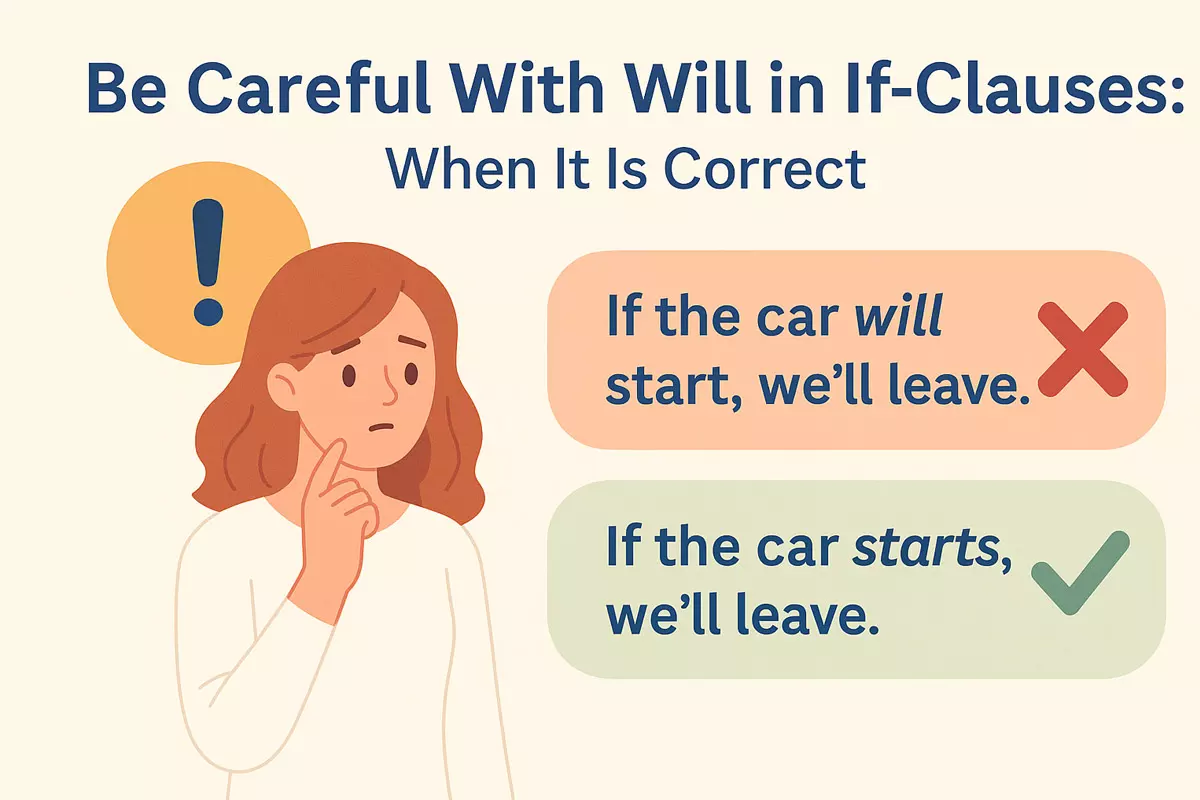 The article explains the rule against using will in if-clauses for real conditionals, highlights exceptions for willingness and repeated actions, compares correct and incorrect examples, offers decision guidelines, and provides practice questions.
- General rule: no will in if-clauses in real conditionals
- When will expresses willingness, insistence, or refusal
- When will refers to future habits or repeated behavior
- Examples of correct vs incorrect use
- Guidelines for deciding whether will is acceptable
- Practice: decide if will is correct in each sentence
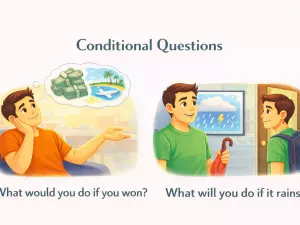
Knowing when to use the future tense in conditional statements can be challenging for both English learners and native speakers. The key is to remember that in most conditional sentences, especially those starting with if, the present tense is used to refer to future events, while will usually appears in the main clause. For example, you would say, If it rains, we will stay inside, not If it will rain. Mastering this rule helps your English sound more natural and reduces common errors in conversation and writing.
General rule: no will in if-clauses in real conditionals
In standard English, when we talk about real situations—those that are possible or likely—we avoid using will in the if-clause. Instead, we use simple present tense to refer to the condition, while will (or other modal verbs) appears in the main clause to express the result. This pattern helps distinguish between the event that must happen first (the condition) and what comes after (the result).
Typical patterns for real conditionals
- If you study (not will study), you will pass the exam.
- If it rains, we’ll stay indoors.
- If she calls, I will answer.
Notice that the verb in the if-clause is always in the present simple, even though the meaning refers to the future. This structure is used for both first conditional (real and possible future) and zero conditional (general truths).
Common mistakes to avoid
- ❌ If you will come early, we will start on time. (Incorrect)
- ✅ If you come early, we will start on time. (Correct)
- ❌ If it will rain, the match will be canceled. (Incorrect)
- ✅ If it rains, the match will be canceled. (Correct)
Why is "will" avoided in the if-clause?
Using will in the conditional part can sound unnatural or even change the meaning. The if-clause sets up a condition—something that could actually happen. English uses the present simple here to show that we are not predicting, but just stating a possible situation. The result clause is where we show our prediction or intention, which is why will belongs there.
Summary of correct and incorrect forms
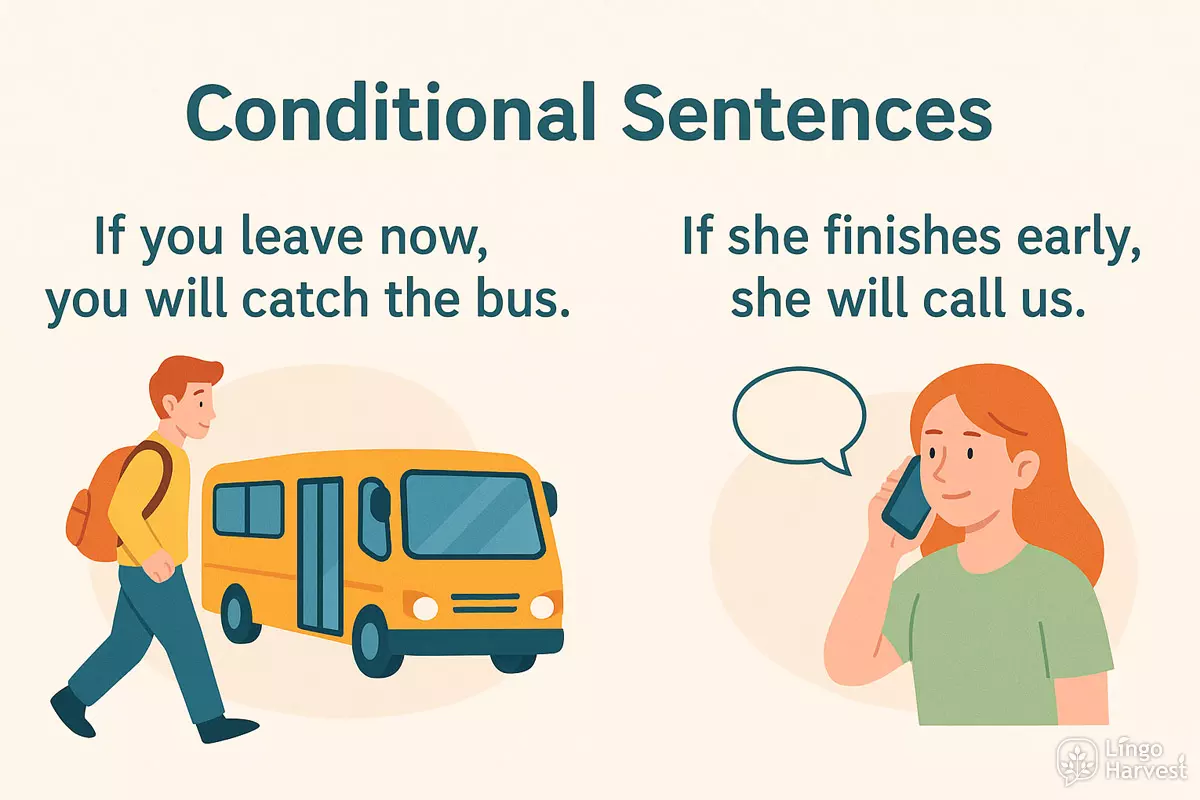
- If you leave now, you will catch the bus. ✅
- If she finishes early, she will call us. ✅
- If they will arrive late, let me know. ❌
- If we see him, we will tell him. ✅
- If you will need help, ask me. ❌
- If it gets cold, I will close the window. ✅
- If you forget, I will remind you. ✅
- If the shop is open, I will buy bread. ✅
- If he will come later, tell me. ❌
- If you miss the train, you will be late. ✅
- If the weather improves, we will go hiking. ✅
- If the car breaks down, I will call for help. ✅
To sum up, keep will out of the if-clause in real and likely situations. This rule keeps your English natural and clear, and helps avoid confusion for both the speaker and the listener.
When will expresses willingness, insistence, or refusal
In certain conditional sentences, "will" is used not to talk about the future in general, but to show someone's desire, determination, or refusal to do something. This use is less about a neutral future event and more about the subject’s attitude or choice. When "will" appears in the if-clause for this reason, it highlights a person's readiness, stubbornness, or unwillingness, and this is one of the few times where "will" is acceptable in the if-part of a sentence.
How 'will' shows attitude in if-clauses
Instead of simply predicting what might happen, using "will" here puts a spotlight on the subject's personal choice or behavior. For example:
- If you will help me, I can finish this faster. (willingness)
- If she will not listen, there’s nothing more we can do. (refusal)
- If you will insist on coming late, you’ll miss the beginning. (insistence)
- If he will keep interrupting, we’ll never get through the meeting. (repeated insistence)
- If they won’t agree, we’ll have to find another solution. (refusal)
- If you will open the window, it’ll get less stuffy in here. (polite request)
- If the dog will stop barking, I can concentrate. (wish for cooperation)
- If you won’t tell me the truth, I can’t help you. (refusal)
- If you will have tea, I’ll make some. (willingness)
- If she will keep complaining, people will stop listening. (habitual insistence)
- If you won’t sign the contract, we can’t proceed. (refusal)
- If you will take that tone, I won’t discuss it further. (insistence)
- If the car will not start, we’ll need to call for help. (refusal)
- If you will come in quietly, you won’t disturb anyone. (willingness)
- If the child will eat his vegetables, he can have dessert. (willingness)
Summary: How to recognize this use
Look for sentences where the if-clause is more about the person’s choice or attitude rather than just a possible future event. In these cases, "will" is not a simple future marker, but a way to highlight determination, refusal, or willingness. This is why it’s sometimes called a “volitional” use of "will" in conditionals.
Common mistakes to avoid
- Don’t use "will" in if-clauses for ordinary future conditions (e.g., ❌ If it will rain tomorrow, we’ll cancel. should be ✅ If it rains tomorrow, we’ll cancel.)
- Only use "will" in the if-clause when you specifically want to show a person’s attitude, not just to talk about the future.
When will refers to future habits or repeated behavior
In English, it’s rare but possible to use will in an if-clause when talking about someone’s typical or habitual actions in the future. This construction signals a pattern of behavior that is expected to repeat rather than a single event. It’s different from the usual rule, which avoids will in if-clauses for simple future predictions. Instead, here will highlights a person’s willingness, insistence, or predictable reaction in situations that are likely to happen again.
Examples of future habits in if-clauses with "will"
- If you will keep interrupting, we’ll never finish the meeting.
- If she will leave her shoes in the hallway, someone will trip over them.
- If the dog will bark at every noise, we may need extra training.
- If people will ignore the rules, accidents are inevitable.
- If Tom will always arrive late, we should start without him.
- If customers will call after hours, we need a voicemail service.
- If you will insist on driving so fast, you’ll get a ticket one day.
- If the printer will jam every morning, we should replace it.
- If she will forget her keys, she’ll keep getting locked out.
- If the weather will keep changing so quickly, we should bring an umbrella every day.
- If kids will play near the road, someone should watch them.
- If the machine will overheat during long use, give it breaks.
- If he will talk during movies, let’s sit elsewhere next time.
- If you will leave the lights on, the bill will go up.
- If staff will take long lunches, productivity drops.
Notes on usage
This construction is most common when expressing annoyance, criticism, or highlighting a stubborn pattern. The use of will in these clauses is not about the simple future, but rather about behavior that is seen as repetitive or characteristic. It is especially frequent in more formal or literary English, and less so in everyday conversation.
Comparison: Simple future vs. future habits in if-clauses
| Standard If-Clause (No "will") | If-Clause Showing Habit/Insistence ("will") |
|---|---|
| If you interrupt, we’ll never finish. | If you will keep interrupting, we’ll never finish. |
| If she leaves her shoes out, someone will trip. | If she will leave her shoes in the hallway, someone will trip. |
| If Tom arrives late, we’ll start without him. | If Tom will always arrive late, we should start without him. |
| If the dog barks, we’ll bring it inside. | If the dog will bark at every noise, we may need extra training. |
Using will in these cases draws attention to the repetitive or characteristic nature of the action. It subtly shifts the meaning from a single possible future event to a pattern or tendency that is likely to continue.
Examples of correct vs incorrect use
Understanding when to use "will" in conditional sentences can be tricky for English learners. Typically, we avoid "will" in the if-clause when describing real or likely situations, but there are exceptions. Below are several sample sentences that illustrate both acceptable and unacceptable uses, as well as some special cases.
Standard usage (zero and first conditionals)
- ✅ If it rains, we will stay inside. ("will" in the main clause)
- ❌ If it will rain, we will stay inside. ("will" incorrectly used in the if-clause)
- ✅ If you heat water to 100°C, it boils. (zero conditional, no "will" needed)
- ❌ If you will heat water to 100°C, it boils. ("will" incorrectly used in the if-clause)
Correct uses of "will" in if-clauses (exceptions)
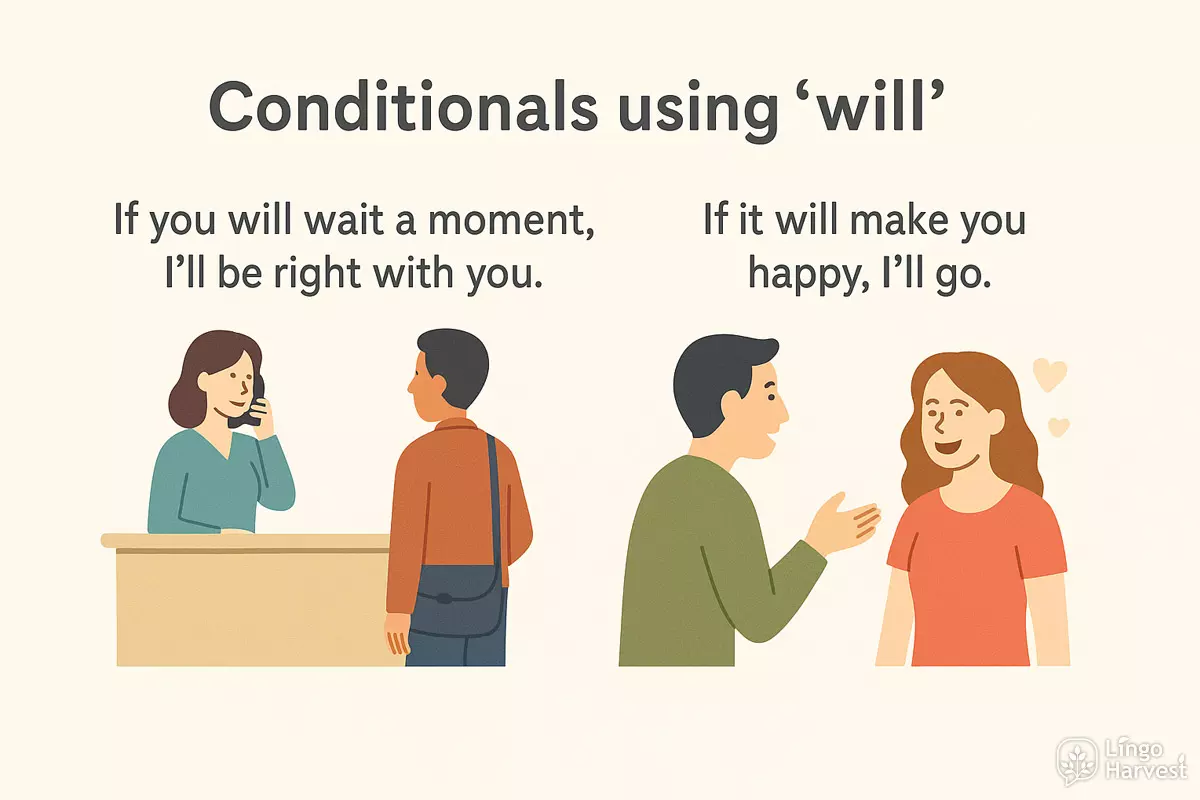
- ✅ If you will wait a moment, I’ll be right with you. (polite request)
- ✅ If it will make you happy, I’ll go. (expressing willingness)
- ✅ If he will keep interrupting, I can’t finish. (complaint, insistence)
Common mistakes to avoid
- ❌ If she will call me, I will tell her the news. (Incorrect: "If she calls me" is correct.)
- ❌ If you will come tomorrow, bring your laptop. (Incorrect: Use "If you come tomorrow…")
Summary table: Typical patterns
| Type | Example Sentence |
|---|---|
| First conditional (correct) | If you arrive early, we will start on time. |
| First conditional (incorrect) | If you will arrive early, we will start on time. |
| Polite request (correct) | If you will sign here, we can proceed. |
| Expressing willingness (correct) | If she will help us, we can finish faster. |
| Complaint/insistence (correct) | If you will keep making noise, I can’t concentrate. |
Key takeaways
- Use "will" in the main clause for real future possibilities.
- In the if-clause, "will" is only correct for willingness, polite requests, or when expressing stubbornness.
- Avoid "will" in if-clauses for ordinary conditions about the future.
Guidelines for deciding whether will is acceptable
Understanding when "will" is correct in if-clauses can be tricky, but there are some clear patterns to help you decide. In standard conditional sentences, especially first conditionals, "will" usually appears in the main clause, not after "if." However, there are exceptions where using "will" in the if-clause is both correct and natural.
Situations Where "Will" Is Appropriate in If-Clauses
"Will" can be used in if-clauses to express willingness, polite requests, or when the action depends on someone's intention or decision. Here are some typical cases:
- Polite requests: If you will sign here, we can proceed. (Willingness)
- Offers: If you'll have a seat, the doctor will see you shortly.
- Persuasion or insistence: If you will keep talking, I can't concentrate.
- Conditional on future willingness: If John will help me, we can finish on time.
- Negotiation or agreement: If you'll pay now, I'll give you a discount.
- Refusal or stubbornness: If she will not listen, there's nothing more I can do.
- Emphasis on intention: If they will ignore the rules, problems will arise.
- Instructional contexts: If you will read chapter five, you'll understand the topic better.
- Hypothetical willingness: If they will take the risk, they may succeed.
- With "will" meaning insistence (old-fashioned): If you will go out in the rain, you’ll get wet.
When "Will" Should Be Avoided in If-Clauses
In most real conditional sentences about the future, avoid "will" after "if." Using it here is considered incorrect by most grammar guides, unless it serves a special function like those above. For example:
- ❌ If it will rain tomorrow, we’ll cancel the picnic.
(Correct: If it rains tomorrow, we’ll cancel the picnic.) - ❌ If he will arrive early, let me know.
(Correct: If he arrives early, let me know.)
Quick Reference: Acceptable vs. Unacceptable Uses
| Usage Type | Example Sentence |
|---|---|
| Willingness/Polite Request ✅ | If you will wait here, I’ll bring your order. |
| Refusal/Insistence ✅ | If you will keep making noise, I can’t help you. |
| Regular Future Condition ❌ | If it will rain, we’ll stay inside. |
| Simple Prediction ❌ | If she will come, we’ll start the meeting. |
Summary Tips
When deciding whether "will" is correct in an if-clause, check if you are expressing willingness, intention, or making a polite request. If so, it's often acceptable. For most predictions or real future conditions, stick to the present simple after "if." When in doubt, rephrase the sentence without "will" in the if-clause for standard usage.
Practice: decide if will is correct in each sentence
Understanding when "will" is appropriate in conditional sentences can be tricky. In most cases, "will" is not used directly after "if" to talk about the future, but there are notable exceptions. Below, you can test your grasp of these rules with a set of sentences. For each one, decide if the use of "will" is correct or not. Some sentences deliberately use "will" wrongly to check your understanding.
Decide if "will" is correctly used
- If you will help me, I will finish faster.
- If it rains tomorrow, we will stay indoors.
- If she will be late, let me know.
- If you press this button, the machine will start.
- If he will call you, please answer quickly.
- If you would like some tea, just ask.
- If they will agree, we can sign the contract.
- If I see John, I will tell him.
- If you will read the instructions, you will understand.
- If she is at home, I will visit her.
- If you will excuse me, I must leave now.
- If the bus arrives late, we will take a taxi.
- If you will wait here, I’ll be back soon.
- If it will snow tonight, we should prepare.
- If you study hard, you will pass the exam.
- If your computer will not start, call support.
- If you will stop interrupting, I can explain.
- If we leave now, we will catch the train.
- If you will sign here, we can proceed.
- If the weather is nice, we will go for a walk.
Show answers
- 1. Correct (polite request/volition)
- 2. Correct
- 3. Incorrect ("will be" not used in standard conditional)
- 4. Correct
- 5. Incorrect ("will call" not used after "if" for future intention)
- 6. Correct ("would like" is polite, not future)
- 7. Incorrect (should use "agree", unless expressing willingness)
- 8. Correct
- 9. Incorrect ("will read" is not used in if-clause for future events)
- 10. Correct
- 11. Correct (polite formula: "if you will excuse me")
- 12. Correct
- 13. Correct (polite request: "if you will wait")
- 14. Incorrect ("will snow" not used in the if-clause for prediction)
- 15. Correct
- 16. Correct ("will not start" refers to refusal/failure, not future action)
- 17. Correct (polite request: "if you will stop")
- 18. Correct
- 19. Correct (polite request: "if you will sign")
- 20. Correct
Key patterns to remember
- Standard future conditionals: Use present simple after "if", not "will".
- Polite requests or willingness: "Will" is sometimes correct after "if" (e.g., "If you will wait...").
- Mechanical refusal or typical behavior: "Will" can be used for things that refuse to work ("If your car will not start...").
- Do not use "will" in if-clauses for predictions: Say "If it rains," not "If it will rain."