Real vs Unreal Conditions: Meaning and Structure

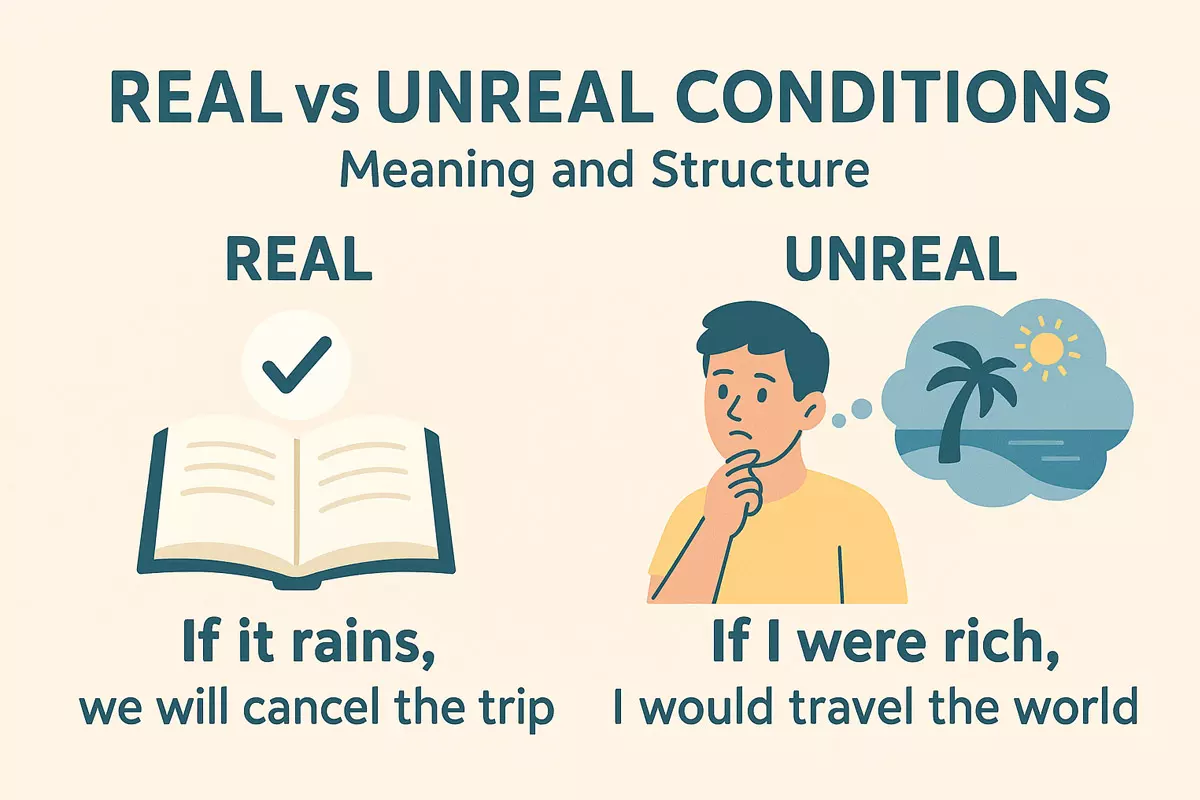 This article explains how English uses tense patterns to distinguish real from unreal situations in present, future, and past conditions. It covers meaning shifts, gives examples of tone and probability, and offers practice changing sentence types.
- How English distinguishes real and unreal situations
- Tense patterns for real present and future conditions
- Tense patterns for unreal present and past conditions
- Meaning shifts when real becomes unreal
- Examples illustrating tone, probability, and imagination
- Practice: change real conditions into unreal ones and vice versa
English gives us tools to discuss both real and imagined situations, allowing us to express wishes, hopes, possibilities, and consequences. Understanding the difference between hypothetical and factual scenarios is important for clear communication. For example, we use different verb forms to talk about things that are true or likely, compared to those that are imagined or contrary to fact. By recognizing these differences, we can better convey our intentions and understand others when discussing what is possible, hoped for, or actually happening.
How English distinguishes real and unreal situations
English uses specific grammar patterns and verb forms to signal whether a situation is possible in reality or just hypothetical. Recognizing these cues helps readers and listeners understand if a statement refers to facts, predictions, or imagined scenarios.
Grammatical markers for reality and unreality
The difference often comes down to verb tenses and the choice of modal verbs. Real situations (also called "open" or "probable" conditions) use the present simple or will for future results. Unreal, or hypothetical, conditions typically use past tenses or modal verbs like would, could, or might.
- Real: If it rains, we stay inside. (Possible, might happen)
- Unreal: If it rained, we would stay inside. (Imagined, not currently true)
- If you study, you will pass. (Likely outcome)
- If you studied, you would pass. (Not actually happening now)
- If I have time, I'll call you. (Future, possible)
- If I had time, I would call you. (Present, not real)
- If I had had time, I would have called you. (Past, didn’t happen)
- If she wins, she celebrates.
- If she won, she would celebrate.
- If she had won, she would have celebrated.
- If they see us, they'll wave.
- If they saw us, they would wave.
- If you are hungry, eat something.
- If you were hungry, you would eat something.
- If it is cold, wear a coat.
- If it were cold, I would wear a coat.
Key differences in structure
The structure of conditional sentences changes depending on whether the speaker is talking about something real or just imagined. In real conditions, present tense verbs are common in the "if" clause, while the result often uses the future simple. In unreal conditions, past simple or past perfect is used in the "if" clause, and the result uses modal verbs.
| Type | Example | Meaning |
|---|---|---|
| Real (Zero Conditional) | If water boils, it evaporates. | Fact, always true |
| Real (First Conditional) | If you call, I will answer. | Possible future |
| Unreal (Second Conditional) | If I knew, I would tell you. | Hypothetical present/future |
| Unreal (Third Conditional) | If she had seen him, she would have spoken. | Hypothetical past |
Summary of signals for real and unreal conditions
- Present tense = real, possible
- Will/won't = real, future
- Past tense = unreal, imagined now
- Would/could/might = unreal, imagined result
- Past perfect = unreal, imagined past
Recognizing these patterns helps you quickly identify whether English speakers are talking about genuine possibilities or just imagining what could happen.
Tense patterns for real present and future conditions
When talking about real situations—those that are possible or likely, either now or in the future—English uses specific verb forms in conditional sentences. These structures, often called “zero” and “first” conditionals, help express facts, routines, and realistic predictions.
Present real conditionals: Zero conditional
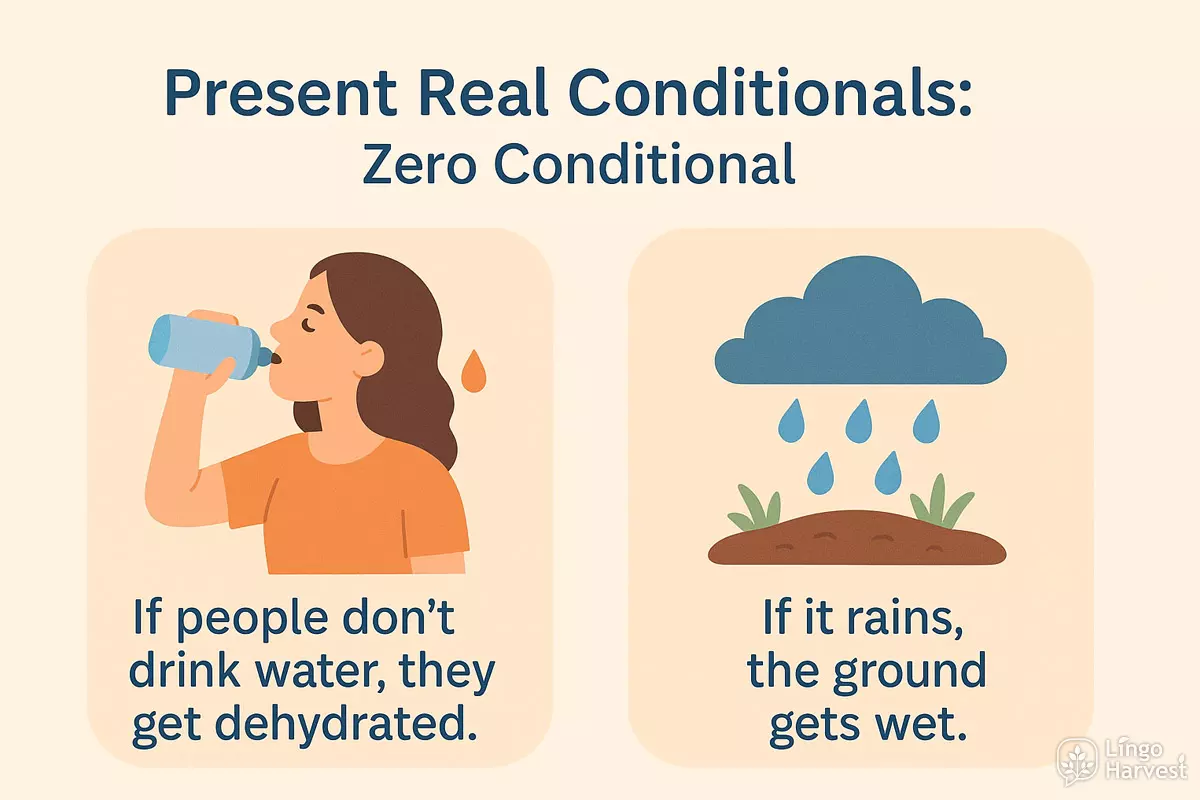
The zero conditional is used for general truths, scientific facts, or habits. Both the “if” clause and the main clause use the present simple tense. This pattern shows that the result always happens when the condition is met.
- If you heat water to 100°C, it boils.
- If people don’t drink water, they get dehydrated.
- If it rains, the ground gets wet.
- If you mix red and blue, you get purple.
- If students study hard, they pass exams.
- If the sun sets, it gets dark.
- If you drop glass, it breaks.
- If you don’t sleep enough, you feel tired.
- If plants don’t get sunlight, they die.
- If you press this button, the machine starts.
Future real conditionals: First conditional
First conditional sentences refer to situations that are possible in the future. The “if” clause uses the present simple, while the main clause usually uses “will” plus the base verb. This construction predicts likely outcomes.
| If-clause (condition) | Main clause (result) |
|---|---|
| If it rains tomorrow | we will stay inside. |
| If you call me | I will answer. |
| If they arrive early | we will have time for coffee. |
| If you don’t hurry | you will miss the bus. |
| If she studies | she will pass the test. |
| If I see him | I will tell him the news. |
| If the weather is nice | we will go hiking. |
| If you don’t eat | you will feel weak. |
| If I finish early | I will help you. |
| If traffic is bad | we will be late. |
Alternative main clauses
Sometimes, instead of “will,” other modal verbs or imperatives are used to express advice, permission, or instructions:
- If you see Anna, tell her to call me.
- If you need help, can ask the teacher.
- If it’s hot, should drink water.
- If you’re tired, may rest a bit.
Understanding these verb patterns helps communicate real possibilities and predictable results with clarity.
Tense patterns for unreal present and past conditions
When we talk about hypothetical or imaginary situations—things that are not real either now or in the past—specific English verb forms signal this unreality. These structures help us express wishes, regrets, or alternatives to actual events, and they differ from the patterns used for real or likely conditions.
Unreal Present Conditions
For situations that are contrary to fact in the present, English uses the simple past in the if-clause, and "would" plus the base verb in the main clause. Despite using the past tense, we’re not talking about the past, but about things that are untrue now.
- If I knew the answer, I would tell you. (But I don’t know.)
- If she were taller, she would play basketball. (She isn’t taller.)
- If we had more time, we would travel more. (We don’t have time.)
- If it didn’t rain so much, we would go outside more often. (It rains a lot.)
- If you went to the party, you would have fun. (You are not going.)
Note: With the verb "be," "were" is often used for all subjects in formal English: "If I were you…"
Unreal Past Conditions
When imagining different outcomes for past events—things that did not happen—English uses the past perfect in the if-clause, and "would have" plus the past participle in the result clause.
- If I had known about the meeting, I would have attended. (But I didn’t know.)
- If they had left earlier, they would have caught the train. (They didn’t leave early.)
- If she had studied harder, she would have passed the exam. (She didn’t study.)
- If we had brought an umbrella, we would not have gotten wet. (We didn’t bring one.)
- If you had listened to me, you wouldn’t have made that mistake. (You didn’t listen.)
Comparison Table: Unreal vs. Real Conditional Forms
| Type | Form in If-clause | Form in Main Clause | Example |
|---|---|---|---|
| Unreal Present | Simple Past (e.g., knew, were) |
would + base verb | If I went outside, I would see my friends. |
| Unreal Past | Past Perfect (e.g., had known) |
would have + past participle | If she had arrived earlier, she would have met him. |
| Real Present/Future | Simple Present | will + base verb | If it rains, I will stay home. |
| Real Past | Simple Past | Simple Past | If he called, she answered. |
Summary: Key Points
- Unreal present: simple past in if-clause, "would" in main clause.
- Unreal past: past perfect in if-clause, "would have" in main clause.
- These patterns express situations that are not true or did not happen.
- "If I were you" is the standard unreal present structure for giving advice.
- Mixing time references (e.g., past condition + present result) is possible but less common.
Understanding these tense combinations helps clarify meaning and avoids confusion between real and imagined scenarios.
Meaning shifts when real becomes unreal
Switching from real to unreal conditions in English causes important changes in meaning. Real conditionals describe situations that are possible or likely—often grounded in facts, habits, or genuine expectations. When we move to unreal conditionals, we step into the realm of imagination, hypotheses, or contrary-to-fact ideas. This shift not only affects the verb forms, but also signals a different stance toward possibility and reality.
How context changes the message
Consider how the nuance shifts in these examples:
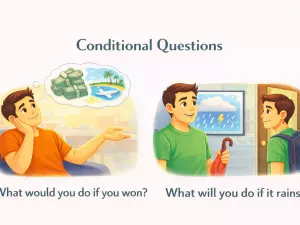
- If it rains, we will stay inside. (A real possibility—rain might happen.)
- If it rained, we would stay inside. (An unreal scenario—rain is not expected, or we're imagining it.)
- If I know the answer, I’ll tell you. (Speaker believes knowing is possible.)
- If I knew the answer, I would tell you. (Speaker does not know; it’s hypothetical.)
Common triggers for unreal meaning
- Unlikely or imaginary situations
- Wishes or regrets
- Advice about impossible past events
- Polite requests or softened statements
Comparing real and unreal conditionals
| Condition Type | Example | Implication | Verb Forms |
|---|---|---|---|
| Real (likely/present) | If she calls, I answer. | Routine or likely event | Present Simple + Present Simple |
| Real (future possible) | If it gets cold, we will light the fire. | Possible future event | Present Simple + Will + Base Verb |
| Unreal (present/future) | If I had more time, I would travel. | Imagined, not real now | Past Simple + Would + Base Verb |
| Unreal (past) | If they had studied, they would have passed. | Contrary to past fact | Past Perfect + Would Have + Past Participle |
Typical expressions signaling unreal conditions
- If only… (If only I were taller!)
- I wish… (I wish you were here.)
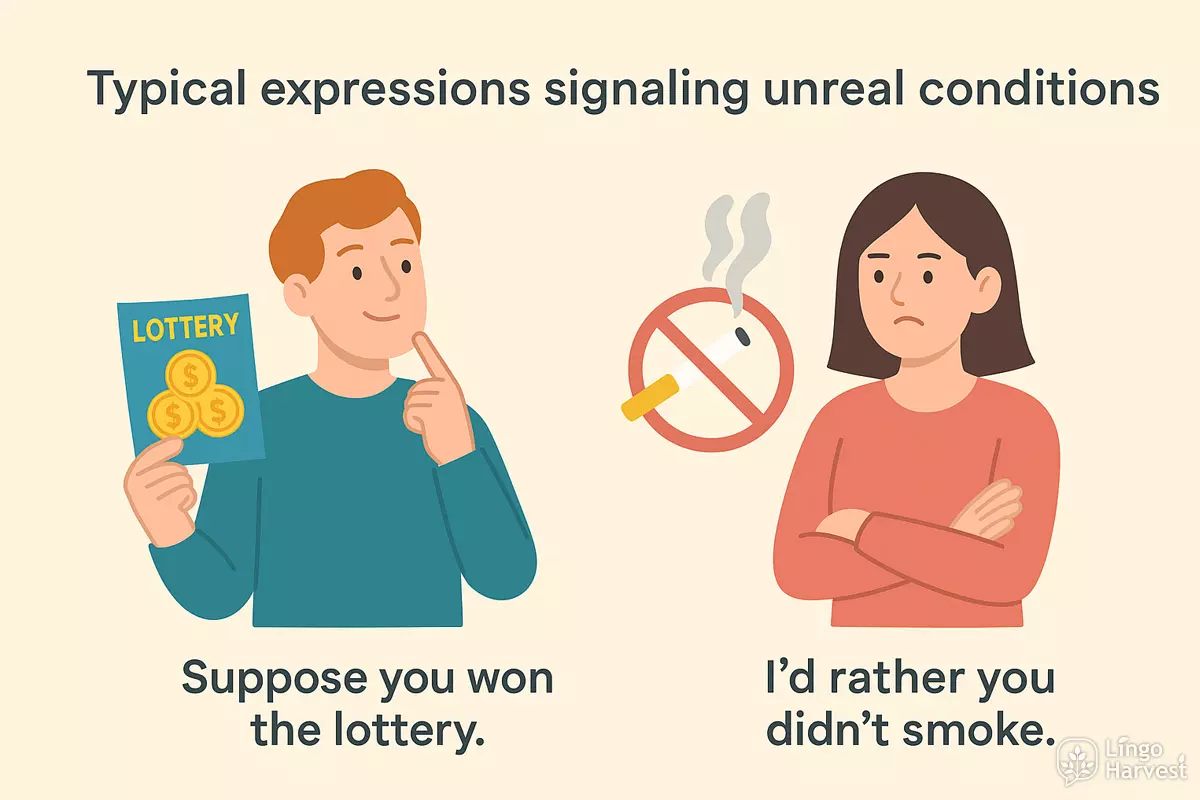
- Suppose/Supposing… (Suppose you won the lottery.)
- Would rather… (I’d rather you didn’t smoke.)
- As if / As though… (She talks as if she knew everything.)
- It’s time… (It’s time we left.)
- What if… (What if he didn’t arrive?)
- Had I known… (Had I known, I would have called.)
- If it weren’t for… (If it weren’t for you, I’d be lost.)
- If you should… (If you should see him, tell him.)
- Were I you… (Were I you, I’d apologize.)
- If I were… (If I were rich, I’d travel the world.)
- If he had… (If he had tried, he might have succeeded.)
- If you happened to… (If you happened to meet her, let me know.)
In summary, changing from a real to an unreal condition alters the meaning by shifting from what is actual or possible to what is imagined or contrary to fact. This is expressed through changes in verb tenses and modal verbs, as well as through specific patterns and phrases that signal hypothetical or impossible scenarios.
Examples illustrating tone, probability, and imagination
Understanding the nuance between real and unreal conditions often comes down to subtle differences in mood, likelihood, and creative thinking. By comparing sentences and analyzing their structure, you can see how English speakers signal certainty, possibility, or pure speculation. The examples below demonstrate how tone and probability shift with different forms, and how imagination shapes hypothetical situations.
Direct (Real) vs. Hypothetical (Unreal) Conditionals
- Real condition: If it rains, we will stay inside. (A likely scenario, neutral tone)
- Unreal condition (present): If it rained, we would stay inside. (Imagined, less probable)
- Unreal condition (past): If it had rained, we would have stayed inside. (Contrary to past fact)
Shifting Tone and Probability
Small changes in verb forms or modal verbs can shift a sentence from factual to speculative. Notice how the certainty decreases:
- If you heat ice, it melts. (Fact, scientific tone)
- If you heated ice, it would melt. (Imaginary, theoretical)
- If you had heated the ice, it would have melted. (Did not happen)
Examples of Imagination and Speculation
- If I were you, I would apologize. (Advice, imagining oneself in another's place)
- If she won the lottery, she would travel the world. (Unlikely, wishful thinking)
- If we had known about the traffic, we would have left earlier. (Regret, speculation about the past)
- If they studied harder, they might pass the exam. (Possibility, less certain than "would")
- If you should see him, tell him to call me. (Formal, polite suggestion, low probability)
- If I see him, I will tell him. (Probable, straightforward)
- If I had wings, I would fly to you. (Pure imagination, impossible condition)
- If you can come early, we will have more time. (Real, practical arrangement)
- If you could come early, we would have more time. (Polite, less direct, less certain)
- If it were not for your help, I would not be here. (Expressing gratitude, unreal present)
- If only I had more time! (Expressing wish or regret, unreal)
- If he hadn't forgotten his keys, he wouldn't be locked out. (Explaining an unreal present by referring to an unreal past)
Comparing Condition Types: Tone, Probability, and Imagination
| Type of Condition | Example Sentence | Probability | Tone/Imagination |
|---|---|---|---|
| Zero (Real/Factual) | If water reaches 100°C, it boils. | Certainty ✅ | Neutral, Scientific |
| First (Likely/Real) | If she calls, I will answer. | High | Practical, Direct |
| Second (Unreal/Present) | If I were rich, I would travel the world. | Unlikely | Imaginative, Dreaming |
| Third (Unreal/Past) | If they had left earlier, they would have caught the train. | Impossible (Past) | Regret, Speculative |
By comparing these patterns, learners can more easily identify how speakers communicate degrees of likelihood and express their thoughts creatively or factually. Recognizing these distinctions is essential for both understanding and producing nuanced English sentences.
Practice: change real conditions into unreal ones and vice versa
Understanding how to shift between real (likely, factual) and unreal (hypothetical, imaginary) conditionals is essential for expressing different meanings in English. This practice section offers practical exercises and reference points to help you master these transformations.
How to Transform Conditional Sentences
To switch a real condition into an unreal one, or vice versa, you need to change both the verb forms and sometimes the meaning. Real conditions typically use the present or future tense to talk about facts or likely events. Unreal conditions rely on past forms (or "would/could/might" + base verb) to describe hypothetical, impossible, or imaginary situations.
Common Patterns for Changing Conditionals
- Zero conditional (real): If + present simple, present simple.
If water boils, it evaporates. - First conditional (real): If + present simple, will + base verb.
If it rains, we will stay inside. - Second conditional (unreal): If + past simple, would + base verb.
If it rained, we would stay inside. - Third conditional (unreal): If + past perfect, would have + past participle.
If it had rained, we would have stayed inside.
Practice: Convert Sentences
Try changing the following sentences from real to unreal conditionals or vice versa. Pay attention to verb tense and meaning.
- If you study hard, you will pass the exam. → (Change to an unreal conditional)
- If I had more time, I would learn Spanish. → (Change to a real conditional)
- If you heat ice, it melts. → (Change to an unreal conditional)
- If she had called, I would have answered. → (Change to a real conditional)
- If we see Anna, we will invite her. → (Change to an unreal conditional)
- If I knew his number, I would call him. → (Change to a real conditional)
- If you don't water plants, they die. → (Change to an unreal conditional)
- If I had seen the sign, I would have stopped. → (Change to a real conditional)
- If you mix red and blue, you get purple. → (Change to an unreal conditional)
- If it snows tomorrow, we will build a snowman. → (Change to an unreal conditional)
Show answers
- If you studied hard, you would pass the exam.
- If I have more time, I will learn Spanish.
- If you heated ice, it would melt.
- If she calls, I will answer.
- If we saw Anna, we would invite her.
- If I know his number, I will call him.
- If you didn't water plants, they would die.
- If I see the sign, I will stop.
- If you mixed red and blue, you would get purple.
- If it snowed tomorrow, we would build a snowman.
Useful Reference Table: Real vs. Unreal Conditional Forms
| Type | Structure & Example |
|---|---|
| Zero (Real) | If + present simple, present simple If you heat water, it boils. |
| First (Real) | If + present simple, will + base verb If you call, I will answer. |
| Second (Unreal) | If + past simple, would + base verb If I knew, I would tell you. |
| Third (Unreal) | If + past perfect, would have + past participle If you had called, I would have answered. |
Use these patterns as a guide when you practice rephrasing sentences. Understanding the shift in meaning and form helps you communicate real possibilities and hypothetical situations more accurately.