Correcting Common Intermediate Errors with Conditionals

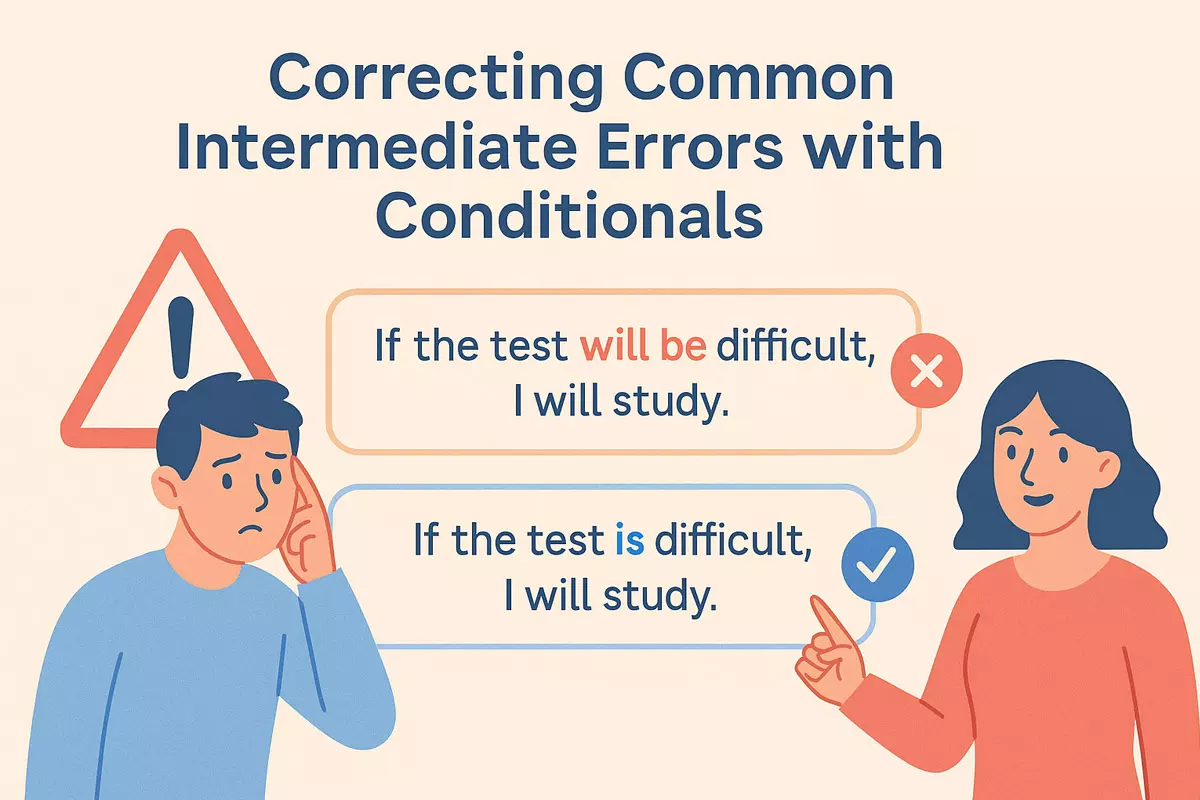 Here we frequent B1–B2 mistakes with conditionals, such as tense errors, wrong modal verbs, and confusion with inversion or mixed forms. It offers clear guidelines and practice for editing and rewriting incorrect conditional sentences.
Even experienced learners sometimes make errors with if-then statements and similar structures, which can lead to unexpected results in their code. By paying attention to common pitfalls—such as misplacing brackets, confusing comparison and assignment operators, or neglecting to handle all possible conditions—you can improve both the clarity and reliability of your programming. Developing a careful approach to these statements not only helps you avoid mistakes but also strengthens your overall coding skills as you advance.
Typical B1–B2 mistakes with conditionals
Learners at the intermediate level often face challenges when using conditional sentences, especially when choosing the correct tense or structure. These difficulties can lead to confusion or miscommunication in both spoken and written English. Understanding where these errors typically occur is the first step to overcoming them.
Confusing Conditional Types
A common issue is mixing up the structures of zero, first, second, and third conditionals. Students may use the wrong verb form or combine elements from different conditional types. For example, using the present simple in a second conditional, or the past simple in a first conditional.
Frequent Errors and Examples
Some of the most widespread mistakes with conditionals at this level include:
- Using will in the if-clause: If you will come, I will be happy. ❌ (Correct: If you come, I will be happy. ✅)
- Incorrect tense in the main clause: If I have time, I would help you. ❌ (Correct: If I had time, I would help you. ✅)
- Mixing first and second conditional forms: If I will see him, I would tell him. ❌
- Forgetting to use would or could in the result clause for hypothetical situations.
- Using the past perfect in the if-clause of a second conditional: If I had known, I would go. ❌
- Omitting had in third conditionals: If you knew about the meeting, you would have come. ❌ (Correct: If you had known about the meeting, you would have come.)
- Using would have in the if-clause: If you would have called, I would have answered. ❌
- Forgetting subject-verb agreement: If he go, I will follow. ❌
- Not using the base form after would: If I were you, I would went. ❌
- Incorrect negative forms: If you don’t would help, I will do it myself. ❌
Conditional Forms Side-by-Side
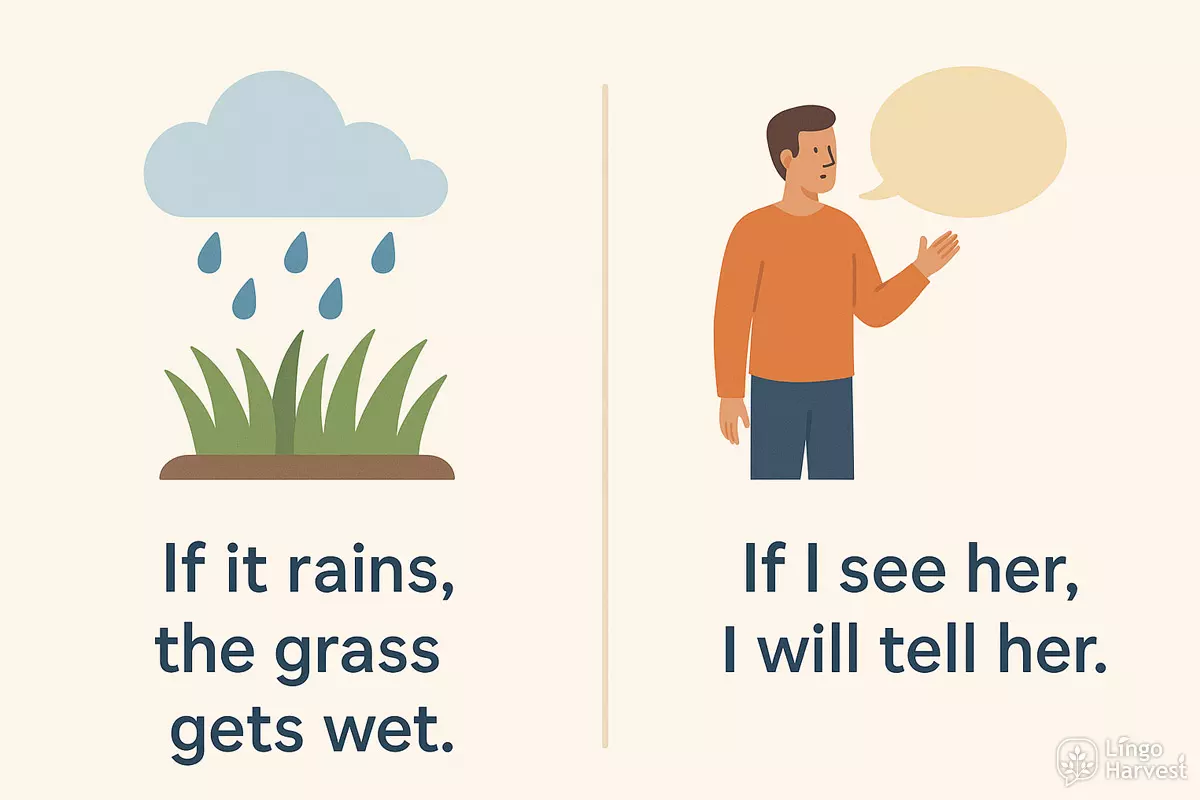
To clarify the differences between conditional types, here is a comparison of their structures and typical uses:
| Conditional Type | Structure & Example | Typical B1–B2 Error | Corrected Version |
|---|---|---|---|
| Zero | If + present simple, present simple If it rains, the grass gets wet. |
If it will rain, the grass gets wet. | If it rains, the grass gets wet. |
| First | If + present simple, will + verb If I see her, I will tell her. |
If I will see her, I will tell her. | If I see her, I will tell her. |
| Second | If + past simple, would + base verb If I had money, I would travel. |
If I would have money, I would travel. | If I had money, I would travel. |
| Third | If + past perfect, would have + past participle If you had called, I would have answered. |
If you would have called, I would have answered. | If you had called, I would have answered. |
Other Pitfalls to Watch For
Learners sometimes forget that "if" is not used for all conditional meanings. For wishes or regrets, "wish" and "if only" are needed, with their own tense rules. Another issue is relying too much on direct translation from the first language, which can lead to unnatural or incorrect patterns in English.
Tips for Avoiding These Errors
- Memorize the basic structures of each conditional type.
- Practice recognizing the difference between real and unreal situations.
- Listen and read authentic English to see how native speakers use conditionals.
- Review and self-correct your writing, focusing on verb forms and sentence order.
With regular practice and awareness of these patterns, you can improve your accuracy and confidence in using English conditionals.
Errors with sequence of tenses
Understanding how verb tenses interact in conditional sentences is a common stumbling block for learners at the intermediate level. When using conditionals, choosing the wrong tense in either the “if” clause or the main clause can make sentences sound unnatural or even change their meaning entirely. This section will look at typical mistakes and clarify how tenses should align in different types of conditional structures.
Common mistakes in tense sequencing
Many students mix present, past, and future tenses incorrectly. For example, they might use a past tense in the “if” clause with a present or future result, or vice versa. This often happens when translating directly from another language or when unsure about which conditional form to use.
- If he will come, I will tell him. ❌ (Incorrect: "will" should not be in the "if" clause)
- If she would study harder, she will pass. ❌ (Incorrect: mixing "would" and "will")
- If I know the answer, I would help you. ❌ (Incorrect: present with "would")
- If I knew her number, I call her. ❌ (Incorrect: past with present)
- If you had told me, I will help. ❌ (Incorrect: past perfect with present/future)
Standard tense patterns in conditionals
To avoid confusion, it helps to remember the standard tense combinations for English conditionals. Here’s a comparison of the main types:
| Conditional Type | Correct Tense Sequence | Example |
|---|---|---|
| Zero Conditional | If + present simple, present simple |
If water boils, it evaporates. |
| First Conditional | If + present simple, will + base verb |
If it rains, we will stay inside. |
| Second Conditional | If + past simple, would + base verb |
If I had time, I would travel more. |
| Third Conditional | If + past perfect, would have + past participle |
If she had left earlier, she would have caught the bus. |
How to fix tense sequence mistakes
When reviewing your writing, check that the tense in the “if” part matches the expected pattern for the conditional type. Here are some tips:
- For real, possible situations (first conditional), use present simple after “if” and “will” in the result.
- For imaginary or unreal situations (second conditional), use past simple after “if” and “would” in the result.
- To talk about the past and things that did not happen (third conditional), use past perfect after “if” and “would have” in the result.
- Never use “will” or “would” directly after “if.”
Typical error patterns to watch out for
Learners often mix up the verb forms, especially in longer or more complex sentences. Here are some examples to avoid:
- If you will see John, tell him. ❌ → If you see John, tell him. ✅
- If I would have known, I would come. ❌ → If I had known, I would have come. ✅
- If she studies, she would pass. ❌ → If she studied, she would pass. ✅
- If it rained, we will stay home. ❌ → If it rains, we will stay home. ✅
Mastering the correct alignment of tenses in conditional sentences will make your English sound more natural and precise. Regularly checking your sentences against the standard patterns above is a great way to avoid these typical errors.
Incorrect modal verb choices
Confusion over which modal verb to use is a frequent stumbling block for learners working with English conditionals. The subtle differences between "would," "could," "might," and "will" can significantly change a sentence's meaning. Choosing the wrong modal often results in sentences that sound unnatural or even illogical to native speakers.
Common mix-ups in conditional sentences
Intermediate learners often swap modals in ways that don't match the intended meaning or the conditional structure. This usually happens because the rules for each conditional type are not fully internalized, or because similar-sounding structures in a learner's native language use different logic.
| Conditional Type | Typical Modal (Main Clause) | Common Error | Correct Example | Mistaken Example |
|---|---|---|---|---|
| Zero | (No modal) | Adding "will" | If you heat ice, it melts. | If you heat ice, it will melt. |
| First | will, can, may | Using "would" | If it rains, I will stay home. | If it rains, I would stay home. |
| Second | would, could, might | Using "will" | If I won the lottery, I would travel the world. | If I won the lottery, I will travel the world. |
| Third | would have, could have, might have | Using "will have" | If you had called, I would have answered. | If you had called, I will have answered. |
Typical modal verbs in conditional sentences
- Will: Used for real future possibilities (first conditional).
- Would: Expresses unreal or hypothetical situations (second and third conditionals).
- Can: Indicates ability or permission in real situations.
- Could: Shows potential ability or possibility in unreal/hypothetical contexts.
- Might: Suggests a lower degree of possibility.
- May: Used for polite or formal possibility in real situations.
- Should: Adds advice or mild obligation to the result.
- Must: Rare in conditionals, but used for strong necessity or deduction.
- Would have: Correct for hypothetical past outcomes (third conditional).
- Could have: Possible ability or opportunity in the past (third conditional).
- Might have: Past possibility or speculation (third conditional).
Careful attention to the meaning you wish to express can help you select the right modal verb for each type of conditional. Always consider both the time (present, future, past) and the degree of certainty or possibility when making your choice. Reviewing and practicing these patterns helps avoid awkward or incorrect constructions.
Problems with inversion and mixed conditionals
Understanding how to use inversion and combine different types of conditionals can be tricky for learners at the intermediate level. Mistakes often appear when students try to make their language sound more formal or sophisticated, or when they mix time references incorrectly. Recognizing these patterns can help avoid frequent pitfalls.
Common mistakes with inversion in conditional sentences
Inversion in conditionals is often used for emphasis or formality, especially in written English. However, it comes with strict word order rules. Many learners:
- Forget to remove "if" when inverting (e.g., If had I known ❌ instead of Had I known ✅)
- Use inversion with the wrong conditional type (e.g., first instead of second or third)
- Incorrectly invert modal verbs (e.g., Should you will need help ❌ instead of Should you need help ✅)
- Omit auxiliary verbs (e.g., Were I you ✅, but Was I you ❌)
Here are some correct patterns for inversion:
- Had I known (third conditional, past unreal)
- Were I you (second conditional, advice)
- Should you need (first conditional, formal offer)
Mixed conditionals: typical confusion
Mixing conditionals involves combining different time frames, such as a past condition with a present result. This is common in English but often leads to errors like mismatched verb tenses or unclear meaning. Some frequent issues include:
- Using past perfect in both clauses when only one is needed
- Mixing up present and past forms (e.g., If I knew you had left, I would be sad instead of If I had known you had left, I would be sad now)
- Overusing "would have" in the main clause when talking about present consequences
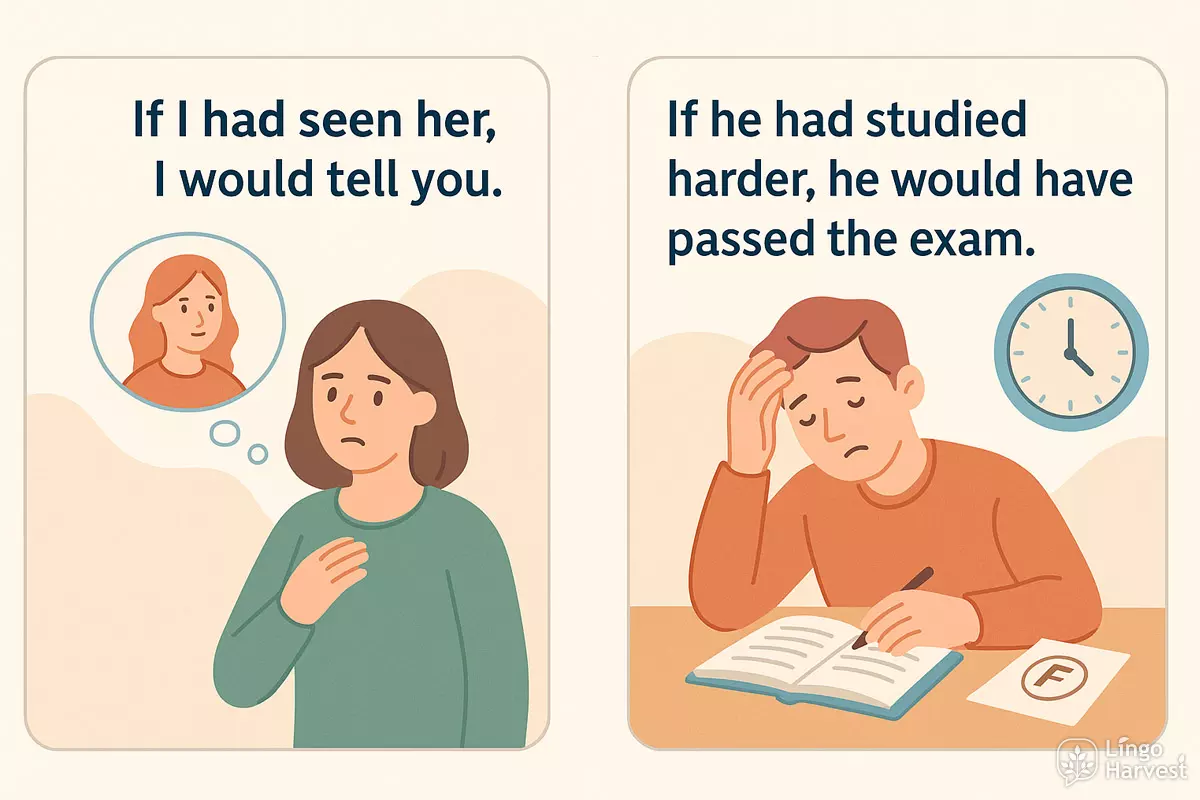
| ❌ Incorrect Form | ✅ Corrected Mixed Conditional |
|---|---|
| If I would have seen her, I will tell you. | If I had seen her, I would tell you. (Past condition, present result) |
| If he studied harder, he would have passed the exam. | If he had studied harder, he would have passed the exam. (Both past: standard third conditional) |
| If you weren’t late, you would have caught the bus. | If you hadn’t been late, you would have caught the bus. (Past condition, past result) |
| If I had taken the job, I am rich now. | If I had taken the job, I would be rich now. (Past condition, present result) |
| Had you told me, I help you. | Had you told me, I would help you. (Inverted, past condition, present result) |
Quick tips for mastering inversion and mixed conditionals
- Use inversion for formal writing or to add emphasis, but never with "if" in the same clause.
- Check the time frame in each part of your sentence: past conditionals rarely mix with present results unless it’s a mixed conditional.
- Practice with common patterns and listen for them in authentic English.
- Remember: the verb after inversion is always auxiliary + subject + main verb.
- For mixed conditionals, clarify which part refers to the past and which to the present or future.
Mastering these forms will help you sound more natural and avoid errors that can confuse your meaning.
Guidelines for correcting meaning and structure
When learners work with conditionals, two frequent challenges are shifting the sentence’s meaning and confusing the underlying structure. To revise these mistakes effectively, focus on both accuracy and clarity. Begin by identifying which type of conditional is needed (zero, first, second, third, or mixed), and then check that the tenses and word order match the intended meaning.
Steps for Effective Correction
- Determine the intended time reference: present, future, past, or hypothetical.
- Check the verb forms: Is the tense appropriate for each clause?
- Verify word order: Is the "if" clause in the correct position? Are both clauses complete?
- Look for logical links: Does the result logically follow from the condition?
- Be alert for meaning shifts: Has a change in structure unintentionally changed the situation described?
- Compare the original and revised sentences for subtle shifts in nuance.
- Ensure modal verbs (will, would, could, might) are used only where appropriate.
- Watch for common mix-ups, such as using "will" in the "if" clause.
- Review for subject-verb agreement within both clauses.
- Read the sentence aloud to check for naturalness and clarity.
Common Correction Patterns
To help visualize how different conditional forms affect meaning, here’s a comparison of typical structures and their uses:
| Conditional Type | Form | Typical Use |
|---|---|---|
| Zero Conditional | If + present simple, present simple | General truths, facts, routines |
| First Conditional | If + present simple, will + base verb | Real future possibilities |
| Second Conditional | If + past simple, would + base verb | Unreal or hypothetical situations now/future |
| Third Conditional | If + past perfect, would have + past participle | Unreal situations in the past |
| Mixed Conditional | If + past perfect, would + base verb | Past condition, present result |
Typical Meaning and Structure Errors
- Swapping the order of clauses and forgetting to adjust punctuation.
- Using "would" in the "if" clause: If you would go, I would go. ❌ (should be: If you went, I would go.)
- Mixing time references: If I will see her, I told her. ❌
- Confusing real and unreal conditions, leading to unintended meanings.
- Missing or extra modal verbs, which can shift the level of certainty.
Checklist for Self-Correction
- ✅ Identify the intended scenario (real, unreal, past, present).
- ✅ Match verb tenses to the correct conditional type.
- ✅ Confirm the logical connection between clauses.
- ✅ Read for unintended shifts in meaning after correction.
By systematically checking both the structure and the meaning, learners can avoid common pitfalls and express their ideas more precisely. Take time to analyze the context and select the conditional form that best conveys the intended message.
Practice: edit and rewrite incorrect conditional sentences
Mastering conditional forms requires attention to common mistakes and incorrect patterns. In this section, you'll work with sentences that contain errors in conditional grammar, verb tenses, or structure. Your goal is to identify the mistakes, then rewrite each sentence in its correct form. This kind of practice helps reinforce your understanding of first, second, and third conditionals, as well as mixed conditional forms.
Common Errors to Watch For
- Using the wrong verb tense in the if-clause or main clause
- Mixing up first, second, and third conditional structures
- Incorrect word order or missing auxiliary verbs
- Confusing real vs. unreal situations
- Omitting "would," "had," or "were" where needed
Exercise: Find and Fix the Mistakes
Read each incorrect sentence below. Edit and rewrite the sentence to make a correct conditional statement.
- If he will study harder, he passes the test.
- If I would have known about the meeting, I come earlier.
- If you will help me, I would finish faster.
- If she knew the answer, she will tell us.
- If they had left earlier, they catch the train.
- If it rains tomorrow, we would stay home.
- If I win the lottery, I would buy a new car.
- If you had told me, I would help you.
- If I be taller, I could play basketball.
- If we would see her, we will say hello.
Show answers
- If he studies harder, he will pass the test.
- If I had known about the meeting, I would have come earlier.
- If you help me, I will finish faster.
- If she knew the answer, she would tell us.
- If they had left earlier, they would have caught the train.
- If it rains tomorrow, we will stay home.
- If I win the lottery, I will buy a new car.
- If you had told me, I would have helped you.
- If I were taller, I could play basketball.
- If we see her, we will say hello.
Quick Reference: Conditional Forms
Here's a summary table of the main conditional types and their structures for easy review:
| Type | Structure | Example | Use |
|---|---|---|---|
| Zero Conditional | If + present simple, present simple | If water boils, it evaporates. | General truths, scientific facts |
| First Conditional | If + present simple, will + base verb | If it rains, we will cancel the picnic. | Real future possibility |
| Second Conditional | If + past simple, would + base verb | If I won the lottery, I would travel the world. | Unreal or unlikely present/future |
| Third Conditional | If + past perfect, would have + past participle | If she had studied, she would have passed. | Unreal past situations |
| Mixed Conditional | If + past perfect, would + base verb | If I had seen him, I would tell you. | Unreal past affecting present |