Advanced Mixed Conditionals: Deep Meaning and Subtle Variations

 This article explains advanced mixed conditionals, focusing on how to link past causes to present results and present conditions to past outcomes. It covers subtle shifts in tone, common patterns in writing, and practice transforming standard forms.
- What mixed conditionals express at an advanced level
- Forms connecting past causes to present results
- Forms connecting present conditions to past outcomes
- How subtle tone and viewpoint affect meaning
- Common patterns in academic and narrative writing
- Practice: transform second/third conditionals into mixed forms
Exploring the interplay of time and possibility in English grammar reveals how we convey complex ideas through conditional sentences. By blending different types of conditionals, we introduce subtle shifts in meaning that enhance both written and spoken communication. These nuances allow us to express hypothetical situations, regrets, or future possibilities with greater precision, demonstrating the richness and flexibility of the English language in reflecting our thoughts and intentions.
What mixed conditionals express at an advanced level
Advanced mixed conditionals allow speakers to navigate complex ideas about time, cause and effect, and hypothetical scenarios. Rather than simply describing unreal situations in the present or past, these structures connect different time frames and realities, offering subtle shades of meaning. For instance, they can show how a past event influences a present result, or how a current state might have changed a past outcome.
Nuances and Depth in Meaning
By combining elements from different conditional types, advanced users can express regret, irony, criticism, or hypothetical reasoning with precision. These constructions are especially useful for highlighting missed opportunities, alternate realities, or unexpected consequences. They often reflect sophisticated thinking about how events and actions are interrelated across time.
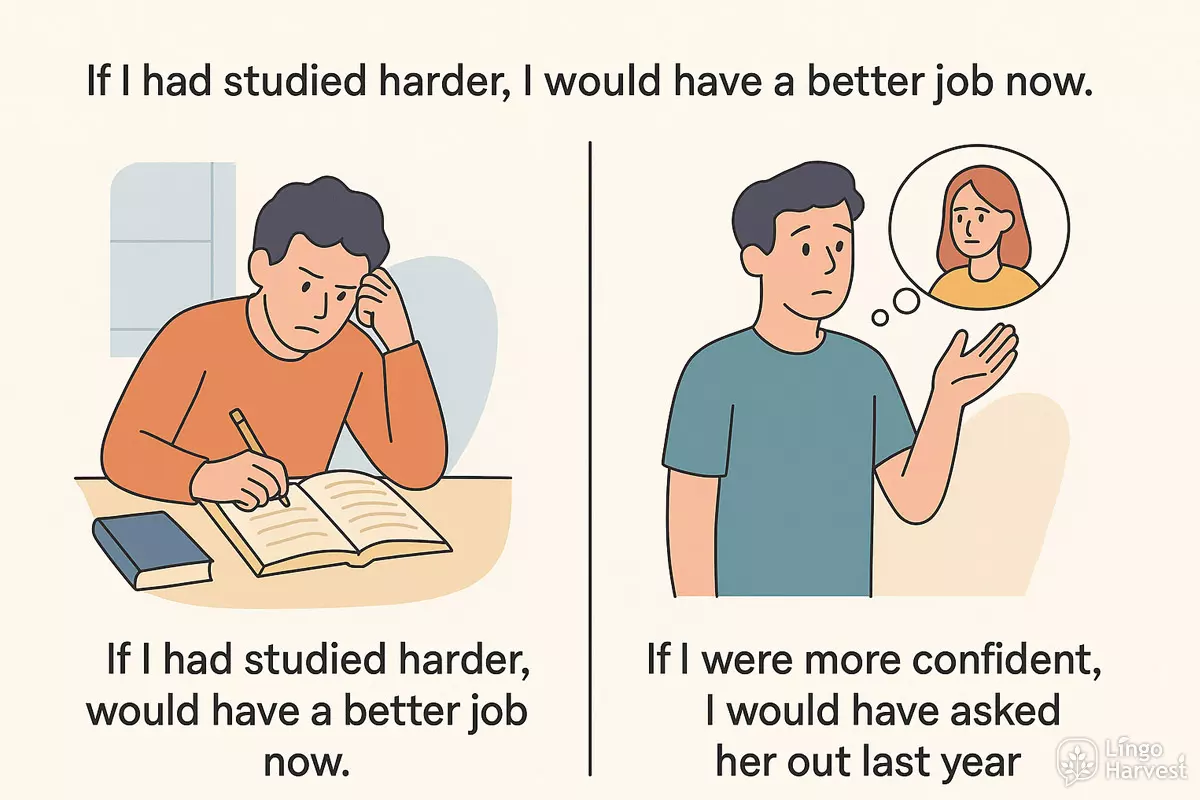
- Expressing present consequences of past actions (e.g., "If I had studied harder, I would have a better job now.")
- Imagining how a present reality could have altered the past ("If I were more confident, I would have asked her out last year.")
- Highlighting regret or missed opportunities ("If he hadn't lied, we would be friends today.")
- Criticizing or questioning decisions ("If they were more careful, they wouldn't have made that mistake.")
- Exploring cause and effect across time frames ("If she had saved money, she wouldn't be struggling now.")
- Suggesting irony or unexpected outcomes ("If I were afraid of heights, I wouldn't have climbed that mountain yesterday.")
- Speculating about alternate realities ("If you were taller, you might have played basketball in college.")
- Showing ongoing impact of past events ("If we had moved to the city, our lives would be very different now.")
- Expressing hypothetical criticism ("If you were more organized, you wouldn't have missed the deadline.")
- Describing hypothetical situations with emotional undertones ("If I hadn't met you, I wouldn't be this happy now.")
- Connecting general truths to specific past events ("If people were more honest, that scandal wouldn't have happened.")
- Introducing subtle advice or warnings ("If you were less stubborn, you might have avoided this problem.")
- Reflecting on how character traits affect outcomes ("If he were more patient, he wouldn't have quit so soon.")
- Exploring the impact of unreal present on real past ("If I were not allergic, I would have tried the cake yesterday.")
Comparing Mixed Conditionals with Standard Conditionals
| Conditional Type | Example & Use |
|---|---|
| Second Conditional (present unreal) |
If I had money, I would travel. (Imagines a present situation that is not true) |
| Third Conditional (past unreal) |
If I had saved money, I would have traveled. (Imagines a different past) |
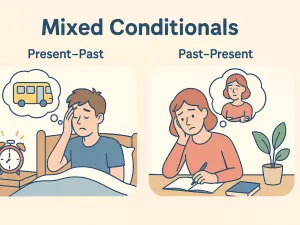
| Mixed Conditional (past → present) |
If I had saved money, I would be traveling now. (Past action affects present result) |
| Mixed Conditional (present → past) |
If I were richer, I would have traveled last year. (Present state imagined to alter past event) |
Mastering these combinations allows for greater clarity and subtlety when discussing complex situations. Advanced mixed conditionals are essential for expressing nuanced ideas in both spoken and written English, especially when discussing hypothetical scenarios that span more than one time frame.
Forms connecting past causes to present results
In advanced English grammar, certain mixed conditional structures bridge hypothetical events in the past with their imagined or real effects in the present. These patterns allow speakers to express regret, speculate about alternative realities, or point out how a different past action could shape a current situation. Recognizing and using these forms helps convey subtle shades of meaning and deepens fluency.
Common Structure and Usage
The most typical pattern combines a past perfect clause (if + had + past participle) with a present conditional main clause (would + base verb). This structure highlights how a different decision or circumstance from before would influence what is true now. For example:
- If she had studied medicine, she would be a doctor now.
- If I hadn't missed the train, I would have more time today.
- If they had moved to the city, they would live closer to us.
This setup is especially useful for expressing regret or imagining alternative outcomes.
Expanded Examples
Here are more examples that illustrate how past events connect to present realities:
- If he had saved more money, he would own a house now.
- If we had listened to advice, we wouldn't be in trouble.
- If you had learned Spanish, you would understand this conversation.
- If I hadn't broken my leg, I would be playing football today.
- If she had accepted the offer, she would have a better job now.
- If my parents had moved abroad, I would be living in another country.
- If we had planned ahead, we wouldn't be rushing now.
- If they hadn't ignored the warning, they would be safe today.
- If I had taken the course, I would be qualified for this role.
Form Variations and Subtleties
Sometimes, the main clause can use "could" or "might" instead of "would," to indicate possibility or uncertainty rather than certainty.
- If you had told me, I could help you now.
- If they had prepared better, they might be winning.
These variations let speakers fine-tune the degree of confidence or likelihood attached to the imagined present outcome.
Comparison Table: Past Causes & Present Results Patterns
| Past Perfect Condition (if-clause) | Present Result (main clause) | Example Sentence |
|---|---|---|
| If she had gone | would be | If she had gone to art school, she would be an artist now. |
| If we had known | could help | If we had known earlier, we could help you now. |
| If I had practiced | might play | If I had practiced more, I might play better today. |
| If they had finished | would have | If they had finished college, they would have more options now. |
Key Takeaways
- These advanced forms let you talk about how the past shapes the present, especially in hypothetical or unreal situations.
- Use past perfect for the condition and present modal forms for the result.
- Experimenting with "would," "could," and "might" allows you to express different nuances of certainty or possibility.
Mastering these patterns adds depth and subtlety to your English, helping you discuss imagined outcomes and reflect on life's twists and turns.
Forms connecting present conditions to past outcomes
One of the most nuanced uses of mixed conditionals in English is when a current state is presented as the result of a hypothetical event in the past. This structure is frequently used to express regret, missed opportunities, or explanations for present realities based on imagined earlier choices.
Structure and Usage
The typical pattern involves an if-clause in the past perfect (to describe the unreal past), combined with a main clause in the present conditional (to describe the unreal present state). This blend allows speakers to link hypothetical scenarios from the past to their consequences in the present.
- If I had studied harder, I would have a better job now.
- If she had left earlier, she wouldn't be stuck in traffic.
- If they hadn't missed the flight, they would be here with us.
- If you had told me about the meeting, I would be prepared today.
- If we had saved more money, we could afford a vacation now.
- If he had listened to advice, he wouldn't be in trouble now.
- If the weather had been better, we wouldn't be so disappointed now.
- If I had taken the medicine, I would feel fine today.
- If you had remembered her birthday, she would be happy with you.
- If the team had practiced more, they would be more confident now.
- If I had known about the sale, I would own that jacket now.
- If they had fixed the leak, the floor would be dry at the moment.
- If you hadn't interrupted him, he would be speaking now.
- If we had booked earlier, we would have seats today.
- If I had brought my umbrella, I wouldn't be wet now.
Subtle Variations and Modal Verbs
While would is the most common modal in the main clause, could and might are also used to indicate possibility or permission rather than certainty. This choice subtly shifts the meaning from definite to potential outcomes.
| If-clause (unreal past) |
Main clause (unreal present) |
|---|---|
| If I had known the answer | I would be less confused now |
| If she had saved more | She could afford a car now |
| If we had left earlier | We might be on time |
| If they hadn’t argued yesterday | They would be speaking today |
| If you had applied for the job | You would have an offer now |
| If I hadn't eaten so much | I would feel better now |
These patterns are essential for expressing how imagined changes in the past could affect the present, allowing for rich, precise communication of cause and effect across time.
How subtle tone and viewpoint affect meaning
The way speakers phrase mixed conditional sentences can reveal more than just time relationships or unreal situations. Tone—whether formal, casual, doubtful, or ironic—shapes the listener’s perception of intent or emotion. Similarly, viewpoint positions the speaker inside or outside the situation, influencing how responsibility, regret, or possibility is felt and understood.
Shifting Perspective with Mixed Conditionals
Even small changes in verb form, word choice, or emphasis can suggest a different attitude. For example, a speaker might use a mixed conditional to express regret indirectly, or to distance themselves from blame. Consider the difference between “If you had told me, I would be helping now” (regret with a hint of blame) and “If I had known, I would be helping now” (regret focused on self).
Common Subtle Variations
- Adding adverbs (“probably,” “just,” “still”) to soften or intensify the meaning
- Switching from active to passive voice to deflect responsibility
- Using modal verbs (“might,” “could,” “would have”) to express uncertainty or politeness
- Changing the subject (“If people had listened, the problem would not exist”) to generalize or avoid direct blame
- Inserting conditionals in questions for tactful suggestions (“Would you be feeling better if you had rested?”)
- Employing irony: “If only I had studied, I’d be relaxing now!” (implying the opposite)
- Expressing empathy: “If you had grown up here, you’d understand.”
- Softening criticism: “If the instructions had been clearer, we’d be done by now.”
- Highlighting missed opportunities: “If we had invested earlier, we’d be rich now.”
- Showing ongoing consequences: “If I hadn’t moved, I’d still be seeing my old friends.”
- Making polite requests: “If you had finished, would you be able to help me?”
- Suggesting hypothetical abilities: “If I had learned French, I’d be working in Paris.”
- Expressing relief: “If you hadn’t called, I’d be worrying right now.”
- Demonstrating frustration: “If you had listened, we wouldn’t be in this mess.”
- Offering reassurance: “If you had made a mistake, I’d be the first to forgive you.”
Comparing Tone and Viewpoint in Mixed Conditionals
| Example Sentence | Implied Tone or Viewpoint |
|---|---|
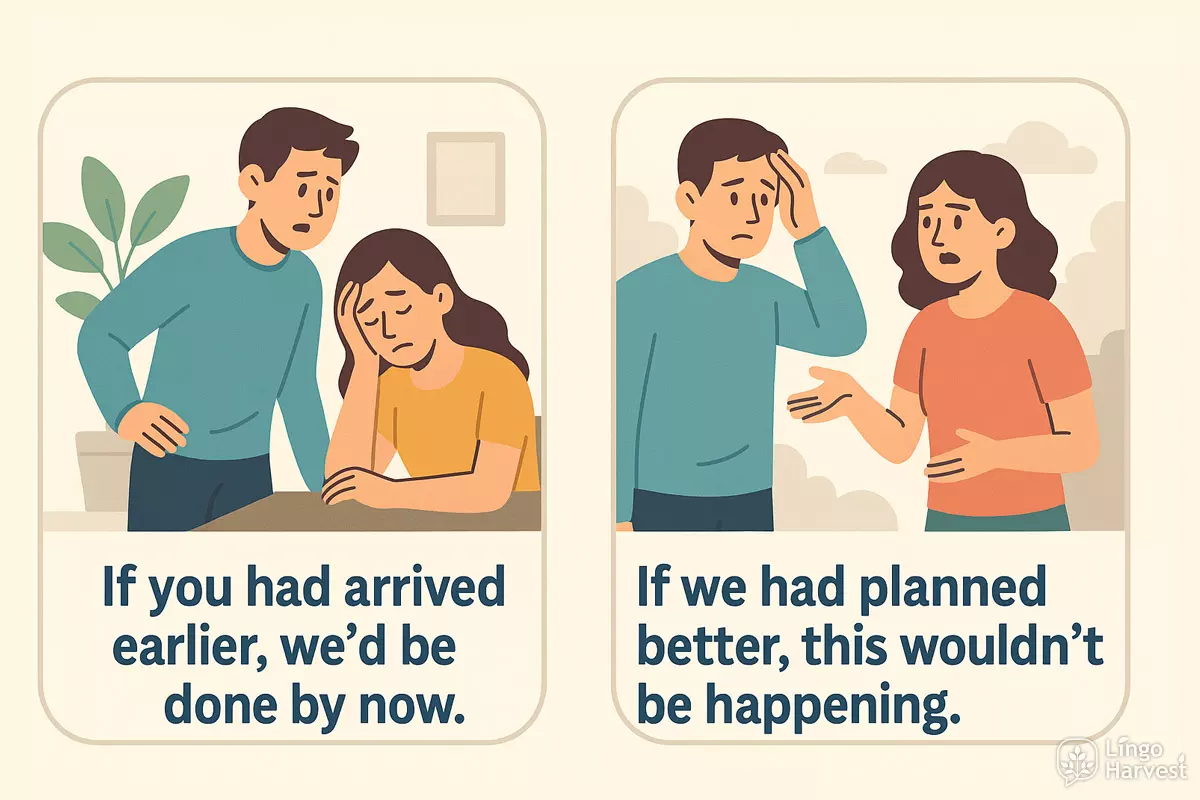
| If you had arrived earlier, we’d be done by now. | Mild criticism; focus on listener’s action |
| If we had planned better, this wouldn’t be happening. | Shared responsibility; collective viewpoint |
| If it hadn’t rained, I’d be playing outside. | External blame; neutral tone |
| If I had known, I would be helping now. | Personal regret; self-focused |
| If you had mentioned it, I might be feeling differently. | Conditional emotion; uncertain or tentative |
Understanding these nuances lets you interpret and use mixed conditionals with greater precision—whether you want to soften a message, convey regret, or highlight consequences. Mastering subtle variations can make your communication richer and more effective in both professional and personal contexts.
Common patterns in academic and narrative writing
Writers often rely on advanced mixed conditionals to convey nuanced relationships between hypothetical situations and their consequences. These structures allow for precise expression of unreal past events affecting the present, or present states influencing imagined past outcomes. The way such patterns are used can differ significantly between formal academic texts and more creative narrative styles.
Frequent Mixed Conditional Structures
In both scholarly and narrative contexts, certain forms recur when expressing complex logic or character motivation. Here are some commonly used patterns:
- If + past perfect, would + base verb (present result of a past condition)
- If + past simple, would have + past participle (past result of a present or general condition)
- If + past perfect, could/might + base verb (present possibility based on a past event)
- Were + subject + to + base verb, would have + past participle (emphatic or formal variant)
- Had + subject + past participle, would + base verb (inverted form for emphasis or variety)
- If it were not for + noun, would have + past participle (highlighting ongoing influence)
- If + subject + should + base verb, would have + past participle (rare, speculative)
- But for + noun, would have + past participle (formal, often in academic argumentation)
- If only + subject + past perfect, would + base verb (expressing regret with present focus)
- Suppose/supposing + past perfect, would + base verb (inviting hypothetical analysis)
Contrast in Usage: Academic vs. Narrative Writing
Writers adjust their use of mixed conditionals depending on the context and intent. The following table illustrates some typical contrasts:
| Academic Usage | Narrative Usage |
|---|---|
| Presenting counterfactual analysis (e.g., "If the data had been collected earlier, the results would be more robust.") | Character reflection or regret (e.g., "If she had chosen differently, he would be standing here now.") |
| Discussing theoretical implications (e.g., "If this variable were constant, the outcome would have differed.") | Imagining alternate storylines (e.g., "Had he arrived on time, the whole evening would have changed.") |
| Exploring causality in arguments (e.g., "Were this assumption valid, the study would have yielded new insights.") | Building suspense or irony (e.g., "If only he had listened, none of this would be happening.") |
| Employing formal inversion for emphasis (e.g., "Had it not been for external factors, the hypothesis would have held.") | Evoking emotion or mood (e.g., "If it hadn't rained, they would be dancing under the stars.") |
Subtle Variations in Meaning
Small shifts in tense or modal verbs can change the nuance of a mixed conditional. For instance, using might instead of would introduces uncertainty: "If she had known, she might be happier now." Similarly, inversion or formal expressions like "Had he studied more, he would be at the top of his class" can impart a more sophisticated or literary tone. Writers choose among these structures to match the tone, perspective, and complexity required by their genre, making mixed conditionals a flexible tool for expressing deep and subtle meaning.
Practice: transform second/third conditionals into mixed forms
Understanding how to shift between second, third, and mixed conditionals is crucial for expressing nuanced ideas about present results of past actions or hypothetical alternatives to current situations. This section offers guided exercises and clear examples to help you confidently manipulate these structures.
Identifying Opportunities for Mixed Conditionals
Before transforming, it's helpful to recognize when a sentence could use a mixed conditional. Look for statements about unreal past actions with present consequences, or unreal present situations with imagined past results.
- If she studied harder, she would have passed the exam.
- If I hadn’t lost my keys, I would be at home now.
- If they were more responsible, they wouldn’t have missed the meeting.
- If you had told me, I wouldn’t be confused now.
- If we were rich, we would have traveled the world by now.
- If he hadn’t broken his leg, he would be playing in the match.
- If I spoke French, I would have understood the movie.
- If she had arrived earlier, she wouldn’t be waiting outside now.
- If you were more careful, you wouldn’t have made that mistake.
- If they had finished the work, they would be relaxing now.
- If I knew his address, I would have sent him an invitation.
- If we hadn’t missed the bus, we would be on time.
- If she were more patient, she wouldn’t have argued with her boss.
- If you hadn’t eaten so much cake, you wouldn’t feel sick now.
- If it weren’t raining, we would have gone for a walk.
- If he had listened to advice, he wouldn’t be in trouble now.
- If I were taller, I would have joined the basketball team.
- If you had saved your money, you would be able to buy the car now.
- If they weren’t so busy, they would have come to the party.
- If I had known about the meeting, I would be there now.
Transformation: From Pure Conditionals to Mixed
Pure second conditionals (if + past simple, would + base) and third conditionals (if + past perfect, would have + past participle) can be blended for subtle meaning. Review the paradigms below:
| Original Conditional | Mixed Conditional Form |
|---|---|
| If she studied harder, she would pass the exam. (Second) |
If she had studied harder, she would pass the exam now. (Past condition, present result) |
| If I hadn’t lost my keys, I would have arrived earlier. (Third) |
If I hadn’t lost my keys, I would be at home now. (Past condition, present result) |
| If I were rich, I would travel the world. (Second) |
If I were rich, I would have traveled the world by now. (Present condition, past result) |
| If you had told me, I would have helped you. (Third) |
If you had told me, I wouldn’t be confused now. (Past condition, present result) |
Try It Yourself: Transformation Tasks
Transform the following sentences into appropriate mixed conditional forms. Consider whether you need to express a present result of a past condition, or a past result of a present (unreal) situation.
- If he worked harder, he would have finished the project on time.
- If they had invited us, we would be at their party now.
- If you were more organized, you wouldn’t have lost your passport.
- If I had seen the sign, I wouldn’t be lost now.
- If it weren’t so cold, we would have gone swimming yesterday.
Show answers
- He didn’t work hard (present unreal), so he didn’t finish the project (past result):
If he worked harder, he would have finished the project on time. - They didn’t invite us (past unreal), so we are not at their party (present result):
If they had invited us, we would be at their party now. - You are not organized (present unreal), so you lost your passport (past result):
If you were more organized, you wouldn’t have lost your passport. - I didn’t see the sign (past unreal), so I am lost now (present result):
If I had seen the sign, I wouldn’t be lost now. - It is cold (present unreal), so we didn’t go swimming yesterday (past result):
If it weren’t so cold, we would have gone swimming yesterday.
Practicing these transformations will help you use mixed conditionals intuitively to express complex ideas about time and reality. Experiment with your own examples to further internalize these patterns.