Inversion in Conditional Sentences: Should, Were, Had (Formal Style)

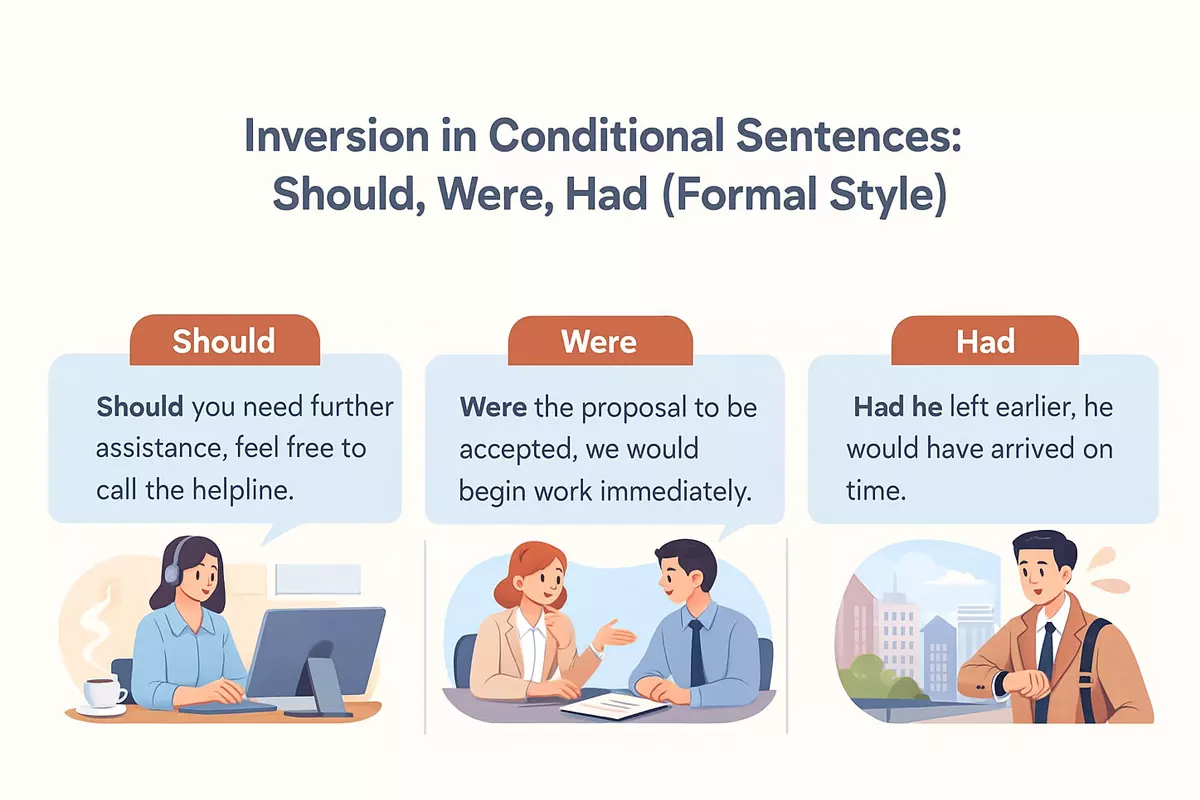 Here we what inversion in conditionals is, how to use should, were, and had for inversion, and how tone and formality differ from standard if-clauses. It also discusses avoiding ambiguity and offers examples and practice exercises.
- What inversion means and why it is used in conditionals
- Inversion patterns with should, were, and had
- Tone and formality differences vs standard if-clauses
- Avoiding ambiguity when inverting complex conditions
- Examples from academic, legal, and literary English
- Practice: rewrite if-clauses using inversion correctly
Mastering formal English involves learning how to restructure conditional sentences for clarity and emphasis. By inverting the usual word order and beginning with auxiliary verbs such as should, were, or had, you can make your writing or speech sound more polished and sophisticated. This technique not only adds variety to your language but also demonstrates a strong command of advanced grammar, which is especially valuable in academic, professional, and formal communication.
What inversion means and why it is used in conditionals
In English grammar, inversion refers to changing the usual word order, typically by placing the auxiliary verb before the subject. Instead of saying "If he should call," you might hear "Should he call," where the auxiliary verb "should" comes first. This switch is especially common in formal writing and speech, particularly in certain types of conditional sentences.
How inversion works in conditional sentences
In conditional clauses, inversion is an alternative to the standard "if" structure. It is usually used with should, were, and had to create a more formal, elegant tone. For example, instead of "If you should need assistance, let me know," you can say "Should you need assistance, let me know." The meaning stays the same, but the style is more formal.
Why do we use inversion?
There are several reasons for using inversion in conditionals:
- Formality: Inverted conditionals sound more sophisticated and are common in written or formal spoken English.
- Emphasis: Placing the auxiliary verb first can make the condition stand out and sound more striking.
- Variety: Using inversion allows writers and speakers to avoid repeating "if" too often, making language less monotonous.
- Conciseness: Sometimes inversion leads to shorter, more direct sentences.
Inversion patterns in conditionals
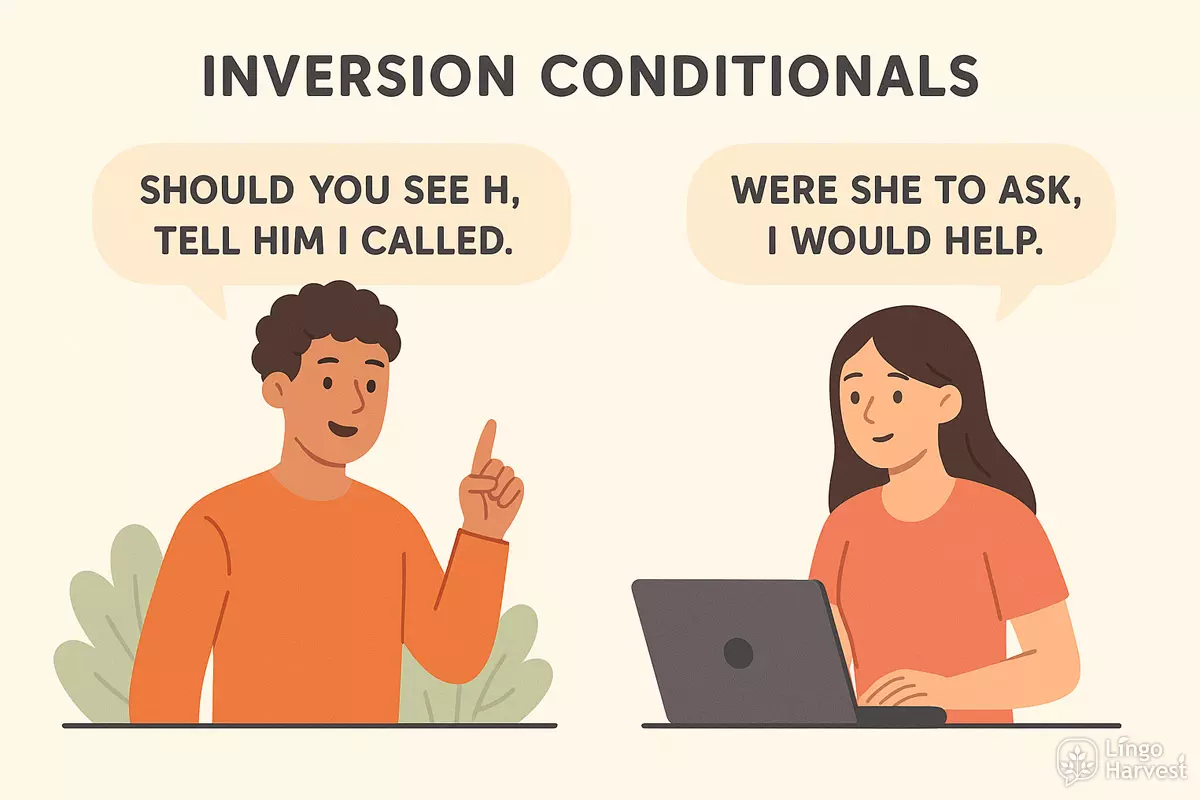
The use of inversion is limited to certain structures, mainly with the auxiliaries should, were, and had. Here are common patterns:
- Should + subject + base verb (for possible future situations):
→ Should you see him, tell him I called. - Were + subject + infinitive/to be (for hypothetical or unlikely situations):
→ Were she to ask, I would help. - Had + subject + past participle (for imaginary past situations):
→ Had I known, I would have acted differently.
Comparison: Standard vs. Inverted Conditionals
| Standard Conditional | Inverted Conditional |
|---|---|
| If you should need help, call me. | Should you need help, call me. |
| If he were here, he would agree. | Were he here, he would agree. |
| If I had seen the sign, I would have stopped. | Had I seen the sign, I would have stopped. |
| If they should arrive early, let me know. | Should they arrive early, let me know. |
Summary
Inversion in conditionals offers a concise and formal alternative to typical "if" clauses. It is a stylistic tool that advanced English speakers use to vary sentence structure, emphasize conditions, and achieve a polished tone. Mastering these patterns can make your English sound more natural and sophisticated, especially in formal contexts.
Inversion patterns with should, were, and had
Understanding how to use inversion with "should," "were," and "had" can make your formal English more sophisticated, especially in conditional sentences. Instead of starting with "if," these structures invert the subject and auxiliary verb, creating a more elegant or literary effect. This kind of inversion is common in written English, especially in academic, legal, or formal contexts.
How inversion works in formal conditionals
Normally, conditional sentences start with "if" (e.g., If you should need help, call me). To make the sentence more formal, you invert the auxiliary verb and the subject, and drop "if." Each modal or auxiliary verb follows a specific pattern:
- Should + subject + base verb (for future possibility)
- Were + subject + infinitive (for hypothetical present/future)
- Had + subject + past participle (for hypothetical past)
Common patterns and examples
The following list shows how these inversion forms appear in sentences. Notice how the meaning remains conditional, even though "if" is omitted.
- Should you require further information, please contact me. (If you should require…)
- Should it rain tomorrow, the event will be postponed. (If it should rain…)
- Were he to win the lottery, he would travel the world. (If he were to win…)
- Were they here now, we could start the meeting. (If they were here…)
- Had I known about the delay, I would have left earlier. (If I had known…)
- Had she seen the sign, she would not have missed the turn. (If she had seen…)
- Should the need arise, we will inform you immediately.
- Were you in my position, what would you do?
- Had we received your letter, we would have responded sooner.
- Should anyone ask, tell them I’m unavailable.
- Were this situation different, our decision might change.
- Had the weather been better, we could have gone hiking.
Summary: Inversion forms at a glance
The table below organizes the main inversion structures, showing how each form relates to its standard conditional equivalent and when it is typically used.
| Inversion Form | Standard Conditional | Typical Use |
|---|---|---|
| Should + subject + base verb | If + subject + should + base verb | Future possibility |
| Were + subject + (to) + base verb | If + subject + were + (to) + base verb | Unlikely or hypothetical present/future |
| Had + subject + past participle | If + subject + had + past participle | Unreal past condition |
Mastering these forms helps you write and speak with greater formality and variety, especially in professional or academic contexts. They add nuance and clarity to your conditional statements.
Tone and formality differences vs standard if-clauses
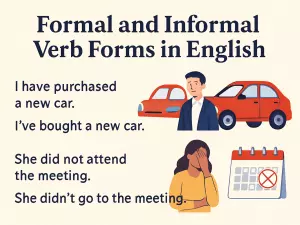
Using inversion in conditional sentences—starting with "Should," "Were," or "Had" instead of a standard "if"—immediately signals a more formal and sometimes literary tone. While standard "if-clauses" are common in both speech and writing, their inverted counterparts are typically reserved for formal writing, speeches, or to achieve a polished, sophisticated style.
Inverted conditionals often appear in:
- Official correspondence
- Academic or technical writing
- Historical or literary narratives
- Legal documents and contracts
- Speeches aiming for rhetorical effect
How inversion changes the tone
Switching from a regular "if" clause to an inverted structure can make your sentences sound more authoritative or elegant. For example, "If you need assistance, call this number" feels neutral and direct. In contrast, "Should you need assistance, call this number" adds a sense of formality and distance, which may be preferred in customer service or official notices.
Comparing standard and inverted forms
The main difference is the impression each structure gives. Standard "if" conditionals are straightforward and conversational. Inverted forms can sound impersonal or detached, which is sometimes desirable in professional contexts.
| Standard "If"-Clause | Inverted Conditional |
|---|---|
| If you have any questions, let me know. | Should you have any questions, let me know. |
| If he were here, he would help. | Were he here, he would help. |
| If I had known, I would have acted differently. | Had I known, I would have acted differently. |
| If they fail, there will be consequences. | Should they fail, there will be consequences. |
| If you decide to accept, please sign below. | Should you decide to accept, please sign below. |
When to use each style
- Standard if-clauses: Everyday conversation, informal writing, emails to colleagues, direct instructions.
- Inverted forms: Formal letters, official announcements, academic texts, ceremonial speeches.
In summary, inversion is best reserved for contexts where a refined or formal register is expected, while standard "if" clauses are ideal for clear, approachable communication in daily life.
Avoiding ambiguity when inverting complex conditions
Clarity becomes especially important when you invert conditional sentences using formal structures like "Should," "Were," or "Had." These inversions can lead to confusion if the sentence is long, contains multiple clauses, or includes negatives. Readers may struggle to identify the intended condition and result, especially when modifiers or additional details are inserted.
Common pitfalls with inverted conditionals
Writers sometimes unintentionally obscure meaning by packing too much information into the subject or by placing adverbials in awkward positions. This is especially true in formal writing, where inversion is more common, and sentences tend to be longer.
- Unclear subject-verb relationships due to inversion
- Multiple negatives creating confusion
- Parenthetical information interrupting the conditional structure
- Ambiguous reference: unclear what the condition refers to
- Overuse of inversion in a single paragraph
- Long noun phrases before or after the verb
- Misplaced adverbs between auxiliary and subject
- Inverted structure combined with passive voice
- Mixing inversion with other formal devices (e.g., fronting, ellipsis)
- Complex time clauses within the condition
- Use of inversion with rare or archaic modal verbs
- Chain conditionals (multiple "if" clauses nested together)
Best practices for clarity
To make inverted conditional sentences easily understandable, consider these strategies:
- Keep the condition clause concise—avoid unnecessary detail.
- Place adverbs after the subject, not between the auxiliary and subject.
- Use commas to clearly separate the conditional and result clauses.
- Limit the number of negatives in the sentence.
- Rephrase extremely complex conditions back to standard "if" clauses if needed.
- Check that the subject of the inversion is clear and unambiguous.
- Avoid interrupting the conditional clause with parenthetical remarks.
- Read the sentence aloud: if it sounds confusing, it probably is.
- Use inversion sparingly in complex technical or legal writing.
- Ask a colleague to paraphrase your sentence to ensure it’s understood as intended.
Examples: Ambiguous vs. Clear Inversion
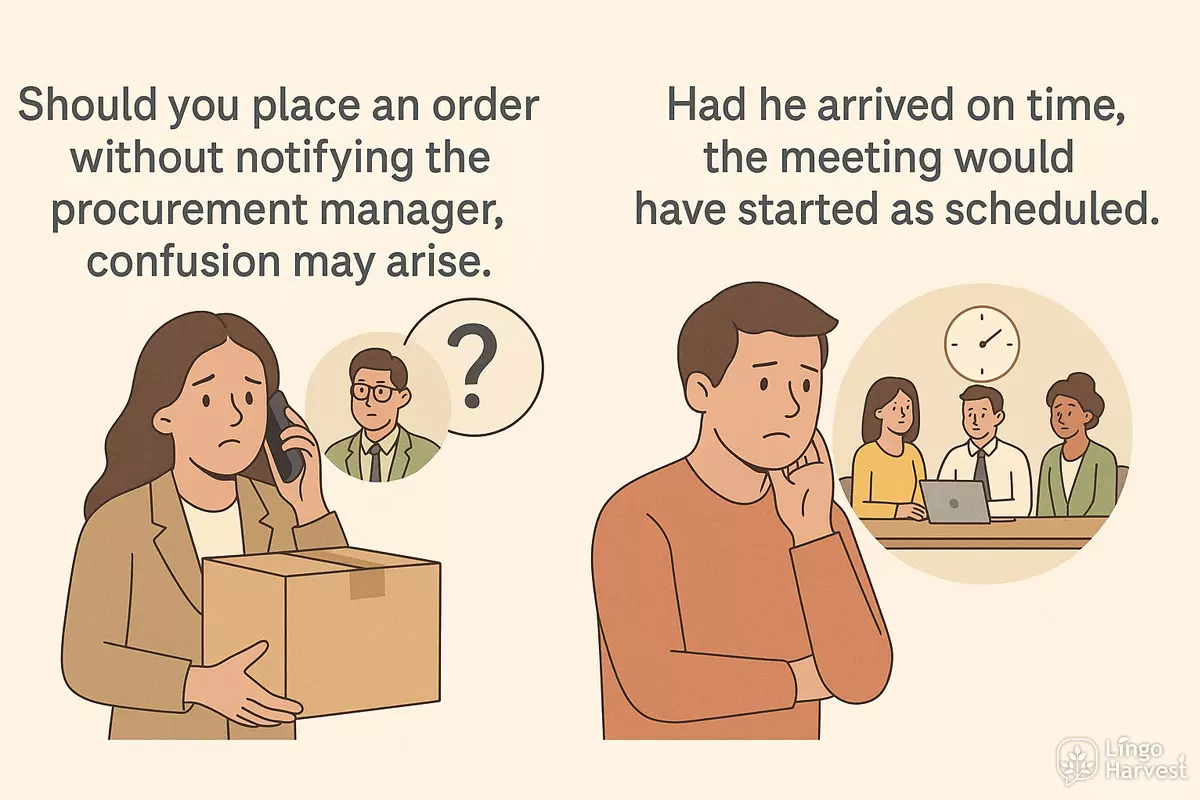
Below, compare less clear and improved forms of inverted conditional sentences:
| Ambiguous or Awkward | Clear and Effective |
|---|---|
| Should you, without notifying the manager who is responsible for overseeing all procurement, place an order, confusion may arise. | Should you place an order without notifying the procurement manager, confusion may arise. |
| Were he not, given the circumstances, to have arrived late, the meeting would have started on time. | Had he arrived on time, the meeting would have started as scheduled. |
| Had the documents, which were requested last week and are still missing, not been submitted, the process would have been delayed. | Had the requested documents not been submitted, the process would have been delayed. |
| Should not you, despite the warnings, have completed the task, issues could occur. | Should you fail to complete the task despite the warnings, issues could occur. |
Summary tips
When using inversion in formal conditional sentences, always prioritize straightforward structure and logical flow. Reducing complexity in the conditional clause and maintaining clear separation between condition and result will help your writing remain precise and effective.
Examples from academic, legal, and literary English
In formal written English, especially in academic articles, legal documents, and classic literature, inversion in conditional sentences with "should," "were," and "had" is used to convey hypothetical or unlikely situations with precision and elegance. These structures frequently appear in texts where a formal, concise tone is required.
Academic Usage
Writers in scholarly publications often employ inverted conditionals to express theoretical possibilities, alternative scenarios, or to introduce counterfactuals. For example:
- Should the data prove inconclusive, further research will be necessary.
- Were the hypothesis true, the implications would be significant.
- Had the experiment failed, the study would have been discontinued.
Legal Documents
Legal English favors inversion to ensure clarity and to state conditions explicitly, minimizing ambiguity. Common patterns include:
- Should the party default, the agreement shall be terminated.
- Were the asset to be transferred, all liabilities would follow.
- Had the contract been signed, obligations would have arisen.
Literary Examples
Classic and modern literature uses these forms for stylistic effect, often to create a formal or dramatic tone:
- Should you require assistance, do not hesitate to call.
- Were it not for his courage, the outcome might have differed.
- Had she known the truth, her actions would have changed.
Comparison of Inverted Conditional Forms
Below is a structured overview comparing standard and inverted forms commonly seen in formal writing:
| Standard Conditional | Inverted Formal Style |
|---|---|
| If he should arrive early, let me know. | Should he arrive early, let me know. |
| If I were you, I would reconsider. | Were I you, I would reconsider. |
| If she had known, she would have acted differently. | Had she known, she would have acted differently. |
| If the need arise, we will respond. | Should the need arise, we will respond. |
| If it not been for the rain, we would have gone. | Had it not been for the rain, we would have gone. |
These patterns illustrate how inversion is used to elevate the tone and clarity of formal English in professional and creative contexts.
Practice: rewrite if-clauses using inversion correctly
Understanding how to convert standard "if" conditional clauses into their inverted, more formal forms is a valuable skill for academic and professional English. The most common forms use "should," "were," and "had" at the beginning of the sentence, replacing "if" and inverting the subject and auxiliary verb. This practice section helps you apply these transformations correctly.
Instructions
Below are several sentences with standard "if-clauses." Rewrite each one using the appropriate inversion structure. Focus on using "should," "were," or "had" as required by the meaning and tense of each sentence.
- If you need any assistance, let me know.
- If I had known about the meeting, I would have attended.
- If she were here, she could explain everything.
- If they arrive early, call me.
- If he had left earlier, he would have caught the train.
- If you should see Anna, give her my regards.
- If it were to rain tomorrow, the match would be cancelled.
- If I were you, I would take that offer.
- If we had received your letter, we would have replied.
- If the opportunity should arise, take it.
- If she had studied harder, she might have passed the exam.
- If you should have any questions, please ask.
Show answers
- Should you need any assistance, let me know.
- Had I known about the meeting, I would have attended.
- Were she here, she could explain everything.
- Should they arrive early, call me.
- Had he left earlier, he would have caught the train.
- Should you see Anna, give her my regards.
- Were it to rain tomorrow, the match would be cancelled.
- Were I you, I would take that offer.
- Had we received your letter, we would have replied.
- Should the opportunity arise, take it.
- Had she studied harder, she might have passed the exam.
- Should you have any questions, please ask.
Quick Reference: Inversion Patterns
Use this mini-guide to decide which structure to use:
- Should + subject + base verb (for present/future, polite or possible conditions):
Should you need help, call me. - Were + subject + (to) base verb (for hypothetical or unlikely present/future):
Were I in your position, I would agree.
Were it to snow, the event would be postponed. - Had + subject + past participle (for unreal past conditions):
Had I seen her, I would have spoken.
Common Mistakes to Avoid
- Do not use "if" with the inverted form. For example, Should you need… (not If should you need…).
- Only invert the auxiliary verb and subject—do not change the main verb tense.
- Use inversion mainly in formal writing or speeches, not everyday conversation.