Testing Conditional Mastery: Full Advanced Diagnostic Test

 This article reviews advanced English conditional structures, including mixed conditionals, past modals, inversion, and elliptical forms. It details task types, multi-step logic, scoring methods, and provides a full answer key for self-evaluation.
- Overview of conditional structures tested at advanced levels
- Task types: recognition, completion, transformation, editing
- Mixed conditionals, past modals, inversion, elliptical forms
- Multi-step logic and complex hypothetical chains
- Final scoring guide and interpretation
- Answer key for full diagnostic evaluation
Test your knowledge of advanced conditional concepts with this comprehensive assessment, carefully designed to challenge your skills and provide a thorough evaluation. By completing this assessment, you will gain valuable insight into your strengths and identify specific areas where you can enhance your understanding. Whether you are looking to reinforce your expertise or pinpoint topics for further study, this assessment offers a meaningful opportunity for growth and self-improvement in mastering complex conditional concepts.
Overview of conditional structures tested at advanced levels
At higher proficiency, learners encounter a broad array of conditional forms that go beyond the standard "if-clauses." These complex structures are essential for expressing nuanced ideas, hypothetical scenarios, and logical relationships in both spoken and written communication. Mastery of these forms is often assessed through tasks that require accurate use, recognition, and transformation of conditionals in context.
Key Conditional Types and Their Uses
Advanced diagnostic tests typically evaluate the following conditional structures:
- Zero conditionals (general truths, scientific facts)
- First conditionals (real future possibilities)
- Second conditionals (unreal, hypothetical present or future situations)
- Third conditionals (unreal past situations and their possible outcomes)
- Mixed conditionals (combining aspects of second and third conditionals)
- Inverted conditionals (formal or literary alternatives using inversion instead of "if")
- Implied conditionals (where the "if" clause is omitted or implied)
- Conditional sentences with modal verbs (could, might, should, would, etc.)
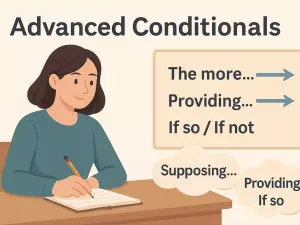
- Unless, provided (that), as long as, in case, supposing (alternative conjunctions)
- Wish and if only structures (expressing regret or desire for change)
- But for, otherwise, had it not been for (expressing conditionality without "if")
- Conditional perfect and continuous forms
Comparing Advanced Conditional Patterns
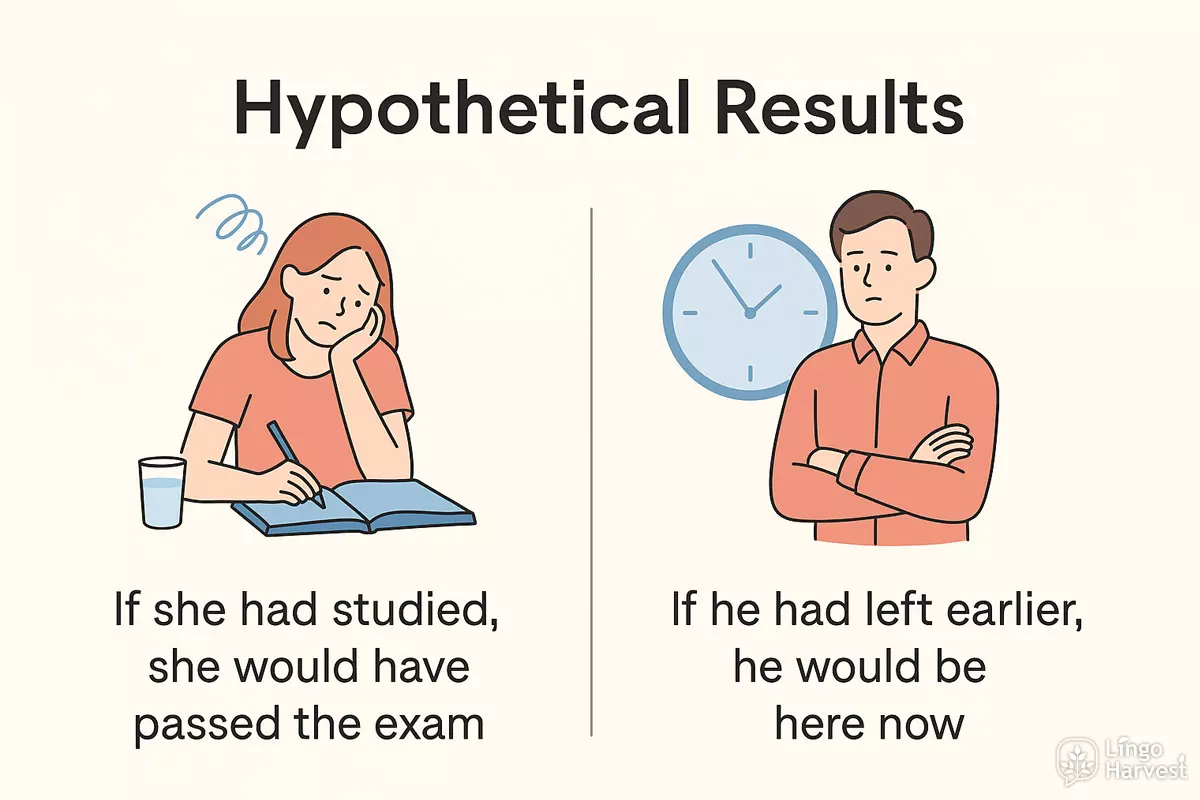
The following table summarizes and contrasts several advanced conditional forms, their typical usage, and example sentences:
| Type | Form | Example |
|---|---|---|
| Third Conditional | If + past perfect, would have + past participle | If she had studied, she would have passed the exam. |
| Mixed Conditional | If + past perfect, would + base verb | If he had left earlier, he would be here now. |
| Inverted Conditional | Had + subject + past participle, ... | Had I known, I would have acted differently. |
| Implied Conditional | Main clause only; "if" understood | I'd help, were I able to. |
| Conditional with Modal | If + past simple, might/could + base verb | If you tried, you could succeed. |
Common Challenges at Advanced Level
Students are often tested on subtle distinctions, such as the difference between real and unreal past conditions, or the use of inversion for emphasis or formality. Tasks may involve error correction, rephrasing, or completion exercises that demand a deep understanding of meaning and form.
Typical Testing Tasks
Advanced assessments might include:
- Transforming direct conditionals into inverted forms
- Identifying and correcting errors in mixed conditionals
- Choosing the correct modal verb for nuanced meaning
- Completing sentences using alternative conjunctions (unless, provided that, etc.)
- Explaining the difference in meaning between similar structures
A solid grasp of these patterns allows for flexible, precise expression across a range of contexts, which is a hallmark of advanced language competence.
Task types: recognition, completion, transformation, editing
Understanding the range of exercises in an advanced diagnostic test is crucial for both effective preparation and accurate self-assessment. These tasks are designed to probe different aspects of a learner’s skills—from identifying correct forms to manipulating and correcting language. Below you’ll find an overview of each type, with practical examples and tips for tackling them.
Recognition Tasks
Recognition exercises test your ability to identify specific language forms, patterns, or errors. These might include selecting the correct option in a multiple-choice format, spotting mistakes, or distinguishing between similar grammatical structures. Common recognition formats include:
- Choosing the correct verb tense in a sentence
- Identifying an error in a given phrase
- Selecting the right word from a set of synonyms
- Deciding which sentence uses a structure correctly
- Marking sentences as correct (✅) or incorrect (❌)
Completion Tasks
Completion items require you to supply missing information, such as filling in blanks, completing sentences, or providing a word or phrase based on context. This type of task assesses both recall and understanding of structures. Typical completion formats:
- Fill-in-the-blank sentences (e.g., "If I ____ (be) you, I would...")
- Short dialogues with missing lines
- Completing a sentence using a prompt
- Supplying the correct form of a given word
- Inserting appropriate connectors or prepositions
Transformation Tasks
Transformation tasks involve rewriting sentences or phrases according to a specific instruction, often to practice paraphrasing, changing voice, or applying grammar rules. These exercises test flexibility and depth of knowledge. Common transformation prompts are:
- Change from direct to indirect speech
- Rewrite using a given word without changing meaning
- Convert active sentences to passive
- Express the same idea using a different grammatical structure
- Transform positive statements into negatives or questions
- Restate a sentence using a modal verb
- Paraphrase using a relative clause
- Change tense while preserving meaning
- Use a conditional form as instructed
- Replace phrasal verbs with single-word synonyms
Editing Tasks
Editing requires you to review a text or sentence and correct any errors in grammar, vocabulary, spelling, or punctuation. This format simulates real-world proofreading and sharpens attention to detail. Editing tasks may be presented as:
- Short paragraphs with several deliberate mistakes
- Sentences containing one or more errors
- Lists of words to be corrected in context
- Texts where you must add missing punctuation
- Sentences needing vocabulary correction
| Task Type | What You Do | Skills Tested | Typical Example |
|---|---|---|---|
| Recognition | Identify correct/incorrect forms | Awareness, analysis | Choose the correct tense: "He ____ to school yesterday." |
| Completion | Fill in missing information | Recall, application | Complete: "If I _____ (know), I would have called." |
| Transformation | Rephrase as instructed | Flexibility, grammar | Change to passive: "They built the bridge." |
| Editing | Correct errors in text | Proofreading, accuracy | Find and fix mistakes: "She don’t likes apples." |
Practice: Sample Tasks
- Recognition: Mark each sentence as correct (✅) or incorrect (❌):
a) She have been to Paris.
b) If I were you, I would call him.
c) He don’t like coffee. - Completion: Fill in the blanks with the correct forms:
a) By the time we arrived, the movie _______ (already/start).
b) If she _______ (study) harder, she will pass. - Transformation: Rewrite as instructed:
a) Change to passive: "The chef cooked the meal."
b) Use reported speech: He said, "I am busy." - Editing: Correct the errors:
a) Their going to the party tonight.
b) I has never seen that movie. - Recognition: Correct (✅) or incorrect (❌):
a) She don’t know him.
b) The test was difficult.
c) If he will come, we will start. - Completion:
a) She _______ (live) here since 2010.
b) If it _______ (rain), we’ll stay inside. - Transformation:
a) Change to passive: "They built the house in 1990."
b) Use reported speech: She said, "I can swim." - Editing:
a) We was very tired.
b) He don’t has any money. - Error identification:
a) If I knew, I would tell you. (Correct/Incorrect?)
b) She have a car. (Correct/Incorrect?) - Completion:
a) If they _______ (arrive) earlier, they would have seen the show.
b) He _______ (never/see) snow before.
Show answers
- a) ❌
b) ✅
c) ❌ - a) had already started
b) studies - a) The meal was cooked by the chef.
b) He said that he was busy. - a) They’re going to the party tonight.
b) I have never seen that movie. - a) ❌
b) ✅
c) ❌ (Correct: If he comes, we will start.) - a) has lived
b) rains - a) The house was built in 1990.
b) She said that she could swim. - a) We were very tired.
b) He doesn’t have any money. - a) Correct
b) Incorrect (Correct: She has a car.) - a) had arrived
b) had never seen
Mastering these varied formats will help you diagnose strengths and gaps efficiently, ensuring targeted practice and progress in advanced language skills.
Mixed conditionals, past modals, inversion, elliptical forms
Understanding advanced grammatical structures is essential for mastering nuanced English communication. This section explores how different conditional types interact, how modal verbs function in hypothetical past situations, and how inversion and ellipsis can create more sophisticated sentence patterns.
Mixed Conditionals: Combining Time Frames
Mixed conditionals allow you to discuss present results of past actions, or past results of present or general situations. They are common in advanced English and require careful attention to verb tenses.
- If she had studied harder, she would be working here now. (Past condition, present result)
- If I were more organized, I would have finished the project last week. (Present condition, past result)
- If he had listened, he wouldn’t be in trouble.
- If you spoke Spanish, you would have understood the announcement.
Past Modals: Expressing Lost Opportunities and Criticism
Modals such as should have, could have, might have, and must have express regret, possibility, or deduction about the past.
- She should have told me the truth. (criticism)
- He could have won the race. (missed opportunity)
- You might have seen him at the party. (possibility)
- They must have forgotten the meeting. (deduction)
- I shouldn’t have said that. (regret)
Inversion: Adding Emphasis and Formality
Inversion is often used in conditional sentences and for stylistic emphasis, especially in formal writing or speech.
- Had I known about the delay, I would have left earlier.
- Were she to apply, she might get the job.
- Should you need assistance, let me know.
- Never have I seen such chaos.
- Rarely do we encounter this issue.
Elliptical Forms: Avoiding Repetition
Ellipsis in English helps to avoid redundancy by omitting repeated words or phrases, especially in responses or coordinated clauses.
- If you can’t come, I can’t either. (instead of "I can’t come either")
- She likes coffee, as do I.
- He could have helped, but didn’t.
- They haven’t finished, nor have we.
- She will call if needed.
Summary Table: Key Patterns and Examples
| Type | Example |
|---|---|
| Mixed Conditional (Past → Present) | If he had saved more, he would be traveling now. |
| Past Modal (Regret) | I should have apologized. |
| Inversion (Conditional) | Had they arrived earlier, they would have met her. |
| Elliptical Form | She likes jazz; so do I. |
Recognizing and correctly using these advanced structures shows a high level of grammatical control and subtlety in English. Practice identifying the intended time frames, modality, and opportunities for conciseness in both written and spoken contexts.
Multi-step logic and complex hypothetical chains
Understanding advanced conditional reasoning requires navigating through scenarios that demand layered thinking. In diagnostic tests that assess this skill, examinees are often presented with situations where one outcome depends on another, which in turn is influenced by further assumptions or variables. This type of reasoning stretches beyond simple “if-then” statements, involving chains of events or stipulations that must be tracked and evaluated.
Recognizing Multi-layered Conditional Structures
Tasks may involve evaluating how a change at the beginning of a sequence ripples through subsequent conditions. For example, a test question might ask: "If policy X is enacted, and only if Y does not occur, then Z will follow, unless W intervenes." Successfully unraveling such a scenario means identifying all dependencies and possible exceptions.
Common Patterns in Advanced Conditional Reasoning
Test-takers benefit from familiarizing themselves with frequent logical structures that appear in these diagnostics. Some of the most prevalent include:
- Nested if-then statements (conditional within a conditional)
- Contrapositive reasoning (if not B, then not A)
- Multiple sufficient and necessary conditions
- Exceptions and unless clauses
- Either/or scenarios with secondary consequences
- Temporal sequences (if event A happens before B, then C)
- Chains with mutual exclusivity
- Dependencies involving more than two variables
- “Only if” versus “if and only if” distinctions
- Complex cause-and-effect progressions
- Decision trees with branching outcomes
- Reverse logic (working backward from a result)
- Multiple hypothetical scenarios to compare or evaluate
- Conditional loops (where a condition leads back to an earlier point)
- Redundant or irrelevant conditions embedded to distract
Visualizing and Organizing Hypotheticals
Managing multi-step hypotheticals is easier when information is organized. Many test-takers use diagrams, flowcharts, or tables to keep track of the variables, dependencies, and possible outcomes. This structured approach helps in accurately tracing implications and avoiding common pitfalls.
| Chain Component | Role in Reasoning |
|---|---|
| Initial Condition | Sets the starting point; triggers subsequent logic |
| Intermediate Assumption | Acts as a bridge; may alter or block the chain |
| Exception/Override | Interrupts or reverses the flow; creates alternate outcomes |
| Final Outcome | The result after all conditions and exceptions are resolved |
Tips for Tackling Complex Logical Chains
When faced with these challenging problems, it helps to:
- Restate each step in your own words
- Map out dependencies visually
- Identify and isolate exceptions or overrides
- Test each branch of the hypothetical separately
- Watch for subtle shifts in wording (e.g., “unless” vs. “only if”)
Mastering these skills is vital for demonstrating advanced conditional mastery in diagnostic settings. The ability to parse and solve intricate logical sequences not only reflects strong analytical thinking but also prepares test-takers for a variety of real-world reasoning challenges.
Final scoring guide and interpretation
Understanding your test results is essential for making the most of a conditional mastery diagnostic. This section explains how to calculate your score, what different ranges mean, and how to interpret strengths and weaknesses revealed by the assessment.
How to Calculate Your Score
Begin by tallying the number of correct answers. Each correct response earns one point. No points are deducted for incorrect answers, so your raw score is simply the total number of correct responses. For a more nuanced view, consider dividing your score by the total possible points to yield a percentage.
Score Range Breakdown
Interpretation depends on the overall percentage achieved. The following table provides a structured overview of score ranges and what each level typically indicates:
| Score Range (%) | Interpretation |
|---|---|
| 90–100 | Exceptional mastery: Consistently accurate understanding and application of advanced conditional structures. Minor errors, if any, are likely due to oversight rather than conceptual gaps. |
| 75–89 | Strong proficiency: Solid grasp of most conditional forms, with rare mistakes. Occasional missteps may point to specific advanced cases needing review. |
| 50–74 | Developing competence: Fundamental understanding is present, but gaps exist in complex or less common structures. Targeted practice is recommended. |
| Below 50 | Needs improvement: Frequent errors or uncertainty suggest foundational concepts should be revisited for better mastery. |
Actionable Insights Based on Your Results
Reflecting on your performance can guide next steps. Consider the following strategies:
- If you scored above 90%, focus on rare exceptions and idiomatic uses to reach full fluency.
- Scores between 75–89% suggest reviewing advanced mixed conditionals or context-driven choices.
- Those in the 50–74% bracket should revisit standard forms and practice distinguishing between real and unreal situations.
- For results below 50%, start with foundational conditional patterns before attempting advanced diagnostics again.
Common Patterns to Review
If your score reveals consistent errors in certain areas, it may help to revisit these common conditional forms:
- Zero conditional (facts and general truths)
- First conditional (real future possibilities)
- Second conditional (unreal present/future)
- Third conditional (unreal past scenarios)
- Mixed conditionals (combining time references)
- Inverted conditionals (formal or literary contexts)
- Unless, provided that, as long as (alternative connectors)
- Elliptical conditionals (omitting "if" or auxiliary verbs)
- Conditional with modal verbs (might, could, should)
- Conditional expressions with "wish" or "if only"
- Use of "were to" for hypothetical situations
- Conditional sentences with imperative in the result clause
- Double negatives in conditional clauses
- Implied conditionals (without explicit "if")
- Contextual appropriateness of conditional use
Next Steps
Use your diagnostic outcomes to plan focused practice. Identify patterns where errors are most frequent and seek targeted exercises. Regular review and exposure to authentic examples will help solidify your command of advanced conditional structures.
Answer key for full diagnostic evaluation
Understanding the solutions to a comprehensive mastery test helps clarify both the logic and structure behind conditional concepts. Below, you’ll find detailed explanations, correct responses, and helpful clarifications tailored to the advanced diagnostic test. Each answer is paired with reasoning, so you can review not just what’s correct, but why.
Conditional forms and their applications
A strong grasp of conditional sentences is essential for advanced learners. Here’s a concise overview of the main conditional types with their core structures and usage notes:
- Zero conditional: If + present simple, present simple (facts, general truths)
- First conditional: If + present simple, will + base verb (real, possible future)
- Second conditional: If + past simple, would + base verb (unreal, hypothetical present/future)
- Third conditional: If + past perfect, would have + past participle (unreal past situations)
- Mixed conditional: If + past perfect, would + base verb (past condition, present result)
- Inverted conditionals: Were/Should/Had + subject + base form/past participle, result clause
- Unless: Used instead of “if…not” for negative conditions
- Provided (that)/As long as: Expressing requirements or conditions
- Even if: Stresses that the result doesn’t change regardless of the condition
- Supposing/What if: Hypothetical scenarios or suggestions
Sample answer breakdowns
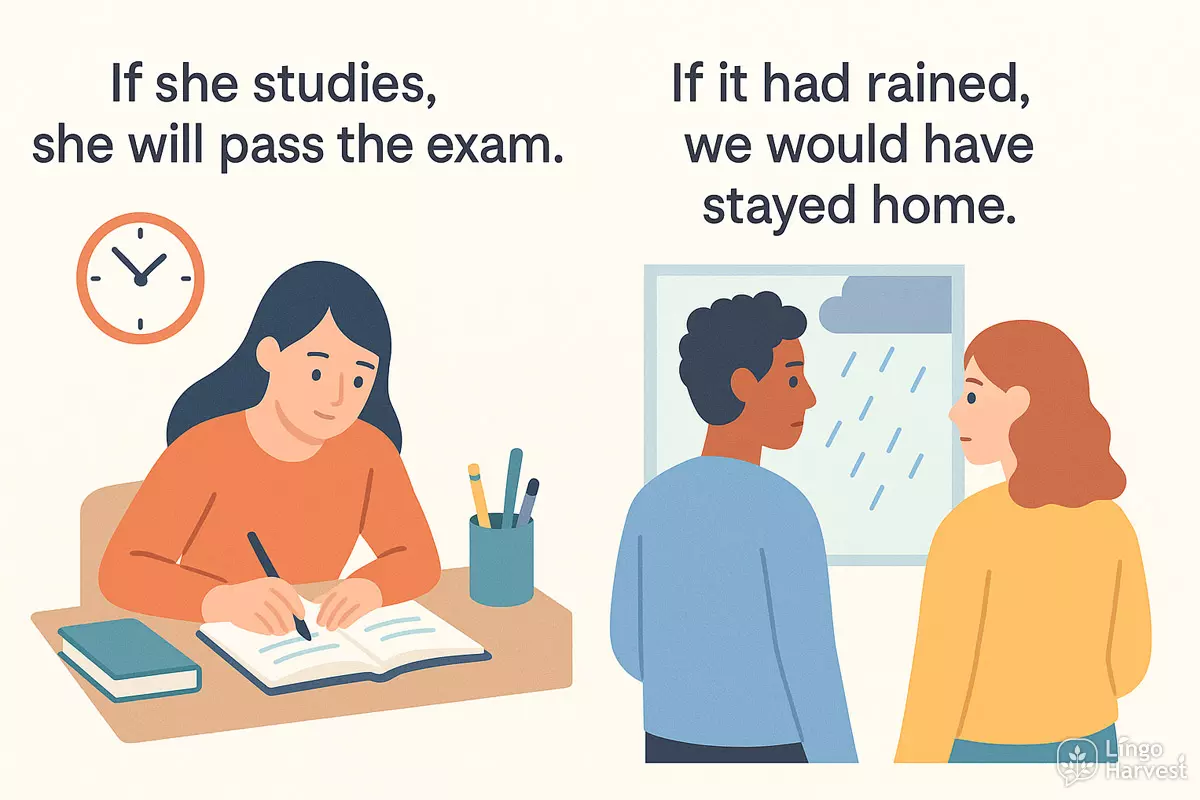
For clarity, here’s a breakdown of representative test items and their model solutions:
- If she studies, she will pass the exam. (First conditional – real future possibility)
- If it had rained, we would have stayed home. (Third conditional – unreal past)
- Were I you, I would reconsider. (Inverted second conditional)
- Unless you hurry, you’ll miss the train. (Negative condition using “unless”)
- If he were more careful, he wouldn’t make so many mistakes. (Second conditional – present hypothetical)
- Should you need assistance, call this number. (Inverted first conditional)
- If I had known, I would not be here now. (Mixed conditional – past condition, present result)
- Even if you apologize, she won’t forgive you. (No effect of condition on result)
- As long as you pay on time, your subscription will remain active. (Requirement for result)
- Supposing he arrives early, what should we do? (Hypothetical scenario)
Common pitfalls and error patterns
Many advanced diagnostic tests include distractors or tricky options. Here are frequent mistakes and tips for avoiding them:
- Confusing verb tenses (e.g., using present perfect instead of past perfect in third conditionals)
- Incorrect word order in inverted forms
- Using “would” in the “if” clause (e.g., If he would come instead of If he came)
- Forgetting to use “had” in third or mixed conditionals
- Misapplying “unless” (it replaces “if…not”, not all negative conditions)
Advanced conditional comparison table
Below is a structured summary highlighting the differences between major conditional types and their corresponding example sentences:
| Conditional Type | Form | Example |
|---|---|---|
| Zero | If + present simple, present simple | If water boils, it evaporates. |
| First | If + present simple, will + base verb | If you call, I will answer. |
| Second | If + past simple, would + base verb | If I knew, I would tell you. |
| Third | If + past perfect, would have + past participle | If they had left, they would have arrived by now. |
| Mixed | If + past perfect, would + base verb | If you had studied, you would be confident now. |
Tips for reviewing your responses
After checking your answers, focus on the logic behind each conditional structure. If you’re unsure why a particular form is correct, revisit the rules and compare with the explanations above. Pay attention to tense consistency and the logical relationship between condition and result. Solid understanding comes from recognizing these patterns across different contexts.