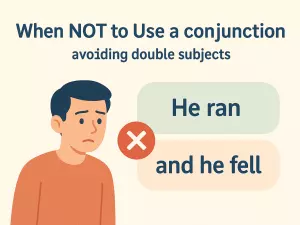
Conjunctions of Reason: because, since, as (full comparison)

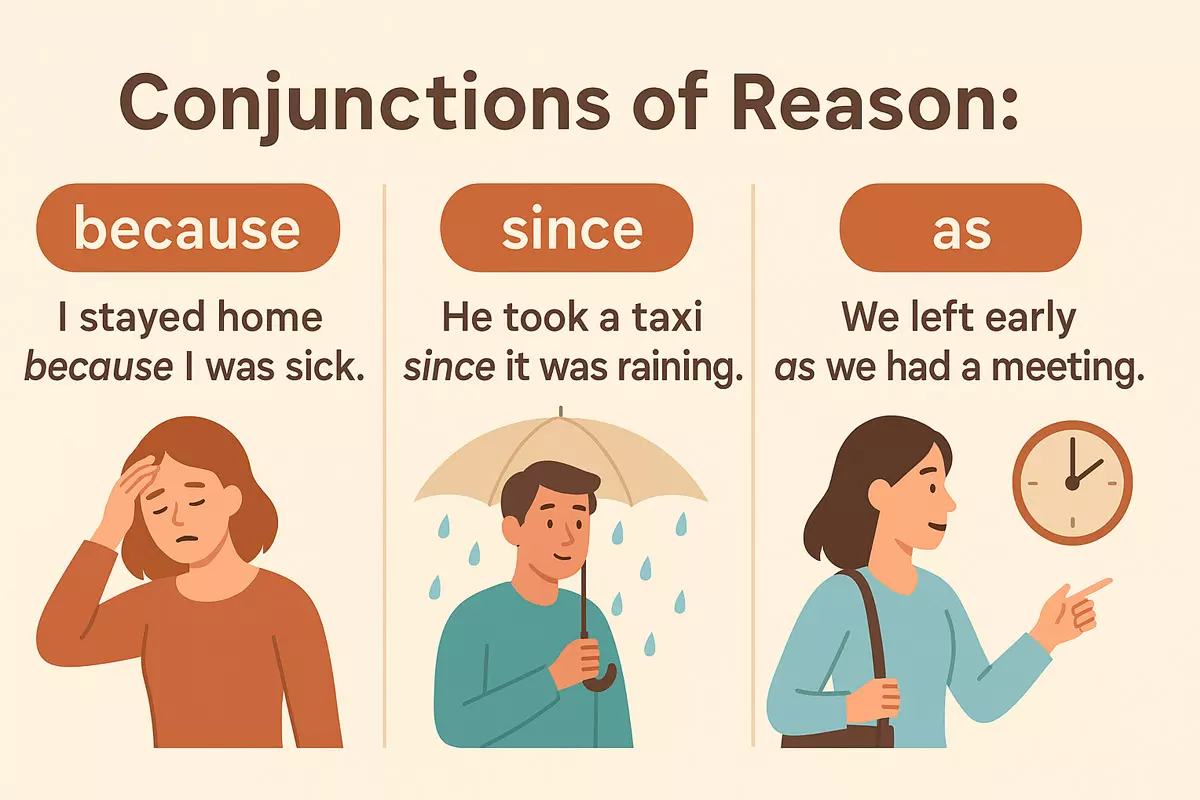 This article explains how to use reason clauses in English, focusing on because, since, and as. It covers their differences in meaning, tone, and punctuation, and offers practice choosing the right conjunction for each situation.
- What a reason clause is in connected sentences
- Detailed look at because for clear cause-and-effect
- How since introduces reasons and can mark known information
- Using as to give background reasons in more formal style
- Differences in tone and emphasis between because, since, and as
- Word order and comma use when the reason comes first
- Practice: choose the best conjunction of reason for each context
Learning to use connecting words such as because, since, and as is essential for explaining reasons clearly in English. Each word can introduce a cause, but they have slightly different uses. Because is the most direct and commonly used to state a specific reason. Since and as are often used when the reason is already known or less important than the main point, and they can sound a bit more formal or casual depending on the context. Mastering these words will help you communicate your ideas more smoothly and accurately.
What a reason clause is in connected sentences
Reason clauses are parts of complex sentences that explain why something happens, using conjunctions like because, since, or as. These clauses provide the cause or motivation for the action in the main part of the sentence. Typically, a reason clause is introduced by a linking word and answers the question “why?”.
In connected sentences, the main clause states a result, and the reason clause introduces the explanation. For example: “She wore a coat because it was cold.” Here, “because it was cold” gives the reason for wearing a coat. The two parts are logically connected, with the conjunction showing the relationship.
Common conjunctions used for giving reasons
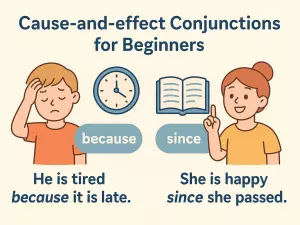
- because – direct and specific (e.g., “I stayed home because it was raining.”)
- since – often used for background information (e.g., “Since you’re here, let’s start.”)
- as – can introduce more general reasons (e.g., “As I was tired, I went to bed early.”)
Typical sentence patterns
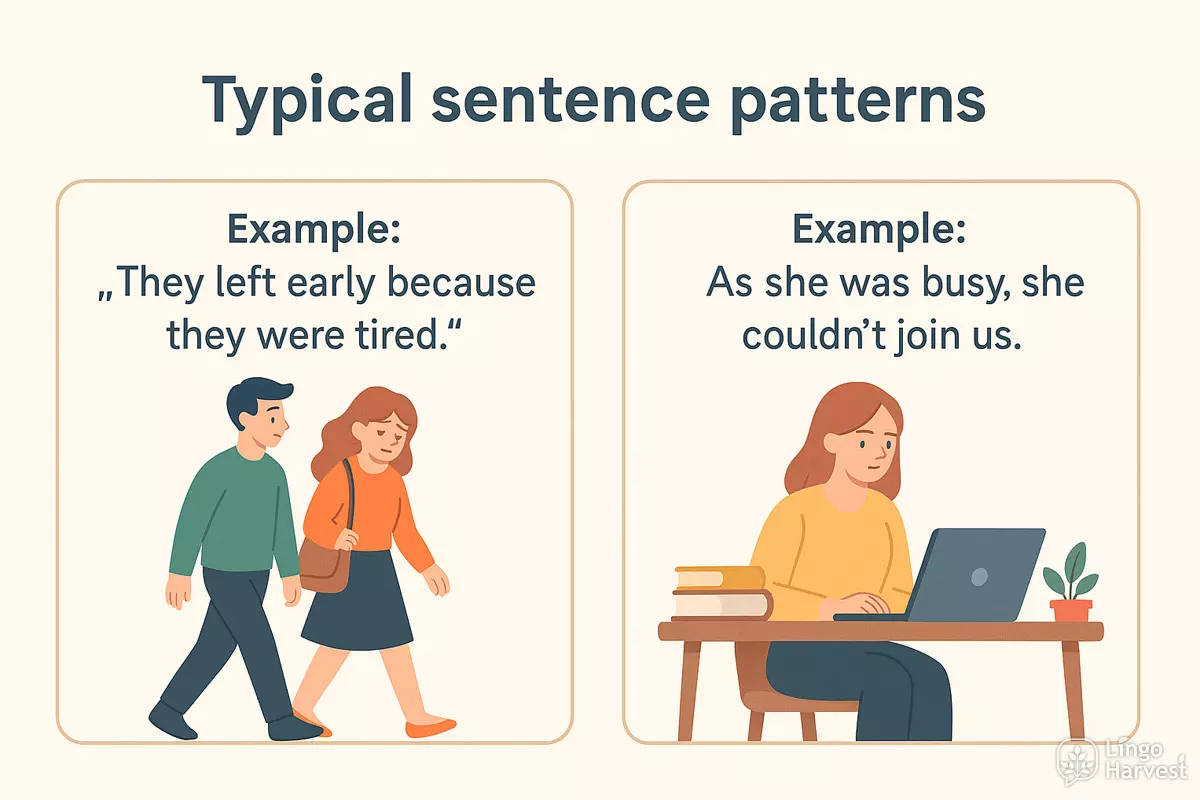
The structure usually follows one of these patterns:
- Main clause + conjunction + reason clause
Example: “They left early because they were tired.” - Conjunction + reason clause + comma + main clause
Example: “As she was busy, she couldn’t join us.”
Examples of reason clauses in context
- He didn’t eat dessert because he was full.
- Since the shop was closed, we went home.
- As it was late, we decided to call a taxi.
- The match was postponed because of the rain.
- Because he forgot his keys, he couldn’t get in.
- She was happy since she passed the exam.
- As you’re new here, let me show you around.
- They stayed inside because it was too hot.
- Since we have time, let’s have coffee.
- He apologized as he realized his mistake.
Comparing reason conjunctions in sentences
| Conjunction | Typical Use & Example |
|---|---|
| because | Gives a direct cause; answers “why?” clearly. “I left because I was tired.” |
| since | Often used when the reason is already known or background. “Since you’re here, let’s begin.” |
| as | Usually introduces a less important or obvious reason. “As it was raining, we stayed indoors.” |
Reason clauses help clarify the relationship between actions and their motivations in connected sentences. Choosing the right conjunction depends on the emphasis, background, and tone you want to convey.
Detailed look at because for clear cause-and-effect
Among all causal conjunctions, because stands out for directly linking a result to its specific reason. Its main use is to give a clear justification for an action, fact, or situation. This conjunction is often preferred when you want your reader or listener to focus squarely on the reason, leaving little ambiguity about the relationship between the two clauses.
How “because” functions in sentences
“Because” joins two clauses, with the cause following the conjunction. The reason can come after or, less commonly, before the result:
- He stayed home because he was sick.
- Because it was raining, the match was postponed.
Notice how the connection is explicit—there’s no room for doubt about which event causes the other.
Common patterns and uses
Here are typical ways “because” appears in English sentences:
- I left early because I was tired.
- She didn’t come because she lost her keys.
- They’re celebrating because they won the game.
- We can’t go outside because it’s too cold.
- He apologized because he made a mistake.
- The store is closed because it’s a holiday.
- Because the train was late, we missed the meeting.
- She smiled because she saw her friend.
- He failed the test because he didn’t study.
- Because I care, I’m telling you the truth.
- They moved because of a new job offer.
- We’re leaving because the movie is over.
- He’s upset because his team lost.
- Because we’re hungry, we ordered pizza.
- The plants died because they weren’t watered.
- I laughed because the joke was funny.
- Because she was tired, she went to bed early.
- We stayed inside because it was snowing.
Directness compared to “since” and “as”
“Because” is usually more direct than “since” or “as” when stating cause-and-effect. It leaves no doubt that the second clause is the direct reason for the first. In contrast, “since” and “as” may sometimes suggest a background reason or be used in more formal or less emphatic contexts.
| Conjunction | Directness of Cause | Example |
|---|---|---|
| because | Very direct ✅ | She left because she was tired. |
| since | Less direct | Since she was tired, she left. |
| as | Often background reason | As she was tired, she left. |
Summary
To express a strong, unambiguous cause-and-effect relationship in English, “because” is your go-to conjunction. It clarifies both the outcome and its trigger, making your reasoning transparent to your audience.
How since introduces reasons and can mark known information
When you use "since" to join clauses, it often signals a reason or cause, much like "because" or "as." However, "since" is distinct in that it frequently suggests the reason is already known, obvious, or less important than the main point. This subtlety affects both the meaning and tone of your sentences.
Using "since" to express reasons
"Since" introduces the cause or explanation for an action. It tends to appear at the start of a sentence, but can also follow the main clause. Unlike "because," which highlights the reason, "since" usually shifts focus to the main action, treating the reason as background information.
- Since you’re here, could you help me with this?
- Since it’s raining, we’ll stay inside.
- We left early since the meeting was over.
- Since you asked, I’ll explain.
- Since the shop is closed, let’s try again tomorrow.
- Since you know the area, can you guide us?
- The event was canceled since nobody registered.
- Since we have time, let’s grab coffee.
- Since it’s your birthday, dinner’s on me.
- Since the train is late, we can wait here.
- He’s upset since he lost his keys.
- Since you finished early, you can leave.
Marking known or assumed information
"Since" is especially useful when the reason is something both the speaker and listener already know or can easily guess. This contrasts with "because," which often introduces new or emphasized information.
- Since you’re the expert, I’ll follow your advice. (Speaker assumes the listener knows this fact.)
- Since we’ve met before, there’s no need for introductions.
- Since it’s Monday, the library is closed. (The schedule is familiar to both.)
- Since this is urgent, I wanted to call right away.
Comparing "since" and other conjunctions of reason
To better understand how "since" differs from "because" and "as," here’s a structured comparison:
| Conjunction | Typical Use | Focus | Example |
|---|---|---|---|
| since | Background reason, often assumed | Main action | Since you’re here, let’s start. |
| because | New, emphasized reason | The reason itself | We’re late because the bus broke down. |
| as | Formal, gentle introduction of reason | Balanced | As it’s raining, we’ll stay inside. |
Summary
"Since" is a flexible conjunction that not only links causes but also subtly signals that the explanation is shared knowledge or less critical than the main message. This makes it especially useful for smooth, natural communication in both speech and writing.
Using as to give background reasons in more formal style
When you want to explain the reason behind an action or situation in a more formal or neutral way, "as" is often the best choice. Unlike "because," which is direct and sometimes emphatic, "as" tends to introduce information that is already known, or that the speaker considers less important than the main point. This makes it especially common in written English, such as reports, essays, and formal correspondence.
Typical contexts and sentence structure
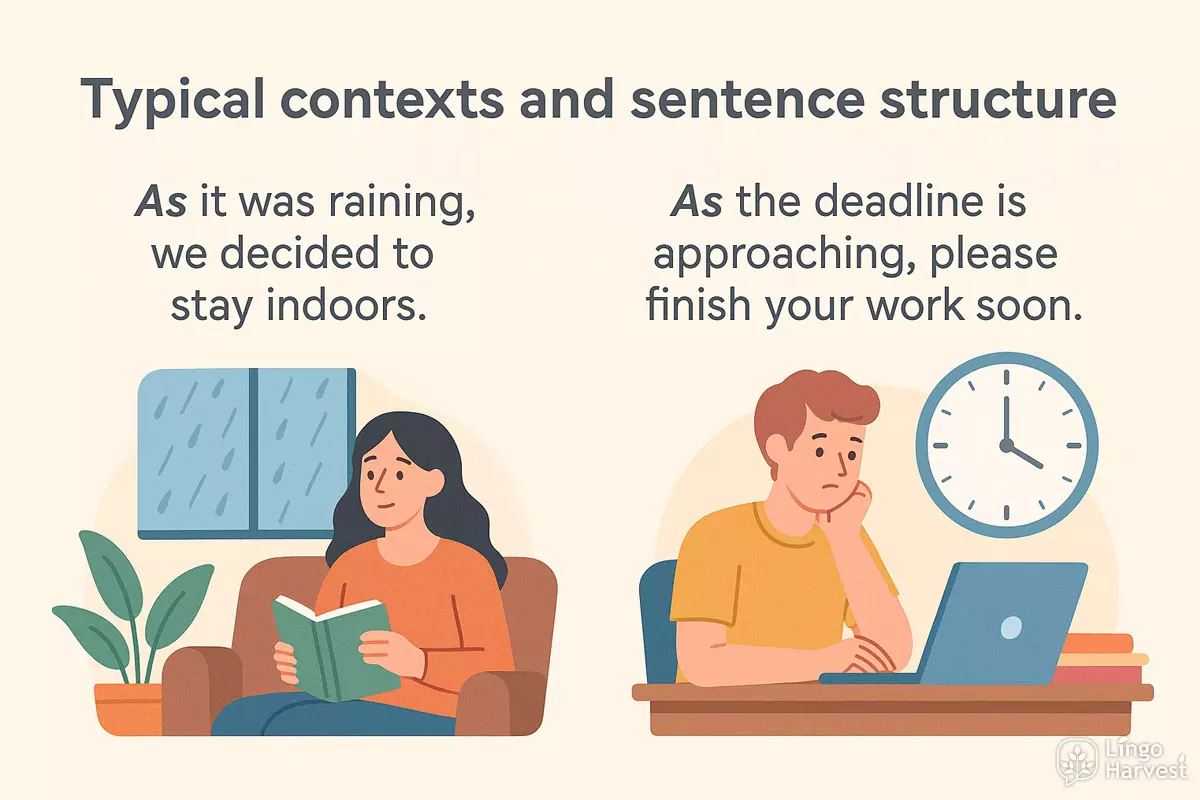
"As" usually appears at the start of a sentence or clause, setting the stage for the main information. The reason comes before the main clause:
- As it was raining, we decided to stay indoors.
- As the deadline is approaching, please finish your work soon.
- We postponed the picnic, as the weather was bad.
This structure shifts the focus to what happens, rather than the cause itself.
Comparing "as" with "because" and "since"
To highlight how "as" works differently from other conjunctions of reason, here is a comparison of their typical uses:
| Conjunction | Typical Use & Tone | Example Sentence |
|---|---|---|
| as | Background reason; formal or neutral; often at sentence start | As she was busy, she couldn’t attend the meeting. |
| because | Direct reason; neutral or informal; main reason is emphasized | She couldn’t attend the meeting because she was busy. |
| since | Background reason; formal or neutral; less common in spoken English | Since she was busy, she couldn’t attend the meeting. |
Examples of "as" for background reasons
Writers and speakers often choose "as" to avoid repeating "because" or to maintain a formal tone. Here are more examples showing this usage:
- As we have already discussed this topic, let's move on.
- As there were no objections, the proposal was accepted.
- As you are new here, let me introduce you to the team.
- As the shop was closed, we went home early.
- As parking is limited, please share rides if possible.
- As our funds are low, we need to reconsider our plans.
- As the system is being updated, access may be restricted.
- As the data is incomplete, conclusions should be tentative.
- As the event is formal, please dress appropriately.
- As the results were inconclusive, further research is needed.
Summary
In summary, "as" is a useful conjunction for background reasons in formal or written contexts. It helps you connect ideas smoothly, signaling to your reader that the reason is context rather than the main focus. Choosing "as" can make your writing sound more polished and objective, especially when you want to avoid repetition or maintain a formal register.
Differences in tone and emphasis between because, since, and as
Understanding how "because," "since," and "as" function in sentences can help you choose the right conjunction for your intended meaning, especially when you want to highlight a reason or background information. Each word suggests a slightly different emphasis and level of formality.
Directness and Clarity
"Because" is the most direct of the three. It unmistakably introduces a cause or reason, drawing a clear link between two ideas. "Since" and "as" can be more subtle, sometimes focusing more on background or context than on strong causality.
- Because — Used for clear, specific reasons ("I left early because I was tired.").
- Since — Often introduces background information, sometimes with a sense of time ("Since it was raining, we stayed in.").
- As — Tends to be weaker in showing direct cause, often used when the reason is already known or less important ("As you weren’t home, I left a note.").
Formality and Style
The choice among these conjunctions can subtly shift the tone of your writing or speech:
- "Because" is neutral and widely used in both formal and informal contexts.
- "Since" and "as" often sound slightly more formal or literary, especially at the start of a sentence.
- In spoken English, "because" often appears for emphasis, while "since" and "as" can make statements feel softer or more polite.
Emphasis on Reason vs. Background
Writers and speakers use these conjunctions to highlight different aspects of information. If the reason is crucial, "because" is usually the best choice. If the cause is secondary or obvious, "since" or "as" may be preferred.
| Conjunction | Typical Use & Emphasis | Example |
|---|---|---|
| Because | Direct reason, strong causal link | I stayed home because I was sick. |
| Since | Background or context; sometimes temporal | Since you’re here, let’s start. |
| As | Background or less important reason | As it was late, we left quietly. |
Quick Reference: Choosing the Right Conjunction
- Use because when the cause is the main focus.
- Use since or as for softer, less direct links or when the reason is already known.
- In formal writing, be cautious: "since" can be ambiguous (reason or time), so "because" is often clearer.
- For spoken English, all three are common, but "because" is less likely to be misunderstood.
By paying attention to these nuances, you can fine-tune your sentences for clarity, tone, and emphasis, making your communication more precise and natural.
Word order and comma use when the reason comes first
When you begin a sentence with the reason, the structure and punctuation change compared to when the main clause comes first. In English, this often means starting with a conjunction such as because, since, or as, followed by the explanation, then a comma, and finally the main result. This pattern is common in both spoken and written language when you want to emphasize the cause or provide context before giving the outcome.
Sentence structure
The typical pattern is:
- [Conjunction of reason] + [Reason clause], [Main clause]
For example:
- Because it was raining, we stayed inside.
- Since you arrived early, we can start the meeting now.
- As I forgot my keys, I couldn’t open the door.
The comma after the reason clause is important. It separates the introductory cause from the main statement, making the sentence clearer and easier to read.
Comparison of conjunctions in initial position
Each conjunction can lead the sentence, but there are subtle differences in tone and formality. Here’s how they typically work when the reason is first:
| Conjunction | Example (Reason First) | Typical Use |
|---|---|---|
| Because | Because I was tired, I went to bed early. | Neutral; used in all contexts |
| Since | Since it’s late, let’s call it a night. | Often slightly more formal or written |
| As | As nobody volunteered, the meeting ended quickly. | Common in formal writing; less direct |
Key points to remember
- ✅ Always use a comma after the reason clause when it comes first.
- ✅ The main clause follows the comma and gives the result or effect.
- ✅ The choice of conjunction can affect the tone—because is most direct, while since and as often sound softer or more formal.
- ❌ Don’t forget the comma; leaving it out can make the sentence confusing.
Expanded examples
- Because the roads were icy, school was cancelled.
- Since nobody called, we assumed everything was fine.
- As the shop was closed, we went home.
- Because I had a headache, I didn’t join the party.
- Since you’re here, can you help me?
- As it’s your birthday, I brought a cake.
- Because my phone died, I couldn’t contact you.
- Since the weather is nice, let’s eat outside.
- As he was running late, he took a taxi.
- Because we finished early, we had extra time to relax.
- Since you asked, I’ll explain further.
- As the movie has started, let’s be quiet.
- Because she studied hard, she passed the test.
- Since it’s raining, bring an umbrella.
- As nobody objected, the plan was approved.
Choosing the right conjunction and remembering the comma after the initial reason helps your writing flow naturally and makes your meaning clear.
Practice: choose the best conjunction of reason for each context
Understanding when to use "because," "since," or "as" in English can be tricky, as each often appears in different contexts or for different levels of formality. Let's try a set of exercises to help you select the most appropriate conjunction of reason in each situation.
Fill in the blank: Pick the most natural conjunction
For each sentence below, choose either because, since, or as to complete the sentence in a way that sounds natural and correct.
- I stayed home ______ I wasn’t feeling well.
- ______ you’re here, could you help me with this box?
- We decided to walk ______ the weather was nice.
- ______ it was raining, the event was cancelled.
- He left early ______ he had a meeting.
- ______ nobody called, I didn’t know about the change.
- ______ it’s late, let’s finish this tomorrow.
- She brought an umbrella ______ she thought it might rain.
- ______ you’ve finished your work, you can leave.
- I made tea ______ I was thirsty.
Show answers
- because
- Since
- because
- As
- because
- Since
- As
- because
- Since
- because
Choose the best conjunction: nuanced contexts
Consider the subtle differences in tone and emphasis. Select the best fit for each situation below. (Sometimes more than one answer is possible, but choose the most typical.)
- The shop is closed ______ it’s a public holiday. (explanation)
- ______ you’re not busy, do you want to join us for lunch? (polite suggestion)
- ______ he had already eaten, he only ordered coffee. (background reason)
- I’m going to bed early ______ I have to get up at 5 a.m. (strong reason)
- We stayed indoors ______ it was too cold outside. (reason)
- ______ you already know the rules, we can start the game. (background info)
- He didn’t take the job ______ the salary was too low. (explanation)
- ______ the lights went out, everyone stopped working. (cause)
- She brought an umbrella ______ she expected rain. (reason)
- ______ the traffic was heavy, we arrived late. (cause)
Show answers
- because
- Since
- As
- because
- because
- As
- because
- Since
- because
- Since
Quick reference: typical uses
| Conjunction | Common Usage Context | Example Sentence |
|---|---|---|
| because | Direct, clear reason; spoken and written English | I left early because I was tired. |
| since | Background reason; often in formal or polite context | Since it’s your birthday, I bought you a gift. |
| as | Background/casual reason; less direct, often at the start | As we were late, we took a taxi. |
Short writing task
Write two sentences explaining why you did something, using a different conjunction in each. Try to reflect the difference in tone or context.
Show answers
- I turned off my phone because I needed to concentrate.
- As it was getting dark, we decided to go home.