When to Use a Comma Before Because, But, and So

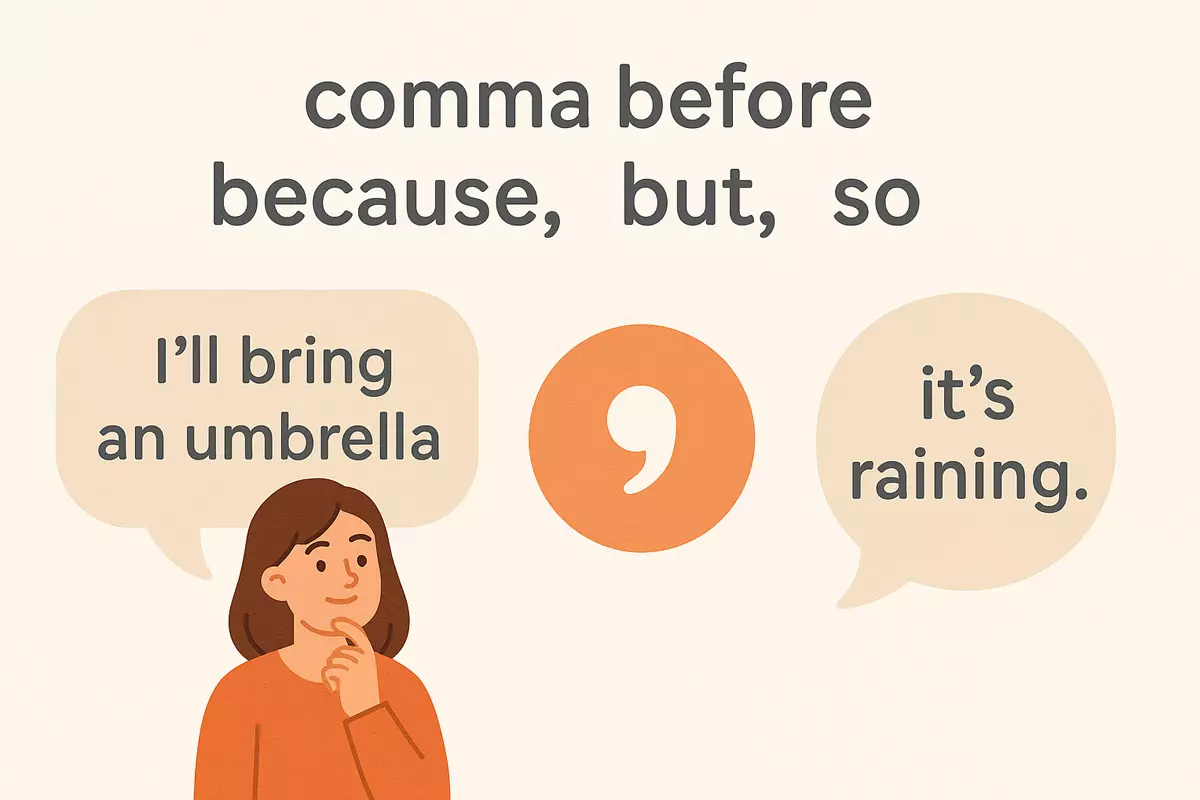 This article explains when to use commas before but and so, how to avoid misplaced commas with because, and ways to break sentences for clarity. It also covers common sentence patterns, formal vs informal comma use, and provides examples and practice.
Many people hesitate when deciding whether to use a comma before connecting words such as because, but, or so, especially when linking ideas within a sentence. Understanding proper comma placement is important, as it can help clarify your meaning and make your writing smoother and more engaging. By learning a few straightforward rules about commas, you can avoid confusion for your readers and express your ideas more effectively, ensuring your sentences are both clear and easy to understand.
Comma Before But and So
Understanding when to insert a comma before words like "but" and "so" helps clarify meaning and keeps sentences easy to read. Both "but" and "so" often connect independent clauses—complete sentences that could stand alone. In these cases, a comma is usually required to signal the boundary between ideas.
When to Use a Comma
A comma is typically needed before "but" or "so" when each part of the sentence could be its own sentence. This rule helps avoid confusion and keeps your writing clear.
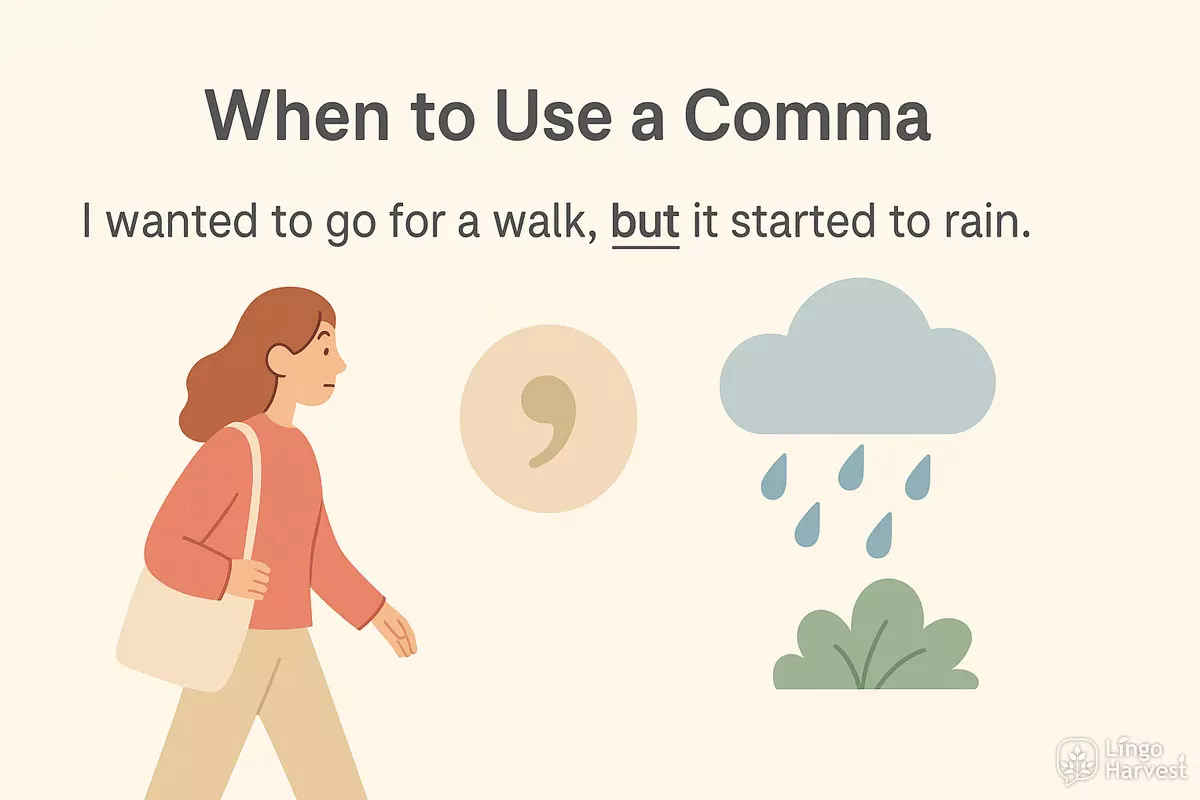
- I wanted to go for a walk, but it started to rain.
- She studied hard, so she passed the exam.
- He likes coffee, but he doesn’t drink it every day.
- The movie was long, so we left early.
If the second part of the sentence is not an independent clause (for example, if it is just a phrase or does not have its own subject and verb), a comma is not needed.
- We tried but failed.
- She ran so fast.
- He called but nobody answered.
- They laughed so hard.
Common Pitfalls and Exceptions
Writers often add unnecessary commas when "but" or "so" does not join two complete sentences. Overusing commas can interrupt the flow of your writing.
| Correct | Incorrect |
|---|---|
| I wanted to help, but I was too busy. | I wanted to help but, I was too busy. |
| She was tired, so she went to bed early. | She was tired so, she went to bed early. |
| He tried but failed. | He tried, but failed. |
| I called so many times. | I called, so many times. |
Quick Tips
- Use a comma before "but" or "so" if both sides are full sentences.
- Skip the comma if the second part is not a complete sentence.
- Read your sentence aloud—if you naturally pause, a comma may be needed.
- Remember: clarity is more important than rigid rules. Adjust for readability.
Mastering these punctuation habits will make your writing clearer and more professional.
Avoiding Misplaced Commas with Because
Understanding when to use a comma before "because" can be tricky. Many writers mistakenly insert a comma in places where it isn’t needed, often leading to confusion about the sentence’s meaning. The key is to consider whether the sentence could be misread without the comma or if the meaning is already clear.
Generally, you should not place a comma before "because" when it simply introduces a reason. For example: She stayed home because she was sick. No pause is needed, as the cause-and-effect relationship is direct. However, a comma becomes helpful when it could clarify ambiguous statements—especially when the sentence could be misread as having two separate thoughts.
When a Comma Is Not Needed
- I left early because I was tired.
- He apologized because he felt guilty.
- The meeting was canceled because the manager was sick.
- We’re late because the bus broke down.
- She laughed because the joke was funny.
In these cases, omitting the comma keeps the sentence clear and natural. The reason directly follows the main action, so additional punctuation would interrupt the flow.
When a Comma Can Clarify Meaning
If omitting a comma could lead to ambiguity, adding one is acceptable. This usually happens when "because" could be misinterpreted as modifying the wrong part of the sentence. Consider the difference:
- He didn’t call, because he forgot. ✅ (He forgot, so he didn’t call.)
- He didn’t call because he forgot. ❌ (Could mean: He did call, but not because he forgot.)
The comma after a negative main clause can help clarify that "because" gives the reason for the action, not an exception or contrasting idea.
Common Mistakes to Watch For
- Using a comma before "because" in every sentence—unnecessary and often incorrect.
- Forgetting the comma when the sentence could be misunderstood without it.
- Assuming that "because" always introduces a new independent clause—it usually doesn’t.
To sum up, most sentences do not require a comma before "because." Only add one if it removes real ambiguity or aids readability. When in doubt, read the sentence aloud and see if a pause is needed or if the meaning changes.
Breaking Sentences for Clarity
When writing complex ideas, it's easy to end up with long, confusing sentences. Shortening or dividing these sentences can help your reader understand your point more easily, especially when using words like "because," "but," and "so." If a sentence feels overloaded with information, consider splitting it into two or more parts.
When to Consider Splitting a Sentence
Sometimes, even with correct punctuation, a sentence can be hard to follow. Here are some signs that a sentence might need to be broken up:
- It contains more than one idea or contrast.
- There are multiple clauses joined by conjunctions ("because," "but," "so," etc.).
- The sentence feels like it runs on or loses focus.
- The meaning is ambiguous or could be misread.
Examples: Breaking Up for Better Understanding
Long sentences often become clearer when divided. Here are several examples of how to split sentences for better readability:
- Original: I went to the store because I needed milk but I forgot my wallet so I couldn't buy anything.
Clearer: I went to the store because I needed milk. But I forgot my wallet, so I couldn't buy anything. - Original: She wanted to help because she cared but she didn't know how so she hesitated.
Clearer: She wanted to help because she cared. But she didn't know how, so she hesitated. - Original: The project was delayed because the materials arrived late but we managed to finish on time so the client was happy.
Clearer: The project was delayed because the materials arrived late. But we managed to finish on time, so the client was happy. - Original: He didn't call because he was busy but he sent a message so I knew he was okay.
Clearer: He didn't call because he was busy. But he sent a message, so I knew he was okay. - Original: The test was difficult because the questions were unexpected but I studied hard so I passed.
Clearer: The test was difficult because the questions were unexpected. But I studied hard, so I passed. - Original: We planned a picnic because the weather was nice but it started to rain so we went home.
Clearer: We planned a picnic because the weather was nice. But it started to rain, so we went home. - Original: She missed the train because she was late but she caught a bus so she arrived on time.
Clearer: She missed the train because she was late. But she caught a bus, so she arrived on time. - Original: He stayed home because he was sick but he finished his work so his boss was pleased.
Clearer: He stayed home because he was sick. But he finished his work, so his boss was pleased. - Original: I was tired because I didn't sleep well but I went to work so I could finish the project.
Clearer: I was tired because I didn't sleep well. But I went to work, so I could finish the project. - Original: The event was canceled because of the storm but everyone received a refund so there were no complaints.
Clearer: The event was canceled because of the storm. But everyone received a refund, so there were no complaints.
Benefits of Dividing Sentences
Splitting up long statements can:
- Prevent confusion ✅
- Make your writing more engaging
- Highlight important ideas
- Reduce the risk of misinterpretation
Choosing to break up sentences is not just about rules; it's about making your message clear and easy to follow. If a sentence feels crowded, don't hesitate to separate the ideas for the sake of your reader.
Common Sentence Patterns
When you’re deciding whether to place a comma before “because,” “but,” or “so,” it helps to look at how these words typically fit into English sentences. These conjunctions connect ideas in specific ways, and their placement often determines if a comma is needed.
Coordinating Conjunctions: “But” and “So”
“But” and “so” are classic coordinating conjunctions. They join two independent clauses—each a complete sentence on its own. In these cases, a comma is usually required before the conjunction.
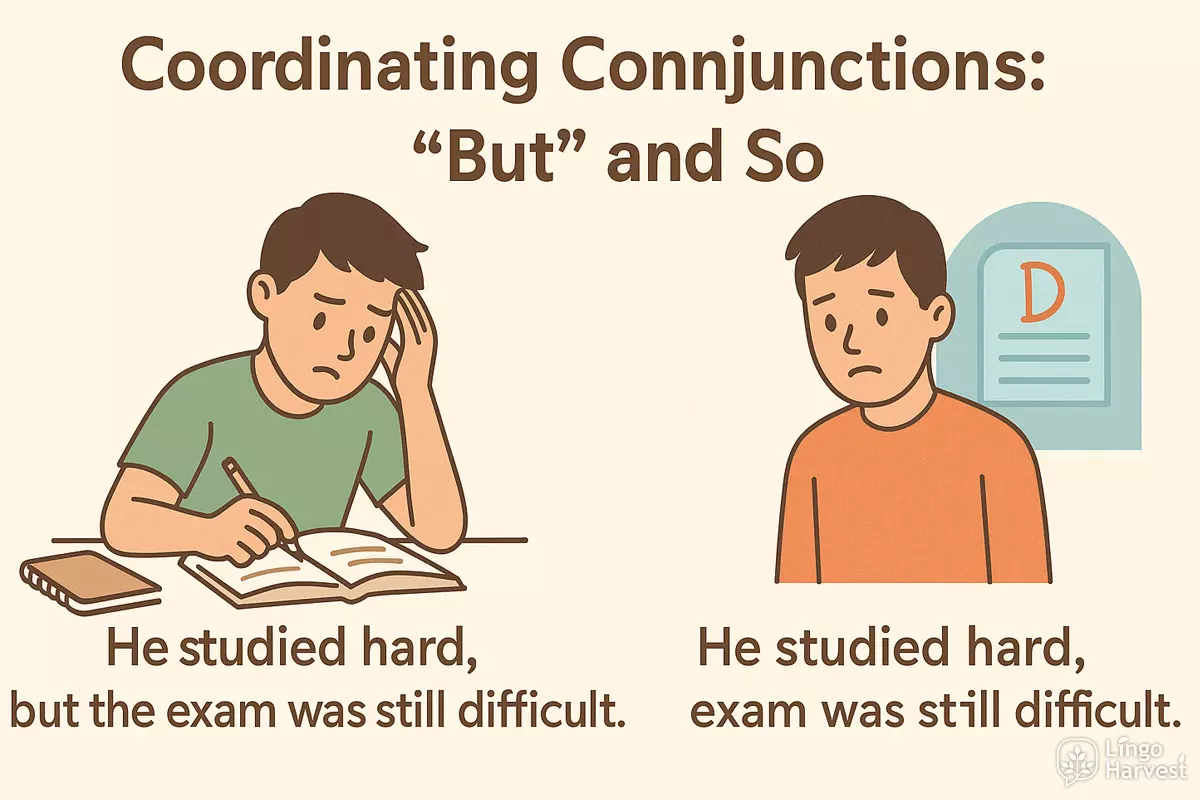
- She wanted to go for a walk, but it started raining.
- The meeting ran late, so I missed my train.
- He studied hard, but the exam was still difficult.
- I was tired, so I went home early.
If the second part is not a complete sentence, you can usually skip the comma:
- She wanted to go but couldn’t find her shoes.
- He stayed late so he could finish the project.
Subordinating Conjunction: “Because”
“Because” introduces a reason or explanation and is a subordinating conjunction. Typically, no comma is needed before “because.” However, a comma may be helpful if omitting it would cause confusion or change the sentence’s meaning.
- They left early because the weather was bad. ✅
- He didn’t call, because he forgot her number. (Comma only if you want to emphasize the reason or avoid ambiguity.)
Summary Table: Comma Usage with “But,” “So,” and “Because”
| Conjunction | Comma Rule & Example |
|---|---|
| But | Add a comma if joining two independent clauses. Example: I like tea, but she prefers coffee. |
| So | Use a comma before “so” when it means “therefore” and joins two complete sentences. Example: It was late, so we went home. |
| Because | Usually no comma before “because” unless needed to prevent confusion. Example: She was upset because she lost her keys. |
Quick Reference Patterns
Here are some frequent sentence constructions involving these conjunctions:
- [Main clause], but [main clause].
- [Main clause], so [main clause].
- [Main clause] because [reason clause].
- [Main clause] but [verb phrase].
- [Main clause] so [purpose phrase].
- Because [reason], [main clause]. (Comma after “because” clause when it comes first.)
- [Main clause] because of [noun phrase].
- If [condition], [main clause], but [contrast clause].
- [Main clause], but [exception/contrast].
- [Main clause], so [result].
Understanding these sentence structures makes it much easier to decide when a comma is necessary before “because,” “but,” and “so.” Consider the role of each conjunction and whether it’s joining two full sentences or simply adding a reason or result.
Comma Use in Formal vs Informal Writing
Choosing when to insert a comma before words like "because," "but," and "so" often depends on the level of formality in your text. In academic essays, business correspondence, or official documents, punctuation follows stricter conventions to ensure clarity and avoid ambiguity. Conversely, everyday communication—such as emails between friends or casual blog posts—often allows for more flexibility and personal style.
Formal Contexts: Clarity and Precision
Writers aiming for a formal tone are typically more meticulous with punctuation. Using a comma before "but" and "so" is standard when joining two independent clauses, reducing confusion. However, placing a comma before "because" is rare unless it prevents misreading. For example:
- He stayed home, but she went to work. ✅
- We canceled the meeting, so everyone could leave early. ✅
- She didn’t run, because she was tired. (Comma clarifies that tiredness is the reason, not an additional detail.)
In these settings, clarity outweighs rhythm or style, and rules are more consistent.
Informal Writing: Flexibility and Rhythm
In less formal writing, the placement of commas can reflect the writer’s voice or the natural pauses of speech. Some omit commas to keep sentences flowing, while others use them for emphasis or to mimic spoken language. While this flexibility is common, overusing or omitting commas can sometimes create ambiguity.
- He went to the store but forgot milk. (Comma optional in informal writing)
- I laughed so hard I cried. (Rarely a comma before "so" in casual texts)
- I didn’t go because I was tired. (Meaning can depend on context and punctuation)
Comparison: Formal vs Informal Patterns
| Situation | Typical Formal Use | Typical Informal Use |
|---|---|---|
| Before "but" | Comma used to join two independent clauses. Example: She tried, but failed. |
Comma often omitted if clauses are short. Example: She tried but failed. |
| Before "so" | Comma used when "so" means "therefore". Example: He was late, so we started without him. |
Comma sometimes omitted for flow. Example: He was late so we started without him. |
| Before "because" | Comma rarely used; only for clarity. Example: He didn’t go, because he was sick. |
Comma almost never used. Example: He didn’t go because he was sick. |
| Ambiguity concerns | Careful punctuation to avoid confusion. | Relies on context; ambiguity more likely. |
Key Takeaways
- Formal writing prioritizes grammatical rules and reader clarity.
- Informal writing allows for personal style and conversational pacing.
- Overusing or omitting commas may change meaning, especially with "because".
- Consider your audience and purpose before deciding on punctuation style.
Understanding the expectations of your writing context helps you make informed punctuation choices, ensuring your message is both clear and appropriate.
Examples: Compare Both Versions
Understanding how punctuation affects meaning is best done by looking at real sentences. Below, you'll see how using or omitting a comma before “because,” “but,” and “so” can change the focus or clarity of a sentence. Let’s break down several sample sentences to highlight these differences.
Comma Before "Because"
- Without comma: She left because it was late.
Meaning: She departed for the reason that it was late. - With comma: She left, because it was late.
Meaning: The comma adds a slight pause, often used for emphasis, but can sometimes cause ambiguity or make the reason seem less essential.
Comma Before "But"
- Correct: I wanted to go, but it started raining.
The comma separates two independent clauses for clarity. - Incorrect: I wanted to go but, it started raining.
This placement is not standard and disrupts the flow.
Comma Before "So"
- With comma (joining full sentences): He was tired, so he went to bed early.
Clear link between cause and effect. - Without comma (when "so" means "so that"): He whispered so he wouldn’t wake the baby.
No comma, as the phrase is not joining two independent clauses.
Side-by-Side Comparison Table
| No Comma | With Comma |
|---|---|
| She didn’t eat because she was sick. (Her illness was the reason she didn't eat.) |
She didn’t eat, because she was sick. (Adds a pause; could sound like an afterthought.) |
| I enjoy hiking but not in the rain. (No comma when the second part is not a full sentence.) |
I enjoy hiking, but I don’t like rain. (Comma needed between two complete sentences.) |
| He ran so he could catch the bus. ("So that"—no comma needed.) |
He was late, so he ran. (Two independent clauses—comma needed.) |
| She stayed quiet because she was nervous. (Explains the reason directly.) |
She stayed quiet, because she was nervous. (Pause adds emphasis or can signal a non-essential clause.) |
Quick Reference: When to Use a Comma
- ✅ Use a comma before "but" and "so" when joining two independent clauses.
- ❌ Don’t use a comma before "because" unless you need to avoid ambiguity or add a pause for emphasis.
- ✅ No comma before "so" when it means "so that."
- ✅ If the sentence after "but" isn’t complete, skip the comma.
This variety of examples should help you see the impact of punctuation choices in real sentences, making it easier to decide when a comma is truly necessary.
Practice: Choose the Right Punctuation
Understanding where to place a comma before words like because, but, and so can be tricky. The following exercises and examples will help you solidify your grasp of correct punctuation in these tricky spots.
Try Adding the Comma—Or Not
Read each sentence and decide if a comma is needed before the highlighted word. Consider both grammar rules and the intended meaning.
- I didn’t go to the party because I was tired.
- She wants to visit Paris but she doesn’t speak French.
- We missed the bus so we took a taxi.
- He didn't call me because he forgot.
- The soup was cold but delicious.
- You can stay here or you can go home.
- She was late because of traffic.
- I studied hard so I passed the test.
- He likes coffee but not tea.
- I didn’t eat breakfast because I woke up late.
Show answers
- No comma before "because" (sentence 1): The reason is clear and direct.
- Comma before "but" (sentence 2): Joins two independent clauses.
- Comma before "so" (sentence 3): Joins two independent clauses.
- No comma before "because" (sentence 4): The clause is essential for meaning.
- Comma before "but" (sentence 5): Joins two independent clauses.
- Comma before "or" (sentence 6): Joins two independent clauses.
- No comma before "because" (sentence 7): The clause is essential for meaning.
- Comma before "so" (sentence 8): Joins two independent clauses.
- Comma before "but" (sentence 9): Joins two independent clauses.
- No comma before "because" (sentence 10): The clause is essential for meaning.
When Meaning Changes
Sometimes, using or omitting a comma before because can change the meaning of a sentence. Look at these pairs and choose which version fits the intended message.
- I didn’t call her, because I was busy.
I didn’t call her because I was busy. - He didn’t win, because he didn’t try.
He didn’t win because he didn’t try.
Show answers
- With the comma, the reason is extra information (not the main reason). Without the comma, the reason is essential to the meaning.
- Same logic: comma = additional info, no comma = main reason.
Quick Reference: When to Use a Comma
Here’s a summary of when a comma is required before these conjunctions:
| Conjunction | Comma Rule |
|---|---|
| But | Use a comma if connecting two independent clauses. |
| So | Use a comma if connecting two independent clauses. |
| Because | Do not use a comma unless you need to avoid ambiguity or add a pause for emphasis. |
| Or | Use a comma if connecting two independent clauses; otherwise, do not use a comma. |
Challenge: Write Your Own
Compose two sentences that use but, so, or because. In one, include a comma; in the other, leave it out. Try to explain your choice.
Show answers
- Example with comma: She was tired, so she went home. (Two independent clauses.)
- Example without comma: She went home because she was tired. (The reason is necessary for the meaning.)