Conjunctions with Gerunds and Infinitives

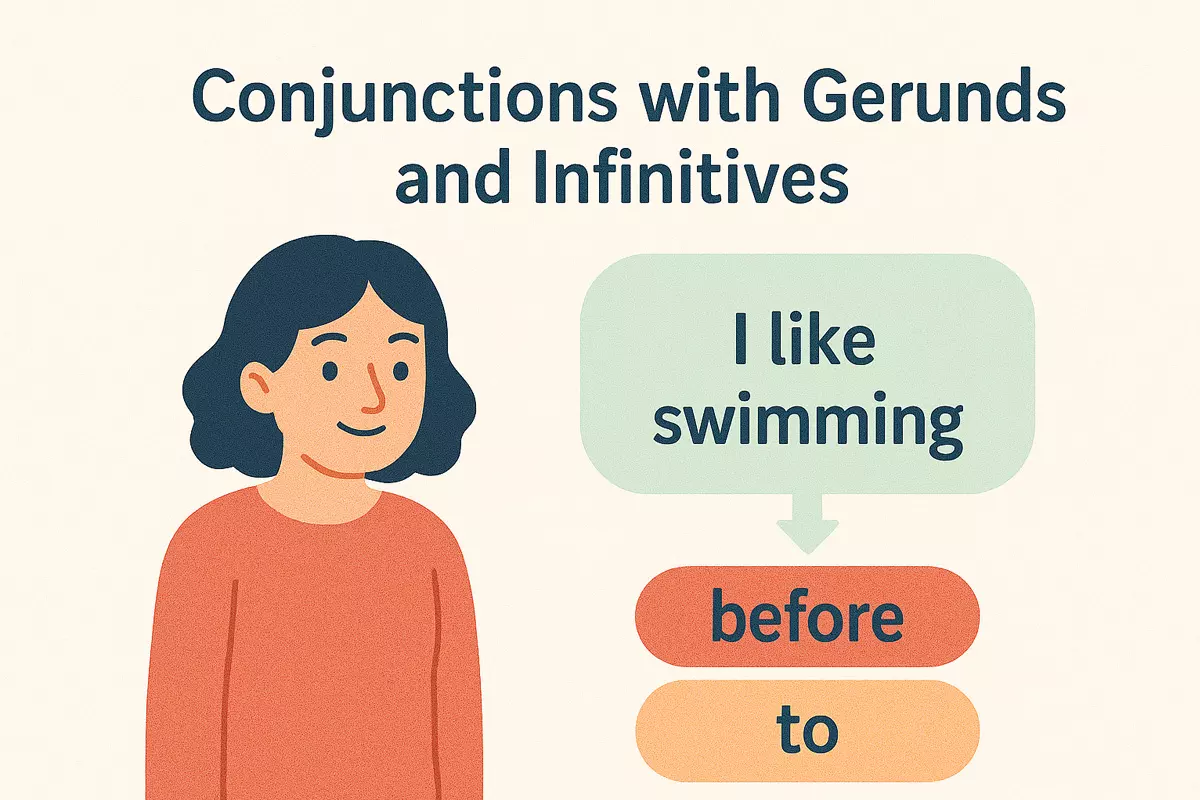 The article reviews when to use gerunds and infinitives, details which conjunctions require each, explains time words like before and after with -ing, covers infinitives of purpose, compares clause lengths, and gives practice rewriting sentences.
- Quick review of gerunds and infinitives in English
- Typical conjunctions followed by gerunds or infinitive clauses
- Using before, after, while with -ing forms
- Using in order to, so as to with infinitives of purpose
- Style notes: shorter non-finite clauses vs full finite clauses
- Examples from instructions, stories, and everyday descriptions
- Practice: rewrite full clauses using gerund or infinitive structures
Learning to connect phrases using action words ending in -ing or with to plus a verb can greatly improve your English writing and speaking. By understanding how linking words function in these sentence structures, you can make your ideas flow more smoothly and communicate more naturally. Practicing these patterns allows your speech and writing to sound more fluent and engaging, helping you express complex thoughts with clarity and confidence. Developing this skill is an important step toward mastering more advanced English.
Quick review of gerunds and infinitives in English
Understanding how to use verb forms like gerunds and infinitives is essential for constructing clear sentences, especially when connecting ideas with conjunctions. Both forms act as nouns, but their usage and the verbs they follow can differ.
What are gerunds?
A gerund is the -ing form of a verb that functions as a noun in a sentence. Gerunds can be subjects, objects, or complements. For example:
- Swimming is good exercise.
- She enjoys reading.
- His favorite activity is cooking.
- Running helps reduce stress.
- They talked about moving to a new city.
- Traveling broadens your perspective.
What are infinitives?
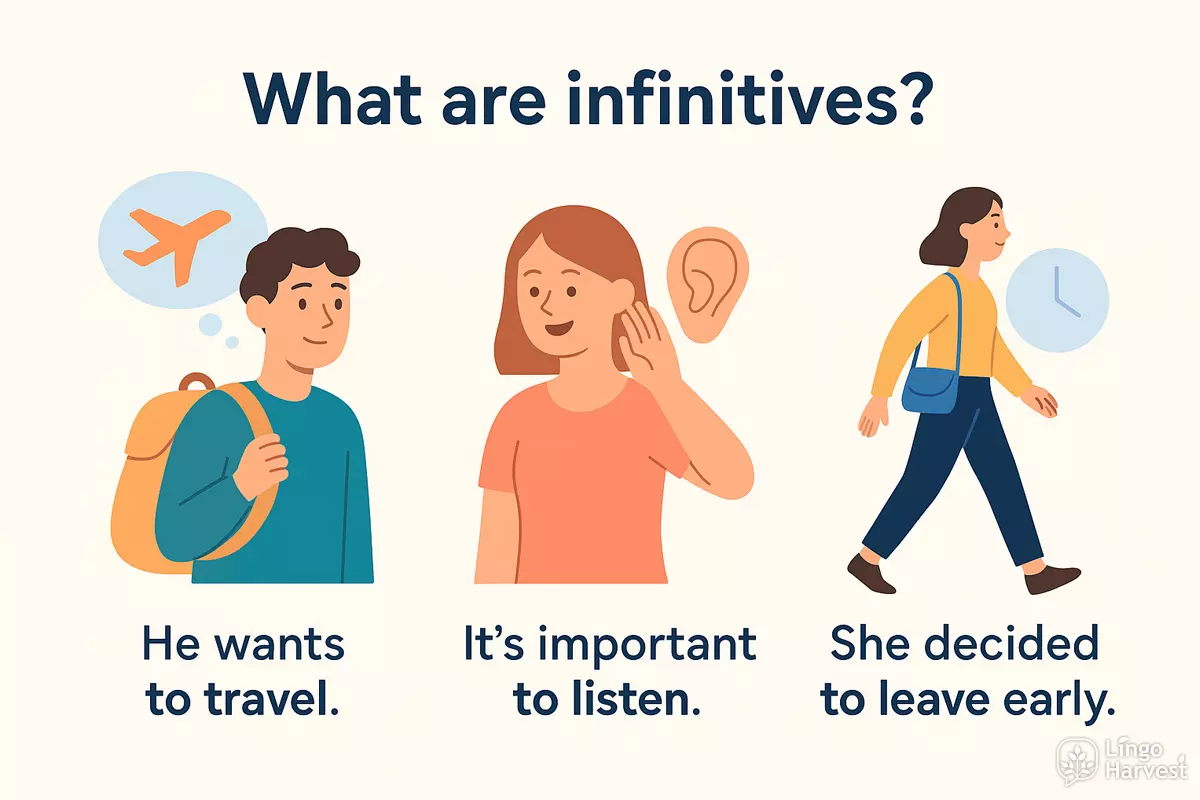
An infinitive is the base form of a verb, usually preceded by "to" (to eat, to run, to learn). Infinitives can also function as nouns, adjectives, or adverbs. For example:
- He wants to travel.
- It’s important to listen.
- She decided to leave early.
- They hope to win the competition.
- He promised to help us tomorrow.
- We need to focus more.
Common verbs and their patterns
Some verbs are typically followed by gerunds, others by infinitives, and a few can take both forms (sometimes with a change in meaning). Here’s a comparison of how certain verbs pair with these forms:
| Verb | Pattern & Example |
|---|---|
| enjoy | enjoy + gerund She enjoys singing. |
| decide | decide + infinitive He decided to leave. |
| stop | stop + gerund / infinitive (different meanings) She stopped smoking (quit the habit). She stopped to smoke (paused to smoke). |
| promise | promise + infinitive They promised to help. |
| avoid | avoid + gerund Avoid driving in the rain. |
| plan | plan + infinitive We plan to visit. |
| admit | admit + gerund He admitted cheating. |
| hope | hope + infinitive I hope to see you soon. |
Typical uses for gerunds and infinitives
- After certain verbs (e.g., enjoy, avoid, decide, hope).
- After prepositions: She’s interested in learning French.
- As the subject of a sentence: Running helps me relax.
- After adjectives (infinitives): It’s easy to understand.
Summary of key points
- Gerunds end in -ing and act as nouns.
- Infinitives use “to” + base verb and can act as nouns, adjectives, or adverbs.
- Verb choice determines whether to use a gerund or infinitive.
- Some verbs can take both forms, but meaning may change.
Typical conjunctions followed by gerunds or infinitive clauses
Many conjunctions in English are naturally followed by either a gerund or an infinitive clause, and the choice can affect the meaning or grammaticality of a sentence. Understanding which connectors pair with which verb forms helps you construct more accurate and fluent sentences.
Common conjunctions with gerunds
Some linking words almost always take a gerund when followed by a verb. Here are several frequently used examples:
- After: She went home after finishing her work.
- Before: Wash your hands before eating.
- While: He listens to music while studying.
- Since: Since leaving college, he has traveled widely.
- By: Improve your English by practicing daily.
- Without: He left without saying goodbye.
- In spite of: In spite of feeling tired, she kept working.
- Instead of: Try tea instead of drinking coffee.
- Because of: We canceled the trip because of feeling unwell.
- On: On arriving, she called her friend.
Conjunctions followed by infinitive clauses
Other connectors are typically followed by the infinitive form. These are less common than gerund cases, but still important:
- In order to: She left early in order to catch the bus.
- So as to: He whispered so as to not wake the baby.
- To (purpose): He went to the store to buy milk.
- So that (sometimes with infinitive): She studied hard so that she could pass the exam.
Comparison of conjunctions with gerunds and infinitives
Some connectors allow both forms, but with a change in meaning or usage. The table below shows key examples and contrast:
| Connector | Example with Gerund | Example with Infinitive |
|---|---|---|
| After | After finishing the book, she slept. | ❌ (not used with infinitive) |
| In order to | ❌ (not used with gerund) | She called in order to confirm the time. |
| Before | Before going out, lock the door. | ❌ (not used with infinitive) |
| So as to | ❌ (not used with gerund) | He ran so as to catch the train. |
| Instead of | Instead of arguing, listen to each other. | ❌ (not used with infinitive) |
Choosing between a gerund or an infinitive after a conjunction depends on the specific connector and the meaning you intend. When in doubt, check which form is standard or most natural for each linking word. Over time, these patterns become more intuitive with practice and exposure.
Using before, after, while with -ing forms
When talking about actions in relation to time, English often uses the words "before," "after," and "while" with gerunds (the -ing form of verbs). This pattern helps link events smoothly, showing what happened first, next, or at the same time. Instead of full clauses, using the -ing form after these conjunctions makes sentences shorter and more natural. For example, compare:
- Before leaving the house, check the windows. (✅)
- After finishing her homework, Mia went out to play. (✅)
- While watching TV, he ate dinner. (✅)
Notice how these expressions connect actions in time without repeating subjects. This is especially useful for describing routines, instructions, or sequences.
Common Patterns and Meanings
- before + -ing: Describes what should happen earlier.
e.g., "Wash your hands before eating." - after + -ing: Describes what happens next.
e.g., "She felt better after resting." - while + -ing: Describes two actions happening at the same time.
e.g., "He listens to music while jogging."
Expanded Examples
- Before going to bed, turn off the lights.
- After taking a shower, she dries her hair.
- While reading, I like to drink tea.
- Before starting the exam, read all instructions carefully.
- After eating breakfast, he leaves for work.
- While waiting for the bus, we chatted about our plans.
- Before applying for the job, update your resume.
- After arriving home, they called their friends.
- While cooking dinner, she listens to podcasts.
- Before signing the document, review all the details.
- After meeting the manager, he felt more confident.
- While cleaning the house, she found her old diary.
- Before submitting your project, check for errors.
- After finishing the book, he started another one.
- While shopping, keep an eye on your wallet.
Usage Tips
- Don’t use the infinitive ("to" + verb) after "before," "after," or "while" in these time expressions.
❌ Before to leave → ✅ Before leaving - If the subject of both actions is the same, omit it in the -ing phrase.
- If the subjects are different, use a full clause: "After she finished, I started."
Summary Table
| Conjunction | Example with -ing form |
|---|---|
| before | Before leaving, check your bag. |
| after | After eating, wash the dishes. |
| while | While studying, listen to calm music. |
| before | Before going out, call your parents. |
| after | After exercising, stretch your muscles. |
| while | While traveling, take photos. |
By practicing these structures, you’ll sound more fluent and concise when describing time relationships between actions.
Using in order to, so as to with infinitives of purpose
When expressing the reason or goal behind an action, English often uses specific phrases followed by the infinitive form of a verb. "In order to" and "so as to" are two formal ways to introduce these purpose clauses. Both structures help clarify why something is done, especially in writing or more formal speech.
Understanding Purpose Structures
The constructions "in order to + infinitive" and "so as to + infinitive" both answer the question "Why?" about an action. They are used instead of just the bare infinitive (e.g., "to improve") for greater clarity or emphasis, especially when there's a risk of ambiguity or in more careful English.
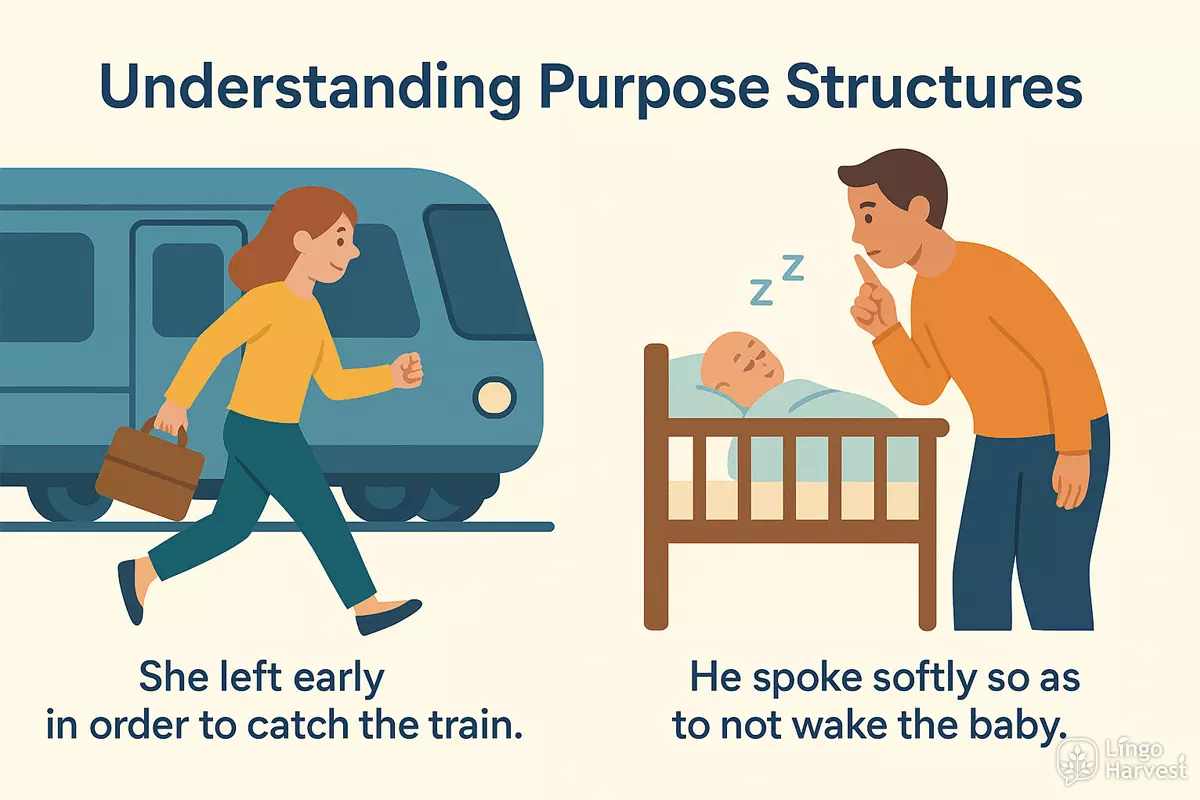
- She left early in order to catch the train.
- He spoke softly so as to not wake the baby.
- They moved to the city in order to find better jobs.
- We whispered so as to avoid disturbing anyone.
- He took notes in order to remember the details.
- She wore glasses so as to see the board clearly.
- I checked twice in order to make sure.
- He hurried so as to not be late.
- They studied hard in order to pass the exam.
- We closed the windows so as to keep out the noise.
- She paused in order to gather her thoughts.
- He slowed down so as to avoid an accident.
Comparing "in order to" and "so as to"
Both phrases are interchangeable in many cases, but "so as to" is less common and often appears in negative sentences ("so as not to..."). "In order to" is more flexible and slightly more neutral in tone.
| Form | Example |
|---|---|
| in order to + infinitive | She left early in order to catch the train. |
| so as to + infinitive | He whispered so as to not disturb anyone. |
| in order not to + infinitive | They lowered their voices in order not to wake the child. |
| so as not to + infinitive | She tiptoed so as not to be heard. |
Usage Tips
- These forms are more formal than simply using "to" for purpose.
- In spoken English, "to + infinitive" is often enough: "She left early to catch the train."
- For negative purposes, use "in order not to" or "so as not to": "They spoke quietly so as not to disturb anyone."
- Do not use "for" with an infinitive of purpose (❌ "for to catch the train").
Choosing between these structures depends on the level of formality and the need for clarity. In formal writing or when negative purpose must be shown, "in order to" and "so as to" are preferred, ensuring your reason for an action is clearly expressed.
Style notes: shorter non-finite clauses vs full finite clauses
Choosing between shorter non-finite constructions (using gerunds or infinitives) and full finite clauses can dramatically affect the tone and clarity of your writing. Non-finite forms like gerunds and infinitives often help to make sentences more concise, while full clauses add detail and sometimes formality. Recognizing when to use each structure is important for both natural and precise expression.
When to use non-finite clauses
Non-finite clauses (such as those with gerunds or infinitives) are especially useful to:
- Condense information and avoid repetition
- Express general purpose or result
- Make writing smoother and less formal
- Link actions without specifying the subject repeatedly
- Create variety in sentence structure
For example:
- She left without saying goodbye. (gerund)
- He plans to travel next year. (infinitive)
- After finishing the report, they went home. (gerund phrase)
- To win the prize, you must practice daily. (infinitive phrase)
When to use full finite clauses
Full clauses, containing a subject and a tense-marked verb, are preferred when:
- Specificity or clarity is needed about who does what
- The time frame is important (past, present, future)
- Complex ideas or multiple actions are being described
- Formality or explicitness is required
Examples:
- She left because she did not want to say goodbye.
- He plans that he will travel next year.
- After they finished the report, they went home.
- So that you win the prize, you must practice daily.
Comparing structure and effect
| Non-finite Clause (Short) | Full Finite Clause (Expanded) |
|---|---|
| Before leaving, check the doors. | Before you leave, check the doors. |
| She enjoys reading novels. | She enjoys it when she reads novels. |
| To avoid confusion, clarify your answer. | If you want to avoid confusion, you should clarify your answer. |
| By working hard, he succeeded. | Because he worked hard, he succeeded. |
Practical notes
Writers often combine both clause types for balance. Non-finite forms are preferred in instructions, headlines, and when summarizing actions. Full clauses are favored in academic or legal writing, and when ambiguity must be avoided. Both are essential tools for nuanced, effective language.
Examples from instructions, stories, and everyday descriptions
Understanding how conjunctions work with gerunds and infinitives is easier when you see real-life sentences. These forms often appear in directions, personal accounts, and everyday speech, helping to connect ideas smoothly. Below, you’ll find a mix of sample sentences, common patterns, and a structured overview to illustrate how these constructions are used in context.
Sample Sentences from Everyday Use
- She apologized for forgetting to call and being late.
- He likes to read and to write in the evenings.
- Remember to lock the door before leaving the house.
- After finishing her homework, she went out to play.
- He stopped talking and started listening.
- Would you prefer to eat out or to cook at home?
- Instead of complaining, try finding a solution.
- She continued singing though everyone had left.
- You need to study and to practice consistently.
- He enjoys swimming and cycling on weekends.
- Without checking the map, we got lost.
- He tried to fix the car and to clean the garage.
- She suggested meeting earlier or calling later.
- They refused to leave until finishing the movie.
- Before going to bed, she likes to read a book.
- He kept asking questions and taking notes during the lecture.
- Don’t forget to bring your umbrella and to wear boots if it rains.
- She risked losing her job by speaking out.
How Conjunctions Link Gerunds and Infinitives
Connecting words like and, or, but, and before help join gerunds or infinitives, creating a smooth flow in both written and spoken English. They often clarify the sequence or relationship between actions.
| Conjunction | Example with Gerunds/Infinitives |
|---|---|
| and | He likes cooking and eating Italian food. |
| or | Would you prefer to walk or to drive? |
| but | She wanted to stay but had to leave. |
| before | Wash your hands before eating. |
| after | After finishing the report, send it to your manager. |
| without | He left without saying goodbye. |
| instead of | She took the train instead of driving. |
| because | He apologized because he forgot to invite you. |
Tips for Everyday Communication
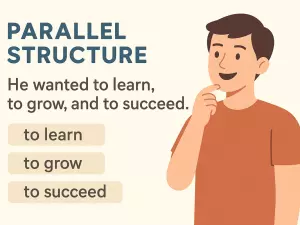
When you combine two or more actions with conjunctions, it’s important to keep the form consistent: use gerunds with gerunds or infinitives with infinitives for clarity. For example, “She likes to dance and to sing” or “She enjoys dancing and singing.” Mixing the forms (e.g., “She likes to dance and singing”) is generally avoided in formal contexts. Reviewing such examples can help you recognize patterns and improve your own use of conjunctions with these verb forms in both writing and conversation.
Practice: rewrite full clauses using gerund or infinitive structures
Understanding how to transform full clauses by using gerunds or infinitive forms is a core skill for mastering complex English sentences. This exercise focuses on identifying where a conjunction can be replaced by a gerund or infinitive structure, making the sentence more concise or natural. Practice these conversions to become more flexible with sentence structures.
Instructions
Below, you'll find sentences containing full clauses joined by conjunctions (such as "when," "because," "after," or "if"). Your task is to rewrite each sentence so that one clause is replaced by a gerund or infinitive phrase. This helps you see how English often condenses ideas using non-finite verb forms.
Examples to Practice
- When she finished her homework, she watched TV.
- Because he was tired, he went to bed early.
- After they ate dinner, they went for a walk.
- If you want to pass the test, you must study hard.
- Before he left the house, he checked the doors.
- Since she didn't know the answer, she asked for help.
- When you drive at night, you should be careful.
- As he was running late, he skipped breakfast.
- He practiced because he wanted to improve his skills.
- After we finished the meeting, we had lunch together.
- Since you have arrived, let's start the presentation.
- If you have nothing to do, come with us.
- When I saw her, I waved hello.
- Before you decide, think carefully.
- While he was waiting for the bus, he read a book.
- As soon as she heard the news, she called her friend.
- Because they wanted to save money, they cooked at home.
- After he had finished his work, he went out for coffee.
- If you need any help, just let me know.
- When you learn a new language, practice is essential.
Patterns and Tips
- Use a gerund (-ing form) when the subject of both clauses is the same and the action is simultaneous or prior (e.g., "After finishing her homework, she watched TV.").
- To express purpose, use an infinitive ("in order to" or just "to"): "He practiced to improve his skills."
- Reduce adverbial clauses by omitting the subject and auxiliary verb, and use the gerund or infinitive form of the main verb.
- For negative forms, use "not" before the gerund or infinitive: "Not knowing the answer, she asked for help."
Practice Table: Clause to Gerund/Infinitive Rewriting
| Full Clause with Conjunction | Rewritten Using Gerund/Infinitive |
|---|---|
| After they ate dinner, they went for a walk. | After eating dinner, they went for a walk. |
| Because he was tired, he went to bed early. | Being tired, he went to bed early. |
| If you want to pass the test, you must study hard. | To pass the test, you must study hard. |
| Since she didn't know the answer, she asked for help. | Not knowing the answer, she asked for help. |
| Before he left the house, he checked the doors. | Before leaving the house, he checked the doors. |
| As he was running late, he skipped breakfast. | Being late, he skipped breakfast. |
| After we finished the meeting, we had lunch together. | After finishing the meeting, we had lunch together. |
| He practiced because he wanted to improve his skills. | He practiced to improve his skills. |
Try It Yourself
Rewrite these sentences using gerund or infinitive structures:
- When you drive at night, you should be careful.
- As soon as she heard the news, she called her friend.
- Because they wanted to save money, they cooked at home.
- While he was waiting for the bus, he read a book.
- After she finished the test, she left the room.
- Since he didn’t feel well, he stayed home.
- Before they started the meeting, they reviewed the agenda.
- Although he was tired, he continued working.
- When he entered the room, everyone greeted him.
- As she walked through the park, she listened to music.
Show answers
- When driving at night, you should be careful.
- Hearing the news, she called her friend.
- Wanting to save money, they cooked at home.
- While waiting for the bus, he read a book.
- After finishing the test, she left the room.
- Not feeling well, he stayed home.
- Before starting the meeting, they reviewed the agenda.
- Although tired, he continued working.
- Entering the room, he greeted everyone.
- Walking through the park, she listened to music.
With regular practice, you'll become more confident in recognizing opportunities to use gerunds or infinitives for smoother, more sophisticated sentences. This skill is especially useful in both academic and conversational English.