Conjunctions of Concession: even though, even if, much as

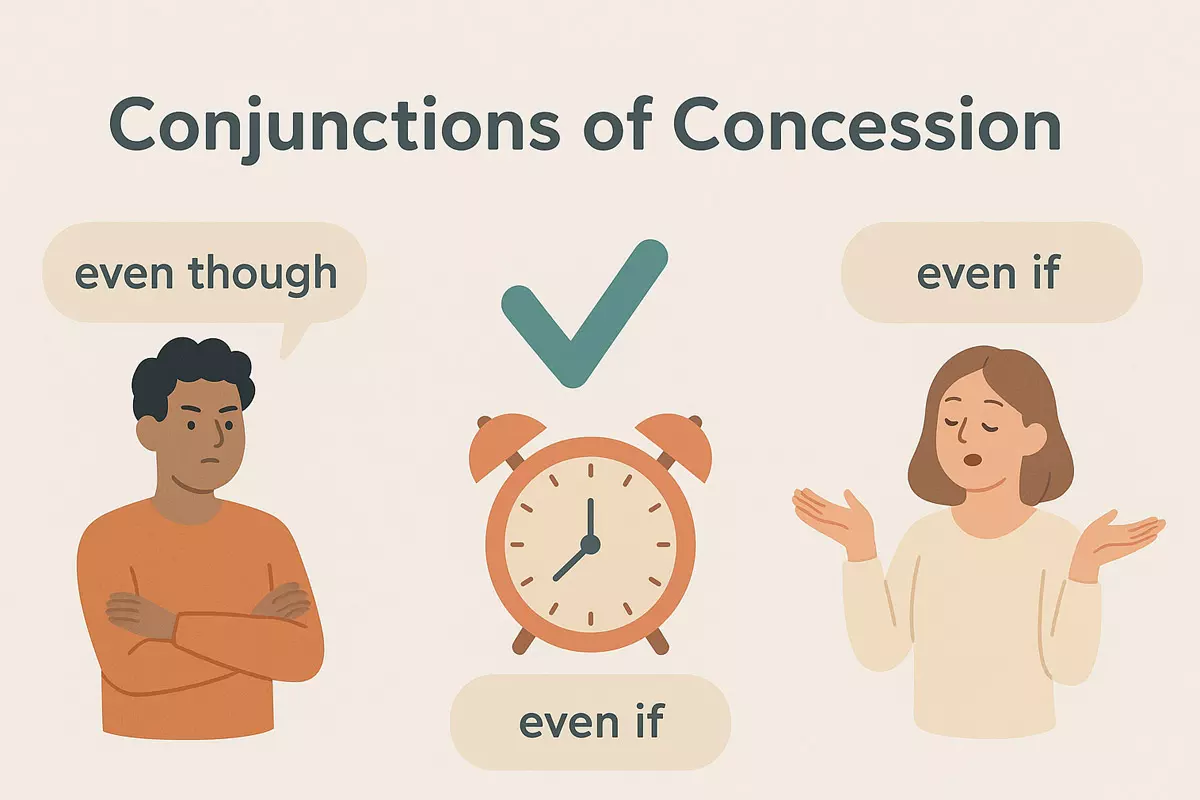 Here we the meaning of concession in complex grammar, explains how even though, even if, and much as differ in use and emphasis, and provides examples from essays and debates. It also offers practice rewriting sentences with concessive conjunctions.
- Meaning of concession in complex grammar
- How even though expresses a real contrast
- How even if introduces a hypothetical limitation
- Using much as to show strong concession in formal contexts
- Strength and emphasis differences across concessive forms
- Examples from essays, debates, and professional writing
- Practice: rewrite sentences using appropriate concessive conjunctions
Mastering the subtle art of expressing contrast in English can be tricky, particularly when using phrases that highlight unexpected outcomes or exceptions. By learning to use expressions such as "even though," "even if," and "much as," you can add depth and clarity to your communication, making it easier to convey nuanced ideas in both everyday conversations and writing. This skill not only enhances your language proficiency but also allows you to express complex thoughts more effectively.
Meaning of concession in complex grammar
In complex sentences, a "concession" refers to a situation where the main idea is contrasted or partly contradicted by another idea, yet the main clause still holds true. This is a key way to show that something happens or is true despite another factor that might prevent it. English speakers often use special conjunctions to introduce these contrasting or unexpected relationships.
How concession works in sentences
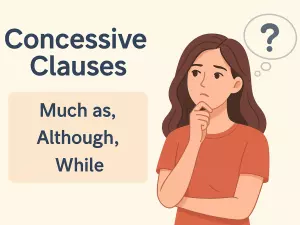
Concessive clauses are typically introduced by words like even though, even if, and much as. These conjunctions set up an expectation that is then challenged by the main clause. The overall effect is to highlight surprise, contrast, or a lack of logical consequence between the clauses.
- Even though she was tired, she finished the project.
- Even if it rains, we will go hiking.
- Much as I like chocolate, I can't eat it every day.
Common conjunctions expressing concession
Here are some of the most frequent words and phrases used to indicate a concession in complex structures:
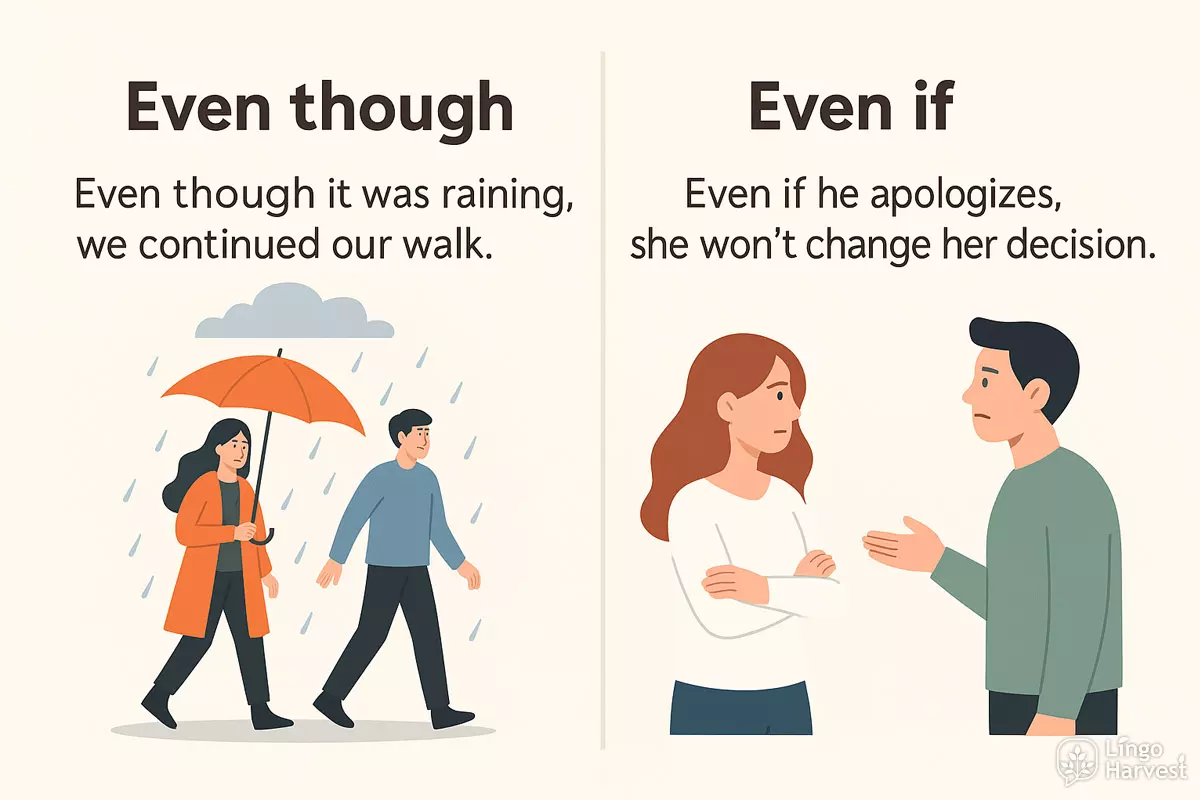
- Even though → Even though it was raining, we continued our walk.
- Even if → Even if he apologizes, she won’t change her decision.
- Much as → Much as I like the idea, it’s not practical.
- Although → Although the task was difficult, they completed it.
- Though → Though he was tired, he kept working.
- While → While the theory seems logical, the evidence is lacking.
- Whereas → He prefers quiet places, whereas she enjoys busy cities.
- However → The plan looked perfect; however, it failed in practice.
- Nevertheless → It was risky; nevertheless, they proceeded.
- Despite the fact that → Despite the fact that he trained hard, he lost the match.
- In spite of → In spite of the delay, the project was successful.
- Admittedly → Admittedly, the method is expensive, but it works well.
- Nonetheless → The task was complex; nonetheless, they managed it.
- Still → The argument was convincing; still, she hesitated.
- Yet → The results look promising, yet more studies are needed.
Comparing concessive conjunctions
| Conjunction | Usage Example | Typical Context |
|---|---|---|
| Even though | Even though it was late, he kept working. | Factually true contrast |
| Even if | Even if you ask, I won't tell you. | Hypothetical/possible contrast |
| Much as | Much as I want to help, I can't. | Strong emotion or desire, with contrast |
| Although | Although he tried, he didn't succeed. | General contrast |
| Though | Though it was cold, we went swimming. | Less formal, general contrast |
| While | While I agree, I have some concerns. | Simultaneous or contrasting ideas |
Understanding how to form concessive clauses helps create more nuanced and precise statements in both spoken and written English. Mastery of these structures allows speakers to express unexpected outcomes, admit exceptions, or soften statements while maintaining clarity.
How even though expresses a real contrast
The conjunction even though is used to show a strong and genuine contrast between two ideas or facts. It introduces information that is surprising or unexpected in relation to the main clause. Unlike weaker forms such as although or though, this connector emphasizes that the reality of the first statement does not prevent the second statement from being true.
Making Contrasts Clear
When you use even though, you highlight a real situation that actually exists. The first clause presents a fact, while the second clause presents an outcome that defies expectation. This makes the opposition between the two parts much stronger and more direct than with other conjunctions of concession.
- Even though it was raining, we went for a walk.
- She passed the exam even though she didn’t study.
- They enjoyed the picnic even though the weather was cold.
- He went to the party even though he felt sick.
- Even though I set my alarm, I overslept.
- The team won even though they were missing key players.
- We finished the project even though we started late.
- She smiled even though she was upset.
- The book was interesting even though it was long.
- He bought the car even though it was expensive.
- Even though he apologized, she remained angry.
- They moved forward even though they had doubts.
- He finished the race even though he injured his leg.
- We had fun even though we got lost.
- She wore the dress even though it was out of fashion.
- He laughed even though the joke was at his expense.
- The cat went outside even though it was snowing.
- I ate the cake even though I wasn’t hungry.
- They traveled even though flights were limited.
- He kept reading even though he was tired.
Comparing "even though" with similar conjunctions
To clarify how this connector functions, compare it with alternatives like even if and although. Even though introduces a fact. Even if introduces a hypothetical situation, and although introduces a contrast but with less emphasis.
| Conjunction | Usage & Example |
|---|---|
| Even though | Expresses a real, surprising contrast. Even though it was late, she kept working. |
| Even if | Introduces a hypothetical condition. Even if it rains, we will go outside. |
| Although | Shows a contrast, but is less forceful. Although it was late, she kept working. |
In summary, choosing even though signals that the contrast is not imagined or possible, but a real clash between facts. This helps speakers and writers make their point more vivid and emphatic.
How even if introduces a hypothetical limitation
The phrase even if sets up a situation that may or may not be real, but is considered for the sake of argument. Unlike even though, which refers to actual facts, even if introduces a condition that is imagined, possible, or hypothetical. This allows speakers and writers to discuss outcomes or responses that are independent of whether the condition actually comes true.
Usage and meaning
When even if is used, it highlights that the main clause will remain true regardless of the hypothetical scenario it introduces. This structure is common in English to emphasize determination, indifference, or inevitability.
- Even if it rains, we will go hiking.
- She would forgive him even if he lied again.
- Even if you apologize, he might not listen.
- I'll finish this project even if it takes all night.
- They won’t change their minds even if you argue.
- Even if we leave now, we’ll be late.
- He keeps practicing even if he feels tired.
- Even if you offer more money, the answer is no.
- She attends every meeting even if she’s unwell.
- Even if nobody helps, I’ll manage.
- I love this dish even if it’s not healthy.
- He’ll try even if success is unlikely.
- Even if you explain, they might not understand.
- We’ll celebrate even if it’s a small victory.
- She’ll wear her new dress even if it rains.
Comparison with other concessive conjunctions
To clarify the distinction, here's how even if compares to even though and much as in expressing limitation or concession:
| Conjunction | Type of Situation | Example | Implication |
|---|---|---|---|
| even if | Hypothetical, possible, imagined | Even if you call, I might not answer. | Outcome stays the same, whether the condition is true or not |
| even though | Real, factual | Even though you called, I didn't answer. | Outcome is contrasted with an actual event |
| much as | Concession about feelings or preferences | Much as I like chocolate, I can't eat it now. | Admits something is true, but introduces a limitation |
Key points to remember
- Even if does not assume the condition is real; it simply explores a possible or theoretical situation.
- This conjunction emphasizes the speaker’s attitude or the main clause’s independence from the hypothetical scenario.
- It is helpful for expressing determination, policy, or rules that apply regardless of changing circumstances.
Using much as to show strong concession in formal contexts
When you need to emphasize a powerful contrast or concession in formal English, "much as" is a valuable tool. This phrase introduces a clause that admits a fact or feeling, while the main clause expresses an opposing action or reality. Its tone is notably formal, making it more suitable for academic writing, business communication, or structured arguments than for casual speech.
Structure and Usage
"Much as" usually starts the sentence, followed by a clause that acknowledges a reality or emotion. The main clause then presents the action or decision that goes against the expectation. For example:
- Much as I admire her dedication, I cannot agree with her proposal.
- Much as we would like to assist, our resources are currently limited.
This structure helps highlight the strength of the concession being made.
Common Patterns and Examples
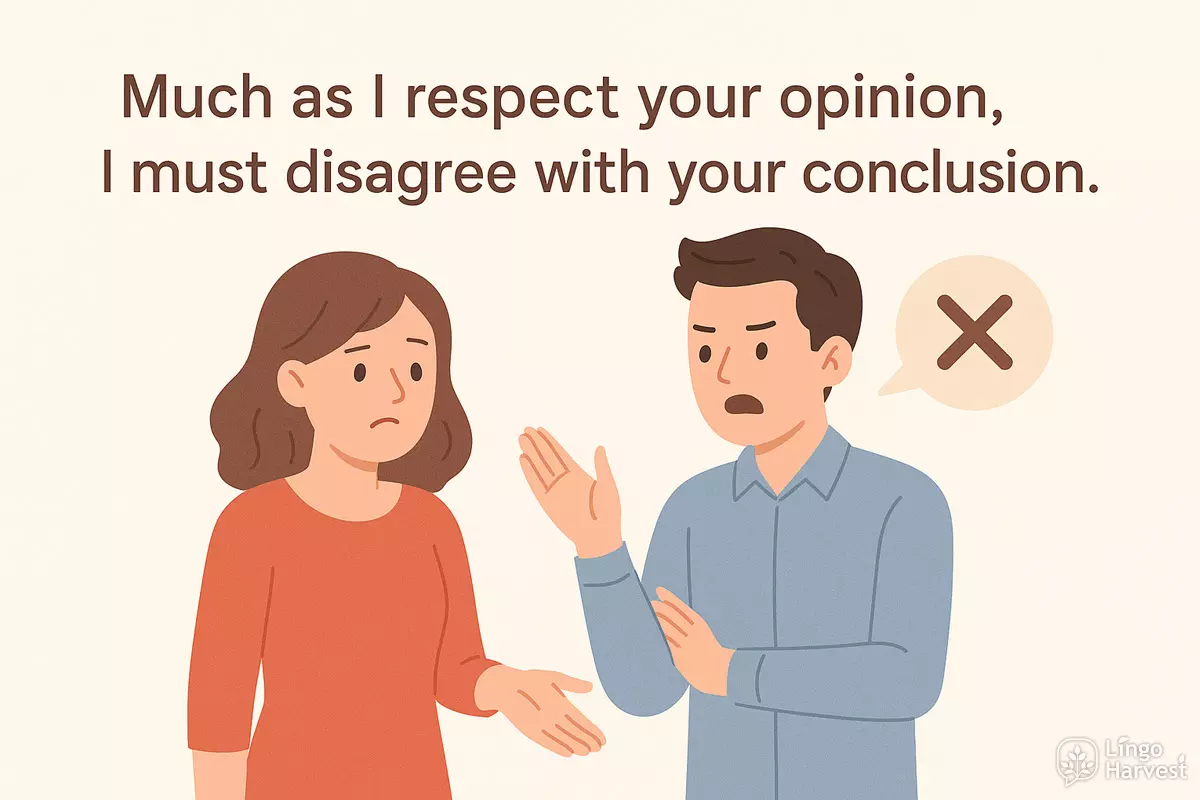
To get comfortable with "much as," consider these common scenarios and sample sentences:
- Much as I respect your opinion, I must disagree with your conclusion.
- Much as he enjoys traveling, he decided to stay home this summer.
- Much as we tried, we could not finish the project on time.
- Much as the team hoped for victory, they were defeated in the final round.
- Much as the evidence suggests otherwise, the committee remained unconvinced.
- Much as she wanted to help, she was unable to attend the meeting.
- Much as I would love to join, prior commitments prevent me.
- Much as they value tradition, innovation is now their priority.
- Much as it pains me to say this, the plan is not feasible.
- Much as the offer tempted him, he declined politely.
- Much as we appreciate your efforts, further work is required.
- Much as the weather improved, the event was still cancelled.
Key Features of "Much as"
- Always introduces a strong concession or contrast.
- Best used in formal or written contexts.
- Can express both emotional and factual concessions.
- Not interchangeable with "even though" or "although" in every context—"much as" often implies a deeper or more reluctant concession.
Comparison: "Much as" vs. Other Concessive Conjunctions
| Conjunction | Typical Use | Level of Formality | Example Sentence |
|---|---|---|---|
| Much as | Strong, formal concession; often emotional or reluctant | Formal | Much as I respect him, I cannot support his plan. |
| Even though | Presents a fact that contrasts with the main clause | Neutral | Even though it was raining, they played outside. |
| Even if | Speculates about a hypothetical situation | Neutral | Even if you ask, I will not change my mind. |
| Although | General contrast, less emphatic | Neutral to formal | Although it was late, she kept working. |
By mastering "much as," you can express nuanced, formal concessions that add depth and sophistication to your writing or speech.
Strength and emphasis differences across concessive forms
When choosing between concessive conjunctions like "even though," "even if," and "much as," it's important to consider how strongly each one highlights contrast or unexpectedness. Each form carries its own nuance, and the choice can subtly shift the meaning or emphasis of a sentence.
Levels of contrast and certainty
"Even though" is the most emphatic of the group—it directly states a fact or reality that contrasts with the main clause. "Even if" introduces a hypothetical or unreal condition, suggesting something that might or might not be true. "Much as" is slightly softer, often used to express reluctant concession, especially with emotions or opinions.
- "Even though I was tired, I finished the project." (Emphasizes a real situation that is surprising or contrary to expectation.)
- "Even if I were tired, I would finish the project." (Focuses on a possible or imagined situation.)
- "Much as I admire her work, I can't agree with her methods." (Expresses a strong feeling or opinion, but concedes a point.)
Comparative overview
To make the distinctions clearer, consider the table below, which summarizes the typical strength, focus, and example uses of each form:
| Concessive Form | Typical Emphasis & Example | Usual Context |
|---|---|---|
| Even though | Strong/Actual: "Even though it rained, we went hiking." | Fact-based, reality; highlights surprising contrast |
| Even if | Conditional/Potential: "Even if it rains, we will go hiking." | Hypothetical, possible situations; planning or imagining |
| Much as | Reluctant/Emotional: "Much as I like sweets, I avoid dessert." | Personal feelings, opinions; softer or more formal tone |
Subtle distinctions in use
Writers and speakers might select different concessive conjunctions depending on the strength of the contrast they wish to express. "Even though" often signals a direct and surprising contradiction, while "even if" leaves room for possibility or uncertainty. "Much as" is more common in formal or literary contexts, especially when expressing concession about an emotional stance.
Expanded examples of usage
Here are some more examples to illustrate the gradations in force and context:
- "Even though he apologized, she remained upset."
- "Even if you call now, the office might be closed."
- "Much as I'd love to join you, I have prior commitments."
- "Even though the evidence was clear, the jury hesitated."
- "Even if we hurry, we might miss the train."
- "Much as I respect your opinion, I must disagree."
- "Even though the mountain is high, climbers reach the summit."
- "Even if the weather improves, the field will be muddy."
- "Much as he tried, he couldn't solve the puzzle."
- "Even though the task was difficult, they succeeded."
- "Even if you don't like it, you should try."
- "Much as it pains me to say, you were right."
- "Even though she knew the answer, she stayed silent."
- "Even if he's late, the meeting will start on time."
- "Much as I want to help, my schedule is full."
In summary, the choice among these conjunctions depends on whether you want to stress a real, hypothetical, or emotional contrast. Understanding these subtleties enhances clarity and style in both writing and speech.
Examples from essays, debates, and professional writing
Writers and speakers often use conjunctions of concession—such as "even though," "even if," and "much as"—to introduce contrasting ideas or acknowledge opposing points. These expressions signal a shift in reasoning, especially in persuasive texts, academic arguments, and analytical reports. The following examples illustrate how these conjunctions appear in authentic contexts, ranging from student essays to formal debates and published articles.
Sample sentences from academic and professional contexts
- Even though the evidence was compelling, the committee remained unconvinced.
- Even if the proposal is approved, additional funding will be necessary.
- Much as I respect his expertise, I cannot agree with his conclusions.
- The policy was implemented, even though several members voiced strong objections.
- Even if the experiment fails, valuable data may still be obtained.
- Much as the technology promises efficiency, concerns about privacy persist.
- She persisted, even though the task seemed impossible at first.
- Even if we double our efforts, the deadline may still be missed.
- Much as the theory appeals to some, it lacks empirical support.
- His argument remains persuasive, even though critics challenge several assumptions.
- Even if the market rebounds, recovery will likely be slow.
- Much as one might wish otherwise, the facts remain unchanged.
Comparing usage across genres
Writers adjust their use of concessive conjunctions depending on the formality and purpose of their text. For example, essays tend to use "even though" to acknowledge counterarguments, while debates often employ "even if" to challenge premises or hypothetical outcomes. Professional writing, such as reports or policy documents, may use "much as" to diplomatically express disagreement or limitations.
| Conjunction | Common Contexts | Example Sentence |
|---|---|---|
| even though | Academic essays, reports | Even though the results were inconclusive, the study advanced the field. |
| even if | Debates, hypothetical analysis | Even if the hypothesis is correct, further testing is required. |
| much as | Reviews, diplomatic statements | Much as I admire the initiative, I question its feasibility. |
| even though | Opinion pieces, editorials | Even though many disagree, the policy has strong support. |
Tips for effective usage
- Use even though for factual contrasts: “Even though the cost is high, the benefits may outweigh it.”
- Choose even if for hypothetical or conditional contrasts: “Even if we prepare thoroughly, unexpected issues can arise.”
- Opt for much as when expressing reluctant concession: “Much as I’d like to agree, the evidence suggests otherwise.”
In summary, employing these conjunctions of concession helps writers acknowledge complexity, anticipate objections, and present nuanced arguments—skills highly valued in both academic and professional communication.
Practice: rewrite sentences using appropriate concessive conjunctions
Understanding how to use concessive conjunctions like even though, even if, and much as is essential for expressing contrast or unexpected results in English. The following exercises will help you practice rewriting sentences to include these conjunctions effectively. Read each prompt and transform the sentence, making sure to use the most suitable conjunction for the context.
Rewrite the following sentences:
- She was tired. She finished her assignment.
- He might not like the movie. We should invite him anyway.
- I admire his dedication. I can’t agree with his methods.
- They arrived late. The meeting had already started.
- It’s raining. We are going for a walk.
- She’s allergic to cats. She adopted one.
- You apologize. He may not forgive you.
- The task seemed impossible. They succeeded.
- He practices every day. He struggles to improve.
- We warned them. They didn’t listen.
Suggestions for conjunction use
- Even though — to show a real, surprising contrast.
- Even if — to discuss imagined or possible situations.
- Much as — to express strong feeling or admiration, but a contrasting action or opinion follows.
Comparing the usage
| Conjunction | Typical Use & Example |
|---|---|
| Even though | Presenting a real situation: Even though she was tired, she finished her assignment. |
| Even if | Describing a possible or hypothetical situation: Even if he doesn’t like the movie, we should invite him. |
| Much as | Expressing strong feeling or concession: Much as I admire his dedication, I can’t agree with his methods. |
More practice: choose the best conjunction
For each sentence, choose even though, even if, or much as to fill in the blank:
- ________ it was late, they kept working.
- ________ I try my best, I still make mistakes.
- He’ll go for a run ________ it’s raining.
- ________ I respect her opinion, I have to disagree.
- She will help you ________ she is busy.
- ________ he was exhausted, he finished the report.
- ________ she apologizes, I won’t forget what happened.
- ________ I admire his enthusiasm, I can’t support this plan.
- He’ll stay with us ________ we move to another city.
- ________ it sounds strange, the story is true.
Show answers
- Even though it was late, they kept working.
- Even if I try my best, I still make mistakes.
- Even if it’s raining, he’ll go for a run.
- Much as I respect her opinion, I have to disagree.
- Even if she is busy, she will help you.
- Even though he was exhausted, he finished the report.
- Even if she apologizes, I won’t forget what happened.
- Much as I admire his enthusiasm, I can’t support this plan.
- Even if we move to another city, he’ll stay with us.
- Even though it sounds strange, the story is true.
Challenge: rewrite with your own ideas
Try creating your own sentences using each conjunction. Aim for real-life situations to make your practice more meaningful.