Using Conjunctions to Build Logical Flow in Essays

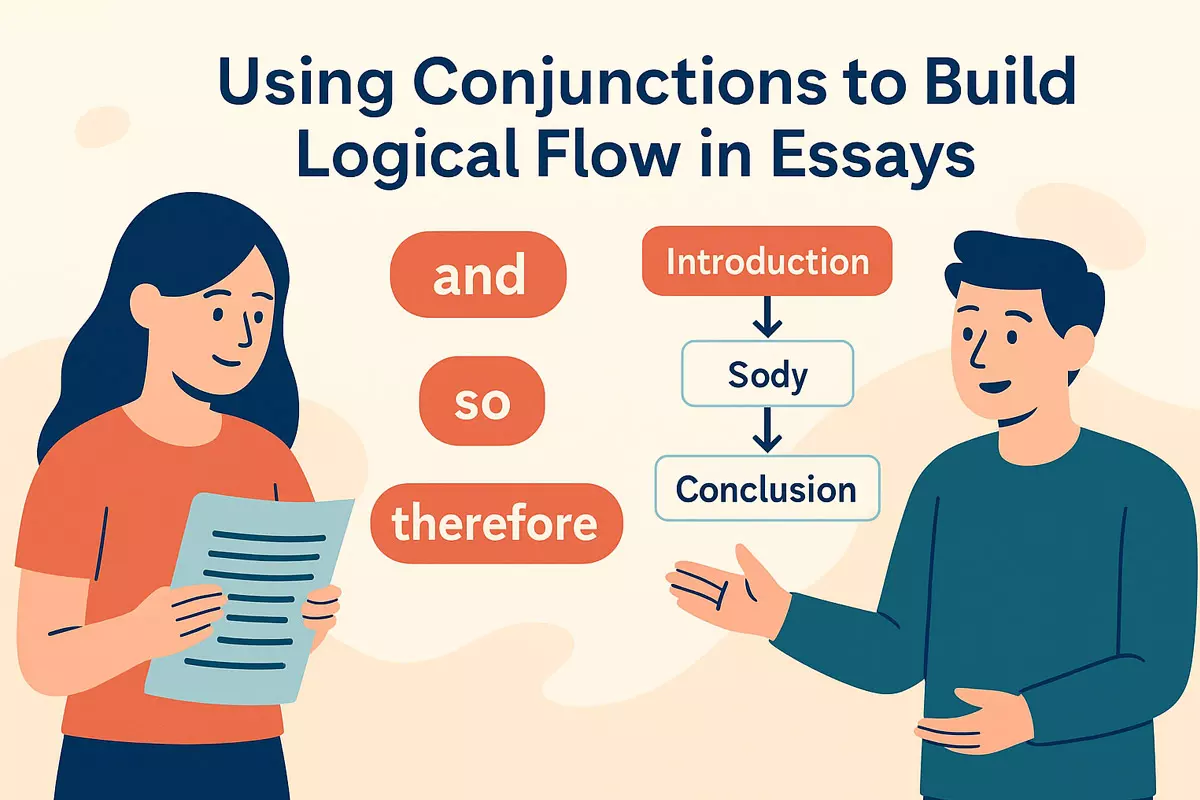 Here we the importance of logical flow in academic writing, discusses using various conjunctions for clarity, explains how to structure paragraphs with clear progression, and offers examples and exercises to improve paragraph cohesion.
- Why logical flow matters in academic writing
- Conjunctions for cause, contrast, addition, and result
- How to structure paragraphs with clear progression
- Placement of conjunctions for maximum clarity
- Examples from model essay paragraphs
- Practice: improve paragraph cohesion by adding appropriate conjunctions
Writing a clear and persuasive essay requires more than strong ideas; it also depends on effective transitions that guide readers smoothly from one point to another. By using appropriate connectors, writers create cohesion and clarity within their work, allowing arguments to flow logically and making the overall message easier for readers to follow and understand. Mastering these skills not only improves the structure of an essay but also enhances its overall persuasiveness and readability.
Why logical flow matters in academic writing
Clear organization and seamless progression of ideas are essential for strong academic essays. When readers can easily follow an argument from one point to the next, they are more likely to understand and engage with the writer’s message. Logical flow helps to minimize confusion, making it easier for instructors, peers, or researchers to see how evidence and analysis build toward a conclusion.
Benefits of strong logical progression
- Enhances comprehension by guiding readers through the essay’s structure
- Reinforces the credibility of the writer’s argument
- Prevents misinterpretation of evidence or reasoning
- Makes complex ideas more accessible
- Facilitates smoother transitions between sections and paragraphs
- Allows connections between ideas to stand out
- Improves the overall readability and professionalism of the paper
- Supports the writer’s critical thinking by requiring clear links between claims
- Helps meet academic standards and expectations
- Reduces the likelihood of redundancy or contradiction
Common issues when flow is lacking
When transitions are weak or connections between points are unclear, readers may struggle to see how individual claims relate to each other. This can result in:
- Disjointed paragraphs with abrupt topic shifts
- Arguments that appear unsupported or out of order
- Difficulty in identifying the main thesis or supporting evidence
- Loss of reader attention or engagement
How conjunctions support logical connections
One of the most effective ways to establish logical relationships is through the use of conjunctions. These words and phrases signal the nature of the link between sentences or paragraphs—such as addition, contrast, cause, or result. Thoughtful use of conjunctions ensures that the reader understands how each idea fits into the broader argument.
- Additionally: adds similar information
- However: introduces a contrast
- Therefore: signals a result or consequence
- For example: provides an illustration
- Because: explains a reason
- Moreover: emphasizes an added point
- Meanwhile: shows simultaneous actions
- Although: introduces a concession
- Consequently: indicates an outcome
- Thus: draws a conclusion
- In contrast: highlights a difference
- Furthermore: adds emphasis to an additional idea
- As a result: introduces an effect
- Since: provides a cause
- Nevertheless: points out an unexpected continuation
- On the other hand: presents an alternative or opposing idea
- Similarly: draws a comparison
- Whereas: contrasts two elements
- In addition: attaches further information
- Even though: signals a contradiction
By deliberately choosing the right conjunctions, writers can make their essays more coherent and persuasive. Logical connections do not happen by accident; they require careful attention to both the content and the way it is linked together.
Conjunctions for cause, contrast, addition, and result
Understanding how to connect ideas is essential for clear academic writing. Words and phrases that signal cause, contrast, addition, and result help readers follow your reasoning and see relationships between points. By using these connectors thoughtfully, you can enhance the logical flow of your essays.
Showing Cause and Reason
When you want to explain why something happens or provide justification, use connectors that indicate cause. These help clarify the link between your claims and the evidence or reasoning behind them.
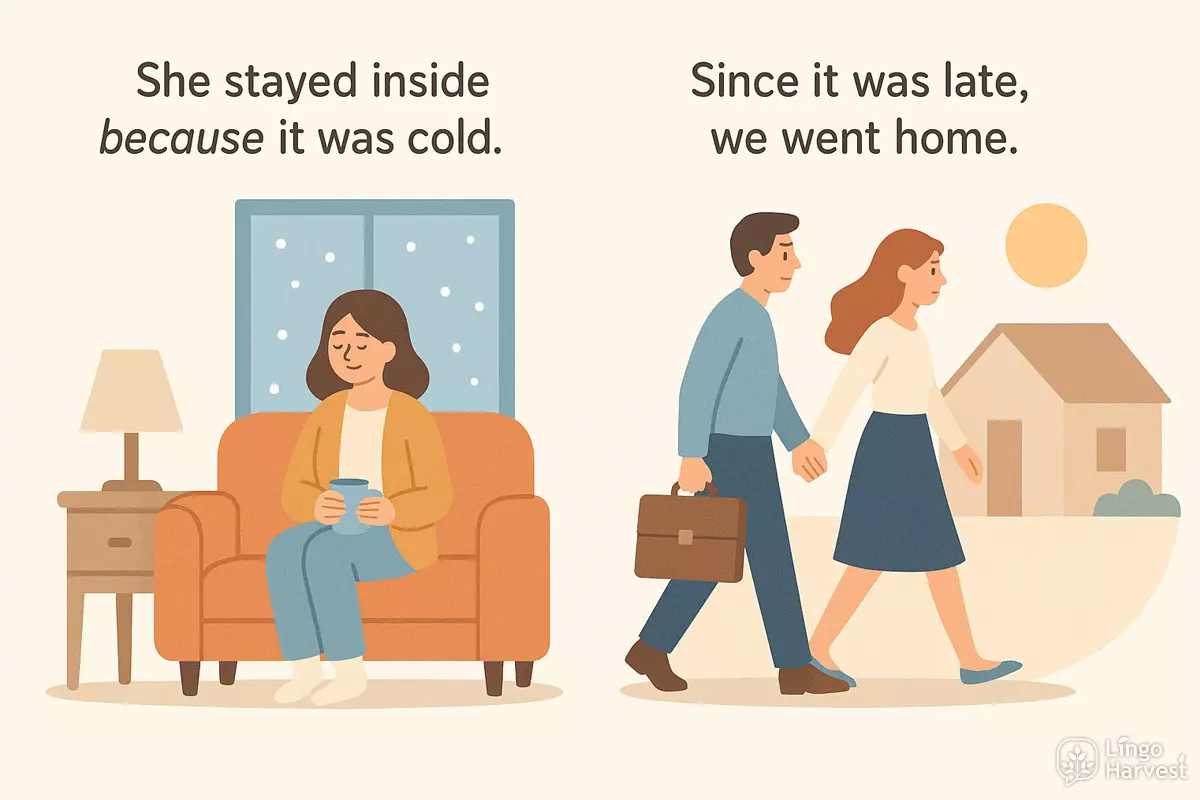
- because → She stayed inside because it was cold.
- since → Since it was late, we went home.
- as → As he was tired, he went to bed early.
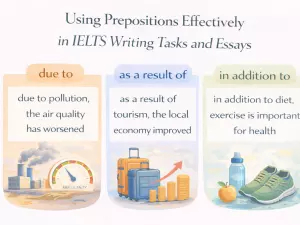
- due to → The match was canceled due to heavy rain.
- owing to → Owing to traffic, we arrived late.
- for → He stopped running, for he was exhausted.
- in view of → In view of recent events, the plan was changed.
- on account of → The road was closed on account of flooding.
Example: She was late because the train was delayed.
Expressing Contrast
To highlight differences or present opposing ideas, use contrastive connectors. These signal shifts in perspective or acknowledge limitations.
- however → It was raining; however, they continued working.
- although → Although he was tired, he finished the report.
- even though → Even though it was expensive, she bought it.
- whereas → She likes tea, whereas he prefers coffee.
- nevertheless → It was freezing; nevertheless, they went swimming.
- on the other hand → She loves cities; on the other hand, he prefers the countryside.
- yet → He studied a lot, yet he failed the exam.
- in contrast → The north is cold; in contrast, the south is warm.
- but → I wanted to go, but I stayed home.
- while → She was cooking, while he was cleaning.
- nonetheless → The task was difficult; nonetheless, they completed it.
Example: The solution seems simple; however, it is difficult to implement.
Adding Information
To expand on an idea or introduce additional points, additive conjunctions are useful. They help build arguments by layering facts or explanations.
- and → She bought apples and oranges.
- also → He is smart and also very creative.
- furthermore → The plan is risky; furthermore, it's expensive.
- moreover → The book is interesting; moreover, it's educational.
- in addition → She speaks French; in addition, she knows Italian.
- besides → I’m tired; besides, it’s too late to go out.
- as well as → He plays guitar as well as piano.
- not only… but also → She not only finished early but also helped others.
- what’s more → It’s cheap; what’s more, it’s eco-friendly.
- plus → He bought a jacket, plus a pair of shoes.
Example: Moreover, the research supports this hypothesis.
Indicating Result or Consequence
When showing the outcome or effect of an action, use result connectors. These clarify the logical consequences of events or arguments.
- so → It was cold, so we stayed inside.
- therefore → The test was difficult; therefore, many students failed.
- as a result → He didn’t study; as a result, he failed.
- thus → The evidence was clear; thus, the decision was easy.
- consequently → She forgot her ticket; consequently, she couldn’t enter.
- hence → It rained all day; hence, the delay.
- for this reason → She was sick; for this reason, she stayed home.
- accordingly → The rules changed; accordingly, the schedule was updated.
- that's why → He didn’t sleep well; that’s why he’s tired.
Example: The data was incomplete; therefore, the analysis was limited.
Connector Comparison Table
| Function | Common Connectors |
|---|---|
| Cause/Reason | because, since, due to, as |
| Contrast | however, although, whereas, but |
| Addition | and, also, moreover, in addition |
| Result/Consequence | so, therefore, as a result, thus |
Varying your use of these connectors not only prevents repetition but also guides your reader through your argument. Try to select the most precise linking word for each situation, and remember that overusing any one type can disrupt the flow of your writing.
How to structure paragraphs with clear progression
To make essays easy to follow, each paragraph should have a logical sequence that smoothly guides readers from one idea to the next. Achieving this flow often depends on how you use conjunctions and transitions to show relationships between sentences. Rather than stacking unrelated points, focus on linking evidence, explanations, and conclusions in a coherent manner.
Start with a Clear Topic Sentence
Open each paragraph by stating the main idea. This helps readers anticipate what to expect and sets a direction for supporting details. For instance, you might begin with, “Furthermore, social media influences communication styles.”
Use Conjunctions to Connect Ideas
Conjunctions such as however, because, although, and therefore signal logical relationships. They show contrast, cause, effect, or addition, making your reasoning clear. Well-placed transitions help paragraphs flow, preventing abrupt jumps between points.
| Connector | Meaning | Example |
|---|---|---|
| Moreover | adds information | Moreover, the results support our initial hypothesis. |
| However | signals contrast | However, the plan may not work in practice. |
| Because | explains reasons | She stayed home because she wasn’t feeling well. |
| Therefore | shows result | The data was incomplete; therefore, the report was delayed. |
| Although | introduces concession | Although it was raining, they continued the game. |
| Meanwhile | indicates simultaneous events | She cooked dinner; meanwhile, he set the table. |
| Consequently | marks consequence | The company expanded quickly; consequently, profits increased. |
| For example | introduces illustration | Many animals migrate; for example, birds travel long distances. |
| In addition | presents extra points | In addition, the new policy improves safety. |
| On the other hand | presents an alternative | The job is stressful; on the other hand, it pays well. |
| Since | introduces cause or time | Since it was late, they decided to go home. |
| Thus | signals conclusion or inference | The evidence was strong; thus, the jury reached a verdict. |
| In contrast | highlights difference | Her approach is creative; in contrast, his is analytical. |
| Despite | shows unexpected result | Despite the warnings, they continued the trip. |
| As a result | links cause and effect | The team worked efficiently; as a result, the project finished early. |
| Furthermore | adds emphasis | Furthermore, the study was independently verified. |
| While | shows simultaneous actions or contrast | While she prefers tea, he likes coffee. |
| Similarly | draws comparisons | The first group improved significantly; similarly, the second group made progress. |
Logical Sequencing Inside Paragraphs
Arrange supporting sentences so each one builds on the previous. This might mean moving from a general claim to specific evidence, then to an explanation. Transitions between sentences can clarify whether you are adding information, contrasting, or drawing conclusions.
Common Patterns for Paragraph Progression
Writers often use consistent patterns to structure their arguments. Below is a comparison of several common approaches:
| Pattern | Description | Typical Conjunctions/Transitions |
|---|---|---|
| Point–Evidence–Explanation | State a claim, give supporting evidence, then interpret it. | For example, because, this shows that, as a result |
| Compare–Contrast | Highlight similarities and differences between two ideas. | Similarly, in contrast, however, on the other hand |
| Cause–Effect | Show how one event leads to another. | Because, therefore, consequently, thus |
| Problem–Solution | Present a problem and propose one or more solutions. | However, to address this, as a result, therefore |
Linking Paragraphs for Essay Cohesion
To keep essays unified, use linking words at the start of new paragraphs. These can refer back to earlier points or signal a change in direction. For example, beginning a paragraph with “In contrast,” or “Moreover,” prepares readers for what comes next and maintains a smooth reading experience. Paying attention to these strategies ensures your writing is not just a collection of sentences, but a well-structured, logical progression of ideas. This clarity makes your arguments more persuasive and your essays easier to follow.
Placement of conjunctions for maximum clarity
Choosing where to position conjunctions within a sentence can significantly affect how easily your reader follows your argument. Placing conjunctions at the beginning of a clause often signals transitions or logical relationships, while embedding them within sentences can subtly connect related ideas. Both strategies have merit, but the choice should depend on the intended emphasis and the complexity of the information being presented.
Initial vs. Mid-Sentence Positioning
Starting a sentence or clause with a conjunction (such as "However," or "Because,") draws attention to the relationship between statements. This can help highlight contrast, cause, or sequence. On the other hand, placing conjunctions in the middle of a sentence can make the writing feel smoother and less abrupt. Consider the following approaches:
- Beginning: However, the results were inconclusive.
- Middle: The results were inconclusive, however, more research is needed.
Common Placement Patterns
Writers often struggle with where to insert these connecting words for optimal comprehension. Here are some widely used patterns:
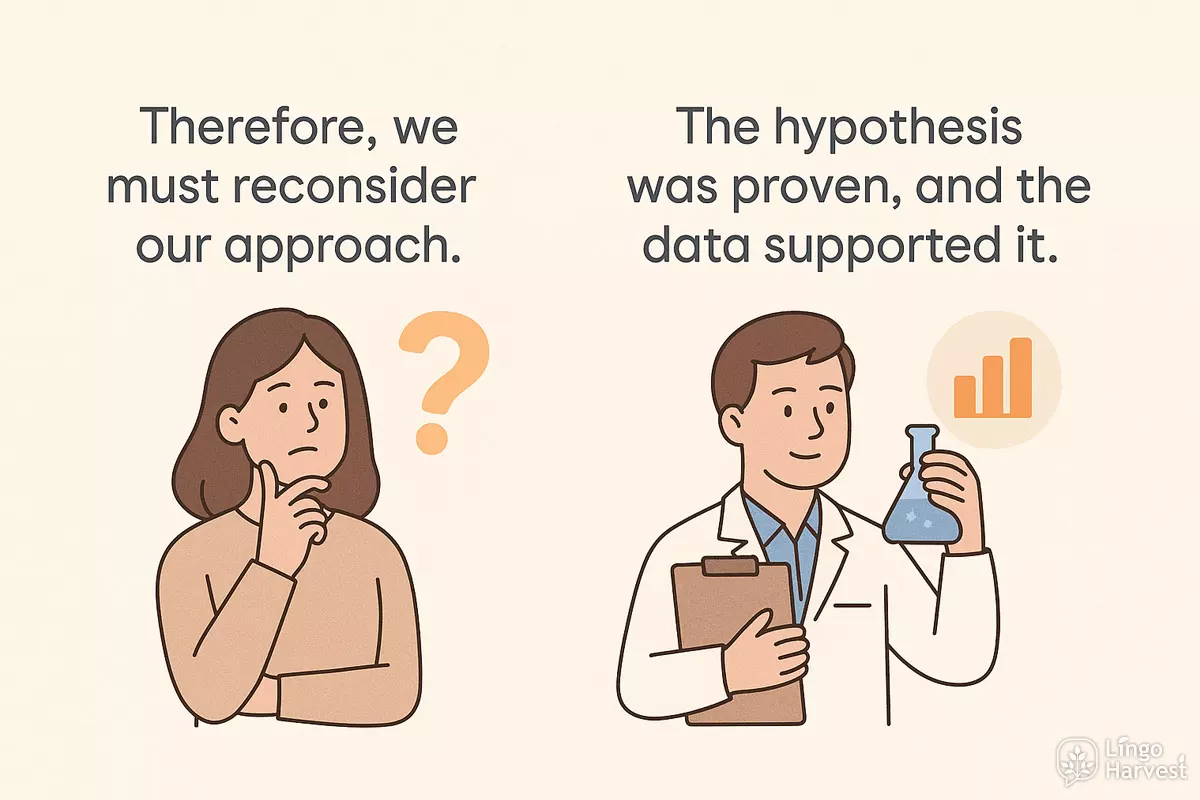
- After a full stop to start a new sentence: Therefore, we must reconsider our approach.
- Within a compound sentence: The hypothesis was proven, and the data supported it.
- At the start of a dependent clause: Although the evidence was strong, doubts remained.
- Before the main clause for emphasis: Because the method failed, the experiment was repeated.
- Between parallel structures: She enjoys reading and writing.
- After a semicolon for cohesion: The sample was small; however, the findings were significant.
- In lists for clarity: You may choose tea, coffee, or juice.
- Connecting alternatives: You can stay or leave.
- Signaling cause and effect: She was late, so she missed the meeting.
- Showing contrast: He is young, but he is very experienced.
- Between clauses for options: We could eat out, or we could cook at home.
- At the start of complex sentences: While the plan is ambitious, it is feasible.
Guidelines for Clear Use
To make your writing as transparent as possible, consider these tips:
- Place conjunctions where they immediately clarify the relationship between ideas.
- Avoid overusing conjunctions at the start of sentences, as this can sound repetitive.
- Use punctuation (commas, semicolons) to set off conjunctions when needed for clarity.
- Match the conjunction’s position with the complexity of the sentence; use simpler placement for complex ideas.
- Check if moving the conjunction changes the meaning or flow.
- Read sentences aloud to judge whether the placement feels natural and clear.
Comparing Placement for Emphasis and Flow
The effect of conjunction placement is especially notable when comparing different structures. The table below illustrates how positioning can alter emphasis and readability:
| Conjunction Position | Effect on Sentence |
|---|---|
| Start of sentence | Highlights the logical link and signals a shift or development. ✅ |
| Middle of sentence | Creates a smoother transition, integrating the connection without breaking the flow. |
| Before dependent clause | Emphasizes cause, condition, or contrast, often clarifying complex relationships. |
| After semicolon | Strengthens cohesion between closely related independent clauses. |
Strategic placement of conjunctions not only clarifies logical connections but also enhances the reader’s understanding. Experiment with different positions in your sentences to see which arrangement best communicates your intended meaning.
Examples from model essay paragraphs
When analyzing well-structured essays, you’ll notice that conjunctions play a crucial role in connecting ideas and creating a natural flow. The following sample sentences and patterns are drawn from academic writing, illustrating how various conjunctions are used to link arguments, contrast viewpoints, or sequence information for clarity.
Common Patterns with Conjunctions
- Addition: “The study revealed significant results, and it suggested further research is necessary.”
- Contrast: “Many believe technology improves communication, but it can also create misunderstandings.”
- “The government increased funding; however, the outcomes were not as expected.”
- Cause and Effect: “She revised her essay several times, so her final draft was much clearer.”
- “He missed the deadline because he was ill.”
- Condition: “If students practice regularly, their writing will improve.”
- Emphasis: “Indeed, strong transitions enhance essay coherence.”
- Sequence: “First, collect data. Next, analyze results.”
- “They must submit the form before the deadline.”
- Comparison: “Writing, like speaking, requires practice.”
- “He enjoys reading, whereas his brother prefers sports.”
- Purpose: “They organized workshops so that students could learn new skills.”
- Result: “The explanation was clear, therefore everyone understood.”
- “She worked hard, thus she succeeded.”
- Alternative: “You can submit the essay online or hand in a printed copy.”
- “It is important to plan your essay; otherwise, your ideas may lack cohesion.”
Structured Comparison: Paragraph Excerpts
| Conjunction Type | Model Essay Excerpt |
|---|---|
| Addition | “The author presents several arguments in support of renewable energy, and she also addresses common misconceptions.” |
| Contrast | “Some people argue that strict laws reduce crime, but evidence suggests otherwise.” |
| Cause and Effect | “The experiment failed because the variables were not controlled.” |
| Sequence | “First, the participants completed a survey. Then, they took part in interviews.” |
| Condition | “If these measures are implemented, pollution levels may decrease.” |
Key Takeaways for Using Conjunctions
Drawing on phrases from high-quality essays, it becomes clear that a variety of conjunctions helps to clarify relationships between ideas. Whether you are introducing a new point, showing contrast, or explaining a result, choosing the right connective word or phrase ensures your arguments are easy to follow. Reviewing real examples from model writing can be especially useful for expanding your repertoire of linking words and improving your essay’s logical coherence.
Practice: improve paragraph cohesion by adding appropriate conjunctions
Linking sentences smoothly is crucial for a logical and engaging essay. When paragraphs lack clear connections, readers may struggle to follow your ideas. To help you master this skill, let's focus on inserting conjunctions that clarify relationships between sentences and support the overall flow of your writing.
Common Types of Conjunctions to Strengthen Paragraph Flow
- Additive: and, also, furthermore, moreover, in addition
- Contrastive: but, however, yet, on the other hand, although
- Cause/Effect: because, since, therefore, as a result, so
- Conditional: if, unless, provided that, even if
- Time/Sequence: then, after, before, when, meanwhile, subsequently
- Purpose: so that, in order that
- Alternative: or, either...or, neither...nor
- Emphasis: indeed, in fact, especially
- Summary: in conclusion, to sum up, overall
- Example: for example, for instance, such as
Exercise: Choose the Best Conjunction
Read each paragraph. Decide which conjunction best completes each blank to improve the flow and clarity.
- The library was closed; ________, I could not return my books on time.
a) however
b) as a result
c) in addition - She practiced every day, ________ she wanted to win the competition.
a) because
b) unless
c) although - The experiment failed the first time. ________, the team did not give up.
a) Therefore
b) Nevertheless
c) For example - I enjoy reading fiction. ________, my brother prefers non-fiction.
a) In conclusion
b) Meanwhile
c) On the other hand - They left early; ________, they wanted to avoid traffic.
a) however
b) because
c) therefore - The weather was terrible; ________, the match continued.
a) nevertheless
b) for example
c) in addition - He didn’t study; ________, he failed the exam.
a) as a result
b) meanwhile
c) although - She wanted to buy the jacket, ________ she didn’t have enough money.
a) because
b) but
c) therefore - The instructions were unclear; ________, many users made mistakes.
a) consequently
b) although
c) moreover - He enjoys cooking; ________, he rarely has time for it.
a) for example
b) however
c) as a result
Show answers
- b) as a result
- a) because
- b) Nevertheless
- c) On the other hand
- c) therefore
- a) nevertheless
- a) as a result
- b) but
- a) consequently
- b) however
Quick Reference: Conjunctions by Function
| Function | Example Conjunctions |
|---|---|
| Addition | and, also, moreover, furthermore, in addition |
| Contrast | but, however, yet, although, whereas |
| Reason/Result | because, so, therefore, thus, as a result |
| Time/Sequence | then, after, before, when, meanwhile |
| Example/Clarification | for example, for instance, such as, namely |
Editing Task: Improve Paragraphs
Below are sentences from a draft paragraph. Add suitable conjunctions to improve cohesion.
- The sun was shining. The wind was cold.
- Many students participated. Only a few won prizes.
- We missed the bus. We arrived late.
- The instructions were clear. Some people made mistakes.
- He studied hard. He failed the exam.
- She wanted to buy the dress. It was too expensive.
- The road was blocked. We took another route.
- The meal looked delicious. It tasted terrible.
- I called him several times. He didn’t answer.
- The weather was terrible. The event continued.
Show answers
- The sun was shining, but the wind was cold.
- Many students participated, yet only a few won prizes.
- We missed the bus, so we arrived late.
- The instructions were clear; however, some people made mistakes.
- He studied hard, yet he failed the exam.
- She wanted to buy the dress, but it was too expensive.
- The road was blocked, so we took another route.
- The meal looked delicious, but it tasted terrible.
- I called him several times, but he didn’t answer.
- The weather was terrible; nevertheless, the event continued.
Regularly practicing with a range of conjunctions will help you develop stronger, more cohesive paragraphs in your essays.