Eliminating Overuse of Conjunctions in Academic Writing

 Here we common issues from overusing conjunctions, how to identify and reduce unnecessary linkers, and ways to use punctuation or structure instead. It also gives improved sentence examples and offers a practice exercise to minimize conjunctions.
- Typical problems caused by excessive conjunction use
- Identifying unnecessary and repetitive linking words
- Strategies for replacing conjunctions with concise phrasing
- Using punctuation and sentence structure instead of linkers
- Examples of before-and-after improved sentences
- Practice: reduce conjunction overuse in a sample paragraph
Many students and researchers find it challenging to make their academic writing concise and impactful, frequently relying on excessive connecting words that can clutter their sentences. By carefully streamlining transitions, writers can improve the logical flow of their arguments and enhance overall clarity. Focusing on clear and direct connections between ideas not only strengthens the structure of academic work but also ensures that readers can easily follow the main points, making the writing more effective and persuasive.
Typical problems caused by excessive conjunction use
Frequent reliance on conjunctions can make academic writing less effective, diluting clarity and coherence. Overusing connectors such as "and," "but," "so," or "because" often leads to lengthy, confusing sentences that are difficult for readers to follow. This can obscure the main arguments, reduce the impact of evidence, and make the overall structure seem disorganized.
Loss of Sentence Variety and Clarity
Writers often string together multiple thoughts using an abundance of conjunctions, resulting in monotonous sentence structures. This makes the text less engaging and harder to understand. Overly complex sentences may bury the main idea, causing the reader to lose track of the argument’s progression.
- Sentences become unnecessarily long and convoluted
- Key points may be hidden within lengthy clauses
- Readers may need to reread passages to grasp the intended meaning
Weakened Argument Structure
Excessive use of connectors can undermine the logic and strength of arguments. Instead of clearly presenting evidence and analysis, writers may blur distinctions between ideas, causing logical relationships to become ambiguous.
- Transitions between ideas may lack precision
- Arguments can appear less persuasive or focused
- Paragraphs may lack a clear topic or concluding sentence
Repetitive and Redundant Language
Repeated use of the same conjunctions leads to redundancy and a lack of lexical variety. This repetition can make the writing feel dull and unpolished, especially in formal academic contexts.
| Conjunction Overuse Example | Improved Alternative |
|---|---|
| The experiment was successful and the data was reliable and the results were consistent. | The experiment was successful; the data was reliable, and the results were consistent. |
| She studied hard but she was tired but she kept working. | Although she was tired, she studied hard and kept working. |
| The theory is logical so it is widely accepted so most researchers use it. | Because the theory is logical and widely accepted, most researchers use it. |
| The sample size was small because the resources were limited because funding was low. | Due to limited resources and low funding, the sample size was small. |
Other Common Issues from Overusing Conjunctions
- Ambiguity in logical connections between ideas
- Difficulty maintaining formal tone
- Increased risk of run-on or fused sentences
- Reduced readability, especially for non-native speakers
- Challenges in editing and peer review due to unclear structure
- Lower engagement, as repetitive sentence patterns tire the reader
- Potential for unintentional shifts in meaning
- Impaired flow, making transitions awkward or forced
In summary, excessive conjunctions can mask the writer's intentions and weaken academic communication. Recognizing these pitfalls is the first step toward producing clearer, more compelling scholarly work.
Identifying unnecessary and repetitive linking words
Academic writing often suffers when transition words and conjunctions are overused or repeated, which can make arguments appear unfocused and reduce clarity. Recognizing these patterns is the first step in improving sentence flow and coherence.
Common Signs of Overused Linking Words
Writers sometimes rely on familiar connectors for emphasis or to ensure logical flow, but this can result in redundancy. Look for these indicators:
- Multiple conjunctions in a single sentence (e.g., "and... and... and...")
- Repeating the same connector across consecutive sentences ("however," "however")
- Using linking words where simple punctuation would suffice
- Adding unnecessary transitions at the start of every paragraph
Typical Linking Words Worth Reviewing

It is helpful to keep a checklist of frequently repeated connectors. Spotting these in your drafts can highlight areas for revision:
- and → She opened the window and let fresh air in.
- but → He wanted to join us, but he was too busy.
- so → The road was icy, so we drove slowly.
- however → The task seemed simple; however, it took hours to complete.
- therefore → It was getting dark; therefore, we headed back.
- furthermore → The hotel was clean; furthermore, the staff were friendly.
- in addition → She speaks Spanish; in addition, she’s learning French.
- because → They stayed home because the weather was awful.
- moreover → The book is informative; moreover, it’s enjoyable to read.
- thus → He didn’t follow the instructions; thus, the machine stopped working.
- as a result → The river overflowed; as a result, several roads closed.
- on the other hand → I enjoy city life; on the other hand, I like quiet places too.
- consequently → She forgot to charge her phone; consequently, it died during the call.
- for example → Many fruits contain vitamin C; for example, oranges and kiwis.
- nevertheless → It was cold outside; nevertheless, they went for a walk.
- in contrast → The north is rainy; in contrast, the south is sunny.
- additionally → The software is fast; additionally, it’s easy to use.
- meanwhile → She cooked dinner; meanwhile, he set the table.
- similarly → The two artists paint landscapes; similarly, they both use bright colors.
- yet → He studied a lot, yet he still felt unprepared.
Strategies to Detect Redundancy
Careful self-editing can reveal both redundant and unnecessary connectors. Consider these approaches:
- Read sentences aloud to notice awkward repetition.
- Highlight all linking words in a paragraph to check for clusters.
- Ask if the meaning changes when a connector is removed.
- Replace several short sentences joined by "and" or "but" with a single, more complex sentence structure.
Examples of Redundant Linking Word Usage
Below is a comparison of repetitive versus streamlined usage in academic writing.
| Repetitive Example | Improved Revision |
|---|---|
| However, the results were inconclusive. However, further research is needed. | The results were inconclusive; therefore, further research is needed. |
| And this method is effective. And it is widely used. | This method is effective and widely used. |
| Because the sample size was small, the findings are limited. Because of this, conclusions must be cautious. | Because the sample size was small, conclusions must be cautious. |
| Therefore, in addition, the results support the hypothesis. | The results support the hypothesis. |
By carefully reviewing drafts for superfluous connectors and consciously varying transitions, academic writers can strengthen arguments and improve readability.
Strategies for replacing conjunctions with concise phrasing
Choosing more succinct language in academic writing often means finding alternatives to frequent conjunction use. Overreliance on words like "and," "but," "so," and "because" can weaken the impact of analysis, making arguments appear meandering or redundant. Instead, writers can use a variety of techniques to create direct, clear sentences that retain logical connections without depending on conjunctions for cohesion.
Use Punctuation for Clarity
Often, sentences joined by conjunctions can be separated into two shorter, punchier statements. This approach enhances readability and emphasizes key points. For example, replacing "and" or "but" with a period or semicolon can clarify relationships between ideas.
- Original: The results were inconclusive, but further research is needed.
Revised: The results were inconclusive. Further research is needed. - Original: The study was comprehensive and it included several variables.
Revised: The study was comprehensive; it included several variables.
Substitute with Transitional Phrases
Transitional adverbs and phrases can often replace conjunctions, providing a more formal tone and improving flow between sentences.
- however → It was cold; however, we still went outside.
- therefore → The data was incomplete; therefore, the report was delayed.
- consequently → She missed the deadline; consequently, the project was postponed.
- moreover → The hotel was affordable; moreover, it was close to the beach.
- additionally → The course includes lectures; additionally, students attend weekly workshops.
- nevertheless → The road was icy; nevertheless, they continued driving.
- thus → He didn’t save his work; thus, all progress was lost.
- in contrast → The north is snowy; in contrast, the south stays warm year-round.
- for example → Many fruits are rich in vitamins; for example, oranges contain a lot of vitamin C.
- as a result → She invested wisely; as a result, her savings grew significantly.
- similarly → The first study found positive effects; similarly, later research confirmed the trend.
- otherwise → Wear a helmet; otherwise, you could get injured.
- meanwhile → She prepared dinner; meanwhile, he set the table.
- in addition → The plan reduces costs; in addition, it improves efficiency.
- subsequently → The system crashed; subsequently, all users were logged out.
- furthermore → The book is informative; furthermore, it’s easy to read.
- in summary → The trial was successful; in summary, the new method works well.
- ultimately → They considered many options; ultimately, they chose the simplest solution.
Condense with Participial or Absolute Phrases
Academic writers can often combine information by turning clauses into concise phrases. This reduces the need for explicit conjunctions and streamlines the writing.
- Original: The experiment failed because the apparatus malfunctioned.
Revised: The apparatus malfunctioning, the experiment failed. - Original: She conducted the survey and analyzed the data.
Revised: Having conducted the survey, she analyzed the data.
Replace Conjunctions with Prepositions or Nominalizations
Sometimes, prepositional phrases or nominal forms can convey the logical relationship more efficiently.
- due to → The event was canceled due to bad weather.
- in light of → In light of recent changes, we must review the plan.
- as a consequence of → He lost access as a consequence of repeated violations.
- in response to → The company updated its policy in response to customer feedback.
- because of → We were late because of heavy traffic.
- following → Following the meeting, everyone received a summary email.
- in spite of → In spite of the noise, she managed to concentrate.
- after → After the game ended, they went out for dinner.
- prior to → Prior to the interview, she reviewed her notes.
- during → During the presentation, the lights suddenly went out.
Comparing Common Conjunctions and Concise Alternatives
Sometimes, seeing direct alternatives helps clarify how to streamline sentences. The following table matches overused conjunctions with concise replacements or rephrasings that strengthen academic prose.
| Conjunction | Concise Alternative |
|---|---|
| and | Additionally / Use a semicolon / Combine with participial phrase |
| but | However / Yet / In contrast |
| so | Therefore / Thus / Consequently |
| because | Due to / Owing to / As a result of |
| although | Despite / In spite of / Nevertheless |
| or | Alternatively / Otherwise |
| if | In the event of / Provided that |
| while | Whereas / Meanwhile / During |
Refining sentences by reducing unnecessary connectors leads to more direct, authoritative writing. By practicing these methods, academic authors can produce clear, impactful prose that engages readers and communicates ideas without excess verbiage.
Using punctuation and sentence structure instead of linkers
Academic writing often relies on conjunctions to connect ideas, but excessive use can make prose monotonous and less impactful. Writers can achieve clarity and variety by using punctuation marks and thoughtful sentence construction to signal relationships between statements. This approach not only streamlines text but also helps emphasize key points without repetitive connectors.
Replacing Linkers with Punctuation
Strategic punctuation marks can indicate contrast, addition, or cause without explicit conjunctions. For instance, semicolons can join closely related ideas, while dashes introduce explanations or clarifications. Colons are effective for presenting lists or elaborations. Em dashes, commas, and even parentheses can shift tone and structure, offering alternatives to words like "and," "but," or "because."
- Semicolon (;): Connects two independent clauses with related content.
- Colon (:): Introduces explanations, examples, or lists.
- Em dash (—): Provides emphasis or parenthetical information.
- Parentheses ( ): Adds supplementary details or clarifications.
- Period (.): Separates ideas into shorter, punchier sentences.
- Comma (,): Sets off introductory elements or nonessential information.
Sentence Structure Techniques
Varying sentence structure can naturally express relationships between ideas without resorting to frequent linkers. Simple, compound, and complex sentences allow for nuanced connections and rhythm in academic writing. Consider using inversion, fronting, or participial phrases to indicate sequence, cause, or contrast.
| Conjunction-Heavy Example | Alternative with Punctuation/Sentence Variation |
|---|---|
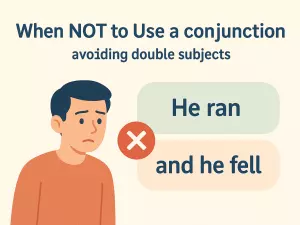
| He conducted the experiment, and he recorded the results. | He conducted the experiment; he recorded the results. |
| It was raining, so the event was cancelled. | It was raining. The event was cancelled. |
| The data were inconclusive, but the hypothesis remains valid. | The data were inconclusive—yet the hypothesis remains valid. |
| The sample was small because resources were limited. | Resources were limited: the sample was small. |
| She revised her paper, and she submitted it on time. | After revising her paper, she submitted it on time. |
Expanded Patterns for Variety
Writers can enrich their academic prose by employing diverse structures. Here are ways to convey relationships without frequent conjunctions:
- Use participial phrases: “Having completed the analysis, the team published their findings.”
- Begin with adverbs: “Consequently, results improved.”
- Inversion for emphasis: “Rarely had such results been observed.”
- Absolute phrases: “The survey complete, data analysis began.”
- Appositives: “The main variable, temperature, was carefully controlled.”
- Short sentences: “The theory was sound. The evidence was lacking.”
- Introductory phrases: “In contrast to previous studies, this trial used a different method.”
- Non-finite clauses: “To ensure accuracy, the process was repeated.”
- Ellipsis: “Some students preferred the new schedule; others, the old.”
- Parenthetical remarks: “The results (as expected) confirmed the hypothesis.”
- Nominalization: “The increase in temperature led to unexpected results.”
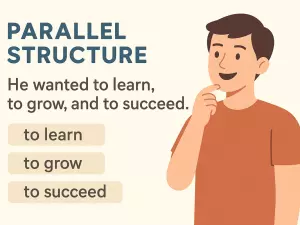
- Parallel structures: “Data was collected, analyzed, and reported.”
- Fronted clauses: “Although limited, the sample provided valuable insights.”
- Contrast by juxtaposition: “The method was efficient. The outcome, however, was disappointing.”
- Relative clauses: “The researcher, who had extensive experience, led the project.”
- Prepositional phrases: “Despite the challenges, the team succeeded.”
- Infinitive phrases: “To minimize error, measurements were repeated.”
- Rhetorical questions: “Was the approach successful? The data suggests otherwise.”
By thoughtfully applying punctuation and syntactic variety, academic writing becomes more engaging and precise—often with fewer conjunctions cluttering the text. This not only enhances readability but also demonstrates stylistic control.
Examples of before-and-after improved sentences
Writers often rely too heavily on conjunctions like "and," "but," and "so," which can make academic prose wordy or unclear. Revising these sentences can lead to more concise and precise arguments. Below are sample transformations, demonstrating how reducing conjunction use can strengthen clarity and flow.
Common Conjunction Overuse and Alternatives
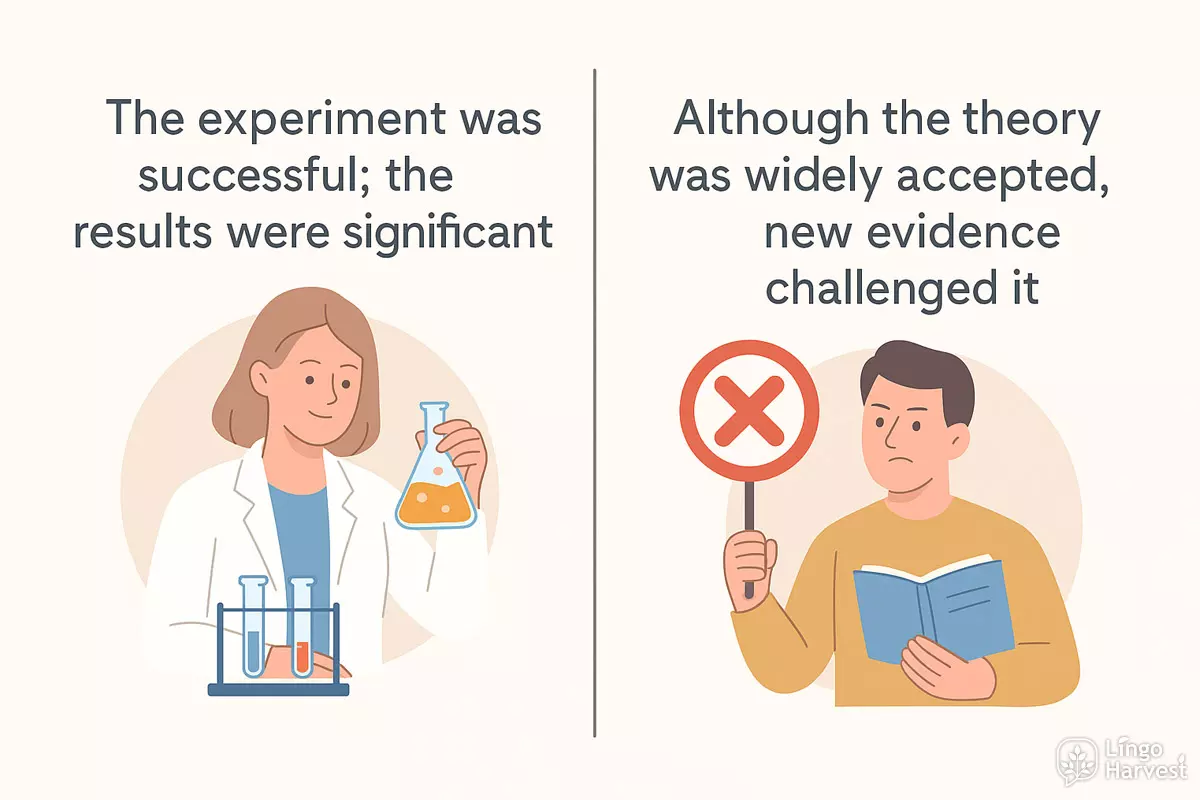
- ❌ Original: The experiment was successful, and the results were significant.
- ✅ Improved: The experiment was successful; the results were significant.
- ❌ Original: The theory was widely accepted, but new evidence challenged it.
- ✅ Improved: Although the theory was widely accepted, new evidence challenged it.
- ❌ Original: The sample size was small, so the findings are inconclusive.
- ✅ Improved: The small sample size renders the findings inconclusive.
- ❌ Original: She reviewed the literature, and she identified several gaps.
- ✅ Improved: Reviewing the literature, she identified several gaps.
- ❌ Original: The data were incomplete, so further analysis was impossible.
- ✅ Improved: Because the data were incomplete, further analysis was impossible.
- ❌ Original: The results support the hypothesis, but more research is needed.
- ✅ Improved: While the results support the hypothesis, more research is needed.
- ❌ Original: The model is simple, and it is effective.
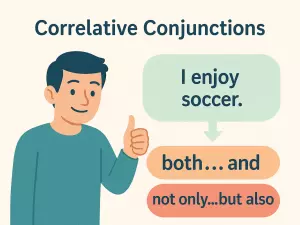
- ✅ Improved: The model is both simple and effective.
- ❌ Original: The author presents several arguments, but not all are convincing.
- ✅ Improved: The author presents several arguments; not all are convincing.
- ❌ Original: The results are promising, so further trials are planned.
- ✅ Improved: Given the promising results, further trials are planned.
Comparing Overused and Improved Sentence Structures
| With Excessive Conjunctions | Revised for Conciseness |
|---|---|
| The study was limited, and the data were incomplete, so the conclusions are tentative. | The study's limitations and incomplete data render the conclusions tentative. |
| The hypothesis was tested, but the results were inconclusive, so further research is necessary. | Due to inconclusive results, further research is necessary to test the hypothesis. |
| She collected the data, and she analyzed it, but she found no significant patterns. | After collecting and analyzing the data, she found no significant patterns. |
| The methodology was rigorous, but the sample size was small, so the findings are limited. | Despite rigorous methodology, the small sample size limits the findings. |
These before-and-after examples illustrate how reducing unnecessary conjunctions can make academic writing more direct and readable. Instead of chaining clauses with multiple connectors, consider restructuring sentences to emphasize relationships more efficiently.
Practice: reduce conjunction overuse in a sample paragraph
When academic writing relies too heavily on conjunctions like "and," "but," or "so," sentences can become cumbersome and less effective. Let’s explore ways to make your writing clearer by minimizing unnecessary conjunctions. In this exercise, you will work with a sample paragraph and practice rewriting it for improved clarity and conciseness.
Sample Paragraph with Conjunction Overuse
Many students want to improve their writing, but they often struggle with sentence structure, and they may not realize that using too many conjunctions can make their arguments less persuasive. Also, professors notice when sentences are too long and repetitive, so they recommend that students revise their drafts and try to eliminate excessive conjunctions, but this can be challenging for students who are not confident writers.
Task: Revise the Paragraph
- Read the sample paragraph carefully. Identify at least five places where conjunctions could be removed or the sentences restructured for greater clarity.
- Rewrite the paragraph to reduce overuse of linking words, while keeping the meaning intact.
- Check your version for sentence variety and conciseness.
Common Strategies for Reducing Conjunctions
- Break up long sentences into shorter, more direct ones.
- Replace conjunctions with transition words or phrases when appropriate.
- Use punctuation (periods, semicolons, em dashes) to separate ideas.
- Eliminate redundant connections or repetitive phrases.
- Restructure sentences to emphasize clarity over flowery linking.
- Combine related ideas thoughtfully, avoiding stringing too many with "and" or "but."
- Use participle phrases instead of full clauses where possible.
- Start sentences with strong nouns or verbs instead of conjunctions.
- Vary sentence openings to avoid monotony.
- Prioritize essential information; omit unnecessary asides joined by conjunctions.
- Check for "so," "but," "and," and "or" at the start of sentences—often, these can be removed.
- Use parallel structure rather than connecting long lists with "and."
- Be direct: choose simple, clear sentence constructions.
- Read your paragraph aloud to spot awkward joins or run-ons.
- Look for places where one idea naturally leads to another, reducing the need for explicit connectors.
Practice Check: Can You Spot the Overused Conjunctions?
Below is a list of sentences from the sample paragraph. Identify which ones could be rewritten for better clarity.
- Many students want to improve their writing, but they often struggle with sentence structure, and they may not realize that using too many conjunctions can make their arguments less persuasive.
- Also, professors notice when sentences are too long and repetitive, so they recommend that students revise their drafts and try to eliminate excessive conjunctions, but this can be challenging for students who are not confident writers.
Show answers
- Both sentences contain multiple conjunctions ("but," "and," "so," "but"), leading to overly long and complex structures. They can be split into shorter sentences and some conjunctions can be replaced by transitions or removed entirely.
- Example revision: "Many students want to improve their writing. However, they often struggle with sentence structure and may not realize that excessive use of conjunctions weakens their arguments. Professors notice when sentences become too long or repetitive. As a result, they recommend revising drafts to eliminate unnecessary conjunctions. This process can be challenging for less confident writers."
Tips for Ongoing Practice
- After drafting, highlight all conjunctions and assess necessity.
- Challenge yourself to rewrite paragraphs with fewer than half the original conjunctions.
- Exchange practice paragraphs with a peer and review each other's work for clarity and flow.