Advanced Editing Test: Improve Logic with Better Conjunctions

 The article explains how to identify and replace weak conjunctions, select stronger alternatives for clarity, edit paragraphs for an academic tone, review before-and-after examples, and practice editing an advanced-level passage.
Improving your ability to connect ideas smoothly is essential for producing compelling and clear writing. By carefully selecting appropriate linking words, you can reinforce the logical progression of your arguments, which helps readers follow your points more easily. This subtle skill not only enhances the structure of your work but also ensures that your message is communicated effectively. Practicing the use of transitions and connectors will ultimately make your writing more persuasive and enjoyable to read.
Instructions for the editing test
Before you begin, review the sample passage provided for logical flow and clarity. Your main objective is to enhance the text by replacing weak or repetitive conjunctions with more precise, varied ones that improve the overall logic and readability. Focus on how sentences and ideas connect, ensuring each transition is clear and meaningful.
Step-by-step process
- Read the passage carefully: Identify sentences where conjunctions (such as "and," "but," "so," "because," etc.) are used.
- Evaluate logic: Check if the connections between ideas are clear, and if the chosen conjunctions express the intended relationships (contrast, addition, cause, sequence, etc.).
- Suggest improvements: Where appropriate, replace basic conjunctions with more nuanced alternatives (e.g., "however," "therefore," "meanwhile," "although," "as a result"). Avoid overusing any single word.
- Maintain the writer’s intent: Ensure your changes do not alter the meaning of the passage.
- Proofread your edits: Confirm that the revised text flows smoothly and exhibits logical progression.
Common conjunctions and alternatives
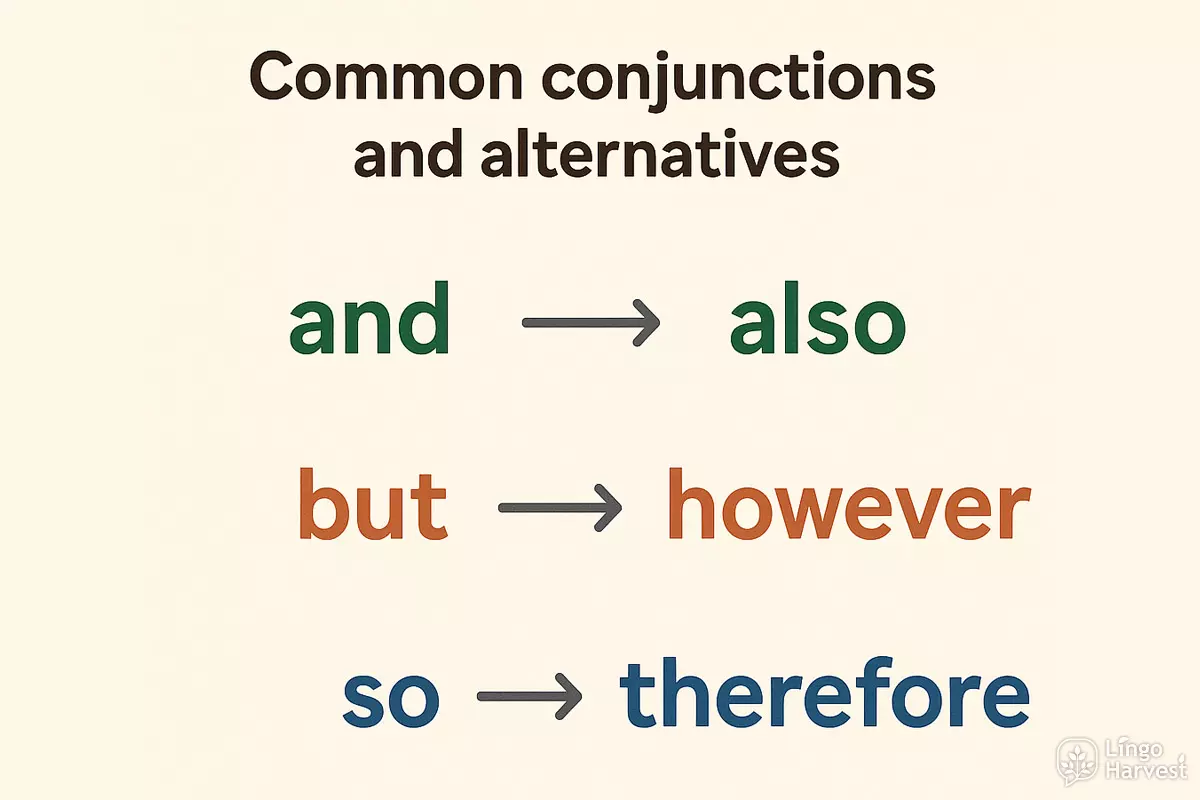
When editing, consider these alternatives for basic connectors:
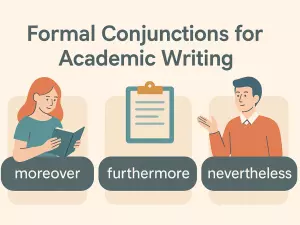
- and → also, moreover, in addition, furthermore, as well as
- but → however, yet, on the other hand, nevertheless, still
- so → therefore, thus, consequently, as a result
- because → since, as, due to, owing to
- or → alternatively, otherwise
- when → whenever, as soon as, while
- if → provided that, unless, in case, in the event that
- although → even though, though, whereas
- before → prior to, ahead of
- after → following, once, subsequently
- while → whereas, at the same time, meanwhile
- for example → for instance, such as, namely
- also → additionally, likewise
- then → next, subsequently, afterward
- because → since, as, inasmuch as
- so that → in order that, so as to
- even if → even though, although
- whereas → while, although, in contrast
- thus → accordingly, consequently, hence
- meanwhile → at the same time, concurrently
Editing task example
Below is a sample sentence with possible improvements for logical connections:
- Original: "She was tired, but she kept working and finished the project."
- Improved: "Although she was tired, she continued working; as a result, she completed the project."
Practice task
Revise the following sentences for better logical flow by improving the conjunctions or transitions:
- He wanted to go to the concert, but he had too much work, so he stayed home.
- It was raining and the roads were slippery and dangerous.
- I studied hard, but I didn’t pass the exam because I was nervous.
- You can call me or you can send an email if you have questions.
- She tried to fix the computer, but it kept freezing, so she called a technician.
- We planned a picnic, but the weather turned bad, so we stayed inside.
- He wanted to buy the jacket, but it was too expensive, so he left the store.
- I wanted to help him, but he refused, so I stepped back.
- They cleaned the house and cooked dinner, but their guests didn’t come.
- The class studied the topic, but many students still didn’t understand because it was difficult.
Show answers
- Although he wanted to attend the concert, he had too much work; therefore, he stayed home.
- It was raining; consequently, the roads became slippery and dangerous.
- Although I studied hard, I didn’t pass the exam due to nerves.
- If you have questions, you can either call me or send an email.
- She tried to fix the computer; however, it kept freezing, so she called a technician.
- We planned a picnic; however, the weather turned bad, so we stayed inside.
- He wanted to buy the jacket; however, it was too expensive, so he left the store.
- I wanted to help him; however, he refused, so I stepped back.
- They cleaned the house and cooked dinner; nevertheless, their guests didn’t come.
- The class studied the topic; nevertheless, many students still didn’t understand because it was difficult.
As you complete the editing assignment, prioritize logical relationships and variety in your connectors. Reread your revisions to ensure that every change improves the clarity and coherence of the passage.
Identifying weak or incorrect conjunctions in context
Recognizing when a conjunction is misused or lacks strength is essential for refining clarity and flow in advanced text editing. Conjunctions—such as "and," "but," "so," and "because"—serve to connect ideas, but not all connections are logical or effective. Sometimes, writers default to basic or imprecise linking words, which can cause confusion or weaken arguments.
Common Signs of Ineffective Conjunction Use
- Ideas are loosely linked, making the relationship between clauses unclear.
- Transitions feel abrupt or forced, disrupting the reader’s understanding.
- Overuse of "and" or "but" where more precise conjunctions would clarify meaning.
- Incorrect cause-and-effect implied by words like "so" or "because."
- Redundant or unnecessary conjunctions that do not add value.
Examples of Weak or Incorrect Conjunctions
- He was tired and he went to bed early. → (Does "and" truly show the reason?)
- I like apples but I eat oranges. → ("But" suggests contrast, though there may be none.)
- She finished her work so she went home. → (Is the cause-effect relationship clear?)
- We can go to the park or we can stay home. → (Could a stronger alternative be used?)
Frequent Problematic Conjunctions and Alternatives
| Weak or Incorrect Usage | Stronger or More Accurate Alternative |
|---|---|
| and | because, as well as, in addition to |
| but | however, although, yet, nevertheless |
| so | therefore, consequently, as a result |
| or | alternatively, otherwise |
| because | since, as, due to the fact that |
| while (for contrast) | whereas, although, on the other hand |
| then (for consequence) | therefore, thus, subsequently |
| so that | in order to, for the purpose of |
Quick Checklist for Spotting Issues
- Is the logical relationship between clauses clear and accurate?
- Could a more specific conjunction improve precision or nuance?
- Are any conjunctions making the sentence ambiguous or misleading?
- Is there repetition of basic connectors where variety would help?
Careful analysis of conjunctions in context helps elevate clarity and coherence, ensuring that every transition truly supports the intended meaning.
Selecting stronger options to improve clarity and flow
Choosing precise conjunctions and connectors can transform a paragraph from confusing to cohesive. Instead of relying on generic words like "and," "but," or "so," editors benefit from identifying more nuanced transitions that reflect specific relationships between ideas. This not only clarifies meaning but also helps readers follow the logical progression of arguments or explanations.
When to Upgrade Your Connectors
Sometimes, a sentence feels awkward simply because the connector doesn’t match the intended relationship. For example, use a contrastive link when highlighting differences, or a causal connector to show reasons. The table below offers a range of alternatives, organized by the relationship they express.
| Relationship | Stronger conjunctions & transitions |
|---|---|
| Contrast | however, nevertheless, on the other hand, in contrast, yet |
| Addition | furthermore, moreover, in addition, equally important, similarly |
| Cause & Effect | because, since, therefore, as a result, consequently, thus |
| Clarification | in other words, that is, namely, specifically, to clarify |
| Example/Illustration | for instance, for example, such as, including, particularly |
| Sequence/Order | first, next, then, finally, subsequently, afterward |
| Emphasis | indeed, in fact, above all, especially, notably |
| Comparison | likewise, similarly, in the same way, just as |
| Condition | if, unless, provided that, in case, as long as |
| Concession | although, even though, though, while it is true, granted |
Practical Tips for Editors
- Read sentences aloud to spot awkward or ambiguous transitions.
- Replace vague connectors with options that specify the relationship between ideas.
- Check for overused conjunctions; variety can enhance readability.
- Be aware of subtle differences: "although" and "however" are not interchangeable.
- Make sure each transition matches the logic you want to convey.
By deliberately choosing more descriptive conjunctions and connectors, editors can make texts not only clearer but also more engaging. Strong transitions guide readers smoothly from one point to the next, reducing confusion and improving the overall reading experience.
Paragraph-level editing for academic tone
Careful revision at the paragraph level is essential for producing writing that meets scholarly expectations. Beyond correcting grammar or vocabulary, this involves evaluating how each paragraph supports the overall argument, ensuring clarity, and achieving a formal and objective style.
Key strategies for refining paragraphs in academic contexts
- Maintain logical flow by connecting ideas with precise conjunctions and transitions.
- Eliminate colloquial language and replace it with discipline-appropriate terminology.
- Use passive or impersonal constructions where appropriate to emphasize objectivity.
- Check that each paragraph has a clear topic sentence and relevant supporting details.
- Ensure pronoun references are unambiguous to avoid confusion.
- Balance sentence length for readability—avoid strings of short choppy sentences or unwieldy run-ons.
- Vary sentence structure to promote engagement and avoid monotony.
- Replace vague descriptors (e.g., "a lot", "things") with precise, quantifiable terms.
- Remove redundancy and repetitive phrasing that does not add value.
- Integrate evidence and citations smoothly, making the relationship between sources and claims explicit.
- Use hedging language appropriately (e.g., "may suggest," "appears to indicate") to moderate claims.
- Transition smoothly between paragraphs to reinforce the overall coherence of the text.
- Check for consistency in tense, person, and register throughout the document.
- Align conclusions or summary statements with the evidence provided in the preceding analysis.
Common conjunctions and transitions for scholarly writing
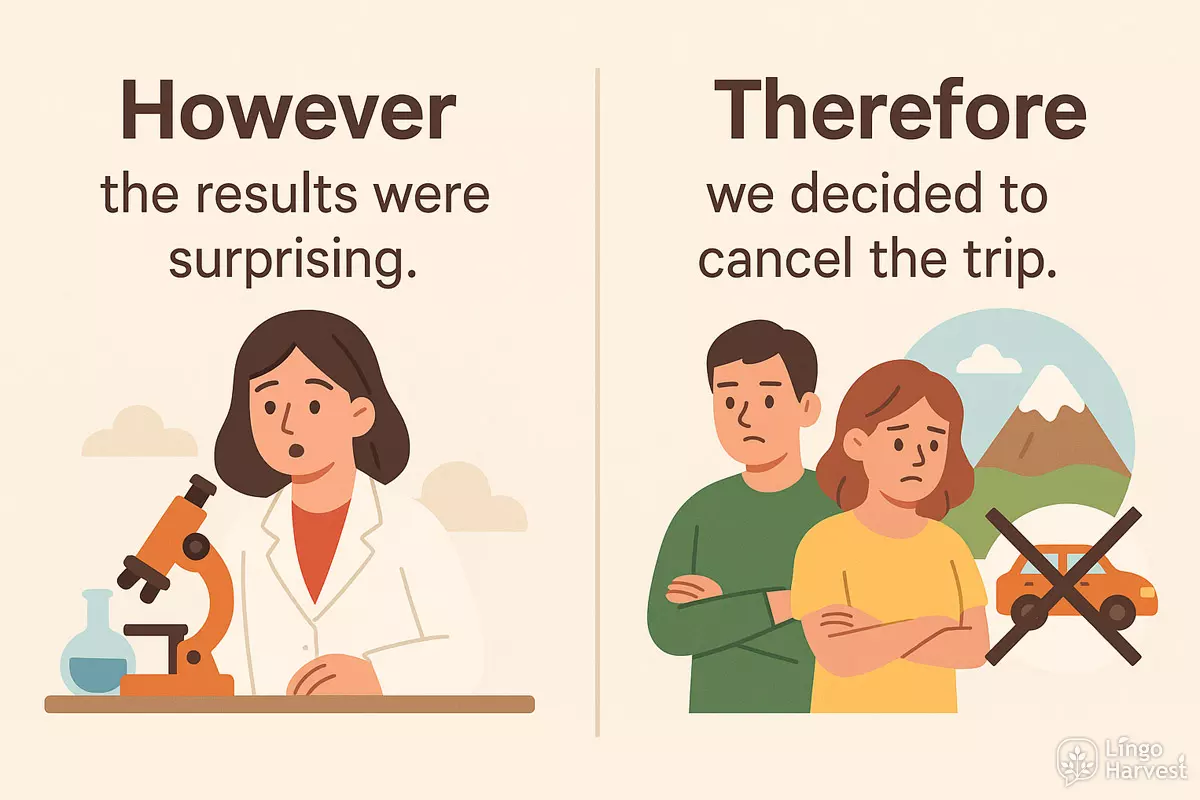
Writers frequently rely on specific connectors to clarify relationships between statements. Choosing the correct conjunction can significantly improve the logical progression of arguments. Below is a comparative list of less formal connectors and their academic counterparts:
| Original | Alternative(s) | Example |
|---|---|---|
| But | However / Nevertheless | However, the results were surprising. |
| So | Therefore / Consequently | Therefore, we decided to cancel the trip. |
| Also | Additionally / Moreover | Moreover, the plan will save money. |
| Because | Since / As / Due to the fact that | Since it was late, we went home. |
| And | Furthermore / In addition | In addition, we need more data. |
| Or | Alternatively | Alternatively, we could try another method. |
| For example | For instance / Specifically | For instance, this model is more accurate. |
| So that | In order to | In order to succeed, you must practice. |
| When | While / During | During the meeting, several issues were raised. |
| After | Subsequently / Following | Subsequently, the team reviewed the results. |
| Before | Prior to | Prior to the test, revise your notes. |
| If | Provided that / Assuming | Provided that everyone agrees, we’ll begin. |
| Even though | Although / Despite the fact that | Although it was late, they continued working. |
| Still | Nonetheless | Nonetheless, we must try again. |
| Because of | Owing to / Due to | Due to the rain, the event was postponed. |
| Too | Additionally | Additionally, we need better equipment. |
| Anyway | In any case | In any case, we’ll find a solution. |
| Next | Subsequently | Subsequently, the report was submitted. |
| In the end | Ultimately | Ultimately, the project was successful. |
Checklist for academic paragraph revision
- ✅ Is the topic sentence clear and relevant?
- ✅ Are all claims supported by evidence or reasoning?
- ✅ Do transitions and conjunctions clarify relationships between ideas?
- ✅ Is the language formal and precise?
- ✅ Are unnecessary words or phrases removed?
By systematically applying these editing strategies, writers can enhance both the coherence and scholarly tone of their academic work. Effective paragraph-level revision not only improves clarity but also strengthens the overall persuasiveness of the argument.
Before-and-after examples with improved logic
Clear transitions and logical flow matter when editing complex sentences. Often, the difference between confusing and clear writing comes down to the right choice of conjunctions. Below are illustrative cases showing how sentences can be made more coherent by carefully selecting connectors that reflect relationships between ideas.
Common conjunction mistakes and their improvements
Writers frequently use conjunctions like "and," "but," or "so" in ways that make reasoning unclear. Improving logic often requires swapping a generic connector for one that precisely expresses cause, contrast, or sequence.
- ❌ Weak: She was tired and she finished her work.
✅ Improved: She was tired, yet she finished her work. - ❌ Weak: The weather was cold, so we went outside.
✅ Improved: Although the weather was cold, we went outside. - ❌ Weak: He wanted to join because he liked the team, but he was nervous.
✅ Improved: Although he liked the team and wanted to join, he was nervous. - ❌ Weak: I studied hard and I passed the exam.
✅ Improved: Because I studied hard, I passed the exam. - ❌ Weak: We missed the train and we had to wait.
✅ Improved: Since we missed the train, we had to wait. - ❌ Weak: She was late but she finished the project.
✅ Improved: Even though she was late, she finished the project. - ❌ Weak: He didn’t call, so I was worried.
✅ Improved: Because he didn’t call, I was worried. - ❌ Weak: The instructions were unclear and the students were confused.
✅ Improved: The students were confused because the instructions were unclear. - ❌ Weak: She was hungry and she ate.
✅ Improved: Since she was hungry, she ate. - ❌ Weak: He practiced every day and he improved.
✅ Improved: As a result of practicing every day, he improved.
Comparing conjunctions for logical clarity
Choosing the right connector makes relationships between ideas explicit. The table below compares original sentences with their revised versions, highlighting how logic improves with better conjunctions.
| Original Sentence | Revised Version |
|---|---|
| She forgot her umbrella and she got wet. | Because she forgot her umbrella, she got wet. |
| He wanted to help but he didn’t know how. | Although he wanted to help, he didn’t know how. |
| The deadline was near and the team worked late. | Since the deadline was near, the team worked late. |
| The task was difficult, so she asked for advice. | Because the task was difficult, she asked for advice. |
| We planned a picnic, but it rained. | Although we planned a picnic, it rained. |
Tips for choosing effective connectors
When improving sentence logic, match the connector to the relationship you want to show:
- Use because, since, or as for cause and effect.
- Use although, even though, or whereas for contrast.
- Use so, therefore, or thus for results.
- Use when, after, or before for time relationships.
- Use if, unless, or provided that for conditions.
Thoughtful conjunction choices not only clarify meaning but also guide readers smoothly through your argument or narrative.
Practice: edit a short advanced-level passage
Improving logical flow often means reworking how sentences connect. In advanced editing, the choice of conjunctions can subtly alter nuance, argument structure, or reader comprehension. Below, you'll work with a short passage that could benefit from more precise linking words and transitions. Focus on clarity and logical progression.
Task: Refine the passage for logical coherence
Read the following passage. Identify where the logic is weak or connections feel abrupt. Suggest better conjunctions or transitions to improve flow. Edit the passage by rewriting it with your chosen improvements.
The experiment produced unexpected results. The team followed the protocol carefully. The data did not match the initial hypothesis. The researchers decided to repeat the test. They wanted to ensure accuracy.
Consider where contrast, cause, or sequence are implied but not clearly stated. Think about whether words like however, because, therefore, or although might help. Rewrite for logical clarity.
Common Advanced Conjunctions and Transitions
- however → It was raining; however, we still went out.
- therefore → She studied hard; therefore, she passed the exam.
- consequently → The streets were flooded; consequently, the event was cancelled.
- nevertheless → He was tired; nevertheless, he continued working.
- although → Although it was cold, they went swimming.
- whereas → She likes tea, whereas he prefers coffee.
- since → Since it’s late, we should go home.
- despite → Despite the noise, he managed to focus.
- in contrast → The north is cold; in contrast, the south is warm.
- as a result → He didn’t set an alarm; as a result, he overslept.
- meanwhile → She cooked dinner; meanwhile, he cleaned the house.
- even though → Even though he tried hard, he didn’t win.
- furthermore → The plan is affordable; furthermore, it is efficient.
- thus → The evidence was unclear; thus, the case was reopened.
- moreover → The hotel is cheap; moreover, it’s close to the beach.
- in addition → She speaks English; in addition, she knows Spanish.
- on the other hand → This phone is fast; on the other hand, it’s expensive.
- subsequently → He broke his leg; subsequently, he missed the tournament.
- because → They stayed inside because it was freezing.
- instead → I didn’t buy coffee; instead, I made some at home.
Quick Conjunction Comparison Table
| Conjunction or Transition | Primary Use | Example in Context |
|---|---|---|
| however | Contrast | The data were complete; however, the results were inconclusive. |
| therefore | Result/Consequence | The test failed; therefore, the procedure was reviewed. |
| although | Concession | Although the protocol was followed, the outcome differed. |
| since | Cause | Since the hypothesis was not supported, the team revised it. |
| meanwhile | Time/Sequence | Meanwhile, the control group was monitored. |
Editing Challenge
- Identify at least two places in the passage where logical connections are missing or weak.
- Choose and insert more effective conjunctions or transitions.
- Rewrite the passage for improved coherence.
Show answers
- Sample improved passage: The experiment produced unexpected results, even though the team followed the protocol carefully. However, the data did not match the initial hypothesis. Therefore, the researchers decided to repeat the test to ensure accuracy.
- Missing connections identified:
- Between "protocol carefully" and "data did not match" (contrast: use even though or although).
- Between "data did not match" and "decided to repeat" (cause/effect: use therefore or as a result).
- Alternative conjunctions: nevertheless, in spite of this, as a consequence, thus.