Conjunctions for Beginners: and, but, or, because, so

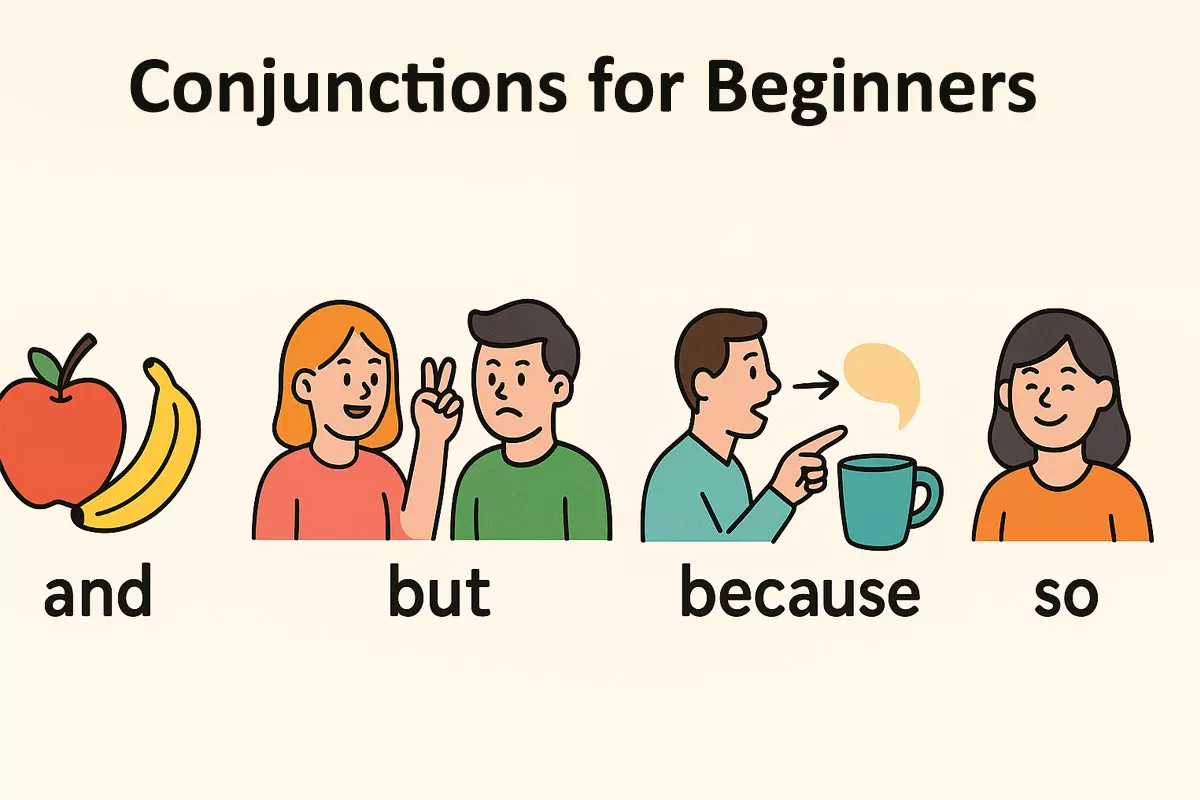 This article explains how conjunctions connect ideas in sentences. It covers using and for similar ideas, but for contrast, or for choices, and because or so for reasons and results, plus practice for building longer sentences.
Connecting words are essential for making your sentences clearer and more engaging, as they help ideas flow smoothly from one point to another. Words such as and, but, or, because, and so act as bridges, showing how different thoughts relate to each other. By learning to use these connectors effectively, you can improve your writing’s coherence and ensure your message is understood. Whether you are combining similar ideas, showing contrast, giving reasons, or presenting options, connecting words make your writing more logical and enjoyable to read.
What Conjunctions Do
Conjunctions are essential for connecting ideas in English sentences. These small but powerful words help link phrases, clauses, or even individual words, making speech and writing clearer and more fluid. Without connectors, sentences can sound choppy and disconnected. Using them properly lets you express relationships such as addition, contrast, choice, reason, and result.
How Connectors Shape Meaning
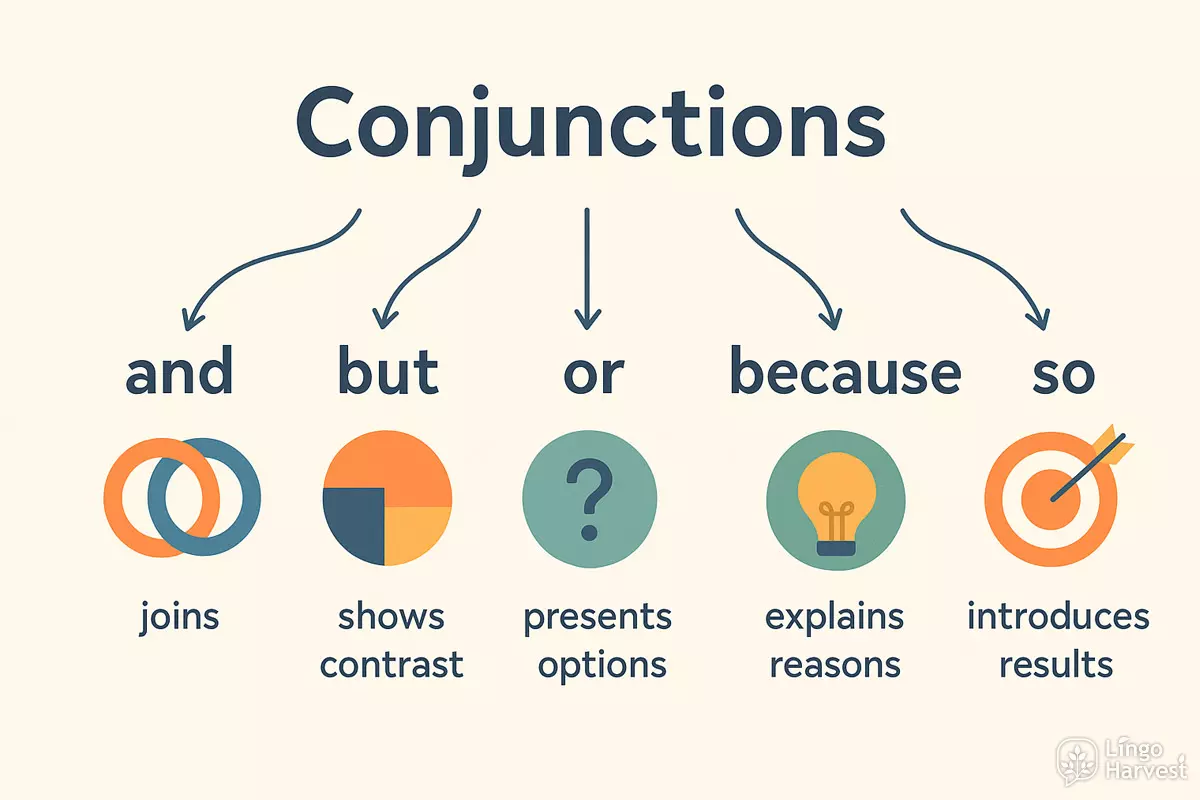
Each type of conjunction serves a different function. For example, “and” joins similar ideas, while “but” shows a contrast or exception. “Or” presents alternatives, “because” explains reasons, and “so” introduces results. Choosing the right one changes the message and flow of your sentence.
- and – Adds information: I like tea and coffee.
- but – Shows contrast: She is tired, but she will finish her work.
- or – Offers a choice: Would you like pizza or pasta?
- because – Explains reasons: He left early because he felt sick.
- so – Shows a result: It rained, so we stayed inside.
- I want to travel and learn new languages.
- She called me because she needed help.
- We can watch a movie or play a game.
- He is allergic to cats, so he can’t visit.
- They tried hard, but they lost the match.
- You can have juice or water.
- My brother is smart and kind.
- I stayed home because it was cold.
- She studied a lot, so she passed.
- He is friendly, but sometimes shy.
- Do you want to go out or stay in?
- We need bread and milk.
- I went to bed early because I was tired.
- It was late, so we left.
Comparing Conjunction Functions
| Conjunction | Main Use | Example |
|---|---|---|
| and | Adds information | We read and write every day. |
| but | Shows contrast | He is tall, but not athletic. |
| or | Offers a choice | Tea or coffee? |
| because | Gives a reason | I stayed home because it rained. |
| so | Shows result | She was hungry, so she ate. |
Mastering these connectors lets you build more complex sentences and communicate your thoughts with greater precision. Try combining different kinds to express nuanced ideas and link facts smoothly.
Joining Similar Ideas (and)
When you want to connect two thoughts that are alike or add information, the word and is your go-to conjunction. It helps you link words, phrases, or entire sentences that share a similar idea or are part of the same action. This makes your sentences smoother and clearer, especially when listing things or describing actions that happen together.
How to Use "and" in Sentences
"And" is commonly used to join similar items, activities, or descriptions. This can be as simple as connecting two nouns or as complex as combining two full clauses. Here are some basic patterns:
- Connecting nouns: I have a cat and a dog.
- Linking verbs: She sings and dances.
- Joining adjectives: The soup is hot and spicy.
- Combining clauses: We finished our homework, and we watched TV.
Common Examples with "and"
- Tom and Jerry are friends.
- I like apples and oranges.
- He is tall and strong.
- They played football and basketball.
- We went to the park and had a picnic.
- Read the instructions and follow them.
- My mom and dad are teachers.
- She smiled and waved at me.
- Turn off the lights and lock the door.
- The movie was funny and exciting.
- Bring your notebook and a pen.
- It is cold and rainy today.
- We ate pizza and drank lemonade.
- You can choose red and blue colors.
- He cleaned his room and did the laundry.
- Listen carefully and take notes.
- Wash your hands and face.
- She bought bread and milk.
- We met at the café and talked for hours.
- The dog barked and ran away.
Key Points to Remember
- Use "and" to add or combine similar ideas.
- It works with words, phrases, or whole sentences.
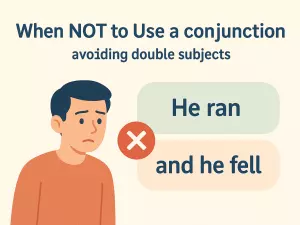
- Do not use "and" to join ideas that are different or opposite; use other conjunctions for that purpose.
Showing Contrast (but)
When you want to connect two ideas that are different or opposite, use the word but. It helps show a clear contrast between statements, actions, or feelings. This conjunction is common in everyday English and makes your sentences more interesting by highlighting differences.
How to Use "but" in Sentences
You can place but between two clauses to show that the second part disagrees with, limits, or contrasts the first part. Each side of but is usually a complete idea.
- I like tea, but I don't like coffee.
- She studied hard, but she didn't pass the exam.
- It's sunny, but it's cold.
- He is very friendly, but sometimes he is shy.
- We wanted to go to the park, but it was raining.
- They invited me, but I couldn't come.
- The movie was long, but it was interesting.
- I’m tired, but I’ll finish my homework.
- She usually walks to work, but today she took the bus.
- My brother is tall, but I am short.
- He tried to fix the car, but it didn’t work.
- I want to eat ice cream, but we don’t have any.
Common Mistakes with "but"
Learners sometimes use but incorrectly. Here are some things to remember:
- Do not use but with another conjunction like and or because in the same place.
- Use a comma before but when both parts are complete sentences.
- Don’t use but if there is no real contrast between the ideas.
Examples of Contrast with "but"
| First Idea | Contrasting Idea |
|---|---|
| She is young | but she is very wise |
| I love pizza | but I can’t eat cheese |
| We finished early | but we waited for others |
| He speaks fast | but I understand him |
| It looks easy | but it’s actually hard |
| The shoes are expensive | but they are comfortable |
| She felt sick | but she went to work |
| We wanted to stay | but we had to leave |
Summary
Use but to connect two ideas that go in different directions. It’s a simple but powerful way to make your English clearer and more natural. Practice making your own sentences with this word to get comfortable showing differences in your conversations and writing.
Offering Choices (or)
When you want to talk about alternatives or present different possibilities, the word or comes in handy. This simple conjunction lets you connect two or more options, making it clear that the listener or reader can choose between them. It’s frequently used in questions, suggestions, and even polite offers.
How to Use "or" in Sentences
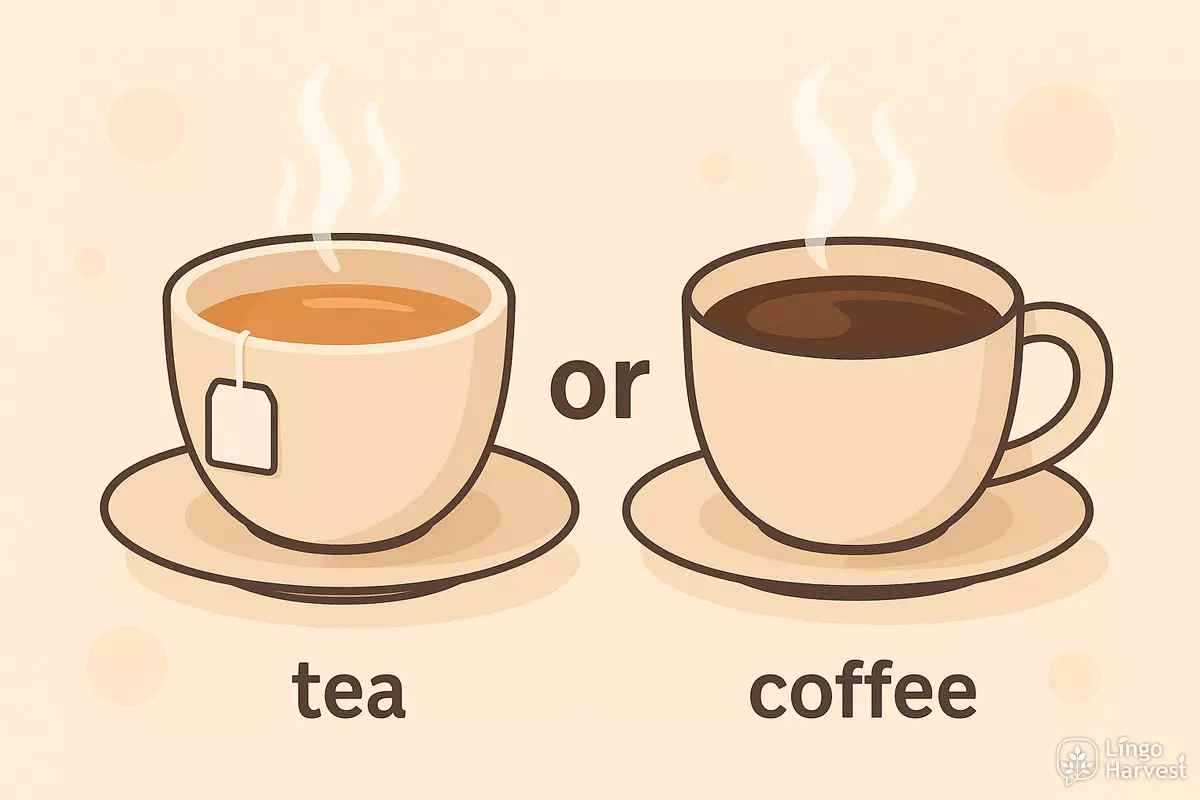
You can use or to join words, phrases, or clauses. The main idea is to show a choice between two (or more) things. Here are some common patterns:
- Would you like tea or coffee?
- Is this your book or hers?
- Should we stay home or go out?
- You can call me or send a message.
- Do you want to watch a movie or read a book?
- We can meet on Friday or Saturday.
- Will you have soup or salad?
- Is it better to walk or take the bus?
- Would you prefer pizza or pasta?
- Are you coming by train or by car?
- Should I email or call you?
- Can you speak English or Spanish?
- Do you want red or blue?
- Should I bring an umbrella or a raincoat?
- Will you pay by cash or card?
- Do you like summer or winter more?
Tips for Using "or"
- Use or when offering a choice, not when combining things (that’s what and is for).
- In questions, or helps clarify alternatives: “Do you want juice or water?”
- Sometimes, or shows uncertainty: “He might be at home or at work.”
- For polite offers, or keeps your tone friendly and flexible.
Comparing "or" and "and"
| Usage | Example |
|---|---|
| Connecting alternatives (or) | Would you like tea or coffee? |
| Joining similar ideas (and) | She likes tea and coffee. |
| Showing uncertainty (or) | He’s at home or at work. |
| Adding information (and) | They went to the park and had a picnic. |
Giving Reasons and Results (because / so)
When you want to explain why something happens, or what happens as a result, you’ll often use “because” and “so.” These two conjunctions help you connect ideas in a clear and logical way. “Because” is used to give the reason for something, while “so” shows the result or outcome.
How to Use "because"
Use “because” to answer questions about why something happens. It connects a result with its reason.
- I took an umbrella because it was raining.
- She stayed home because she was sick.
- They are happy because they passed the test.
- We turned on the fan because it was hot.
- He ran quickly because he was late.
How to Use "so"
Use “so” to show what happens as a result of something. It links a cause to its effect.
- It was raining, so I took an umbrella.
- She was sick, so she stayed home.
- They passed the test, so they are happy.
- It was hot, so we turned on the fan.
- He was late, so he ran quickly.
Comparing "because" and "so"
Both words link two related ideas, but they do it in opposite directions. “Because” gives the reason for something, while “so” gives the result. The meaning is similar, but the sentence structure changes:
| Using because | Using so |
|---|---|
| I am tired because I went to bed late. | I went to bed late, so I am tired. |
| She is smiling because she won a prize. | She won a prize, so she is smiling. |
| They left early because they had an appointment. | They had an appointment, so they left early. |
| We are inside because it’s cold outside. | It’s cold outside, so we are inside. |
| He is laughing because the joke was funny. | The joke was funny, so he is laughing. |
Common Mistakes
- ❌ Don’t use both “because” and “so” in the same sentence: Wrong: I was tired because I worked late, so I went to bed early.
- ✅ Choose one: Give the reason with “because” or the result with “so,” not both together.
Understanding when to use each conjunction helps you make your sentences clearer and more natural in English conversation and writing.
Practice: Build Longer Sentences
Combining short ideas with simple connectors is a great way to make your English more natural and detailed. Let's work with "and," "but," "or," "because," and "so" to link ideas and express reasons, choices, or contrast. Read the examples, then try the exercises below to get comfortable with sentence building.
Examples of Joining Simple Sentences
- I like apples and I like oranges.
- She wanted to go out but it was raining.
- You can have tea or you can have coffee.
- He stayed home because he was sick.
- It was cold, so they wore jackets.
- We studied hard and we passed the test.
- I don’t eat meat but I eat fish.
- Would you like juice or water?
- They left early because they were tired.
- She forgot her umbrella, so she got wet.
- My brother plays football and basketball.
- I want to go out but I have homework.
- Take a pen or a pencil.
- He was late because the bus broke down.
- It started to rain, so we went inside.
- We can watch a movie or play a game.
- She likes cats and dogs.
- I tried to call you but your phone was off.
- We are hungry so let's eat now.
- He didn’t come because he was busy.
Build Your Own Sentences
Combine the two simple sentences in each pair using the correct conjunction ("and," "but," "or," "because," "so").
- It was sunny. We went to the park.
- She likes pizza. She doesn’t like pasta.
- Do you want milk? Do you want juice?
- I was tired. I went to bed early.
- He didn’t study. He failed the test.
Show answers
- It was sunny, so we went to the park.
- She likes pizza but she doesn’t like pasta.
- Do you want milk or juice?
- I was tired, so I went to bed early.
- He didn’t study, so he failed the test.
Choose the Best Connector
Fill in the blanks with "and," "but," "or," "because," or "so."
- I like tea ____ coffee.
- We stayed home ____ it was raining.
- He is tired ____ he worked all day.
- She wanted to come ____ she was busy.
- You can have soup ____ salad.
Show answers
- and
- because
- because
- but
- or
Step-by-Step: Expanding Sentences
Notice how you can add connectors to make your ideas clearer and more interesting. Here’s a quick comparison:
| Short Sentences | Longer Sentence with Conjunction |
|---|---|
| I am hungry. I will make a sandwich. | I am hungry, so I will make a sandwich. |
| He likes to swim. He doesn’t like to run. | He likes to swim but doesn’t like to run. |
| We can go to the museum. We can go to the zoo. | We can go to the museum or the zoo. |
| She is happy. She passed the exam. | She is happy because she passed the exam. |
| The weather is nice. Let’s go outside. | The weather is nice, so let’s go outside. |
| He plays the guitar. He sings. | He plays the guitar and sings. |
| I want ice cream. I don’t want cake. | I want ice cream but not cake. |
| Bring your book. Bring your notebook. | Bring your book and your notebook. |
| Call me. Text me. | Call me or text me. |
| He was late. He missed the bus. | He was late because he missed the bus. |
Practicing these patterns helps you express more details and connect your thoughts smoothly. Try making your own examples using your daily activities or things you like!